Europe’s Last Wild Riviera
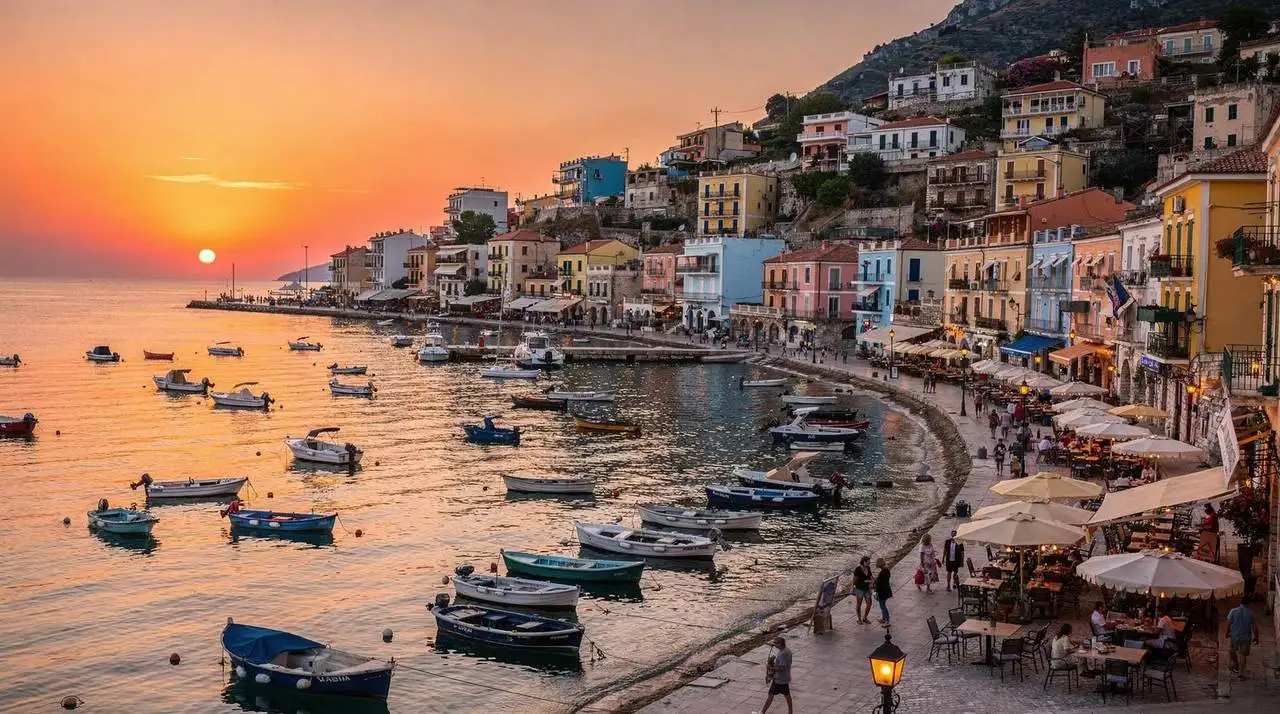
The term “Albanian Riviera” has been applied to the approximately 120-kilometer stretch of Ionian coastline running from Vlora in the north to Ksamil in the south. It is not a riviera in the Monaco or Côte d’Azur sense — there are no yacht marinas, no Michelin-starred waterfront restaurants, no crowds of the very rich. What it is, and what has made it one of Europe’s most talked-about emerging travel destinations, is a coastline of extraordinary natural beauty that has been almost entirely spared the mass-tourism development that consumed the Greek, Croatian, and Turkish Adriatic over the past 40 years.
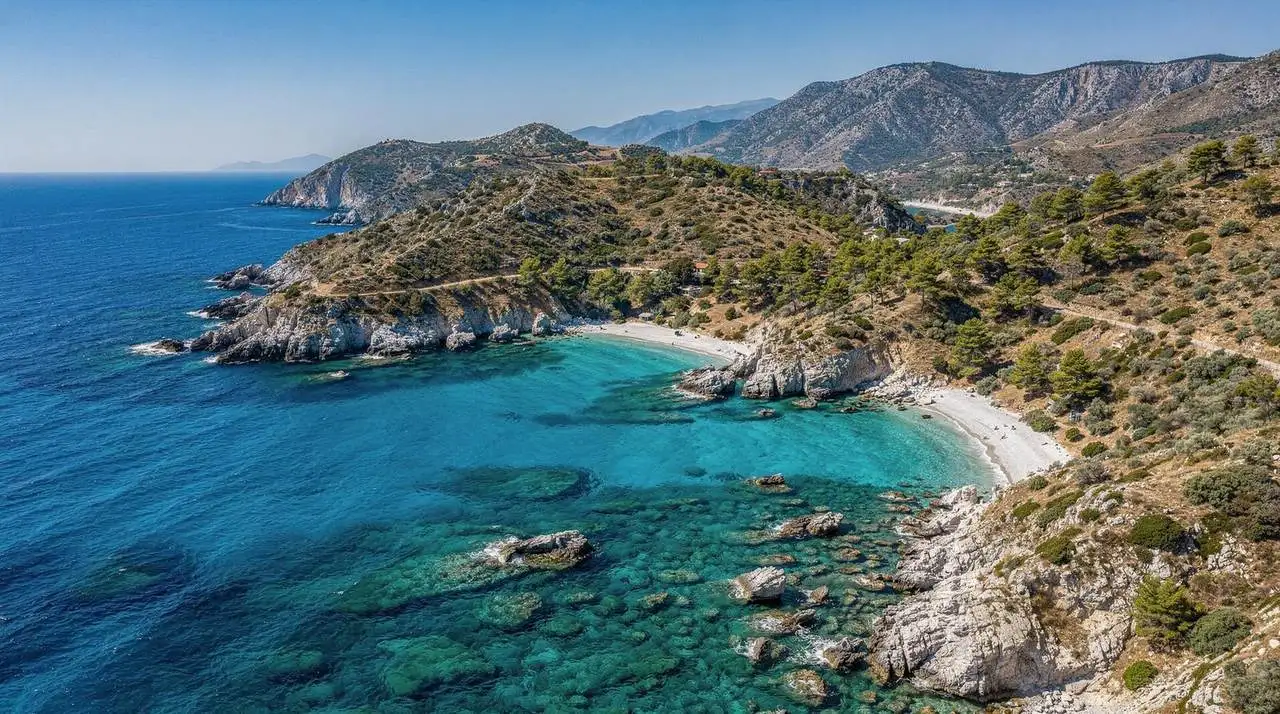
The Communist government’s closure of Albania to the outside world — and its prohibition on private property development — inadvertently created one of Europe’s last truly undeveloped Mediterranean coastlines. Since 1990, development has accelerated sharply, and some formerly pristine spots now show the growing pains of unplanned growth. But much of the riviera remains as it was: limestone cliffs plunging directly into the Ionian, turquoise coves accessible only by boat, olive groves running to the cliff edge, and small villages where locals still fish the traditional way.
The riviera is best explored slowly, with a car, over at least four or five days. Moving too quickly — hitting Dhermi, Himara, and Saranda in a single day — leaves you with a beautiful blur rather than a genuine sense of a place. The Albanian Riviera road trip itinerary provides a structured approach to doing it properly. Our 14-day Albania itinerary allocates four days on the coast, which represents a reasonable minimum for first-time visitors.
This page covers the riviera as a whole — for individual destinations, see Dhermi, Himara, Porto Palermo, Borsh, Saranda, and Ksamil.
| Length | ~120 km, Vlora to Ksamil (4-5hrs driving without stops) |
| Getting there | Self-drive (recommended), direct bus from Tirana, or ferry from Corfu |
| Minimum time | 4-5 days to see more than a blur |
| Budget | EUR 30-40/day budget, EUR 60-80/day mid-range |
| Best bases | Dhermi (beach clubs), Himara (all-round), Saranda (hub) |
The Riviera at a Glance
Northern Gateway: Vlora and Llogara
The riviera effectively begins at Vlora, where the Adriatic and Ionian meet at the Karaburun Peninsula. Vlora itself is a substantial city with its own historical weight — it is where Albanian independence was declared in 1912 — and its northern sea offers boat excursions to Sazan Island and the remarkable Karaburun Peninsula, where the Haxhi Ali sea cave and the ancient Grama Bay inscriptions reward a full day on the water.
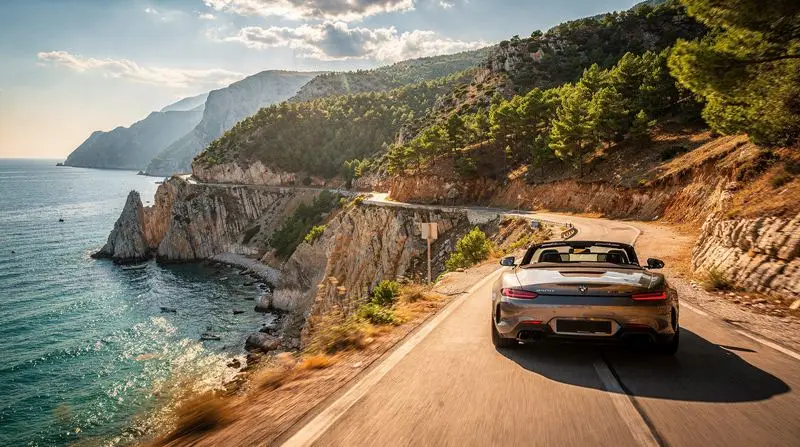
From Vlora, the riviera road (SH8) climbs steeply into the mountains, reaching the Llogara Pass at 1,027 metres — a national park of ancient black pine forest with extraordinary views over the Ionian below. The descent from Llogara is one of the great drives in Europe: the road winds down through the pines, and at a certain bend the entire riviera coast unfolds below — a panorama of blue sea, limestone cliffs, and tiny coves extending south to the horizon. Stop at Restorant Gjiku on the pass for qifqi (rice and herb fritters) and the view.
The Llogara Pass area is also the starting point for serious hiking. The Maja e Cikes trail rises to 2,044 metres with views across two seas, and paths descend through the pine forest towards the coast. The hiking and trekking guide covers the Llogara trails in detail.
Dhermi
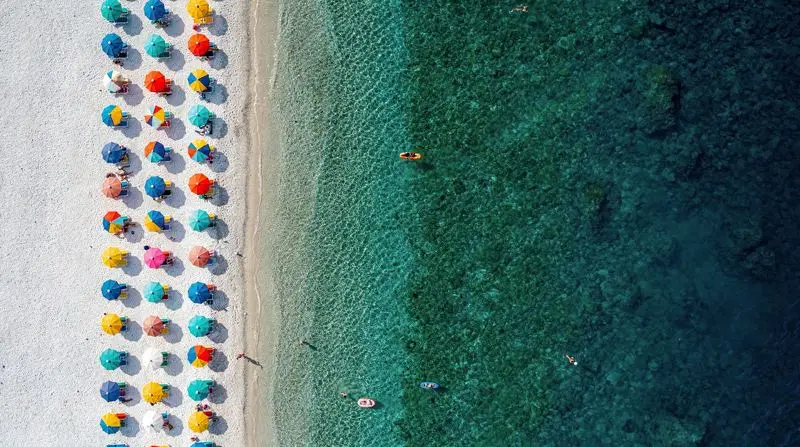
Dhermi is the first major beach town below the Llogara descent, and it has evolved rapidly from a traditional Albanian village into a centre of upscale riviera tourism. The main beach — accessed via a winding road from the village perched on the hillside — is long, pebbly, and backed by mountains, with remarkably clear water. In high summer Dhermi attracts a young, party-oriented crowd; in June and September it is calmer and more beautiful. Several of Albania’s best beach clubs operate here, with impressive sound systems and exceptional sunset views.
The village above the beach retains its traditional character, with stone houses and Orthodox churches that date from the period of Albanian Greek-minority settlement. The village church of Shën Mitri contains old frescoes and is worth the climb from the beach. Drymades beach, a short walk north of the main beach, is wilder and less developed — preferred by those who want the scenery without the beach club atmosphere.
Dhermi sits roughly 50 km south of Vlora and is often used as a base for exploring the central riviera, including Gjipe Beach — a remote canyon beach reached by a 45-minute hike through a limestone gorge that is one of the riviera’s most spectacular walks.
Himara
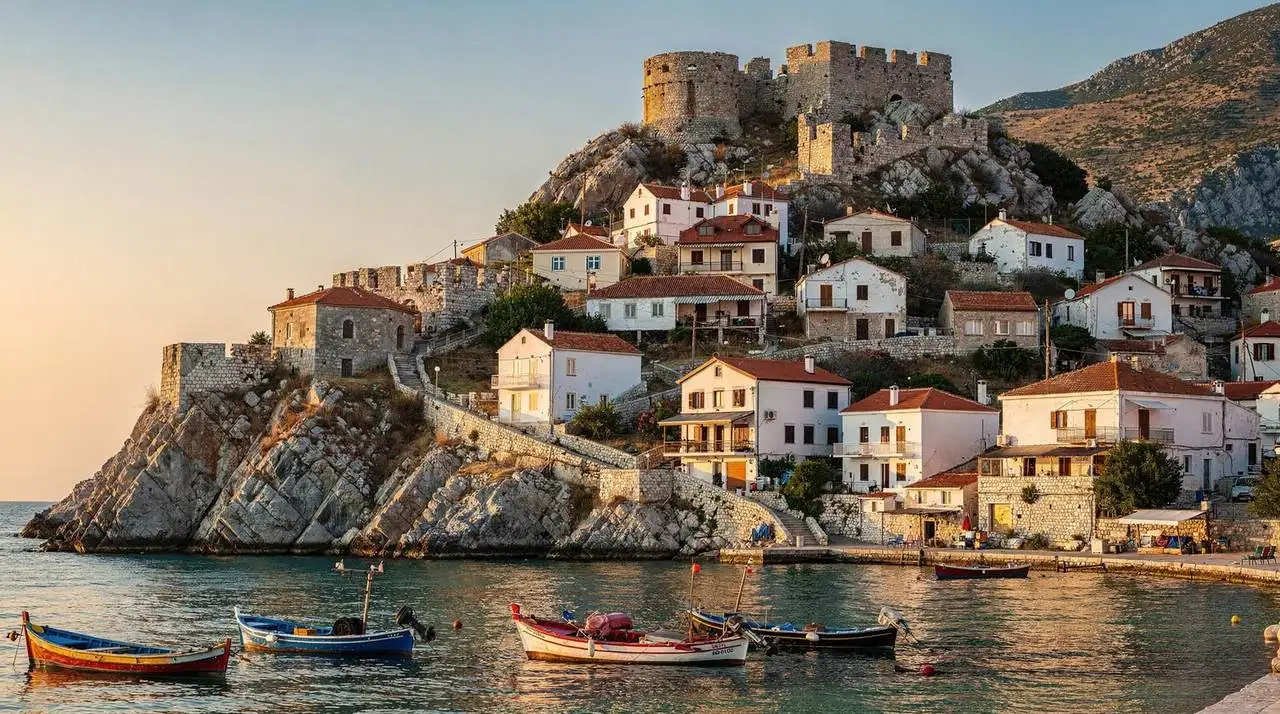
Himara is the riviera’s most complete destination — a town rather than just a beach, with a historic castle above, a Greek-minority population that gives it a distinct character, and excellent boat tours to the sea caves and coves that punctuate the cliff coast north and south of the town. Himara has several beaches of its own (Spile Beach and Livadhi Beach are the most popular), plus easy access to Palasa, Jala, and other smaller coves north of the town.
The old town of Himara, clustered around the castle hill, is worth an hour or two separate from the beach. Stone-paved lanes, Byzantine-era church foundations, and views over the Ionian that make the surrounding coves visible from above — it gives context to the geography you are swimming in.
Albanian Riviera boat tours from Himara are among the best on the coast — covering the sea caves, cliff coves, and crystal-clear swimming spots that can only be reached by water. Full-day tours depart from Himara harbour and typically visit six to eight swimming and cave stops along the coast.
Porto Palermo
South of Himara, the ruined castle of Ali Pasha of Ioannina juts into the sea on a tiny peninsula at Porto Palermo, a spot of almost excessive drama: an 18th-century fortification surrounded on three sides by clear water. The castle is in partial ruin but remains visually striking, and the cove below is one of the most photographed on the coast. During the communist era, the peninsula concealed a submarine base in tunnels carved into the rock — now visible from the water on boat tours.
Entry to the castle is approximately 100-200 ALL and is informal — there is no formal ticket booth, just a caretaker at the gate. Allow 1-2 hours. The bay of Porto Palermo is also an excellent swimming spot: the enclosed water is calm and remarkably clear, and there is a small beach on the inner shore. Kayak tours exploring the castle’s sea caves and the surrounding cliffs are available from Himara and from the bay itself.
Borsh
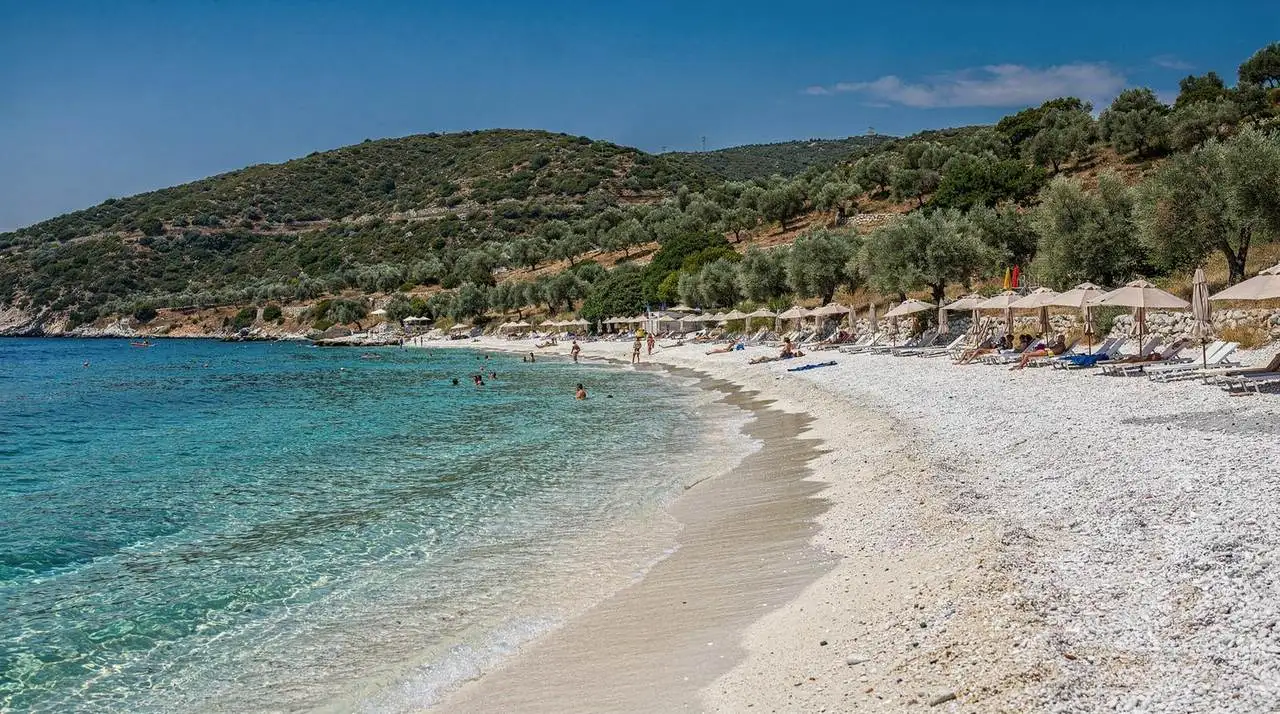
Borsh claims the longest beach on the Albanian riviera — a vast, largely undeveloped stretch of grey pebble backed by ancient olive groves, some of which are said to be over 2,000 years old. The trees’ gnarly silver trunks and deep shade give the area a quality entirely different from the beach clubs of Dhermi. In high summer Borsh hosts a beach bar or two; in June and September it is virtually empty.
The village of Qeparo, perched on the hillside above Borsh, is one of the better-preserved traditional villages on the coast — mostly abandoned, with stone houses and Byzantine churches in various states of decay. It makes for an atmospheric half-hour walk above the beach.
For those seeking a wild, undeveloped beach on a European coastline, Borsh delivers something increasingly rare. The pace is slower, the prices lower, and the sense of being somewhere that has not been packaged for tourism is intact.
Saranda
Saranda is the riviera’s main city — the largest settlement on the Ionian coast, with a full range of accommodation, restaurants, ferry connections to Corfu, and organised excursions to Butrint, the Blue Eye, and Ksamil. It functions as both a destination and a hub. The city waterfront is pleasant for an evening promenade, lined with cafes and restaurants looking across the bay towards the Greek island of Corfu — visible clearly on calm days.
From Saranda, Butrint National Park is 18 kilometres south: one of the most impressive archaeological sites in the Balkans, with Greek, Roman, Venetian, and Ottoman layers stacked in a setting of extraordinary natural beauty. Entry is 1,000 ALL. Ksamil is just beyond Butrint — four small islands accessible by a short swim or kayak, with water colour and clarity that competes with the Greek islands. These three stops — Saranda, Butrint, Ksamil — form a natural southern riviera circuit that can be done in a day from a Saranda base.
Boat Tours: The Essential Riviera Experience
The Albanian Riviera’s most dramatic scenery is only accessible from the water. The limestone coast between Himara and Saranda is a succession of cliffs, sea caves, arches, and coves that no road reaches. Boat tours — available from Himara, Vlora, and Saranda — are not a tourist add-on but genuinely the best way to see the coast’s most spectacular features.
This Himara Riviera caves boat tour covers the most dramatic sea cave formations on the coast — a half-day of swimming in crystal-clear water and exploring cave systems accessible only by boat. The caves along the cliff base include chambers large enough to swim inside, where the filtered light turns the water colours that have no name.
For kayaking and stand-up paddleboarding closer to Porto Palermo, this Porto Palermo kayak and SUP tour with castle sea views explores the sea caves beneath the castle promontory — formations accessible only by paddle or swim, with the castle walls rising from the water directly above. It is one of the more unusual and memorable activity options on the coast.
From Vlora, tours to Sazan Island and the Karaburun Peninsula form the northern version of this experience. The peninsula’s Haxhi Ali cave — a cathedral-sized sea cave reachable only by boat — is one of Albania’s most spectacular natural features. This Sazan and Karaburun Marine Park boat trip from Vlora covers both the island and the peninsula in a full-day excursion, including the cave and the ancient Grama Bay inscriptions where centuries of passing sailors carved their names.
For a comprehensive multi-day riviera experience, this 3-day Albanian Riviera coastal wonders tour from Vlora covers the entire stretch from Vlora to the south, including Llogara, Dhermi, Himara, and the southern beaches — the most structured way to see the whole coast for visitors without a car or those who prefer guided travel.
The Riviera Road Trip
The SH8 highway from Vlora to Saranda is Albania’s most spectacular drive and one of the finest coastal road trips in Europe. The total distance is approximately 120 km, but the mountain section between Vlora and Dhermi and the clifftop stretches further south mean the journey takes four to five hours without stops — plan for a full day minimum, and ideally two or three with overnight stops along the way.
Our Albanian Riviera road trip itinerary provides a day-by-day guide to driving the coast, including where to stop, where to swim, and where to spend the night. The car rental in Albania guide covers vehicle options and what to look for in a rental on mountain coastal roads.
Key Driving Notes
- The Llogara Pass section (north of Dhermi) has steep switchbacks and narrow lanes. Drive slowly, use pull-offs for photographs, and beware of buses. The descent on the southern side has areas where road edge drops sharply — stay to the centre of your lane.
- Fuel up in Vlora before heading south. Petrol stations on the riviera road are sparse. There is a station in Himara, but do not rely on finding one between Dhermi and Himara.
- The road between Himara and Saranda has improved significantly but some stretches remain rough. A standard car handles it fine; avoid low-slung vehicles and anything with wide body overhangs on the tight sections.
- Morning light is best for northward driving (sun behind you looking at the water); afternoon light for southward — the Ionian turns gold in the late afternoon when you are heading south.
- Parking at coves is informal — pull off where others have and walk down to the water. Most coves have a short path or scramble from the road.
- Overtaking on the coast road requires patience. Buses, trucks, and slow tourist cars are inevitable. Avoid attempting to overtake on blind bends.
Key Stops on the Drive
Driving north to south, the non-negotiable stops on the SH8:
- Llogara Pass viewpoint — Stop at the summit area for the panorama before descending. Restorant Gjiku on the pass is a good breakfast or coffee stop.
- Dhermi beach — Turn off at the signed junction and descend to the beach. Allow at least 2 hours for a swim and lunch.
- Gjipe Canyon trailhead — A 45-minute walk from the road to one of the coast’s most spectacular hidden beaches. Signed off the main road.
- Palasa — A small beach with crystalline water and limited development. Easy road access.
- Porto Palermo — The castle is clearly visible from the road. The 10-minute walk down the causeway is essential.
- Borsh — Turn off for the beach. A short stop or a long one depending on how you feel about empty, ancient olive groves and a wide pebble shore.
- Qeparo village — Above Borsh, an atmospheric abandoned village with sea views.
Where to Eat Along the Riviera
The riviera’s food culture spans beach club menus at the high end and family taverna cooking at the authentic end. The best meals are almost always at the simple end: grilled fish brought in that morning, salads of locally grown tomatoes, fresh olive oil, and home-produced raki.
Dhermi
Restorant Lungomare Dhermi (beach road, Dhermi) — A family-run restaurant on the road between the village and the beach serving grilled fish, Albanian salads, and pasta. The grilled sea bream is the standout. Budget EUR 8-14 per person.
Taverna e Vjetër (old village, Dhermi) — Up in the original stone village above the beach, this old-style taverna serves slow-cooked meat dishes, local white wine, and byrek in a setting that predates the beach club era. Budget EUR 6-10 per person.
Drymades Beach Bar (Drymades beach) — Casual daytime food: sandwiches, cold drinks, and simple grilled items at the quieter northern beach. Budget EUR 4-8 per person.
Himara
Restorant Riviera (Himara seafront) — One of the better seafront restaurants in Himara for grilled fish and seafood, with a terrace looking over Livadhi beach. Popular with the Greek-Albanian community and a reliable choice for a proper fish dinner. Budget EUR 9-15 per person.
Kafja Kalaja (Himara old town) — A small cafe beneath the castle walls in the old quarter, serving coffee, cold drinks, and byrek. A good stop before or after exploring the castle area. Budget EUR 2-5 per person.
Borsh
Restorant Borshi (main beach access road, Borsh) — The most established restaurant in the Borsh area, serving grilled lamb and fish with fresh salads from the village gardens. Simple, filling, and priced for locals rather than tourists. Budget EUR 5-9 per person.
Along the Road
Roadside cafes on the SH8 serve espresso, cold drinks, and byrek throughout the riviera. They are not destinations but they are useful for breaks on a driving day. The Llogara Pass restaurants — several operate near the summit — serve heartier mountain food: slow-braised lamb, qifqi (herb rice fritters), and thick vegetable soups. Budget EUR 5-10 per person for a full lunch.
Our Albanian food guide covers the riviera’s cooking traditions in detail, including the differences between the Greek-influenced Himara area and the Albanian cooking further north.
Beaches: A Detailed Guide
The riviera has dozens of beaches ranging from the well-developed to the genuinely wild. Here is a practical overview organized by character:
Best for swimming clarity and colour: Ksamil, Jal, Gjipe Beach, Palasa — all have water that shifts between turquoise, jade, and deep blue depending on depth and light conditions. Ksamil’s island beaches have the most photographed water on the coast.
Best for scenery and drama: Gjipe Beach (a canyon beach reached through a limestone gorge), Palasa (backed by vertical cliffs), Borsh (the widest beach backed by ancient olive groves). These are the beaches where the landscape overwhelms the beach itself.
Best for facilities and beach clubs: Dhermi main beach and Ksamil offer the most developed infrastructure — sunbeds, cafes, restaurants, water sports rentals. Good options for those who want services alongside their swimming.
Best for isolation in high season: Borsh (large enough to absorb a crowd and remain spacious), Gjipe Beach (the hike keeps numbers down), Palasa (limited road access keeps it quieter than Dhermi). For genuine emptiness, visit any of these in May or early June.
Best for families with young children: Ksamil (shallow sandy entry between the islands), Livadhi beach in Himara (long, gradual entry, facilities close), Saranda city beach (urban convenience, calm water).
Our best beaches in Albania guide covers each beach with more detail on access, facilities, and what to expect in different seasons.
Things to Do Beyond the Beach
The Albanian Riviera offers more than swimming. For visitors who want to combine the coast with other activities:
Hiking
The stretch between Llogara and Dhermi is one of the best hiking areas on the coast. The Maja e Cikes summit trail (2,044 m) from the Llogara Pass is the highest point accessible on a day hike from the coast; the paths descending from the pass through pine forest towards Palasa and Dhermi are equally rewarding. The Gjipe Beach canyon walk is available to anyone with decent shoes — 45 minutes through dramatic limestone gorge, with a beach at the end. The hiking in Albania guide covers all riviera trails with route details and timing.
Kayaking and Water Sports
Sea kayaking is available at several points along the coast. Himara and the Porto Palermo area offer the best-organised guided kayak tours, exploring sea caves and cliff faces inaccessible by boat. This Porto Palermo kayak and SUP tour covers the castle’s sea caves — one of the most memorable paddling experiences on the coast. Stand-up paddleboarding, snorkelling equipment rental, and basic water sports (pedalos, inflatables) are available at all the developed beaches. Our Albania kayaking and SUP guide covers operators along the coast.
Archaeology
The riviera is not only coast — the Albanian interior just behind it contains significant archaeological sites. Butrint (18 km south of Saranda) is the primary one: a UNESCO World Heritage Site with Greek, Roman, Byzantine, and Venetian layers in a setting of extraordinary natural beauty. Apollonia is accessible from the northern end of the riviera as a day trip from Vlora — a substantial Greek and Roman city set in rolling hills inland. The historical sites guide covers both in detail.
Paragliding
The Llogara Pass is one of the best paragliding launch sites in the Balkans. The height of the pass, the consistency of the thermal conditions, and the dramatic descent towards the sea combine to produce an extraordinary tandem experience. This tandem paragliding flight from Llogara Pass launches from 1,000+ metres and covers the descent to the coast with views across the entire riviera — one of the more spectacular ways to arrive on the Albanian coast.
Is the Riviera Suitable for Families?
Yes, with some thought about where you base yourself. Ksamil and Saranda’s calm, shallow-entry beaches suit young children well, and Livadhi beach in Himara offers a similarly gentle, gradual entry with facilities nearby. Dhermi’s beach-club-driven atmosphere and late-night noise are less suited to families with young children, particularly if staying beachfront; a hillside guesthouse or a base in quieter Himara or Borsh works better. Our Albania family travel guide covers how to plan a Riviera itinerary around children’s needs, including which stretches of coast to prioritise and which to treat as day-trip-only.
Diving and Snorkelling Along the Coast
Beyond the casual snorkelling available at almost every cove, the Riviera has a small but growing base of scuba operators, concentrated mainly around Himara and Saranda where the sea caves and rocky reefs offer genuinely interesting diving. Visibility is consistently excellent — often 15-20 metres or more in calm summer conditions — and sites include underwater cave systems, rock formations, and healthy populations of grouper, moray eel, octopus and Mediterranean reef fish. Certification courses and single dives are both available through operators in these towns. Our diving and snorkelling in Albania guide lists the current operators and sites along the whole coast.
Camping and Budget Stays
For travelers keeping costs down, informal and semi-formal camping is possible at several points along the Riviera, particularly around Borsh, Dhermi, and the areas near Llogara. Facilities are basic to non-existent — this is not organised campground camping in the western European sense — but the practice is common among both Albanian and international budget travelers in summer. Always ask locally before pitching a tent on private-feeling land, and be aware that official campsites are still rare compared to more developed Mediterranean coastlines. Our Albania travel budget guide covers how camping fits into a low-cost Riviera itinerary alongside guesthouse and hostel options.
Combining the Riviera with Inland Destinations
The riviera is often visited as a standalone itinerary, but the Albanian interior is close and compelling. Several combinations work particularly well:
Riviera + Gjirokastra: Gjirokastra, the UNESCO World Heritage city, is roughly 60-70 km inland from Saranda — about an hour by car. A day trip from the southern riviera gives you one of the finest Ottoman cities in the Balkans alongside the coast. The Blue Eye natural spring is directly on the road between Saranda and Gjirokastra and makes a logical stop.
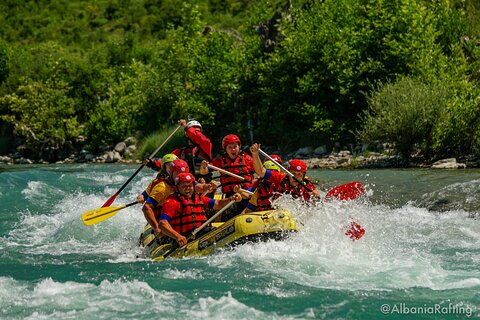
Riviera + Permet and the Vjosa Valley: From Saranda, the road northeast towards Permet follows the Drino and Vjosa river valleys through some of the most remote and beautiful inland terrain in Albania. Permet’s thermal baths and Vjosa river rafting make for a compelling contrast with the coast.
Riviera + Berat: The “City of a Thousand Windows” is accessible from the northern end of the riviera via Vlora. A Berat visit adds a UNESCO World Heritage city to the coast itinerary without major detour.
Full south loop: Starting in Tirana, driving south through Berat and Permet, crossing to Gjirokastra and Saranda, then driving the riviera north to Vlora and returning to Tirana — this loop takes 7-10 days and covers the best of southern Albania in a single circuit. Our 14-day Albania itinerary and 7-day Albania itinerary both include variations of this approach.
For travellers who prefer to sequence things the other way, starting on the coast and finishing inland works just as well logistically: fly into Tirana, head straight to the Riviera for the first few days while jet lag and travel fatigue are highest, then move inland to Gjirokastra, Berat, and Permet once you’re acclimatised and ready for more active, culturally dense days. Neither direction is objectively better — it depends on whether you’d rather ease into the trip with beach time or build up to it as a reward after the more demanding inland stretches.
Where to Stay on the Riviera
The riviera’s accommodation spans a complete range:
Dhermi: Best-developed hotel and apartment infrastructure on the central riviera. Wide choice from budget guesthouses to boutique hotels and villa rentals. Good base for beach clubs and Llogara excursions. Prices: EUR 40-100 per night for a decent double in high season; EUR 25-50 in shoulder months.
Himara: Best all-round base — town facilities, multiple beaches, boat tours, and guesthouses across all price points. The most comfortable option for travellers without a car. Walking access to the old town, the beach, and the harbour for boat tours. Prices: EUR 30-70 per night.
Saranda: The most complete city on the coast, with the widest range of restaurants, transport connections, and accommodation. Best base for Butrint and Ksamil day trips. Prices: EUR 35-90 per night.
Ksamil: Best base for beach-focused travel. More limited facilities than Saranda but immediate access to the finest swimming on the coast. Prices: EUR 30-70 per night.
Borsh: Limited accommodation — a few family guesthouses. Genuinely inexpensive and peaceful. Best for travellers who want quiet and do not need much infrastructure. Prices: EUR 20-35 per night.
For a multi-night riviera trip, a sequence of one or two nights each in Dhermi, Himara, and Saranda or Ksamil allows you to experience the full range of the coast without excessive backtracking.
Longer stays: Travellers spending a week or more on the coast, rather than moving nightly, increasingly opt for a single base with a rental apartment or villa, using day trips to cover the rest of the coast. Himara’s central position makes it the most practical single base for this approach, putting Dhermi, Porto Palermo, and even a Saranda day trip within manageable driving distance without repacking every night.
How to Get There
By car: The most flexible approach. Rent in Tirana and drive south — the road from Tirana to Vlora is fast and well-maintained; from Vlora south the journey becomes the destination. See our car rental in Albania guide for vehicle recommendations and what to expect on the mountain coastal road.
By bus: Direct buses run from Tirana to Saranda, Himara, and Dhermi — typically early morning departures, taking 4-5 hours to Saranda and 3.5-4 hours to Himara. Furgons connect the towns along the coast in summer. The Tirana-Saranda overnight bus is popular in peak season — book ahead. Costs: approximately 1,000-1,500 ALL to Saranda, 600-1,000 ALL to Himara.
Via Corfu: Fly to Corfu, ferry to Saranda (30-45 minutes, several daily departures in summer — approximately EUR 19-25 one way), and travel north. This approach allows you to experience the riviera from south to north, which many travellers find rewarding. Saranda to Corfu is one of Europe’s shortest international ferry routes.
From Montenegro: Drive south through Montenegro and cross into Albania at the border near Shkodra, then drive south the length of the country. This north-to-south approach means you arrive at the riviera at its far northern end (Vlora) after seeing Shkodra, the lakes, and central Albania first. The 7-day Albania itinerary covers this north-south routing.
Food and Drink Along the Riviera
Riviera cooking is defined by freshness and simplicity: grilled fish caught that morning, salads of tomatoes grown in nearby gardens, olive oil pressed from the ancient groves you can see from the road, and local raki made from grapes or figs. The cooking improves as you go further from the tourist centres — the best meals on the Albanian Riviera are often eaten at a simple roadside taverna rather than a beachfront restaurant with a laminated menu.
Local specialties to look for:
- Grilled sea bass and bream (levrek and orada) — the quintessential riviera meal; simple preparation, impeccably fresh
- Grilled octopus — dressed with olive oil, lemon, and herbs; a staple of every proper coast restaurant
- Fresh figs — in August and September, sold at roadside stalls for next to nothing; among the best figs in Europe
- Homemade raki — offered as a welcome drink at most guesthouses; fig raki (raki fiku) is the southern specialty
- Fresh sheep’s cheese — from mountain farms above the coast, served with honey and walnuts in better guesthouses
- Tavë me perime — baked vegetables in olive oil, a vegetarian staple that excels when the produce is from nearby gardens
- Byrek — the Albanian filled pastry, usually spinach-and-egg or cheese; available at bakeries in every town for 150-200 ALL
Our Albanian food guide covers the riviera’s cooking traditions in full, including the Greek-influenced cuisine of the Himara area and the differences between coastal and mountain cooking styles.
For travellers who want to go beyond eating the food to actually learning how it’s made, a handful of operators along the coast and further south around Saranda now run half-day cooking classes built around the same fresh fish, olive oil, and garden vegetables that define Riviera cuisine. Our cooking classes in Albania guide lists the current options for travellers who want a hands-on culinary detour from the beach.
Best Time to Visit
June is the ideal month: the sea is warm (20-22°C), crowds are manageable, accommodation is available without advance booking, and the landscape is at its most verdant from spring rains. Beach clubs are open but not yet at full capacity.
July-August is high season: crowded, expensive (prices rise 30-50% on shoulder season), and hot (33-38°C on the coast), but the riviera is at its most lively and all facilities are operating. Book accommodation several weeks in advance for August in Dhermi and Ksamil.
September is increasingly popular: the heat eases, the sea remains warm (24-25°C), and the crowds thin dramatically after the first week of the month. An excellent month — arguably the best for experienced travellers who value space over a buzzing scene. Prices drop sharply from mid-September.
May is possible — some facilities are not yet open and the sea is cool (17-19°C), but the landscape is beautiful and you will have the beaches largely to yourself. The Llogara Pass forests are at their most atmospheric in May, with wildflowers and lower cloud.
October-April is off-season on the coast. Most beach-facing businesses close, but the towns remain alive and the landscapes are striking in the low autumn and winter light. Suitable for those combining the coast with inland destinations and comfortable with limited tourist infrastructure.
Practical Tips
Driving the riviera: See our Albanian Riviera road trip itinerary for detailed guidance. The single most important preparation is having enough fuel before you leave Vlora heading south.
Currency: Albanian lek is universal on the riviera; EUR is accepted at some tourist businesses but at poor rates. Cash is essential at smaller restaurants, beach bars, and guesthouses. ATMs are available in Dhermi, Himara, and Saranda — not reliably elsewhere on the coast.
Swimming safety: The Ionian is generally calm inside the coves, but some beaches are exposed to swell from the southwest. Check conditions before swimming at unfamiliar beaches, and be aware that some coves have strong currents at their mouths. Gjipe Beach in particular can have current at the canyon exit — ask locally before swimming across it.
Budget: The riviera has a wide range. At the budget end (guesthouse accommodation, local restaurants, public transport), EUR 30-40 per day is realistic. At the mid-range (decent hotel, restaurant meals, occasional boat tour), EUR 60-80 per day. Beach club days in Dhermi or Ksamil can significantly exceed this. Our Albania travel budget guide provides detailed cost planning across all categories.
Mobile coverage: Reasonably good on the main SH8 road and in towns; patchy in some coves, the Gjipe canyon approach, and hiking areas above the Llogara Pass.
Parking in peak season: Informal roadside parking at the popular coves fills early in July and August, particularly at Gjipe’s trailhead and Porto Palermo. Arriving before 10am, or later in the afternoon once day-trippers have left, avoids the worst of the crowding.
Language: Albanian is the primary language throughout, with Greek widely spoken in Himara and some southern villages given the Greek-minority population. English is common among younger people working in tourism, particularly in Dhermi, Himara, and Saranda, but thins out in smaller villages and among older residents. A handful of basic Albanian phrases go a long way, and our Albania language phrasebook covers the essentials useful for a Riviera trip.
Respect local communities: Many riviera villages have permanent Greek-minority populations with their own cultural traditions, language, and Orthodox religious practices. The riviera is not a resort complex but a living coast. Dress respectfully when visiting churches, greet locals in Albanian (or Greek), and do not treat village streets as an extension of the beach.
Water and sun: In July and August, carry water at all times on any beach walk or hike. The sun intensity on limestone reflective surfaces is extreme. High-factor sunscreen, a hat, and more water than you think you need are not optional for anyone doing more than sitting under an umbrella.
Accessibility: The Riviera’s steep terrain and informal cove access make it a genuinely challenging destination for travellers with mobility limitations. Saranda and Ksamil have the most level, developed beach access; Dhermi, Himara, and especially Gjipe and Borsh’s quieter stretches involve steps, slopes, or scrambling. Our accessible travel in Albania guide covers what to expect in more detail across the coast.
Solo travel: The Riviera is a popular and comfortable destination for solo travellers, with an easy hostel and guesthouse scene in Himara and Saranda, and boat tours and organised activities that make it simple to meet other travellers. Our Albania solo travel guide covers logistics and safety specifics for travelling the coast independently.
The Albanian Riviera offers some of the best value beach travel in Europe, combining dramatic natural scenery, accessible archaeology, and genuine hospitality in a way that the more developed Mediterranean coasts have largely lost. Whether you drive it, take the bus, or arrive by boat from Corfu, it reshapes expectations about what European coastal travel can be.
Frequently Asked Questions About The Albanian Riviera
Where does the Albanian Riviera start and end?
The Albanian Riviera runs approximately 120 km from Vlora in the north to Ksamil in the south. The riviera proper begins at Vlora where the Adriatic meets the Ionian, climbs over the Llogara Pass at 1,027 metres, and then descends to the Ionian coast through Dhermi, Himara, Borsh, Porto Palermo, and Saranda before reaching Ksamil and the Butrint lagoon.
What is the best beach on the Albanian Riviera?
For water colour and clarity, Ksamil’s island beaches and Gjipe Beach are the finest. Ksamil offers the most photographed turquoise water with offshore island access; Gjipe is a spectacular canyon beach requiring a 30-minute hike but delivering near-solitude even in summer. For the best facilities and beach club scene, Dhermi and Drymades are the premier options. For sheer length and quiet, Borsh’s 7 km of uncrowded shore is unrivalled.
Do you need a car for the Albanian Riviera?
A car is strongly recommended and significantly enhances the experience. The riviera’s best beaches, hidden coves, and viewpoints are only accessible with a vehicle, and the freedom to stop along the clifftop road whenever a view demands it is part of the joy. That said, direct buses from Tirana reach Saranda, Himara, and Dhermi, and furgons connect the towns in summer — it is possible without a car but limiting.
How many days do you need for the Albanian Riviera?
A minimum of four to five days to experience more than a brief impression. One night each in Dhermi, Himara, and Saranda or Ksamil allows you to experience the full range of the coast without excessive backtracking. Seven to ten days lets you slow down, take boat tours, hike the Gjipe canyon, explore inland to Gjirokastra and the Blue Eye, and have genuine beach time at multiple locations.
Is the Albanian Riviera better than Croatia?
The Albanian Riviera offers more dramatic scenery, clearer water in many locations, far fewer crowds, and prices that are roughly one-third of Croatian coastal equivalents. The trade-off is less tourist infrastructure — some areas lack the polished facilities of the Croatian coast, and road quality varies. For travellers who value natural beauty and authenticity over convenience, the Albanian Riviera consistently outperforms Croatia’s more commercialized coast. It is, in the estimation of many seasoned Mediterranean travellers, the most exciting beach destination in Europe right now.
Is the Albanian Riviera safe?
Yes, generally very safe for travellers, including solo travellers. Petty theft and scams are less common than in many more touristed Mediterranean destinations. The main practical risks are road-related — the mountain sections of the SH8 require careful driving — and swimming-related at a handful of beaches with stronger currents at cove mouths. Our Albania safety guide covers the specifics in more depth for travellers planning an extended Riviera stay.
Can you visit the Albanian Riviera without a car?
Yes, though it’s more limiting. Direct buses connect Tirana to Saranda, Himara, and Dhermi, and furgons run along the coast between towns in summer. Boat tours and organised day trips can cover much of what a car would let you reach independently, but travellers without a vehicle should expect to base themselves in one or two towns rather than roaming the full 120 km freely.