Walking Tours in Albania: The Best Guided City Walks
Walking tours are the most efficient way to crack open the layers of history embedded in Albanian cities. The country’s past — Illyrian antiquity, Byzantine Christianity, Ottoman rule, Italian fascism, Soviet-influenced communism, and the chaotic post-1990 transition — has left physical traces in its architecture, its street patterns, and its public spaces that reward slow, guided exploration. A knowledgeable local guide connects these traces into a coherent story; a city walk without one can leave you staring at a building without understanding why it matters.
This guide covers the best walking tours available in Albania’s major cities: Tirana (for communist history and urban transformation), Berat (for Ottoman and Byzantine heritage), Gjirokastra (for the stone-built old town), Vlora (for independence history), and Shkodra (for the Catholic north). It also covers practical information on booking, costs, footwear, and combining walking tours with food experiences and other activities.
Guided walking tours in Albania typically cost EUR 15-35 per person for a two to three hour walk, with private tours from EUR 80-150 for a half-day. These prices are among the lowest in Europe for equivalent historical depth and guide quality.
| Cost | EUR 15-35/person group; EUR 80-150 private half-day |
| Duration | 2-3 hours basic, 4-5 hours comprehensive |
| Best time of day | Before 9am in summer for light and cool temperatures |
| Footwear | Sturdy shoes essential in Berat and Gjirokastra |
| Booking | 1-2 days ahead in Tirana peak season; often same-day elsewhere |
Walking Tours of Tirana
Tirana is the richest city for guided walks in Albania. Its compressed history — from Ottoman market town to Fascist showcase, from communist capital to post-communist reinvention — is written in its buildings, its public art, and its underground infrastructure. A good guide makes the city readable in a way that independent exploration cannot.
The Essential Tirana City Walk
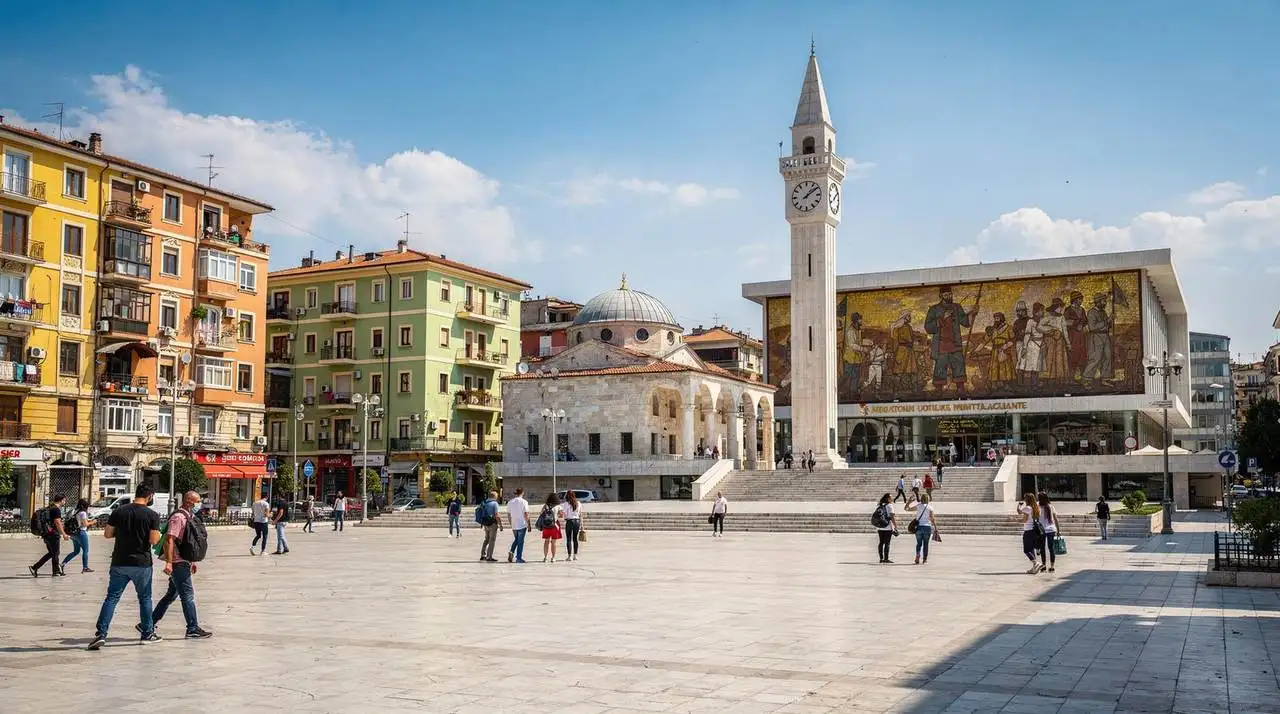
The core Tirana walking route covers Skanderbeg Square and its ring of landmark buildings, the Et’hem Bey Mosque, the Clock Tower, the National History Museum, and Blloku — the former party elite neighbourhood that became the city’s most fashionable district after 1991. This route takes two to three hours at a comfortable pace and introduces the essential historical and architectural themes of the city.
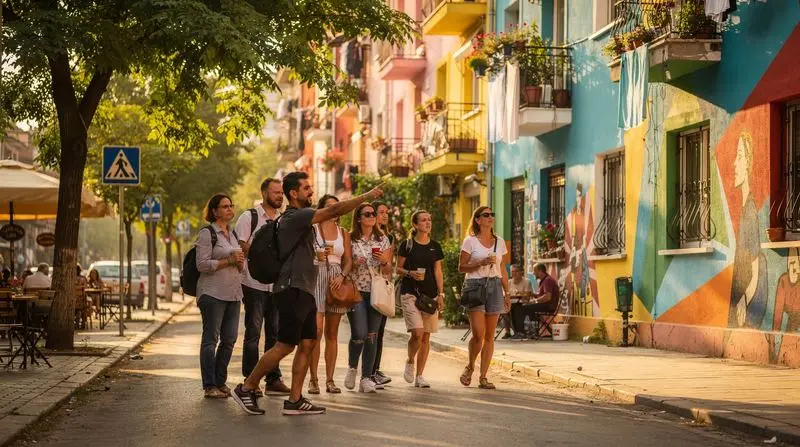
This Tirana walking tour is one of the most popular in the country — a well-reviewed city walk with local guides who bring the history of Skanderbeg Square, Blloku, and the city’s reinvention to life. Groups are small, English is spoken throughout, and the tour includes context on the main historical sites. Cost approximately EUR 15-25 per person.
The Communist Tirana Tour
Tirana’s communist legacy is physically present in ways that require interpretation to fully appreciate. The Pyramid — built as Hoxha’s mausoleum, now reborn as a youth technology hub — sits on a major boulevard. Bunk’Art 1 and 2 occupy nuclear bunkers beneath the city. The House of Leaves was a Sigurimi (secret police) surveillance building hidden in plain sight as a residential villa. The Soviet-influenced architecture of the city’s main boulevards reflects an entire ideological system in concrete and stone.
A dedicated communist history tour connects these sites with the narrative of the Hoxha era — the bunkers, the surveillance, the enforced isolation, and the extraordinary suppression of an entire generation. For visitors who want to understand Albania beyond its natural beauty and Ottoman heritage, this is the essential walk.
This Tirana communist Albania tour including Bunk’Art Museum combines guided walking through the communist-era city with entry to Bunk’Art — the nuclear bunker museum that is one of the most affecting historical attractions in southeastern Europe. Allow 4-5 hours for the full experience including the museum interior. Cost approximately EUR 25-40 per person including museum entry.
The Dajti Mountain Excursion
For a different perspective on Tirana and its surroundings, the Dajti cable car rises from the edge of the city to 1,600 metres on the mountain plateau above, providing panoramic views over the capital, the Adriatic plain, and on clear days toward the Adriatic Sea itself.
This Tirana walking tour with Dajti cable car ticket included combines the city walk with the mountain excursion — an excellent full-day programme that covers both the urban history of the capital and the natural landscape that surrounds it. Cost approximately EUR 35-50 per person.
Self-Guided Tirana Options
For visitors who prefer to walk independently, Tirana is easily navigable on foot. The old bazaar district, the boulevard axis from Skanderbeg Square to the university, Blloku, and the Grand Park are all within walking distance of each other. The city’s public art — murals, installations, and the coloured building facades commissioned during Mayor Rama’s tenure — is best appreciated slowly, on foot, without a fixed itinerary.
The Pazari i Ri (New Bazaar) is particularly rewarding as a self-guided stop: a renovated Ottoman-era market that combines traditional food vendors with modern restaurants and coffee shops, all under a beautifully restored arcade. The food tours guide covers the New Bazaar in detail and can serve as a route map for a self-guided food and culture walk.
Walking Tours of Berat
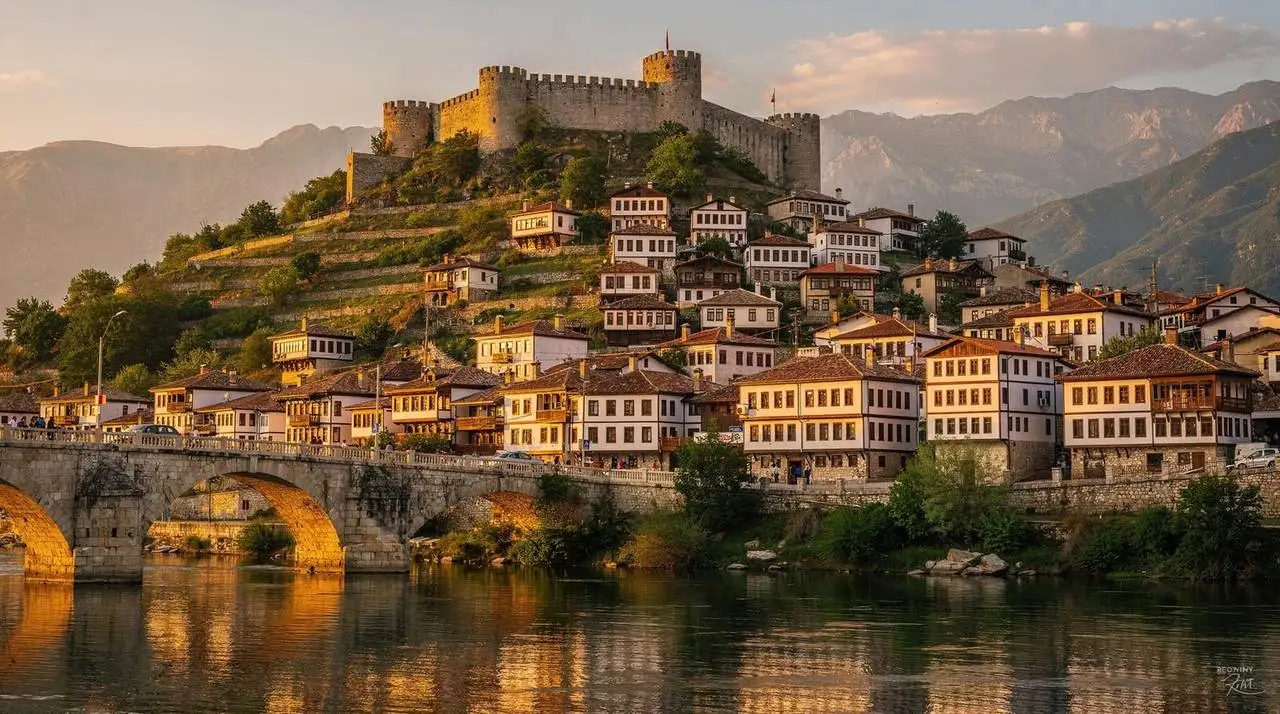
Berat is designated a UNESCO World Heritage Site, and its old town — the Mangalem and Gorica neighbourhoods — is among the most architecturally coherent historic districts in the Balkans. The characteristic style is the Ottoman-era house with stacked ranks of white-painted windows overlooking the river gorge: hence the city’s epithet “the city of a thousand windows.”
A guided walk through Berat covers the Castle (Kalaja) — a medieval walled settlement still inhabited by a small community, containing Byzantine churches, the National Iconography Museum, and remarkable views — the Mangalem quarter (the main historic neighbourhood below the castle, climbing the hillside in tiers of white-windowed houses), and Gorica (the quieter neighbourhood on the opposite bank, with cross-river views of the famous white facades).
The classic Berat walking circuit descends from the castle through Mangalem, crosses the stone bridge, and returns along the riverside. Allow three to four hours for the full walk, including time inside the castle and the Iconography Museum.
This full-day Berat tour from Tirana includes guided walking through both the castle and the historic quarters with a local expert who explains the architectural details and historical context that make Berat comprehensible rather than merely beautiful. Cost approximately EUR 40-60 per person including transport.
Local guides available in Berat’s center provide English-language tours of the castle and old town independently of the Tirana day-trip packages. For guided cooking and food experiences in Berat, see the food tours guide and cooking classes guide.
Walking Tours of Gjirokastra
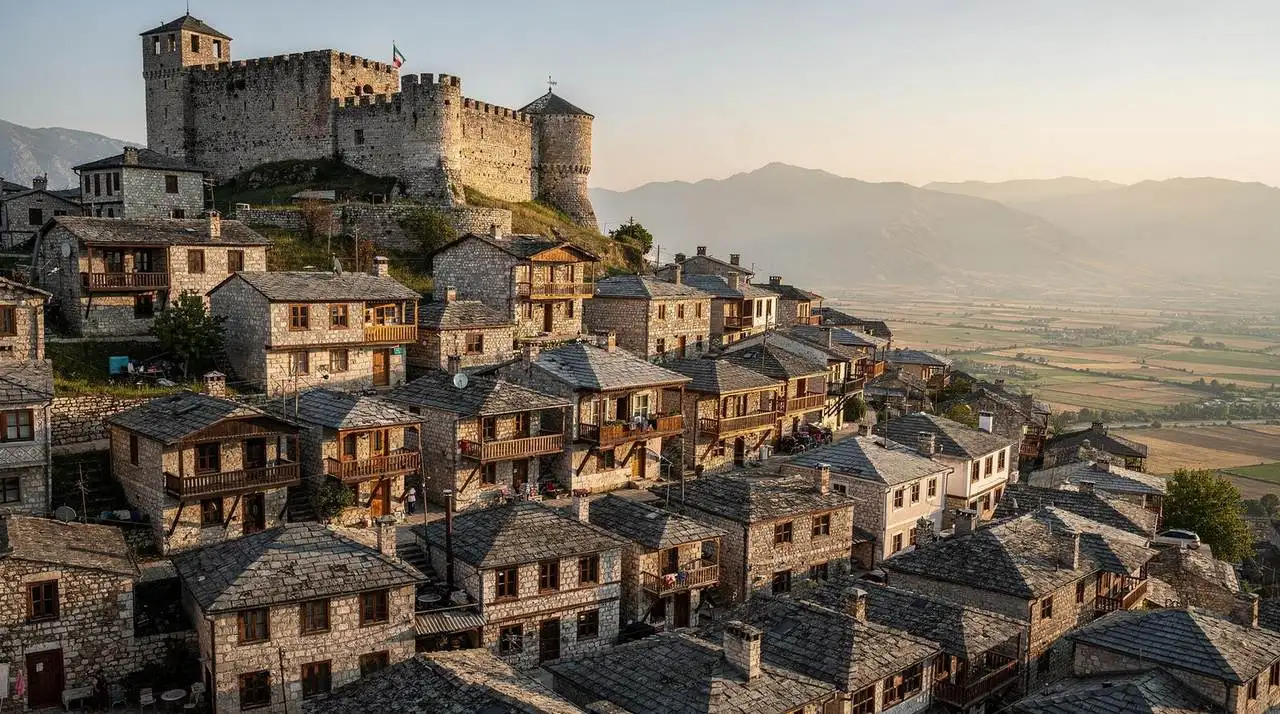
Gjirokastra is Albania’s other UNESCO-listed historic city, and in some ways its stone-built old town is even more dramatic than Berat’s. Where Berat is organic and hillside-warm, Gjirokastra has a severe, fortress-like quality — great slabs of grey limestone forming houses that look more like fortifications than residences, dominated by a massive castle on the ridge above the valley.
The old town (Lagje e Palikut and surrounding quarters) is one of the best-preserved Ottoman urban environments in the Balkans. Walking its steep, cobbled alleyways between the great stone houses — some of which have been in family ownership for three to four generations — gives a strong sense of a living historic district rather than a museum exhibit.
This guided Gjirokastra city tour covers the castle, the old bazaar, the Skenduli House (a beautifully preserved Ottoman mansion), the Cold War tunnel beneath the castle, and the broader historic district. Local guides provide context on the city’s history as a centre of Albanian intellectual life and on its famous sons — including Enver Hoxha himself, born here in 1908. Cost approximately EUR 20-35 per person.
Gjirokastra is also the hometown of Ismail Kadare, Albania’s most celebrated novelist, and for literary travellers the city has an additional layer of significance — many of his books draw directly on its landscapes and social structures. The Kadare family house is open for visits.
Combining the guided city walk with a Zagoria off-road jeep tour the following day creates an excellent two-day Gjirokastra programme covering both the urban heritage and the spectacular mountain landscape surrounding the city.
Walking Tours of Vlora
Vlora holds a particular place in Albanian history as the site where independence was declared on 28 November 1912, ending 450 years of Ottoman rule. The city’s historic sites are linked to this moment — the Independence Museum, the Ismail Qemali house, and the Memorial of Independence are all within walking distance of each other.
A Vlora walking tour covers these independence sites, the historic neighbourhoods where Ottoman-era houses survive alongside mid-century modern apartment blocks, and the Muradie Mosque — one of the finest Ottoman religious buildings in the country, built in the 16th century by Suleiman the Magnificent. The mosque’s elegant proportions and the quality of its decorative tilework make it worth significant time.
Vlora is also the gateway to the Karaburun Peninsula and Sazan Island for boat tours and diving — a half-day walking tour of the city combined with an afternoon boat excursion makes for an excellent full day in Albania’s third city. See the Vlora destination guide for the full range of activities available.
Walking in Shkodra
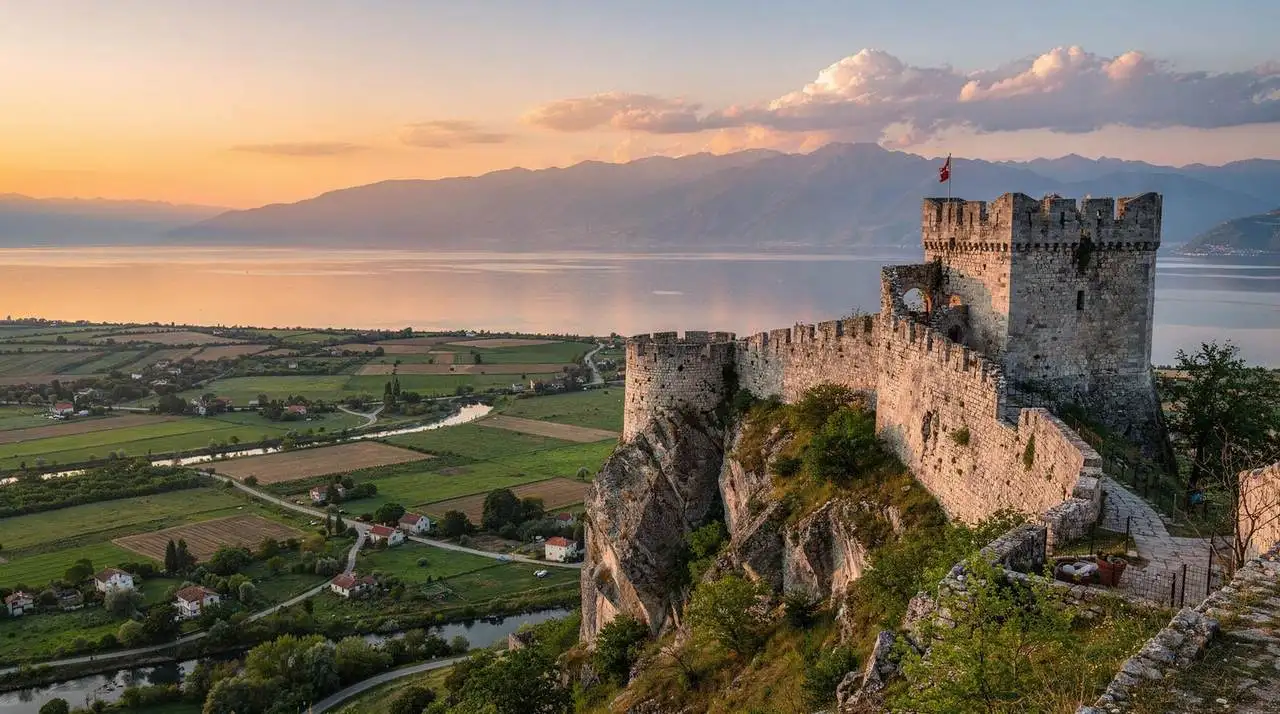
Albania’s northern capital has a compact historic centre worth several hours of exploration. Rozafa Castle, dramatically sited on a promontory overlooking the confluence of the Buna and Drin rivers and Lake Shkodra, is one of the best-preserved fortifications in Albania, with excellent views from the ramparts over the surrounding landscape.
The old bazaar district, the Catholic Cathedral of Saint Stephen, and the pedestrianised boulevard through the centre make Shkodra’s city core enjoyable on foot. The city has a distinct cultural character from Tirana — more conservative, more Catholic in the north, more oriented toward its Albanian-speaking neighbours in Montenegro and Kosovo. The Marubi Photography Museum — housing the world’s largest collection of Albanian historical photography — is one of the finest museums in the country and deserves 90 minutes minimum.
From Shkodra, the trail leads north to Theth and the Albanian Alps — see the hiking the Albanian Alps guide for details on what lies beyond the city.
Combining Walking Tours with Food Experiences
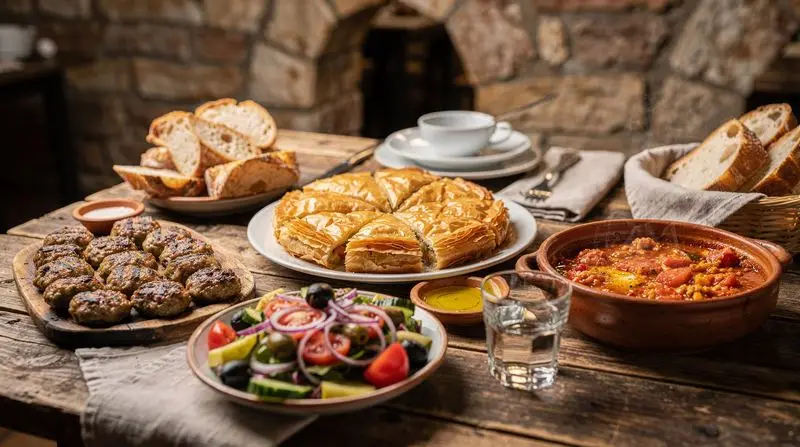
The ideal Tirana itinerary combines a morning walking tour with an afternoon food tour of the New Bazaar. The walking tour gives the historical and cultural framework; the food tour fills in the sensory dimension — what Albanians eat, how they produce it, and what makes the cuisine distinct from its neighbours. Together they represent four to five hours of highly efficient orientation to the country.
In Berat, the cooking class experience pairs perfectly with the castle and old town walk — a morning in the castle, a cooking class for lunch, and an afternoon in Mangalem’s cafes. This is one of the most satisfying single-day itineraries in southern Albania.
Practical Tips for Walking Tours in Albania
Footwear: Gjirokastra and Berat’s historic districts involve steep, often uneven cobblestone paths. Proper walking shoes or light hiking boots are strongly recommended. Flat sandals will cause discomfort and potential ankle strain — this is not an exaggeration. The cobblestones in both cities are beautiful but genuinely challenging for inadequate footwear.
Best time of day: Morning walks avoid the peak midday heat in summer (July-August). Start before 9am for the best light and the coolest temperatures. Most historical sites open at 9am. The golden light of early morning on the white facades of Berat’s Mangalem quarter is one of the finest sights in Albanian photography.
Duration: Budget two to three hours for a basic city walk, four to five hours for a comprehensive tour including museum entry. Full-day itineraries can combine walking with food stops, cooking demonstrations, or — in cities near the coast — boat excursions.
Guides and languages: English-speaking guides are available in all main Albanian cities. Italian is also commonly spoken, particularly in Shkodra and northern Albania. French-speaking guides are available in Tirana and Berat. Advance booking via platforms guarantees guide availability; in shoulder season, on-the-day booking is usually possible.
Group sizes: Most organised walking tours cap at 8-15 participants. Private tours can be arranged for individuals or small groups at a premium of approximately EUR 50-100 above the per-person group rate.
Costs: Guided walking tours typically cost EUR 15-35 per person for a two to three hour walk. Entry to museums and monuments (Bunk’Art, Berat Castle, Gjirokastra Castle) is additional and typically costs EUR 2-5 per site.
Historical Walking in the Albanian Alps
Beyond the cities, a different kind of walking tour exists in the Albanian Alps — multi-day or single-day guided hikes through landscapes that have barely changed in centuries. The Theth to Valbona crossing is the most famous, but day hikes from both valleys allow shorter explorations of the extraordinary mountain terrain.
The Albanian Alps guesthouses guide covers the accommodation network that supports this kind of mountain walking, and the hiking guide covers the main routes in detail.
Self-Guided Walking in Albanian Cities
All major Albanian cities can be explored self-guided using free audio tour apps or maps from city tourism offices. The UNESCO heritage sites of Berat and Gjirokastra have information boards at major points of interest, and both cities are small enough that you are unlikely to get genuinely lost.
For Tirana, the food tours guide covers a self-guided route through the New Bazaar and key food stops that doubles as an excellent walking route through the city centre. The historical sites guide provides context on the major monuments that you will pass on any city walk.
For the most satisfying result, combine a morning guided tour with an afternoon of independent wandering — the guide provides the framework and the afternoon fills it in with your own discoveries.
Walking Tours for Photographers
Each Albanian city offers distinct photographic opportunities that a well-timed walking tour can maximize. Tirana’s colorful communist-era apartment blocks and the stark geometry of the Pyramid reward midday light with strong shadows, while Blloku’s cafe culture is best captured in the golden hour before sunset. Berat’s whitewashed Mangalem quarter, reflected in the Osum River, is at its most photogenic in early morning light from the Gorica side of the river. Gjirokastra’s grey stone kulla houses photograph best in overcast conditions or the warm light of late afternoon, which softens the otherwise severe stone tones. Booking a walking tour for these specific times, rather than the standard mid-morning slot, requires requesting it directly with the operator — most are happy to accommodate photographers who explain what they’re after.
Comparing Walking Tours by City
| City | Highlight | Typical duration | Best for |
|---|---|---|---|
| Tirana | Communist history, Bunk’Art | 2-5 hours | First-time visitors, history |
| Berat | Castle, Mangalem quarter | 3-4 hours | UNESCO architecture, photography |
| Gjirokastra | Stone old town, castle | 2-3 hours | Literary and Ottoman heritage |
| Vlora | Independence sites, mosque | 2-3 hours | Political history, coastal combo |
| Shkodra | Rozafa Castle, Marubi Museum | 2-3 hours | Northern culture, photography museum |
Tirana offers the widest range of tour types and the most frequent departures, making it the easiest city to slot a walking tour into a short itinerary on short notice. Berat and Gjirokastra reward the most time investment given their UNESCO status and architectural density, while Vlora and Shkodra work best as half-day additions to a coastal or northern circuit rather than standalone destinations.
Choosing Between a Free Tour and a Paid Guided Tour
Tirana’s tip-based free walking tours are a genuinely good option for budget travelers or those wanting a low-commitment introduction before deciding whether to book a deeper paid tour elsewhere. The trade-off is group size — free tours can run larger groups than paid options, which affects how much individual attention and Q&A time you get. Paid tours, particularly those bundling museum entry like the Bunk’Art combination, are worth the extra cost when the site itself requires an entry fee anyway, since the guide’s context meaningfully deepens the museum visit. For Berat and Gjirokastra, where UNESCO density rewards deeper explanation, a paid guide is generally the better investment; for a first orientation walk in Tirana, the free tip-based tour is a perfectly reasonable starting point.
Frequently Asked Questions About Walking Tours in Albania
Are there free walking tours in Albania?
Yes, Tirana has free walking tours operating on a tip-based model, typically departing from Skanderbeg Square. These are run by local guides and cover the main landmarks, communist history, and Blloku neighborhood. Tips of EUR 10-15 per person are customary and appropriate for a quality tour.
What is the best walking tour in Tirana?
The communist history walking tour — covering Skanderbeg Square, the pyramid, Blloku (the former communist elite quarter), and ideally including a Bunk’Art museum visit — is consistently the most highly rated. These tours typically run 2-3 hours and cost EUR 15-25 per person with a good local guide who provides personal and political context unavailable in guidebooks.
Do you need to book walking tours in advance?
For Tirana, booking 1-2 days ahead is recommended in peak season (July-August) as popular tours fill up. In shoulder season, same-day booking is usually possible. For Berat and Gjirokastra, guided town walks can often be arranged directly through your accommodation or at the local tourist information office without advance booking.