Albania’s Alpine Heart
The Albanian Alps — the Accursed Mountains, as they are dramatically known in Albanian (Bjeshkët e Namuna) — are one of the last truly wild mountain regions of Europe. Shared between Albania, Montenegro, and Kosovo, the range rises to over 2,600 meters, cut by deep river valleys and glacial lakes, blanketed in beech and pine forest at lower elevations and lunar rock above the treeline. At the heart of Albanian Alpine tourism, and the destination that has made the mountains accessible to international hikers, is the village of Theth.
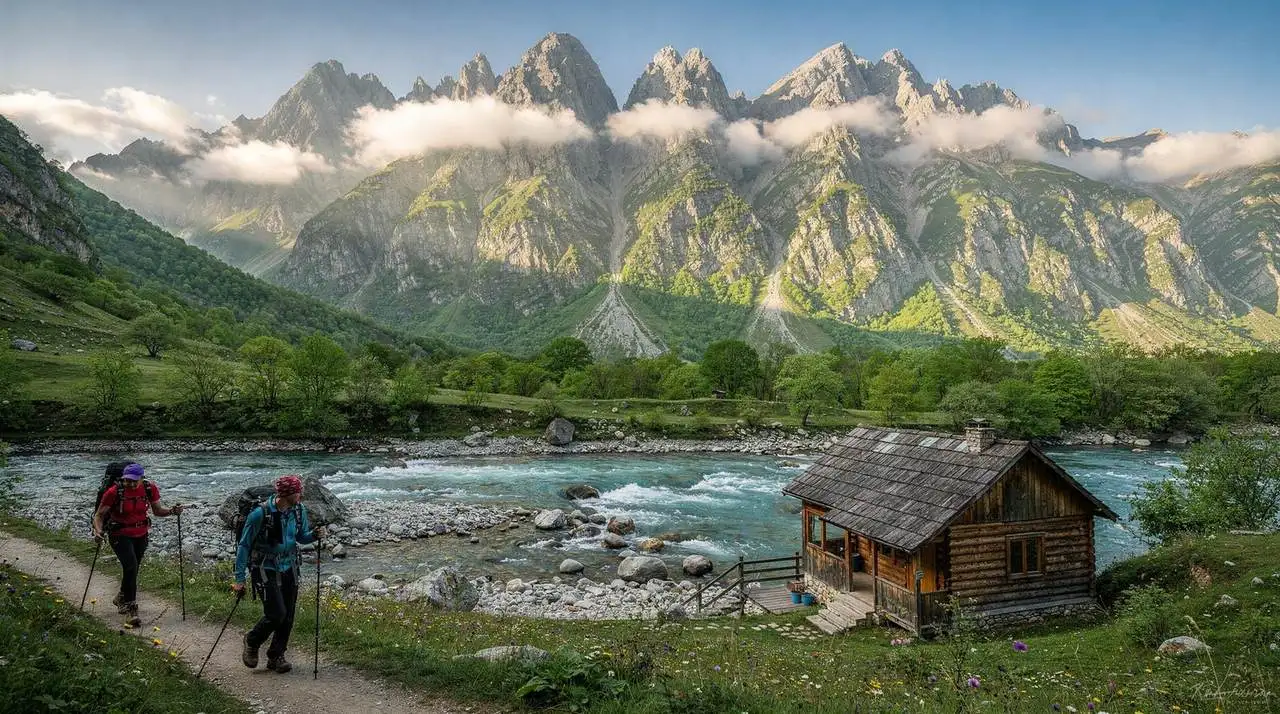
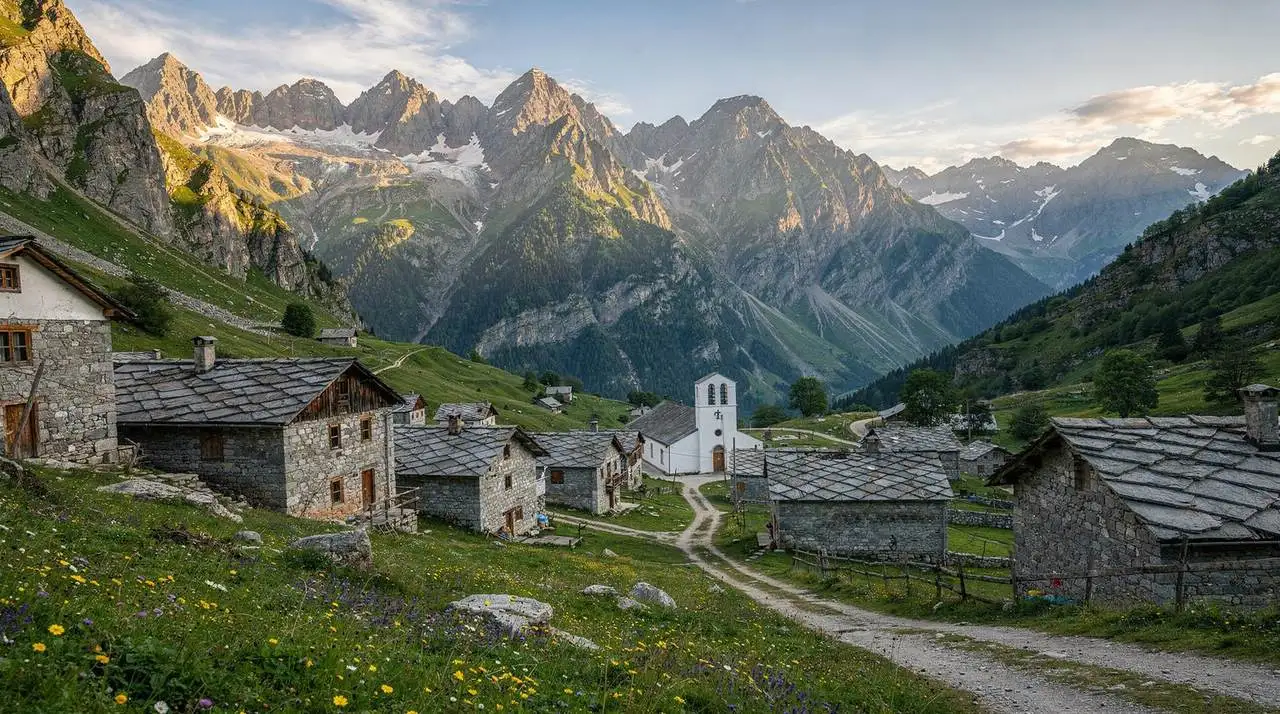
Theth sits in the Theth Valley at around 900 meters elevation, a tight glacial valley surrounded by dramatic limestone peaks that rise to 2,000 meters and above on all sides. The village is small — perhaps 300 permanent residents, supplemented by a growing population of guesthouse owners who cater to hikers and adventurous travelers from June through September. There are no paved roads to Theth: access is via a rough mountain track from Shkodra that takes two hours by 4WD or minibus. This inaccessibility is precisely what has preserved Theth’s character — and it is precisely the reason travelers are now making the effort to come.
For anyone planning a northern Albania circuit, Theth sits naturally alongside Valbona and the Koman Lake ferry in the classic Albanian Alps loop that has become one of the signature outdoor experiences in the Balkans. Our hiking the Albanian Alps guide covers the full logistics of the circuit, and Shkodra serves as the essential staging point for all mountain-bound travelers.
| Where | Theth Valley, Albanian Alps, ~2hrs from Shkodra |
| Cost | Around EUR 20-35/day incl. half-board guesthouse |
| Time needed | 2-3 days minimum |
| Getting there | Minibus or 4WD from Shkodra (unpaved final section) |
| Best time | Mid-June to mid-September (road closed in winter) |
What Makes Theth Special
Theth is not spectacular in the way that a popular resort is spectacular. There is no cable car, no hotel pool, no restaurant with an international wine list. What it offers is simpler and rarer: a traditional Albanian mountain village that has preserved its architecture and way of life in a landscape of genuine alpine grandeur, where you can hike serious mountain routes in almost complete solitude, sleep in a family guesthouse and eat food grown in the valley, and swim in a glacial Blue Eye spring that is known almost exclusively to the travelers who make the effort to find it.
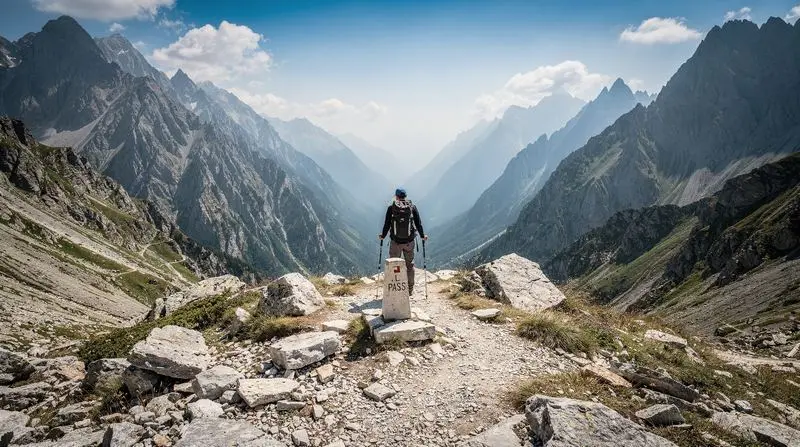
The famous Theth-Valbona traverse — a full day’s hiking over the Valbona Pass at 1,795 meters — has become one of the classic hikes in the Balkans, drawing trekkers from across Europe who walk from Theth to Valbona (or vice versa) in a single demanding but extraordinarily beautiful day. But even for non-hikers willing to make the rough road journey, Theth rewards a visit: the valley scenery, traditional guesthouse life, and cultural authenticity are valuable in themselves.
Things to Do
Theth-Valbona Hike
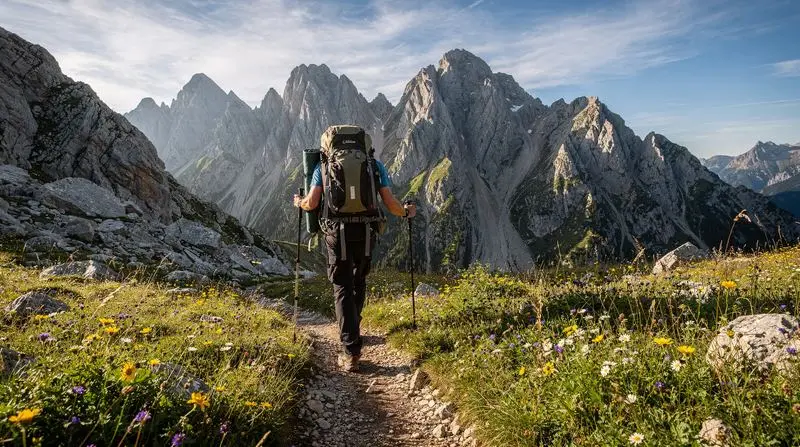
The crown jewel of the Albanian Alps. The route from Theth village over the Valbona Pass to the Valbona valley covers approximately 18 km and climbs 900 meters before descending to Valbona on the other side. The ascent through beech forest and alpine meadows, the views from the pass over two separate valleys, and the descent through the dramatic Valbona Valley gorge make this one of the finest hikes in southeastern Europe. It takes 6-8 hours at a moderate pace — a long day, but manageable for any fit hiker with proper footwear.
Practical details: Start early — 6am is ideal — to avoid afternoon thunderstorms on the exposed ridge section. The waymarking has improved significantly in recent years through Peaks of the Balkans investment. Carry sufficient water and snacks; there are no facilities on the route above the treeline. A small fee (around 500 ALL) may be collected at the trailhead.
Our Theth-Valbona hike guide covers the route in full, including seasonal conditions, waymarking, accommodation on both ends, and practical tips for the crossing.
The Blue Eye of Theth
Not to be confused with the famous Blue Eye near Gjirokastra, the Theth Blue Eye (Syri i Kaltër i Thethit) is a glacial spring approximately 40 minutes’ walk from the village. Fed by snowmelt and underground springs from the surrounding peaks, it wells up through the riverbed in a pool of brilliant, icy-cold turquoise water. In high summer the temperature is around 10°C — refreshing after a hot morning’s hiking, bracing at any other time.
The walk to the spring follows the valley bottom through beech forest and is suitable for all levels. The trail is well-marked from the village center and involves no significant elevation change — just a pleasant woodland path along the river. The Blue Eye is most impressive in early summer when snowmelt flow is at its highest, though it is beautiful throughout the season.
Grunas Canyon and Waterfall
The Grunas waterfall, approximately 20 minutes from the village center, is one of the more accessible sights in Theth — a 30-meter cascade dropping through limestone rock into a pool at the valley floor. The path to the waterfall is well-marked and passes through the gorge section of the Grunas River, with several short scrambles over rock. The waterfall is at its most impressive in spring and early summer when snowmelt is at its peak; it reduces considerably by late August.
The Grunas Canyon extends beyond the waterfall for hikers who want to explore further — a half-day canyon walk that requires some scrambling and occasional wading in low water. The canyon narrows dramatically in its upper section, with walls rising 50-60 meters on either side. A guide is advisable for the full canyon traverse.
The Lock-in Tower (Kulla e Ngujimit)
The kulla — traditional Albanian tower house — near the center of Theth village is the most distinctive architectural element of the northern Albanian mountain tradition. This particular kulla was a “lock-in tower” used under the Kanun of Lekë Dukagjini, the ancient Albanian customary law that governed blood feuds: a man who had killed another family’s member could take refuge in a lock-in tower, where the blood feud code prohibited the victim’s family from attacking him. He might remain locked inside for months or years, venturing out only to conduct essential business.
The Theth lock-in tower is preserved as a small museum explaining the Kanun’s operation and its social consequences — a fascinating and sobering window into traditional Albanian mountain society. Entry costs a small amount (typically 100-200 ALL). The interior displays explain the feud system, the concept of besa (sworn protection), and the way these traditional codes shaped life in the valleys for centuries. Allow 30 minutes for a thorough visit.
St. John’s Church
The Catholic church at the center of Theth is a beautiful stone building from the early 20th century, set against the valley backdrop and surrounded by the graves of local families. Theth is a strongly Catholic community — reflecting the persistence of the faith in northern Albania through the Ottoman period and communist suppression — and the church remains an active center of village life. Mass is celebrated on Sundays in summer, often with visitors from walking groups alongside permanent residents.
The church’s setting — framed by limestone peaks on all sides, with the valley meadows stretching away from its entrance — makes it one of the most photographed scenes in the Albanian Alps. Early morning, before the mist clears, produces particularly atmospheric conditions.
Hiking the Surrounding Peaks
Beyond the Theth-Valbona traverse, the valley offers several day-hiking routes for those staying multiple nights:
Ragam Peak (2,067m): A demanding summit hike offering panoramic views over the Albanian and Montenegrin Alps. The route climbs steeply through pine forest before breaking into the open rocky summit zone. Allow a full day and hire a local guide — the upper section requires route-finding ability.
Pejes Waterfall route: An easier valley walk downstream from Theth village, suitable for families and those wanting a low-intensity mountain day. The path follows the river through shaded forest with several good swimming spots.
Shala River: The upper Shala River, accessible from above Theth, offers exceptional scenery and swimming in milky turquoise water. Arrange transport and a guide through your guesthouse.
For a guided day trip from Shkodra that includes Theth’s Blue Eye and waterfall, this private Theth waterfall and Blue Eye tour from Shkodra covers the highlights in a single day — ideal for those who cannot stay overnight but want to experience the valley scenery.
Multi-Day Tours and Organized Trekking
For visitors who prefer a guided alpine experience with logistics handled, organized multi-day tours are available from Shkodra and Tirana. This 3-day Albanian Alps trip covering Valbona and Theth includes transport from Shkodra, accommodation in both valleys, guiding for the Valbona-Theth traverse, and a return transfer — the most straightforward way to experience the full alpine circuit without managing logistics independently.
From Tirana, a longer variant is available: this day tour to the Albanian Alps and Theth Village from Tirana gives visitors a full-day glimpse of the mountains, including the approach road scenery, Theth village, and the Blue Eye spring — good for travelers with limited time who cannot dedicate multiple nights to the Alps.
For a comprehensive 3-night northern Albania circuit that covers multiple highlights, this 3-day northern Albania tour covering Theth, the Blue Eye, Shkodra, and the Shala River is one of the best-value comprehensive mountain experiences in Albania, combining the most spectacular elements of the north in a single organized package.
Food and Drink
Eating in Theth is one of the genuine pleasures of a visit to the Albanian Alps. The guesthouses that accommodate hikers typically serve home-cooked meals using produce from the surrounding valley — this is not gastronomy in any sophisticated sense, but it is honest, hearty, and prepared with the warmth of genuine Albanian hospitality.
Typical guesthouse meals include cornbread (bukë misri) baked in a wood-fired oven, lamb or goat stewed with mountain herbs, fresh dairy products (butter, cream, and soft cheeses from local flocks), fresh vegetables from kitchen gardens, and walnut-based dishes. Portions are substantial — the assumption is that hikers need fuel.
Honey from the mountain meadows is exceptional — buy a jar from any guesthouse to take home. The wildflower honey from the alpine meadows above Theth has a distinctive, complex flavour unlike anything produced at lower elevations.
Raki is offered as a matter of course before every meal. The northern Albanian grape raki is strong and warming; the walnut variety is sweet and slightly medicinal. Refusing the first glass is considered slightly impolite; your host will understand after the first or second offering.
Most guesthouses offer half-board (dinner and breakfast) as standard. A packed lunch for hiking days can be arranged with your host in advance — typically bread, cheese, tomatoes, and something sweet. Bring energy bars and snacks from Shkodra for the long hiking days.
Water: Mountain water in Theth is safe to drink directly from streams and springs. Carry a refillable bottle and use the excellent local water rather than buying plastic.
There are no restaurants in the conventional sense in Theth — eating means eating with your host family, which is the correct and most rewarding way to experience northern Albanian mountain culture. Our Albanian food guide explains the northern mountain cooking tradition in detail.
Where to Stay
Theth’s accommodation consists almost entirely of family guesthouses — typically traditional stone houses with rooms added over time to accommodate hikers. Standards vary but have improved dramatically in the past decade: most guesthouses now offer en-suite bathrooms, reliable hot water, and WiFi (sometimes). Prices are low by any European standard.
Expect to pay: EUR 20-35 per person per night, typically including breakfast and dinner (half-board). Some guesthouses offer room-only rates; ask when booking.
Booking: Book ahead for July and August, when the most popular guesthouses fill quickly. Email or WhatsApp booking is standard. Some guesthouses appear on Booking.com. If you arrive without a reservation in peak season, you may struggle to find space — particularly on the nights before and after the Valbona crossing, when demand concentrates.
What to expect: Comfortable but simple rooms, excellent home cooking, warm family hospitality, and very early mornings — guesthouses serve breakfast from 6-7am to allow hikers an early start for the Valbona pass crossing.
How to Get to Theth
From Shkodra: The standard approach. A daily minibus (in summer) departs Shkodra market square at approximately 7am and reaches Theth in around 2 hours via an unpaved mountain track. The return service departs Theth early morning. Pre-arrange transport through your guesthouse. Private 4WD taxis from Shkodra are also available — faster and more flexible, typically costing EUR 40-60 for the vehicle one-way.
From Tirana: Travel first to Shkodra by furgon or bus (1.5-2 hours from Tirana), then connect to Theth transport. The total journey from Tirana to Theth takes 4-5 hours. Our car rental in Albania guide covers vehicle recommendations for the mountain drive.
Road conditions: The Theth road is unpaved and rough for its final section. A standard car with decent ground clearance can manage in dry conditions; in wet conditions or after heavy rain, 4WD is advisable. Some sections involve narrow tracks and limited passing places. Do not attempt at night. The approach road was partially improved in recent years but the final descent into the valley remains challenging.
Season: The road typically opens in mid-June when snow clears. The guesthouses run until late September; some stay open into October. Outside this window, Theth is accessible only on foot or by snowshoe — a very different kind of adventure.
Best Time to Visit
Mid-June through mid-September is the season. This window aligns with the road opening, guesthouse operations, and safe hiking conditions on the high passes.
July is the busiest month — the Valbona-Theth hike sees its highest volume of trekkers. Book accommodation well in advance for July visits. The valley is at its social peak: guesthouses are full, the trails are busy, and the energy is lively.
Late June and September are the best months for serious hikers: the snowpack on high routes is gone by late June, and by September the summer crowds have thinned while the weather remains excellent. Alpine wildflowers are at their peak in late June; the beech forests begin to turn gold in September, creating spectacular scenery on the Valbona Pass crossing.
August is the warmest month — pleasant for walking, though afternoon thunderstorms are common and can develop quickly at altitude. Plan mountain routes to be completed by early afternoon.
Theth Season at a Glance
| Period | Conditions | Crowds |
|---|---|---|
| Mid-June to early July | Road just open, wildflowers peak, snowpack gone on the pass | Low-moderate |
| July-August | Warmest, busiest, afternoon storms common | High — book ahead |
| September | Clear weather, beech forests turning gold, thinning crowds | Moderate-low |
| Late Sept-October | Guesthouses closing, unpredictable weather, pass risk if snow falls early | Very low |
| November-mid June | Road closed by snow, village largely inaccessible | Closed |
If You Only Have Time for One: Theth or Valbona?
Both valleys anchor the same Peaks of the Balkans hiking region, but they have distinct characters. Valbona is wider and grander, reached via the scenic Koman Lake ferry; Theth is tighter, more intimate, and centred on its Blue Eye spring and lock-in tower. If you can only manage one night in the Alps, Theth’s Blue Eye and Grunas waterfall give more to do within walking distance of the village itself, while Valbona rewards those prioritising the ferry journey and open mountain views. Doing both via the Theth-Valbona traverse remains the best option if your itinerary allows it.
Practical Tips
Footwear: The Valbona-Theth pass requires proper hiking boots with ankle support. Trainers are insufficient for the rocky terrain and stream crossings on the high section. Do not attempt the pass in flip-flops or casual shoes.
Weather: Mountain weather in the Albanian Alps changes rapidly. Carry a waterproof jacket even on clear mornings. Storms typically develop in the afternoon; plan to be below the treeline by midday on the pass crossing. Lightning on the exposed ridge is a real hazard.
Navigation: The Theth-Valbona route has improved waymarking in recent years, but it is advisable to carry a map or download the GPX track before setting off. Phone signal is intermittent on the pass. Our Theth-Valbona hike guide includes downloadable GPS data and full route descriptions.
Cash only: There are no ATMs in Theth. Bring sufficient cash from Shkodra for accommodation, meals, and any guide fees. Most guesthouses quote prices in euros but accept Albanian lek at a reasonable exchange rate.
Guides: For off-trail routes or summit hikes beyond the main Valbona traverse, hire a local mountain guide through your guesthouse. Rates are reasonable (EUR 30-50 per day) and the safety margin is significant on routes without clear waymarking.
Pack light: Everything you bring to Theth must be carried in a backpack on the mountain paths. Leave non-essential luggage at your Shkodra accommodation if possible. The guesthouse can usually provide blankets and towels — you do not need to carry these.
Mobile coverage: Signal is intermittent in the valley and absent on the high routes. Download offline maps (Maps.me or Gaia GPS) before arriving. Let someone know your plans and expected arrival time when doing the Valbona crossing.
Theth, in combination with Valbona and the broader Albanian Alps, offers some of the most rewarding mountain travel in Europe — genuinely wild, accessible to fit hikers of all backgrounds, and astonishingly inexpensive. The 14-day Albania itinerary includes Theth as the northern mountain highlight, and our full hiking the Albanian Alps guide covers everything you need to plan the trip in detail.
Frequently Asked Questions About Theth
How do you get to Theth?
The standard route is a daily minibus from Shkodra, departing in the early morning and taking approximately two hours on a rough mountain road. The fare is around EUR 5-7 per person. Private transfers by 4WD are available through guesthouses for approximately EUR 50-80 per vehicle. There is no road access from November through mid-June due to snow — the travel window is mid-June to late September. Book your minibus seat the evening before through your Shkodra accommodation.
Is the Theth to Valbona hike difficult?
The Theth-Valbona traverse is a demanding but achievable day hike for any fit walker. The route covers approximately 18 km with 900 meters of ascent and takes 6-8 hours at a comfortable pace. The terrain is rocky above the treeline, the pass reaches 1,795 meters, and proper ankle-supporting hiking boots are essential. The biggest practical challenge is the early start required to avoid afternoon thunderstorms on the exposed ridge section — aim to begin walking by 6am.
When is Theth open?
Theth’s guesthouses are open mid-June through September. The mountain road closes with snow from November to approximately mid-June, making the village largely inaccessible in winter. Some permanent residents stay year-round, but there are no tourist services out of season. Late June to mid-July is ideal — trails are clear, wildflowers are at their peak, and crowds are manageable. August is busier with European hikers.
Do you need to book guesthouses in Theth in advance?
Yes, advance booking is strongly recommended, especially in July and August when Theth guesthouses fill completely. Email booking is standard — most guesthouses have basic email contact available through their listings. Turning up without a reservation in peak season risks being unable to find a bed. Booking two to four weeks in advance is advisable for July. Shoulder season (late June, September) allows more flexibility but advance contact is still recommended.
Is there phone signal in Theth?
Phone signal is intermittent in Theth valley. Albanian mobile networks (particularly Vodafone Albania) provide a weak signal in parts of the village, but coverage drops to nothing on the high mountain routes above the treeline. Download offline maps (Maps.me or Gaia GPS with the relevant GPX track) before leaving Shkodra. There is no reliable internet access — do not expect to stream content or use data-heavy applications. Some guesthouses offer limited WiFi.
How much does Theth cost?
Theth is one of the most affordable overnight destinations in the Alps region. Guesthouse beds with half board (bed, dinner, breakfast) typically cost EUR 20-35 per person. Meals are simple but generous, usually featuring locally grown vegetables, beans, yoghurt, and occasional meat. There are no ATMs in Theth — bring sufficient cash from Shkodra. The trailhead fee for the Valbona crossing is approximately 500 ALL.