Albania Packing List: What to Bring for Every Itinerary
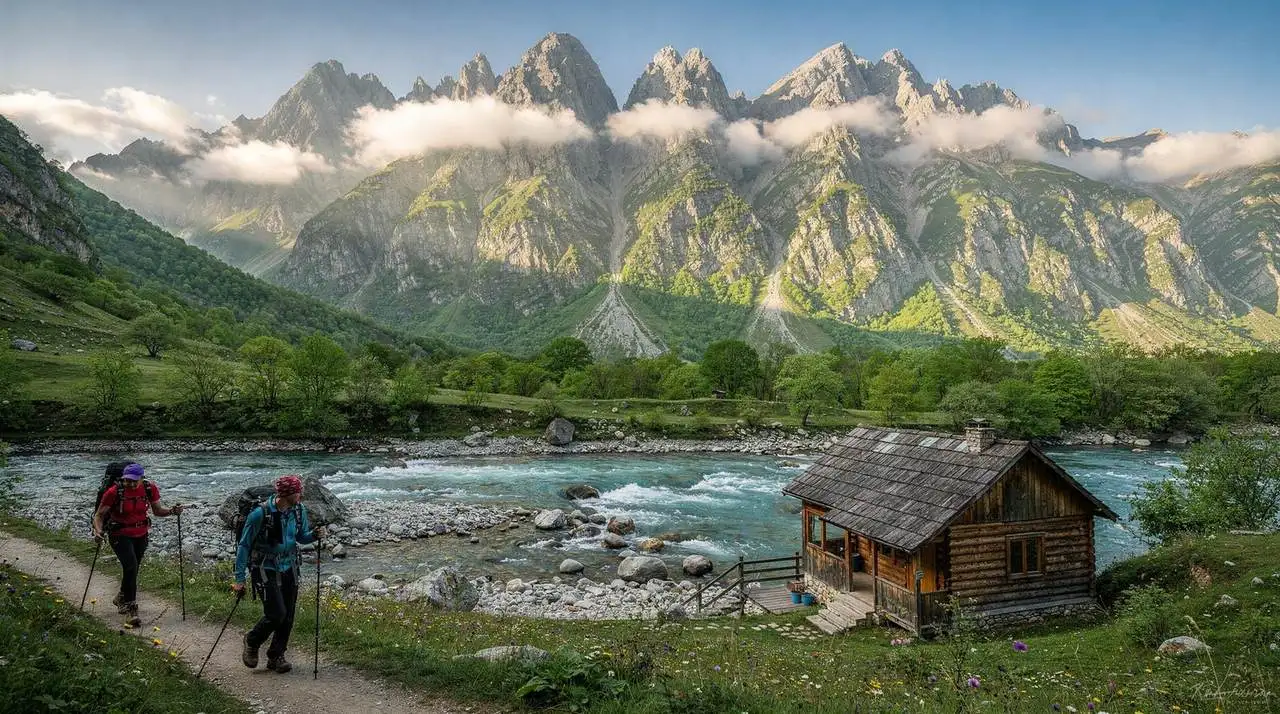
What you need to pack for Albania depends enormously on where you are going. A week on the Albanian Riviera demands very different gear from a trek through the Accursed Mountains — though both are in the same small country. This guide is organized by category and by trip type, so you can build your specific list based on your actual itinerary.
The short version: pack lighter than you think you need. Albania is a casual country with affordable shopping for anything you forgot. The freedom to move easily between destinations — furgons, mountain guesthouses, coastal beaches — is easier with a pack that fits in an overhead locker.
| Power sockets | Type C/F, 230V/50Hz |
| Essential for the coast | Reef-safe sunscreen, water shoes |
| Essential for the Alps | Hiking boots, waterproof shell, warm mid-layer |
| Best luggage type | Backpack or duffel (40-60L) for mixed itineraries |
| What to buy locally | Bottled water, raki, olive oil |
The Basics: What Everyone Should Pack
Documents and Admin
- Passport (valid for at least 6 months beyond your travel dates)
- Copies of key documents — photograph your passport, travel insurance, and emergency contacts and store in email or cloud storage
- Travel insurance policy details — see the Albania travel insurance guide for what coverage to get
- Cash in euros for exchange on arrival (EUR 100-200 is a sensible starting amount)
- Credit/debit card — Visa and Mastercard most widely accepted
- Driving license plus International Driving Permit if you plan to rent a car in Albania
Electronics
- Power adapter — Albania uses Type C and Type F sockets (the standard European round two-pin). If you are coming from the UK or North America, you need an adapter. Voltage is 230V/50Hz, standard European.
- Power bank — essential for mountain areas and ferry crossings where you cannot charge. Minimum 10,000mAh; 20,000mAh for extended mountain sections.
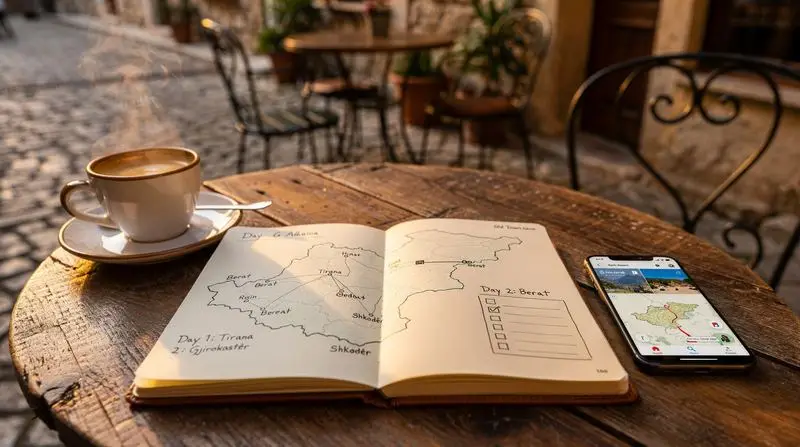
- Phone with Maps.me or OsmAnd downloaded with Albania offline maps. Google Maps works well in cities; offline coverage is better for rural areas.
- Camera — Albania is photogenic enough that a proper camera is worth bringing. A waterproof phone case is useful for beach and boat days.
- Laptop or tablet if you are working remotely. See the Albania digital nomads guide for connectivity advice.
Health and Pharmacy
- Personal prescription medications — bring full supply plus a few days’ extra. Availability varies for specific medications.
- Ibuprofen and paracetamol — available in Albanian pharmacies (farmaci) but your preferred brand may not be
- Rehydration sachets — useful in summer heat, particularly on beach days and mountain hikes
- Antihistamines — for hay fever, insect bites, or allergic reactions
- Plasters and blister treatment — particularly if hiking on Albania’s cobbled historic towns and mountain trails
- Diarrhoea medication — as a precaution for food adjustments
- Sunscreen (high SPF) — see below for why reef-safe matters in Albania
- Insect repellent — DEET-based is most effective; mosquitoes are present in coastal and lowland areas in summer
- Hand sanitizer — for situations where soap is not available
Clothing by Season
Summer (June to September) — Riviera and Cities
This is when most visitors go to Albania. The heat is real — Tirana regularly exceeds 35 degrees Celsius in July and August, and the coast has intense sun. Pack:
- Light cotton or linen shirts: 3-4. Breathable fabrics are essential. Avoid polyester.
- Shorts: 2-3 pairs. Fine for cities, beaches, and casual restaurants.
- Swimwear: 2 sets (having a second dry pair matters more than you think). Women: a bikini and a one-piece for more conservative areas. Men: boardshorts are fine everywhere.
- Light dress or trousers for evenings — Tirana restaurants and some coastal venues are smart-casual
- Light layers for evenings: A thin long-sleeve shirt or light cardigan. Even in July, mountain evenings cool significantly.
- Walking shoes: Comfortable, well-broken-in footwear for city exploration and coastal paths
- Flip flops or sandals for beach use and casual wear
- Sun hat — protection from genuinely intense Albanian sun, especially on boats and beaches
- Sunglasses — UV protection, not just fashion
Spring (April-May) and Autumn (September-October)
Add to the summer list:
- Warm mid-layer: A lightweight fleece or down jacket. Temperatures can drop sharply in the evenings, especially inland.
- Light waterproof layer: April-May and October see more rain. A packable rain jacket that stuffs into a daypack is ideal.
- Long trousers: 1-2 pairs in addition to shorts
Winter (November to March)
Cities remain visitable in winter — Berat and Gjirokastra are especially atmospheric, and Tirana has a full cultural calendar. The beach season is over and the mountains may be snow-closed.
Pack:
- Warm coat — Albanian winters are cold, particularly inland. Tirana temperatures can drop to 0-5 degrees Celsius.
- Warm layers — thermal base layer, fleece, waterproof outer
- Waterproof footwear — rain and mud in the off-season
- Umbrella or waterproof hat — winter is Albania’s wet season
Hiking and Mountain Gear
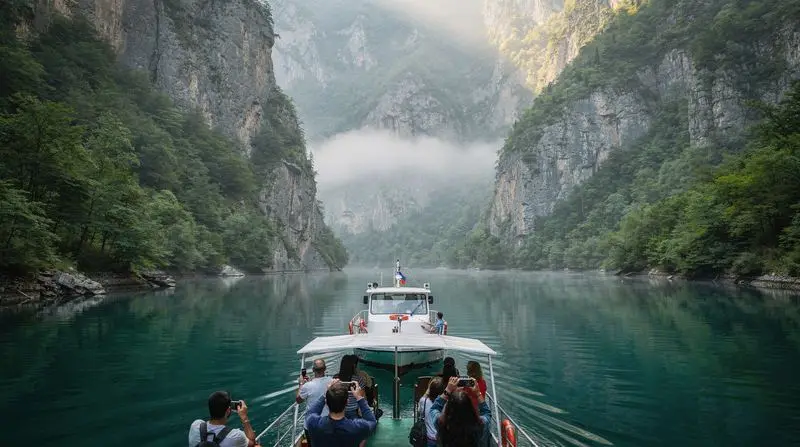
If your itinerary includes the Albanian Alps (Theth, Valbona, Peaks of the Balkans trek), the Koman Lake ferry approach, or any serious hiking, add:
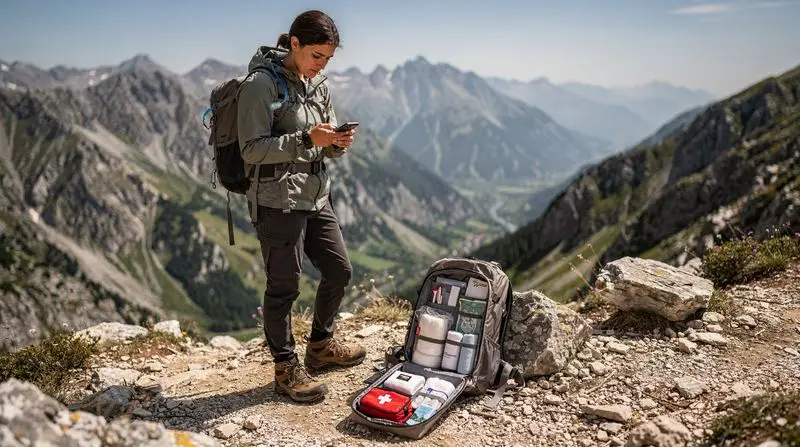
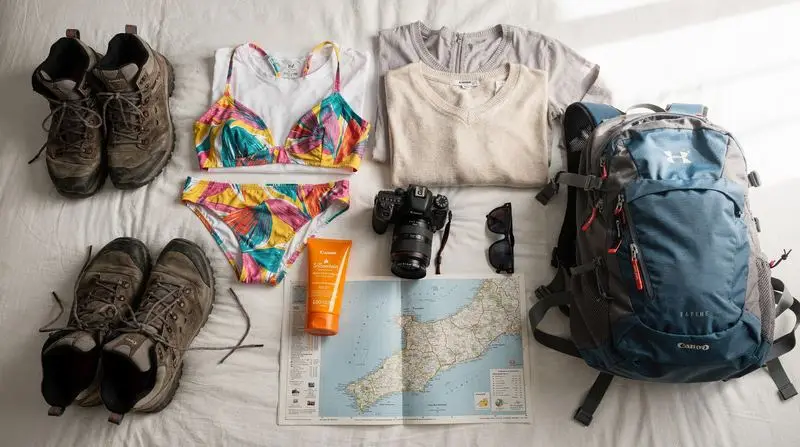
- Hiking boots — proper ankle-supporting boots are non-negotiable on Albanian mountain trails. The terrain can be rocky, steep, and wet. Do not attempt the Alps trails in trainers or road running shoes.
- Hiking socks — good-quality wool or synthetic to prevent blisters. 3-4 pairs.
- Trekking poles — optional but very helpful on steep descents. Folding poles pack small.
- Daypack (20-30L) — for carrying water, lunch, and layers on day hikes
- Waterproof jacket — mountain weather changes fast. A proper waterproof (not just water-resistant) shell is important.
- Base layer — moisture-wicking thermal layer for cold mountain mornings
- Warm mid-layer — a down jacket or fleece. Even in July, Valbona mornings at altitude are cold.
- Headlamp or torch — useful in guesthouses without reliable lighting, and on early-morning starts
- Water purification tablets or filter — as a backup in remote areas
For more on hiking preparation, see the Albanian Alps hiking guide. If you want to test your boots and layers on a shorter outing first, a day on the trails above Tirana is an easy way in, such as this Bovilla Lake and Gamti Mountain hiking day trip from Tirana.
Beach and Water Activities
For the Albanian Riviera and any water activities:
- Reef-safe sunscreen — Several Albanian coastal marine protected areas request it, and the Mediterranean sea benefits from it. Look for mineral-based sunscreen (zinc oxide or titanium dioxide) without oxybenzone or octinoxate.
- Snorkeling mask and fins — Albania’s Ionian waters are clear and worth exploring. Rental is possible in resorts but having your own means better fit and freedom. Particularly valuable for boat trips along the Riviera.
- Dry bag — for keeping electronics and documents safe on boat trips and at beaches without secure storage
- Waterproof phone pouch — cheaper alternative to a full dry bag for just your phone
- Water shoes — many Albanian beaches are pebbly rather than sandy. Rocky entries into the water benefit from footwear.
- Rashguard — for extended snorkeling or sailing days in intense sun
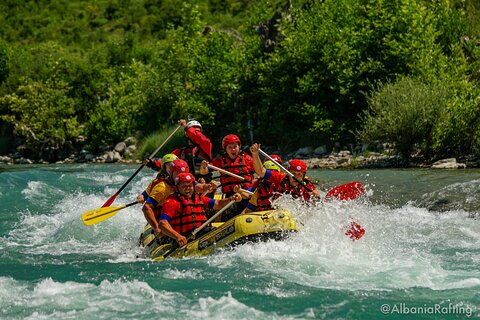
If you are planning sea kayaking on the Riviera or rafting the Osumi Canyon, operators provide equipment but wearing a rashguard and water shoes makes these activities more comfortable.
Miscellaneous Items People Forget
- Small Albanian phrasebook or downloaded phrases — much appreciated by locals. See the Albania language guide for the most useful phrases.
- Reusable water bottle — water is cheap but single-use plastic is worth reducing where possible.
- Small padlock — for hostel lockers
- Earplugs — Albanian cities can be noisy in summer evenings (cafes and bars run late)
- Sarong or light scarf — useful as beach cover-up, and women covering shoulders when entering churches or mosques is appreciated. See the Albania customs guide.
- Small roll of toilet paper — quality varies in rural facilities
- Anti-chafing cream or stick — essential in hot weather with lots of walking
What Not to Pack
- Excessive clothing — Albania is a casual country. Smart-casual is the highest dress code you will realistically encounter outside Tirana’s best restaurants.
- Valuables you cannot afford to lose — leave expensive jewelry at home
- Huge padlocks and security gear — Albania is safe; normal travel precautions suffice
- Your whole medicine cabinet — Albanian pharmacies are well-stocked for common medications
Luggage Recommendations
For a mixed Albania itinerary (cities plus coast plus mountains):
- Backpack (40-60L) — the most flexible for moving between multiple destinations, fitting in furgons, and hiking access
- Duffel with shoulder strap — good compromise between flexibility and ease of packing
- Rolling suitcase — fine for Tirana and coastal resorts; awkward on cobbled streets in Berat and Gjirokastra, and not suitable for hiking
A small daypack in addition to your main bag is very useful for beach days and hikes.
A Note on Dress Code
Albania is a largely secular Muslim-majority country with a long tradition of religious tolerance. You do not need to dress conservatively for general travel. However:
- Cover shoulders and knees when entering mosques (a scarf or sarong works)
- Similarly, modesty is appreciated when visiting Orthodox churches
- In rural and more conservative areas, particularly the northeast, women covering up slightly more reduces unwanted attention
Packing by Trip Duration
Weekend trip (2-3 days): Carry-on bag only. Two outfits, swimwear if coastal, toiletries in liquids bag, charger and adapter. Albania’s summer weather is predictable enough to pack minimal layers.
One week: Medium backpack or 20-inch cabin suitcase. 4-5 outfit combinations that mix and match, swimwear, one smart-casual outfit for nicer restaurants.
Two weeks: 40-60L backpack (if doing mountains and coast combined), or a 24-inch checked bag if mostly cities and coast. Full packing list above applies.
One month plus: Add laundry options — Albanian laundromats exist in cities, and guesthouses usually offer hand-washing facilities. Packing light and doing laundry beats overpacking.
Sustainable Packing for Albania
Albania’s natural environments — the Riviera beaches, the Alps rivers, the karst springs — are increasingly protected:
Reef-safe sunscreen: Already mentioned, but worth emphasizing. Standard sunscreen chemicals are harmful to marine ecosystems. Mineral-based sunscreen is effective and marine-safe.
Reusable water bottle with filter: A LifeStraw bottle or similar allows you to drink from mountain springs while dramatically reducing plastic bottle consumption. In the Albanian Alps, spring water is generally clean.
Solid toiletries: Shampoo bars, solid conditioner, and solid sunscreen reduce both plastic waste and the liquids you need to manage at airport security.
Quick-dry towel: Most Albanian guesthouses provide towels, but a personal quick-dry travel towel is useful for beach days, unexpected river swims, and the occasional guesthouse that runs short on supply in peak season.
Medications and Health Supplies
Albanian-specific health supplies worth having:
Oral rehydration salts: Summer heat in Albania is intense. Heatstroke and dehydration are real risks, particularly on the coast and during mountain exertion.
Blister treatment: Albania involves more walking on varied surfaces than most Mediterranean beach destinations. Cobbled streets in Gjirokastra and Berat, rocky coastal paths, mountain trails — blisters are common.
Altitude awareness: If you are hiking above 2,000 meters in the Accursed Mountains, carry ibuprofen for headaches (a common mild altitude symptom). Descend immediately if severe symptoms develop.
Tick repellent: Ticks are present in Albanian grassland and forest areas. If hiking through long grass or woodland, DEET-based repellent and a daily tick check after outdoor activity is sensible precaution.
Things to Buy in Albania Rather Than Pack
Some items are cheaper or better to buy on arrival:
Bottled water: Cheaper in Albanian supermarkets than buying at a pharmacy or airport at home. Buy a large bottle immediately after arriving.
Raki: The local spirit makes an excellent souvenir. Buy at the source — from guesthouse producers or local stores — rather than at departure airports. The Albania raki guide explains what to look for.
Albanian olive oil: Excellent quality, available in markets and supermarkets. Buy a bottle to take home — it fits in checked luggage.
Light cotton items: If you have forgotten a t-shirt or need an extra layer, Albanian city markets and shops sell basic clothing at very low prices.
Tech Packing for Albania
Power bank (10,000mAh minimum): Albania’s mountain areas and ferry crossings leave you without charging for extended periods.
Universal travel adapter (Type C/F): Albania uses European standard two-pin round sockets at 230V/50Hz. UK, US, and Australian plugs all require adapters.
Waterproof phone case or bag: For beach days, boat trips, and the occasional unexpected rain on a mountain trail.
Offline GPS device (optional): If you are doing serious mountain hiking in the Albanian Alps, a dedicated GPS device (Garmin or similar) with downloaded Albania maps is more reliable than a phone in areas without signal.
For app recommendations for navigation, transport, and communication in Albania, see the best apps for Albania guide.
The best Albania packing approach is to start with less than you think you need, trust that Albania’s towns and cities have everything necessary, and leave room in your bag for what you bring home. The country rewards light, flexible travel — the freedom to divert, extend, and change plans is easiest when you are not weighed down by overpacking.
For the Albanian Alps specifically, an organised 3-day trip provides excellent preparation for what to expect:
This 3-day Valbona to Theth Alps trip from Shkodra — reading the detailed tour description gives an accurate sense of exactly what gear is needed for mountain guesthouse travel in the Albanian Alps, from the type of footwear to the weather layers required. Cost approximately EUR 120-180 per person for the full three-day experience.
Packing for a Road Trip
If your itinerary includes renting a car and driving in Albania, a few extra items are worth the space: a printed or downloaded offline map as backup to phone navigation, a phone mount for the dashboard, a small cooler bag for beach and mountain picnics bought at roadside markets, and cash in small denominations for parking and rural petrol stations that may not take cards. If you’re travelling with young children, see the Albania family travel guide for additional car-trip specific packing notes, including car seat availability from rental agencies.
Packing for Accessibility Needs
Travellers with mobility or other accessibility needs should pack with Albania’s uneven infrastructure in mind — cobbled old towns (Berat, Gjirokastra), variable pavement quality, and limited lift access in older buildings. Bringing your own mobility aids rather than relying on finding equivalents locally is strongly advised, since specialist equipment is not widely available outside Tirana. The Albania accessible travel guide covers what to expect destination by destination and how to plan around it.
Frequently Asked Questions About Packing for Albania
Do I need hiking boots if I’m only visiting the coast and cities?
No. If your itinerary stays on the Riviera and in Tirana, Berat, and Gjirokastra, comfortable walking shoes are sufficient — the cobbled old towns benefit from sturdy soles, but full hiking boots are only necessary if you’re heading into the Albanian Alps or doing serious canyon trekking.
What’s the one item most travelers forget to pack for Albania?
A proper adapter for Type C/F European sockets, and — for coastal trips — water shoes for pebble beaches. Both are easy to buy locally if forgotten, but having them on day one avoids an unnecessary shopping trip.
Should I pack differently for solo travel versus a family trip to Albania?
The core list is largely the same, but families should add a few extras: a printed copy of key documents for each family member, entertainment for long furgon or car journeys, and child-appropriate sun protection given Albania’s intense summer sun. See the Albania family travel guide and the Albania solo travel guide for the fuller picture beyond packing.