Albania in 14 Days: The Comprehensive Itinerary
Two weeks in Albania is enough time to move deeply through the country — not just ticking off highlights but spending real time in each place, taking day trips, eating well, and understanding something of Albanian culture and history beyond the surface. This itinerary covers the north (Shkodra, Koman Lake, the Albanian Alps), the centre (Tirana, Berat, Apollonia), the far south (Permet thermal baths, Gjirokastra, Korce), and the coast (Blue Eye, Saranda, Ksamil, the Riviera).
It’s designed to be done without a private car, though renting a vehicle for the last three days on the Riviera section would add significant flexibility. For those with three weeks, see the 21-day Albania deep-dive itinerary.
| Best for | Returning-minded travellers who want real depth, not just highlights |
| Total cost | Around EUR 520–1,500 per person (budget to mid-range) |
| Getting around | Buses and shared taxis throughout; a rental car helps for the Riviera leg |
| Car needed | Optional — only useful for the last 3 days on the coast |
| Best months | June, or September–October |
Route Overview
Days 1–2: Tirana Days 3–4: Shkodra and Albanian Alps Day 5: Koman Lake to Valbona Day 6: Valbona to Theth Day 7: Theth, return toward Tirana Day 8: Berat Day 9: Apollonia and surroundings Day 10: Permet and Benja Thermal Baths Day 11: Gjirokastra Day 12: Korce Day 13: Blue Eye, Saranda, Butrint Day 14: Ksamil, Riviera, departure
If two weeks feels like too much, the 10-day complete itinerary covers the same north-to-south arc while dropping Apollonia, Permet, and Korce.
Day 1: Tirana — Arrival and Orientation
Arrive at Tirana International Airport and transfer to your accommodation in the city centre. Tirana is the ideal introduction to Albania: energetic, colourful, and stuffed with history if you know where to look.
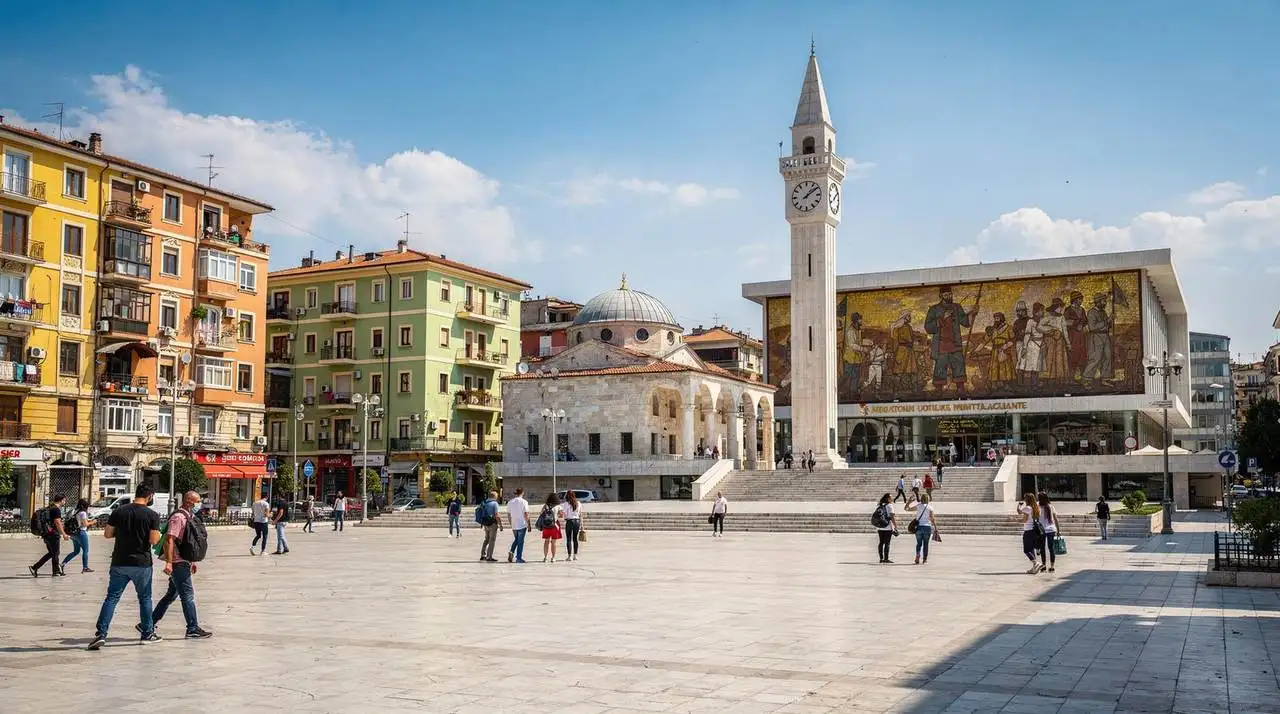
Spend the first afternoon at Skanderbeg Square and the surrounding streets: the Et’hem Bey Mosque, the Clock Tower, the facade of the National History Museum. Walk through Blloku — the former communist party enclave — for coffee and people-watching.
Join a guided Tirana walking tour in the late afternoon to immediately understand the city’s layers — communist architecture, post-communist colour, the Hoxha-era bunkers, and the extraordinary 1991 transformation.
Evening dinner in Blloku or the old bazaar area. Try fërgësë (Tirana’s signature dish), traditional lamb preparations, and local house wine. Budget 1,500–2,500 lekë per person.
Day 2: Tirana — Museums and Food
Morning: National History Museum (700 lekë, 2 hours), then BunkArt 2 (600 lekë) — the secret police bunker museum. Together these give the best possible grounding in Albanian history.
Lunch: Pazari i Ri market — byrek, olives, cheese, bread. 300–500 lekë.
Afternoon: The Pyramid of Tirana (free to climb, great views), Blloku street art and independent shops, the House of Leaves museum (500 lekë) — the Sigurimi surveillance headquarters.
Evening: Join the Tirana food tour for a comprehensive evening of Albanian culinary culture. Alternatively, dine at Oda Restaurant or Era for excellent traditional cooking.
Day 3: Tirana to Shkodra
Morning bus to Shkodra (2 hours, 400 lekë). Visit the Marubi Photography Museum (500 lekë) — extraordinary archive of Albanian documentary photography — and Rozafa Castle (300 lekë) with views over the three-river confluence and Lake Shkodra. Walk the lake promenade at sunset.
Shkodra serves as your gateway to the Albanian Alps. Arrange your morning transport to the Koman ferry terminal with your guesthouse tonight. Have a dinner of local lake fish in one of the lakeside restaurants.
Day 4: Shkodra — Shala River and Koman Lake Preview
Before committing to the full mountain circuit, spend a day on the water. Join a Koman Lake and Shala River boat tour from Shkodra — the turquoise Shala River canyon (the “Maldives of Albania”) and the fringes of Koman Lake are among the most visually striking environments in Albania.
This day also gives you time to properly explore Shkodra’s old town: the Pedestrian Street (Rruga Kole Idromeno) with its Ottoman-era buildings, the cycling culture, the local cafes. Pack your mountain bag tonight; tomorrow you enter the Alps.
Day 5: Koman Lake Ferry to Valbona
Rise before dawn. Shared taxi to Koman ferry terminal (1.5 hours). The Koman Lake ferry (2.5 hours) is one of Europe’s most spectacular journeys — a narrow reservoir carved into the limestone mountains, sheer cliffs rising from the water, abandoned villages on ledges high above, a world entirely apart.
From Fierza terminal, shared transport to Valbona (1 hour). Check into your guesthouse, rest, swim in the glacier-cold river, and eat an exceptional home-cooked dinner. Valbona Valley is magnificently beautiful: dense forest, jagged limestone peaks, the clean mountain air.
Day 6: Valbona to Theth — The Mountain Crossing
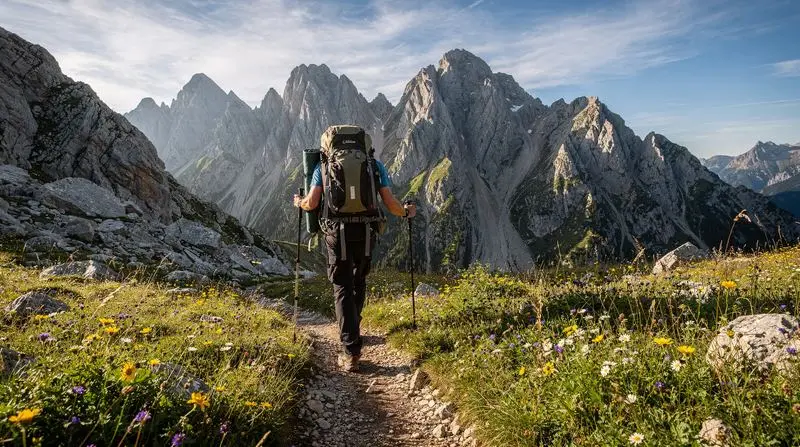
The legendary Valbona-to-Theth crossing: 14 km, 1,200 m ascent, 800 m descent, 7–9 hours walking. Start at 7am. The trail climbs through beech forest to the Valbona Pass (1,800 m) with extraordinary views in all directions, then descends through pine and meadow into the Theth Valley.
Book a guided 3-day Valbona-Theth crossing for all-inclusive mountain logistics from Shkodra.
Arrive in Theth by late afternoon. Guesthouse half-board dinner — long communal tables, multiple courses, home raki.
Day 7: Theth and Return Toward Tirana
Morning: Grunas Waterfall walk (45 mins each way), the Lock-In Tower (Kulla e Ngujimit), and Theth’s Blue Eye spring pool. These three short walks cover the essential Theth experience.
Afternoon: Shared 4WD taxi from Theth to Shkodra (2.5–3 hours on the mountain road, 2,000–3,000 lekë). Bus Shkodra to Tirana (2 hours). One night back in Tirana before heading south.
Day 8: Tirana to Berat
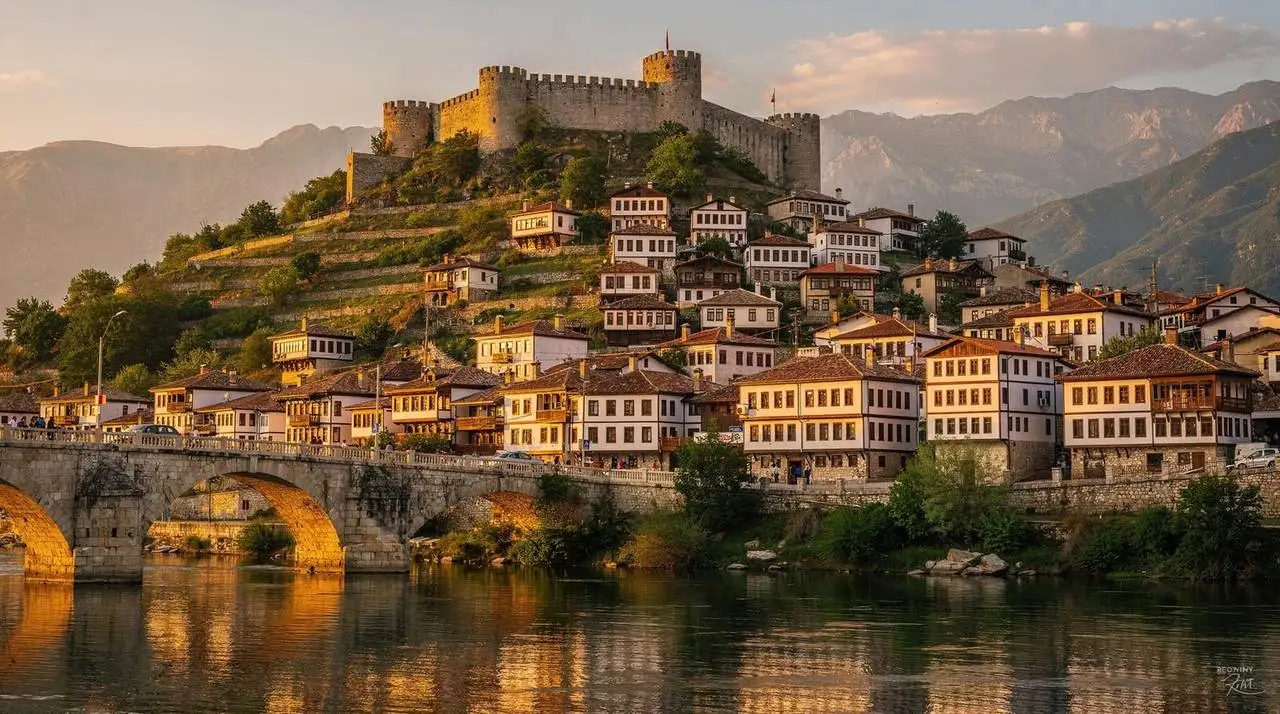
Early morning bus to Berat (2 hours, 400 lekë). Full afternoon in the UNESCO city: Mangalem old town, Kalaja Castle (inhabited since Illyrian times), and the extraordinary Onufri Museum (400 lekë) with its 16th-century Byzantine icons in saturated reds.
Cross to the Gorica quarter at sunset for the famous view of the thousand windows. Dinner at a guesthouse or riverside terrace restaurant; local Berat white wine is worth seeking out.
Day 9: Apollonia Archaeological Site
From Berat, take a morning bus or shared taxi northwest to the ruins of Apollonia near Fier — one of the most important Greek and Roman cities in the Adriatic region, founded around 588 BC and eventually home to 60,000 people. The archaeological park (entry 700 lekë) contains a well-preserved Greek bouleuterion (civic assembly hall), Roman odeon, Byzantine monastery, and museum of exceptional quality.
Apollonia is often missed by travellers rushing between Tirana and Berat, which makes it all the more rewarding — you’ll likely have it nearly to yourself. Julius Caesar used Apollonia as a base during the civil war against Pompey; the young Octavian (later Augustus) was studying here when he learned of Caesar’s assassination.
Return to Berat for your second night, or push on to Permet if you want to save time.
Day 10: Permet and Benja Thermal Baths
Travel from Berat to Permet via Tepelena — approximately 3–3.5 hours by bus or shared taxi. Permet sits on the Vjosa River, one of Europe’s last wild rivers, in a valley surrounded by forested limestone mountains.
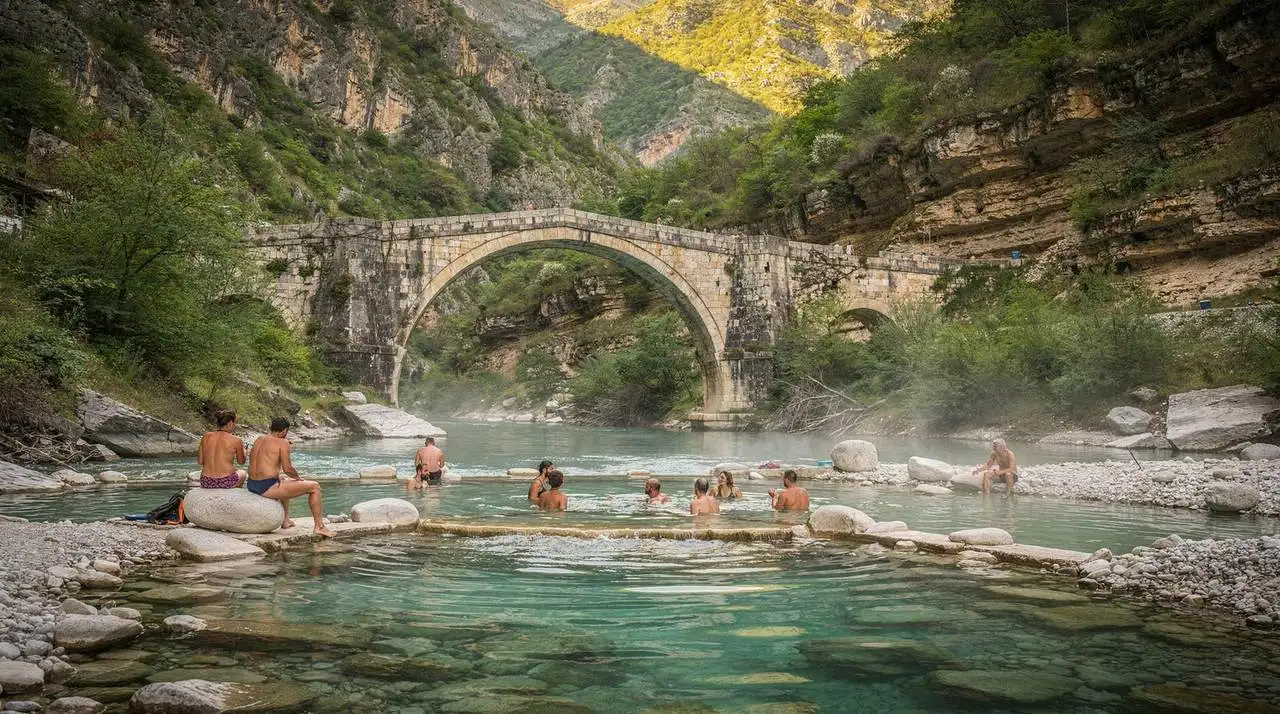
The main attraction is the Benja Thermal Baths on the Langarica River — naturally hot mineral springs in a stunning limestone canyon, free to enter, with a medieval Ottoman bridge nearby. Book a Permet and Benja thermal baths guided tour to include the canyon, bridge, and surrounding valley.
Permet is also the source of Albania’s famous gliko (preserved fruits in syrup) and some of the country’s best local wine. An overnight stay in Permet is worthwhile — the town is relaxed, the guesthouses excellent, and the evening promenade along the Vjosa is genuinely pleasant.
Day 11: Gjirokastra — Albania’s Stone City
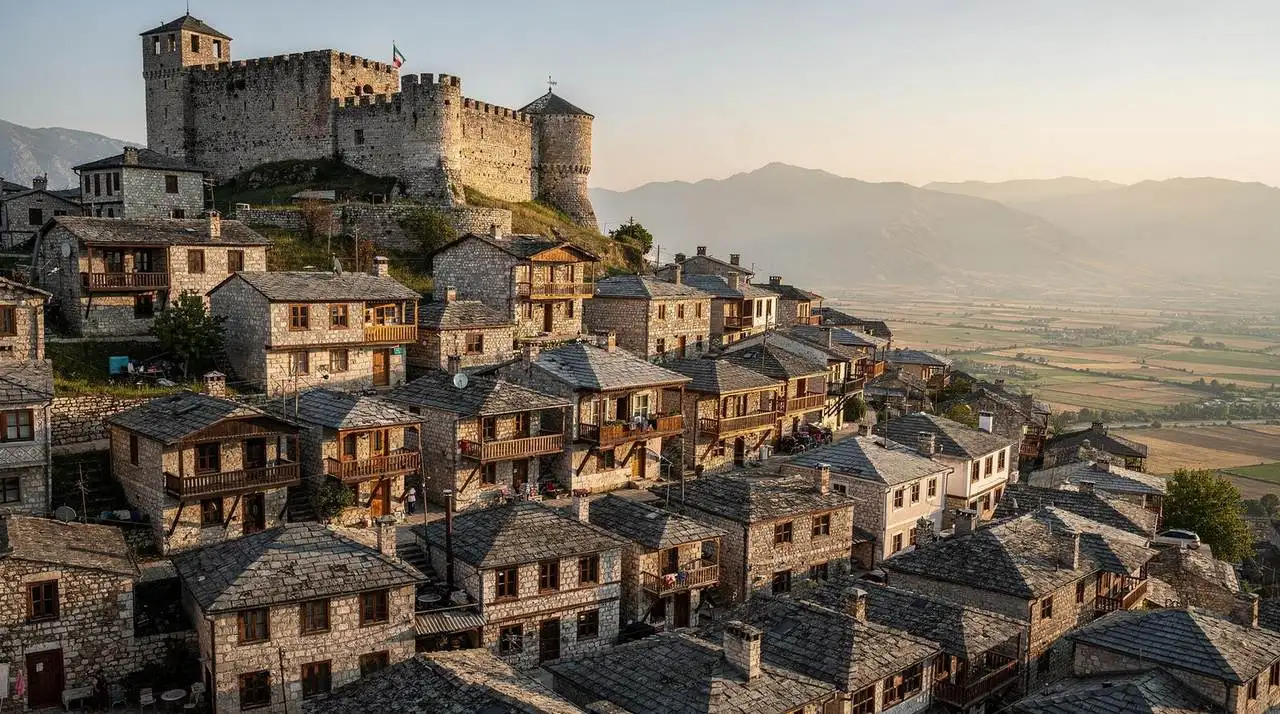
Travel from Permet to Gjirokastra — approximately 1.5 hours by bus or shared taxi. Gjirokastra shares UNESCO World Heritage status with Berat but feels entirely different: grey stone, fortress-like, dramatic.
Full afternoon at Gjirokastra Castle (500 lekë) — the hilltop fortress with captured military hardware, valley views, and an ethnographic museum. The Zekate House (300 lekë) is the finest example of Gjirokastra’s distinctive stone tower house typology. Walk the Old Bazaar and visit the birthplace museum of novelist Ismail Kadare. Overnight in Gjirokastra.
Join a guided Gjirokastra city tour for the most complete understanding of this extraordinary city’s architecture and history.
Day 12: Korce — Albania’s Cultural Capital
From Gjirokastra, take a bus or shared taxi to Korce (Korça) — approximately 3–4 hours via Permet or directly through the mountains. Korce is Albania’s self-proclaimed “cultural capital” — a prosperous town with a strong Orthodox tradition, a vibrant cafe culture, and a famous Carnival. It sits near the North Macedonia border at 869 metres altitude, noticeably cooler than the coast.
Key sights: the National Museum of Medieval Art (one of Albania’s finest, with outstanding Byzantine icons and frescoes from churches across the country), the Old Bazaar neighbourhood, the French neo-Gothic Cathedral of the Resurrection, and the charming Rinia promenade. Korce is also famous for its beer (Korca Beer, Albania’s most popular brand, is brewed here) and for its flija (a layered crepe dish specific to the region).
Overnight in Korce at one of the comfortable mid-range hotels in the centre.
Day 13: Blue Eye Spring, Saranda, and Butrint
From Korce, travel to Saranda via Gjirokastra — a longer journey (3–4 hours) but worth it. Stop at the Blue Eye spring en route: the extraordinary karst spring 25 km east of Saranda where brilliant cobalt water wells up from an unknown underground source.
Book a best-of-Saranda tour covering Blue Eye, Butrint, and Ksamil for efficient coverage of all three.
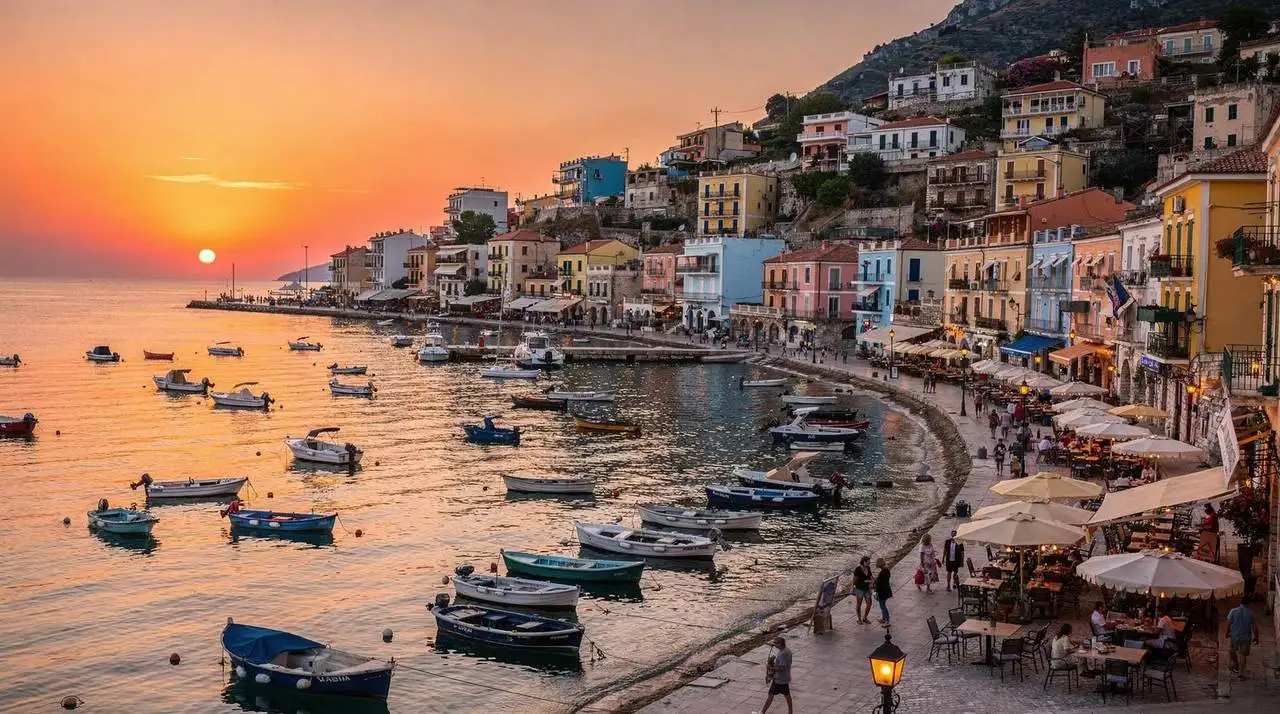
Arrive in Saranda for lunch on the waterfront. Afternoon at Butrint — the UNESCO archaeological site of layered Greek, Roman, Byzantine, and Venetian history in a forested promontory setting (1,000 lekë). Evening: seafood dinner on the Saranda waterfront with views toward Corfu.
Day 14: Ksamil, Riviera, and Departure
Final morning at Ksamil — Albania’s best beach, with three offshore islands and brilliantly clear Ionian water. Take a boat to the islands, snorkel, and swim. A Riviera boat tour from Saranda is a beautiful way to spend a final morning on the water.
Afternoon: bus or shared taxi back to Tirana for your flight, or ferry to Corfu for onward travel. Tirana–Saranda bus: 4–5 hours, 700–800 lekë.
14-Day Budget Summary
| Category | Budget | Mid-range | Comfortable |
|---|---|---|---|
| Accommodation (14 nights) | EUR 200–280 | EUR 490–700 | EUR 980–1,400 |
| Intercity transport | EUR 45–65 | EUR 90–140 | EUR 180–280 |
| Museum and site entries | EUR 45–55 | EUR 45–55 | EUR 45–55 |
| Food and drink (per day) | EUR 15–22 | EUR 30–50 | EUR 55–90 |
| Guided tours | EUR 0–50 | EUR 100–180 | EUR 300–500 |
| Total 14 days | EUR 520–720 | EUR 1,050–1,500 | EUR 2,100–3,100 |
Prices per person. Mountain guesthouse half-board (Valbona, Theth) represents exceptional value and is included in the accommodation figures above.
Seasonal Guidance
April–May: Excellent for cultural sites and the south. Wildflowers cover the mountains and valley floors. The Valbona-Theth crossing may still have snow at the pass in early May — check conditions before attempting it. Berat and Gjirokastra are at their best with good light and few crowds.
June: Arguably the best month for this full itinerary. The mountain crossing is reliable from mid-June; the coast is warm without being overcrowded; everything is green and the waterfalls are at full flow after the spring rains.
July–August: Peak season. The coast (Saranda, Ksamil) is very busy; book well ahead. The mountains are warm and dry — ideal hiking conditions. Cities are hot (Tirana and the south valley floors reach 38–40°C); plan outdoor exploration for early morning and evening.
September–October: The second-best window. Crowds thin dramatically after mid-September; prices drop; the light is excellent. The Valbona-Theth crossing is typically clear through October. The coast is warm enough for swimming into early October.
November–March: Many guesthouses in Valbona and Theth close. The mountain crossing is impassable without specialist equipment. Tirana, Berat, and Gjirokastra remain open and the cities are charming in winter light; Saranda has a quiet charm and mild temperatures in winter. Not recommended for first-time visitors doing the full circuit.
Day-by-Day Summary Reference
| Day | Location | Main activity | Accommodation |
|---|---|---|---|
| 1 | Tirana | Walking tour, museums | Tirana hostel/hotel |
| 2 | Tirana | Food tour, Blloku | Tirana |
| 3 | Shkodra | Rozafa Castle, Marubi Museum | Shkodra guesthouse |
| 4 | Shkodra | Shala River boat tour | Shkodra |
| 5 | Koman → Valbona | Ferry crossing | Valbona guesthouse (half-board) |
| 6 | Valbona → Theth | Mountain crossing (14 km hike) | Theth guesthouse (half-board) |
| 7 | Theth → Tirana | Morning walks, return journey | Tirana |
| 8 | Berat | Kalaja, Onufri Museum, Mangalem | Berat guesthouse |
| 9 | Apollonia | Day trip, return to Berat | Berat |
| 10 | Permet | Travel, Benja thermal baths | Permet guesthouse |
| 11 | Gjirokastra | Castle, guided tour, Zekate House | Gjirokastra guesthouse |
| 12 | Korce | National Museum of Medieval Art, old town | Korce hotel |
| 13 | Blue Eye → Saranda → Butrint | Spring, archaeology | Saranda hotel |
| 14 | Ksamil → Saranda | Beach, departure | Depart |
What Makes Albania Special: A Note for First-Time Visitors
After 14 days in Albania, most visitors report the same set of unexpected discoveries. The hospitality is genuinely warm — not performative for tourists, but rooted in besa, the Albanian concept of pledged honour and unconditional hospitality to guests. A conversation with a guesthouse host in Valbona, a farmer on the road to Gjirokastra, or a cafe owner in Permet invariably involves an invitation to sit longer, eat more, drink raki, and talk. This can feel overwhelming at first; eventually it becomes one of the defining pleasures of Albanian travel.
The country’s communist history is everywhere and surprisingly accessible to visitors. The bunkers — 750,000 of them, built by Enver Hoxha’s government at enormous expense between the 1960s and 1980s — dot every field, beach, and hillside. They appear in shepherds’ fields, on mountain passes, on city street corners, in people’s gardens. BunkArt 1 and BunkArt 2 transform the two most significant bunkers into museums; the rest simply exist in the landscape as permanent monuments to a particular kind of political paranoia. They are impossible to ignore and essential to understand.
The food is better than almost anyone expects. Albanian cuisine draws from Ottoman, Greek, and Balkan traditions, using exceptional local ingredients: olive oil from ancient groves in the south, lamb from mountain pastures in the north, fresh Ionian and Adriatic seafood on the coasts, vegetables and dairy from family farms everywhere. Restaurant prices are extraordinarily low by European standards. Albanian wine — still largely unknown internationally — is improving fast; the white wines from the Berat region and the reds from Shkodra are worth seeking out.
For those who choose to return — and a remarkable number of first-time Albania visitors do return — the 21-day Albania itinerary opens up the deeper Albania: the villages that don’t appear in guidebooks, the landscapes that require longer walks to reach, and the conversations that take time to develop.
Photography Guide for the 14-Day Itinerary
Albania is one of Europe’s most photogenic countries, and 14 days gives you enough time to shoot in good light rather than grabbing snapshots between transport connections.
Tirana: The National History Museum mosaic facade (morning light from the east side of the square); the Pyramid (interesting at any time but particularly striking at blue hour); Blloku street art (overcast days give the most even light); Pazari i Ri market (early morning, 8–9am, before it fills up and before the light gets harsh).
Shkodra: Rozafa Castle at sunset from the lake promenade — the reflection in the still water is the classic shot; arrive 30 minutes before sunset. The Marubi Museum collection itself (the archive photographs are as compelling as any original photography you’ll take).
Koman Lake: Shoot from the bow of the ferry. The narrow canyon sections, where the cliff walls rise directly from the water and reflections shimmer on the surface, are the most dramatic. Morning mist on the water in early summer is extraordinary.
Valbona: The valley is best photographed in early morning when the mist sits in the beech forest and the peaks catch the first light. The Valbona River with its clear water over pale gravel reflects the mountains above.
Valbona Pass: The 360-degree panorama is best in the morning before any cloud builds. Kosovo mountains to the northeast, Theth valley unfolding to the southwest, bare limestone peaks in all directions.
Theth: The village with the Church of Theth and the mountains behind (classic shot, best in morning or afternoon side-light). The Grunas Waterfall (overcast conditions give the best waterfall photography; direct sun creates harsh contrast). The Lock-In Tower (side-lit in afternoon is dramatic against the dark forest behind).
Berat: The Gorica viewpoint for the thousand windows — arrive 30 minutes before sunset, wait for the golden light. The Kalaja castle from below in early morning, when the light picks out the texture of the stone walls. The old stone bridge reflected in the Osum River on calm mornings.
Gjirokastra: From the valley floor looking up at the tower houses — afternoon light from the south picks out the stone texture. From the castle looking down toward the valley — morning light best. The Zekate House interior — the painted ceilings and bay windows require patience for the right natural light.
Blue Eye: This is a notoriously difficult subject. The colour of the water is most saturated on slightly overcast days. Shoot from directly above if possible (the viewing platform allows this) to capture the depth and colour gradient from cobalt at the centre to turquoise at the edges.
Butrint: The Greek theatre in morning light before tour groups arrive. The baptistery mosaic (interior, relatively dark — use a tripod or stabiliser). The city walls from the waterside, with the Vivari Channel in the background.
Packing List for 14 Days in Albania
Two weeks across multiple climate zones — alpine, inland, and coastal — requires versatile packing.
Documents: Passport (valid for 3+ months beyond intended stay), travel insurance details, accommodation confirmations printed or saved offline, emergency contacts list.
Clothing: 3–4 quick-dry t-shirts, 1–2 long-sleeve shirts, lightweight trousers (for mosques, churches, and cool evenings), 1 pair shorts, 1 pair hiking trousers, underwear and socks, light fleece or mid-layer, waterproof jacket (essential for the mountains), swimwear (2 sets if spending significant beach time), comfortable walking shoes or lightweight trail shoes, hiking boots (essential if doing the Valbona-Theth crossing), flip flops or sandals for the coast.
Gear: Trekking poles (collapsible/packable), daypack for the mountain crossing, 2-litre water bottle or bladder, headlamp, basic first aid kit (blister plasters essential), sunscreen (SPF 50+), sunglasses, hat for both sun and cold.
Electronics: Phone (download offline maps before entering the mountains), universal adapter (Type C/F), power bank (guesthouse charging is not always reliable), camera if you shoot serious photography (the landscapes justify bringing good equipment).
Cash: Withdraw enough lekë in Tirana or Shkodra to cover the mountain section. Valbona and Theth are completely cash-only. Budget 5,000–8,000 lekë per day in the mountains for accommodation, food, and transport.
Albanian SIM: Buy at Tirana Airport (Vodafone AL, approximately EUR 5 for 10GB). Works reasonably in the main cities and along the coast; coverage is limited in the mountain valleys but sufficient for emergency calls and messaging.
Should You Rent a Car for Part of This Route?
The itinerary above works entirely by bus, shared taxi, and the Koman ferry — no car required. But the calculus changes for the last three or four days, from Gjirokastra through the Blue Eye, Saranda, and the Riviera to Ksamil. That stretch of coast has slow, winding roads (the Llogara Pass road along the Riviera is spectacular but not built for speed) and bus schedules that thin out considerably once you’re south of Saranda proper. A rental car picked up in Gjirokastra or Saranda and dropped off in Tirana lets you take the coastal road at your own pace, stop at viewpoints and quieter beaches the buses skip, and reach Ksamil and Butrint without waiting on shared-taxi departure times.
The trade-off is cost and Tirana traffic on the return leg — city driving in the capital is genuinely stressful for visitors unused to Balkan traffic norms, so many travellers drop the car at Saranda airport (Kukës is not relevant here; Saranda’s small airstrip handles limited traffic, so most drop-offs are actually arranged in Tirana with a same-day return drive) or simply return it in Vlora and bus the final stretch. See the driving in Albania guide and car rental guide for the practicalities, including which international licences are accepted and what insurance actually covers.
Combining This Itinerary With a Neighbouring Country
Fourteen days is also enough time to extend into a neighbouring country without feeling rushed, since several of Albania’s borders are a half-day’s travel from places already on this route. From Korce, the North Macedonia border and Lake Ohrid are close enough for a detour — see the Albania and North Macedonia combined itinerary for how that connection works. From Shkodra, the Montenegro border and Lake Skadar’s northern shore are within reach, covered in the Albania and Montenegro itinerary. And from Saranda, the 45-minute ferry to Corfu opens up a Greek-islands extension, detailed in the Albania and Greece combined itinerary.
None of these require abandoning the 14-day core route — they work best as either a pre- or post-trip add-on of 3–5 days, bolted onto either end depending on your flight in and out.
What to Cut If Days 9–12 Run Long
The middle stretch of this itinerary — Apollonia, Permet, Gjirokastra, Korce — is the most flexible section and the one most likely to need adjusting once you’re actually on the road, since transfer times between these smaller towns are less predictable than the well-served Tirana–Berat–Saranda spine. If you’re running a day behind by Day 9, the easiest single cut is Korce: it’s the most out-of-the-way stop geographically (requiring backtracking distance that the other towns don’t) and, while genuinely rewarding for its Byzantine art and Orthodox character, it’s the one destination on this route with the least overlap with anything else — meaning skipping it doesn’t compromise the logic of the rest of the trip.
If you’d rather keep Korce and cut elsewhere, Apollonia is the next candidate: it can be visited as a shorter half-day from Berat rather than requiring a full day and a return, freeing up time for Permet or Gjirokastra without losing the site entirely. Permet is the hardest to justify cutting once you’ve committed to the far south, since the Benja Thermal Baths and the Vjosa valley setting are genuinely unlike anything else on the route — most travellers who cut something from this stretch cut Korce or shorten Apollonia rather than dropping Permet.
Whatever you cut, resist the temptation to simply compress two full days into one rushed day — Albania’s smaller-town transport (shared taxis that depart only when full, buses with two or three departures a day rather than hourly service) punishes tight same-day double transfers more than the driving distances alone would suggest. The buses and furgons guide explains how this system actually works and why building in slack matters more here than in most European countries.