Hiking the Albanian Alps: Everything You Need to Know
The Albanian Alps — known locally as the Bjeshket e Namuna, or the Accursed Mountains — represent one of the last great undiscovered hiking frontiers in Europe. Straddling the border between Albania, Kosovo, and Montenegro, this range of limestone and dolomite peaks rises to over 2,600 metres, with deeply carved valleys, glacial lakes, ancient stone villages, and a system of well-marked trails that has improved dramatically over the past decade. The combination of world-class scenery and remarkably few visitors makes this one of the most compelling destinations for mountain walkers anywhere on the continent.
The two valleys that form the core of Albanian Alps hiking are Theth and Valbona. Each has its own character, and most visitors who come for the mountains find themselves wanting to explore both. The trail connecting them — the Theth-Valbona crossing — is the centrepiece of the experience, but it is far from the only reason to be here.
| Signature hike | Theth-Valbona crossing, 17km, 6-9 hours |
| Best season | Mid-June to September |
| Accommodation | Family guesthouses (bujtina), EUR 20-35/night half-board |
| Cash | Essential — no ATMs in either valley |
| Guide cost | EUR 40-60/day for off-trail or high routes |
Why the Albanian Alps Are Special
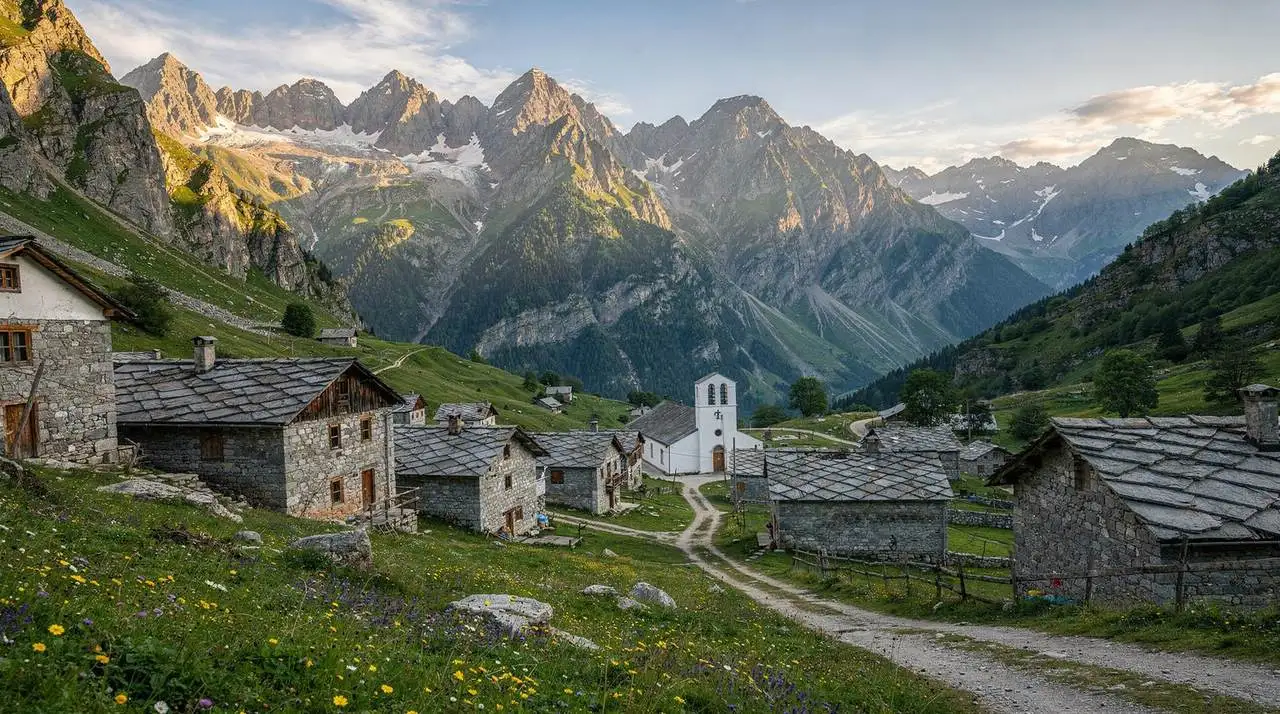
What distinguishes the Albanian Alps from better-known mountain destinations such as the Swiss or Austrian Alps is not simply the scenery — though the scenery is genuinely exceptional. It is the combination of landscape with living culture. The villages of Theth and Valbona are inhabited year-round by families who have been in these valleys for generations. Hiking here means walking through a landscape that is simultaneously wild and farmed, where the path passes stone-walled vegetable gardens and traditional kulla (tower houses) alongside limestone cliffs and rushing rivers.
The infrastructure is basic by Alpine standards — expect rough mountain tracks rather than groomed paths, guesthouses rather than hotels, and cash rather than card payments. But this is precisely what keeps the experience authentic. The Peaks of the Balkans long-distance trail, which passes through both Theth and Valbona on its circuit through Albania, Kosovo, and Montenegro, has brought improved trail marking and international attention since its launch in 2013.
The Theth-Valbona Crossing
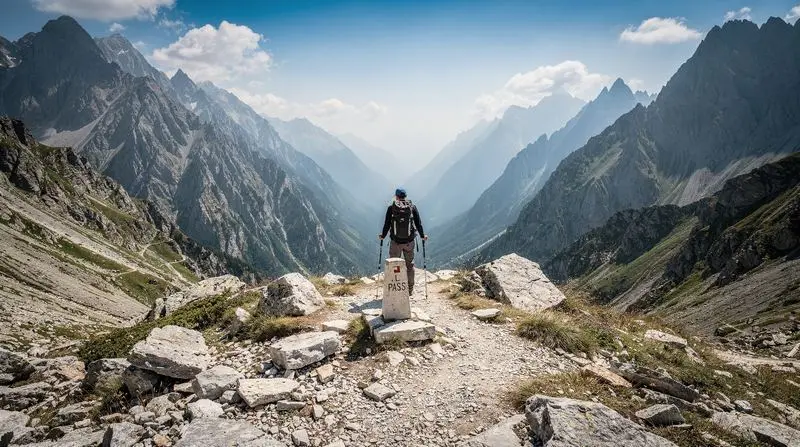
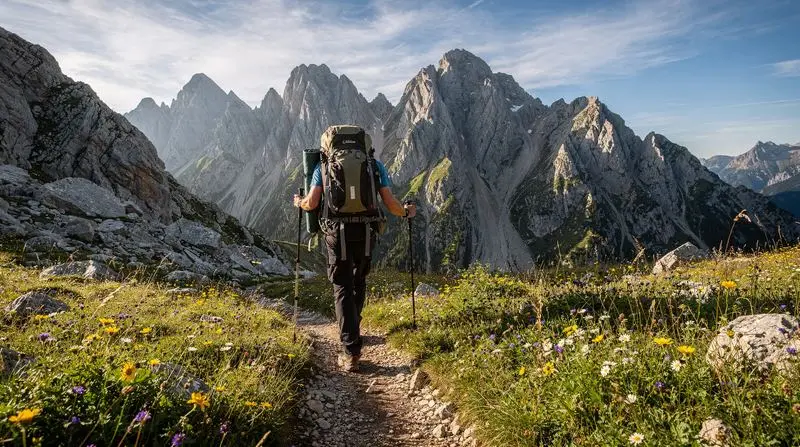
The most celebrated hike in Albania. The 17-kilometre trail between Theth and Valbona crosses the Valbona Pass at 1,800 metres and takes most hikers six to nine hours depending on fitness and pace. It is classified as moderate-to-challenging: there are no technical sections, but the sustained elevation gain, the rough terrain, and the length mean it is not suitable for casual walkers.
Our dedicated Theth to Valbona hike guide covers the route in full, including waypoints, timing, what to carry, and how to arrange accommodation on either side. If you plan to do this as part of an organised trip, a multi-day guided package handles logistics that can be genuinely complex for first-time visitors:
This 3-day Albanian Alps trip from Shkodra covers the Valbona-Theth crossing with accommodation, guided walking, and transfers included — a well-organised option for visitors who want the full experience without the logistical headache.
Hiking in Theth
Theth is the more dramatic of the two valleys — a narrow gorge enclosed by near-vertical limestone walls, with a rushing river, waterfalls, and a collection of historic stone buildings including the famous Lock-In Tower (Kulla e Ngujimit), used historically for protection during blood feuds. The main village sits at around 750 metres altitude and makes an excellent base for multi-day hiking.
Blue Eye of Theth
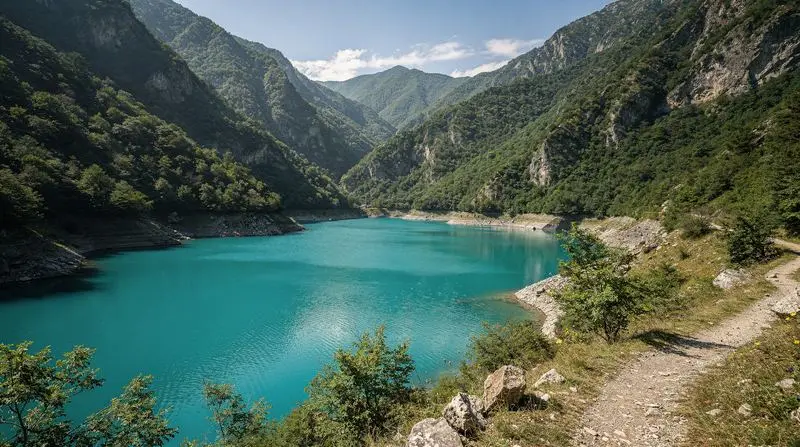
One of the most beautiful natural phenomena in the Albanian Alps. The Blue Eye (Syri i Kalter) is a spring of intensely cold, turquoise water that emerges from the base of the cliff face on the far side of the valley from the main village. A 30-40 minute walk along a flat riverside path leads to the spring, which pools into a stone basin of extraordinary colour — different blues and greens layered over each other depending on depth and light. The trail is easy enough for all fitness levels.
Note that there is another Blue Eye spring near Saranda in southern Albania — a different location, though equally striking. The Theth Blue Eye is smaller and more intimate. The Blue Eye destination page covers the southern spring if you want to compare the two.
Grunas Waterfall
A straightforward walk from Theth village — roughly 45 minutes each way — leads to the Grunas Waterfall, which drops around 30 metres into a rocky pool. In spring and early summer when snowmelt is still feeding the mountain streams, the volume is impressive. By August the flow reduces but the setting remains beautiful. The path passes through forest and alpine meadow.
The Canyon Walk
A more challenging route follows the Theth River downstream through the gorge, at points squeezing between the canyon walls. The canyon walk requires some scrambling over rocks and stream crossings and is best done with local guidance, but it is one of the most dramatic experiences available in the area.
Multi-Day Routes from Theth
Beyond the Valbona crossing, Theth connects to the broader Peaks of the Balkans trail. The route north to Vusanje in Montenegro is achievable in two days for fit walkers; the route east toward Kosovo involves high passes and should only be attempted with a guide. For most visitors, Theth-Valbona and the day hikes above satisfy an appetite for serious mountain walking.
If you would rather follow a ready-made plan than piece the days together yourself, the Theth-Valbona trek itinerary lays out the days in order, and the Peaks of the Balkans guide goes deeper on the longer circuit.
Hiking in Valbona
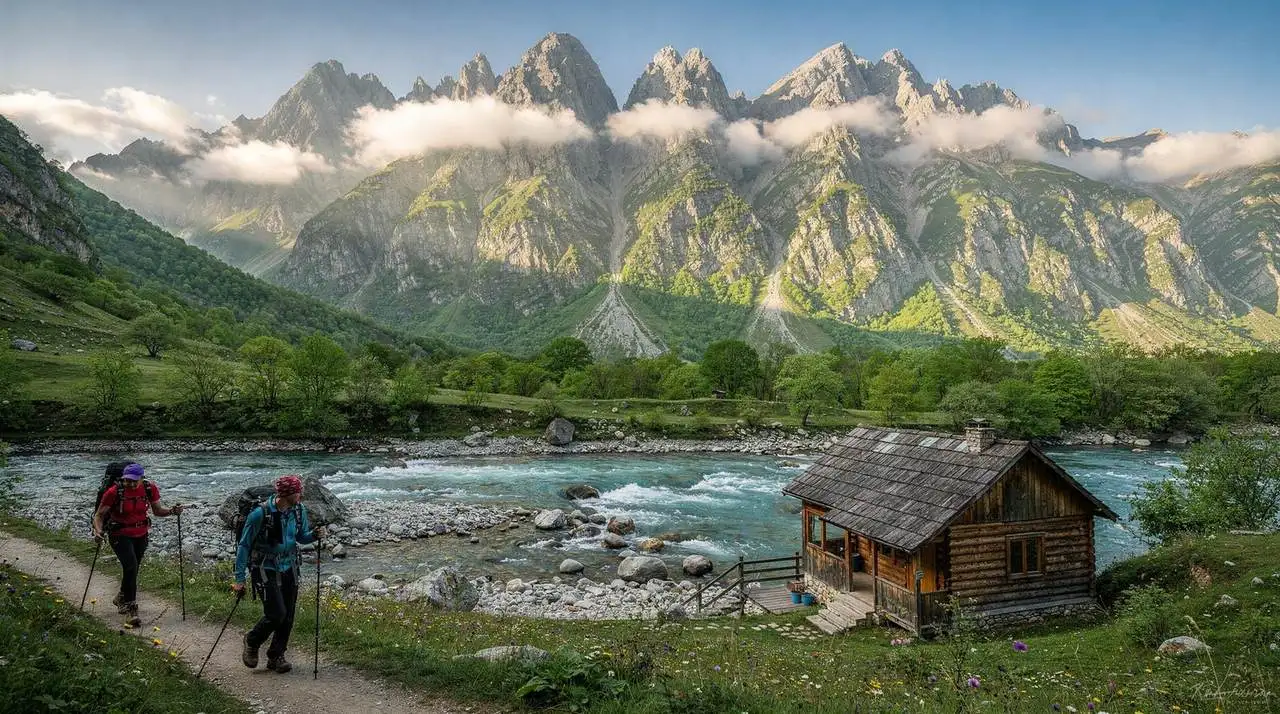
Valbona Valley is broader, more pastoral, and in some ways more immediately accessible than Theth. The valley floor is walkable for kilometres in both directions from the main settlement, passing farmhouses, suspension bridges over the river, and increasingly dramatic mountain views. This gentler topography makes Valbona a good choice for visitors who want mountain scenery without committing to strenuous ascents.
Valley Floor Walks
The most straightforward hiking in Valbona follows the river. Walking downstream from the main settlement passes traditional farmhouses and forested slopes, eventually reaching the Valbona Gorge where the river squeezes through a narrow limestone canyon. This section is flat, easy, and takes two to three hours return.
Upstream, the trail ascends gradually toward the Valbona Pass — this is the start of the Theth crossing route and can be walked as a day hike to the treeline and back without committing to the full crossing.
Rragami and Dragobia Villages
The satellite villages of Rragami and Dragobia, reached by trails branching off the main valley, offer excellent walking through terrain that sees far fewer visitors than the main track. Both have small guesthouses. Walking between them and the central valley makes for a pleasant loop of four to five hours.
High-Level Routes
The Jezerca massif — the highest peak in the Dinaric Alps at 2,694 metres — is accessible from Valbona for experienced mountaineers. This is a two-day undertaking requiring navigation skills and ideally a local guide. The views from the summit ridge are extraordinary.
The Peaks of the Balkans Trail
The Peaks of the Balkans is a 192-kilometre circular long-distance trail that passes through Albania, Kosovo, and Montenegro over ten to twelve days. The Albanian section takes in both Theth and Valbona, making it possible to hike directly between the two valleys and continue across the border in either direction.
For visitors with two weeks and strong legs, completing the full Peaks of the Balkans circuit is one of the great long-distance walking experiences in Europe. The trail is waymarked throughout and covered by a dedicated hiking map available at guesthouses and the ranger stations in both valleys.
Getting to the Albanian Alps
Via Shkodra
The standard approach to both valleys goes through Shkodra. From Shkodra, daily minibuses and shared taxis run to Theth (3-4 hours) and to the Koman Lake ferry connection for Valbona (from which it is a further 2-3 hours by ferry and connecting minibus). Shkodra is connected to Tirana by multiple daily buses (2 hours) and to international border crossings with Montenegro and North Macedonia.
Via the Koman Lake Ferry
The ferry crossing of Koman Lake is one of Albania’s most memorable experiences — a slow boat journey through limestone fjords of extraordinary drama. The ferry departs Koman at around 9:00 AM daily in season (June to September) and arrives at Fierza after roughly 2.5 hours, from where minibuses continue to Valbona.
Our Koman Lake ferry guide and the Koman Lake page explain how the crossing works and what to expect on board.
For Theth, a direct minibus from Shkodra avoids the ferry entirely. Many visitors take the ferry one way (typically entering Valbona by ferry, then crossing to Theth and returning via road to Shkodra) to experience both routes.
Organised Tours from Tirana
For visitors without their own transport, organised tours handle the complex logistics of the northern circuit:
This Tirana to Albanian Alps and Theth day tour provides a taste of the northern mountains without requiring an overnight stay — useful for visitors on a tight schedule who still want to see the landscape.
When to Hike the Albanian Alps
Mid-June to September is the reliable hiking window. The Valbona Pass trail (the Theth-Valbona crossing) is typically snowbound until at least late May and can carry lingering snow into June. The guesthouses in both valleys are predominantly open from June through September, with reduced but possible options in May and October.
July and August are peak season. Trails are well-trodden, all guesthouses operate, and the weather is consistently warm and dry. Book accommodation in advance — particularly in Theth, where beds are limited.
September is widely regarded as the best month for serious hikers. The summer crowds have thinned, the weather remains stable, and the early autumn colours on the beech forests are spectacular.
October is possible for experienced hikers, but weather becomes unpredictable, many guesthouses close, and some high passes may be impassable after early snowfall.
What to Pack for Albanian Alps Hiking
Footwear: Solid hiking boots with ankle support are essential for the Theth-Valbona crossing and any route involving the high passes. Trail running shoes are sufficient for valley-floor walks. Trekking poles significantly reduce knee strain on descents.
Layers: Even in July, temperatures at the Valbona Pass can drop rapidly if cloud comes in. A waterproof jacket, warm mid-layer, and moisture-wicking base layers cover most eventualities.
Navigation: Download offline maps on Maps.me or Gaia GPS before arriving — mobile signal is intermittent in both valleys. The Peaks of the Balkans trail map is available at guesthouses in both Theth and Valbona. For the rest of your kit, see the Albania packing list.
Cash: There are no ATMs in either valley. Bring sufficient cash from Shkodra for accommodation, food, and any entrance fees (see money and currency in Albania for practical tips). Guesthouses typically charge EUR 20-35 per person per night including dinner and breakfast.
Water: Mountain streams and springs in the Albanian Alps are generally safe to drink. A water bottle and optional filter gives peace of mind on longer routes.
Accommodation in the Albanian Alps
Both Theth and Valbona run on the bujtina (guesthouse) system. Families open their homes to hikers, offering simple rooms — often with shared bathrooms — alongside home-cooked meals of extraordinary quality. The food is locally sourced: mountain lamb, fresh cheese, wild herbs, cornbread, honey, and raki.
Contact is typically via WhatsApp. Online booking platforms have limited coverage in these valleys. Arriving without a reservation in high season is risky — ask your current host to message ahead to the next one. For a curated list of guesthouses in both valleys, the local tourism websites and the Peaks of the Balkans organization maintain updated contact lists.
Safety and Trail Conditions
The main hiking trails in the Albanian Alps are well-marked and well-used in season. The risks are those of any mountain environment: rapid weather changes, unstable terrain on higher routes, and river crossings that can be hazardous in early season when snowmelt is high.
The most important safety rule in the Albanian Alps: do not attempt the Valbona Pass in poor weather, in late afternoon (be at the pass by 2pm at the latest), or without adequate footwear and layers. Descents in wet conditions on the rocky sections can be treacherous.
For off-trail routes or high mountain objectives, hiring a local guide through your guesthouse is strongly recommended. Guides charge around EUR 40-60 per day and provide both safety assurance and invaluable local knowledge.
Combining the Alps with the Rest of Albania
The Albanian Alps circuit fits naturally into a broader Albania itinerary. Most visitors travel south from the mountains to Shkodra (for history and the lake), then Tirana (for culture and nightlife), then the Albanian Riviera (for beaches). This north-to-south progression — or its reverse — covers the greatest diversity of landscapes in the country.
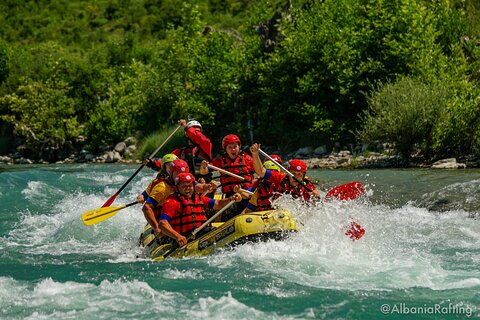
Day trips from Tirana can include the Albanian Alps for those on short schedules. From Tirana it is possible to visit Theth in a very long day, though two or three nights in the mountains is far more rewarding. The boat tours available from Shkodra on the Koman Lake and Shala River extend the northern itinerary for water-based exploration.
Final Thoughts
The Albanian Alps deserve their growing reputation as one of Europe’s finest mountain destinations. The landscape alone would justify the journey — but it is the combination of glacial valleys, authentic village life, exceptional food, and a hiking infrastructure that challenges without overwhelming that makes this somewhere genuinely special. Come prepared, come curious, and come soon — the word is spreading, and the character of the place is worth experiencing before it is transformed by the development that heavy tourism inevitably brings.
Frequently Asked Questions About Hiking in the Albanian Alps
Is hiking in the Albanian Alps safe?
Yes, hiking in the Albanian Alps is safe when done with proper preparation. The main risks are environmental — rapid weather changes, rough terrain on high passes, and river crossings during snowmelt season. The local guesthouse hosts are extremely helpful and provide invaluable safety information about current trail conditions.
When is the best time to hike in Albania?
Mid-June to September is the reliable hiking window for the Albanian Alps. September is widely considered the best month — crowds are thinner, weather is stable, and the beech forests begin turning golden. The Valbona Pass trail is typically snowbound until mid-June most years.
Do you need a guide for hiking in Albania?
The main Theth-Valbona crossing is well-marked and achievable independently by fit hikers. For off-trail routes, high mountain objectives like the Jezerca massif, or the canyon walk in Theth, hiring a local guide is strongly recommended. Guides charge approximately EUR 40-60 per day.
How fit do you need to be for the Albanian Alps?
The Theth-Valbona crossing (17 km, 900m elevation gain) requires a reasonable level of fitness — comparable to a challenging day hike in any European mountain range. Walkers who regularly cover 15-20 km days in hilly terrain will find it manageable. Valley-floor walks in Valbona are easy enough for most fitness levels.
Are there mountain huts in the Albanian Alps?
There are no traditional Alpine-style mountain huts, but both Theth and Valbona have excellent family-run guesthouses (bujtina) that offer rooms, home-cooked meals, and genuine hospitality for EUR 20-35 per person including dinner and breakfast. The hamlet of Rragami on the crossing trail also has a small guesthouse.