Getting to Albania: Your Complete Route Guide
Albania sits in the western Balkans with a long Adriatic and Ionian coastline, which means you have more options for getting here than most travelers expect. Whether you are flying from a Western European hub, island-hopping from Greece, cruising in from Italy, or driving overland from North Macedonia or Montenegro, Albania is more connected than its reputation suggests. This guide covers every realistic route, with honest advice on costs, journey times, and what to expect at the border.
| By air | Tirana Airport (TIA), Ryanair/Wizz Air cheapest |
| By ferry from Greece | Corfu-Saranda, 25-90 minutes, from EUR 10 |
| By ferry from Italy | Bari or Ancona to Durres, 8-16 hours |
| Overland | From Montenegro, Kosovo, North Macedonia, Greece |
| Visa | Not required for most Western passport holders, up to 90 days |
Flying to Albania
Tirana International Airport (TIA)
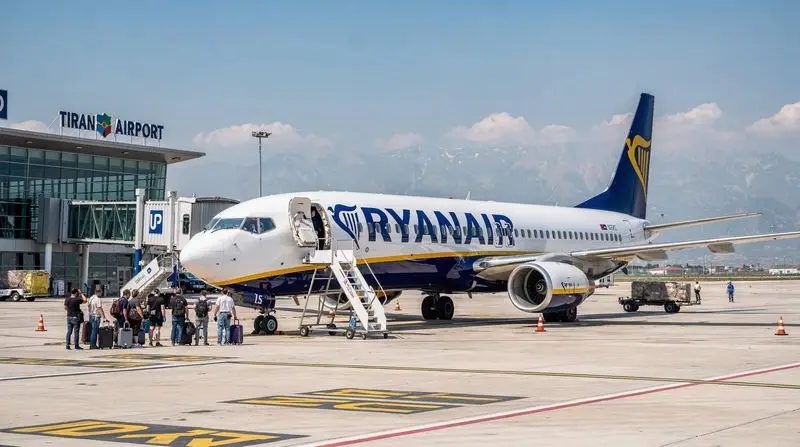
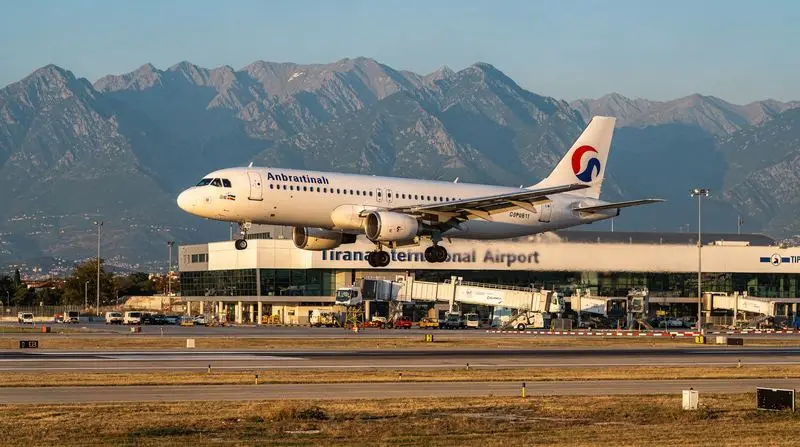
Tirana’s Mother Teresa International Airport, known by its IATA code TIA, is the country’s only international airport with significant commercial traffic. It sits about 17 kilometers northwest of central Tirana, in the suburb of Rinas. The airport underwent major expansion between 2019 and 2022 and now handles over six million passengers a year, a figure that has roughly tripled in a decade.
The terminal is compact but modern. Arrivals, customs, and the baggage hall are efficient for a medium-sized airport. You will find ATMs, currency exchange booths, a small duty-free section, and food options airside. On arrival, keep your passport ready and have accommodation details to hand — border control can occasionally ask where you are staying, though for most Western passport holders entry is straightforward.
For full details on airline options and how to find the cheapest fares, see our dedicated flights to Albania guide.
Which Airlines Fly to Tirana?
Ryanair dominates the market from Western Europe, operating routes from London Stansted, Rome, Milan, Barcelona, Madrid, Brussels, and over 30 other cities. Wizz Air connects Tirana with numerous Central and Eastern European destinations including Budapest, Warsaw, Vienna, and Bucharest. Turkish Airlines offers excellent connections via Istanbul for travelers coming from outside Europe or North America. Aegean Airlines connects Athens with Tirana multiple times daily, a useful link for island hoppers. Transavia serves Paris and Amsterdam.
Seasonal charter flights increase significantly from May to September, with additional routes from Germany, Scandinavia, and the Netherlands. If you are booking for summer, search well in advance — seats on the most popular routes sell out.
Kukës Airport
There is a second civilian airport at Kukës in northeastern Albania, primarily used for domestic and occasional charter flights. For most international travelers, Kukës Airport is not relevant, but it is worth knowing about if you are arriving from Kosovo or planning a tour of the north.
Getting from Tirana Airport to the City
Once you land, you have three main options for reaching central Tirana:
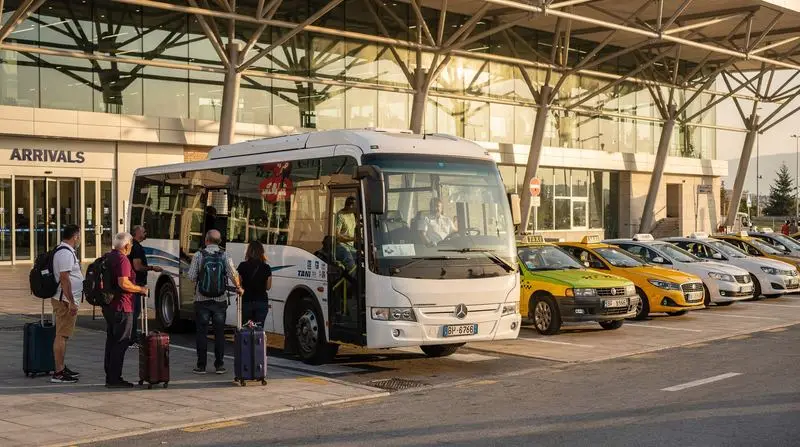
The LU-NA Shuttle Bus runs 24 hours a day, seven days a week, connecting the airport with Sheshi Italia in central Tirana. The journey takes around 30 minutes in normal traffic and costs 400 Albanian Lek (roughly EUR 4). It is the best-value option by far and runs frequently enough that you rarely wait more than 15-20 minutes.
Metered Taxis from the official rank outside arrivals cost around EUR 20-25 for the 30-minute drive. Use only official airport taxis with meters — avoid unlicensed drivers who approach you in the terminal.
Pre-booked Private Transfers are the most comfortable option, especially if you are arriving late or with a group. A driver will meet you in arrivals with your name on a sign. For full details including booking links, see our airport transfers Tirana guide.
Book the Tirana airport bus transfer in advance to guarantee your seat on the LU-NA shuttle, particularly useful for early morning or late night arrivals.
Pre-book a private airport transfer if you want to head directly to your accommodation anywhere in Albania — drivers can take you straight to Berat, the Riviera, or Shkoder without stopping in Tirana.
Arriving by Ferry
Albania’s ferry connections are a major draw, particularly for travelers combining it with a Greece or Italy trip.
Ferries from Corfu, Greece
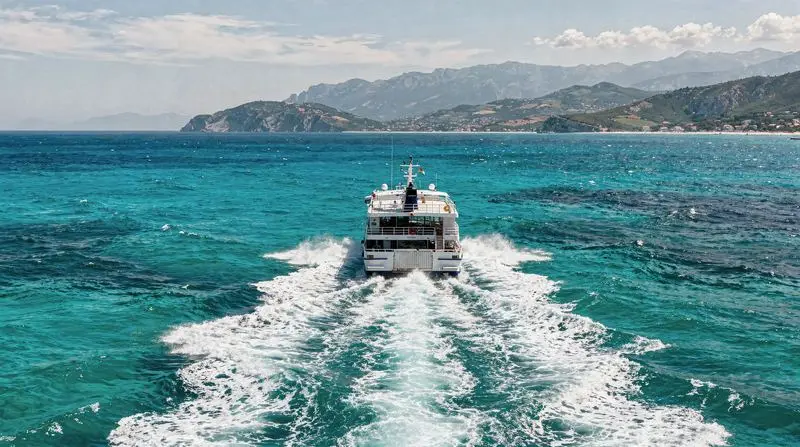
The most popular sea route into Albania is the short crossing from Corfu to Saranda on the Albanian Riviera. Several ferry operators — including Finikas Lines and Ionian Seaways — make the trip multiple times daily. The journey takes between 25 minutes on the fast hydrofoil and 90 minutes on the slower conventional ferry. Prices start from around EUR 10 for a foot passenger one way.
This route is enormously convenient for island-hoppers working their way through Greece. You can island-hop to Corfu, take the morning ferry to Saranda, spend a few days on the Albanian Riviera, and either return to Corfu or continue overland. For timetables, operators, and what to expect at Albanian customs, see our full Corfu to Albania ferry guide.
Ferries from Italy
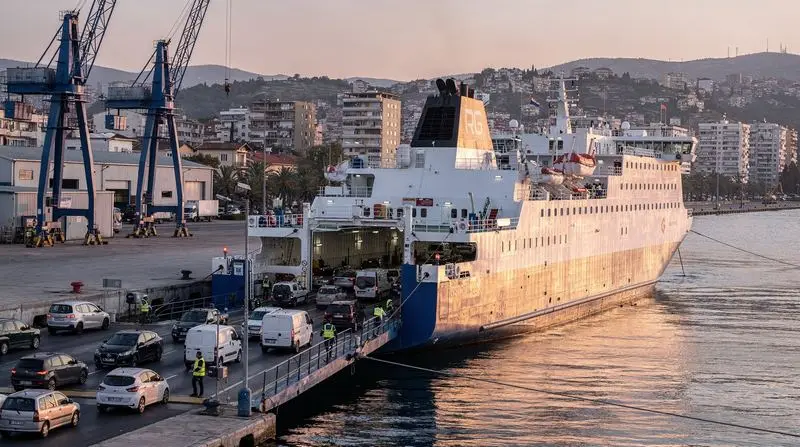
If you are traveling from Western Europe without wanting to fly, the overnight ferry from Italy is a practical option. Services run from Bari (8-9 hours) and Ancona (14-16 hours) to the port of Durres, which is Albania’s main commercial harbor and its second largest city. Operators include Adria Ferries and Grandi Navi Veloci. The crossing is longer but more economical if you are traveling by car or motorcycle.
Cabin options range from basic airline-style reclining seats to private cabins with beds. Taking a cabin on the overnight Ancona crossing is worth the extra cost — you save on a night’s accommodation and arrive refreshed. Full details are in our Italy to Albania ferry guide.
Overland Entry
From Montenegro
The border crossing at Han i Hotit (on the main road between Shkoder and Podgorica) is the most commonly used entry point from Montenegro. The crossing is straightforward for most nationalities and typically quick outside summer peak periods. From the border it is roughly 30 kilometers to Shkoder, and another 110 kilometers to Tirana.
A second crossing at Muriqan-Sukobin, further south, connects coastal Montenegro (near Ulcinj) with the Albanian coast. This route is popular with travelers continuing down the Albanian Riviera.
From Kosovo
The Morina-Vërmicë crossing on the main highway between Pristina and Kukës is heavily used and generally fast. The scenery on this route is spectacular — you descend into Albania through the dramatic Drini valley. From Kukës it is about 120 kilometers to Tirana via the SH1 motorway.
From North Macedonia
The main crossing at Qafa e Thanës, connecting Ohrid (North Macedonia) with Pogradec on Lake Ohrid’s Albanian shore, is popular with travelers who combine the two countries. The lake views at this crossing are genuinely beautiful. Pogradec to Tirana is about 145 kilometers.
From Greece
The Kakavija crossing on the main E90 highway between Ioannina and Gjirokastra is the busiest land border with Greece. Expect queues in summer, particularly on weekends. The Kapshtica crossing near Korça is a secondary option, slower but scenic.
Entry Requirements and Border Formalities
Most Western passport holders — including all EU citizens, UK nationals, Americans, Canadians, and Australians — can enter Albania without a visa for stays up to 90 days. Albania is not part of the Schengen Area, so your Schengen days are not affected.
At land and sea borders you will hand over your passport, which is scanned and stamped. The process is usually quick. Entry forms are not required. Keep your passport valid for at least six months beyond your travel dates.
For full details on visa requirements and what to know before you cross, see our Albania visa requirements guide.
Traveling to Albania by Bus
Long-distance bus services connect Tirana with several European cities, primarily serving the Albanian diaspora in Italy, Germany, Switzerland, and the UK. Companies including FlixBus and local operators run services from cities like Rome, Milan, Geneva, and London. These are very long journeys — London to Tirana is a 36-plus hour trip — but fares are significantly cheaper than flying if you are on an extremely tight budget.
Within the region, buses and furgons connect Albania with Kosovo, North Macedonia, and Montenegro on a daily basis. The Tirana-Pristina corridor is particularly well served, with departures throughout the day.
What to Expect on Arrival
Albania is a relaxed destination for arrivals from Western countries. Customs limits are standard European allowances — 200 cigarettes, 1 liter of spirits, standard personal goods. The country uses the Albanian Lek (ALL), and euros are also widely accepted in tourist areas. ATMs are available at the airport and in all towns.
Mobile data works immediately on most international plans, or pick up a local SIM in the arrivals hall or in Tirana. Our Albania SIM card guide covers your best options.
Getting Around After You Arrive
Once in Albania, your transport options depend on where you are going. For Tirana and city travel, taxis and ride-hailing apps work well. For the coast and mountains, renting a car gives you the most freedom. Furgons (shared minibuses) connect most towns affordably, though on no fixed schedule. For the Valbona Valley and Albanian Alps, the Koman Lake ferry is an essential part of the journey. Full details on all of these are in our buses and furgons guide.
Practical Tips for Getting to Albania
Book flights early for summer. July and August are peak months and fares from Western Europe spike significantly. May, June, September, and early October offer much better prices and cooler temperatures.
Carry some euros in cash. Even if you plan to use ATMs, having EUR 50-100 on hand when you arrive smooths the first few hours — covering transport, tips, and initial meals before you find an ATM.
Combine entry points for a loop itinerary. A popular approach is to fly into Tirana, travel south along the Riviera, cross by ferry to Corfu, and then island-hop through Greece. Or fly in, travel north to the Albanian Alps, and exit overland into Kosovo or Montenegro.
Download Maps.me or OsmAnd before you arrive. Google Maps has improving but still incomplete coverage for Albania’s rural roads, and offline maps are invaluable in mountain areas with poor signal.
Albania’s growing tourism infrastructure means getting here has never been easier, and the connections continue to multiply each season. Whichever route you choose, the country rewards the journey.
Seasonal Considerations for Getting to Albania
The timing of your arrival matters more than you might expect, both for availability and cost.
Peak season (July-August): Tirana Airport operates at near-maximum capacity. Flights are expensive and often fully booked if you leave it late. Ferry services from Corfu run at their highest frequency. Land borders can queue for 1-2 hours on busy summer weekends, particularly Kakavija (from Greece). Book everything as far ahead as possible.
Shoulder season (May-June, September-October): This is the ideal window for most travelers. Flights are significantly cheaper — 30-50 percent below peak rates. Border crossings are fast. Ferry services run but with less frequency than summer peak. Hotels and guesthouses are available and often offer better rates for advance booking. The weather in May-June and September-October is excellent: warm, clear, and comfortable.
Low season (November-March): Flights are at their cheapest. The country sees very few tourists. Mountain routes and the Koman Lake ferry may be closed or unreliable. The Albanian Alps are snow-bound. However, the historic cities (Berat, Gjirokastra, Tirana) are perfectly visitable in winter and have a quality of authentic quiet that summer visitors rarely experience.
Comparing Routes: Which Is Best for Your Itinerary?
Choosing how to get to Albania depends largely on your onward plans:
Fly to Tirana if: You are doing a standalone Albania trip, entering from Western Europe, or want maximum flexibility to explore the whole country from a central base.
Take the Corfu ferry if: You are island-hopping through Greece, want to enter directly onto the Riviera, or are doing an Albania-plus-Greece combination. The Corfu to Albania ferry is one of the most scenic entry points to any country in Europe.
Take the Italy ferry if: You are driving through Albania, arriving from Western Europe by car or motorcycle, or want to save on a night’s accommodation by crossing overnight.
Enter overland from Kosovo if: You are doing a Western Balkans multi-country trip (Albania, Kosovo, North Macedonia, Serbia, Montenegro is a classic circuit). The Pristina-Tirana route is fast and well-served by buses and furgons.
Enter from Greece overland if: You are coming from Ioannina or northern Greece and heading directly to Gjirokastra, Berat, or Tirana without wanting to cross the sea.
What to Do in the First 24 Hours After Arriving
Your first day in Albania sets the tone for the whole trip. A few recommendations based on whichever entry point you use:
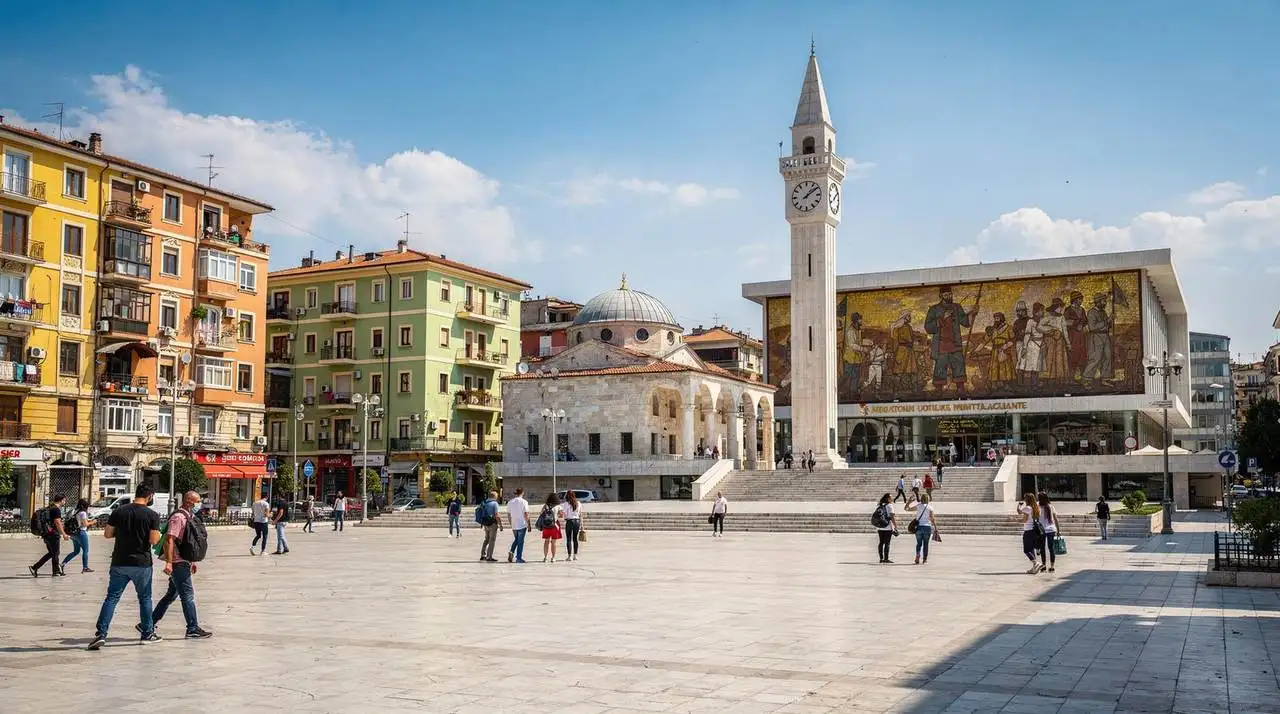
Arriving at Tirana Airport: Head directly to central Tirana on the LU-NA shuttle bus. Check in, freshen up, and then walk Skanderbeg Square in the early evening, when the fountains run and the locals promenade. Eat at a restaurant in the Blloku neighborhood for your first Albanian meal — try tavë kosi (baked lamb with yogurt) or grilled lamb chops.
Arriving by ferry at Saranda: Walk the seafront promenade, find your accommodation, and then take a taxi to Butrint for a late afternoon visit (the ruins close at sunset). Eat fresh fish on the waterfront with a glass of local white wine. Watch the lights of Corfu appear across the water at dusk.
Arriving at Durres by ferry from Italy: Drive or take a bus directly to Tirana (40 minutes on the A1 highway), or spend a morning in Durres exploring the Roman amphitheater before heading further.
Useful Resources for Planning Your Journey to Albania
Several tools make planning your arrival smoother:
For flights: Google Flights with price tracking enabled. Set alerts for Tirana (TIA) from your home airport. Skyscanner and Kayak are useful for multi-airline comparisons.
For ferry bookings: DirectFerries.co.uk covers the Italy-Albania routes. For Corfu-Saranda, check the Finikas Lines website or simply buy at the port.
For border crossing times: The Albanian customs authority and various travel forums post real-time reports on queue times at major land crossings during summer. Facebook groups like “Albania Travel” have useful current information.
For getting around once you arrive: Our buses and furgons guide and car rental Albania guide cover all the options in detail.
Getting to Albania requires a bit more planning than heading to a well-trodden Western European destination, but the process is entirely manageable and the arrival — whether into Tirana’s increasingly modern terminal, onto the Saranda waterfront with the mountains behind it, or from the sea at Durres — is always rewarding. The logistics are the entry price to one of Europe’s most genuine travel experiences.
Frequently Asked Questions About How to Get to Albania
What is the easiest way to get to Albania?
Flying into Tirana International Airport (TIA) is the easiest way to reach Albania. Ryanair, Wizz Air, and several other carriers operate direct routes from major European cities, with fares from EUR 20-60 each way if booked in advance. The airport is 17 km from Tirana city center with shuttle buses and taxis available.
Which airport do you fly into for Albania?
Tirana International Airport Nene Tereza (TIA) is the main international airport, handling the vast majority of flights to Albania. Corfu Airport in Greece is a useful alternative for travelers heading directly to the Albanian Riviera, combining a flight to Corfu with the short Corfu to Saranda ferry crossing.
Can you take a ferry to Albania?
Yes. Regular ferry services connect Italy (Bari, Ancona, Brindisi) to Durres and Vlora on Albania’s Adriatic coast, with crossings taking 8-19 hours depending on the route. The Corfu to Saranda ferry is a shorter crossing of about 30 minutes, popular with travelers arriving from Greece.
Can you drive to Albania?
Yes, Albania shares land borders with Montenegro, Kosovo, North Macedonia, and Greece, all with standard border crossings open to foreign vehicles. The most popular overland entry points are from Montenegro (via Shkodra), Kosovo (via Prizren or Pristina), and Greece (via Kakavia near Gjirokastra).
How do you get from Greece to Albania?
The quickest option is the Corfu to Saranda ferry, which crosses in about 30 minutes and runs multiple times daily in season. Alternatively, the land border at Kakavia between Ioannina and Gjirokastra is the main road crossing point from northern Greece, with regular bus services connecting the two countries.