The Riviera Gateway
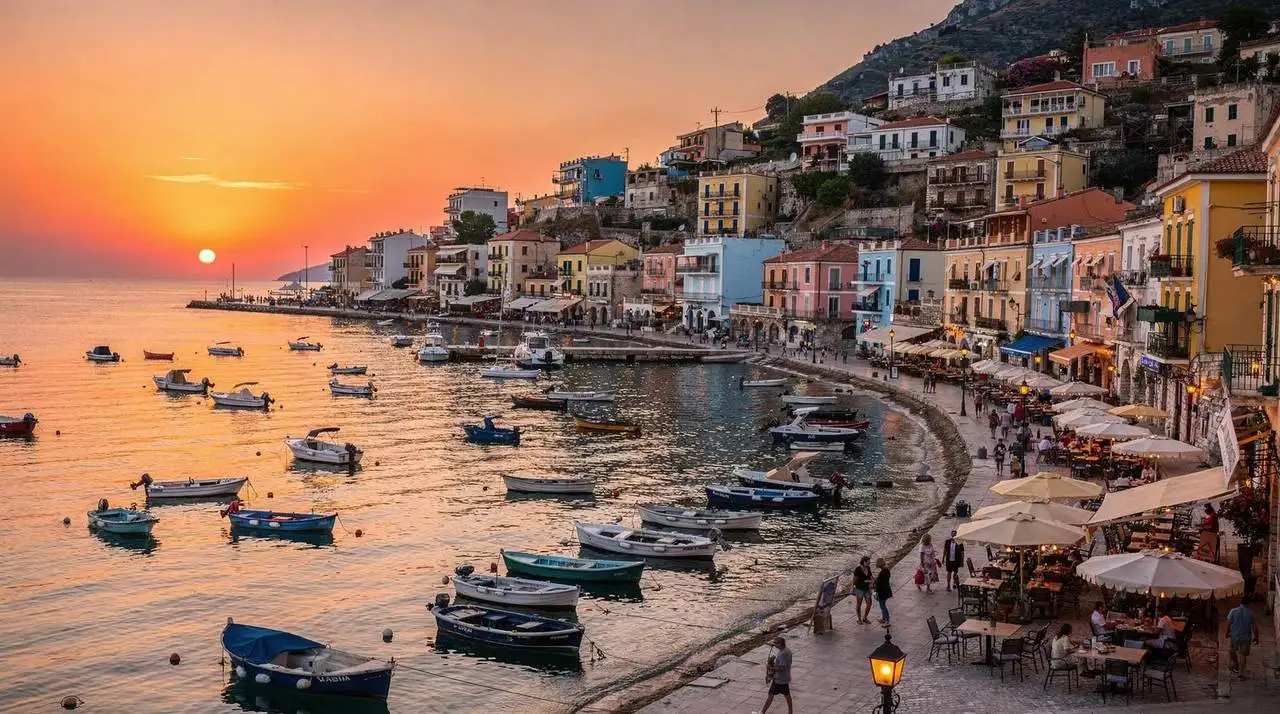
Saranda is where the Albanian Riviera begins — or ends, depending on your direction of travel. Curving around a natural bay on Albania’s southernmost Ionian coast, the city has grown rapidly from a quiet provincial town into a busy summer resort, with a promenade lined with cafes and restaurants, a surprisingly lively hotel strip, and a waterfront that hums until late into the warm Mediterranean nights. Across the water, barely five kilometers away, the Greek island of Corfu shimmers on the horizon — Saranda’s most startling geographical fact, and one that gives the city a cosmopolitan character that sets it apart from the rest of the Albanian coast.
The name Saranda derives from the Greek Agioi Saranda (“Forty Saints”), a reference to a 6th-century monastery built here in honor of forty Christian martyrs. The ancient city of Onchesmos occupied this bay, and later Byzantine and Venetian layers added to the site before the Ottomans took control. Today the city is primarily a jumping-off point for the extraordinary heritage sites and natural attractions that surround it — Butrint to the south, Ksamil just down the road, the Blue Eye spring inland, and Gjirokastra an hour north.
Saranda is the natural southern hub for any Albanian holiday. Our day trips from Saranda guide covers every excursion option in detail, and the 7 days south Albania itinerary uses Saranda as the base for exploring the region’s remarkable concentration of attractions.
| Where | Southern Ionian coast, 5km from Corfu, Greece |
| Cost | EUR 35-70/day |
| Time needed | 2-4 days |
| Getting there | Bus/furgon from Tirana (~5hrs) or ferry from Corfu (25-90 min) |
| Best time | May-June and September for warmth without August crowds |
Things to Do
Lëkurësi Castle
Perched on the hilltop directly above Saranda, the 16th-century Lëkurësi Castle was built by the Ottomans to protect the bay from Venetian naval attack. The castle itself is modestly preserved — mostly towers and walls — but the site rewards the 20-minute drive for the view alone: a sweeping panorama of Saranda’s bay, the Ksamil islands, Corfu, and on clear days as far north as the riviera coast toward Himara. A restaurant operates inside the castle walls in summer — an excellent spot for sunset drinks. Visit at dusk for the best light and the most dramatic views.
Practical details: Entry is free. Drive or take a taxi from the center (around EUR 5). The castle road is steep and narrow; a standard car handles it fine in dry conditions. Allow 1-2 hours for the visit including the viewpoint experience.
Saranda Walking Tour
Before striking out to the surrounding attractions, orient yourself with a local guide. This 2.5-hour walking tour around Saranda covers the city’s history, promenade, ancient synagogue ruins, and the key viewpoints with an English-speaking local guide — an efficient introduction to the city and its context that sets up your wider explorations effectively.
Butrint National Park
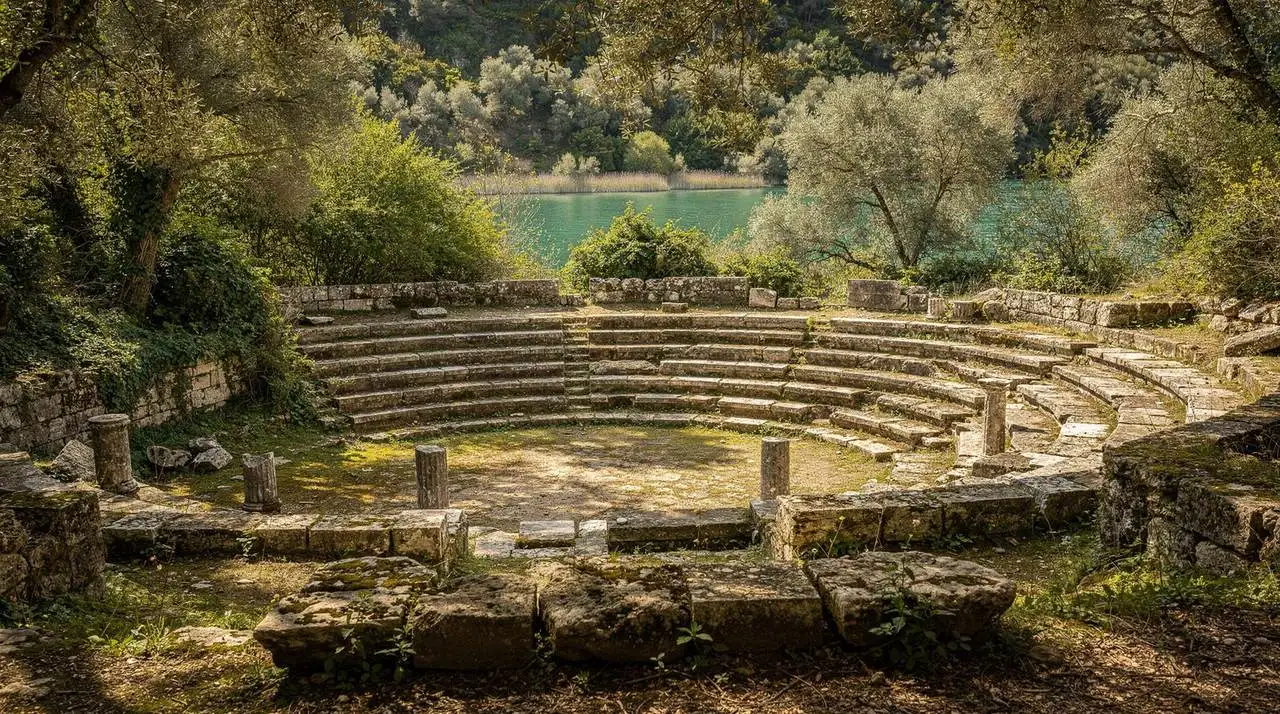
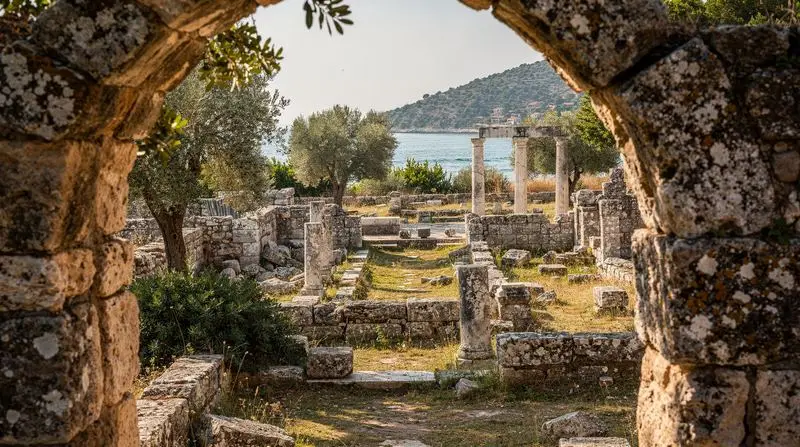
This is the heavyweight attraction of the Saranda area and one of the most important archaeological sites in the Mediterranean. Butrint sits on a forested peninsula 18 km south of Saranda, surrounded by a lagoon system that once made it a natural harbor. The site has been continuously inhabited from the 8th century BC through the Byzantine and Venetian periods, and every layer is visible in the landscape — a Greek theater carved into the hillside, Roman baths, early Christian baptistery with a floor mosaic of outstanding quality, Venetian castle, Byzantine basilica, and stretches of city wall threading through the trees.
Butrint is a UNESCO World Heritage Site and managed as a national park. Allow a full half-day, more if you are a serious history enthusiast. Entry is 1,000 ALL. Open daily 8am to 7pm in summer.
This Butrint archaeological park and Ksamil day trip from Saranda efficiently combines both attractions — morning archaeology at Butrint, afternoon beach time at Ksamil — in a single guided day that handles all logistics. It is the most efficient way to cover both major sites south of Saranda without managing transport independently.
Ksamil and the Islands
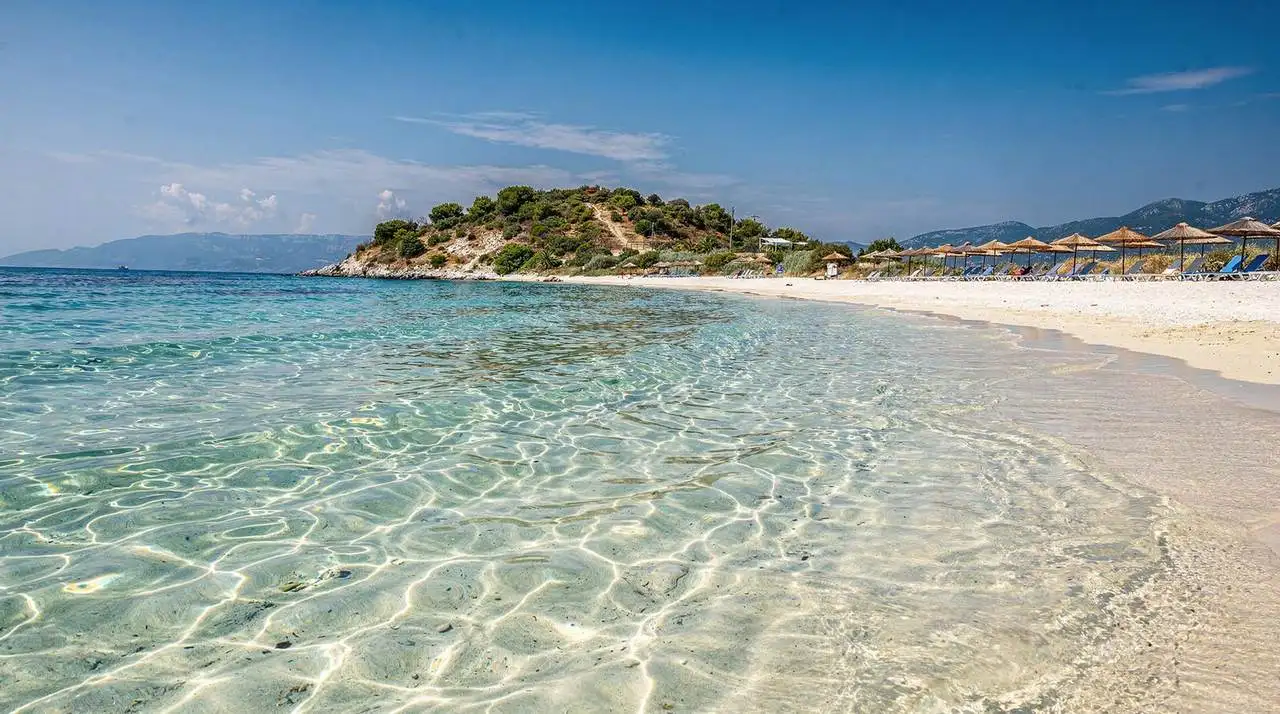
Just 17 km south of Saranda, Ksamil is a small coastal village with a collection of tiny islands accessible by boat from the beach and some of the finest clear-water swimming in Albania. The combination of white pebble and sand beaches, turquoise shallow water, and the offshore islands makes Ksamil the most photographed beach destination in the country. In summer it is crowded; in late May, June, or September the crowds thin and the experience is superb.
By taxi from Saranda, Ksamil is 15-20 minutes (around EUR 8-12). Many visitors split their time between Saranda (for logistics, dining, and nightlife) and Ksamil (for beach time), making day trips in both directions.
Blue Eye Spring
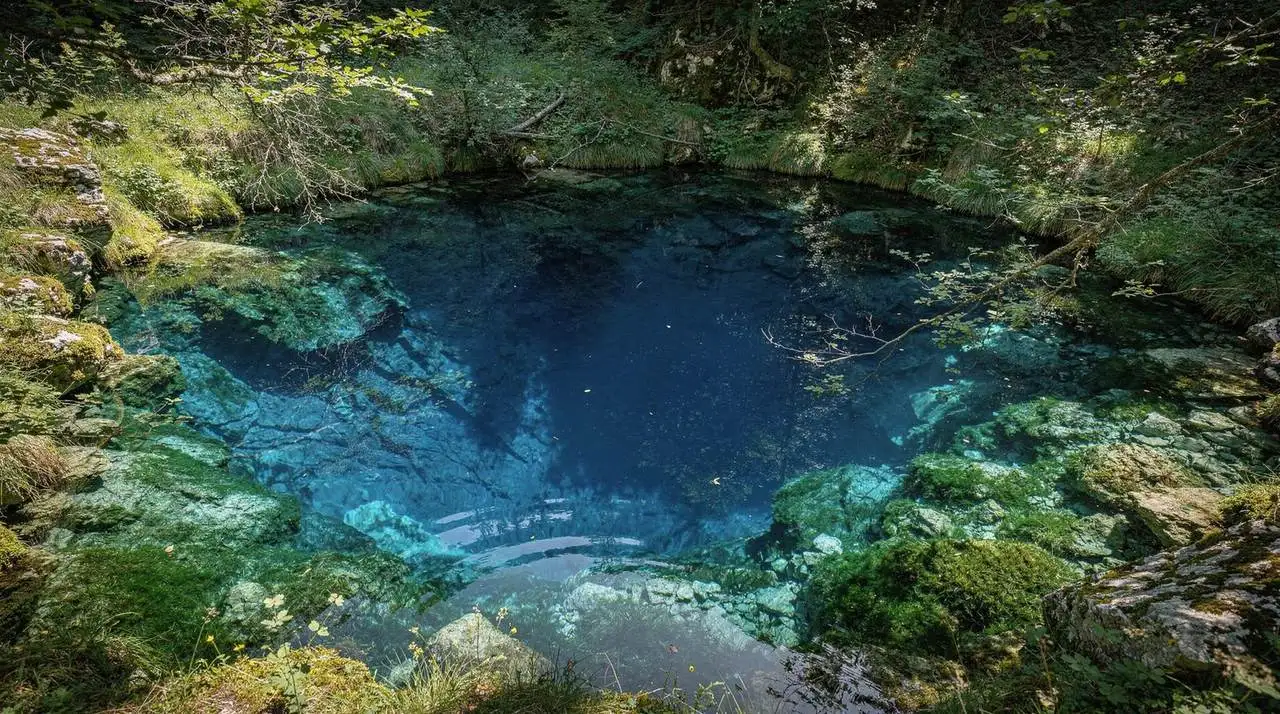
The Blue Eye (Syri i Kaltër) is approximately 25 km northeast of Saranda, a short drive inland through the valley. The spring — an underground river welling up with extraordinary force through a circular aperture in the riverbed — creates a pool of startlingly deep blue water surrounded by beech and poplar forest. The depth of the source has never been measured; it is at least 50 meters. Swimming in the outer edges of the pool is possible in summer, though the water is very cold (around 12°C year-round). Entry requires 100 ALL; parking is available nearby.
This half-day Blue Eye trip from Saranda is an excellent option if you do not have a rental car — covering transport and a local guide to explain the spring’s geography and folklore.
For a fuller day that combines Blue Eye with Albania’s most famous UNESCO stone city, this Blue Eye and Gjirokastra day trip from Saranda is one of the best organised excursions available from the city, combining natural wonder and historical depth in a single well-paced day.
Boat Tours
Saranda’s position on the Ionian coast makes it an ideal base for boat excursions. The coastline immediately to the north — running toward Himara and Dhermi — is dramatic cliff and cave territory accessible only by sea. Boat tours typically combine swimming stops, cave exploration, and snorkeling over clear Ionian waters.
This Saranda boat tour visiting 7 destinations with snorkeling is one of the most comprehensive on offer — a full day on the water with multiple swimming stops and sea cave visits. Our boat tours in Albania guide covers all options including prices and seasonal availability.
For a combined islands and snorkeling experience near Ksamil, the Ksamil Islands and shipwreck snorkeling tour covers the offshore islands, a WWI shipwreck visible in clear water, and multiple swim stops — ideal for a half-day on the water.
For those who prefer an active approach combining kayaking and walking, this Blue Eye kayak and walking tour including Lekursi Castle combines paddling the coastal area with the spring visit and a castle viewpoint — a physical and varied half-day.
The Full Southern Albania Loop
The most efficient way to cover Saranda’s main attractions is with a combination excursion: this “Best of Saranda” tour covering Blue Eye, Butrint, Ksamil, and Lëkurësi Castle packs the four main sites into a single day — an excellent option for visitors with limited time who want to cover the full southern circuit without managing transport independently.
Corfu Day Trip
The Ionian Ferry makes the crossing to Corfu town in as little as 25 minutes (high-speed hydrofoil) or 90 minutes on the standard ferry. Corfu is one of Greece’s most beautiful islands, with a UNESCO-listed old town, excellent beaches, and a very different cultural character from Albania. Day trips and overnight visits are both popular with visitors staying in Saranda.
This organised day trip from Saranda to Corfu Town and Palaiokastritsa covers the Corfu old town (UNESCO World Heritage Site) and the beautiful Palaiokastritsa bay — all the highlights of the island in a single guided day. Ferries run multiple times daily in summer; book in advance during July and August.
Saranda Promenade and City Beach
The seafront promenade — Bulevardi Ismail Qemali — runs the length of the bay and is pleasant for an evening walk. The city beach directly in front is functional but not Saranda’s finest (Ksamil is much better for swimming); the promenade’s value is in its cafes, gelato stands, and the social performance of the Albanian evening passeggiata. The ancient synagogue ruins on the promenade hill are an unexpected historical footnote — one of the oldest Jewish houses of worship ever found in Albania, dating from the 5th-6th century AD.
Planning Your Days: A Sample Split
| Day | Focus | Notes |
|---|---|---|
| Day 1 | Arrive, Lëkurësi Castle at sunset, promenade dinner | Ease in, orient yourself |
| Day 2 | Butrint and Ksamil | Combine archaeology with beach time |
| Day 3 | Blue Eye and Gjirokastra | Full day inland, back for dinner |
| Day 4 | Boat tour or Corfu ferry day trip | Flex day depending on weather/interest |
This four-day structure covers the essential sites without feeling rushed, and it is easy to compress into three days by combining the Blue Eye with a shorter Gjirokastra visit, or to extend with an extra beach day in Ksamil if swimming is the priority. The day trips from Saranda guide breaks down each option with more granular timing.
Where to Eat
Saranda’s restaurant scene has expanded considerably with the growth in tourism, offering everything from traditional Albanian grills to fresh seafood, pizza, and increasingly sophisticated modern cooking.
Mango Restaurant (Rruga Skenderbeu, promenade area) — Reliable seafood restaurant popular with locals and visitors. Good fresh fish at reasonable prices. The daily special typically features the best of what came in that morning. Budget EUR 10-18 per person.
Taverna Limani (harbor area) — Traditional Albanian cooking with a focus on fresh-caught fish from local boats. One of the better options for authentic cooking without the tourist markup. Budget EUR 8-14 per person.
Restorant Bora Bora (promenade) — Reliable mid-range option with good outdoor seating, sea views, and a menu covering Albanian classics and grilled meats. Budget EUR 10-16 per person.
Fresh seafood is the highlight — Ionian fish including sea bass, bream, and octopus are grilled simply and served at restaurants along the waterfront. Prices vary dramatically: the tourist-facing restaurants on the promenade are more expensive than the local spots one or two streets back. The morning byrek from a local bakery is one of the great cheap pleasures of Albanian travel — 150-200 ALL for a filling breakfast portion.
The bar scene runs late in summer, with the promenade’s cafe-bars filling up from around 9pm and staying busy well past midnight. The local raki is always available; Albanian beer (Korça, Kaon, Tirana) is cold and cheap.
Where to Stay
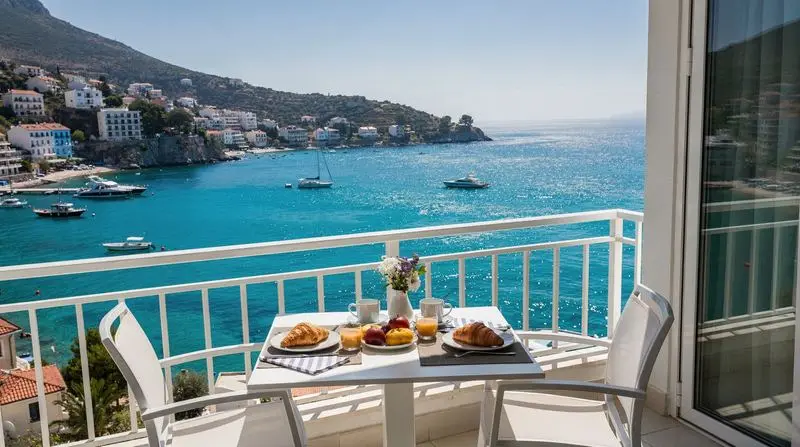
Saranda has extensive accommodation ranging from backpacker hostels to comfortable four-star hotels. The main areas to stay:
The promenade and center — convenient for restaurants, ferry connections, and organised tours. Prices are higher but the location is unbeatable. Expect EUR 50-120 per night for a mid-range double in summer.
Outside the center — quieter guesthouses and apartments offer better value, typically a 10-15 minute walk from the promenade.
Ksamil — staying in Ksamil (17 km south) and day-tripping to Saranda is an excellent alternative for beach-focused travelers. See our Ksamil page for options.
Full accommodation guidance in our where to stay in Saranda guide.
Saranda’s Growth and What It Means for Visitors
Saranda has changed rapidly over the past decade, transforming from a modest provincial town into one of Albania’s busiest tourism hubs, with new hotel construction visible along much of the seafront and hillside. This growth brings genuine benefits for visitors — a wider range of restaurants, more reliable transport connections, and improving infrastructure — but it also means the city can feel less distinctly Albanian than quieter destinations like Pogradec or Shkodra, with construction noise and traffic a factor in peak season.
For travellers who want the convenience of Saranda’s logistics without the busiest atmosphere, staying slightly outside the immediate promenade area, or basing in Ksamil with day trips into the city, offers a reasonable compromise. The city’s underlying appeal — the proximity to world-class archaeology, beaches, and natural springs — remains intact regardless of how much the town itself has grown, and most visitors find the trade-off worthwhile given how much is packed into a small radius.
How to Get to Saranda
From Tirana: The most common approach is by bus or furgon — a 4.5 to 5-hour journey via the SH4 highway through the mountain interior. Buses depart from Tirana’s southern terminal several times daily; cost approximately EUR 8-10 one way. By rental car, the same journey takes approximately 4 hours. See our car rental in Albania guide for agency recommendations.
From Gjirokastra: One hour south by furgon or private car along the SH75. This is the most common direction for travelers doing the southern circuit. Furgons run frequently throughout the morning.
From Corfu: The ferry is an increasingly popular entry point — fly to Corfu and take the 25-minute hydrofoil to Saranda, entering Albania via one of Europe’s most scenic crossings. Full information in our how to get to Albania guide.
From Butrint: The site is just 18 km south, connected by a road through the Vivari Channel. Local transport runs several times daily in summer; a taxi costs around EUR 12-15.
Our day trips from Saranda guide covers all transport options in detail, including rental car recommendations and shared transport timetables.
Best Time to Visit
May-June and September are the best months: warm sea temperatures (18-22°C in May, 24-26°C in September), manageable crowds, and lower accommodation prices than peak summer. The water is swimmable from mid-May onward.
July-August is peak season: temperatures reach 32-36°C, accommodation fills quickly, and Ksamil in particular becomes very crowded. Book well in advance and arrive at popular spots early in the day.
October is still warm enough for the beach (22-24°C) and the crowds have largely gone. An underrated month on the riviera.
Winter is quiet — most tourist businesses close from November through March, but Saranda itself remains a functioning town with some accommodation available year-round.
Practical Tips
Ferry to Corfu: Book tickets in advance in summer, particularly for July and August weekends. Finikas Lines and Ionian Ferries both operate the route. Take your passport — you will be entering and leaving the EU.
Car rental: A rental car unlocks the full potential of the Saranda area, allowing you to visit Blue Eye, Butrint, and Ksamil on your own schedule. Several agencies operate in Saranda; compare options in our car rental in Albania guide.
Negotiating boat tours: Independent boat operators at the harbor will approach you with offers. Prices are negotiable, especially outside peak season. Ensure the tour includes snorkeling equipment and check whether fuel costs are included in the quoted price.
Albanian SIM cards: Available at phone shops in the center. Useful for navigating the Blue Eye road and finding guesthouses in Ksamil.
Safety: Saranda is a very safe destination. See our Albania safety guide for general travel safety information.
Best beaches nearby: For the full picture of swimming options around Saranda, our best beaches in Albania guide compares Ksamil, Butrint channel swimming spots, and the beaches within Saranda itself.
Saranda’s combination of accessible natural beauty, outstanding archaeology, and growing tourist infrastructure makes it the most complete resort destination in Albania. Pair it with Ksamil for beaches, Butrint for history, and Gjirokastra for culture, and you have one of the best-value holidays in the Mediterranean. The full Albanian Riviera road trip itinerary shows how to use Saranda as the southern anchor of a week-long coastal journey.
Frequently Asked Questions About Saranda
Is Saranda worth visiting?
Yes — Saranda is one of the most rewarding bases in Albania. The city itself is pleasant rather than spectacular, but its surrounding area is extraordinary: Ksamil’s Caribbean-quality beaches are 15 minutes south, the UNESCO archaeological site at Butrint is 18 km away, the Blue Eye spring is 25 km inland, and Gjirokastra is just one hour north. Four days based in Saranda can cover all of these with time to spare for a ferry day trip to Corfu.
Is Saranda or Ksamil better?
They serve different purposes. Saranda is a full city with restaurants, nightlife, ferry connections, and logistics for day trips. Ksamil is a village with better beaches — the transparent turquoise water and offshore islands make it the finest swimming destination in Albania. Most visitors use Saranda as their base and spend beach days in Ksamil. If you prioritize beach time over urban facilities, staying in Ksamil is the better choice.
How do you get from Corfu to Saranda?
Ferries run multiple times daily in summer. The fast hydrofoil crossing takes 25 minutes and costs approximately EUR 19-25 one way. The standard ferry takes 90 minutes. Finikas Lines and Ionian Ferries both operate the route. Book in advance for July and August weekends. Take your passport — you are crossing an EU border.
Is Saranda expensive?
By Western European standards, Saranda is very affordable. Accommodation ranges from EUR 40-120 per night for a mid-range hotel. Restaurant meals on the promenade cost EUR 10-16 per person for seafood; local restaurants one street back are EUR 6-10. In July and August prices rise by around 20-30%. May, June, and September offer the best combination of warm weather and lower prices.
What is the best month to visit Saranda?
May-June and September are the optimal months. The sea reaches swimmable temperatures from mid-May (18-22°C), crowds are manageable, and prices are lower than peak summer. September is arguably the finest month — the sea remains warm (24-26°C), the summer crowds have thinned after the first week, and the light is exceptional. July and August are hottest and busiest but have the most lively atmosphere.
How many days do you need in Saranda?
Two to four days covers the essentials comfortably: a day for the city and Lëkurësi Castle, a day for Butrint and Ksamil, a day for the Blue Eye and Gjirokastra, and an optional flex day for a boat tour or Corfu ferry trip. Three days is a reasonable minimum if time is tight; five or more allows a genuinely relaxed pace with extra beach time in Ksamil.