7 Days in South Albania: From UNESCO Cities to Ionian Beaches
Southern Albania is one of Europe’s most rewarding travel experiences: two UNESCO World Heritage cities carved from stone and Ottoman plaster, the crystalline spring of the Blue Eye, thermal baths set in a river gorge, pristine Ionian beaches, and a coastline that rivals the Greek islands at a fraction of the cost. This seven-day itinerary covers the essential south without feeling rushed, spending enough time in each place to go beyond the surface.
This route works without a car using Albania’s network of buses and furgons (shared minibuses), though a rental car for the last two days would give you more flexibility along the Riviera. For a more extensive south Albania experience, see our 14-day comprehensive Albania itinerary. For those who want to combine north and south, the 10-day complete itinerary is ideal.
| Where | Tirana, Berat, Gjirokastra, Permet, Blue Eye, Saranda, Ksamil |
| Cost | Around EUR 230–730 per person (budget to mid-range) |
| Time needed | 7 days, no car required (though useful for the Riviera) |
| Getting there | Tirana International Airport, then bus south |
| Best time | May–June or September–October |
Overview
- Day 1: Arrive Tirana, explore the capital
- Day 2: Tirana sights and food
- Day 3: Travel to Berat, explore the old town
- Day 4: Berat and Osum Canyon day trip
- Day 5: Gjirokastra
- Day 6: Permet and thermal baths
- Day 7: Blue Eye, Saranda, Ksamil
Day 1: Tirana — Arrival
Afternoon/Evening: First Taste of the Capital
Arrive at Tirana International Airport and transfer to your accommodation. Tirana gives you the perfect introduction to contemporary Albania — a city that has transformed itself from communist grey to a riot of colour, energy, and ambition.
Spend the afternoon around Skanderbeg Square: the National History Museum, the Et’hem Bey Mosque, the Clock Tower. Walk through Blloku — the former party elite’s neighbourhood — and find a table at one of its pavement cafes for an Albanian macchiato (small, strong, excellent) and some people-watching. The evening is for dinner; try fërgësë (Tirana’s signature dish of peppers, tomatoes, and cottage cheese baked in an earthenware pot) at Oda Restaurant or Era Restaurant in the centre.
Taxi from airport: 2,500–3,000 lekë. Hotel options range from EUR 15 hostels to EUR 100+ boutique hotels; Blloku and the centre are the best locations.
Day 2: Tirana — Museums, Markets, and Food
Morning: National History Museum and Pazari i Ri
Begin at the National History Museum (700 lekë) for a comprehensive grounding in Albanian history from the Illyrians through the communist era. Then walk to Pazari i Ri — the beautifully restored covered market — for a lunch built from local olives, cheeses, pickled vegetables, and freshly baked bread. Budget 300–500 lekë for an excellent market lunch.
Afternoon: BunkArt 2 and Blloku
Visit BunkArt 2 — the communist-era nuclear bunker museum documenting the Sigurimi secret police — then explore Blloku’s boutiques, street art, and colourful painted facades. The former Pyramid of Tirana is worth a stop; climb the exterior for free city views.
Evening: Tirana Food Tour
Join a Tirana food tour in the evening — typically 3–4 hours hitting the city’s best food spots: byrek stalls, traditional tavernas, raki bars, and sweet shops. It’s both a great meal and the best possible introduction to Albanian culinary culture.
Day 3: Tirana to Berat
Morning: Travel to Berat
Take the morning bus from Tirana to Berat — approximately 2 hours, 400 lekë, multiple daily departures from the southern bus terminal. Arrive in Berat by late morning and check into your accommodation in the Mangalem old town.
Afternoon: Mangalem, Kalaja, and Onufri Museum
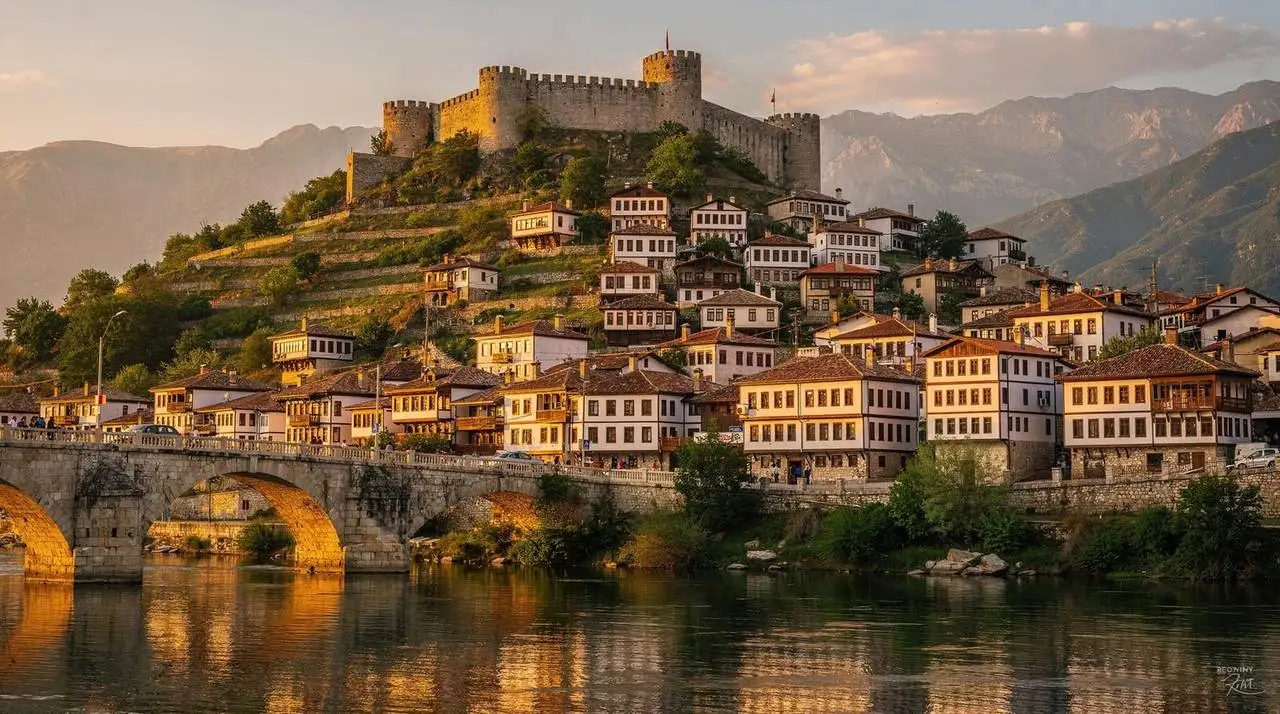
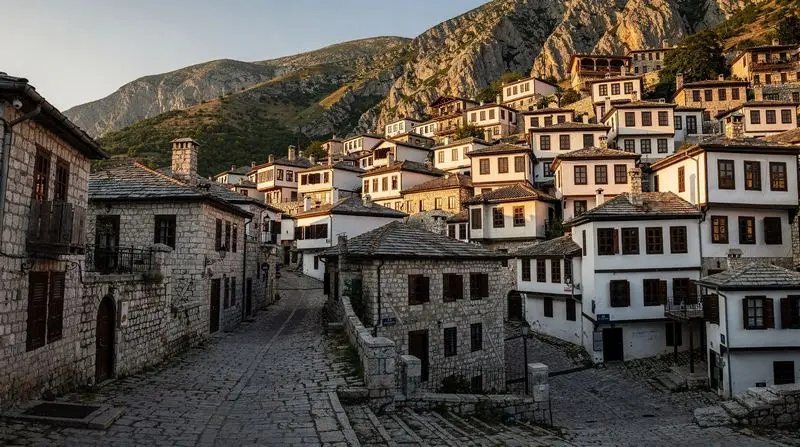
Walk the cobblestone lanes of Mangalem — Berat’s Islamic old quarter stacked on the hillside above the Osum River — and climb to Kalaja, the inhabited castle at the top. The Onufri Museum inside Kalaja (400 lekë) displays extraordinary 16th-century Byzantine icons; Onufri’s use of a distinctive vivid red pigment makes his work immediately recognisable.
Explore the castle’s churches, cisterns, towers, and still-inhabited houses. The views from the walls over the Osum valley and Mangalem quarter below are among the best in the country.
Evening: Gorica Quarter
Cross the old stone bridge to the Gorica quarter on the east bank of the Osum and find a terrace cafe or restaurant for sunset. The reflected late-afternoon light on the thousand windows of Mangalem across the river is the defining image of Berat. Dinner at a Berat guesthouse is often the best option — many serve home-cooked meals using local ingredients for 800–1,200 lekë.
Day 4: Berat and Osum Canyon
Morning: Osum Canyon
Take a morning shared taxi (1,000–1,500 lekë each way, split with other travellers) to the Osum Canyon — a spectacular gorge carved by the Osum River into pale limestone cliffs, up to 80 metres deep in places. Book an Osum Canyon and Bogove Waterfall tour from Berat for the most complete experience — it typically combines the canyon with the Bogove Waterfall, a 25-metre cascade into a turquoise pool.
The canyon is accessible by riverbed walk during dry months (July–September), when the water level drops enough to wade through. During spring, water levels are higher and boat trips through the canyon are available. Either way, the sheer limestone walls, the caves, and the extraordinary colour of the water make this one of south Albania’s great natural spectacles.
Afternoon: Ethnographic Museum and Gorica
Return to Berat by early afternoon. Visit the Ethnographic Museum in the Mangalem quarter — housed in an original 18th-century Ottoman mansion with superb carved wooden ceilings. Entry 300 lekë; the collection of traditional costumes, tools, and domestic objects gives excellent context for Albanian daily life in the pre-industrial era.
Spend the remaining afternoon wandering Berat’s streets: the Bachelors’ Mosque (Xhamia e Beqarëve), the renovated Old Bazaar, and the riverside promenade along the Osum are all worth time. Berat is a town that rewards slow walking.
Evening: Farewell Dinner in Berat
This is your last night in Berat. Try Restaurant Mangalemi or one of the vine-covered terraces in the old town for a relaxed dinner. Local Berat wines (the Trebicano grape produces a distinctive local white) are worth trying. Budget 1,500–2,500 lekë for dinner with wine.
Day 5: Gjirokastra — The Stone City
Morning: Travel to Gjirokastra
Take a morning bus or shared taxi from Berat to Gjirokastra — approximately 2.5–3 hours with a possible change in Tepelena. Shared taxis from Berat bus station are more comfortable and not much more expensive: 1,500–2,000 lekë per person. Arrive by late morning.
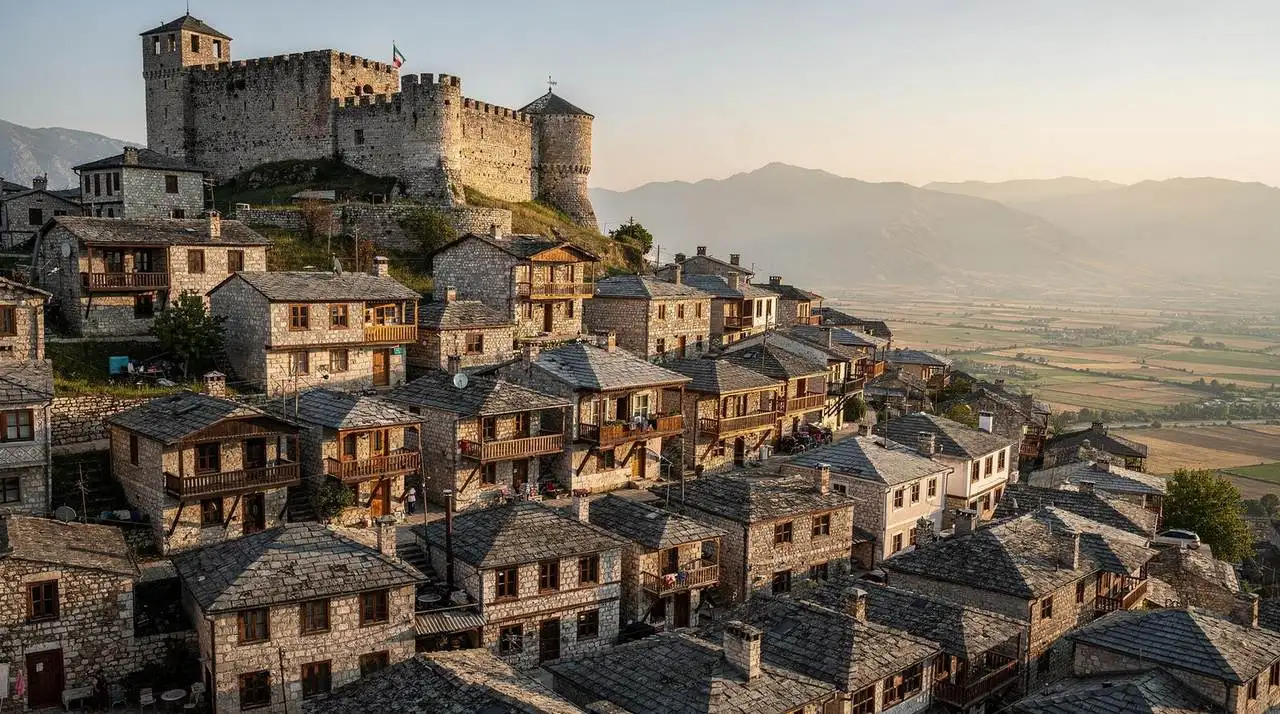
Gjirokastra shares Berat’s UNESCO status but has a completely different character: built from grey local stone on a dramatically steep hillside, it is more austere, more fortress-like, and perhaps even more visually powerful. The NATO bombing campaign that destroyed much of Kosovo and the socialist-era concrete blocks that mar most Albanian cities are both absent here; Gjirokastra preserved its historic fabric, partly because of communist heritage protection policies and partly because of its geographic isolation.
Afternoon: Castle, Old Bazaar, and Zekate House
Climb to Gjirokastra Castle — the enormous fortress perched above the old town — for the best views over the Drinos valley and across toward Greece. The castle courtyard contains a captured US Air Force jet and various military hardware, giving the whole site a slightly surreal quality. Inside: an ethnographic museum and the old city prison. Entry 500 lekë.
Take a guided Gjirokastra city tour to properly unlock the city’s history and architecture — the guides here are excellent and the neighbourhood context is hard to absorb independently.
After the tour, visit the Zekate House — an extraordinary 18th-century tower house that exemplifies the Gjirokastra architectural type: massive defensive lower storeys, elegant upper living quarters with floor-to-ceiling windows, and intricately painted wooden ceilings. Entry 300 lekë.
Evening: Old Bazaar and Ismail Kadare’s House
Walk through the restored Old Bazaar and visit the house where novelist Ismail Kadare (Albania’s most internationally recognised writer, nominated for the Nobel Prize multiple times) was born. Several good restaurants are clustered in and around the bazaar; Kujtimi Restaurant and Sopoti Restaurant are local favourites with traditional Albanian cooking.
Day 6: Permet and the Benja Thermal Baths
Morning: Travel to Permet
From Gjirokastra, take a bus or shared taxi northeast to Permet — approximately 1.5–2 hours through mountain scenery. Permet is a small, relaxed town on the Vjosa River — one of Europe’s last wild rivers — and is the gateway to some of Albania’s most beautiful natural landscapes.
Book a Permet and Benja thermal baths tour for a guided experience that includes the thermal pools and often the Benja bridge and surrounding canyon.
Afternoon: Benja Thermal Baths and Vjosa Valley
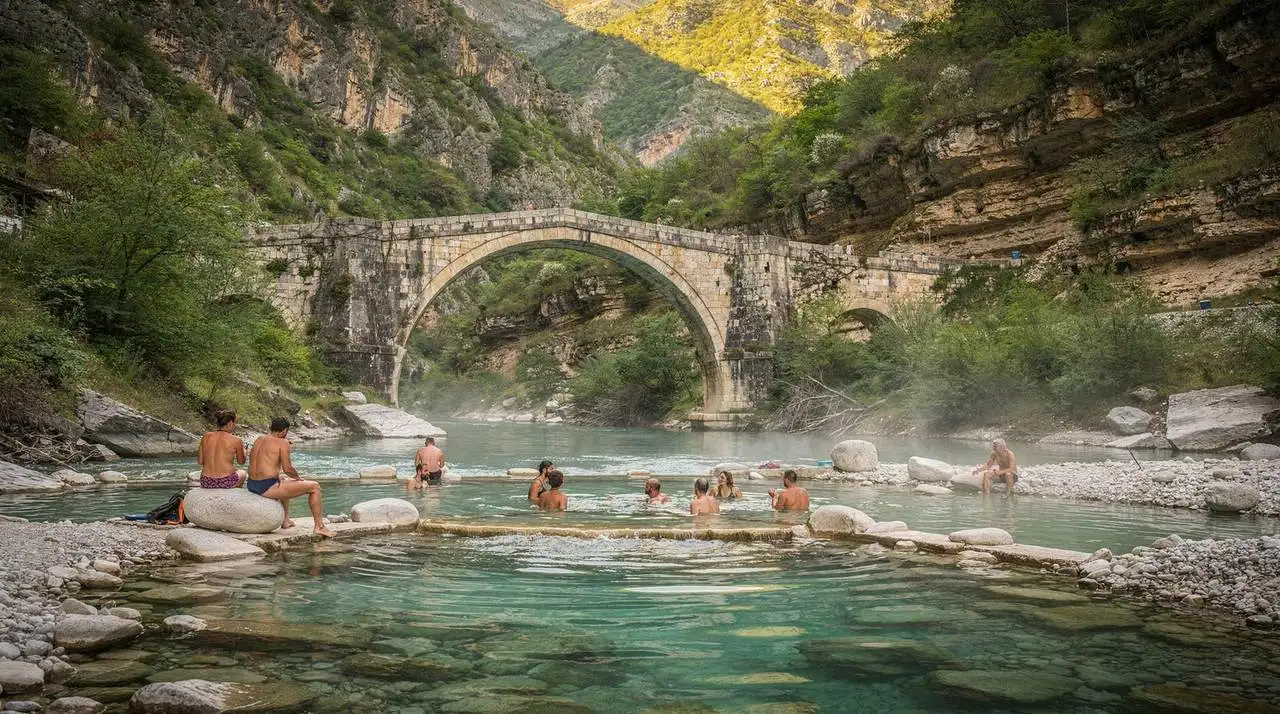
The Benja Thermal Baths — naturally hot mineral springs emerging from the rock walls of a limestone canyon on the Langarica River — are one of Albania’s great pleasures. The pools range in temperature from comfortably warm to genuinely hot, and the setting (stone canyon walls, clear river below, ancient bridge upstream) is extraordinarily beautiful. Entry is free; a towel and swimwear are essential.
The Ottoman bridge at Benja — a graceful single-arch stone bridge spanning the Langarica gorge — is one of the finest examples of Ottoman bridge-building in Albania. The river below is swimming-pool clear in summer.
Permet itself is worth exploring: the town centre has a pleasant promenade along the Vjosa, several good cafes, and the local speciality of Permet gliko — preserved fruits in sugar syrup, particularly quince and citrus, which make excellent gifts.
Evening: Overnight in Permet or Return to Gjirokastra
Either stay overnight in Permet (good basic guesthouses, 2,000–3,500 lekë per room) or return to Gjirokastra for your last night there before continuing south. If staying in Permet, dinner at one of the riverside restaurants costs 1,000–1,800 lekë for a full meal.
Day 7: Blue Eye Spring, Saranda, and Ksamil
Morning: The Blue Eye Spring
From Gjirokastra or Permet, make your way to the Blue Eye (Syri i Kaltër) — most easily done by joining a tour or taking a shared taxi from either town. The Blue Eye is located about 25 km east of Saranda on the road from Gjirokastra.
Book a Blue Eye, Butrint, and Ksamil day tour from Saranda — this is the most efficient way to combine all three highlights if you’re basing yourself in Saranda.
The Blue Eye is a karst spring where water wells up from an unknown underground source, creating a perfect cobalt-blue disc in the forest floor. The colour is extraordinary — an intense, unreal blue that photographs cannot quite capture accurately. The surrounding plane forest and the sound of the cold water are deeply calming. Entry to the park: 100 lekë.
Afternoon: Saranda and Ksamil
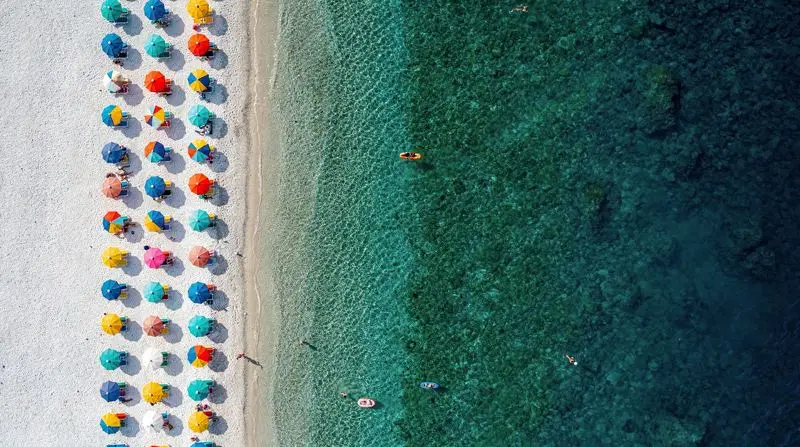
Continue to Saranda for lunch on the waterfront, then take a taxi or local bus 15 km south to Ksamil — a small village with three small islands offshore and the finest beaches in Albania. The water here is Ionian clear and warm from June through September; the beaches are sandy and the islands (reachable by short boat or kayak) offer snorkelling over surprisingly good coral and sea life.
Ksamil sits adjacent to Butrint National Park, and the combination of archaeology and beach makes it an ideal final destination. The village has grown quickly as a tourist destination and now has a decent range of restaurants, bars, and accommodation.
Join an Albanian Riviera boat tour from Saranda to see the coastline from the water — these tours typically include Ksamil, the Butrint channel, and sometimes Butrint itself from the sea.
Evening: Saranda Waterfront
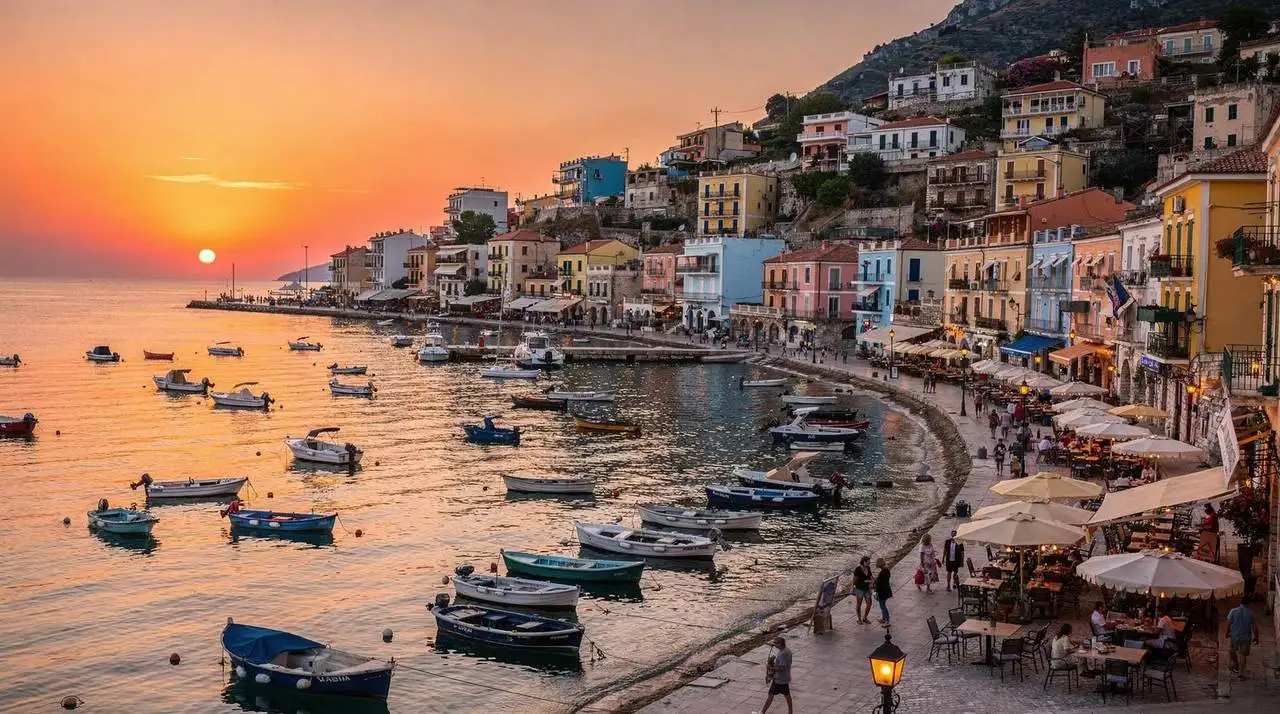
Saranda’s promenade is lively in the evening with restaurants, ice cream stands, and bars. A seafood dinner — grilled sea bass, octopus salad, calamari — with local white wine on the waterfront is the perfect end to seven days in southern Albania. From Saranda you can catch a ferry to Corfu (45 minutes, several daily crossings), take a bus back to Tirana (4–5 hours), or extend your trip along the Albanian Riviera.
Where to Stay
Tirana (2 nights): Hostel Freddy’s (budget), Hotel Kalemi 2 (mid-range), Padam Hotel (comfortable).
Berat (2 nights): Hotel Mangalemi (mid-range, old town location), Guesthouse Lena (budget, great views).
Gjirokastra (1–2 nights): Guesthouse Kotoni (budget, stone house), Stone City Hotel (mid-range).
Permet (optional 1 night): Guesthouse Argjiro, Hotel Permet.
Saranda/Ksamil (1 night): Hotel Butrinti (mid-range), Camping Bleart Ksamil (budget), Hotel Riviera Saranda (comfortable).
7-Day South Albania Budget Summary
| Category | Budget | Mid-range | Comfortable |
|---|---|---|---|
| Accommodation (7 nights) | EUR 80–110 | EUR 245–350 | EUR 490–700 |
| Intercity transport | EUR 18–25 | EUR 35–55 | EUR 60–100 |
| Museum and park entries | EUR 22–28 | EUR 22–28 | EUR 22–28 |
| Food and drink (per day) | EUR 15–22 | EUR 30–50 | EUR 55–90 |
| Guided tours | EUR 0–25 | EUR 60–100 | EUR 150–250 |
| Total 7 days | EUR 230–325 | EUR 510–730 | EUR 990–1,450 |
Prices per person. Budget assumes dorms/cheap guesthouses and buses. Mid-range assumes guesthouses and mixed bus/taxi. Comfortable assumes small hotels and mostly taxis/tours.
Key Tips for South Albania
Bargain on shared taxis: For intercity journeys not covered by scheduled buses, ask at the bus station for a shared taxi. Negotiate the per-seat price before getting in; it should be close to the bus fare.
Cash is king outside Tirana: Berat, Gjirokastra, Permet, and smaller villages operate almost entirely on cash. Bring enough lekë from Tirana or Berat ATMs.
Heat in July–August: South Albania in midsummer is genuinely hot — often 35–38°C in the valleys. Start sightseeing early, rest in the afternoon, and carry plenty of water.
Mosquitoes at Butrint: The Butrint lagoon area is prone to mosquitoes, especially at dusk. Carry repellent.
Ferry to Corfu: Saranda to Corfu ferry takes 45 minutes and costs around EUR 20 one-way. Several operators run the crossing; Finikas Lines and Ionian Cruises are reliable. See our Albania and Greece combined itinerary for a route that includes both countries.
South Albania in Depth: Why These Cities Matter
Southern Albania is more than a collection of pretty towns. The two UNESCO cities — Berat and Gjirokastra — represent something genuinely rare in European heritage: urban environments where centuries of history are visible in the built fabric, where people still live in Ottoman-era houses, and where the social structures of a pre-industrial Balkan city are legible in the street pattern, the architecture, and the relationship between neighbourhoods.
Berat’s three quarters: Berat divides into three historic zones that each represent a different community of the Ottoman city. Mangalem (the western hillside) was the Muslim quarter, served by the Bachelors’ Mosque and the Halveti Mosque. Gorica (the eastern bank) was the Christian quarter, its community focused on Orthodox churches. And Kalaja — the castle on top — was a mixed community of Christians and Muslims, defended by shared walls and united by proximity. This three-part structure, where different faiths coexisted within a single city (not always harmoniously, but continuously), is itself historically significant and is part of what UNESCO recognised.
Gjirokastra’s towers: The distinctive architecture of Gjirokastra — massive stone towers with small windows on the defensive lower floors and large bay windows opening onto the valley on the upper living floors — reflects a social history of intermittent violence and the need for families to both defend themselves and display their wealth. The towers were built by powerful local families (the Zekate family’s house is the finest surviving example) during a period of Ottoman governance when local strongmen competed for influence and needed both military capability and social prestige. Reading the architecture as social history makes Gjirokastra’s streets far more interesting than a straightforward heritage town.
Saranda’s layers: Saranda feels like a straightforward beach resort — the promenade, the hotels, the seafood restaurants facing Corfu. But the town has genuine history beneath the modern surface. The name comes from the Byzantine monastery of Agioi Saranta (Forty Saints) whose ruins are visible on the hillside above the town. The ancient city of Onchesmos occupied this site in Greek and Roman times; its remains lie beneath the modern town and occasionally surface during construction work. Butrint — 12 km south — gives this history its full expression.
The Ottoman Heritage of South Albania
One of the most powerful themes running through this 7-day itinerary is the Ottoman legacy. Albania was part of the Ottoman Empire from 1385 (Gjirokastra fell) or 1417 (Berat fell) until 1912 — over 500 years of Turkish governance that left profound marks on language, architecture, food, and culture.
The Ottomans brought Islam (Albania was predominantly Orthodox Christian before), rebuilt and expanded existing fortifications (Berat’s Kalaja, Gjirokastra’s castle), created the covered bazaar system (visible at both cities), introduced the hammam (public bathhouse), and transformed domestic architecture through the introduction of the bay window — a concession to the desire for light in a culture that required privacy from the street.
Albanian Islam, however, was always syncretic. The Bektashi order — a mystical Sufi tradition that blends Islamic, Christian, and pre-Islamic Albanian elements — was particularly strong in southern Albania. The Bektashi world headquarters relocated to Tirana after Atatürk abolished the order in Turkey. Walking through Berat or Gjirokastra, you’ll notice that mosques and churches often stand within metres of each other, that many Albanian Muslims celebrate Orthodox Easter, and that the prohibition on alcohol has never meaningfully applied. This is a form of Islam shaped by Albanian culture, not the other way around.
Understanding this context makes the religious sites of south Albania — the mosques, the Orthodox churches, the Bektashi teqe (shrines) — far more interesting than simple architectural sightseeing.
Getting the Most from Gjirokastra
Gjirokastra rewards more than the standard castle-and-bazaar visit. Here are experiences that most visitors miss:
The view from below: Most photos of Gjirokastra are taken from above (from the castle or the road above the old town). But the most dramatic view of the old city is from the valley floor, looking up at the tower houses stacked against the hillside, their stone walls catching the afternoon light. Walk down the main road toward the football stadium and look back.
The evening bazaar: The old bazaar is at its best in the evenings when day visitors have left and local residents come out for their evening stroll (xhiro). The cafe terraces fill with families; the sound of Albanian conversation echoes off the stone. This is the authentic city.
The castle folk music festival: If your visit coincides with summer (the festival usually takes place in late July or August in even-numbered years), Gjirokastra’s Folk Music Festival is one of Albania’s great cultural events — ensembles from across the country and region perform traditional polyphonic music (iso-polyphony, which UNESCO has recognised as Intangible Cultural Heritage) in the castle courtyard.
Ismail Kadare’s view: Find the viewpoint above Kadare’s childhood home — he describes this exact perspective in “Chronicle in Stone,” and reading the relevant passage while looking at the view is one of those rare literary-travel moments where a book and a place align precisely.
South Albania’s Food and Wine Scene
Berat: Local specialities include lamb cooked in the Berat style (slow-roasted in clay pots sealed with dough and left in wood-burning ovens overnight), fresh river fish from the Osum, and the local white wine from Trebicano grapes. The guesthouses of Mangalem typically serve the most authentic home cooking; restaurant food in Berat is good but the family guesthouse meal is better.
Gjirokastra: The local food speciality is the Gjirokastra version of byrek — made with a different ratio of filling to pastry than the Tirana version, and often baked in larger pans cut into squares rather than individual triangles. Lamb from the surrounding mountains is excellent. The restaurants in the Old Bazaar serve reliably good traditional food.
Permet: The most interesting local food culture on this itinerary. Permet is famous for its gliko (preserved fruits in syrup — especially quince, citrus, and rose), for its local wine (from indigenous Vlosh and Serekan grapes, typically robust reds), and for an extraordinary variety of wild herbs gathered from the surrounding mountains and used to flavour everything from raki to honey. The Vjosa River provides fresh trout.
Saranda and Ksamil: The Ionian coast means fresh seafood. The fish comes off boats that still go out daily from the small harbours; the octopus is dried on the line outside the restaurants before being grilled; the mussels come from local beds in the Butrint lagoon. Grilled sea bass and sea bream are the default order; both are reliably excellent. Local white wine from the Saranda region (ask for Shesh i Bardhe, a light, dry indigenous white) pairs well with fish.
Adjusting the Route: More Time or Less
If you only have 5 days, the cleanest cut is Permet — genuinely rewarding but the most out-of-the-way stop on this route, requiring a dedicated detour that the UNESCO cities and the coast don’t. Dropping it lets you move directly from Gjirokastra to the Blue Eye and Saranda, and the resulting route closely matches our 5-day highlights itinerary. Keep Permet if thermal baths and wild-river scenery matter more to you than an extra beach day in Ksamil.
With more time — 9 or 10 days instead of 7 — the best addition is the Albanian Riviera itself: two or three extra days from Saranda north through Himara and Dhermi to the Llogara Pass, ideally with a rented car picked up in Saranda. This turns the trip’s final beat from “one evening in Saranda” into a proper coastal road trip; see the Albanian Riviera road trip itinerary for the detailed version, or extend directly into the 10-day complete itinerary if you’d rather add the north instead of more coast.
Should You Rent a Car for the Riviera Leg?
The itinerary above works entirely without a car, using buses and shared taxis for every transfer including the final approach to Saranda and Ksamil. A car becomes genuinely useful only if you extend past Day 7 onto the wider Riviera (Himara, Dhermi, the Llogara Pass), where bus frequency drops and the coastal road rewards stopping wherever you like rather than sticking to fixed timetables. For the core 7-day route as written, skip the rental — it adds cost without meaningfully improving the Tirana-Berat-Gjirokastra-Permet-Saranda sequence, all of which is well served by shared taxis and buses. See the car rental guide if you do decide to extend onto the Riviera.
Timing This Route Around the Heat
South Albania’s inland valleys — Berat, Gjirokastra, and especially Permet, which sits in a sheltered river basin — run noticeably hotter than the coast in midsummer, often reaching 35–38°C by early afternoon in July and August. This itinerary’s structure, front-loading castle and museum visits into the morning and reserving afternoons for slower wandering or shaded courtyards, works well against that heat pattern, but it’s worth building in even more margin if you’re travelling in peak summer: start Kalaja and Gjirokastra Castle visits by 9am rather than mid-morning, and treat the 1pm–4pm window as rest time rather than sightseeing time in Berat and Gjirokastra specifically.
The coastal stretch (Saranda, Ksamil) is more forgiving in summer thanks to sea breezes, which is part of why the itinerary saves the coast for last — by Day 7 you’ve done the hottest, most exposed sightseeing and arrive at the beach ready to simply cool off rather than tour.
Shoulder season (May–June, September–October) removes most of this pressure entirely: daytime temperatures in the inland valleys stay comfortable enough for a normal all-day sightseeing pace, museum and castle visits don’t need to be rushed into the early morning, and the coast is still swimmable, if a touch cooler than midsummer. For travellers with flexible dates, this is the single biggest lever for making a 7-day south Albania trip feel relaxed rather than a heat-driven sprint from shade to shade.
Solo Travellers on This Route
South Albania is one of the more comfortable regions in the country for solo travel, and this itinerary works well without adjustment for a single traveller. Guesthouse dinners in Berat and Gjirokastra are naturally social — you’ll often share a table or at least a terrace with other guests — and shared taxis between towns put you in casual contact with fellow travellers heading the same direction, which is how most solo itineraries here pick up informal travel companions for a day or two without planning it. Saranda and Ksamil have enough backpacker and mid-range infrastructure that solo dining and activity booking are entirely normal rather than awkward. See the solo travel guide for broader safety and logistics notes that apply beyond this specific route.