Porto Palermo: An Ottoman Castle at the Edge of the Ionian
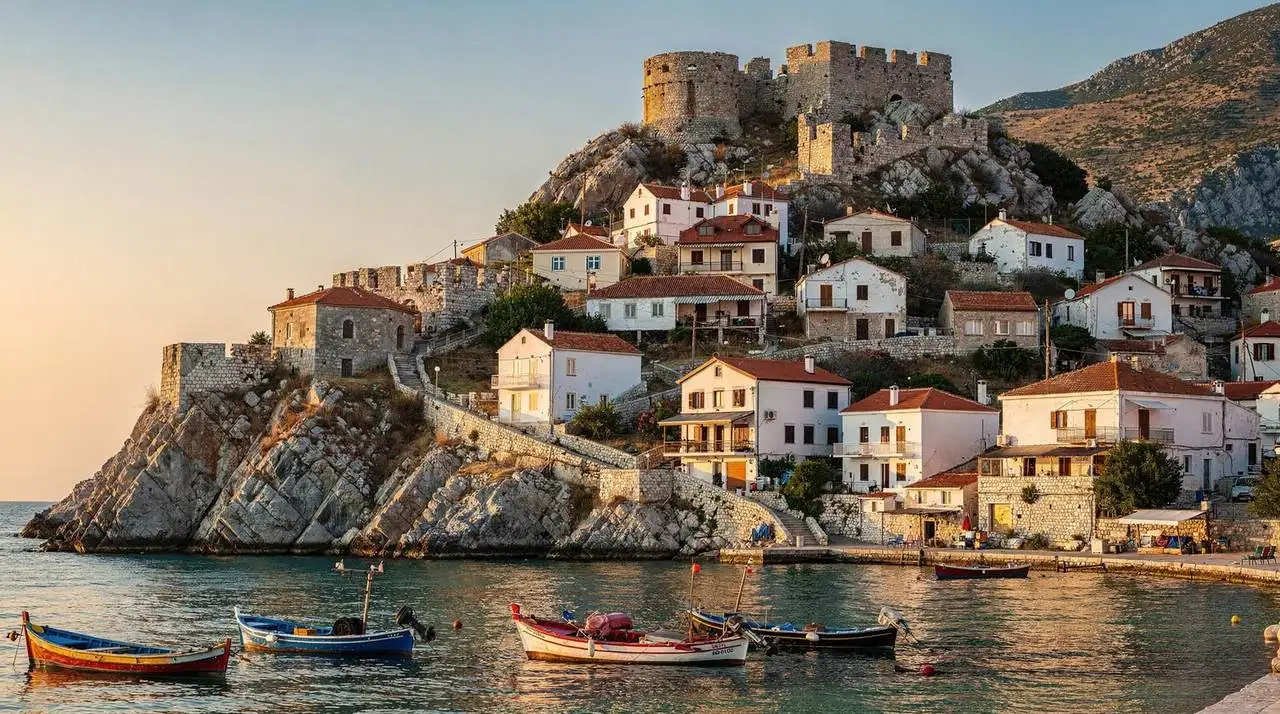
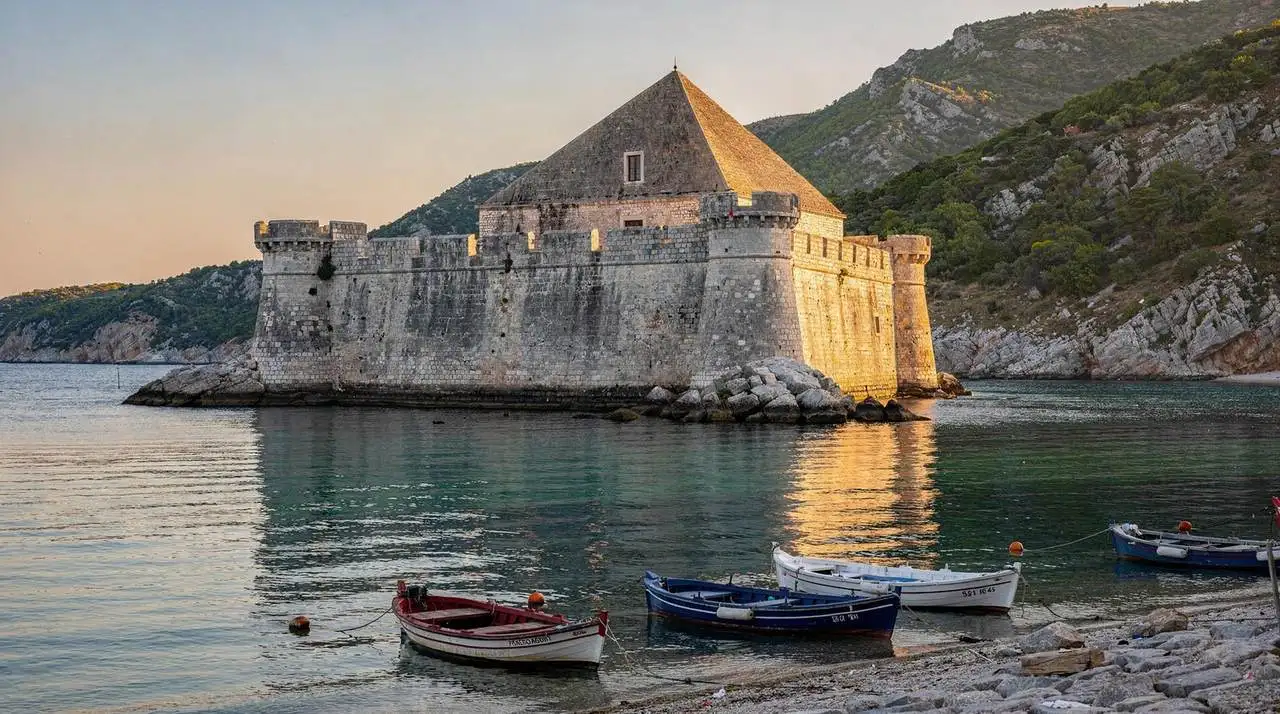
On a narrow triangle of rock jutting into the Ionian Sea between Himara and Borsh, connected to the mainland by the slenderest of causeways, stands one of the most dramatically positioned fortresses in the Balkans. Porto Palermo Castle — built by the extraordinary and terrible Ali Pasha of Ioannina in the early 19th century — sits directly on the water, its triangular walls rising from the sea itself, its towers commanding views of the entire surrounding bay.
The setting is exceptional. The bay of Porto Palermo is a nearly enclosed natural harbour, surrounded by pine-covered hills that drop steeply to the water’s edge. The castle occupies a promontory at the bay’s mouth as if placed there by a set designer with an eye for drama. Whether you approach by road, by kayak from the sea, or by boat, the first view of the fortress against the blue-green water and the mountains behind it is a photograph that takes itself.
Porto Palermo sits on the Albanian Riviera approximately 20 kilometres south of Himara, making it a natural stop on any drive along the SH8 coastal road. It pairs naturally with Borsh beach (15 minutes north) and with Himara for accommodation and wider services. Our castles of Albania guide provides context for Porto Palermo within the broader history of Albanian fortifications.
| Where | SH8 coast, 20 min south of Himara |
| Cost | Around 100-200 ALL castle entry |
| Time needed | 1-2 hours, longer with swimming or kayaking |
| Getting there | Car or furgon (Himara-Saranda route, ask to stop) |
| Best time | May-October; late afternoon for light and quiet |
Who Was Ali Pasha of Ioannina?
Understanding Porto Palermo Castle requires some understanding of the man who built it. Ali Pasha — known as “the Lion of Ioannina” — was born around 1740 in Tepelena, now a small Albanian town to the north. He rose from the violence of 18th-century Albanian clan politics to become the autonomous ruler of a vast territory encompassing most of what is now Albania and northwestern Greece, nominally under Ottoman suzerainty but in practice independent.
His court at Ioannina attracted European travellers, writers, and diplomats. Lord Byron visited and was fascinated; the chapter on Ali Pasha in “Childe Harold’s Pilgrimage” made him famous across Europe. Ali Pasha maintained French agents, negotiated with Napoleon, corresponded with the British, and played the great powers against each other with considerable skill. He was also, by most accounts, extraordinarily brutal — his methods of controlling territory included torture, mass executions, and collective punishment on a scale that shocked even his contemporaries.
He came to a dramatic end in 1822, when Ottoman Sultan Mahmud II finally moved to eliminate the man who had become too powerful to control. Porto Palermo was his naval stronghold, chosen for the natural shelter of the bay and its strategic position controlling the coastal sea lane. The castle he built here was designed to house a small fleet and defend against naval attack. For Ali Pasha’s birthplace, see the Tepelena guide; for his other major coastal fortification, see the Albanian Riviera section on the coast between Himara and Saranda.
The Castle: What to See
The Exterior and Approach
The approach to the castle is part of the experience. From the main road above the bay, a track descends to the causeway — barely wide enough for a car — that connects the promontory to the mainland. On foot, the walk from the road to the castle gate takes around ten minutes, with the water close on both sides of the causeway and the triangular walls of the fortress rising ahead.
The causeway itself is remarkable: at its narrowest point you are walking with the sea a few metres on either side, the castle walls rising ahead, and the pine-covered hillside behind you. In calm weather the water on both sides of the causeway is extraordinarily clear, and you can see the rocky sea floor below.
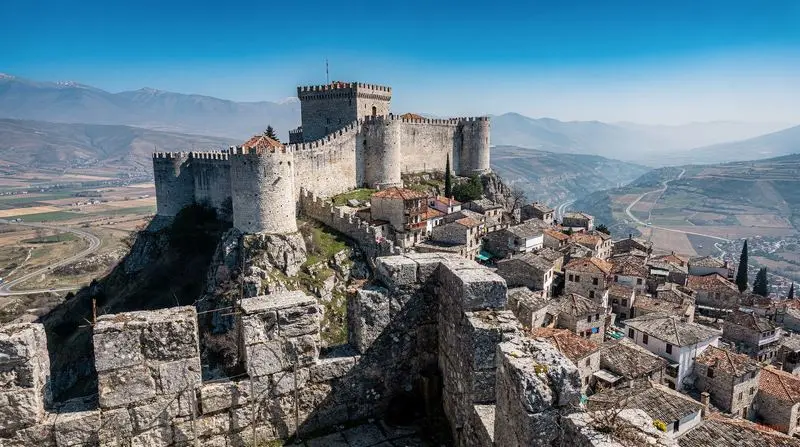
The castle’s outer walls are well-preserved, following the triangular outline of the promontory. Three towers anchor the corners, and a substantial gatehouse controls the entrance. The stonework is characteristic of late Ottoman military architecture — solid, utilitarian, designed for function rather than elegance.
Practical details: A small entry fee is typically charged at the entrance (approximately 100-200 ALL). Open daily during daylight hours. No formal ticket office — pay at the gate or sometimes to a gatekeeper who may or may not be present. Allow 1-2 hours for the full interior exploration.
The Interior
Inside the walls, the castle is largely a ruin but a legible one. Remains of barracks, storehouses, a small mosque, cisterns, and what are believed to be cells or dungeons occupy the interior. The mosque, though roofless, retains its basic form — a reminder that this was a functioning military and administrative settlement, not merely a fortification. The mihrab (prayer niche) is still discernible, oriented toward Mecca.
The three towers can be climbed (with appropriate care — the stairs are steep and unrailed in places), and each offers a different perspective on the bay and the surrounding coast. The seaward tower, facing the open Ionian, commands a view that on clear days extends to the Greek island of Corfu. The interior tower looks back along the bay towards the pine hills and the mountains behind.
History Layers
The site was not only Ottoman. Porto Palermo’s strategic value attracted attention across centuries — there are traces of earlier Byzantine and possibly Venetian use, and the bay was exploited as a submarine base during the communist period, adding yet another layer of military history to an already complex site. The submarine base infrastructure — concrete docking ramps, now submerged, and tunnel entrances cut into the hillside — is still partially visible and adds a Cold War dimension to the historical layers. Our Albania off the beaten path guide covers several other former military sites along the coast that share this layered quality.
Kayaking to Porto Palermo
One of the most memorable ways to experience Porto Palermo is by sea. The bay is sheltered enough for kayaking except in strong winds, and paddling from the nearby beach directly to the castle promontory gives you a perspective that no road approach can replicate.
This kayak and SUP tour of Porto Palermo’s caves with castle sea views is a guided tour combining sea kayaking in the bay with exploration of the sea caves along the castle’s base and the surrounding cliffs. It includes spectacular close-up views of the fortress walls rising from the water and is one of the more interesting active options on the southern Riviera.
From the water, the castle’s relationship with the sea becomes fully apparent. The walls extend practically to the waterline at points, and the sea caves in the limestone base of the promontory are accessible only by kayak or swimming. The clarity of the water in the bay makes the kayaking itself visually extraordinary — you can see the sea floor clearly in many places, and the rocky outcroppings shelter good marine life.
Our Albania kayaking and SUP guide covers this and other sea kayaking locations along the coast, with operator recommendations and what to expect in terms of conditions and difficulty.
Boat Tours from Himara
Several boat tours from Himara pass Porto Palermo as part of a broader Riviera circuit. These Albanian Riviera boat tours from Himara cover the coastline including the Porto Palermo bay — arriving by sea gives you the most dramatic perspective on the castle, approaching across the bay to see the walls rise from the water.
For the dedicated cave system south of Porto Palermo, this Himara Riviera caves boat tour covers the cliff formations in the Porto Palermo area, which include some of the most dramatic sea caves accessible from this stretch of coast.
The Bay: Swimming and Relaxation
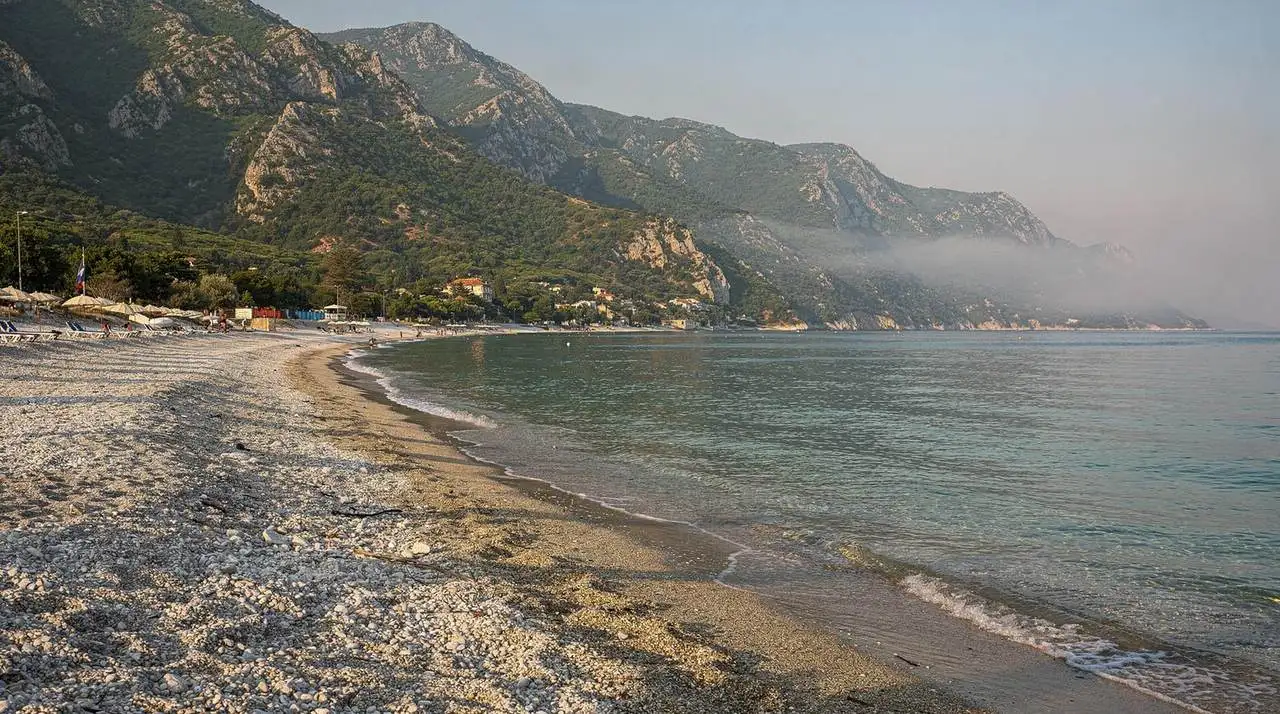
The bay of Porto Palermo is an excellent swimming spot in its own right. The water inside the enclosed bay is typically calmer than the open coast, the clarity is exceptional, and there is a small beach on the northern inner shore of the bay. The swimming directly around the castle promontory is particularly beautiful — the water turns extraordinary colours against the white limestone.
The bay has a small seasonal beach bar, but facilities are minimal. It is a place to swim, look at the castle from the water, and absorb an atmosphere that combines natural beauty and historical depth in unusual proportions. The late afternoon is particularly atmospheric — the light on the castle walls turns gold, the water in the enclosed bay is at its calmest, and the day-trippers from the road have generally departed.
The marine life in the bay reflects the sheltered, relatively undisturbed character of the water. Octopus are commonly seen in the rocky shallows around the castle base. Sea bass and bream move through the bay entrance. Snorkelling near the castle walls, particularly in the late afternoon, is productive.
Where to Eat Near Porto Palermo
Porto Palermo itself has minimal food facilities — just the seasonal beach bar. For proper meals:
In Himara (20 minutes north): Himara has the best restaurant selection near Porto Palermo. The seafront restaurants serve fresh grilled fish at reasonable prices. See the Himara guide for specific restaurant recommendations. Budget EUR 8-15 per person for a full seafood meal.
At Borsh (15 minutes north): The beachside restaurants at Borsh serve simple Albanian grilled food at low prices and are a natural pairing with a Porto Palermo visit. The fish at Borsh is sourced locally and the setting is pleasant. Budget EUR 6-12 per person.
Roadside cafes: A couple of basic cafes on the SH8 road above Porto Palermo serve coffee and cold drinks — useful for a quick stop on the drive. Budget EUR 1-3 per person.
Our Albanian food guide covers the regional cooking of the southern Ionian coast.
Getting to Porto Palermo
Porto Palermo is located on the SH8 coastal road, approximately 20 kilometres south of Himara and 15 kilometres north of Borsh. The bay and castle are clearly visible from the road, and the turnoff is signed.
By car: From Himara, the drive takes around 20 minutes. From Saranda in the south, it is about 50 kilometres north — roughly an hour’s drive on the winding coastal road. Parking is available near the causeway entrance. See our car rental in Albania guide for vehicle recommendations.
By furgon: Any furgon or bus travelling between Himara and Saranda passes directly above the bay. Ask to be dropped at “Porto Palermo” — the driver will know it. From the road, the walk down to the castle is 10-15 minutes. For the return, either walk back up to the road and flag down a passing vehicle, or pre-arrange a taxi from Himara.
Porto Palermo in Context
Porto Palermo works best as part of a broader exploration of the southern Riviera. The most natural pairings:
With Borsh Beach: Borsh is just 15 minutes north — spend the afternoon at the castle, then drive to Borsh for a swim on Albania’s longest beach. This combination covers history and beach in a single afternoon and is one of the more satisfying uses of a half-day on the southern Riviera.
With Himara: Himara to the north has accommodation, restaurants, and its own castle and old town. A day based in Himara with Porto Palermo as one of several stops along the coast is a satisfying way to structure the area. The Himara castle in the morning, Porto Palermo in the afternoon, and dinner on the Himara promenade at sunset is a near-perfect southern Riviera day.
As a road trip stop: If you are driving the full Riviera between Vlora and Saranda (or in reverse), Porto Palermo is one of the non-negotiable pauses. The castle and a swim in the bay add 2-3 hours to the drive and make the journey considerably more interesting. The Albanian Riviera road trip itinerary includes Porto Palermo as a key pause on the coastal route.
Photographing Porto Palermo
The castle’s triangular silhouette against the bay makes it one of the most photogenic single sites on the Riviera, and timing matters considerably. Morning light comes from behind the castle when shooting from the road above, which can flatten the towers into silhouette; late afternoon light, arriving from the west, brings out the texture of the stonework and turns the bay water a deeper turquoise. Shooting from the water — by kayak or during a boat tour — gives the most dramatic angle, with the walls appearing to rise directly out of the sea.
For those without a drone or boat, the road above the bay offers a wide panoramic view that captures the full triangular footprint of the fortress against the hills, useful as an establishing shot before descending to the causeway for closer detail. The submarine base tunnel entrances, visible from certain angles along the shore, add an unusual juxtaposition of Ottoman and Cold War history within a single frame.
A Word on Ali Pasha’s Legacy
Ali Pasha is a complex figure in Balkan memory. In Albania, he is sometimes portrayed as a proto-nationalist who built Albanian autonomy against Ottoman central control; in Greece, as an oppressor who taxed and brutalized the Greek population; in European romantic literature, as a fascinating Oriental despot who attracted Byron and Hobhouse and fed the Western imagination’s image of wild, barbaric Albania.
The reality is more complicated and more interesting than any of these framings. Porto Palermo Castle is a physical remnant of his power, ambition, and the strategic vision that made him one of the most significant political figures in the early 19th-century Balkans.
Standing at the castle gate, looking out at the bay he chose as his naval stronghold, it is easy to see what he saw: a perfect natural harbour, defensible by a small garrison, commanding the sea lane along the coast. The man who built this knew what he was doing. Whatever else he was, he was not careless. The 14-day Albania itinerary includes Porto Palermo as a stop on the southern Riviera circuit.
Frequently Asked Questions About Porto Palermo
What is Porto Palermo famous for?
Porto Palermo is known for two things: the triangular Ottoman-era sea castle built by Ali Pasha of Ioannina in the early 19th century, and a hidden Cold War submarine base carved into the cliff face of the peninsula by communist-era engineers. The combination of Napoleonic-period history, communist military history, and one of the most sheltered natural bays on the Albanian Riviera makes Porto Palermo one of the most interesting single stops on the coast.
Can you visit the Porto Palermo submarine base?
The communist-era submarine base carved into the rock at Porto Palermo is partially accessible and is one of the more unusual Cold War heritage sites in Albania. The tunnels were designed to shelter Albanian submarines from NATO air or naval attack during the Hoxha era. Access conditions vary — parts of the complex are open for exploration, others are sealed. Check current access with local operators or your accommodation in Himara before planning specifically around the submarine base visit.
Can you kayak at Porto Palermo?
Yes — Porto Palermo Bay is one of the best kayaking locations on the Albanian Riviera. The sheltered bay, the sea caves accessible along the castle peninsula, and the clear Ionian water make it excellent for both solo paddling and guided tours. Local operators in Himara (30 minutes north) rent kayaks and organise guided tours to Porto Palermo. The calm conditions inside the bay are suitable for beginners; more experienced paddlers can explore the outer headlands.
How do you get to Porto Palermo?
Porto Palermo is on the SH8 coastal highway, approximately 20 km south of Himara and 45 km north of Saranda. It is easily visited by car as a stop on the coastal drive — pull off at the signposted turning and drive down to the castle and bay. By public transport, furgons running between Himara and Saranda pass the junction. There is no dedicated public transport to the site; a taxi from Himara costs approximately 2,000-2,500 ALL return including waiting time.
Is it worth stopping at Porto Palermo?
Yes — Porto Palermo is one of the best stops on the Albanian Riviera drive and requires only 2-3 hours to see properly. The castle exterior (entry approximately 200 ALL) takes an hour to explore, and the bay is excellent for swimming. Few visitors extend their stay into a full day, but those who do — particularly for kayaking — consistently rate it as a highlight. It is best combined with Himara as a base rather than visited in isolation.
What is the best time of day to photograph Porto Palermo?
Late afternoon light works best for photographs from the road above the bay, bringing out the texture of the castle’s stonework and deepening the turquoise of the water; morning light from the same angle tends to silhouette the towers. For the most dramatic angle, shooting from the water via kayak or boat tour captures the walls appearing to rise directly from the sea.