The Albanian Riviera Road Trip: Europe’s Best-Value Coastal Drive
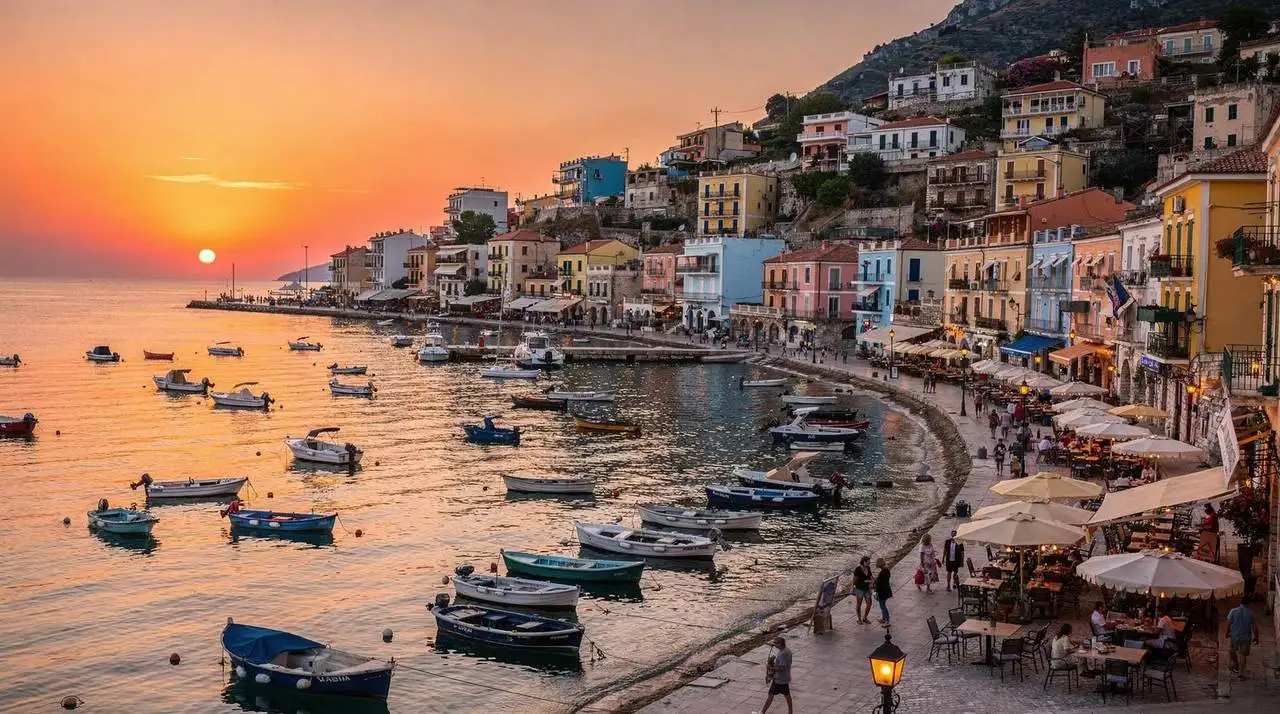
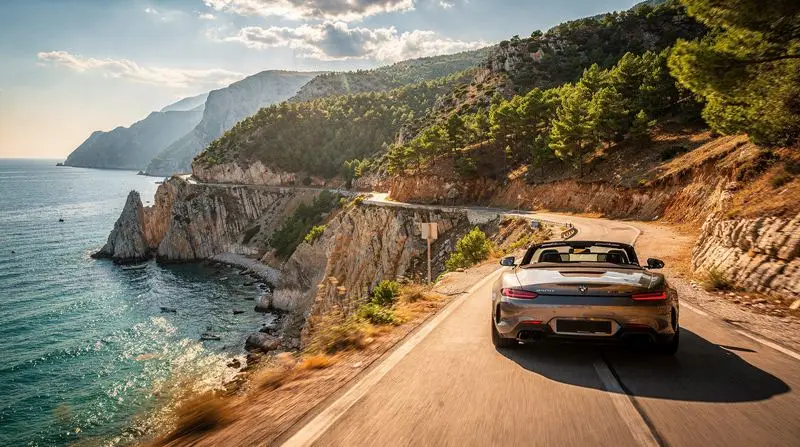
The Albanian Riviera — the stretch of Ionian coastline between Vlora and Saranda — is one of Europe’s most dramatic and least-explored coastlines. Mountains plunge directly into the sea; tiny beaches hide at the foot of cliffs accessible only by boat or steep footpath; the water is impossibly clear; and the villages clinging to the hillsides above look across toward Corfu and the Greek islands. The road itself — the Rruga e Rivierës, winding along the steep hillside above the coast — is one of the great drives of the Balkans.
A private car or rental vehicle transforms this journey. While buses do run between the main towns, the Riviera’s greatest beaches are accessible only by foot track from the road or by boat — meaning a car gives you the ability to stop, scramble down to an empty cove, and swim without a schedule. Rental cars are available in Vlora, Saranda, and Tirana; expect to pay EUR 35–55/day for a standard vehicle (4WD not necessary in summer on the main road, but recommended if you plan off-road detours).
This itinerary runs from north to south: Vlora to Ksamil over 5 days, with optional extensions to 6 or 7 days. It can also be driven in reverse if you’re starting from Saranda.
| Where | Vlora → Llogara → Dhermi → Himara → Borsh → Saranda → Ksamil |
| Duration | 5 days core route, 6–7 with Ksamil and Corfu extensions |
| Cost | Around EUR 430–590 for 5 days (budget, single person) |
| Getting around | Rental car essential — EUR 35–55/day |
| Best time | May–June or September–October for uncrowded beaches |
| Booking | Reserve accommodation 3–4 weeks ahead for July 15–August 20 |
Before You Drive
Road conditions: The main coastal road (SH8) is sealed and well-maintained. Some side roads to beaches are unpaved but accessible in a standard car in dry weather. The Llogara Pass section (hairpin bends) requires careful driving but is not technically demanding.
Fuel: Fill up in Vlora before leaving. Himara has a petrol station; Saranda has multiple. There is nothing between the main towns.
Parking: Free and plentiful at most beach access points; some popular beaches in July–August charge 200–500 lekë for all-day parking.
Insurance: Ensure your rental car insurance covers Albania. Some international renters bring a car from Greece — check with your rental company that cross-border coverage is included.
Best season: May–June and September–October offer warm water, uncrowded beaches, and spectacular wildflower-covered hillsides. July–August is peak season: very hot, beaches busier, accommodation prices double.
Day 1: Vlora — Karaburun Peninsula and Bay of Vlora
Morning: Arrive in Vlora
Vlora (Vlorë) is Albania’s second-largest port and the gateway to the Riviera. It has a wide, pleasant waterfront promenade, several good hotels and restaurants, and the distinction of being where Albanian independence was declared in 1912. The Independence Museum (entry 400 lekë) and the Muradi Mosque (15th century, one of the oldest mosques in Albania) are worth a morning visit before heading to the water.
Afternoon: Karaburun and Sazan Island Boat Trip
The afternoon is for the sea. Book a Sazan Island and Karaburun Peninsula boat trip from Vlora — one of the best water excursions in Albania.
Karaburun is a wild, uninhabited peninsula forming the southern arm of the Bay of Vlora — accessible only by boat, with pristine beaches, sea caves (including the famous Cave of Ali Pasha, where the Ionian meets the Adriatic), and crystal-clear water. Sazan Island — historically a military base (off-limits until 2014), now a protected area — sits at the mouth of the bay and can be circled by boat, its bunkers and Soviet-era infrastructure now being slowly reclaimed by nature.
Boat tours typically include swimming stops, snorkelling, and sometimes a fish lunch on board. Allow a full afternoon.
Evening: Vlora Waterfront
Dinner on the Vlora waterfront: grilled fish, seafood pasta, or the local speciality of tavë me mish (baked meat casserole). The promenade at dusk is lively; the sun sets over the bay and Karaburun, which makes for genuinely good evening light. Budget 1,500–2,500 lekë per person.
Day 2: Llogara Pass and Dhermi
Morning: Llogara National Park
Drive south from Vlora along the coast road, climbing steadily toward the Llogara Pass at 1,027 metres above sea level. The pass itself sits within Llogara National Park — a pine and oak forest with walking trails, viewpoints, and a dramatically different climate from the coast below (it can be misty and cool at the pass even when the beach is sweltering).
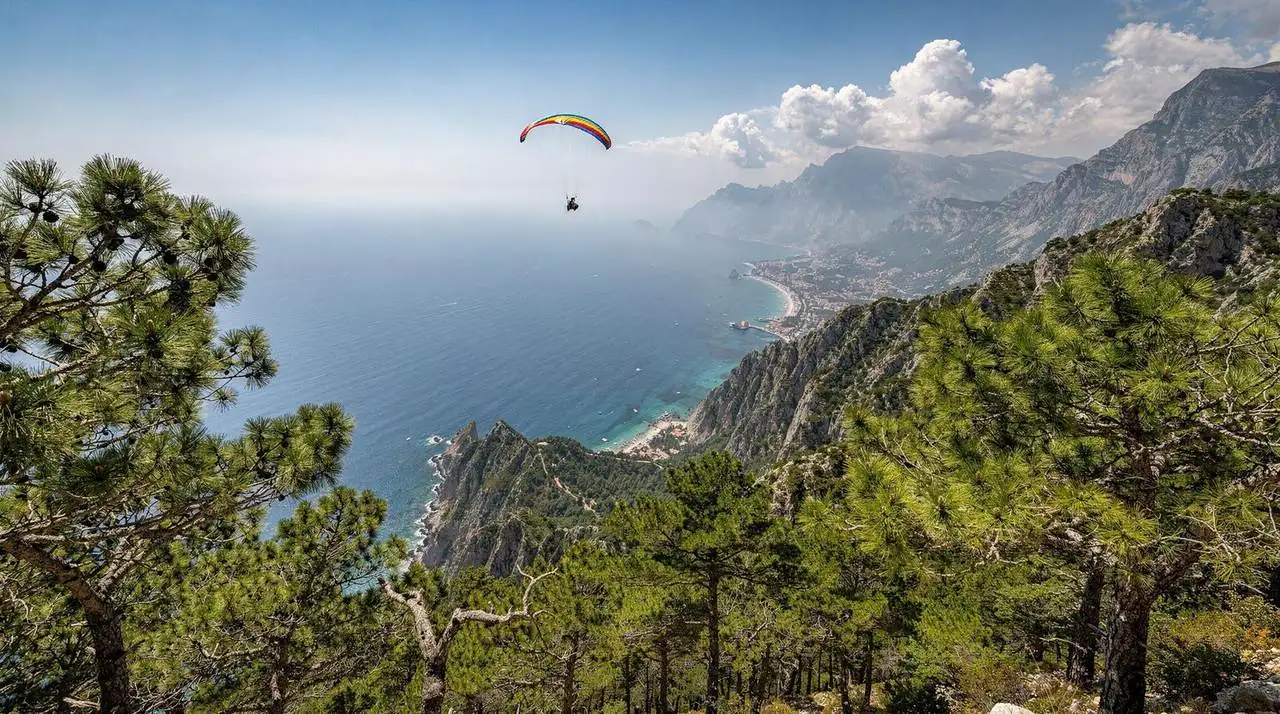
Stop at the viewpoint just before the pass summit for the defining view of the Albanian Riviera: the mountains dropping away beneath you to the coastline, beaches like white crescents far below, the sea extending toward Corfu on the horizon. This is one of the great panoramas of the Balkans.
If you’re feeling adventurous, try paragliding from Llogara Pass — launching from the mountain and soaring down toward the beach below is one of the most spectacular experiences in Albania. No experience required; tandem flights with an instructor are available.
Walk one of the forest trails in the park before descending — the Shtegu i Ariut (Bear’s Path) offers 2–3 hours of pine forest walking with mountain views.
Afternoon: Gjipe Beach
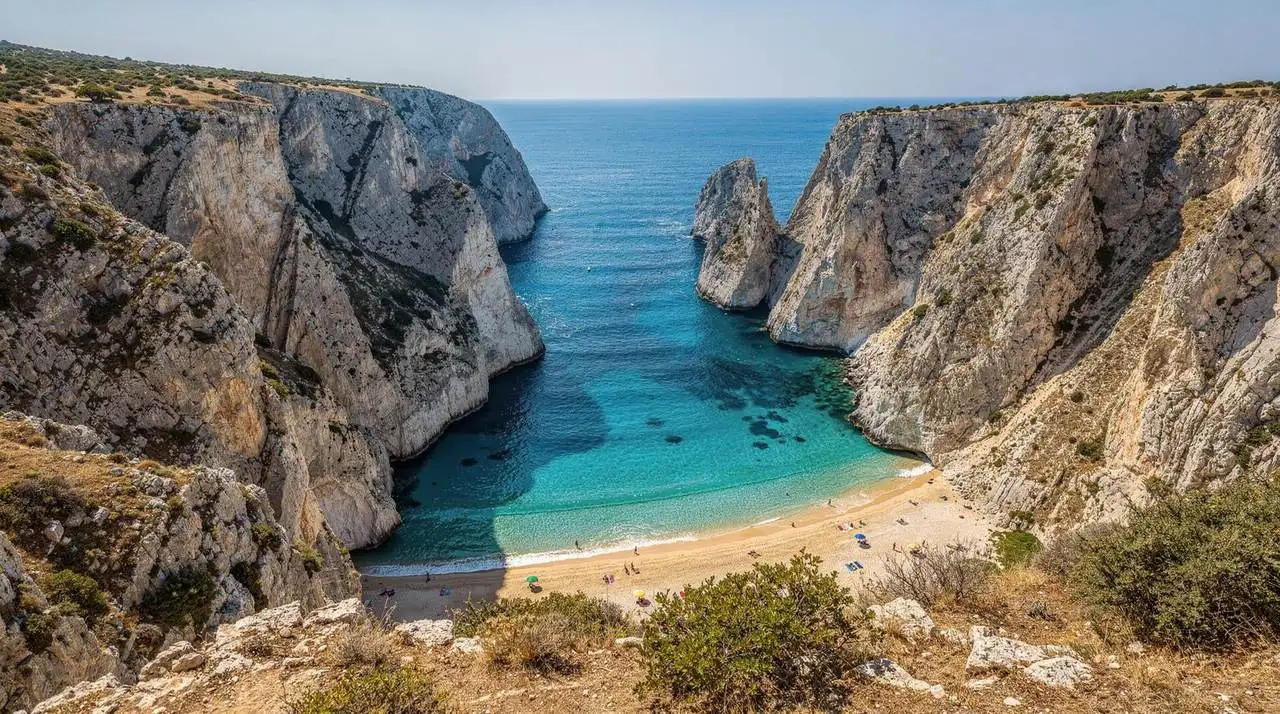
Drive down the other side of the pass toward the coast. At Palasa, take the walking track down to Gjipe Beach — one of the most dramatic in Albania, a wild pebble beach enclosed by towering limestone cliffs at the point where the Gjipe Canyon meets the sea. The walk down takes about 30–40 minutes on a rough path; the swim at the end is absolutely worth it. The water is extraordinarily clear in the canyon’s shadow.
Return to the car and continue south to Dhermi.
Evening: Dhermi
Dhermi is the Riviera’s most fashionable beach resort: a long strip of fine-pebble beach backed by beach clubs, restaurants, and bars, with the old village perched on the hillside above. The water here is some of the clearest on the Riviera — a luminous blue-green that photographs beautifully.
Check into your accommodation (beach hotels and apartments range from EUR 40–150/night; book ahead in July–August). Sunset dinner at one of the beachfront restaurants: fresh octopus, grilled sea bass, Albanian white wine. Budget 1,800–3,000 lekë per person.
Day 3: Dhermi and Himara
Morning: Dhermi Beach and Sea Caves
Spend the morning properly at Dhermi: swim off the main beach, take a water taxi to one of the sea caves visible along the cliff face, or rent a kayak and paddle along the coastline to Llamani Beach (the next cove north, quieter and more beautiful than the main strip).
Dhermi’s old village on the hillside is worth the ten-minute drive up: an Orthodox church with old frescoes, traditional stone houses, and views down to the beach that are excellent in the morning light.
Afternoon: Himara
Drive 15 km south to Himara — a town with a distinct Greek-Albanian character (a significant Greek-speaking community lives here), a good beach, and one of the Riviera’s best old villages climbing the hillside above. The Himara Castle — a late medieval fortress above the town — is freely accessible and has excellent coastal views.
Himara has better practical facilities than Dhermi (larger supermarket, several ATMs, fuel) and a pleasant, less party-focused atmosphere. Several excellent restaurants serve local Ionian fish and the Greek-influenced cuisine of the region: horiatiki (Greek village salad), grilled tsipoura (sea bream), and fresh local olive oil.
Join a Riviera boat tour from the area — afternoon boat trips depart from Himara to sea caves and hidden beaches not reachable by road.
Evening: Overnight in Himara
Himara has good accommodation options at mid-range prices (EUR 40–70/night for a hotel or apartment). The evening is relaxed: dinner at a harbour restaurant, a walk along the beach at dusk, local wine.
Day 4: Porto Palermo, Borsh, and Qeparo
Morning: Porto Palermo Castle
Drive south from Himara to Porto Palermo — a perfectly circular bay formed by ancient volcanic activity, home to a beautifully preserved Ottoman castle that juts out on a small peninsula into the bay. Ali Pasha of Ioannina used this castle as a naval base in the early 19th century; it was later repurposed as a submarine base and torpedo storage facility by the communist government. Entry is sometimes free, sometimes 300 lekë.
The bay itself is completely sheltered — perfect for swimming with remarkably clear water. Bring snorkelling gear: the rocky seafloor visible through 10 metres of crystal water.
Afternoon: Borsh Beach
Continue south to Borsh — at 7 km, one of the longest beaches in Albania, and one of the most uncrowded outside peak season. The beach is wide, pebbly, and backed by olive groves that run up the hillside. The village above has a Byzantine-era castle (freely accessible, excellent views) and the remnants of one of Albania’s most productive olive oil industries.
Stop at Qeparo — another terraced village above the coast — for lunch at the small family restaurant in the village square. This is authentic Riviera life: the same families who have lived here for generations, olive oil produced in the village, fish brought up from the boats below.
Evening: Push Toward Saranda or Stay at Borsh
You can either continue to Saranda (1.5 hours south) for accommodation, or stay overnight at Borsh — there are a handful of simple guesthouses and a camping area near the beach. Staying at Borsh gives you a genuinely peaceful evening on a big empty beach.
Day 5: Saranda, Butrint, and Ksamil
Morning: Arrive in Saranda
Drive the final section of the Riviera road into Saranda — the main Ionian resort town, pleasantly low-key by Mediterranean standards. The waterfront promenade curves around a wide bay with views toward Corfu directly across the water.
Check in and have a coffee on the promenade before heading to Butrint (12 km south).
Afternoon: Butrint UNESCO Site
Butrint is one of the most important archaeological sites in the Balkans: a wooded peninsula where Greek, Roman, Byzantine, and Venetian layers of occupation are visible within a 2 km walk through ancient forest. The Greek theatre, the baptistery mosaic, the city walls and Roman gate, the basilicas, and the Venetian tower are all impressive. Entry 1,000 lekë; allow 2 hours. The setting — on a promontory between a lagoon and the Vivari Channel — is extraordinarily beautiful.
Evening: Ksamil and the Final Swim
Drive or taxi 15 km south of Saranda to Ksamil — Albania’s finest beach destination. Three small offshore islands are reachable by short boat trip (500–800 lekë return from the beach). The water is Ionian-warm in summer, brilliantly clear, and the sunset from Ksamil’s beach — with the islands silhouetted against the light — is one of the great Riviera images.
Dinner at one of Ksamil’s beachfront restaurants: fresh grilled fish, seafood pasta, or octopus salad. The village has grown fast as a tourist destination and now has good options at every price point.
Optional Day 6: Ksamil Slow Day and Snorkelling
If you have six days, spend a full day in Ksamil. Book a Ksamil Islands and shipwreck snorkelling tour — exploring the underwater wreck visible in the shallow water between the islands, with a guided snorkelling session that reveals the marine life of this remarkably clear Ionian coastal zone.
Otherwise: kayak to the islands, swim off any of the beaches, eat a long lunch, and simply exist in one of the prettiest beach environments in Europe.
Optional Day 7: Corfu Day Trip from Saranda
From Saranda, a ferry to Corfu takes just 45 minutes (Finikas Lines and Ionian Cruises both operate the crossing). A day in Corfu Town — a UNESCO World Heritage Site with extraordinary Venetian, French, and British colonial architecture — makes a natural complement to the Albanian experience. Return to Saranda by evening for the overnight bus to Tirana (4–5 hours) or for a flight connection.
Where to Stay Along the Riviera
Vlora: Hotel Vlora International (mid-range), Hotel Kaonia (comfortable), several beachfront apartments (budget).
Llogara/Palasa: Guesthouse Palasa (budget, mountain views), several simple chalets within the national park.
Dhermi: Hotel Dhermi (mid-range), Riviera Resort (comfortable), multiple apartments and villas available through Airbnb and booking platforms.
Himara: Hotel Himara (mid-range), Hotel Himara Beach (comfortable waterfront location).
Borsh: Simple guesthouses and camping only — budget options, basic but perfectly pleasant.
Saranda: Hotel Butrinti (mid-range), Hotel Porto Eda (comfortable), Hairy Lemon (party hostel, budget), multiple apartments.
Ksamil: Hotel Ksamil (mid-range), many apartments and villas available for weekly rental, Camping Bleart (budget).
Riviera Road Trip Budget Summary
| Category | Budget (5 days) | Mid-range (5 days) | Comfortable (5 days) |
|---|---|---|---|
| Accommodation (5 nights) | EUR 100–140 | EUR 200–350 | EUR 400–650 |
| Car rental (5 days) | EUR 175–250 | EUR 200–275 | EUR 250–350 |
| Fuel | EUR 25–35 | EUR 25–35 | EUR 25–35 |
| Museum and park entries | EUR 18–22 | EUR 18–22 | EUR 18–22 |
| Food and drink (per day) | EUR 15–22 | EUR 30–50 | EUR 55–90 |
| Boat tours and activities | EUR 20–40 | EUR 50–90 | EUR 120–200 |
| Total 5 days | EUR 430–590 | EUR 610–940 | EUR 1,100–1,600 |
Costs for a single person. Couples sharing a car and accommodation roughly halve the per-person costs. Car rental is the biggest fixed cost; splitting it between two people reduces the total significantly.
Riviera Tips
Swimming safety: The Ionian can have unexpected currents at some beaches, especially near the canyon entrances. Respect any local warnings and don’t swim alone at remote beaches.
Jellyfish: Purple and white jellyfish appear in August–September along some sections of the coast. Mostly harmless but wear a rash vest if you’re sensitive.
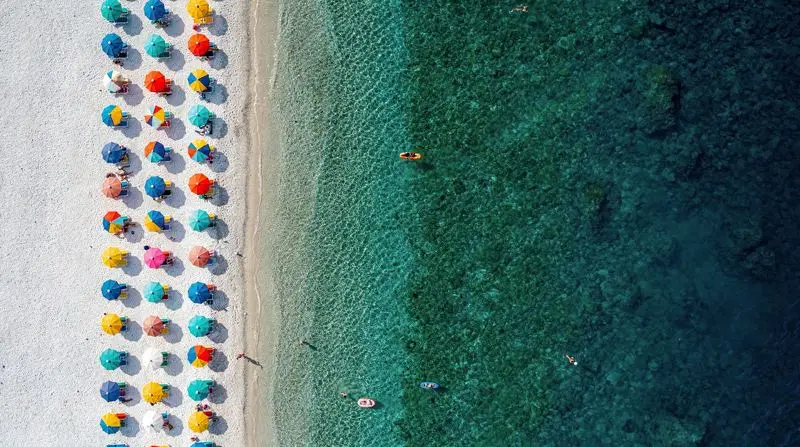
Shade: The pebble beaches of the Riviera offer very little natural shade. Bring a beach umbrella (available from supermarkets in Vlora) or pay for a sunbed-and-umbrella hire (typically 800–1,500 lekë at commercial beaches).
Reservations in peak season: July 15–August 20 is extremely busy on the Riviera. Book accommodation 3–4 weeks ahead. Prices can double or triple compared to June or September.
The view from the sea: The most beautiful way to see the Riviera is from the water. Join at least one boat trip — they operate from every town along the coast — to see the cliffs, caves, and beaches as they’re meant to be seen.
The Riviera’s Beaches: A Complete Guide
The Albanian Riviera has dozens of beaches — some large and accessible, others reachable only by boat or 30-minute scramble down a cliff path. Here is a comprehensive guide to the best, arranged from north to south:
Radhima Beach (near Vlora): A long pebble beach on the northern arm of the Bay of Vlora, relatively undeveloped and popular with Albanian families. Good swimming, views across the bay to Karaburun.
Palasa Beach: A small beach below the village of Palasa, accessed by a steep road. Surrounded by olive groves; the water is particularly clear. Basic facilities only.
Jale Beach: A sheltered cove between Palasa and Dhermi, accessible by road (rough track) or by boat. Several simple beach bars and camping in summer. Excellent snorkelling on the rocky flanks of the cove.
Gjipe Beach: Accessible only on foot (30–40 minutes from the road) or by boat. A wild pebble beach at the mouth of the Gjipe Canyon — one of the most dramatic beach settings in Albania. No facilities. Bring everything you need. Absolutely worth the effort. See Gjipe Beach for the detailed guide.
Drymades Beach: Below Dhermi on the south side, quieter than the main Dhermi strip and more beautiful. Some beach bars but less developed. Fine pebble, excellent water.
Dhermi Beach: The main Dhermi strip — a long arc of fine pebble beach with beach clubs, restaurants, and bars. The social hub of the Riviera in summer. Water quality is excellent; the beach itself gets crowded in July–August.
Livadhi Beach (Himara): The main beach at Himara — a pleasant arc of pebble below the town, with good facilities and reliable water quality. The town beach at its best in shoulder season when it’s not packed.
Llamani Beach (near Himara): A small, quiet cove north of Himara with some of the clearest water on the Riviera. Accessible by footpath (20 minutes from the main road) or by boat.
Porto Palermo Beach: The sheltered inner bay of Porto Palermo — completely enclosed by the volcanic rim, with water so calm it’s almost like a lake. The Ottoman castle on the peninsula above is one of the most photogenic sights on the Riviera.
Borsh Beach: Seven kilometres of wide pebble beach backed by ancient olive groves — one of the longest and most uncrowded beaches in Albania. A revelation in shoulder season.
Lukova Beach and Shën Vasil Beach: Two beaches near the southern end of the Riviera, close to Saranda. More accessible and therefore busier than the northern beaches, but with excellent water quality.
The Riviera: History and Culture
The Albanian Riviera is not just beaches. The coastline has been inhabited since antiquity — the Illyrians, Greeks, Romans, Byzantines, and Ottomans all passed through or settled here — and traces of that history are visible throughout.
The olive groves of Borsh and Himara: Many of the olive trees growing on the hillsides above the beaches are extraordinarily old — some dating back 1,000+ years, survivors of every political system that has governed the coast. The Borsh olive grove contains some of the oldest cultivated olives in Europe. The communist government collectivised the groves and neglected them; post-1991, many families have reclaimed their ancestral trees. The olive oil produced here is exceptional.
The fortresses: Every headland on the Riviera has a fortress. Porto Palermo (Ali Pasha, 18th–19th century), Himara Castle (medieval, Byzantine base), the ancient walls of Borsh above the beach, and the castle at Lekursi above Saranda are all accessible and all offer extraordinary views. Most are free to enter.
The Greek minority: The Riviera between Himara and Saranda has a significant Greek-speaking minority — communities that have been here since Byzantine times, speaking a dialect of Greek called Arvanitika (or simply Greek) alongside Albanian. Their presence gives the food, architecture, and social culture of southern towns like Himara a distinct flavour. Greek Orthodox churches appear alongside Albanian mosques; the cuisine combines Albanian and Greek elements; and the older generation often speaks Greek as their first language.
Communist history: The entire coast was sealed off to ordinary Albanians under communist rule — the regime’s paranoia about people attempting to escape by sea meant that the Riviera was a military zone. The bunkers visible on every headland and hillside were primarily aimed not at external enemies but at keeping Albanians in. The beaches that are now popular holiday destinations were empty for decades; families from Berat or Tirana could not visit. This context makes the post-1991 opening of the coast to Albanian tourism as much a political event as a recreational one.
Planning the Drive: Routes and Timing
One-way vs return: The most efficient approach is to drive the Riviera one-way (Vlora to Saranda or vice versa) rather than doubling back. Drop the car in Saranda (rental companies accommodate this with a one-way fee, typically EUR 20–30) and take the ferry to Corfu or the bus to Tirana.
Driving time: The Vlora-to-Saranda drive takes approximately 3–4 hours with no stops (including the Llogara Pass). With the stops in this itinerary, allow a full day for each section. The road is narrow in places and the Llogara hairpins require careful driving; don’t rush.
Morning vs afternoon driving: The sun is behind you when driving south in the morning and north in the afternoon. This affects photography significantly — if you care about the light, plan your direction accordingly. For the section between Dhermi and Himara, afternoon light from the south gives spectacular coastal colours.
What kind of car: A standard 4-door car is fine for the main road. If you want to access Gjipe Beach by vehicle (there’s a rough track) or explore mountain roads above Borsh, a higher-clearance vehicle is helpful. In July–August, air conditioning is essential.
Money and Connectivity on the Coast
The Riviera is more card-friendly than inland Albania, especially in Dhermi and Saranda, but smaller beach bars and family-run guesthouses in Borsh and Palasa remain cash-only — withdraw lekë in Vlora or Saranda before setting off, since ATMs are sparse along the coastal road itself. The Albania currency and money guide covers exchange rates and ATM locations in more depth. For navigation and booking on the go, a local SIM or eSIM (see the Albania eSIM guide) is worth activating before you start driving, since mobile coverage drops in and out on the more remote stretches around Llogara Pass and Palasa.
Card machines exist in most Dhermi and Saranda restaurants now, but they occasionally go offline, particularly in the busiest weeks of August when networks get overloaded — keep a cash buffer even where you expect to pay by card. Fuel stations along the SH8 accept both cash and card reliably, but the smaller unbranded stations near Borsh sometimes prefer cash, so don’t let the tank run too low before checking.
Weather Patterns Along the Coast
The Riviera’s microclimate varies more than its short length suggests. Llogara Pass, at over 1,000 metres, can be noticeably cooler and occasionally misty even when the coast below is baking — pack a light layer for the pass crossing even in July. The stretch between Dhermi and Himara catches the most consistent afternoon sea breeze, which takes the edge off the heat during the hottest part of the day; Borsh and the beaches south toward Saranda are more sheltered and can feel notably stiller and hotter by comparison. Wind matters for boat trips specifically — mornings are typically calmer than afternoons, so scheduling Karaburun or Riviera boat excursions earlier in the day usually means a smoother crossing.
Comparing the Riviera to Other Albanian Beach Trips
If five days feels like too much driving, the south section alone (Saranda, Butrint, Ksamil) can be done without a car as part of the 7-days south itinerary, using buses and taxis between a single or double base. The full Riviera drive rewards travellers who want to see the northern beaches (Dhermi, Himara, Borsh) that don’t work well without a vehicle — the best beaches in Albania guide is a useful reference for comparing all the coast’s beaches side by side, including several not covered stop-by-stop in this itinerary.
Diving, Snorkelling, and Water Activities Along the Way
Beyond the swimming stops built into each day, the Riviera has a growing scene for structured water activities. Snorkelling gear is worth packing or buying cheaply in Saranda or Vlora — the rocky coves around Jale, Llamani, and Porto Palermo reward it more than the main sandy strips. For anyone wanting a guided introduction to diving rather than casual snorkelling, operators in Saranda and Dhermi run beginner-friendly dives; see the diving and snorkelling guide for what’s realistic to arrange without advance certification.
Going Deeper on the Stops
Several stops on this route deserve more time than a single itinerary can give them. Vlora works well as a first night, and the Karaburun and Sazan Island boat trip is easier to enjoy when you aren’t rushing to reach the next bed. If the Llogara Pass viewpoint makes you want to stay longer in the forest, the Llogara destination page describes the trails and the mountain atmosphere in more detail.
Further south, Dhermi and Himara each have their own guide, and choosing where to sleep is easier with the where to stay in Dhermi and where to stay in Himara pages open beside this one. Culture-minded travellers can add the Porto Palermo castle and the ruins at Butrint as unhurried visits rather than quick photo stops, and the Ksamil destination guide helps you plan the last evening on the water.
If you are still deciding how to get a vehicle, the car rental guide and the driving in Albania guide cover what to check before you set off, and the Albania road trip guide places this coastal route alongside other drives in the country.
Frequently asked questions about Albanian Riviera Road Trip
Is 5 days enough for the Albanian Riviera road trip?
Five days covers the essential drive from Vlora to Ksamil with a proper stop at each major beach, which suits most first-time visitors well. Extend to 6–7 days if you want a slow day in Ksamil for snorkelling, or a Corfu day trip from Saranda — both are worthwhile if your schedule allows.
Do I really need a rental car for this itinerary?
Yes, more than for most Albania itineraries. Several of the Riviera’s best beaches — Gjipe, Jale, Llamani — are only reachable by a footpath from the road or by boat, and the flexibility to stop at an empty cove without a bus schedule is the whole point of doing this as a road trip rather than a bus-based coastal hop.
When is the best time to drive the Riviera to avoid crowds?
May–June and September–October offer warm water and dramatically quieter beaches than July–August, when accommodation prices roughly double and popular spots like Dhermi and Ksamil get genuinely crowded. If you can only travel in peak summer, arrive at beaches before 10am or after 4pm to avoid the busiest hours.