Albania Travel Tips: Essential Things to Know Before You Go
Albania surprises almost every first-time visitor. The country is safer, more beautiful, more affordable, and more welcoming than its reputation in Western media suggests. But it also has quirks, logistical realities, and cultural nuances that are worth knowing before you land. This is your complete pre-departure briefing — the practical knowledge that separates a smooth trip from an unnecessarily stressful one.
Whether you are planning a quick long weekend in Tirana, a multi-week Riviera road trip, or a serious hiking expedition in the Albanian Alps, these tips apply across the board. They come from the patterns of first-time visitor confusion and the consistent advice of experienced Albania travelers.
| Currency | Albanian Lek (ALL), roughly 100 to EUR 1 |
| Language | Albanian; English common in tourist areas, Italian in the south |
| Best time | June or September for weather and lower prices |
| Getting around | Furgons (shared minibuses), Bolt in cities, rental car for flexibility |
| Key etiquette | Head nod = no, head shake = yes (reversed from Western norms) |
Essential Cultural Knowledge
1. The Yes/No Head Movement Is Reversed
Albanian head movements for agreement and disagreement are the opposite of what Western travelers expect. A nod (up-down motion) means NO. A head shake (side-to-side motion) means YES. This is not a minor quirk — it will catch you off guard repeatedly in shops, guesthouses, and bus stations. When something genuinely matters — confirmation that the bus is leaving, that this is the right road, that the guesthouse has your booking — use verbal confirmations: “Po?” (yes?) or “Jo?” (no?).
Experienced Albania travelers adapt after a day or two, but the first 24 hours catch almost everyone. Prepare yourself.
2. Hospitality Is Taken Very Seriously
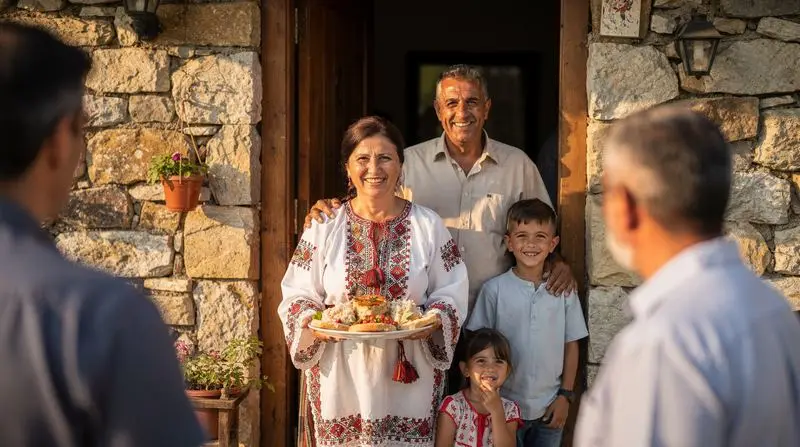
Albanian hospitality (besa) is a cultural cornerstone, not just a tourism pitch. If someone offers you coffee, a meal, or help, they genuinely mean it. Refusing without a good reason can be taken as a mild social offense. Accept graciously, engage genuinely, and enjoy one of the warmest social cultures in Europe. Understanding besa — the Albanian code of honor and guest protection — transforms how you understand Albanian interactions. The Albania customs and etiquette guide covers this in depth.
3. Coffee Culture Means Lingering Is Normal
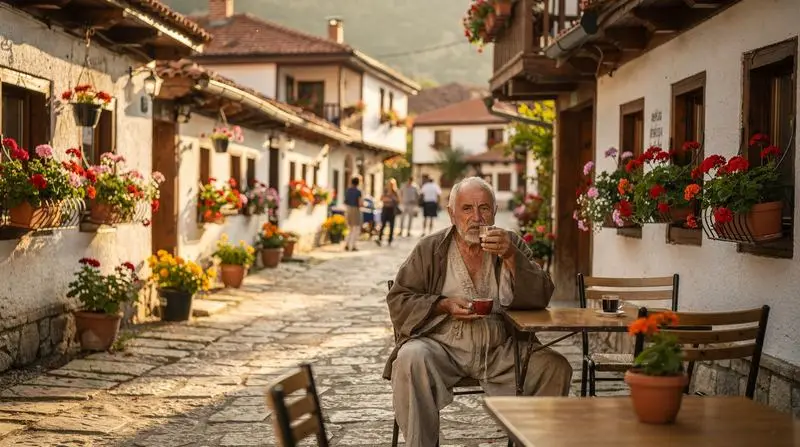
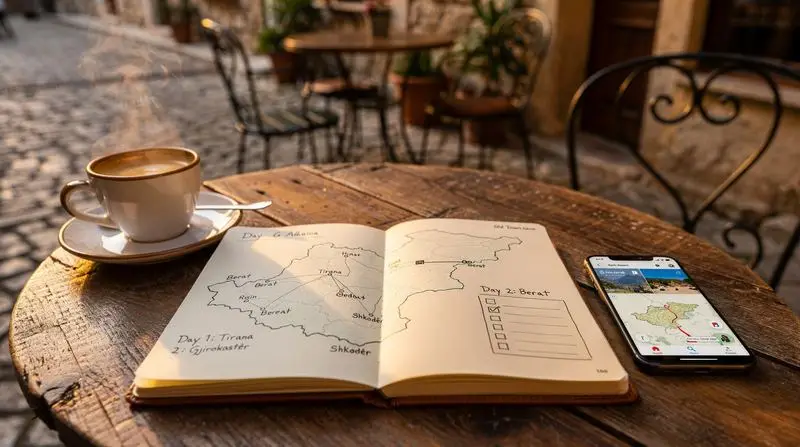
Albanian espresso bars operate on Mediterranean time. Sitting for two hours over a single coffee is completely normal — no one will rush you, clear your cup, or bring the bill uninvited. This is the default mode of social interaction in Albania. Embrace it rather than fighting it. Albanian coffee culture is one of the country’s genuine pleasures, and the espresso is consistently excellent.
4. Albanian Is Not Related to Any Other European Language
Your Italian, Greek, or German will not help you decode Albanian. The language is an isolate within the Indo-European family — ancient and distinct. However, many young Albanians in tourist areas speak English. Italian is widely understood by older generations and in the south (decades of Italian television have created a de facto bilingualism). A translation app with Albanian offline packs is genuinely useful. See the Albania language basics guide for the phrases worth learning.
5. Albania Is a Secular Country with Multiple Faiths
Despite a Muslim majority, Albania is genuinely secular and historically religiously tolerant. You will not encounter pressure around religion, dress codes are relaxed for general travel, and mosques and churches sit peacefully alongside each other in the same town squares. Cover shoulders and knees when entering places of worship — that is the only specific etiquette required, and it applies equally across religious sites.
6. Understand the Communist Past Before You Arrive
Albania was one of the world’s most isolated and repressive communist states from 1944 to 1991. Understanding this period makes everything you encounter richer — the bunkers that dot every landscape, the transformation of Tirana from gray communist capital to vibrant city, the directness and warmth of people who emerged from that isolation with remarkable resilience. Visit Bunk’Art 1 and 2 in Tirana early in your trip. They explain everything.
Money and Payments
7. Carry Cash, Always
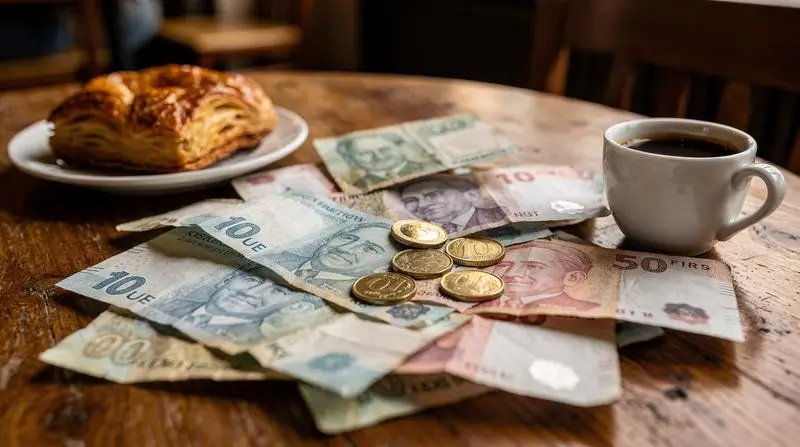
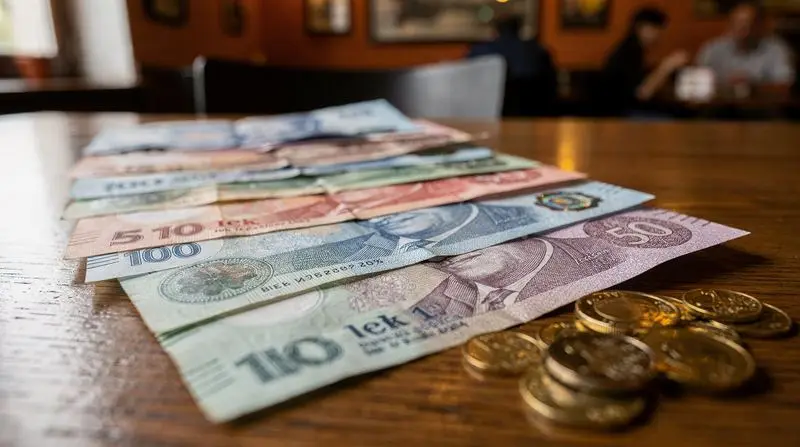
Albania is improving on card payments but is still largely a cash economy outside major hotels and restaurants. Furgons (shared minibuses), local cafes, markets, mountain guesthouses, and small shops almost universally require cash. Carry enough Albanian Lek for your day’s anticipated needs plus a comfortable buffer. See the Albania currency and money guide for ATM locations and exchange advice.
8. Euros Are Widely Accepted in Tourist Areas
Hotels, tour operators, and many restaurants in tourist areas accept euros directly, often at a reasonable exchange rate. This is useful but do not rely on it exclusively — Lek is essential for daily life outside tourist centers and for transport.
9. ATMs Are Plentiful in Cities, Scarce in Mountains
Withdraw cash before heading to Theth, Valbona, or remote Riviera villages. The nearest ATM to a mountain guesthouse may be 80 kilometers away in Shkodra or Bajram Curri. Arriving cash-light in a mountain village is a fixable but avoidable problem. Raiffeisen Bank and BKT ATMs are the most reliable — they dispense Lek without excessive fees and are widespread in cities.
10. The Exchange Rate Is Roughly 100 Lek to 1 Euro
This makes mental arithmetic easy. A 500 ALL meal costs roughly EUR 5. 1,200 ALL for a bus ticket is EUR 12. The exact rate fluctuates slightly — check XE.com before departure and use the round figure for quick calculations throughout your trip.
11. Tipping Is Appreciated but Not Obligatory
10 percent at restaurants is generous and well-received. Round up taxi fares. Leave cash for guesthouse hosts who have cooked for you — EUR 5-10 for a multi-day stay where you have been fed well. Albanians are not expecting tips in the US sense, but the gesture is genuinely appreciated and remembered.
Transport and Getting Around
12. Renting a Car Transforms Your Trip
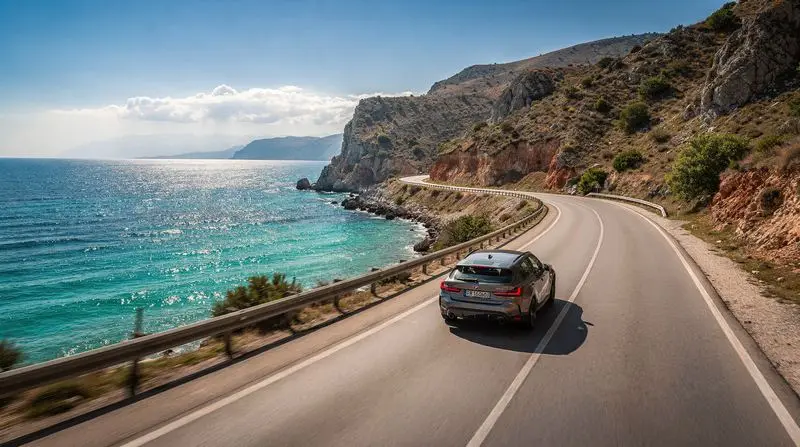
The Albanian Riviera, mountain roads, and hidden villages are all best accessed by private vehicle. Furgons cover the main routes, but the flexibility of a car means you can stop at that viewpoint, find that beach, and make the detour that turns a good day into a great one. Costs start from EUR 15-25 per day for a basic car. An SUV or 4WD is worthwhile for mountain roads. Full details in the car rental Albania guide.
13. Furgons Leave When Full, Not on a Schedule
Shared minibuses (furgons) depart when the vehicle is full enough to justify the journey. Morning departures are frequent on busy routes; afternoon frequency drops significantly. If you have a specific connection to make — catching the Koman Lake ferry, meeting a guesthouse host — plan around morning transport and add generous buffer time. The buses and furgons guide covers how the system works in detail.
14. Get a Local SIM Card at the Airport
Vodafone and ONE both have booths in Tirana Airport arrivals. Spend EUR 5-8 on a SIM with a week’s data and you have navigation, WhatsApp for guesthouses, and Bolt ride-hailing immediately. Having no data in Albania is unnecessary and inconvenient. If you prefer to set up connectivity before arrival, see the Albania eSIM guide. Details on physical SIMs are in the Albania SIM card guide.
15. Download Offline Maps Before Mountain Sections
Google Maps has improving but incomplete coverage of Albania’s rural roads. In Theth, Valbona, and on the Koman Lake crossing, there is no mobile signal. Download Albania offline maps via Maps.me or OsmAnd while you still have WiFi in Tirana or Shkodra.
16. Use Bolt in Cities
The Bolt ride-hailing app works in Tirana, Durres, Shkodra, and most major cities. Fares are transparent, metered automatically, and consistently cheaper than street taxis. Download before you arrive and add a payment method. The best apps for Albania guide covers Bolt and other essential tools.
Accommodation and Booking
17. Book Summer Riviera Accommodation Well in Advance
July and August on the Albanian Riviera — Dhermi, Himara, Ksamil, Saranda — are genuinely busy. Good accommodation fills up weeks ahead. For peak summer coastal stays, book 6-8 weeks in advance. Off-season and shoulder season (May-June, September) are much more relaxed and accommodation is readily available on shorter notice.
18. Mountain Guesthouses Book via WhatsApp
Guesthouses in Theth and Valbona are largely not on major booking platforms. Email or WhatsApp them directly — they respond quickly and speaking directly confirms the logistics better than an online form. Ask your guesthouse at each destination to recommend and connect you with the next one along your route. This informal network functions well.
19. Albanian Guesthouse Half-Board Is Extraordinary Value
Mountain guesthouses almost universally offer dinner and breakfast as part of their room rate (half-board). The food is home-cooked, generous, and often includes homemade wine or raki. The total price of EUR 20-35 per person including accommodation and two meals is essentially unmatched value anywhere in Europe. The Albanian Alps guesthouses guide covers what to expect and how to find the best.
Safety and Health
20. Albania Is Safer Than Its Reputation Suggests
Violent crime against tourists is extremely rare. The hospitality culture creates genuine social safety. The main concern is road safety — drive defensively, avoid rural roads at night, and be aware as a pedestrian in cities. The Albania safety guide gives an honest and detailed assessment of all safety considerations.
21. Get Travel Insurance, Particularly for Medical Evacuation
Medical facilities vary significantly in quality. Regional hospitals outside Tirana are limited in equipment and specialists. If you have a serious incident in a remote area — a hiking accident in the Alps — medical evacuation to Tirana or abroad can cost many thousands of euros without coverage. Good travel insurance with evacuation coverage is essential. See the Albania travel insurance guide.
22. Drink Bottled Water
Tap water in Albania is treated but not reliably safe in older infrastructure or rural areas. Bottled water is cheap (50-80 ALL for a 1.5L bottle) and universally available. Brew coffee and brush teeth with bottled water if you are staying somewhere with uncertain pipes.
23. The Sun Is Intense on the Coast
The Albanian Riviera’s summer sun is genuinely fierce, particularly on the water where reflection amplifies UV exposure. High-SPF sunscreen (factor 50 is appropriate), a sun hat, and avoiding peak hours (12:00-16:00) for extended sun exposure protects both you and your holiday.
Planning and Timing
24. June and September Are the Sweet Spot
If you have flexibility, visit in June or September. The sea is warm, the weather is beautiful, the beaches are not overcrowded, guesthouses have availability, and prices are lower than peak. May is excellent for the mountains — wildflowers and fewer trekkers. October is atmospheric in the historic cities of Berat and Gjirokastra.
25. Albania Is Not Part of Schengen
Albania’s 90-day visa-free access for most Western nationalities is entirely separate from your Schengen allowance. You can spend 90 days in Albania without consuming any Schengen time. This is genuinely useful for extended European trips or digital nomads exploring the region. See the full Albania visa requirements guide.
26. Come with Curiosity, Not a Fixed Agenda
Albania is a country that rewards improvisation. The best moments — an unexplained detour that finds an extraordinary beach, a conversation over raki that goes on until midnight, a mountain view that nobody told you to stop for — happen when you are moving with openness rather than following a rigid schedule. Build in time for the unexpected. Albania is very good at the unexpected.
Five Things That Will Genuinely Surprise You
Beyond the tips above, here are five things that catch most first-time visitors off guard in a positive way:
The quality of the food. Albanian cuisine — lamb roasted over wood, fresh Adriatic fish grilled with local olive oil, tavë kosi (baked lamb with yogurt), byrek in a dozen forms, walnut-stuffed peppers, fresh fig desserts — is significantly better than the country’s culinary reputation suggests. Eating in Albania is one of its genuine pleasures, and the cost makes it even more enjoyable.
How much Albanians know about their own history. Ask your guesthouse host about the communist period, about Skanderbeg, about the 1997 pyramid scheme collapse — you will find a sophisticated, often darkly funny interlocutor who has thought deeply about Albania’s extraordinary recent past. The historical self-awareness is striking.
The quality of the wine. Albanian wine has improved dramatically in the past decade. The indigenous grape varieties — Shesh i Bardhë (white), Shesh i Zi and Kallmet (red) — produce wines unlike anything you have tasted elsewhere. Find a local wine bar and work through a tasting.
How undiscovered it still feels. Despite growing tourist numbers, Albania retains a quality of genuine discovery. You will find beaches that are not in any guide. Viewpoints unmarked by tourists. Restaurants with no English on the menu but outstanding food. The feeling of being somewhere Europe has not entirely packaged yet.
How quickly the country changes. Albania’s pace of development is extraordinary. Infrastructure that did not exist two years ago is now solid. Returning travelers routinely comment that Albania changes more between visits than any other European destination in Europe.
Getting Started in Albania
For first-time visitors, a few orientation suggestions:
Start with a walking tour of Tirana. An organized walking tour on your first morning orients you quickly, gives context for what you are seeing, and introduces you to fellow travelers. Tirana walking tours are available daily and are among the best-value introductions to Albania you can get.
Eat a local lunch on day one. Albania’s food is a revelation. Do not wait until you have “settled in” — find a local restaurant with Albanian menus and have your first tavë kosi or qofte lunch on day one. The Albanian food guide tells you what to order.
Book the Bunk’Art museums before you leave Tirana. Bunk’Art 1 and 2 are two of the most affecting historical sites in Europe. Understanding Albania’s communist past enriches everything you see in the rest of the country. Budget half a day for each.
Arrange your first day trip. Even from Tirana, you can reach Berat in 2.5 hours by bus or 1.5 hours by car. A Tirana food tour is another excellent option for immersing yourself in Albanian culture on your first day.
Technology and Apps to Download Before You Go
A practical pre-departure app checklist:
- Bolt: Ride-hailing, essential for cities
- Google Maps: With Albania offline maps downloaded
- Maps.me or OsmAnd: Better coverage for rural roads
- Google Translate: With Albanian language pack downloaded offline
- WhatsApp: Standard communication with guesthouses and drivers
- XE Currency: For quick exchange rate checks
- My Vodafone Albania (if you get a Vodafone SIM): For top-ups and data management
- GetYourGuide: For browsing and booking tours with traveler reviews
Albania’s Dark Tourism: Understanding the Communist Past
For historically curious travelers, Albania’s communist legacy offers some of the most affecting dark tourism in Europe:
Bunk’Art 1 and 2 in Tirana: Two communist bunker museums are among the most powerful historical installations on the continent. Bunk’Art 1 occupies an actual nuclear shelter built for Party leadership. Bunk’Art 2 documents the secret police’s terror of ordinary citizens.
The House of Leaves: Tirana’s surveillance museum, occupying the actual building where the Sigurimi monitored the private lives of Albanian citizens. Profoundly unsettling and essential for understanding modern Albania.
The Pyramid of Tirana: Currently repurposed as a youth and tech center, this building — originally planned as Enver Hoxha’s mausoleum — is one of the communist world’s most bizarre architectural monuments.
The bunkers themselves: Over 170,000 bunkers of various sizes were built across Albania during the communist period. They are everywhere — in fields, on beaches, converted into cafes and storage rooms. Their ubiquity is itself a kind of historical text about the paranoia of the Hoxha regime.
Tips by Traveler Type
Solo travelers: Albania rates highly for solo safety, including for women. Stick to Bolt over informal taxis at night, keep an eye on your bag at busy bus stations, and don’t hesitate to accept genuine hospitality — it is one of the trip’s highlights, not a red flag. The Albania solo travel guide and Albania female solo travel guide go deeper on this.
Couples: Prioritise a night or two in Berat or on the Riviera at a boutique guesthouse over cramming in every stop — Albania rewards slowing down, and some of the best moments (sunset from a guesthouse terrace, a long dinner with local wine) need unhurried time. The Albania for couples guide has specific recommendations.
Families: Furgons work less well with small children and luggage; a rental car buys flexibility worth the extra cost. Build in downtime at the coast rather than a city-a-day pace, and check the Albania family travel guide for age-appropriate activity ideas across the country.
Road trippers: The national roads are now generally good, but mountain routes and some rural stretches still require caution, particularly after dark. The Albania road trip guide covers realistic daily driving distances and where to build in buffer time.
Final Thoughts: Albania’s Moment
Albania is in an extraordinary moment of travel history — growing fast enough to have proper infrastructure for independent visitors, not yet overwhelmed enough to have lost what makes it special. The combination of scenery, history, culture, food, and people is matched by almost no other European destination at this price point.
The travelers who visit Albania in 2026 are, in a real sense, among the last to experience it before the wider world fully arrives. That is not a reason to delay — it is a reason to go now.
For comprehensive planning, start with the Albania travel budget guide and the Albania safety guide, then dive into destination guides for wherever you are heading first.
Packing Priorities by Trip Type
What you pack changes a lot depending on which parts of Albania you are covering:
| Trip focus | Pack extra | Skip |
|---|---|---|
| Riviera beaches | High-SPF sunscreen, reef-safe if snorkelling, swim shoes for pebble beaches | Heavy hiking boots |
| Albanian Alps | Layers, sturdy boots, cash (no ATMs), offline maps | Formal clothing |
| Tirana / cities | One smarter outfit for Blloku restaurants, comfortable walking shoes | Full hiking kit |
| Mixed itinerary | A daypack that works for both beach and trail days | Anything single-purpose |
The Albania packing list covers the complete list item by item, including what genuinely gets used versus what sits unused in the bag.
A First-Timer’s Checklist Before You Fly
A short pre-departure list that covers the items first-time visitors most often forget: confirm your passport has at least 6 months of validity (see the Albania visa requirements guide for full entry rules), buy travel insurance with medical evacuation cover per the Albania travel insurance guide, download offline maps and an Albanian phrase pack, and get a local SIM or eSIM sorted — the Albania SIM card guide and Albania eSIM guide cover both routes. If a rental car is part of your plan, sort this before arrival in peak season, as good vehicles get booked up; see the car rental Albania guide.
Frequently Asked Questions About Albania Travel Tips
What is the single biggest mistake first-time visitors make in Albania?
Underestimating how cash-dependent the country still is outside Tirana and major tourist hubs. Furgons, mountain guesthouses, small restaurants, and rural shops routinely only accept Lek in cash. Carrying enough cash for each day’s plans, topped up at city ATMs before heading rural, avoids the most common source of first-day stress.
Do I need to speak Albanian to travel comfortably?
No, but a few phrases go a long way. English is increasingly common in Tirana, Saranda, and the Riviera among younger Albanians; Italian is more useful with older generations, especially in the south. The Albania language basics guide covers the handful of phrases that make the biggest practical difference.