The Riviera’s Most Complete Town
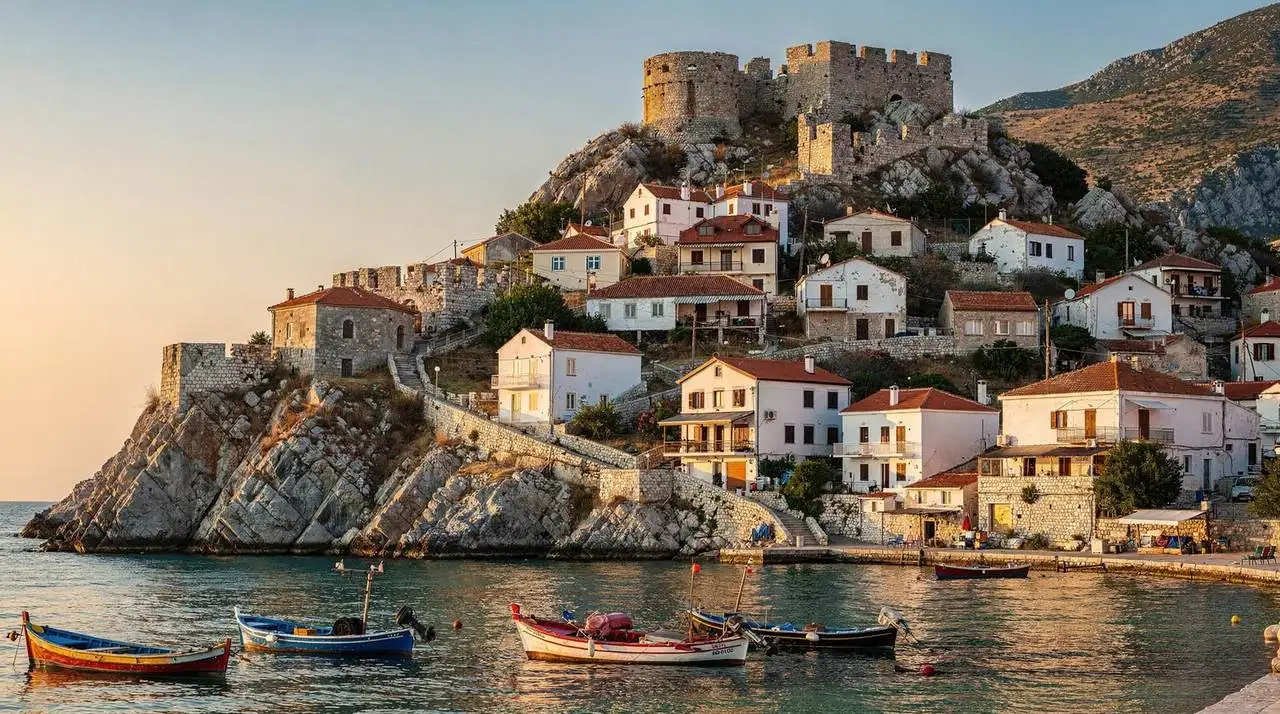
If the Albanian Riviera is defined by dramatic cliff coast, clear Ionian water, and traditional village character, Himara synthesizes all three qualities into the most complete riviera destination between Vlora and Saranda. It is a real town — not just a beach development — with a castle-crowned hill above, a Greek-minority population that has lived here for centuries, a functioning market and local infrastructure, and a coastline studded with beaches and sea caves that rank among the finest on the Albanian Ionian.
Himara (sometimes spelled Himarë) sits approximately 80 km south of Vlora along the SH8 riviera road, at a point where the limestone mountains that have pressed the road against the sea for the previous 30 km relent slightly and allow a broader coastal shelf. The town itself is concentrated on the seafront and the lower slopes, with the medieval castle perched high above on a rocky spur. The combination of an accessible beach resort with a hilltop castle, strong local culture, and exceptional boat tour access to inaccessible cliff coves makes Himara uniquely well-rounded for the riviera traveler.
Himara works well as a base for the central riviera — day trips north to Dhermi and Gjipe Beach, south to Porto Palermo and Borsh, and boat tours to the cave systems that make this stretch of coast world-class. Our best beaches in Albania guide gives detailed ratings for all beaches accessible from Himara, and the Albanian Riviera road trip itinerary uses Himara as a central base for the coastal circuit.
| Where | Albanian Riviera, ~80 km south of Vlora, ~55 km north of Saranda |
| Getting there | Furgon along the SH8 from Vlora or Saranda, or rental car |
| Time needed | 2-3 days |
| Sunbed rental | Around EUR 5-8 per set |
| Best base for | Boat tours, castle walk, day trips north and south |
History and Character
Himara’s history stretches back to antiquity — the area was settled by Illyrian tribes and later Greeks; the Byzantine period saw it develop as an agricultural and maritime community. The town has always had a predominantly Greek-speaking (or Greek-minority) population, and this remains true today: around 40-50% of Himara’s permanent residents identify as ethnic Greek, making it the center of the Greek minority community in Albania. This cultural distinctiveness — Orthodox churches, Greek-language schooling, different food traditions — gives Himara a character that is noticeably different from the predominantly Muslim and Albanian-speaking towns of the central and northern riviera.
The old town on the hilltop (known as Kastro) predates the modern seafront settlement by centuries. The Venetians fortified it; the Ottomans rebuilt elements; local families maintained it through the 19th and early 20th centuries. During the communist era, Himara was a closed border zone, its population subjected to particularly strict surveillance due to its Greek character and its coastal proximity to Greece. The post-1990 opening released a pent-up energy that has driven rapid tourism development since the 2000s.
Things to Do
Boat Tours: The Riviera’s Sea Caves
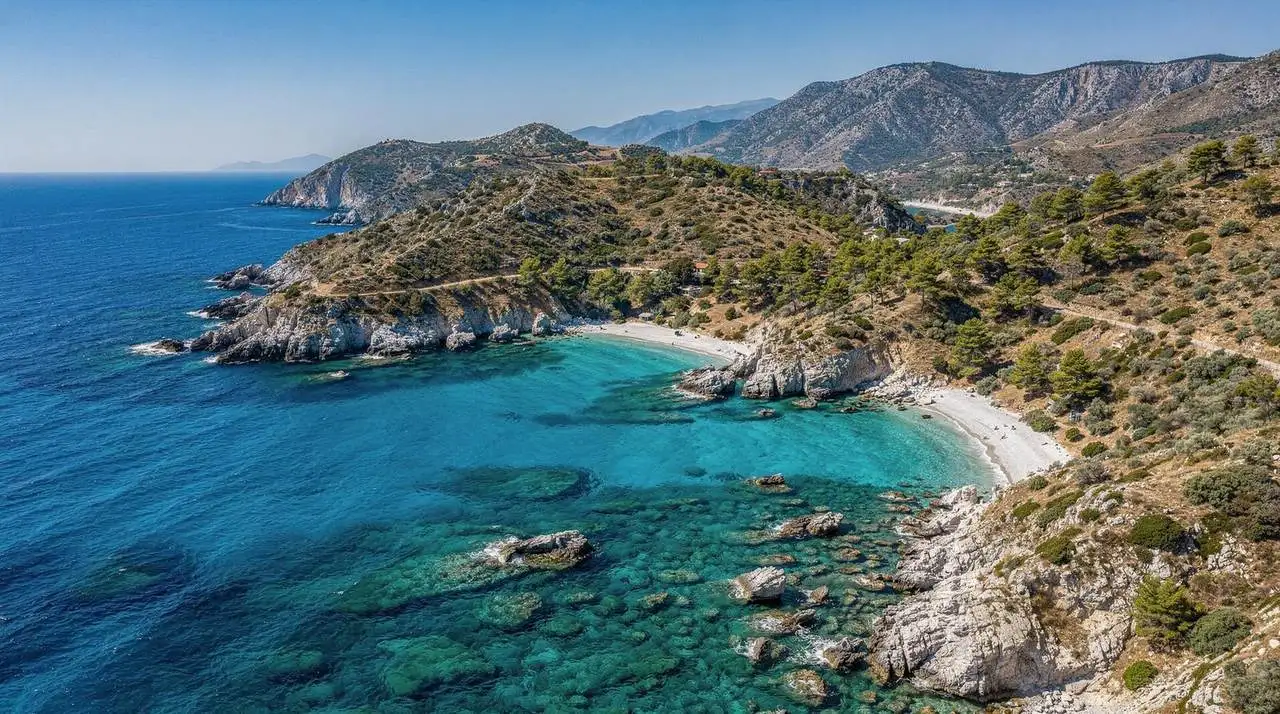
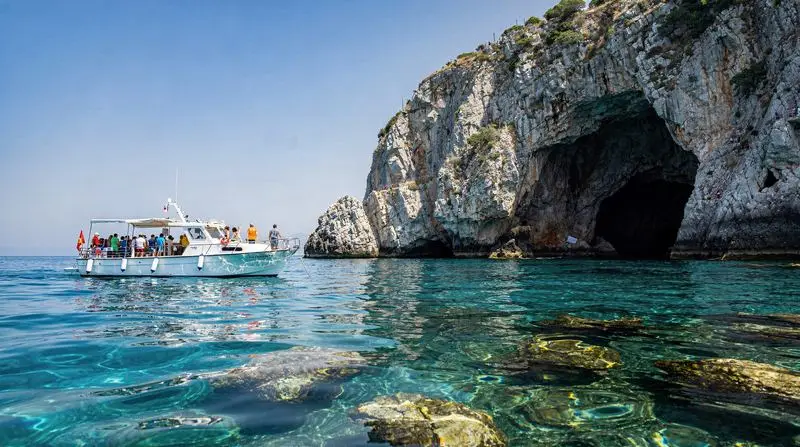
Himara is the best base on the riviera for boat tours to the spectacular coastal scenery only accessible from the water. The limestone cliff coast between Himara and the sea caves to the north and south conceals extraordinary geological formations — cathedral-sized caves, natural arches, emerald pools, and snorkeling coves with visibility to 20+ meters.
This Himara Riviera boat tour with swimming stops is the classic half-day experience — covering the most dramatic cave formations and turquoise swimming spots near Himara, with multiple stops for swimming in otherwise inaccessible coves. Typically three to four hours. The tour usually departs in the morning when sea conditions are calmest.
For the comprehensive caves experience, this Himara Riviera caves boat tour focuses specifically on the most spectacular cave systems — the kind of geological formations that make the Albanian coast genuinely exceptional by Mediterranean standards. Guides explain the geology and local stories behind each cave. This is the tour for serious cave enthusiasts or anyone wanting maximum cave time.
For the broadest coastal overview, this Albanian Riviera boat tour from Himara covers a longer stretch of coast including beaches to the north and south that can only be reached from the sea — a full-day perspective on the riviera’s hidden coastline. It is the most comprehensive option for understanding the full geographic scale of this coast.
Our boat tours in Albania guide covers all Himara operators with pricing and seasonal availability, including the smaller independent operators who offer more flexible itineraries.
Pirates’ Cave Tour
For the famous Pirates’ Cave specifically, this Pirates’ Cave boat tour from Himara focuses on the dramatic sea cave system that the locals have always associated with Mediterranean pirates and corsairs who used Albania’s isolated coast as a base. You can swim inside the cave and explore by the natural light that filters through the rock ceiling. The cave is large enough to enter in a small boat, and the light quality inside is extraordinary — shifting blues and greens from the refracted sea light. A shorter, focused option for those who want to maximize beach time.
Porto Palermo and Kayaking
South of Himara toward Saranda, Porto Palermo Bay sits at the base of a small peninsula crowned by the castle of Ali Pasha of Ioannina — an 18th-century fortification of striking drama, surrounded on three sides by clear water. The castle is accessible by road (a short walk from the parking area) and is partially open to visitors.
The bay itself and the adjacent coastline are superb for kayaking — the water is shallow, clear, and calm inside the bay, with sea caves and arches accessible to anyone with basic paddling skills. This Porto Palermo kayak and SUP tour with castle views combines paddling the Porto Palermo sea caves with views of the Ali Pasha castle from the water — a distinctive riviera experience that covers the best of Porto Palermo without requiring a separate road trip.
The Old Castle Town (Kastro)
The medieval hilltop settlement above modern Himara is undervisited and atmospheric. The climb from the modern town takes around 20-30 minutes on foot, rewarded by extraordinary panoramic views over the Ionian, the surrounding mountains, and the coast north and south. The castle walls enclose a small settlement of stone houses, several Byzantine and post-Byzantine churches, and the foundations of structures from multiple periods.
The Church of All Saints (Kisha e Shenjtorëve) inside the castle complex is particularly notable — a small but beautifully frescoed Orthodox church that reflects the Italo-Epirote artistic tradition of the region. Ask locally about current opening times. The Kastro is best visited in the morning or late afternoon; midday heat makes the climb uncomfortable in summer. The views from the castle terrace, particularly at sunset when the light hits the sea directly, are among the finest viewpoints on the Albanian Riviera.
Guided Tour Including Saranda and Qeparo
For visitors who want to cover the southern riviera with local guidance, this guided tour connecting Saranda, Qeparo, and Himara provides context for the entire stretch of coast between the two main towns, with stops at the historic village of Qeparo (with its dramatically situated old houses) and the Himara old town.
Spile Beach
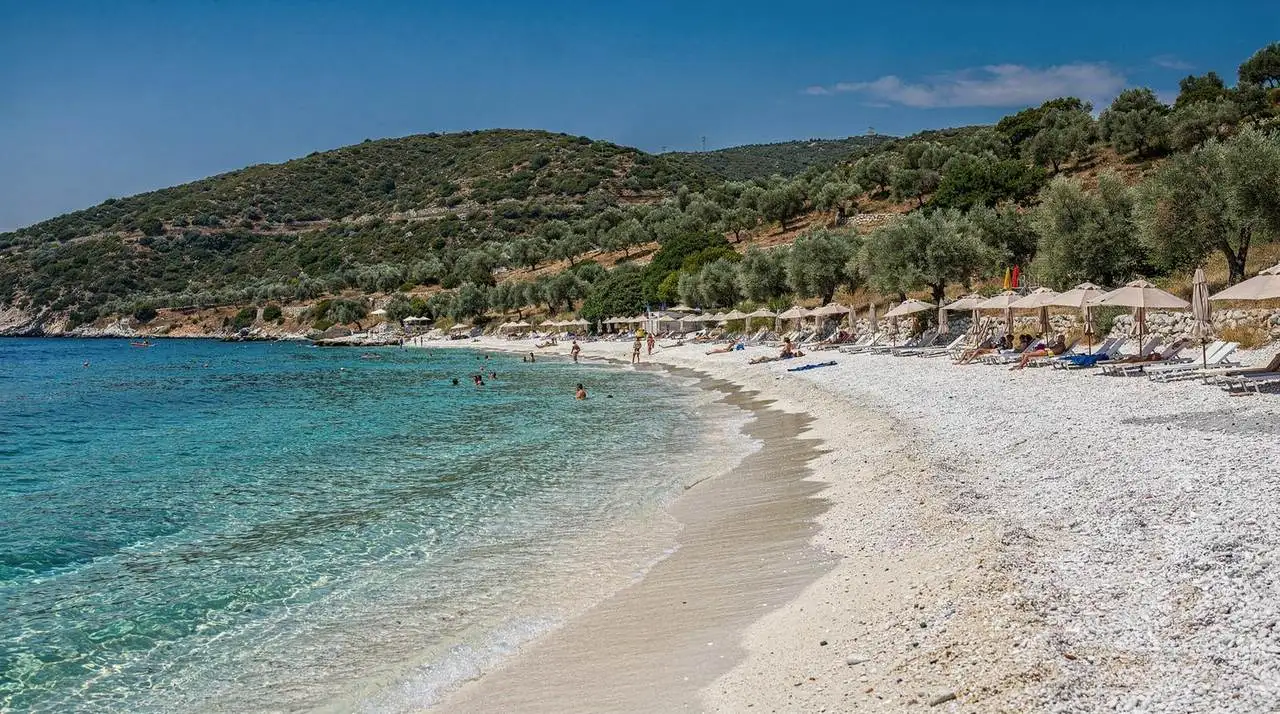
The main beach south of Himara’s seafront promenade, Spile (or Spileja) Beach is a long stretch of grey pebble with very clear water and a line of beach bars and sunbed operators in summer. The beach is backed directly by the mountains, which provides dramatic scenery but also means it goes into shade earlier in the afternoon. Morning swimming here is exceptional — the water is usually calm, the light is clear, and the crows have not yet arrived.
Sunbed rental costs approximately EUR 5-8 per set. The beach bars serve coffee, cold drinks, and simple food. The northern end of Spile, nearest the town promenade, is more social; the southern end, where the beach curves toward the rocky headland, is quieter and better for snorkeling.
Livadhi Beach
A few kilometers north of the town center, Livadhi Beach is broader and somewhat sandier than Spile, with a more relaxed atmosphere and slightly lower prices at the beach bars. It is popular with Albanian families as well as international visitors. The water here is particularly shallow and calm, making it the best option for families with young children. The beach road from Himara passes through a stretch of olive grove before descending to the shore.
Palasa and Jal
North of Himara, the riviera road passes through the extraordinarily scenic stretch toward Dhermi. The beaches at Palasa and Jal (Jala) are accessible by turning off the main road and descending to the coast — both offer exceptional swimming in less crowded conditions than Himara itself. Palasa is a small cove between cliffs; Jal is a larger, more developed beach that has become popular with the Albanian domestic tourism market.
Dhermi Day Trip
Dhermi is around 20 km north of Himara along the riviera road — the most striking stretch of the entire SH8, with cliff edges and sea views. Dhermi has a slightly more upscale, beach-club-oriented atmosphere than Himara and is worth a day trip for the swimming and sunset views. The Drymades beach below Dhermi village is one of the finest on the riviera, and the Gjipe Beach canyon hike is accessible from this area.
Where to Eat
Himara’s food scene reflects its dual heritage: Albanian riviera staples (fresh grilled fish, seafood, byrek) combined with elements of the Greek-minority culinary tradition (more use of olive oil, herbs, and Greek-influenced cheese preparations).
Radhima Restaurant (promenade) — Consistently good seafood with an emphasis on daily-fresh catches. The grilled sea bream and octopus salad are standouts. Fresh fish here is ordered by weight; the sea bass and red mullet are the best choices when available. Budget EUR 10-18 per person.
Taverna Himara (seafront) — Family-run with excellent value, particularly the mixed seafood platter. Good local wine from the Permet region. Budget EUR 8-15 per person.
Burek Stalls (morning market area) — For breakfast, the local bakeries near the market produce outstanding byrek with various fillings. The spinach and feta version has a distinctly Greek-influenced character. Budget EUR 1-3 per portion.
Sofrit is a uniquely Himara dish — slow-cooked lamb offal (liver and kidneys) with herbs and spices, wrapped in membranes and cooked on the grill. An acquired taste but authentically local; ask at traditional restaurants whether they prepare it.
Fresh fish is the centrepiece: sea bass, bream, red mullet, octopus, and squid are all caught locally and prepared simply — grilled, fried, or baked with olive oil and herbs. The seafront restaurants and the quayside tavernas offer the freshest options. Ordering fish by weight is the norm; a 400g sea bass is a reasonable portion for one person.
Greek-influenced dishes: Spanakopita-style spinach pies, feta-style local cheese, and fresh salads prepared with local olive oil — the Himara region produces olive oil with a distinctive aromatic quality from ancient groves on the hillsides above the coast.
Our Albanian food guide explains the regional food culture of the Ionian coast, including the distinctive hybrid cuisine of Himara that blends Albanian and Greek traditions.
Where to Stay
Himara’s accommodation ranges from simple guesthouses to comfortable apartments and small boutique hotels. The seafront and the streets immediately behind it are the most convenient base for beach access and boat tour departures.
Guesthouses: The majority of accommodation is in family guesthouses and converted houses, typically offering simple but clean rooms with breakfast. Expect EUR 30-60 per night for a double room in peak season. Many guesthouses include excellent home-cooked breakfasts.
Apartments: Self-catering apartments are increasingly available and suit families or longer stays. Many are modern and well-equipped with kitchens, allowing you to buy fresh produce and fish from the market.
Boutique hotels: A handful of small hotels offer more comfort — air conditioning, private bathrooms, sea views — at EUR 60-100 per night in season.
Booking ahead is strongly advisable for July and early August, when Himara is at its most popular. Our boat tours in Albania guide covers Himara’s tour operators in detail, including how to book and what to expect.
How to Get to Himara
From Saranda: Around 1 hour north along the SH8 riviera road. Furgons run this route several times daily in summer; cost approximately EUR 2-3. By rental car, the road is straightforward if occasionally narrow — allow extra time on the tighter mountain sections. The drive from Saranda is one of the most scenic in Albania.
From Vlora: Around 2 to 2.5 hours south, including the Llogara Pass section. The most dramatic approach: the descent from Llogara toward Dhermi and then onward to Himara takes you through the most spectacular scenery on the Albanian coast. The first sight of the Riviera from the Llogara pass, with the sea spread below you in bands of blue, is one of the defining moments of Albanian travel.
From Tirana: 4-5 hours by car or bus, either directly via Vlora and Llogara, or via Saranda from the south. Long-distance buses from Tirana to Saranda stop at Himara. See our car rental in Albania guide for vehicle options.
From Dhermi: Around 30 minutes south along the cliff road — a short but spectacular drive with views of Gjipe Beach canyon visible from above.
Best Time to Visit
June and September are optimal for Himara: warm sea temperatures, manageable crowds, available accommodation, and the best conditions for boat tours (which can be cancelled in rough weather in shoulder season). The sea reaches 22-24°C in June and holds 24-26°C through September.
July and August are peak season: Himara is busy and accommodation prices are at their highest. The boat tours run daily and the social atmosphere on the promenade is lively and international. Book accommodation at least a week ahead for August.
May: Possible for visitors who accept cooler water (18-20°C) and some facilities not yet operational. The landscape is beautiful and the beaches empty. The boat tours begin in May and run until October.
October: The sea is still warm (22°C), crowds are gone, and accommodation is available. Some beach bars and tourist restaurants close after September, but the town itself remains fully operational and the castle walk is particularly pleasant in the autumn light.
Himara’s Beaches Compared
| Beach | Character | Best for |
|---|---|---|
| Spile (Spileja) | Grey pebble, town-adjacent, beach bars | Convenience, morning swims |
| Livadhi | Broader, sandier, shallow | Families with young children |
| Palasa / Jal | Smaller coves north toward Dhermi | Quieter swimming, fewer crowds |
| Gjipe Beach | Canyon-access cove, minimal facilities | A full-day excursion, not a lazy beach day |
Himara by Season
| Month | Sea temp | Boat tours | Notes |
|---|---|---|---|
| May | 18-20°C | Running, weather-dependent | Empty beaches, cool water |
| June | 22-24°C | Reliable | One of the two best months |
| July-August | 24-26°C | Daily, book ahead | Peak crowds and prices |
| September | 24-26°C | Reliable | The other best month — warm, thinner crowds |
| October | ~22°C | Winding down | Some beach bars close after mid-month |
Practical Tips
Book boat tours ahead: The best boat tour operators in Himara fill up in July and August. Pre-booking through your guesthouse or directly with operators a day or two ahead avoids disappointment. Morning departures are generally calmer seas.
Walking to the castle: The hike up to Kastro is worthwhile for the views, but wear appropriate footwear — the path is rocky and steep in places. Allow an hour for the round trip. Bring water and start in the morning or late afternoon to avoid the midday heat.
Currency: Cash is preferred for boat tours, beach sunbeds, and smaller restaurants. There is an ATM in the town center. See our Albania travel budget guide for a realistic cost breakdown.
The Greek minority: Himara has a politically sensitive history regarding its Greek-minority status, which has occasionally featured in Greek-Albanian diplomatic discussions. This does not affect day-to-day travel but explains the presence of Greek-language signs and the dual-identity character of the town.
Drive carefully: The SH8 between Himara and Saranda has improved but remains demanding — narrow in places, with sharp bends and occasional livestock on the road. Night driving should be avoided.
Riviera context: For the full Albanian Riviera picture including how Himara fits into a longer coastal itinerary, see the Albanian Riviera road trip itinerary and the 14-day Albania itinerary.
Himara is the ideal base for travelers who want the full Albanian Riviera experience: beach, boat tours, history, local culture, and excellent food in a destination that retains genuine character. For the wider riviera picture, our Albanian Riviera guide and best beaches in Albania guide provide comprehensive planning resources.
Frequently Asked Questions About Himara
Is Himara a good base for the Albanian Riviera?
Himara is arguably the best base on the Albanian Riviera for travelers who want more than just beach time. Centrally positioned between Dhermi to the north and Borsh/Ksamil to the south, the town has the best range of restaurants, accommodation, and practical services of any riviera destination. Day trips to Gjipe Beach, Dhermi, and Porto Palermo are all within 30-40 minutes. The old castle village above the modern town adds cultural depth that purely beach-focused resorts lack.
What boat tours run from Himara?
Boat tours from Himara’s harbour explore the coastline in both directions, visiting sea caves, inaccessible coves, and swimming spots that are only reachable by water. The most popular tours cover the stretch north toward Dhermi and Gjipe Canyon, and south toward Porto Palermo Bay. Full-day tours typically cost EUR 25-40 per person; half-day options are available for EUR 15-25. Departures are usually morning. Book through your accommodation or at the harbour — morning departures see calmer seas.
Are there good beaches in Himara itself?
Yes — Himara has several beaches within easy walking or short taxi distance. The main town beach is convenient but not the most scenic. Livadhi Beach, a short drive south, is wider and better for swimming. Potami Beach further south offers clearer water and a more relaxed atmosphere. The most dramatic options — Gjipe, Drymades — require longer travel but are reachable as day excursions from a Himara base.
How do you get to Himara?
Himara is on the SH8 coastal highway, approximately 145 km south of Vlora by road (2.5-3 hours) and 55 km north of Saranda (1-1.5 hours). Furgons (shared minibuses) run between Vlora and Saranda along the coastal road and stop in Himara. There is no direct connection from Tirana without changing in Vlora or Gjirokastra. Having a rental car makes Himara significantly more accessible and allows the full coastal drive to be enjoyed at your own pace.
When is the best time to visit Himara?
June and September offer the ideal conditions: warm sea temperatures (23-26°C), reliable sunshine, significantly lower prices than peak season, and manageable crowds. July and August are the busiest months — the boat tours fill up, accommodation prices peak, and the beaches are at their liveliest. For those wanting genuine quiet, early June or October allows the essentials of the Himara experience with very few other visitors around.
Is Himara or Dhermi a better base?
Himara suits travelers who want a real town — a working market, a wider range of restaurants, and easy access to boat tours in both directions. Dhermi leans more upscale and beach-club-oriented, with a livelier nightlife scene but less of an everyday-town feel. Many travelers base in Himara and day-trip to Dhermi for the beach clubs, or vice versa; both are about 30 minutes apart along the cliff road.
Do you need a car to enjoy Himara?
Not strictly, but it helps considerably. Furgons cover the SH8 between Vlora and Saranda and stop in Himara, and boat tours reach most of the best coves without a car. However, reaching Livadhi Beach, Palasa, or the Gjipe Beach trailhead comfortably on your own schedule is much easier with a rental car — see the car rental in Albania guide for options.