Albanian Food: A Complete Guide to What to Eat and Where
Albanian cuisine is one of the Mediterranean’s most underrated food cultures. Shaped by Ottoman influence, Balkan tradition, and the particular geography of a country where mountains, rivers, and coastline all produce very different ingredients, Albanian cooking is hearty, seasonal, and deeply rooted in hospitality. Meals here are rarely rushed, portions are generous, and the expectation is that guests will leave the table full and satisfied.
Despite growing international tourism, Albanian food remains largely unchanged by outside trends. Most restaurants in the country still serve the dishes that Albanian grandmothers have been cooking for generations. Understanding what those dishes are — and where to find the best versions — makes an enormous difference to how well you eat during a visit.
| Must-try dish | Tave kosi (national dish) and byrek (everyday staple) |
| Typical meal cost | Around EUR 6–15 per person at a traditional restaurant |
| Best food city | Tirana (New Bazaar) for range, Elbasan for tave kosi |
| Vegetarian-friendly | Yes, with some advance notice in guesthouses |
| Peak flavor season | May–June and September, for fresh produce |
The Foundation: What Shapes Albanian Cooking
Geography explains much of Albanian food. The inland and mountain regions produce lamb, goat, dairy products, wild herbs, and game. The coastal south delivers fish, octopus, mussels, and sea bream straight from the Ionian and Adriatic waters. The fertile lowlands around Shkodra and Fier supply the wheat, corn, peppers, tomatoes, and onions that form the base of countless dishes.
The Ottoman legacy is unmistakable in the use of yogurt, slow-cooked meats, börek-style pastries, and the culture of mezze-style sharing. But Albanian cooks have made these dishes their own over five centuries, developing regional variations, local spice profiles, and cooking techniques that differ noticeably from Turkish or Greek equivalents.
One constant across the entire country is the insistence on fresh, seasonal ingredients. Albania did not develop a large processed food industry during the communist era, and markets today are still dominated by seasonal produce. Eating in May or September means benefiting from outstanding tomatoes, fresh herbs, and peak-season vegetables that transform even simple dishes.
Tave Kosi: The National Dish
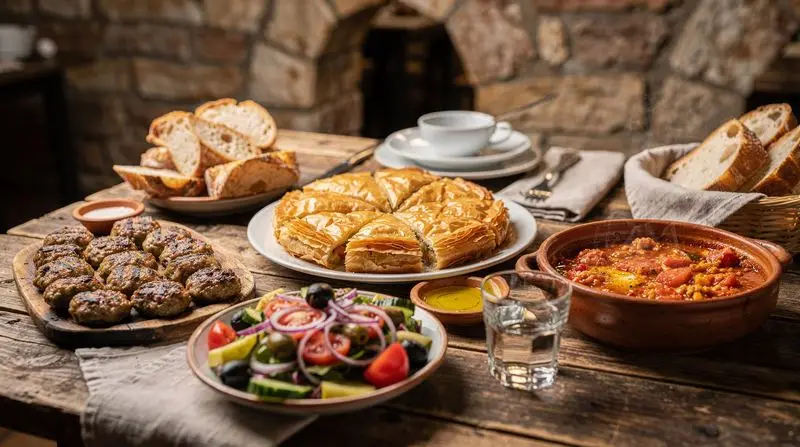
If you eat only one Albanian dish, make it tave kosi. This is Albania’s most celebrated recipe: chunks of slow-roasted lamb or sometimes chicken baked in a creamy yogurt and egg custard, often with rice added to the base. The result is something between a casserole and a baked pudding — the yogurt sets around the meat, creating a golden crust on top and a rich, tangy interior.
The dish originates in Elbasan in central Albania, and the Elbasani version is considered the definitive one. Restaurants in Tirana and across the country serve their own interpretations, but if you travel to Elbasan, ordering tave kosi there is almost a rite of passage. The Elbasani restaurant strip along the old bazaar produces some of the finest versions.
Tave kosi is typically served as a main course with bread and a simple salad. It is filling enough that most visitors find a portion more than sufficient for a complete meal.
Byrek: Albania’s Essential Pastry
Byrek is the food you will encounter everywhere in Albania — sold from street vendors in the morning, stacked in bakery windows, served as a starter in traditional restaurants, and eaten by Albanian families as a weekday staple. It is a filo pastry pie filled with various ingredients, baked until golden and layered with a flakiness that good byrek achieves and mediocre versions fail to replicate.
The most common fillings are djath (white cheese, similar to feta but milder and saltier), spinaq (spinach mixed with egg and sometimes onion), and mish (seasoned ground meat). Some bakeries also produce byrek with leek or pumpkin. The cheese version is the most popular and usually the best introduction.
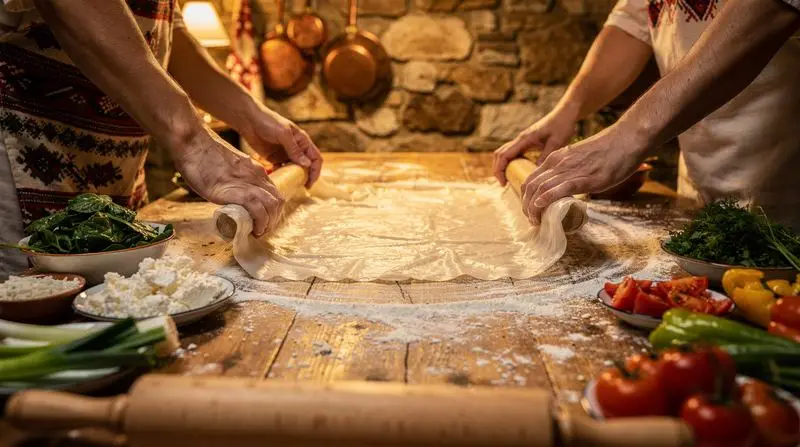
The quality of byrek varies enormously depending on whether the filo pastry is made fresh by hand or bought pre-made. In smaller towns and traditional bakeries, byrek is still made with hand-pulled pastry that produces a far more delicate result. Watching a bakery worker stretch filo dough across a large table is one of those small food experiences worth pausing for.
Tirana has dozens of excellent byrek shops, and the New Bazaar market is one of the best places to sample several styles in one visit.
Fergese: The Pepper and Cheese Staple
Fergese is a thick, rich dish made from roasted red peppers, tomatoes, white cheese (gjize or similar), and eggs, cooked together in a clay pot until the mixture becomes a dense, intensely flavored stew. It is served hot with bread for dipping and works equally well as a starter or a light main course.
The Tirane version (Fergese Tirane) is arguably the most famous, made with calves’ liver added to the mix — a version that sounds unexpected to visitors but has a devoted following among Albanians. The vegetarian version, made without liver, is equally good and more widely available across the country.
Fergese appears on virtually every traditional Albanian restaurant menu. The clay pot in which it is cooked and served retains heat well, making it one of those dishes that gets better as it sits on the table and the flavors continue to meld.
Qofte: Albanian Meatballs Done Right
Qofte are grilled minced meat patties or small sausage-shaped rolls, typically made from a mixture of lamb and beef seasoned with onion, parsley, salt, and occasionally dried mint. They are cooked over charcoal or on a flat grill and served with bread, yogurt sauce (salce kosi), pickled vegetables, and sometimes fries.
The street version of qofte — sold from dedicated grills throughout Albanian cities — is among the country’s most satisfying fast foods. A portion of four or five pieces with bread and yogurt costs well under EUR 3 in most places and represents exceptional value. Qofte te ferguara (fried qofte) also appear in some restaurants, though the grilled version is superior.
Regional variations exist: the Shkodra version tends to be spicier, while southern versions sometimes incorporate goat meat for a more pronounced flavor.
Coastal Seafood: The Riviera Table
Along the Albanian Riviera from Vlora down to Saranda, seafood replaces meat as the centerpiece of the local diet. The Ionian Sea here is remarkably clean and productive, and the fishing tradition in towns like Himara, Saranda, and Vlora ensures that what arrives on your plate in a restaurant was likely caught the same morning.
Sea bream (levrek), bass (koce), and red mullet (barbun) are the most prized fish and are typically grilled whole over charcoal and served with olive oil and lemon. Octopus (oktopodit) is grilled or slow-cooked in tomato sauce. Mussels (midhje) from the Butrinti lagoon near Saranda are exceptional — the lagoon’s nutrient-rich water produces large, sweet-tasting mussels that restaurants serve steamed with white wine, or stuffed and baked.
The best approach at any coastal restaurant is to ask what has come in that day rather than ordering from the menu. Restaurants near the harbor in Saranda and the fishing port of Himara frequently have daily catches that are not listed anywhere.
Lakror and Flija: Mountain Pastry Traditions
In the highlands and northern mountain regions, the pastry tradition takes different forms. Lakror is similar to byrek but often cooked in a different style — sometimes buried under coals in a traditional method called under-the-saj (a metal lid with coals placed on top). The result is a slower-cooked, denser pastry with a more pronounced char on the outside.
Flija is a northern Albanian specialty made by layering thin crepe-like batter on a griddle, with each layer slightly cooked before the next is added. The finished dish is a thick, soft layered pastry served with sour cream (kaymak) or honey. It takes considerable time and patience to make properly, and in northern villages it is still prepared as a special occasion dish rather than an everyday meal.
If you are traveling through the Albanian Alps or visiting Shkodra, flija is worth seeking out in the traditional guesthouses (bujtina) that have kept these recipes alive.
Tavë me Perime: The Vegetable Bake
Albanian cooking has a strong tradition of vegetable dishes that stands apart from the meat-heavy reputation of Balkan cuisines. Tavë me perime is a baked dish of seasonal vegetables — zucchini, peppers, tomatoes, eggplant — layered in a clay pot with olive oil and sometimes eggs or cheese, then slow-cooked until the flavors concentrate.
The dish changes with the season. In summer it features the peak tomatoes and peppers of July and August. In autumn it incorporates pumpkin and dried herbs. In winter, preserved and dried vegetables make their way in. This seasonal sensitivity means that the best version of the dish you eat in Albania may be different from month to month.
Dairy Products: Gjize, Kaymak, and Salce Kosi
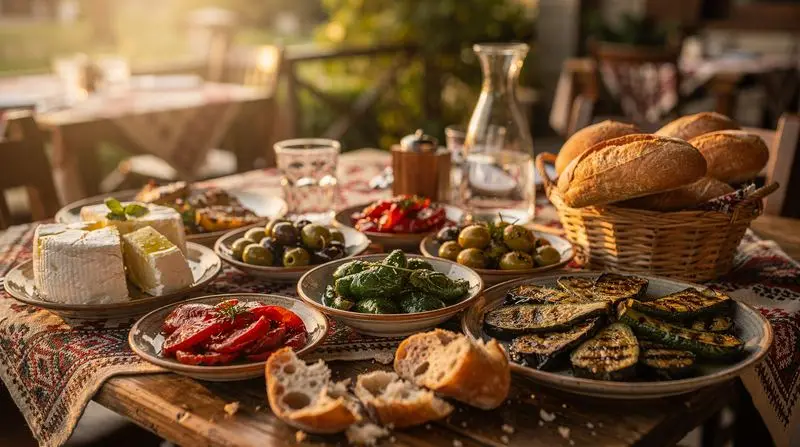
Albanian dairy is outstanding and features prominently across the cuisine. Gjize is a fresh, crumbly white cheese similar to ricotta but denser and tangier — it appears in byrek, salads, and as a table cheese. White brined cheese (djath i bardhe) is closer to feta and is served at almost every Albanian meal alongside olives, tomatoes, and cucumbers as part of the standard table spread.
Kaymak is a thick clotted cream produced by slowly heating and then cooling buffalo or cow milk. It is used as a spread on bread, served alongside pastries, and eaten with honey at breakfast. The best kaymak comes from northern Albania and Kosovo, where buffalo herds still produce exceptionally rich milk.
Salce kosi is the simple but essential garlic yogurt sauce that accompanies qofte, lamb dishes, and borek. Albanian yogurt is made from full-fat milk and has a richness and slight tartness that supermarket equivalents rarely match.
Sweets and Desserts
Albanian sweets are rooted in the Ottoman baklava tradition but have developed local variations. Baklava here is typically less sweet than Turkish versions, with layers of walnut or almond filling rather than pistachio, and a lighter honey syrup. Kadaif (shredded wheat pastry soaked in syrup) and revani (semolina cake) appear in traditional pastry shops alongside cream pastries that have more of a Western European character.
Ballokume is a distinctive Albanian cookie from Elbasan, made from corn flour, eggs, butter, and sugar. It is crumbly, slightly grainy, and not overly sweet — the sort of thing you eat two of before realizing you have eaten six. It is particularly associated with the Dita e Veres (Summer Day) festival in March and is sold year-round in Elbasan and specialty shops in Tirana.
Sultjash is a rice pudding made with milk and rose water, similar to muhallebi, served cold and sometimes dusted with cinnamon. It is particularly good in traditional pastry shops in Berat and Gjirokastra.
Where to Experience the Best of Albanian Food
The gap between a mediocre Albanian meal and an excellent one has narrowed considerably in recent years as better-quality restaurants have opened across the country. That said, the best food is still found in places that prioritize tradition over presentation.
In Tirana, the New Bazaar (Pazari i Ri) is the most rewarding food destination in the country — a revamped historic market where vendors sell seasonal produce, dairy, cured meats, and preserves, surrounded by restaurants and food stalls serving traditional dishes at very reasonable prices. Spending a morning walking the market and eating at noon is one of the highlights of any Albanian visit. For guided introductions to Tirana’s food scene, this small-group Tirana food tour covers multiple stops across the city with meals included and provides excellent context about what you are eating and why.
For a deeper dive into the flavors of the capital, the Taste of Albania food tour focuses specifically on traditional Albanian recipes and their stories, visiting producers, markets, and restaurants that tourists rarely find independently.
Food tours in Albania are among the most efficient ways to cover a lot of culinary ground quickly, particularly in cities like Tirana where the food scene has expanded rapidly and local knowledge makes a real difference.
Dining Culture and What to Expect
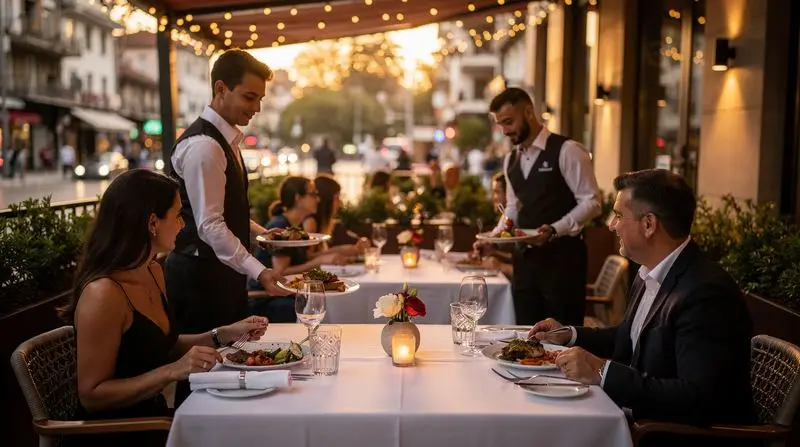
Albanian restaurant culture has its own rhythms. Lunch (dreka) is the main meal of the day for most Albanians and is eaten between 1pm and 3pm. Dinner (darka) tends to be lighter and later, often not starting until 8pm or 9pm. Breakfast (mengjes) is usually simple — byrek or bread with cheese and coffee.
Portions in traditional Albanian restaurants are large by most standards. Ordering for two people works better as a series of shared dishes rather than individual mains: a starter of fergese, a salad, a shared portion of tave kosi, and bread covers more food than most pairs can comfortably finish. Do not be surprised if the waiter suggests you have ordered more than you need.
Bread is served at every meal and is not charged separately in most traditional restaurants. Olive oil on the table is common in southern Albania; in the north, butter or kaymak is more likely.
Tipping is not standard but is increasingly common in tourist areas. Rounding up the bill or leaving 10% for good service is appreciated and will not be refused.
Learning to Cook Albanian Food
The best way to deepen your understanding of Albanian cuisine is to cook it. Cooking classes in Albania are available in several cities and typically cover the essential dishes — byrek, tave kosi, fergese — alongside market visits to source ingredients. The experience of making byrek filo pastry by hand under the guidance of an Albanian cook is one that most participants describe as a highlight of their trip.
Whether you approach Albanian food through street stalls, market tastings, restaurant meals, or a cooking class, the experience rewards curiosity and an appetite for flavors that are genuinely different from what most international visitors encounter elsewhere in Europe. Albanian food does not shout for attention — but once you have tasted the real thing, it is difficult to forget.
For the best dining experiences in the capital, see our guide to the best restaurants in Tirana.
Regional Food Differences Across Albania
Albanian food varies significantly by region in ways that reward travelers who cover more than one area of the country. Understanding these differences helps set appropriate expectations and highlights what is most worth seeking out in each destination.
Northern Albanian food, centered on Shkodra and the highland communities, is heartier and more dairy-intensive than the national average. Flija (the layered crepe-based pastry of northern tradition), corn-based breads, and preparations involving lamb and goat from the local flocks reflect both the highland climate and the traditional pastoral economy. The Shkodra region has Italian connections from centuries of Venetian influence and the strong Catholic community, and some of this influence is visible in the cooking — a slightly more refined approach to certain preparations, more use of herbs, a different bread tradition.
Central Albania — Tirana, Elbasan, Berat, and the Myzeqe lowlands — represents the mainstream of Albanian cuisine as most visitors experience it. Tave kosi from Elbasan, tave elbasani (a similar clay pot preparation with more egg), ballokume cookies, the wine tradition of the Berat area, and the intensively agricultural lowlands that supply the country’s markets all characterize this region.
Southern Albania — Gjirokastra, Permet, Saranda, and the Greek border areas — has the strongest Ottoman culinary influence and the most pronounced Mediterranean character. The use of olive oil is more generous here than in the north. The lamb preparations of the Lunxheri hills are particularly fine. The wine of the Permet area has a distinct character from the Berat wines produced to the west. The Greek minority communities of the south have contributed food traditions that enrich the already complex southern Albanian culinary landscape.
The coastal areas from Vlora to Saranda have their own identity: seafood dominant, lighter than the inland cooking, with a Mediterranean directness of preparation that suits the fish and shellfish of exceptional quality from the Ionian.
Albanian Food and the Seasons
One aspect of Albanian food culture that distinguishes it from the standardized year-round menus of more industrialized food systems is its genuine seasonality. Albanian restaurants — particularly in smaller cities and traditional establishments — serve what is available rather than what can be sourced regardless of time of year.
This means that the best experiences of Albanian food are season-specific. Spring brings wild greens, fresh dairy at its richest, and the lamb of the season. Summer brings the tomatoes, peppers, and eggplant that define Albanian summer cooking, along with peak Ionian seafood. Autumn brings the grape harvest, wild mushrooms, chestnuts, figs, and the transition to preserved goods. Winter brings the stored and pickled produce of the autumn harvest, long-cooked beans, and the heartier preparations that cold weather justifies.
Accepting this seasonality — eating what is available rather than seeking what is always theoretically possible — produces the most satisfying and authentic Albanian food experience. The Albanian food culture rewards travelers who engage with it on its own terms rather than importing expectations from outside.
Markets Worth Building a Morning Around
Beyond Tirana’s New Bazaar, several regional markets reward an early start. In Shkodra, the daily produce market near the old town sells farm cheese, honey, and seasonal vegetables from the fertile lowlands, and pairs well with a coffee stop on Rruga Kole Idromeno afterward. Along the coast, Saranda and Himara have small fish markets where the morning catch is sold directly — arriving before 9am gives the best selection of sea bream, mullet, and octopus before restaurants buy up the day’s supply. Berat’s old bazaar quarter has fewer stalls than Tirana’s but a strong concentration of traditional sweet shops selling ballokume and other local pastries near the citadel.
Drinks That Belong on the Table
Albanian meals are rarely eaten without something to drink alongside the food. Raki — a strong fruit brandy, most often distilled from grapes but sometimes plums or mulberries — is the default aperitif and digestif, poured in small glasses and often homemade in rural households; declining a host’s raki is acceptable but expect gentle insistence. Albanian wine, particularly from the Berat and Permet regions, pairs naturally with the heavier meat dishes; see the Albanian wine guide for producers and where to taste. For non-alcoholic options, fresh-squeezed juices and Albanian mineral water (uje mineral) from mountain springs are widely available and genuinely good. Coffee, covered in depth in the Albanian coffee culture guide, typically follows the meal rather than accompanying it.
Eating on a Budget vs. Eating Well
Albania makes it easy to eat cheaply and easy to eat memorably, often at the same restaurant. A full traditional meal — starter, main, bread, and a drink — at a neighborhood restaurant in Tirana or a smaller town typically runs EUR 6–15 per person, and street food (byrek, qofte) can carry a day’s eating well under EUR 10 total. At the other end, a few destination restaurants in Tirana and along the coast, including some serving contemporary reinterpretations of traditional dishes with wine pairings, charge EUR 20–35 per person and deliver genuinely refined versions of the classics.
The gap between the two tiers is smaller than in most European capitals, which means budget-conscious travelers do not have to sacrifice much to eat well. The clearest strategy: reserve one or two nights for a higher-end restaurant experience in Tirana, and eat at family-run places and market stalls the rest of the trip. Both approaches deliver excellent food; the difference is presentation, service pace, and wine list depth rather than raw ingredient quality.
Bringing Albanian Food Home
Several Albanian food products travel well and make genuinely useful souvenirs rather than novelty items. Dried oregano and mountain herbs, sold in small bags at markets, are noticeably more fragrant than most supermarket equivalents abroad. Bottled Albanian olive oil, particularly from the south near Vlora, is high quality and reasonably priced compared to imported olive oil at home. Raki is portable in checked luggage if well-sealed, though airline liquid limits apply to carry-on. Honey from mountain regions, sold in jars at roadside stands and markets, varies distinctly by region and season and is worth sampling before buying. Vacuum-sealed cured meats and cheese are harder to bring through customs in some countries, so check import restrictions before committing to a large purchase.
Frequently Asked Questions About Albanian Food
What is the national dish of Albania?
Tave kosi — slow-baked lamb with eggs and yogurt — is widely considered Albania’s national dish. It originates from Elbasan and appears on menus across the country. Byrek, the flaky filo pastry filled with cheese, meat, or spinach, is the most eaten everyday food and could equally claim national dish status.
Is Albanian food spicy?
No, Albanian food is not spicy in the chili sense. The cuisine relies on fresh herbs (oregano, mint, bay leaf), good olive oil, quality dairy, and slow cooking rather than heat. Peppers are used extensively but typically as a sweet or mild ingredient rather than for spice. Travelers sensitive to spice will find Albanian food very approachable.
Can vegetarians eat well in Albania?
Yes, though it requires some awareness. Byrek with cheese or spinach, fergese (peppers and cottage cheese), fasule (bean stew), grilled vegetables with feta, and fresh salads are widely available. In mountain guesthouses where meat dominates the menu, communicating dietary requirements in advance ensures the host prepares alternatives. Coastal restaurants have excellent seafood for pescatarians.
What should I try first in Albania?
Start with byrek from a bakery for breakfast — the cheese version is a perfect introduction to Albanian flavors. For your first proper meal, order tave kosi if available, or qofte (grilled minced meat patties) with salad. On the coast, fresh sea bream grilled whole with olive oil and lemon is the essential seafood experience.
Is Albanian food similar to Greek food?
There are significant similarities — both cuisines use olive oil generously, feature grilled meats, yogurt-based dishes, fresh seafood, feta-style cheese, and simple vegetable preparations. The influence of Ottoman cooking also runs through both. Albanian food tends to be slightly heavier on dairy and cornbread in the mountain regions, with a stronger Italian influence in the south near the Riviera.
Is it safe to drink tap water and eat street food in Albania?
Tap water is generally treated as unsafe to drink by locals and visitors alike in most of Albania, so bottled or filtered water is the standard choice, including for brushing teeth if you prefer caution. Street food, by contrast, is widely considered safe and is a normal part of Albanian eating — byrek from a busy bakery or qofte from a well-used grill stall with high turnover are reliable choices, since high turnover means fresh ingredients rather than food sitting for hours.