Renting a Car in Albania: Everything You Need to Know
A rental car transforms what you can do in Albania. The country’s best experiences — the Albanian Riviera’s hidden beaches, the mountain villages of the Accursed Mountains, the empty roads of the south — are either impossible or genuinely difficult to reach without your own vehicle. Furgons and buses cover the main routes, but they leave on their own schedules, stop where they want, and simply do not go to places like Llogara Pass, the road to Theth, or the secluded coves between Himara and Saranda.
The good news is that renting is cheap. Albania has one of the lowest car rental costs in Europe. The not-so-good news is that driving can be challenging, and insurance and documentation require careful attention. This guide covers everything: where to rent, what to pay, what documents you need, and the practical realities of driving with a rental car in Albania.
| Cost | around EUR 15-25/day economy (local), EUR 30-50/day (international) |
| Where to rent | Tirana Airport, Tirana city, Saranda, Shkodra |
| Documents | Driving license (+IDP recommended), passport, credit card |
| Deposit | around EUR 200-500 (pre-authorized hold) |
| Best for | Riviera coves, Albanian Alps villages, mixed itineraries |
For the Riviera coves or the road to Theth, compare what each rental includes rather than only the daily rate, and check the size of the pre-authorized hold on your credit card. Local and international offers differ on both, and a low listed price can come with a larger deposit at the desk. To line up those details for a Tirana Airport pick-up, you can search and compare cars on DiscoverCars before you travel.
Why Renting a Car Is Worth It
The single most-cited piece of advice from travelers who have visited Albania is this: rent a car. Here is why:
The Riviera is a series of beaches separated by a winding coastal road. No beach shuttle covers all of them on your schedule. With a car, you can pull off at empty coves, explore villages above the road, and move between Dhermi, Himara, Porto Palermo, and Ksamil at will — parking for free at most beach turnoffs and paying nothing for the freedom to leave when you want.
Mountain destinations require a car or an organized tour. Theth, Valbona, Berat, and Gjirokastra are served by public transport, but the connections are infrequent and slow. A car halves journey times and gives you the freedom to stop at viewpoints, waterfalls, and villages. The furgon from Shkodra to Theth runs once in the morning — a car gives you a 6-hour window instead of a 30-minute one.
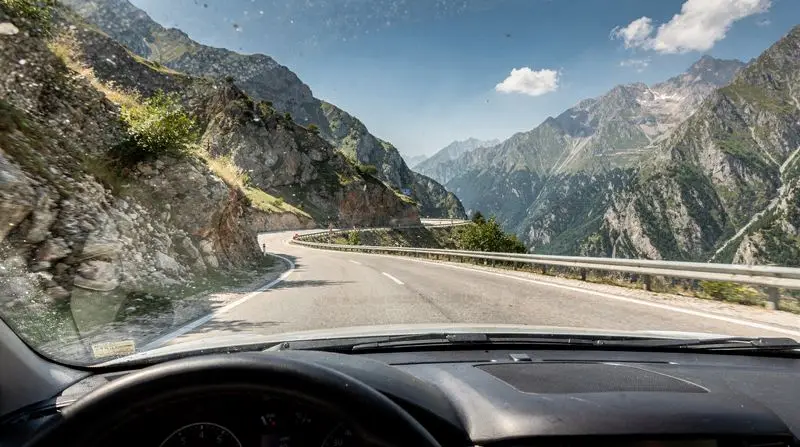
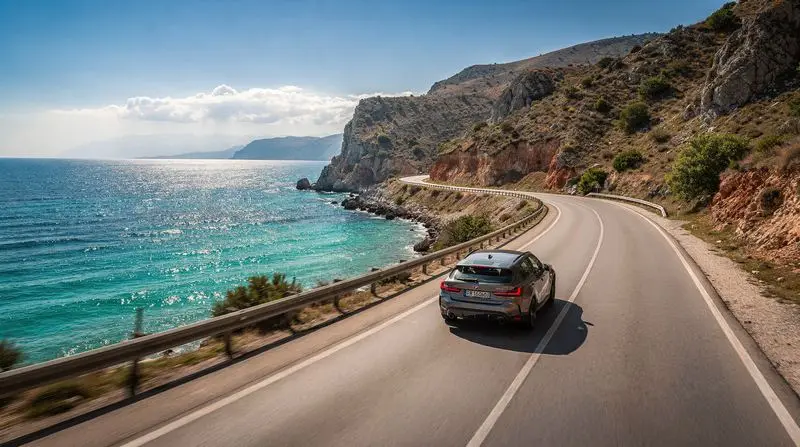
The roads between tourist sights are part of the experience. Albania’s interior is spectacularly beautiful. Driving the SH8 from Tirana over the mountains to the coast — the road that drops into the Ionian Sea at Llogara Pass — is genuinely one of the great drives in Europe. You cannot do that on a furgon. The internal mountain roads of the south, winding through olive groves and ancient villages, are worth hours of your time in themselves.
Flexibility for longer trips. If you are spending more than a week in Albania, the accumulated time savings and itinerary freedom of a rental car justify the cost decisively. Even at EUR 20/day for a small car, that is less than one restaurant meal — and it unlocks a country that rewards detours and spontaneous exploration.
If you prefer not to drive and want to cover specific routes with local expertise, organized day trips from Tirana are an excellent complement — particularly for destinations like Berat and Gjirokastra where a guide’s historical knowledge adds as much as the journey itself.
Where to Rent a Car in Albania
Tirana Airport (TIA)
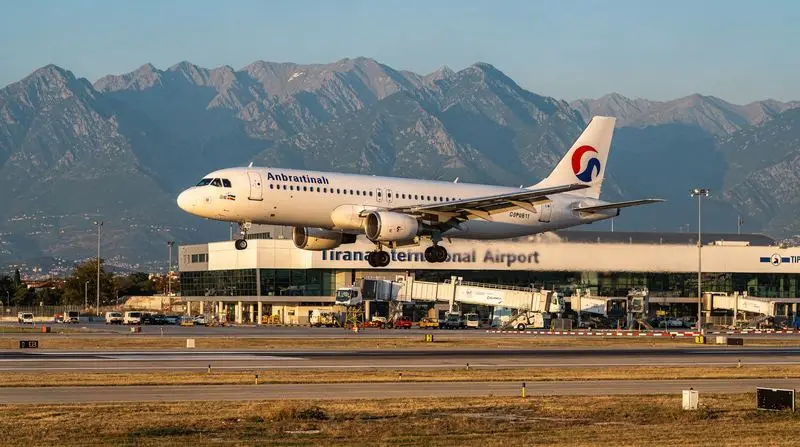
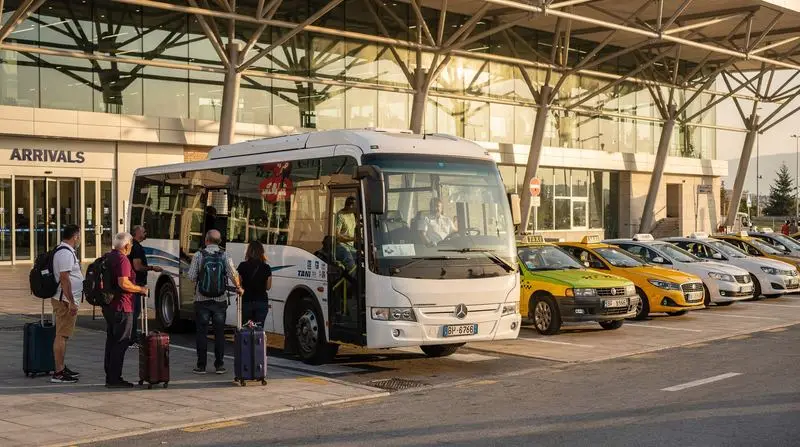
The arrivals hall at Mother Teresa International Airport has rental desks from several companies, and it is the most convenient pickup point if you are flying in and want to start driving immediately.
International companies at Tirana Airport:
- Europcar — reliable, with good vehicle standards and well-organized paperwork
- Hertz — available through the airport, consistent international standards
- Sixt — competitive rates, modern fleet, good availability in peak season
Local companies operating at or near the airport: Local Albanian agencies frequently undercut the international brands significantly. Companies like Arberia Rent a Car, Elda Car, and others operate either from the airport arrivals area or offer free pickup from the terminal. Their vehicles range from basic economy cars to SUVs and 4x4s. The trade-off is less standardized insurance documentation and more variable customer service — but for straightforward rentals in good conditions, they work well. Many long-term Albania visitors use local agencies exclusively.
Tirana City Center
Several agencies operate from offices in central Tirana, with free delivery to your hotel or the airport available on request. If you do not need a car immediately on arrival (you are spending a day or two in Tirana first, for example), city-center agencies often offer better rates than airport desks. Booking in advance by email or WhatsApp — common for Albanian local agencies — sometimes gets you a discount versus walk-in rates.
Saranda and the South
For travelers arriving by ferry from Corfu, several agencies in Saranda rent cars, which is useful for exploring the Riviera from that end. Rates in Saranda are comparable to Tirana. If your itinerary starts in the south and works north, picking up in Saranda and dropping off at Tirana Airport is possible with some agencies (expect a one-way drop fee of EUR 30-80).
Shkodra for Northern Itineraries
If your focus is the Albanian Alps — Theth, Valbona, the Koman Lake ferry — starting in Shkodra is more practical than Tirana. Some agencies in Shkodra rent vehicles appropriate for northern mountain roads. For the Koman Lake ferry crossing, you typically park your car at Koman or Fierza and walk onto the ferry — check with your agency whether leaving the car at the ferry terminal is permitted under your rental agreement.
Car Rental Prices in Albania
Albania is genuinely cheap for car hire. As of 2025-2026 prices:
Economy car (Fiat Panda, VW Polo, Renault Clio):
- EUR 15-25 per day (local agencies)
- EUR 25-40 per day (international companies)
Compact car (Ford Focus, VW Golf, Skoda Octavia):
- EUR 20-35 per day (local agencies)
- EUR 35-55 per day (international companies)
SUV or 4x4 (Dacia Duster, Suzuki Vitara, Toyota RAV4):
- EUR 30-50 per day (local agencies)
- EUR 45-80 per day (international companies)
Large SUV or 4x4 (Toyota Land Cruiser, Mitsubishi Pajero):
- EUR 60-100 per day — usually through specialist agencies
- Relevant only if heading deep into extremely rough mountain terrain
Automatic transmission: Adds EUR 10-15 per day to the above rates. Albania’s manual cars are typically small-engined, which is fine for flat roads but can feel underpowered on mountain passes. If you are not comfortable with a manual gearbox, book automatic well in advance — the selection is smaller.
Weekly rates offer a discount of roughly 15-25 percent versus the daily rate. If you are renting for six or more days, always ask for the weekly rate explicitly — it is not always applied automatically.
Additional drivers: EUR 5-10 per day extra for a second driver, at most agencies. Add this upfront rather than discovering later that driving by an unlisted person voids your insurance.
Fuel policy: Most rentals use a full-to-full policy — you receive the car full and return it full. Top up before returning to avoid expensive dealer fill charges. Some agencies offer a full prepayment policy (you pay for a full tank at pickup and return empty) — avoid this as you almost never get the value.
Do You Need an SUV or 4x4?
This depends entirely on your itinerary. For main roads, coastal routes, and city driving, any economy car is perfectly adequate. For specific destinations, an SUV is strongly recommended:
Theth and the Albanian Alps: The road into Theth has improved dramatically in recent years but still has demanding sections — steep gradients, sharp switchbacks, and occasional rough patches. A higher-clearance vehicle makes the drive more comfortable and reduces the stress of the approach. The road from Bajram Curri to Valbona Valley is in good condition but benefits from ground clearance.
Interior mountain villages: Many secondary roads in the Albanian interior have significant potholes, loose gravel, and no barriers on sheer drops. A higher-clearance vehicle gives confidence on these roads and protects your undercarriage.
Southern roads near the Greek border: The mountain roads connecting some interior villages — particularly if you leave the main SH4 corridor — can be rough. A small SUV handles them comfortably.
The main roads (Tirana-Berat-Gjirokastra corridor, SH1 to Shkodra, coastal road to Saranda): Any small car is completely fine. These roads are in good condition and do not require elevated clearance.
When in doubt, rent a Dacia Duster. It is a capable small SUV, widely available from Albanian agencies, fuel-efficient, and at the lower end of the SUV price bracket. It handles everything a typical Albania itinerary throws at it without the cost or fuel consumption of a full-size 4x4.
Documents Required for Renting
Valid driving license: Your home country license is required. International Driving Permits (IDPs) are officially required for non-EU license holders (UK, USA, Australian, Canadian, etc.) according to Albanian law, though in practice some agencies do not insist on one. To avoid any complication — particularly at a police checkpoint — get an IDP before you travel. In the UK they are available from the Post Office for a small fee. In the US, the AAA issues them. The process is straightforward.
Passport: Required at time of rental. The agency photographs your passport page for their records.
Credit card: Required for the security deposit, which typically runs EUR 200-500. The deposit is preauthorized on your card (a hold, not a charge) and released after the car is returned in good condition. Processing time for the hold release varies — 3-10 business days is typical. Debit cards are accepted by some local agencies but not international companies.
Minimum age: Usually 21 years old (25 for some vehicle categories and companies). Young driver surcharges (for ages 21-25) typically add EUR 5-10 per day. If you are under 21, rental options are very limited.
Insurance: Read This Carefully
Insurance is the area where car rental in Albania requires the most attention. This is not unique to Albania — it is the same in most countries — but the road conditions and occasional unpredictability of Albanian driving make adequate coverage more important than in Western Europe.
Included insurance: Most rentals include basic third-party liability (mandatory by Albanian law) and a Collision Damage Waiver (CDW) with an excess of EUR 500-2,000. This means that if you damage the car, you pay up to the excess amount personally before insurance covers the rest.
Excess reduction: You can usually purchase an excess reduction policy that reduces or eliminates your excess liability, typically for EUR 5-15 per day extra. This is worth considering given Albania’s road conditions, narrow mountain roads, and the occasional pothole appearing unexpectedly on an otherwise smooth road.
Check your existing coverage: Some premium credit cards include rental car insurance as a benefit. Some home travel insurance policies include CDW. Check before paying for coverage you already have — but be honest about conditions. Some card policies exclude “exotic” or “high-risk” countries; verify Albania is covered. The Albania travel insurance guide covers what type of insurance you need more broadly.
Gravel road and mountain road coverage: Some policies explicitly exclude damage on unpaved roads. If you are heading to Theth, the Highlands, or any off-road tracks, verify your coverage explicitly before signing. Ask: “Is damage to the vehicle on unpaved mountain roads covered by this policy?”
Theft coverage: Car theft is not a major problem in Albania, but it exists. Verify your rental includes theft protection, particularly if you plan to leave the car unattended in less-watched areas.
Take a thorough walk-around before departure. Photograph or video every existing dent, scratch, chip, and mark before you drive off the lot. Send the photos to yourself by email or WhatsApp immediately — this creates a timestamped record. This single step protects you from the unpleasant situation of being charged for pre-existing damage on return.
Practical Tips for Driving Your Rental in Albania
Fuel up strategically. Petrol stations become scarce in the mountains and far south. Never let your tank drop below a quarter in rural areas — the next station may be 40 kilometers away, and the one after that may be closed. In Tirana and main cities, fuel stations are everywhere.
Carry cash. Toll roads exist (the A1 between Tirana and Durres, and some other stretches) and require cash. Tolls are cheap — typically 50-100 ALL per stretch — but cashless payment is not consistently available. The Albania currency guide covers denominations and what cash to carry.
Download offline maps before you go. Google Maps has improving but still incomplete coverage of Albania’s secondary roads. Download an offline map via Google Maps, Maps.me, or OsmAnd before you set out. Mobile signal is patchy in mountain areas, and navigation apps relying on data will fail when you need them most. See best apps for Albania for which navigation tools work best.
Park only in designated spots in cities. Tirana has a parking attendant system in the center — look for yellow-and-blue zones where attendants collect a small fee. Do not block driveways or park on footpaths; fines are issued more frequently than before as Albania modernizes its traffic enforcement.
Albanian traffic police: Traffic police operate checkpoints and patrols on main roads. They are looking for speeding, seatbelt compliance, and valid documents. Always have your driving license, passport, and rental documents in the car. Being polite and cooperative is the standard approach.
Speed limits: 50 km/h in towns, 80 km/h on secondary roads, 110 km/h on expressways. Speed cameras and radar guns are increasingly used. Rentals are not anonymous — fines are typically passed to the renter by the agency.
For a full picture of driving conditions, road quality, Albanian traffic law, navigating mountain passes, and specific route advice, see our comprehensive driving in Albania guide.
Fuel Prices and Consumption
Albanian fuel prices are broadly similar to, or slightly cheaper than, EU averages. As of 2025-2026, diesel runs roughly EUR 1.40-1.60 per liter and unleaded petrol (95 octane) around EUR 1.50-1.70 per liter. LPG is available at some stations but not reliably across the country.
Fuel consumption considerations: Mountain driving burns significantly more fuel than flat road driving. A car that returns 6 liters per 100km on a motorway may use 9-10 liters on a steep mountain road with multiple gear changes. Plan accordingly — tank up before mountain sections even if your gauge shows half full.
Electric charging: Electric vehicle infrastructure in Albania is minimal as of 2025-2026. Public charging points exist in central Tirana and a very small number of other locations, but coverage is nowhere near sufficient for touring use. Standard petrol and diesel vehicles remain the practical choice for Albania itineraries.
Petrol vs diesel: Most Albanian rental cars are petrol. Diesel is available and slightly cheaper, but the fleet of diesel rentals is smaller. If you have a preference, specify at booking.
Crossing Borders with a Rental Car
If you plan to take your Albanian rental car into neighboring countries (Kosovo, Montenegro, North Macedonia, Greece), you must notify the rental agency in advance and obtain written permission. Most local agencies restrict cross-border travel or require additional documentation. Some international companies charge an additional fee for border crossing authorization.
Cross-border additions typically include:
- An additional daily fee (EUR 5-15)
- Green Card insurance extension for specific countries
- Additional documentation (letter of authorization from the agency)
Ask explicitly when booking and confirm again when picking up the car. Crossing a border with a rental car without permission can void your insurance and leave you personally liable for any incident that occurs outside Albania.
Which borders are usually permitted: Kosovo and Montenegro are the most commonly allowed adjacent countries for Albanian rental cars. Greece requires additional insurance paperwork and some agencies refuse it. North Macedonia is variable.
If you are planning a broader Balkans road trip, consider whether renting in a country with better cross-border rental flexibility (such as Serbia or Croatia) might be more practical than an Albanian rental that cannot easily leave.
Booking Platforms and How to Reserve
Booking directly with a local agency: For Albanian local agencies, direct booking via email or WhatsApp is common and often gets you a better rate than through a platform. Many local agencies are not fully listed on international comparison sites. A quick email exchange establishes vehicle availability, insurance terms, and any restrictions.
International comparison sites: Rentalcars.com, Kayak, and similar platforms aggregate international brands (Europcar, Hertz, Sixt) at Tirana Airport. These are reliable for international company bookings and allow fully prepaid reservations with defined cancellation policies.
When to book ahead: July and August supply can be genuinely tight, particularly for SUVs. If you are traveling in peak summer and want a specific vehicle type, book 4-6 weeks in advance. In shoulder season (May-June, September-October), last-minute availability is usually fine.
What to compare: Do not compare only the base fare. Look at:
- What the CDW excess is if you damage the car
- Whether theft protection is included
- Whether additional driver fees apply
- What fuel policy applies (full-to-full or prepaid)
- What the minimum age requirement is
- Whether mileage is unlimited or capped
Returning the Rental Car
The return process at Tirana Airport is straightforward but worth doing thoroughly:
Drive to the rental agency’s designated return area (usually marked in the car park near the terminal). A staff member walks around the car with you and notes any new damage against the original condition report. Confirm the fuel level matches the policy requirement (usually full tank). Retain a copy of the return confirmation — this is your evidence the car was returned and accepted.
Photographing the car comprehensively at the moment of return (not just on pickup) provides additional protection in case of any dispute that emerges after you have left the country.
The deposit authorization release takes 3-10 business days after return. If you have not seen the hold cleared from your card after 10 business days, contact the agency directly.
Recommended Self-Drive Routes
With a rental car, these are the most rewarding driving itineraries in Albania:
The Riviera Drive (Vlora to Saranda): The SH8 coastal road from Vlora through Llogara Pass and down to Saranda is one of Europe’s great coastal drives. The pass at 1,000 meters offers views over the Ionian Sea and Albanian Alps simultaneously. Allow a full day to enjoy it properly with stops.
The Southern Loop (Tirana-Berat-Gjirokastra-Saranda-return): A 4-5 day circuit covering the country’s UNESCO sites, mountain towns, and coast. Excellent roads throughout. Suitable for any car.
The Northern Loop (Tirana-Shkodra-Theth-Koman-Tirana): The classic northern circuit combining the Albanian Alps and Koman Lake. Requires an SUV for the Theth section. Allow 5-7 days to do it justice.
Day trips from Tirana: The day trips from Tirana guide covers Berat, Apollonia, Kruja, and other destinations reachable in a day by car. A rental unlocks all of these on your schedule.
For travelers who want to experience specific routes without the driving responsibility, organized tours handle the transport and provide expert local commentary alongside. Half-day city tours from Tirana are a good starting point before you take the rental car out into the country.
Should You Drive Albania With Your Own Car?
If you are arriving by the Italy-Albania ferry with your own vehicle, driving your own car eliminates rental costs and simplifies insurance (check your home policy covers Albania with a Green Card). However, bring your vehicle registration, proof of insurance, and be aware that Albanian mountain roads can be hard on vehicles — a ding or suspension damage on Albania’s roads is more consequential when it is your own car.
Renting locally remains the better option for most travelers — it is cheap, avoids the ferry surcharge for your vehicle, and means any damage costs only your excess, not your own repair bill.
What Car Rental Unlocks
The practical impact of a rental car on your Albania experience is difficult to overstate. Consider:
Beaches: The most beautiful coves on the Albanian Riviera — Gjipe Beach, Livadhi Beach, Potami Beach — are not reachable by public transport. A car finds them effortlessly.
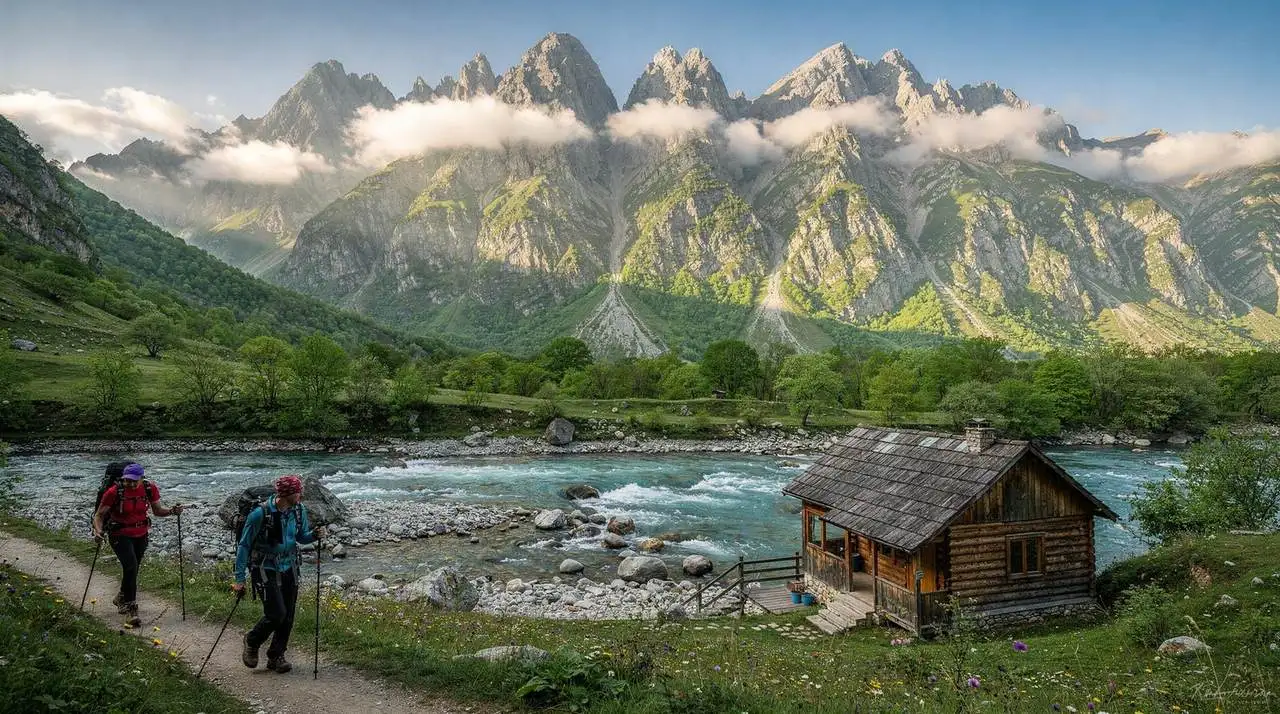
Mountain villages: Theth, Valbona, Bënjë (near the Osumi Canyon), the villages of the Permet area — all either impossible or time-consuming without a car.
Flexibility: No dependence on furgon schedules, no morning rushes for the one daily connection. Start when you want, leave when you want, stop when something catches your eye.
Cost: For a group of two or more, the per-person cost of a rental car often equals or undercuts the cost of separate bus tickets and taxis — while offering infinitely more flexibility.
The Albania travel budget guide covers how car rental costs compare to public transport across different itinerary types. For most mixed itineraries (cities plus coast plus mountains), the rental car is not a luxury — it is the most practical option available.
For routes, road conditions, and specific driving advice, see the driving in Albania guide which covers everything from road surface quality to fuel station locations to what to do at a police checkpoint.
Frequently Asked Questions About Car Rental in Albania
Is it worth renting a car in Albania?
Yes, for most itineraries a rental car is the single best investment you can make. Public transport does not serve the Albanian Riviera, mountain villages, or many historical sites adequately. A car gives you the flexibility to reach secluded beaches, stop at mountain viewpoints, and move between destinations on your own schedule.
How much does car rental cost in Albania?
Basic economy cars start from EUR 15-25 per day from local agencies, while international companies at Tirana Airport charge EUR 30-50 per day. An SUV for mountain driving costs EUR 40-70 per day. A week’s rental with fuel for a typical mixed itinerary (cities, Riviera, some mountain roads) costs EUR 150-350 total depending on vehicle choice.
Is it safe to drive in Albania?
Driving in Albania is manageable but requires more defensive awareness than in Western Europe. The main hazards are assertive local driving culture in urban areas, variable road quality, and livestock or unlit vehicles on rural roads after dark. Driving by daylight on main routes is very manageable; mountain roads at night should be avoided.
Do I need an international driving permit for Albania?
EU driving licences are accepted without any additional documentation. Travelers from the USA, UK, Canada, and Australia technically should carry an International Driving Permit (IDP) alongside their national licence, though enforcement is inconsistent. Getting an IDP before travel is a simple precaution worth taking for non-EU visitors.
What side of the road do you drive on in Albania?
Albanians drive on the right side of the road, the same as most of continental Europe. This is straightforward for visitors from the USA, Canada, and continental Europe. UK, Irish, and Australian drivers will need to adapt to right-hand traffic, which becomes instinctive within the first hour of driving.
Should I rent an economy car or an SUV in Albania?
For the main tourist circuit — Tirana, Berat, Gjirokastra, and the coastal road to Saranda — an economy car handles everything comfortably. Upgrade to a small SUV like a Dacia Duster only if Theth or Valbona and the Albanian Alps are on your itinerary, where the elevated clearance genuinely helps on the mountain approach roads.
Can I pick up a rental car in one city and drop it off in another?
Yes, many agencies offer one-way rentals between Tirana, Saranda, and Shkodra, though expect a drop fee of roughly EUR 30-80 depending on the distance and agency. This is a popular option for travelers starting in the north (flying into Tirana) and finishing in the south (departing via the ferry to Corfu), or the reverse. Confirm one-way availability and the exact fee when booking, as not every local agency offers it.
Renting for a Group vs. Solo Travel
The per-person economics of car rental shift significantly with group size. For a solo traveler, a week-long economy rental at EUR 150-250 plus fuel often costs more than furgon and bus tickets for the same itinerary — the buses and furgons guide covers the budget alternative in detail. For two or more travelers splitting the cost, a rental frequently becomes cheaper per person than public transport while adding vastly more flexibility, particularly for reaching Riviera beaches and mountain villages that furgons do not serve directly. Families and small groups of three to four people almost always come out ahead with a rental, especially once luggage space and the convenience of door-to-door travel are factored in.
Automatic Transmission Availability
Automatic cars remain a minority of the Albanian rental fleet, particularly among local agencies where manual transmission dominates. If you require automatic, book several weeks ahead — especially for July and August — since availability at both Tirana Airport and city-center agencies is genuinely limited compared to manual. International companies (Europcar, Hertz, Sixt) typically carry a slightly larger automatic selection than local operators, at a corresponding price premium of EUR 10-15 per day above the manual rate.
What Happens If Something Goes Wrong
Breakdown: Local agencies generally provide a phone number for roadside assistance, and response times outside major cities can be slower than in Western Europe — budget for delay if this happens in a remote mountain area. International companies typically have more standardized 24-hour assistance lines. Confirm the emergency contact process at pickup, and keep the number saved before you set off on any mountain route.
Accidents: For any collision, however minor, contact the rental agency immediately and, for anything involving another vehicle or injury, the police (emergency number 129). Do not move the vehicles before police arrive if there is a dispute about fault. Photograph everything — the vehicles, the road, any visible damage — before anything is moved, and retain the police report for your insurance claim.
Traffic fines: Speed cameras and radar checks are increasingly common on Albanian roads. Fines issued after you return the car are typically passed on by the rental agency, sometimes with an administrative fee added. Confirm at pickup how any post-return fines would be communicated and charged, so there are no surprises weeks after your trip.
Disputed damage charges: This is the most common post-rental dispute. Your pre-departure photo walk-around (covered above) is your primary defense — if a charge appears that you believe is unjustified, the timestamped photos from pickup are your strongest evidence, alongside photos taken at the moment of return.
For broader trip protection, cross-reference your rental insurance with your general Albania travel insurance policy — some comprehensive travel insurance policies include rental car excess cover as a standard benefit, which can make purchasing the agency’s excess reduction unnecessary.
Renting for Longer Stays: Digital Nomads and Extended Visitors
For travelers staying a month or more — a growing group given Albania’s popularity with digital nomads — monthly rental rates from local agencies typically undercut the daily rate significantly, sometimes by 30-40 percent. Long-term renters should negotiate directly with a local agency by email or WhatsApp rather than booking through an international comparison site, and confirm maintenance and roadside assistance terms explicitly given the extended exposure to Albania’s variable road conditions over a longer period.
Some long-term visitors find it more economical to arrange a series of shorter rentals from different agencies rather than one continuous month-long contract, particularly if their itinerary shifts between cities — though this trades some price advantage for administrative repetition (paperwork, deposits, walk-arounds) at each handover — weigh the trade-off against your specific route before deciding which approach suits your trip.
Rental Car vs. Furgon: A Direct Comparison
| Rental car | Furgon/bus | |
|---|---|---|
| Cost (1 week, mixed itinerary) | around EUR 150-350 | around EUR 60-100 |
| Reaches Riviera coves | Yes | No — road junctions only |
| Reaches Theth/Valbona directly | Yes (SUV recommended) | Seasonal, once daily |
| Schedule flexibility | Full | Fixed or “leaves when full” |
| Best for | Groups of 2+, mixed itineraries | Solo budget travelers, fixed routes |
For a full comparison of what public transport alone can and cannot reach, see the buses and furgons guide and the bus routes Albania guide.