Butrint National Park: Three Thousand Years in a Single Site
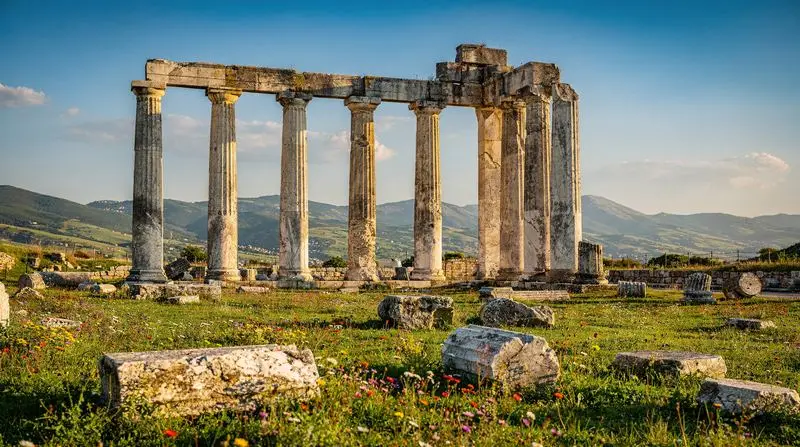
On a wooded peninsula where a freshwater lake meets the Vivari Channel just south of Saranda, the ancient city of Butrint preserves an almost unbroken sequence of human occupation stretching back three thousand years. Greek sanctuary, Roman colony, Byzantine bishopric, Venetian fortification, Ottoman holding — Butrint has been all of these things and more, and the ruins of each era overlap and interweave in a way that makes the site feel genuinely archaeological rather than curated.
It is the most important archaeological site in Albania and one of the finest in the Balkans. UNESCO listed it as a World Heritage Site in 1992, and the national park that surrounds it protects not just the ruins but an exceptional wetland ecosystem — lagoons, mudflats, reed beds, and coastal forest that supports some of the richest birdlife in the region.
A visit to Butrint takes three to four hours for a thorough walk, though the site can be covered more quickly. Combined with Ksamil beach and Saranda, it forms one of the best day circuits in the whole country. The UNESCO sites in Albania guide places Butrint in the broader context of Albania’s World Heritage sites alongside Gjirokastra and Berat. The historical sites guide covers Butrint alongside other significant ancient sites across the country.
| Where | 18 km south of Saranda, on the Vivari Channel |
| Getting there | Taxi, seasonal minibus, organised tour, or self-drive |
| Time needed | 3-4 hours for a thorough visit |
| Entry | 1,000 ALL (cash only), includes museum |
| Pairs well with | Ksamil beach (3 km away) for the same day |
Historical Overview
Butrint’s origins lie in a pre-Greek sanctuary, likely Illyrian, on the hilltop that would become the site’s acropolis. By the seventh century BC, Greek settlers had established a more formal presence, and by the fifth and fourth centuries the city — then called Buthrotum — was producing its own coinage and functioning as a significant port in the Epirus region.
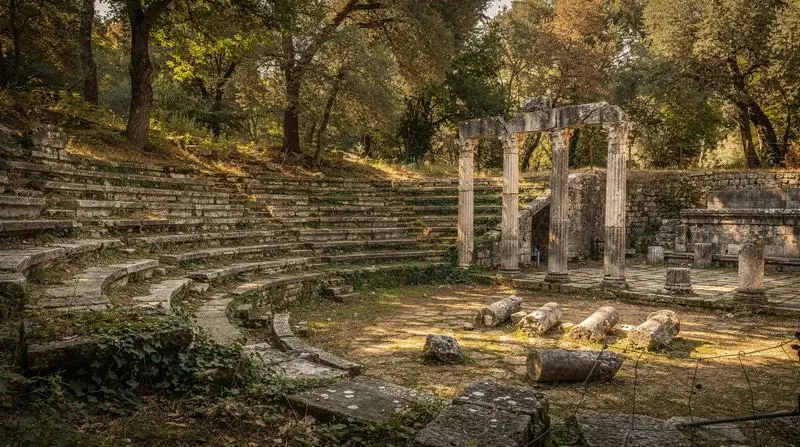
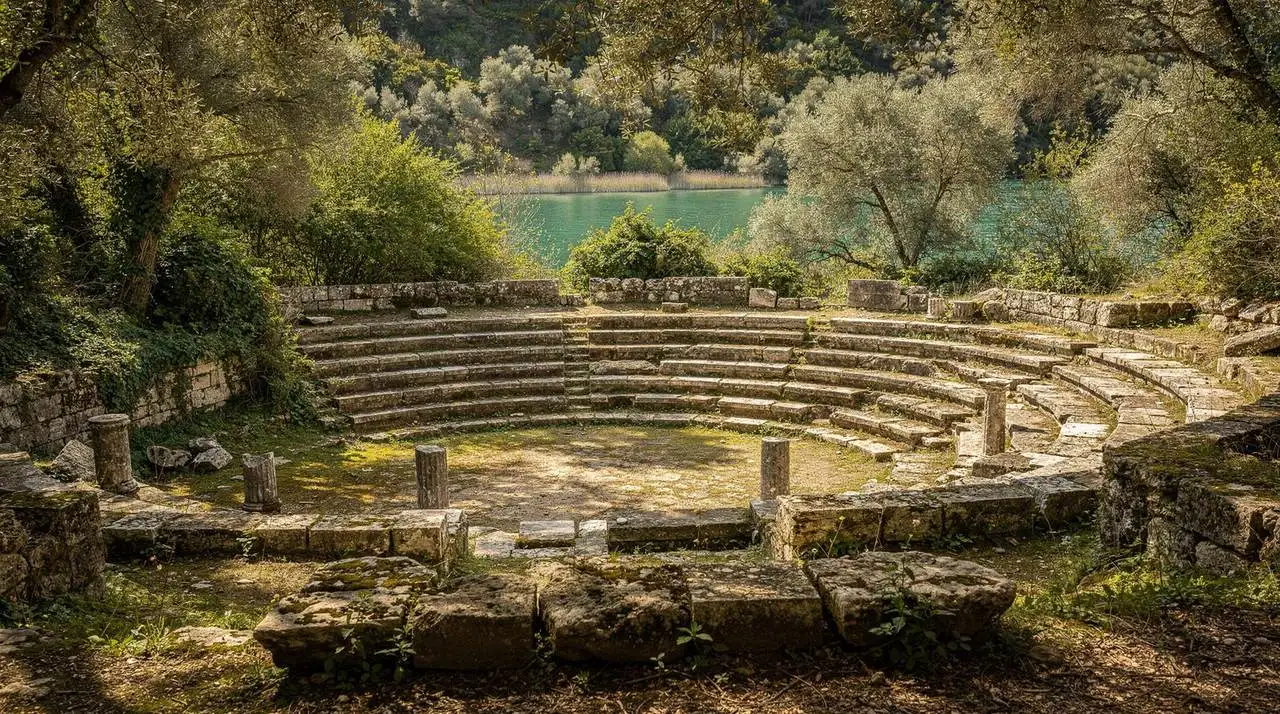
The Romans brought dramatic expansion. Julius Caesar granted Buthrotum the status of a Roman colony, and his heir Octavian (later Augustus) settled veterans here after the civil wars. The Roman city grew rapidly: a forum, baths, a theatre, villas, and an aqueduct all appeared within a generation. The theatre, still remarkably intact, seated around two thousand spectators and remains the most visually striking structure at the site.
Christianity arrived in the third and fourth centuries AD, and Butrint became an episcopal centre of some significance. The baptistery built in the fifth or sixth century contains floor mosaics of exceptional quality — geometric patterns interspersed with fish, birds, and hunting scenes — that rank among the finest late-antique mosaics in the Balkans.
The Venetians controlled Butrint during the medieval period and left their own mark in the form of the Lion Gate — a carved Venetian lion above the main entrance — and the triangular fortress that guards the channel crossing. The Ottomans held the site after 1799 but found it commercially marginal, and gradual depopulation set in. By the early twentieth century, Butrint was largely abandoned.
Systematic excavation began under Italian archaeologists in the 1920s and has continued, with intervals, ever since. The Butrint Foundation, established in the 1990s, has coordinated much of the recent work and maintains the site’s infrastructure. Today Butrint is one of the most carefully managed and internationally recognised ancient sites in southeastern Europe.
What to See at Butrint
The Theatre
The Greek theatre, modified substantially in Roman times, sits in a natural hollow below the acropolis hill. The seating tiers are cut from the living rock, and a substantial portion of the original cavea survives. The stage area has been excavated to reveal the hyposcenium and portions of the proscenium. It remains one of the best-preserved ancient theatres in the region and a genuinely evocative space — standing in the orchestra and looking up at the tiers, it is easy to imagine the space filled with two thousand spectators for a performance two millennia ago.
The theatre is oriented to make use of the natural acoustics of the hillside. Sound carries remarkably well from the performance area to the upper tiers even today. The massive blocks of the seating are partly original rock cut and partly quarried stone laid in the Roman period; the two phases of construction are legible to anyone who looks closely.
The theatre is used for occasional outdoor performances in summer — check locally if you want to combine a visit with a cultural event, as these sell out well in advance.
The Baptistery
A short distance from the theatre, the early Christian baptistery is protected under a modern shelter. The central font — a deep pool for full-immersion baptism — is surrounded by an ambulatory floor covered in mosaic. The mosaic depicts hunting scenes, birds, fish, marine creatures, and geometric borders, all executed in small coloured tesserae with considerable technical skill. Some panels have suffered from weathering, but large sections remain clear and impressive. This is one of the finest pieces of early Christian art in Albania.
The baptistery dates from the fifth or sixth century AD and represents the moment when Butrint transitioned from a Roman colonial city to a fully Christian community. The combination of the old pagan city infrastructure — the theatre, baths, forum — with this new religious architecture creates one of the most vivid palimpsest experiences available anywhere in the Mediterranean world.
The Acropolis and Museum
The hilltop acropolis, reached by a path through dense woodland, has the best views over the site and the surrounding lagoons and channel. A small museum in the former Venetian-Ottoman castle at the summit displays key finds from the excavations: sculpture, ceramics, inscriptions, coins, and architectural fragments. The collection is well organised and provides essential context for what you have seen below.
The views from the acropolis tower over the Vivari Channel, the lagoon, and the coastal wetlands are outstanding. On clear days, the Greek island of Corfu is visible across the water — a reminder of how geographically integrated this part of Albania has always been with the wider Greek world. The acropolis is the best photographic viewpoint at the site, particularly in the morning light when the mist sometimes sits over the lagoon below.
The Lion Gate and City Walls
The main entrance to the ancient city from the Vivari Channel side is marked by the Lion Gate, a stone arch surmounted by a Venetian carved lion dating from the medieval period. The city walls, originally Greek and repeatedly rebuilt through Roman, Byzantine, and Venetian periods, trace the hillside above the lake and channel. Walking sections of the wall circuit provides changing views of the site’s relationship with water on all sides.
The Lion Gate is one of the most photographed features of Butrint — the Venetian lion sitting above a much older arch, framing a view into the wooded interior of the site. It is a summary of Butrint’s entire history in a single architectural composition: ancient foundations bearing medieval additions, all now preserved within a modern national park.
The Forum and Baths
The Roman forum and public baths occupy the flatter ground between the theatre and the channel. The scale of the bath complex — including well-preserved hypocaust (underfloor heating) systems — indicates the size and prosperity of the Roman colony. The structural remains are extensive and give a strong sense of urban scale. The hypocaust system at Butrint is one of the most clearly legible in the Balkans — the raised floor supports and the flue channels that distributed hot air through the walls are visible without any particular archaeological knowledge.
The Triangular Castle and the Vivari Channel
Across the channel from the main site, an Ottoman-era triangular fortress guards the narrow waterway that connects the Butrint lagoon to the sea. Built in the early 19th century under Ali Pasha of Ioannina — the same regional ruler responsible for Porto Palermo further up the coast — the fort controlled shipping traffic in and out of the lagoon and complemented the older Venetian defences on the Butrint side. It is less visited than the main archaeological park, reached by the small chain ferry that also carries vehicles across the channel, but the view back across the water toward Butrint’s acropolis is one of the better photographic angles of the whole site.
The Butrint Foundation and Ongoing Research
Much of what makes a Butrint visit feel coherent rather than fragmentary is the work of the Butrint Foundation, a UK-based archaeological and conservation charity that has coordinated excavation, conservation and site management since the 1990s. Their work has included stabilising the mosaics in the baptistery, managing the wetland habitat alongside the archaeological remains, and training Albanian archaeologists and site staff. Excavation continues in the off-season in specific areas of the park, and visitors sometimes encounter active dig sites during a spring or autumn visit — a reminder that Butrint, despite decades of study, is still only partially understood.
Getting to Butrint
From Saranda. Butrint is 18 kilometres south of Saranda and is the most common base for visiting the site. Organised taxis from Saranda run all day; the fare is approximately EUR 10-15 each way with waiting time. Shared minibuses also run in high season on a set schedule, typically departing from the main bus station in Saranda and costing around 200-300 ALL per person.
A combined day tour from Saranda that includes Butrint and Ksamil is the most efficient way to cover all three southern highlights: this Saranda, Butrint Archaeological Park, and Ksamil day trip covers the archaeology and the beach in a single organised day with transport. The tour is structured to give you the morning at Butrint, before the heat and crowds build, and the afternoon at Ksamil’s beaches.
From the Corfu ferry. Saranda receives ferry connections from Corfu daily, making Butrint accessible as a day trip from Corfu for visitors who do not want to overnight in Albania. This Butrint excursion from Saranda Port is organised specifically for day visitors arriving by ferry — covering the site with an English-speaking guide and returning to Saranda in time for the afternoon crossing. This is the most popular tour option among visitors arriving from Greece.
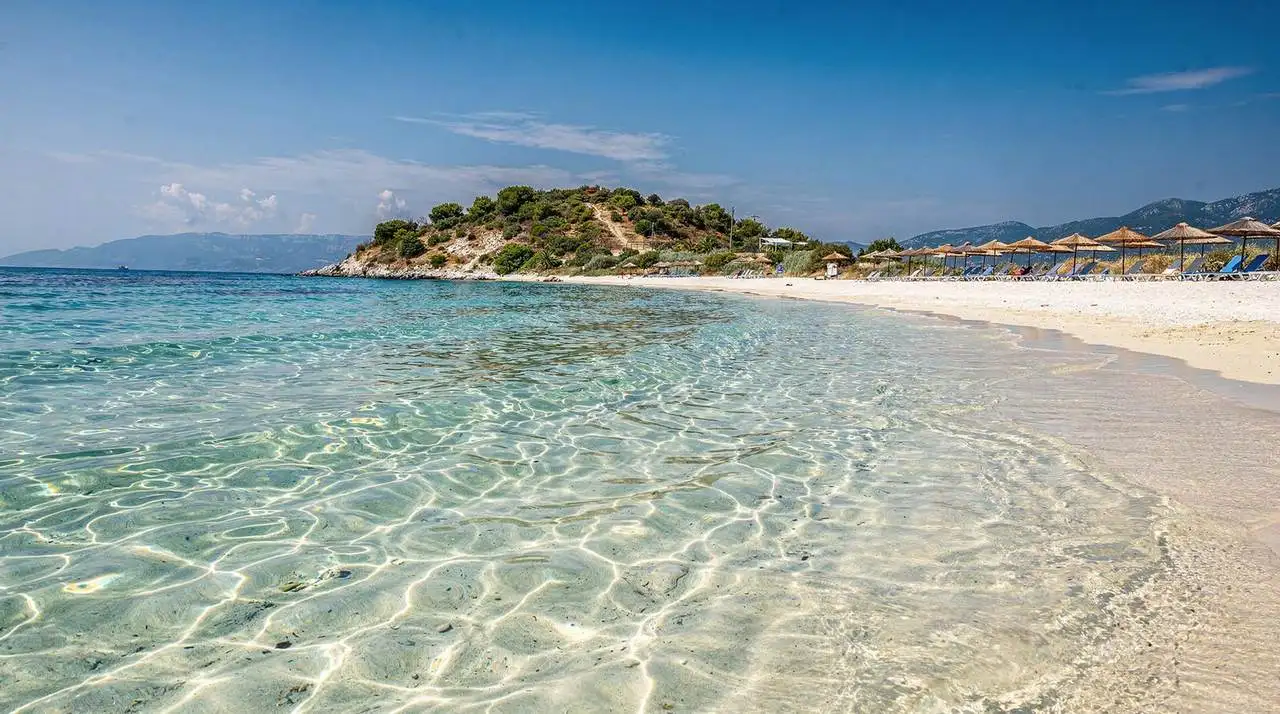
From Ksamil. Ksamil village is just 3 km from the Butrint entrance — walk, cycle, or take a short taxi. This makes combining a morning at Butrint with an afternoon at Ksamil’s beaches the most natural sequence for beach-focused visitors. The Ksamil beach strip is 10-15 minutes’ walk from the site entrance.
By car. Driving from Saranda takes about twenty-five minutes. A small car ferry crosses the Vivari Channel to reach the site from the south (from the Ksamil side), or the road approaches from the north via Mursi. Parking is available at the site entrance. See our car rental in Albania guide for vehicle options.
Our day trips from Saranda guide covers all transport options and combinations in detail, including the best sequences for visiting multiple sites in a single day from a Saranda base.
Entry and Practical Information
Entry fee: 1,000 ALL (approximately EUR 10) for adults. A combined ticket with the museum is available. Children under ten are typically free. The ticket office is at the main entrance and accepts Albanian lek only — no card payment. The entry fee is collected regardless of whether you take the museum.
Opening hours: Daily from 8:00 AM to 7:00 PM in summer (April to October), with reduced hours in winter (typically 9:00 AM to 4:00 PM). Closed Mondays in the off-season but open daily in peak season.
Time needed: Plan three to four hours for a thorough walk. Those with particular interest in classical archaeology or wetland wildlife may wish to extend to a full day, which allows time for both the site itself and a boat trip on the lagoon.
What to bring: Comfortable walking shoes — the paths are unpaved and uneven in places. Water and sun protection are essential in summer. Insect repellent is strongly recommended; the wetland setting means mosquitoes are present, particularly in the early morning and evening. A light jacket is useful in spring and autumn when the site can be cool in the wooded sections.
Audio guides: Available for hire at the ticket office in English and several other languages. Genuinely helpful for navigating the site in order and understanding the layered historical periods. The audio guide makes the connections between periods much clearer than simply walking and reading labels.
Photography: Permitted throughout the site. The theatre, baptistery mosaics, and the view from the acropolis toward the lagoon are the best photographic opportunities. The Lion Gate in morning light is particularly striking. Drone photography is not permitted within the national park boundaries.
Toilets and facilities: Available near the main entrance and at the museum on the acropolis. There is no food service inside the archaeological park itself, so plan meals before or after your visit using the options below.
Mosquito precautions: Because the site sits directly within an active wetland, insect repellent matters more here than at Albania’s other archaeological sites. Long sleeves and trousers in the early morning or evening, when mosquito activity peaks, are a sensible addition to repellent spray.
Where to Eat Near Butrint
Taverna Butrint (site entrance, canal side) — The most convenient option immediately outside the archaeological park, serving grilled fish from the Vivari Channel alongside Albanian salads and raki. The eel (ngjalë) from the channel is a regional speciality and worth ordering if available. The terrace looks directly over the channel and the castle walls. Budget EUR 8-14 per person.
Restorant Anika (near the canal crossing) — A simple family restaurant serving fish and grilled meat with views over the Vivari Channel. Less busy than the entrance-side options. Budget EUR 6-12 per person.
Ksamil restaurants (3 km, 5 minutes by car) — Ksamil has a broader restaurant selection and is the natural lunch stop if combining Butrint with a beach afternoon. Several good fish restaurants near the beach serve the daily catch at reasonable prices. See the Ksamil guide for specific recommendations.
Saranda (18 km, 25 minutes) — The full range of restaurant options is available in Saranda for pre- or post-Butrint meals. The promenade has excellent seafood restaurants. Our Albanian food guide covers the regional food traditions of the southern Ionian coast, including the fresh seafood and local specialities of the Saranda area.
The National Park: Wetlands and Wildlife
Beyond the ruins, Butrint National Park protects around 2,400 hectares of exceptionally diverse habitat. The Butrint Lagoon, the Lake of Butrint, and the Vivari Channel form an interconnected wetland system fed by freshwater springs and open to the sea. This mixture of salinity gradients supports an extraordinary range of species.
Birdlife is the main draw for naturalists. Pelicans, flamingos, herons, egrets, cormorants, and a variety of waders use the wetlands as year-round residents or seasonal visitors. The reed beds shelter marsh harriers and bitterns. The coastal forest hosts nightingales, hoopoes, and various raptors. Spring migration (April to May) brings the greatest diversity, with passage migrants adding to the resident species.
Boat tours of the lagoon can be arranged at the site entrance — small wooden motorboats with local fishermen who double as informal guides. A forty-five-minute circuit of the lagoon provides exceptional birdwatching opportunities and views of Butrint from the water — a different perspective entirely from the archaeological walk. The fisher-guides know where pelicans and flamingos are likely to be found at different times of year and can adjust the route accordingly.
These informal boat trips are not standardised, so prices and availability depend on which fishermen are around when you arrive — expect to negotiate a fee directly rather than find a fixed-price ticket booth, and confirm the duration and route before setting off. Early morning departures tend to produce the best birdwatching, since much of the wetland’s bird activity dies down once the day’s heat builds and boat traffic from tour groups increases.
The waterway turtle and the European eel are among the notable aquatic species. The wetlands support significant populations of freshwater fish, and artisanal fishing continues using fixed wicker traps — the same method visible in illustrations from the eighteenth century. This continuity of traditional practice within the national park boundaries is another example of the layered character that makes Butrint genuinely extraordinary.
Combining Butrint with the Southern Circuit
Butrint anchors the southern end of the UNESCO sites in Albania circuit alongside Gjirokastra. Most visitors see both on a two to three-day southern loop, using Saranda as a base.
A classic combination: morning at Butrint, lunch in Saranda, afternoon at Ksamil beach, overnight in Saranda, and the following day for Gjirokastra (one hour north by road) and the Blue Eye spring. This circuit covers the most significant natural and historical sights of southern Albania in approximately three days and represents one of the best-value cultural itineraries in the Mediterranean.
The 7 days south Albania itinerary uses Saranda as a base and includes Butrint as a half-day morning visit. The 14-day Albania itinerary places Butrint in context as the southern anchor of the complete country circuit.
Best Time to Visit
April through October is the main season. Summer visits should begin early — the site opens at 8:00 AM — to beat both the heat and the tour groups that arrive from Corfu and Saranda mid-morning. By 11:00 AM in July and August the site can be busy; by late afternoon it quiets significantly as day-trippers return to their boats and bases.
Spring is exceptional for the combination of wildflowers in the archaeological park and peak birdwatching in the wetlands. The woodland paths through the site are at their most beautiful in April and May, with birdsong replacing the tourist chatter of high summer.
October and early November offer golden light, empty paths, and the possibility of dramatic storm effects over the lagoon. The autumn migration brings additional birdwatching interest, and the archaeological park takes on a more contemplative atmosphere.
Winter visits are possible — the site does not close entirely — but opening hours are reduced and some facilities are unavailable. The wetlands are at their most productive for birdwatching in winter, when northern European migratory species join the year-round residents.
Why Butrint Matters
In a country where Ottoman-era architecture and communist-era bunkers are the most visible markers on the landscape, Butrint is a reminder that Albanian territory was central to the classical Mediterranean world for more than a millennium. The Greek theatre, the Roman baths, the Byzantine mosaics, the Venetian gateway — these are not peripheral footnotes but primary evidence of a civilisational continuity that connects this corner of the Adriatic to Athens, Rome, and Constantinople in direct and documented ways.
The site is also an object lesson in what careful, sustained archaeological work can achieve. Butrint in 1990 was underprotected, partially looted, and largely unknown outside specialist circles. Thirty years of sustained international investment and scholarship have transformed it into one of the most carefully managed and interpreted ancient sites in southeastern Europe.
Go in the morning light, when the theatre fills with birdsong rather than tourist chatter. Walk to the acropolis. Look at the mosaics. Give it the half-day it deserves. For context on Albania’s complete heritage landscape and how Butrint fits within it, our Albania off the beaten path guide covers the less-visited sites that complement a Butrint visit.
Frequently Asked Questions About Butrint National Park
Is Butrint worth visiting?
Butrint is one of the most impressive archaeological sites in the entire Balkans and is genuinely worth the trip from anywhere on the southern Albanian coast. The Greek theatre, Roman baths, Byzantine mosaics, and the atmospheric forest paths connecting the ruins make for an outstanding half-day. UNESCO listed the site for good reason — it preserves an extraordinary density of Mediterranean civilisation on a small peninsula. Allow at least three hours to do it justice.
Can you visit Butrint from Corfu by boat?
Yes — there are direct day trips from Corfu to Butrint by boat, making it one of the most convenient cross-border archaeological excursions in the Mediterranean. Regular boat services from Corfu Town run to Saranda (45 minutes to 1 hour by hydrofoil), from where the Butrint site is a 20-minute taxi or bus ride south. Several Corfu-based operators run combined Saranda-Butrint day trips including transport and a guide, costing approximately EUR 50-70 per person including the ferry crossing and site entry.
Can you combine Butrint with Ksamil?
Yes — Butrint and Ksamil are adjacent and combining them is the natural way to spend a day in the far south. Butrint is approximately 3 km from Ksamil village. Visit Butrint in the morning when the site is coolest and least crowded, then spend the afternoon on Ksamil’s beaches. Staying overnight in Ksamil makes this combination effortless — the two sites together give you the complete picture of Albania’s southern tip: ancient civilisation in the morning, Ionian sea swimming in the afternoon.
What is the entry fee for Butrint?
The entry fee for Butrint National Park is 1,000 ALL (approximately EUR 9) for adults. The site includes both the archaeological park and access to the surrounding wetland areas. A local guide can be hired at the entrance for approximately EUR 15-20 for a 1.5-hour tour — worthwhile given the depth of history here. The site is open daily from 8am to 7pm in summer and 8am to 5pm in winter.
When is the best time to visit Butrint?
The ideal months are April-May and September-October. Spring brings wildflowers among the ruins and excellent birdwatching in the surrounding wetlands; autumn offers golden light and dramatically fewer visitors than peak summer. July and August see the site at its busiest with day-trippers from Corfu and Saranda — arrive at opening time (8am) to beat the main rush. Winter is quiet and contemplative but some facilities are reduced.
Is Butrint suitable for people with limited mobility?
Partially. The lower areas near the theatre, forum and baths are reachable on relatively level, if unpaved, paths, but the climb to the acropolis and museum is steeper and uneven underfoot, and much of the site involves walking on packed earth or gravel rather than paved surfaces. Our accessible travel in Albania guide has broader guidance for archaeological sites of this kind across the country.
Can you do Butrint without a guide?
Yes, and the audio guide available at the ticket office covers most of what a human guide would explain, at your own pace. A live guide adds more depth and can answer specific questions, which suits visitors with a strong interest in classical history, but independent visitors with the audio guide or a good background read beforehand will still get a rich, well-contextualised visit.