Blue Eye: Albania’s Most Mesmerising Natural Wonder
Twenty-five kilometres inland from Saranda, hidden in a shaded forest of plane trees and oaks, a spring of impossibly deep blue water rises from the earth at the base of a limestone escarpment. Syri i Kalter — the Blue Eye — is one of the most photogenic natural phenomena in Albania and one of the most distinctive freshwater springs in the entire Mediterranean region.
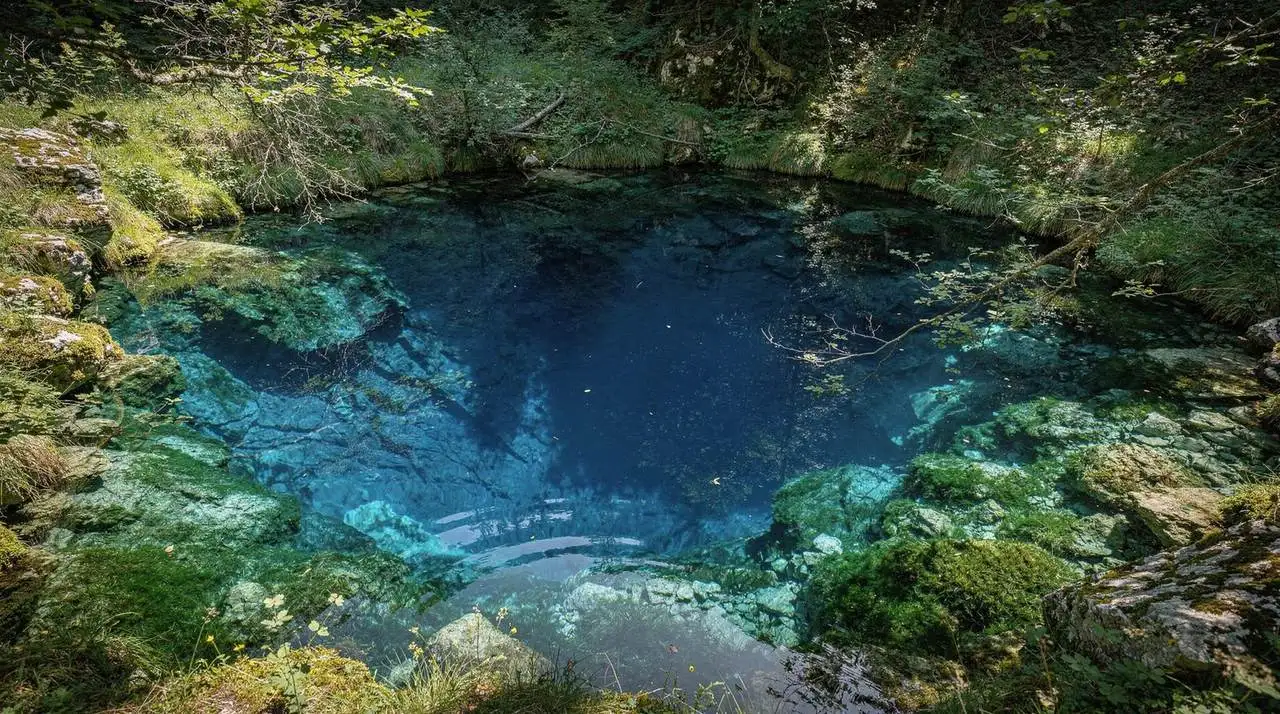
The eye itself is a circular pool roughly twenty metres across. The water at its centre is a deep, vivid cobalt blue — almost unreal in its saturation — that fades to turquoise and then transparent at the edges where the spring outflow begins to move downstream. The blue colour results from the depth of the underwater karst system feeding the spring: divers have descended more than 50 metres without reaching the bottom, and the reflected light from those depths gives the water its impossible hue.
The spring feeds the Bistrica River, which was for much of the communist era the primary fresh water supply for Saranda and the surrounding coastal region. The Bistrica valley through which you approach is equally beautiful — the road follows the river upstream through a narrow valley of overhanging trees, with the sound of fast water constant and cooling.
Blue Eye is accessible as a half-day trip from Saranda, most commonly combined with Gjirokastra or the drive along the Ionian coast. It deserves one to two hours properly — but it is not a place that rewards multiple days in itself. Come, be astonished, swim if you can bear the cold, and move on enriched by the experience.
| Where | Bistrica valley, ~25 km / 25min inland from Saranda |
| Getting there | Taxi (~EUR 15-20 each way), organised tour, or self-drive |
| Time needed | 60-90 minutes at the site |
| Entry | 100 ALL |
| Water temp | ~10-11°C year-round — cold even in summer |
The Spring: What to Expect
The site is managed as a natural monument by the Albanian government. A small entry fee of 100 ALL (less than EUR 1) is charged at the barrier on the approach road. A car park serves both private vehicles and tour minibuses.
Opening hours: The site is technically open year-round, though the car park barrier hours vary by season. In summer, access is available from approximately 8:00 AM to sunset. Off-season, arrive during daylight hours to be safe.
From the car park, a path of about five minutes through forest leads to the spring. The sound of the Bistrica River accompanies you throughout. The arrival at the pool is invariably striking, even for travellers who have seen photographs beforehand — the colour of the water in person is more saturated and more strange than any photograph can convey.
The pool is surrounded by a wooden walkway and railing that was installed to manage visitor traffic and protect the spring banks. Signage asks visitors not to enter the water — the currents in the central portion of the spring are strong and unpredictable, and swimming directly in the eye is genuinely dangerous. The underwater openings through which the water rises create powerful suction forces that have been responsible for drowning deaths. Take this seriously; the spring is beautiful but the central current is deceptive.
Wading at the very edge, where the outflow begins to calm and become shallow, is possible in practice, though technically not encouraged. The water temperature is a constant 10-11 degrees Celsius year-round — very cold even in August, refreshing if you are already overheated from the drive.
The surrounding forest has picnic tables and basic facilities including toilets and a small cafe/bar selling cold drinks and snacks. The atmosphere on a quiet morning is genuinely peaceful — birdsong, moving water, dappled light through the plane trees.
Swimming Near Blue Eye
While the spring itself is not safe for swimming, the Bistrica River a short distance downstream — roughly five to ten minutes walk from the spring — widens into sections where swimming is both safe and popular. The water here is slightly warmer than the spring itself but still cold and exceptionally clear, with a gravel bed visible several metres down.
Local families use the river pools throughout the summer, and the natural shade of the valley makes it a welcome escape from the heat of the coast. Bring a towel and be prepared for cold water — this is mountain-fed river swimming, not the warm Ionian Sea of Ksamil.
The gravel banks at the river pools are pleasant for picnicking and sunbathing between swims. Bring provisions from Saranda, as the site cafe is limited.
Getting to Blue Eye
By taxi from Saranda. The most common approach. A taxi from Saranda costs around EUR 15-20 each way, with most drivers willing to wait one to two hours while you visit (agree the waiting fee in advance). The drive takes about twenty-five minutes through the Bistrica valley.
By organised tour. Day tours from Saranda frequently combine Blue Eye with Gjirokastra, covering both in a single efficient day. This day trip from Saranda covering both Blue Eye and Gjirokastra is the most popular combination and handles all transport while providing historical context for both sites.
For a shorter dedicated half-day focused solely on the spring, this half-day Blue Eye trip from Saranda covers the spring with transport from the city — the most efficient option for travelers with limited time.
By car. Follow the SH99 road inland from Saranda through Muzina and into the Bistrica valley. The Blue Eye is signposted. Parking is available at the site. The road is fully paved and manageable in any vehicle. See our car rental in Albania guide for vehicle options.
By rental bike. For the adventurous, the 25-kilometre ride from Saranda along the river road is not technically demanding (mostly flat, paved) and takes around ninety minutes each way. The valley provides shade for much of the route and the river is visible for much of the journey.
Our day trips from Saranda guide compares all transport options and combinations in detail.
Combining Blue Eye with Gjirokastra
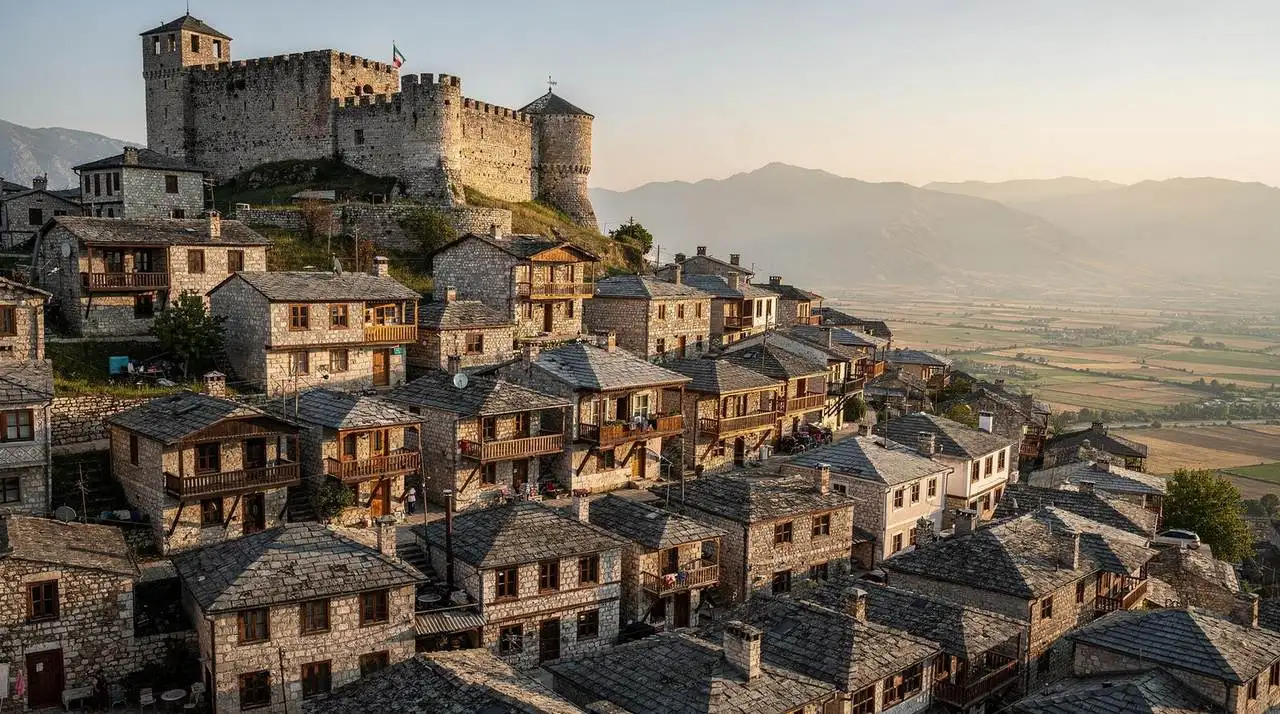
The majority of visitors to Blue Eye combine it with the UNESCO-listed Ottoman city of Gjirokastra, which lies approximately thirty minutes further inland from the spring along the same valley road. This pairing makes excellent sense: Blue Eye for natural wonder, Gjirokastra for historical depth, and a single long day covers both comfortably.
The sequence most guides recommend is Blue Eye in the morning (when crowds are thinner and the light is better for photography), then Gjirokastra from late morning through afternoon. Lunch in Gjirokastra is easy — the old city has several good restaurants in the bazaar area including Restorant Kujtimi, which serves traditional Albanian cooking in a historic stone building.
For those approaching from the direction of Permet and the interior, the road through the Drinos Valley passes near the Blue Eye on the way to Saranda — making a stop here a natural addition to the southern circuit. Our Albania off the beaten path guide covers the interior southern route that passes through Gjirokastra, the Blue Eye, and on to the Ionian coast.
Kayaking from the Blue Eye
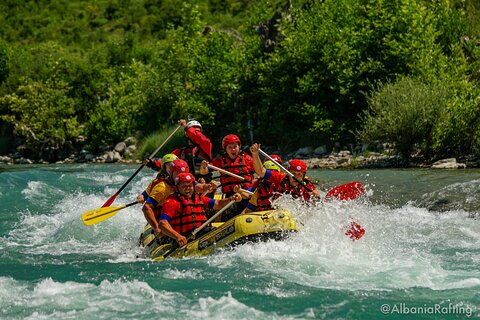
The Bistrica River downstream from Blue Eye offers gentle flat-water kayaking through the shaded valley. Several operators offer kayak and canoe rental at the river near the spring site. The river moves slowly downstream through the valley, offering a combination of swimming stops and paddling through beautiful forested countryside. This is a good activity for those who want more than a brief stop at the pool itself.
This Blue Eye kayaking tour from Saranda combines transport to the spring with a guided kayak descent of the Bistrica River — an excellent way to spend more time in the valley while getting active.
Wildlife in the Bistrica Valley
The plane tree forest and river corridor around Blue Eye support more birdlife than the quick roadside stop suggests. Grey wagtails and dippers work the river shallows near the spring, kingfishers occasionally flash along the calmer downstream pools, and the forest canopy holds woodpeckers and a variety of warblers in spring and early summer. None of this requires special effort to notice — simply sitting quietly at the river’s edge for ten minutes rather than rushing straight back to the car park is usually enough. Our birdwatching in Albania guide covers the country’s stronger dedicated birding sites, including the wetlands further north, for travelers who want to build a more focused itinerary around wildlife.
Camping and Longer Stays Near Blue Eye
A handful of small campsites and simple guesthouses have opened along the Bistrica valley road in recent years, aimed at travelers who want to base themselves closer to the spring rather than day-tripping from Saranda. These tend to be basic — tent pitches, a few bungalows, river access — but the appeal is obvious: cooler valley air in summer, the sound of the river at night, and the ability to reach Blue Eye at opening time without a drive first. This suits independent travelers with their own transport more than those relying on organised tours, since public transport options thin out considerably once you’re not staying in Saranda itself.
The Broader Saranda Region
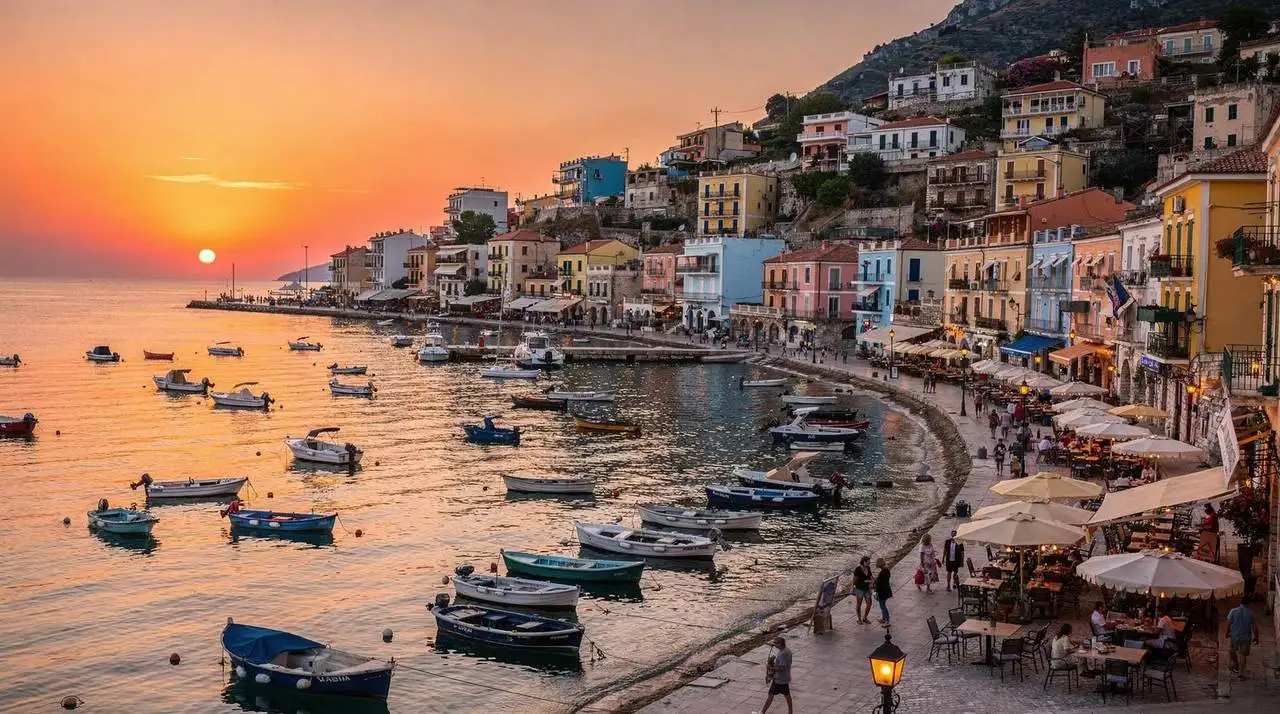
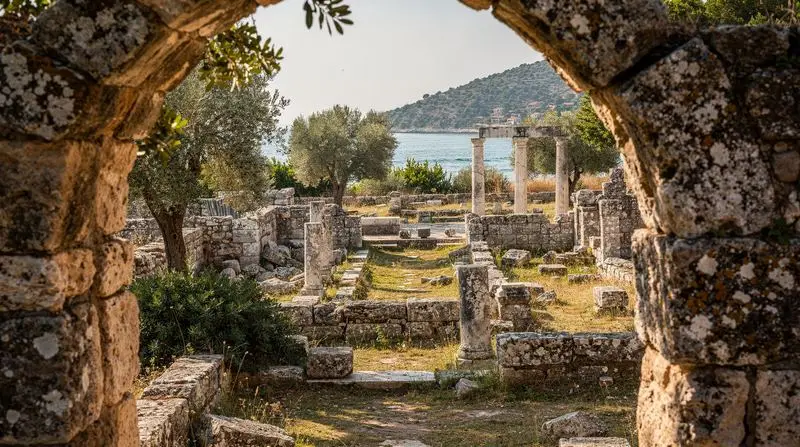
Blue Eye sits within an exceptionally rich triangle of sights in the extreme south of Albania. Within thirty minutes of the spring you can reach Saranda and its promenade, Gjirokastra with its castle and old town, and Butrint with its ancient Greek and Roman ruins. This concentration of natural and historical interest within a small area makes southern Albania one of the most efficient regions in the Balkans for sightseeing.
A three-day base in Saranda gives you time to do all of the above without rushing: one day for Butrint and a beach at Ksamil, one day for Blue Eye and Gjirokastra, and a day at leisure on the coast or taking the fast ferry to Corfu for a half-day excursion. Our day trips from Saranda guide outlines all combinations in detail with timing and transport options.
Where to Eat Near Blue Eye
The site cafe at the Blue Eye car park serves coffee, cold drinks, and simple snacks but is not a meal destination. For a proper meal, the options are:
At the spring: The cafe sells basic provisions. Roadside vendors on the Bistrica valley road sell fresh fruit, watermelon, and local cheese in season — ideal for a picnic at the river.
In Gjirokastra (30 minutes): The logical lunch stop when combining both sights. Gjirokastra has several good restaurants in the old bazaar area. Restorant Kujtimi is the most consistently recommended for traditional Albanian cooking. Budget EUR 6-12 per person.
In Saranda (25 minutes back): Return to Saranda for lunch or dinner. The promenade has numerous seafood restaurants with Ionian views. Our Albanian food guide covers the regional food traditions of the southern coast.
The Legend and Local Significance
Albanian folk tradition holds that the Blue Eye is not merely a spring but a portal — the eye of an enormous subterranean serpent (the bolla or kulshedra of Albanian mythology) that gazes upward from the depths of the earth. The vivid blue colour is the eye itself. The powerful currents that have defeated divers seeking the bottom are the creature’s breath.
Whether or not one subscribes to the mythology, the spring has a genuine quality of otherworldliness that inspires that kind of story. Standing at the edge and looking down into the deep blue-black centre, with the visible upwelling of water from some unfathomable depth, it is not hard to understand why people who lived near it before the age of scientific explanation reached for mythological frameworks.
The spring has been known to locals for centuries and was a significant water source for the region long before it became a tourist attraction. The plane tree grove surrounding it — ancient trees with trunks requiring several people to encircle — suggests human presence and cultivation going back generations.
Best Time to Visit
Blue Eye is open and accessible year-round. The spring is constant in temperature and flow regardless of season.
Summer (June to August) is the busiest period, with tour groups from Saranda arriving between 10:00 AM and noon. The earliest morning visit (arrive at opening, around 8:00 AM) provides the most tranquil experience and the best light for photography — the morning sun angles through the forest canopy and the water colours are most vivid.
Spring and autumn are ideal in terms of both weather and crowd levels. The valley flowers in April and May, and the autumn colours of the plane trees in October are exceptional. The spring flow is strongest in late spring when snowmelt from the mountains above is at its peak.
Winter visits are fully possible and produce the most solitary experience. The spring itself is unchanged; the surrounding forest is bare but the play of winter light through the branches has its own appeal.
Practical Tips
Photography. The best light at the spring pool is in the morning when sunlight penetrates the forest canopy at a low angle. Midday produces the most vivid water colour saturation but harsher shadows. A polarising filter on a DSLR or mirrorless camera cuts surface glare and reveals the depth of colour dramatically. A tripod helps for longer exposures in the shaded forest.
What to wear. Comfortable walking shoes or sandals for the short path. Swimwear is worth bringing if you want to wade at the river edge or swim in the downstream pools.
Crowds. Peak arrival of tour groups is between 10:00 AM and 12:30 PM. The site is significantly quieter before 9:00 AM and after 3:00 PM. An early start is the single most effective way to improve the experience.
Duration. Plan sixty to ninety minutes at the site — time for the walk in, the pool area, the downstream river, and the walk back. More time is only needed if you plan extended river swimming.
Safety. Do not enter the central pool area of the spring. The suction currents are dangerous even for strong swimmers. Respect the barriers and signage — they exist for good reason.
Budget. Entry is 100 ALL (under EUR 1). Combine with a taxi (EUR 30-40 return with waiting) or organised tour (EUR 15-25 per person) for the full day trip cost. See our Albania travel budget guide for broader cost planning.
Mobile signal. Coverage in the Bistrica valley is patchy in places, particularly close to the spring itself where the tree canopy and valley walls interfere with reception. Download offline maps before you leave Saranda if you are self-driving, and agree pickup times with a taxi driver rather than relying on a call to arrange a later collection.
The Bistrica Valley: More Than a Drive-Through
The road from Saranda to Blue Eye follows the Bistrica River upstream through a valley that deserves appreciation in its own right. The first few kilometres pass through cultivated land — citrus groves, olive orchards, vegetable plots — before the valley narrows and the road enters a corridor of overhanging plane trees that form a continuous canopy overhead. In summer, the temperature drops noticeably as you enter the shade.
The valley sides are layered limestone, and the river runs fast and clear over a gravel bed. In several places, the road crosses small bridges over tributary streams, each one a potential swimming spot or picnic site. Albanian families use the wider gravel bars along the river for summer picnics and barbecues — the sight of extended family groups cooking meat over open fires beside the river is part of the authentic landscape of the Albanian summer.
Roadside vendors appear in season selling produce from the valley: cucumbers, tomatoes, watermelons, figs, and homemade cheese. Stopping to buy local fruit for a picnic at the spring is the most natural way to complete the experience.
For travelers with a rental car and no fixed schedule, treating the drive itself as part of the destination — stopping at a bridge, a fruit stand, or a quiet gravel bar rather than driving straight through — often produces the most memorable half hour of the whole trip. This is the kind of unhurried, unplanned stop that rewards independent travel over an organised tour, where the itinerary rarely allows for spontaneous detours along the valley road.
A Simple Wonder
The Blue Eye does not require explanation to appreciate. You arrive, you see water of an impossible colour, you stand at its edge and feel a vague spiritual unease at the depth you cannot fathom, and you take photographs that will fail to capture what you are actually seeing. Then you walk back through the forest and get in the car and head to Gjirokastra.
That is the whole experience, and it is somehow enough. Albania has a talent for moments like this — phenomena that arrive without extensive preamble, make a strong impression, and leave room for the next thing. The UNESCO sites in Albania guide provides context for the broader heritage landscape of southern Albania that surrounds the spring. The 14-day Albania itinerary includes Blue Eye as a half-day stop within the southern circuit, giving context for how it fits into a broader Albanian journey.
See it. It is worth every minute of the drive from Saranda.
Frequently Asked Questions About Blue Eye (Syri i Kalter)
What is the Blue Eye of Albania?
The Blue Eye (Syri i Kalter) is a natural karst spring approximately 25 km northeast of Saranda, where water wells up from an underground river through a circular pool of intense cobalt-blue water. The spring is over 50 meters deep — divers have descended to this depth without reaching the source — and the colour is caused by the refraction of light through exceptionally clear, cold water. The surrounding area is a declared nature reserve with shaded paths through Mediterranean forest.
Can you swim in the Blue Eye?
Swimming directly in the Blue Eye spring pool is officially discouraged and practically difficult due to the powerful upwelling current at the centre. The surrounding river, however, is perfectly swimmable and many visitors wade in the shallower areas downstream. The water temperature is around 10°C year-round — bracing rather than comfortable for extended swimming. The experience of immersing yourself briefly in the cold spring water is part of the attraction.
How do you get to the Blue Eye from Saranda?
The Blue Eye is approximately 25 km from Saranda and is most easily reached by car, taxi, or furgon (shared minibus). A taxi from Saranda costs approximately 2,500-3,000 ALL return, including waiting time. Furgons run from the Saranda market area in the morning and return in the early afternoon. The road follows the Bistrica River valley through citrus and olive groves. Entry to the nature reserve is 100 ALL per person.
Can you combine the Blue Eye with Gjirokastra?
Yes — the Blue Eye sits roughly halfway between Saranda and Gjirokastra on a natural route through southern Albania. From Saranda, visit the Blue Eye first (1.5-2 hours including travel), then continue to Gjirokastra (a further 45 minutes). This is the most efficient way to see both in a single day, and is a common route for travelers moving between the coast and the inland Ottoman towns. Having your own transport or a private taxi makes this combination straightforward.
What time of year is best for the Blue Eye?
The Blue Eye is worth visiting year-round — the spring itself maintains its colour and flow in all seasons. The surrounding forest is coolest and most pleasant in spring (March-May) and autumn (September-November). Summer visits are perfectly fine but can be crowded in July and August, particularly on weekends when Albanian families make the short trip from Saranda. Visiting first thing in the morning avoids the peak crowds and gives the most peaceful experience.
Is Blue Eye worth the trip from Saranda?
Yes, for most travelers. It is a short, striking half-day detour rather than a major undertaking — 25 minutes each way — and the colour of the water genuinely exceeds what photographs convey. It suits travelers who also want to see Gjirokastra, since the two combine naturally into a single day. It is less essential if your time in the south is very limited and you have to choose between it and Butrint or the beaches of Ksamil.
Is Blue Eye suitable for children?
Generally yes — the forest path is short and flat, and children usually enjoy the river swimming area more than the spring pool itself, which is off-limits for safety reasons anyway. Keep young children away from the railing around the central pool, where the current is genuinely dangerous, and supervise closely at the downstream swimming spots, as the water is cold and the current can be stronger than it looks.