Albania’s Hidden Gems: The Places That Make Travellers Come Back
Albania’s mainstream tourism is concentrated in a handful of well-established destinations: the Albanian Riviera, Berat, Gjirokastra, Tirana, and the Albanian Alps. These places deserve their reputations — they are genuinely exceptional. But the country is larger and stranger and more various than the standard itinerary suggests, and the best travel memories from Albania often come from places that are barely mentioned in guidebooks.
This guide covers the hidden gems: not obscure for the sake of obscurity, but genuinely rewarding destinations that most visitors to Albania miss entirely. These are places where the ratio of quality to tourist density is still wildly in the visitor’s favour — where you can have an extraordinary experience without sharing it with a tour group.
| Requires | Rental car for most sites; furgon reaches only Permet, Pogradec, Corovode |
| Best single stop | Permet — thermal baths, rafting, wine, ruins nearby |
| Cheapest to visit | Antigonea (free), Shala River swimming (free) |
| Best season | May-June and September for hiking/rafting comfort |
| Daily budget | EUR 60-80/person, cheaper than the main tourist circuit |
Permet: The Soul of Southern Albania
Permet is the most rewarding hidden gem in the country, and it is quietly becoming less hidden. The town sits in a valley where the Vjosa River — one of the last wild rivers in Europe, largely free of dams and diversions — carves through the mountains of the deep south. It has an unhurried, intellectual atmosphere unusual for a town of its size, and it produces some of Albania’s finest honey, wine, and raki.
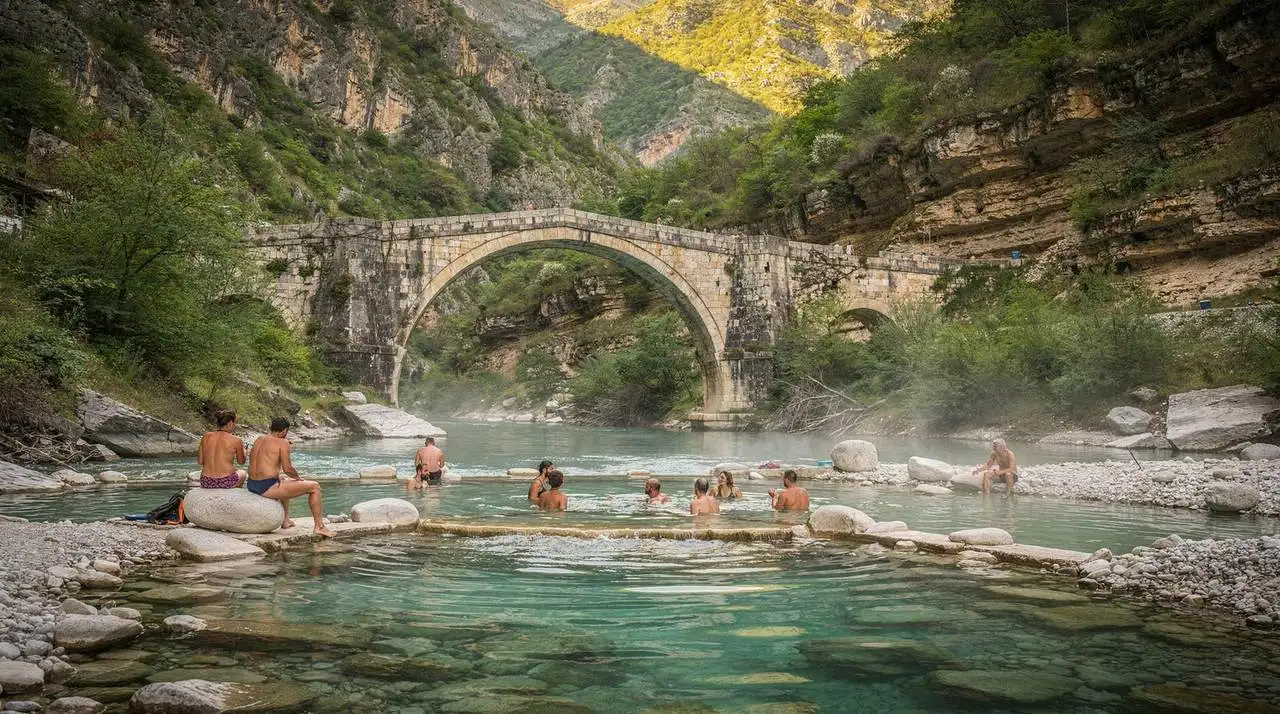
The specific draws are numerous. The Benja thermal baths, a few kilometres outside town, occupy a gorge where hot springs bubble up beside the river; a natural stone bridge spans the canyon above, and the surrounding landscape has the quality of a film set that nobody told the world about. The pools sit at around 29-32°C and the walk through the gorge to reach them passes under dramatic limestone overhangs.
This guided thermal baths experience from Permet includes the canyon context and access logistics that make the visit much more rewarding than turning up independently — the guide explains the geological and cultural setting of baths that have been used continuously since Ottoman times. Cost approximately EUR 20-35 per person.
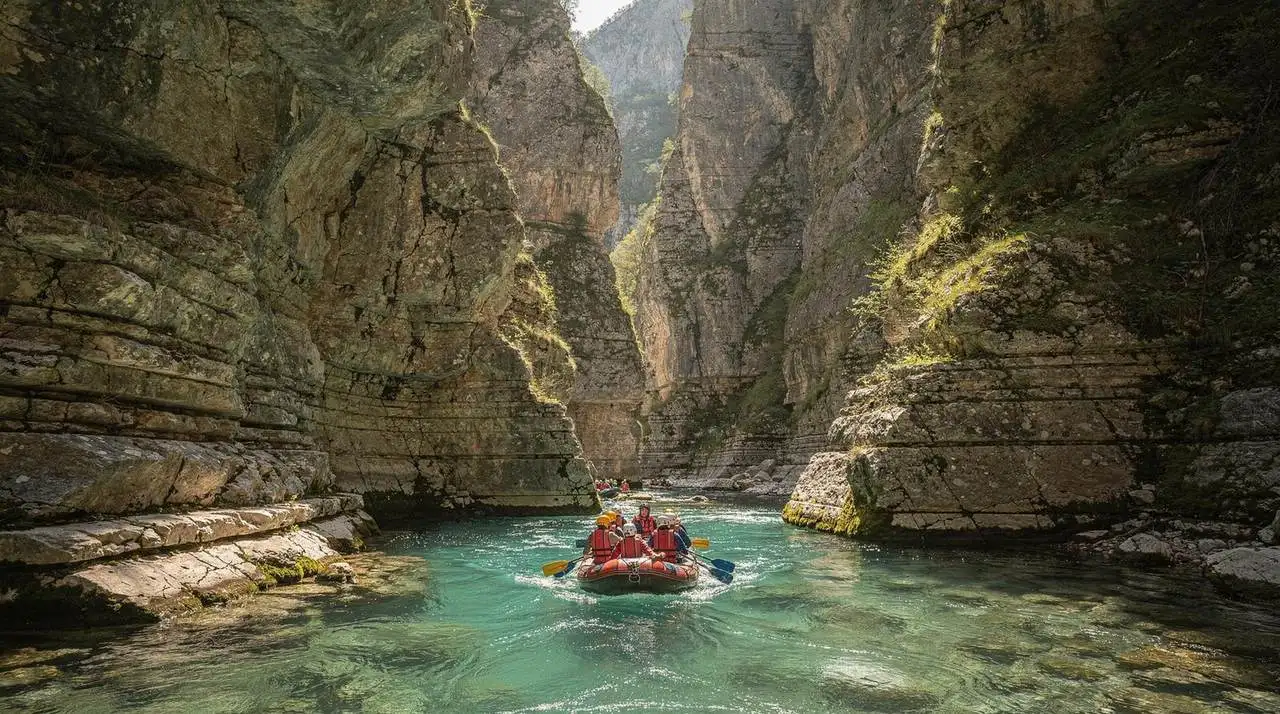
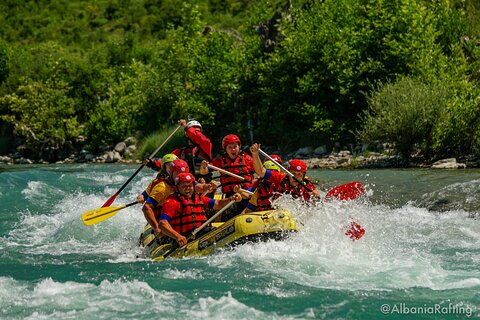
The Vjosa River around Permet is outstanding for rafting — wild water in an entirely wild setting, running through one of Europe’s last undammed river systems. Adventure operators in the town offer half-day and full-day rafting trips that are genuinely thrilling rather than tourist-sanitised.
This Vjosa River rafting experience near Permet is one of the best adventure activities in southern Albania — the river runs fast and clear through scenery that has barely changed in centuries. Cost approximately EUR 30-45 per person.
The mountains around Permet shelter Byzantine churches of extraordinary age and quality. Shen Kolli above the village of Leskoviku, and the monastery of Shen Meri at Labova e Kryqit — which contains what is claimed to be one of the oldest icons in the world — reward the traveller willing to drive rough roads and ask directions from shepherds. The combination of art history, mountain scenery, and total absence of tourist infrastructure creates an experience that is difficult to find anywhere in Europe.
The Permit winery scene is also worth knowing about. The Vreshti i Pashait winery produces wines from the indigenous Vlosh and Puls grape varieties grown almost exclusively in this valley — varieties found nowhere else in the world. A tasting at the winery, combined with lunch at a local restaurant serving Vjosa trout and locally produced cheese, is one of the most distinctively Albanian days you can have.
Osum Canyon: Albania’s Grand Canyon
Osum Canyon near Skrapar in central Albania is one of the country’s most dramatic natural features and one of its most undervisited. The canyon runs for roughly 26 kilometres through limestone so sheer and so orange-red that the comparison to the Grand Canyon, while geologically inaccurate, is visually defensible.
The Osum River at the canyon floor is cold, clear, and fast — excellent for kayaking and canyon trekking in spring and autumn when the water level is manageable. In summer, the river drops and the canyon walls trap the heat, making the experience more intense.
Access is improving but still requires planning. The nearest town is Corovode; most visitors combine Osum with a longer southern Albania circuit that also includes Permet and Berat.
This Osum canyoning adventure at the Bigazi Waterfall takes you into the canyon itself — wading, swimming, and scrambling through the gorge to reach a hidden waterfall. One of the most adventurous single-day experiences available in central Albania. Cost approximately EUR 35-55 per person.
The Shala River: Albania’s Blue Heart
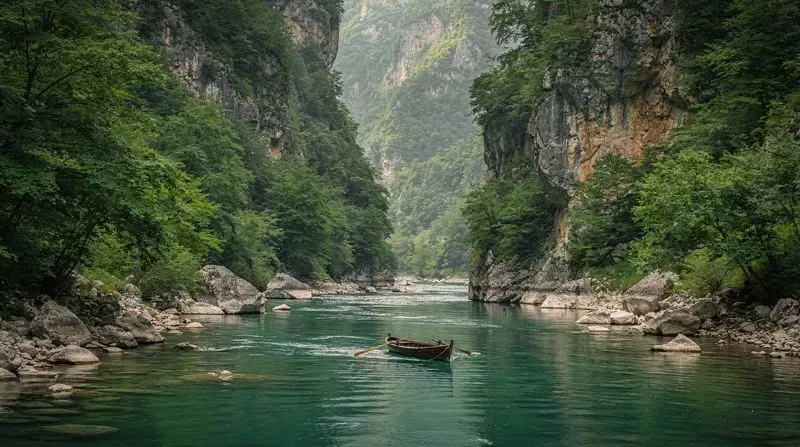
The Shala River in northern Albania — accessible from Shkodra via the Koman Lake ferry or overland through the mountains — is one of the most astonishing river valleys in Europe. The turquoise colour of the water is so improbable that first-time visitors instinctively look for the filter. There is none.
The river runs through a canyon of white limestone karst, flanked by mountains on both sides, with a depth and clarity that makes it look almost artificially blue. Boat trips from the village of Shala explore the upper reaches; swimming in the river at the traditional gathering point of Grunas is one of the great free experiences in Albanian travel.
The Shala Valley above the canyon has a small number of guesthouses run by local families, and the walking in the surrounding mountains is excellent if you have more than a day. The guesthouses operate the same half-board system as those in Theth and Valbona — dinner and breakfast included at EUR 20-30 per person — and the hospitality has the same warmth as elsewhere in the Albanian Alps tradition.
Porto Palermo: The Forgotten Castle on the Sea
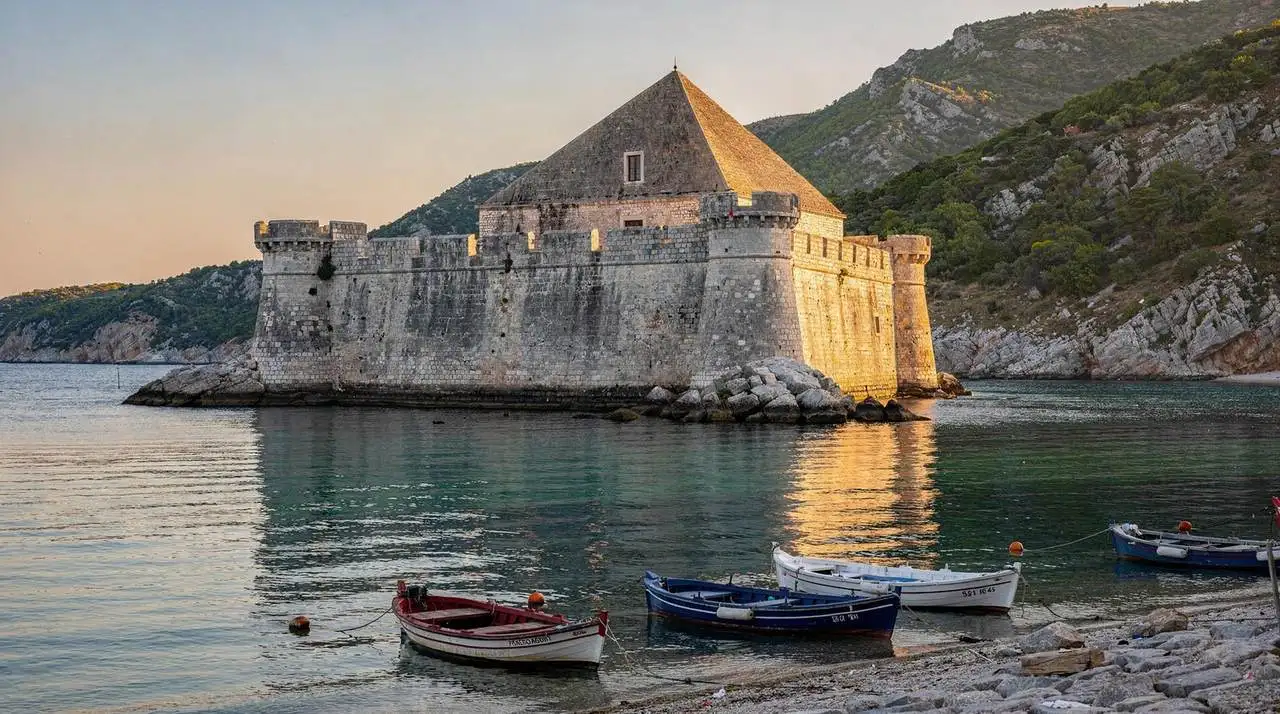
Porto Palermo is a small bay on the Albanian Riviera, halfway between Himara and Saranda, where an unusual triangular Ali Pasha castle sits on a peninsula almost entirely surrounded by sea. The fortress was built in the early 19th century by Ali Pasha of Ioannina — the remarkable semi-independent Albanian ruler who held Napoleon’s and Byron’s attention simultaneously.
The castle is accessible by a short causeway and is free to enter; the views from its walls across the bay and to the surrounding mountains are exceptional. The bay itself has a small pebble beach of excellent water quality that receives only a fraction of the visitors that the more famous Riviera beaches attract.
The communist-era submarine base hidden in the cave system behind the bay adds another layer of historical strangeness. The tunnels are partially open for exploration and the experience of seeing Cold War military infrastructure inside a Mediterranean sea cave is genuinely surreal. The Italians first used the bay as a submarine shelter during the Second World War; the Albanians expanded it into a full naval base during the Hoxha era.
For visitors exploring by kayak, the sea caves around Porto Palermo bay are among the most impressive on the coast. The bay’s sheltered geography and the cave systems at water level make it ideal for kayaking regardless of the historical interest.
This Porto Palermo kayak and SUP tour explores both the sea caves and the castle bay from the water — the combination of the Ottoman fortress rising above you while paddling through the submarine cave entrance is one of the more cinematic experiences available on the Albanian coast. Cost approximately EUR 30-45 per person.
Pogradec and Lake Ohrid: Albania’s Overlooked Eastern Shore
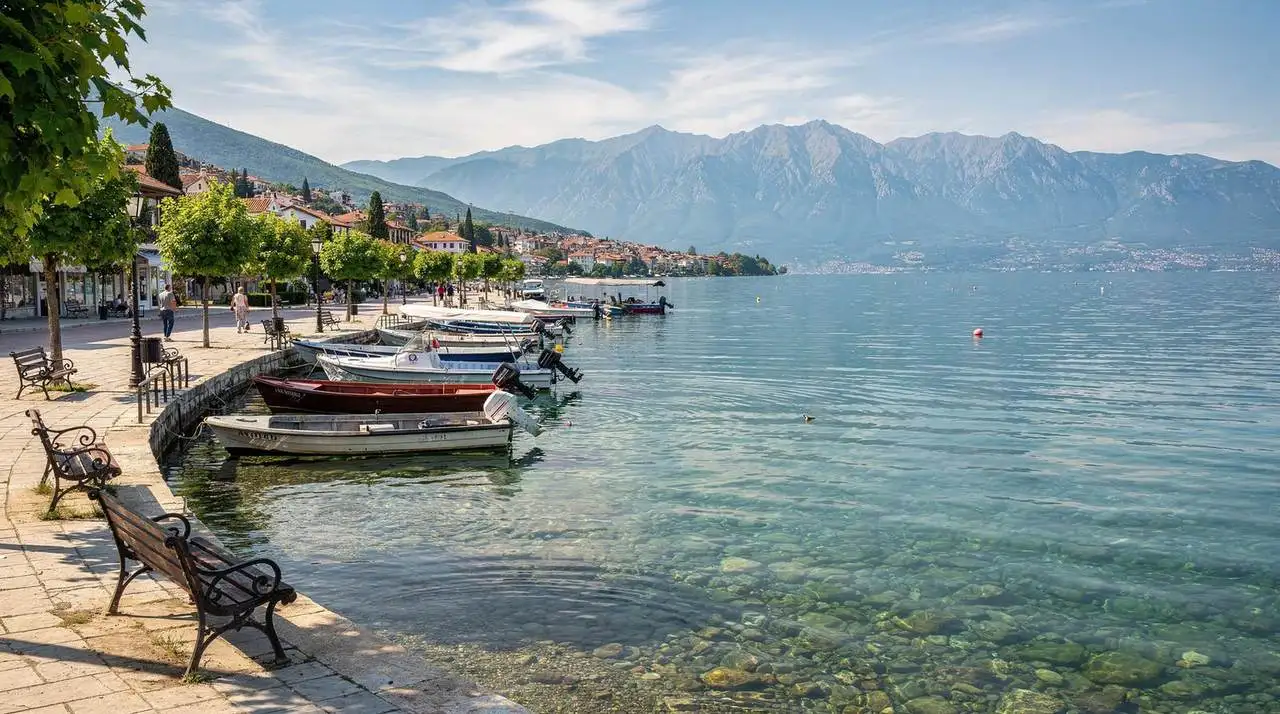
Pogradec sits on the Albanian shore of Lake Ohrid, one of the oldest and deepest lakes in Europe and one of the world’s great freshwater ecosystems. The city — unremarkable in itself, with a pleasant lakeside promenade — functions as the gateway to an Albanian lakeside experience that most visitors to the region miss entirely by going to Ohrid in North Macedonia instead.
The Albanian shore of Ohrid has quieter beaches, cleaner and less developed surroundings, and the extraordinary Lin peninsula — where a Byzantine basilica floor mosaic of exceptional quality lies exposed to the sky, visited by almost nobody despite its significance. The drive along the lake shore from Pogradec south toward Korce is genuinely beautiful, with the Galicica mountains of North Macedonia rising across the water.
The Ohrid trout — a unique subspecies found only in the lake — is a food experience worth making the journey for. Restaurants in Pogradec serve it grilled simply with lemon and local olive oil; it is mild, sweet, and unlike any trout you have tasted elsewhere. A lakeside lunch of Ohrid trout, local salad, and a glass of Albanian white wine is a meal that costs EUR 8-12 per person and could not be replicated anywhere else in the world.
Korce, 40 kilometres south of Pogradec, is one of Albania’s most culturally interesting cities — a place with a strong French educational influence (French Lycee founded in 1917), a distinctive dialect, an excellent archaeology museum, and the Korce brewery that produces Albania’s best-known beer. See the Albania off beaten path guide for more on Korce and eastern Albania.
Vuno: The Riviera’s Secret Village
Vuno is a tiny stone village perched on a terrace above the Riviera, about midway between Himara and Dhermi, invisible from the coastal road and reached by a narrow lane that most cars and drivers prefer to avoid. It has a small number of rooms in local guesthouses, a handful of terraces looking out over the sea, and the particular atmosphere of a place that tourism has not yet properly found.
The walk from Vuno down to Jala beach below takes about 45 minutes and descends through olive groves and maquis scrub to a bay of exceptional water quality. The bay has some of the Riviera’s clearest water and far fewer visitors than the more accessible beaches. Coming back up in the late afternoon, with the Ionian turning orange below, is one of the better walks on the coast.
Accommodation in Vuno is in simple family guesthouses at EUR 30-50 per night. The hosts are typically very welcoming of visitors who have made the effort to find the village. Bring cash — no ATMs exist and card payment is not established.
Antigonea: The Forgotten Hellenistic City
Most visitors to Albania’s ancient sites go to Butrint and Apollonia. Fewer visit Antigonea, the Hellenistic city founded by King Pyrrhus of Epirus (the general whose Pyrrhic victories gave English a useful phrase) above the Drinos Valley near Gjirokastra.
The ruins are extensive and largely unexcavated, sitting on a hilltop from which the view across the valley to the mountains of the Greek border is extraordinary. The archaeological layers are genuinely significant — this was a major city of the ancient Epirote kingdom — but the site feels like a private discovery, with almost no tourist infrastructure and sometimes no other visitors at all.
Entry to Antigonea is free; access requires a car and a short walk up the hill. Combined with a visit to Gjirokastra below, Antigonea makes for one of the most satisfying archaeological days in Albania. The contrast between the managed UNESCO site in the city below and the wild, uninterpreted hilltop ruin above captures something important about Albania’s relationship with its own heritage.
Divjaka-Karavasta Lagoon: Albania’s Pelican Coast
On the central Albanian coast between Vlora and Durres, the Divjaka-Karavasta National Park protects one of the Mediterranean’s most important wetland systems: a lagoon system that hosts the only breeding colony of Dalmatian pelicans in Albania and one of the largest in the Balkans.
The pelicans are extraordinary — massive, prehistoric-looking birds that breed on islands within the lagoon and fish its shallow waters in coordinated groups. The park also hosts flamingos, herons, cormorants, and hundreds of other bird species. In spring and autumn, the lagoon is a major stopover for migratory waterbirds, and the diversity of species visible in a single morning walk is remarkable.
The park is accessible from the town of Divjaka and has boat tours through the lagoon channels. Boat tours cost approximately EUR 8-12 per person for a one-hour circuit. The park is one of the most undervisited nature reserves in southern Europe — even most Albanians have not been.
Kelcyra Gorge: The Drive That Few Take
Between Tepelena and Permet, the Vjosa River runs through the Kelcyra Gorge — a narrow canyon where the road clings to the cliff face above the rushing water, tunnelling through rock at points and emerging to views of impossible depth and scale.
This is one of the most dramatic road sections in Albania and one of the most overlooked. Most visitors travel between Gjirokastra and Permet via a different route, missing this canyon entirely. The drive takes about 45 minutes and is accessible in any vehicle. In spring, the river is running full and the gorge walls are streaked with waterfalls. In summer, the lower water level reveals gravel beaches at the canyon bottom where local families swim.
Combining the Kelcyra Gorge with the Permite thermal baths, the Vjosa River, and the Byzantine churches of the surrounding mountains makes one of the best multi-day itineraries in southern Albania — an area where international visitors are still a genuine rarity and the welcome correspondingly warm.
How to Visit Albania’s Hidden Gems
The common factor among most of these places is that they require a rental car or a willingness to negotiate with local drivers for detours from the main routes. The furgon network — Albania’s shared minivan system — reaches Permet, Pogradec, and Corovode, but not Vuno, Antigonea, the Shala River, or Porto Palermo’s castle.
A car is the key that unlocks this version of Albania. See the Albania road trip guide for a suggested route that takes in several of these places on a single journey through the south.
Carrying cash is essential outside the main towns. ATMs do not exist in Vuno or Antigonea; restaurant owners in Permet’s smaller establishments will not have card readers. See the Albania travel budget guide for guidance on how much to carry.
Travel insurance is worth having when visiting remote areas. Medical facilities are limited or absent in places like Osum Canyon or the Shala Valley, and evacuation from remote areas requires planning. See the Albania travel insurance guide for recommendations.
The Pattern
Albania’s hidden gems share a quality: they are places where the default mode of tourism — the queue, the price list, the organised experience — has not yet arrived. That will change. It is already changing faster than most people who love these places would like. The Shala River is more visited than it was five years ago; Permet is appearing on “secret Albania” lists with increasing frequency; Porto Palermo’s castle is on every overland route from Himara to Saranda.
Visit sooner. These places are hidden in inverse proportion to how long that will remain true. For more on reaching Albania’s least-visited corners, see the off beaten path guide and the Albania in autumn guide — the shoulder seasons when the mainstream destinations are quieter and the hidden gems are at their best.
Suggested Itinerary: A Hidden Albania Week
A week-long route covering Albania’s best hidden gems, requiring a rental car:
Day 1: Tirana. Arrive, pick up rental car, overnight at a central hotel. Use the evening for the Blloku bar scene and orienting yourself with a city walk.
Day 2: Apollonia and approach south. Drive to Apollonia (the unvisited Hellenistic ruins near Fier, open EUR 3-5 entry), continue to Permet via the Kelcyra Gorge. Overnight in Permet.
Day 3: Permet. Benja thermal baths in the morning, Byzantine church visit in the afternoon, Vjosa riverside in the evening. Excellent honey and local wine with dinner.
Day 4: Gjirokastra via Antigonea. Drive north to Antigonea (unexcavated Hellenistic hillfort above the Drino Valley, free entry), descend to Gjirokastra for the afternoon and overnight. The UNESCO old town provides necessary comfortable context after the remote hilltop ruins.
Day 5: Porto Palermo and Riviera. Drive south through Saranda, continue up the coast to Porto Palermo. Castle and sea caves exploration, afternoon at the bay beach. Continue to Himara for overnight.
Day 6: Vuno and Jale. Walk down from the road to Vuno village (unmarked, ask locally). Continue north to Jale for the beach experience. Return to Himara or continue toward Vlora.
Day 7: Divjaka-Karavasta or Narta Lagoon. Return north to Tirana via the coast, stopping at either the flamingo lagoon at Divjaka-Karavasta (pelicans, herons, extraordinary wetland) or the Narta Lagoon north of Vlora. Return car and depart from Tirana.
This circuit covers approximately 850 kilometres and touches on most of the places described in this guide, while maintaining a manageable daily driving distance.
Budget for Hidden Gem Travel
Visiting Albania’s hidden gems is actually cheaper than visiting the mainstream destinations:
- Accommodation in Permet, Pogradec, and off-route small towns: EUR 25-50 per night at good guesthouses
- Entry fees at archaeological sites: EUR 0-5 (Antigonea is free; Apollonia EUR 3-5)
- Thermal baths: EUR 3-8 per person
- Boat tours and canyon activities: EUR 25-55 per person for organised experiences
- Food in smaller towns: EUR 5-10 for a full restaurant meal
A daily budget of EUR 60-80 per person covers everything comfortably when travelling through Albania’s hidden destinations, compared to EUR 80-120 for equivalent comfort in the main tourist destinations at peak season. See the Albania travel budget guide for full cost breakdowns.
Photography at Albania’s Hidden Gems
The photography opportunities at Albania’s lesser-visited sites are exceptional, for the specific reason that there are almost no other tourists in the frame. The Antigonea hilltop ruins, the Osum Canyon, the Shala River pools, the Porto Palermo castle — these are sites where you can take photographs that look exactly as they might have looked in the first travel photographs of the 20th century: genuine discovery rather than managed heritage tourism.
Sunrise and early morning are the best times at the Shala River (when the water colour is at its most intense) and at Antigonea (before heat haze reduces the mountain views). The Divjaka lagoon is best photographed in early morning when the pelicans are most active.
Bring a telephoto lens for the lagoon wildlife and wide-angle for the canyon landscapes and the Shala River reflections.
Frequently Asked Questions About Hidden Gems in Albania
What are Albania’s hidden gems?
Beyond the main tourist circuit, Albania’s standout hidden gems include the Shala River (turquoise water in a remote northern canyon), Antigonea (a hilltop Hellenistic city with zero crowds), the Divjaka-Karavasta lagoon (home to one of Europe’s largest Dalmatian pelican colonies), the Permet valley (thermal baths, canyon rafting, excellent local wine), and Voskopoja (a forgotten mountain town with extraordinary frescoed churches).
Where should I go in Albania off the beaten path?
The Permet area in southeastern Albania is the most rewarding off-track destination — combining Benja thermal baths, Osum Canyon rafting, and local Cobo wine. The Shala River canyon north of Shkodra sees a fraction of the visitors that Theth does but offers equally stunning scenery. Borsh (a long, almost empty beach north of Saranda) and the Karaburun Peninsula (boat access only, pristine marine park) are outstanding coastal alternatives to crowded Riviera spots.
What is the most underrated place in Albania?
Permet is consistently cited by experienced Albania travelers as the country’s most underrated destination. A small market town in the far southeast, it combines extraordinary natural scenery (the Osum Canyon), therapeutic thermal springs at Benja, some of Albania’s best wine production, and a genuine local atmosphere entirely undiluted by tourist infrastructure — at prices significantly below the main tourist circuit.