Albania vs Croatia: An Honest Comparison
Both countries offer coastline, history, and food worth travelling for. Both sit on the Adriatic and Ionian margins of the Mediterranean world. Both have UNESCO-listed old towns, extraordinary water clarity, and mountain backdrops that make the sea views spectacular. The difference is that Croatia is one of Europe’s most visited countries and Albania is one of its least — and that gap has consequences for price, crowds, and the quality of experience you get for your money.
This guide does not declare a winner. It explains what each country actually delivers and helps you decide which one suits your specific trip.
| Cost gap | Albania around 50-70% cheaper across the board |
| Best for islands | Croatia (no Albanian equivalent) |
| Best for crowds | Albania (far fewer visitors overall) |
| Best combined trip | Albania first, Montenegro, then Croatia |
| Visa | Both visa-free 90/180 for most Western nationalities |
The Price Gap: Bigger Than You Think
The single most important difference between Albania and Croatia is cost. Croatia, since its EU accession and particularly since the adoption of the euro in 2023, has moved firmly into the expensive tier of European travel. Dubrovnik and Hvar in peak season are comparable in price to Italian and French Riviera destinations. Split and Zadar are somewhat more affordable but still significantly more expensive than any equivalent Albanian city.
| Category | Albania (peak) | Croatia (peak) | Difference |
|---|---|---|---|
| Guesthouse double room | EUR 50-90 | EUR 120-200 | Albania ~60% cheaper |
| Restaurant dinner (pp) | EUR 12-20 | EUR 30-50 | Albania ~60% cheaper |
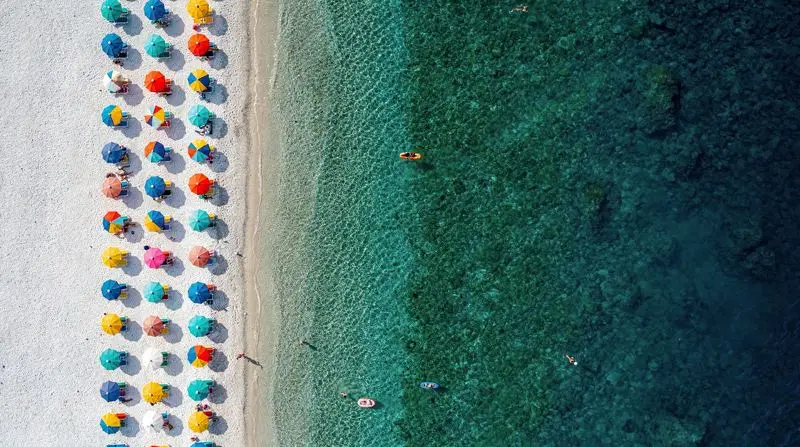
| Beach sunbed + umbrella | EUR 5-8 | EUR 15-30 | Albania ~70% cheaper |
| Airport car rental (week) | EUR 200-300 | EUR 400-700 | Albania ~50% cheaper |
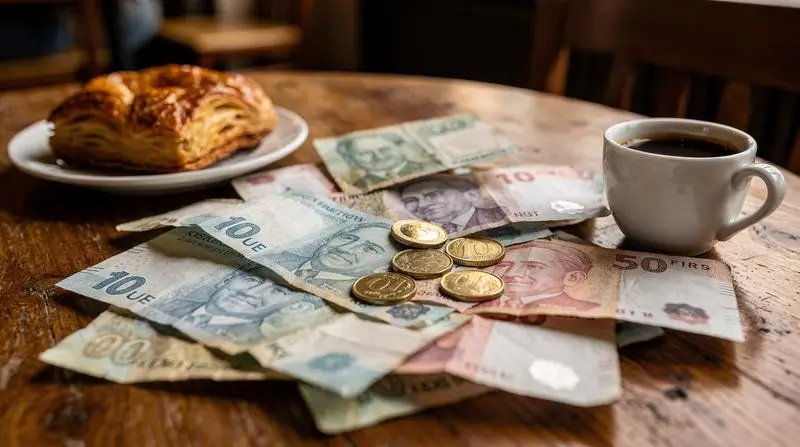
| City coffee | EUR 1.50 | EUR 3-4 | Albania ~60% cheaper |
On a ten-day trip, a couple can reasonably expect to spend EUR 1,500-2,000 in Albania (including accommodation, food, transport, and activities) versus EUR 3,500-5,000 for a comparable Croatian trip in July or August. The gap is not marginal; it is transformative in terms of what you can afford to do and how long you can stay.
See Albania travel budget for a detailed breakdown of real costs.
The Beaches: More Similar Than You Expect
Croatia’s Dalmatian coast is famous — and justifiably so. The limestone karst coastline produces exceptional clarity, numerous islands offer variety and seclusion, and the combination of walled historic cities and beach coves is hard to beat. Dubrovnik in particular remains one of the most beautiful coastal cities on Earth.
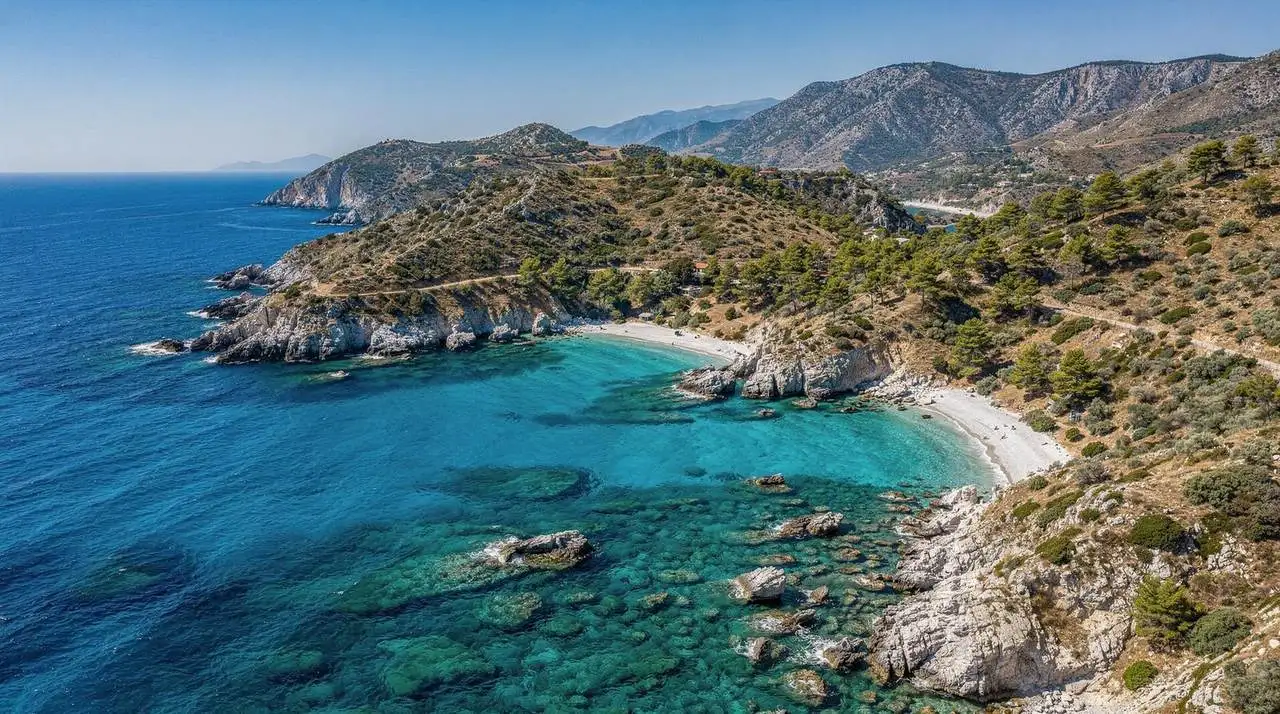
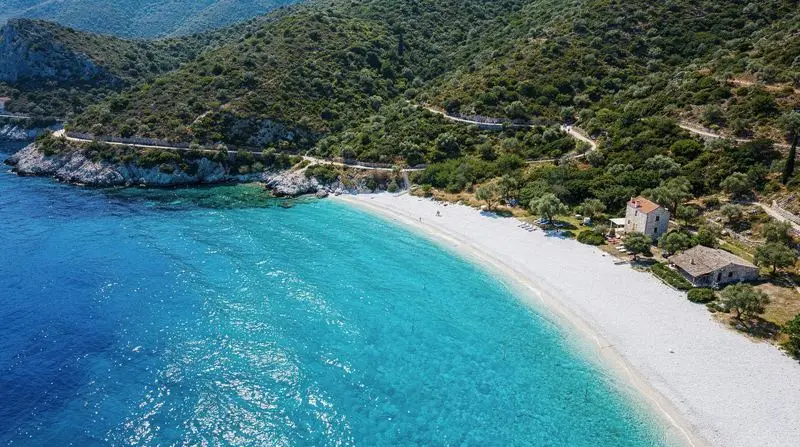
Albania’s Albanian Riviera is different in character but comparable in quality. The mountains drop more steeply to the sea in Albania, creating a more dramatic backdrop. The water is equally clear — the Ionian Sea, where the Albanian coast sits, has exceptional transparency. The beaches tend to be smaller and fewer, but the quality at places like Ksamil, Gjipe, and Drymades is genuinely world-class.
What Croatia has and Albania does not: islands. Croatia’s Dalmatian and Kvarner islands — Hvar, Brac, Korcula, Vis, Mljet — offer a variety and a sailing culture that Albania simply cannot match. If island-hopping is central to your trip vision, Croatia wins this category decisively.
What Albania has and Croatia does not: space. Ksamil in August is busy; Dubrovnik in August is overrun. The difference in crowd density is significant and affects the quality of experience at every popular site. In Albania, you can still find a nearly empty cove in peak summer by walking 20 minutes from the nearest road. In Croatia, genuinely uncrowded spots in peak season require either a boat or very early rising.
A boat tour of the Albanian Riviera reveals the best of what the coast offers, including sea caves and coves inaccessible by road. This Albanian Riviera boat tour from Himara is one of the best ways to experience the coast without road crowds — covering the Blue Cave, Gjipe Canyon, and Porto Palermo with multiple swimming stops for EUR 25-40 per person.
History and UNESCO Sites
Both countries are rich in UNESCO World Heritage Sites and genuinely important historical layers.
Croatia: Dubrovnik’s old town (UNESCO), Diocletian’s Palace in Split (UNESCO), the old city of Trogir (UNESCO), Plitvice Lakes (UNESCO). Roman, Venetian, and Baroque architectural layers. Exceptional medieval fortifications.
Albania: Berat (UNESCO), Gjirokastra (UNESCO), Butrint ancient city (UNESCO). Ottoman, Byzantine, Illyrian, and Roman layers. The castle complexes of Rozafa, Lekuresi, and Porto Palermo. The Apollonia archaeological site.
The Albanian UNESCO sites are, on balance, less visited and more atmospherically intact than their Croatian equivalents. Walking the cobbled lanes of Gjirokastra feels like genuine discovery; walking the Stradun in Dubrovnik in summer feels like navigating a theme park. That is an unfair characterisation of Dubrovnik — it is genuinely extraordinary — but the crowd context is real.
Berat, with its white Ottoman houses stacked above the Osum River gorge, may be the single most beautiful city in the Balkans that most travellers have never heard of. The Berat full-day tour from Tirana gives you the full historical context — UNESCO castle, Onufri Museum, Mangalem and Gorica quarters — in a single guided day.
The communist-era layer adds a historical dimension that Croatia cannot match: the Bunk’Art museum systems in Tirana’s former nuclear shelters, the 175,000 concrete bunkers distributed across the Albanian landscape, and the documented story of the most isolated country in Cold War Europe. This history is recent enough to feel immediate and processed in ways that are intelligent and disturbing.
Infrastructure and Ease of Travel
Croatia wins this category clearly. The country has excellent road infrastructure, a well-developed ferry network connecting the mainland to the islands, reliable tourist information, ATMs and card payment everywhere, and an accommodation industry regulated to European standards. English is widely spoken. Everything is easy.
Albania’s infrastructure is improving rapidly but remains behind Croatia. The roads on the Riviera are significantly better than they were five years ago; the main national roads are generally good. But the mountain areas, some rural interior routes, and smaller coastal villages can involve rough roads, limited signage, and fewer facilities. Card payment is less reliable — cash is essential in many places. Some guesthouses book via WhatsApp rather than any booking platform.
For travellers comfortable with some logistical improvisation, this is not a deterrent; it is part of the appeal. For travellers who want every detail pre-arranged and working, Croatia is the easier destination.
See driving in Albania for what to expect on the roads, and Albania travel tips for practical preparation.
Crowds: The Defining Difference
There is no way to overstate how different the crowd experience is in these two countries in peak season. Dubrovnik receives around 1.5 million visitors per year in a city of 40,000 residents. The cruise ship industry alone delivers thousands of day visitors per day in summer. Hvar town, with a permanent population of under 4,000, receives over a million visitors annually.
Albania’s entire tourism industry received approximately 10 million visitors in 2023 — the whole country, for the whole year, all destinations combined. The Albanian Riviera — its most visited attraction — is busy by Albanian standards in August and almost empty by Croatian standards.
If avoiding crowds is a priority, Albania wins this comparison without contest.
Food: Different Strengths
Croatian food is heavily Mediterranean: seafood, olive oil, local wines, truffles in Istria, lamb from the Dalmatian hinterland, and excellent fresh fish everywhere on the coast. The cuisine is delicious and reliable.
Albanian food is more eclectic and arguably more interesting. The Turkish and Ottoman influence produces exceptional pastry, slow-cooked meat dishes, and yoghurt-based preparations. The coastal seafood is superb and typically cheaper. Albanian olive oil, produced around Vlora and Berat, is outstanding. The gjelle (slow-braised meat and vegetable dishes) cooked in a sac (a domed cast iron lid covered with embers) are unlike anything in Croatia.
Albania’s wine scene is smaller but has some excellent producers working with indigenous varieties like Kallmet, Shesh i Zi, and Shesh i Bardhe. Raki — the local fruit brandy, made from grapes, mulberries, plums, or whatever the local tradition dictates — is a serious Albanian tradition with regional variation that rewards exploration. The wine tasting guide for Albania covers the best producers and regions for dedicated wine tourism.
Food tours in Tirana give an excellent introduction to Albanian culinary culture for travellers who want to understand the food context before exploring independently. These run year-round and cost EUR 35-55 per person. If you prefer to book ahead, the Taste of Albania Tirana food tour is a good way to sample the local dishes in one sitting.
The Mountain Factor: Albania’s Unique Advantage
Croatia has mountains — the Velebit range behind the Dalmatian coast, and the Dinara peaks — but they do not feature heavily in most Croatian tourist itineraries. The island-and-coast focus means most Croatia visitors barely engage with the interior.
Albania’s Albanian Alps are a genuinely extraordinary complement to the coastal experience. The Accursed Mountains (Bjeshket e Namuna) contain scenery that experienced Alpine hikers describe as reminiscent of the Swiss Alps a hundred years ago — before tourism infrastructure arrived. The Theth-Valbona hike crosses a 1,793-metre pass through valleys where stone-towered guesthouses serve dinner from their own gardens.
This mountain dimension — accessible in a two or three day detour from the coast via Shkodra and the Koman Lake ferry — gives an Albania trip a variety of landscape and experience that a Croatia trip typically lacks unless you specifically plan for the interior.
Nightlife and Beach Scene: Different Styles
Both countries have a significant summer beach club and nightlife culture, though the styles differ.
Croatia: Hvar’s nightlife is internationally famous and caters to the yacht crowd and British/Australian summer holidaymakers. Split has a strong year-round bar scene. The music culture is more international EDM-oriented.
Albania: Dhermi beach clubs are the main party scene, with an energetic summer atmosphere that attracts young Albanians and European visitors in roughly equal measure. The Tirana nightlife scene in the Blloku neighbourhood is genuinely excellent year-round — a sophisticated bar and restaurant scene with lower prices than any comparable European capital.
Combining Albania and Croatia
Yes, and this is the ideal scenario for a longer trip. The overland crossing between Albania and Croatia is possible via Montenegro, and the Saranda-to-Corfu ferry connects to flights throughout Greece, making an itinerary that combines the Albanian Riviera with the Dalmatian coast achievable within a two-to-three week trip.
A typical combined route: fly into Tirana, spend five to six days on the Albanian Riviera and in Gjirokastra, cross into Montenegro via Shkodra, drive along the Bay of Kotor, cross into Croatia for a week of Dalmatian coast. Fly home from Split or Dubrovnik.
The overland route via Montenegro is itself worth taking slowly — Kotor’s walled old town is spectacular and sits naturally between the two main destinations.
Who Should Choose Albania
- Budget-conscious travellers who want Mediterranean quality without Mediterranean prices
- Travellers who have done Croatia and want the road less taken
- History enthusiasts who want UNESCO sites without tour bus crowds
- Hikers: the Albanian Alps are underexplored and extraordinary
- People who value authentic cultural encounters over polished tourist experiences
- Travellers with time to explore: Albania rewards slow travel
- Anyone drawn to communist-era history and its living context
Who Should Choose Croatia
- Island-hoppers: there is no Albanian equivalent to the Dalmatian islands
- Travellers who need reliable infrastructure and easy logistics
- Sailing and yacht charter holidays
- Families with younger children who need consistent facilities
- Travellers combining with Dubrovnik (which is genuinely unmissable)
- People who want guaranteed English-speaking service everywhere
The Bottom Line
Albania and Croatia are different destinations that appeal to different travellers — but they are more similar in quality than the name recognition gap suggests. Albania simply has not been discovered yet at the scale Croatia has, and that gap in discovery is almost entirely the visitor’s gain.
If price and authenticity matter more to you than island variety and logistical ease, Albania is the better choice. If you want islands, a reliably polished experience, and one of Europe’s most beautiful walled cities in Dubrovnik, Croatia earns its reputation.
The ideal? Do both — Albania first, Croatia second, with Montenegro in between.
See best beaches in Albania for the full Riviera breakdown before you plan your route, and Albania worth visiting for a broader case for the country.
Practical Logistics: Getting Between the Two
For travelers planning the combined route, the overland journey via Montenegro takes roughly a full day of driving from the Albanian Riviera to Dubrovnik, with Kotor as a natural overnight stop. Flying is the alternative for those short on time: Tirana connects to most major European hubs, and a one-way flight from Tirana to a Croatian city (via a connection, as there are no direct routes) typically costs EUR 80-150. For those without a car, furgons cover the Albanian side to the Montenegrin border, and Montenegro’s bus network connects onward to Croatia. The driving in Albania guide and Albania road trip guide cover what to expect on Albanian roads specifically before crossing into Montenegro.
Which Coastal Town Pairs Best With Which
Travelers who know Croatia well and want an Albanian equivalent experience can use this rough matching: if you loved Hvar’s nightlife, Dhermi’s beach club scene is the closest Albanian parallel, at a fraction of the price. If Rovinj’s quiet charm appealed, Himara offers a similarly low-key coastal town feel. If Dubrovnik’s old town captivated you despite the crowds, Gjirokastra delivers comparable Ottoman-era atmosphere without the cruise ship day-trippers.
Frequently Asked Questions About Albania vs Croatia
Is Albania cheaper than Croatia?
Yes, significantly. Albania runs roughly 50-70% cheaper than Croatia across accommodation, food, and activities, particularly in peak summer when Croatian coastal prices reach their highest. A ten-day trip that costs EUR 3,500-5,000 for a couple in Croatia typically costs EUR 1,500-2,000 for the same style of trip in Albania.
Can I visit both Albania and Croatia in one trip?
Yes, and it’s a popular route. The overland journey via Montenegro connects the Albanian Riviera to Dubrovnik in about a day of driving, with Kotor Bay as a natural stop in between. A combined two-to-three week itinerary covering all three countries is one of the most rewarding Balkans-Adriatic routes available.
Does Albania have anything like Croatia’s islands?
Not really — this is Croatia’s clearest advantage. Albania’s coastline is continuous rather than dotted with islands, so there is no equivalent to island-hopping between Hvar, Korčula, or Vis. What Albania offers instead is space and solitude: the same coastline quality without the crowds, reachable by road rather than ferry.