The Northern Capital
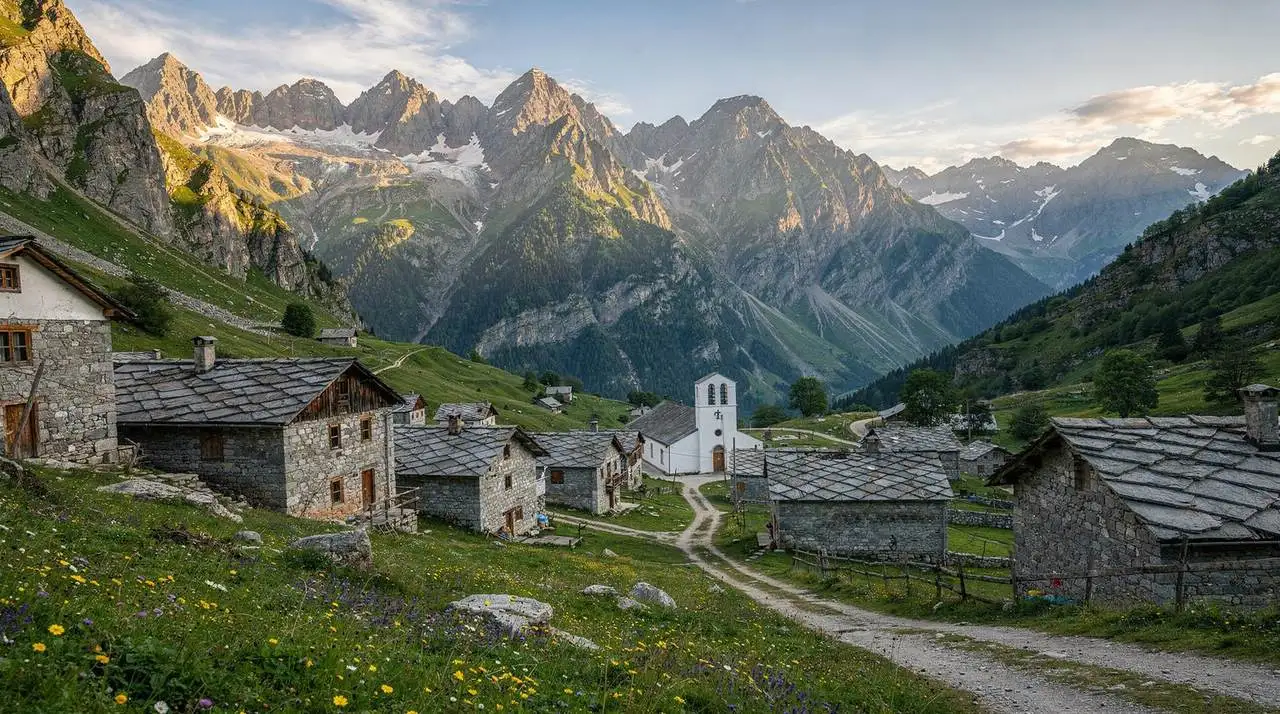
Shkodra (also spelled Shkodër) is Albania’s fourth largest city and the cultural capital of the north — a city with a significantly different character from Tirana, reflecting the northern Albanian tribal traditions (the Kanun), the city’s Catholic majority (rare in a predominantly Muslim country), and its long history as a powerful independent city-state that resisted Ottoman domination longer than most of the Balkans. Today Shkodra is the jumping-off point for the Albanian Alps — the gateway from which travelers access Theth, Valbona, and the extraordinary Koman Lake ferry — and it rewards a day or two of independent exploration before heading into the mountains.
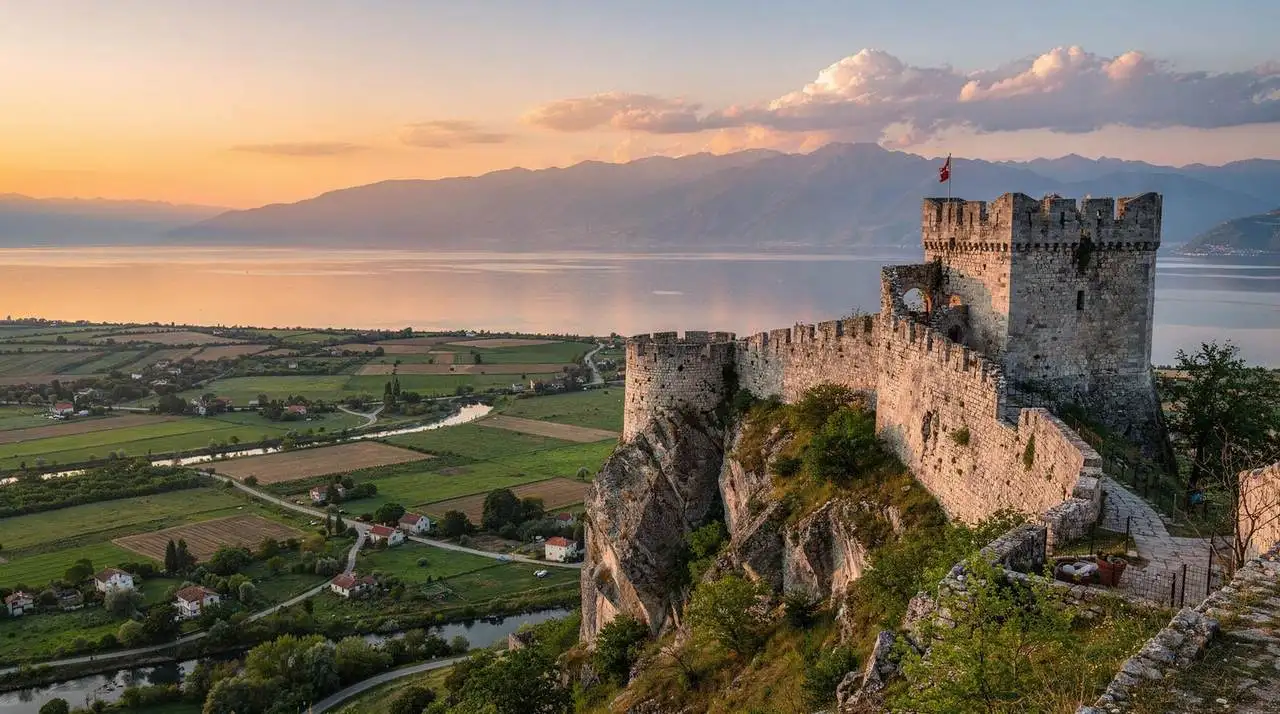
The city sits at the southern end of Lake Shkodra (Liqeni i Shkodrës), the largest lake in the Balkans, which it shares with Montenegro across the border. The Buna and Drin rivers converge here, and Rozafa Castle rises on a dramatic rocky promontory above the confluence, visible from much of the surrounding plain.
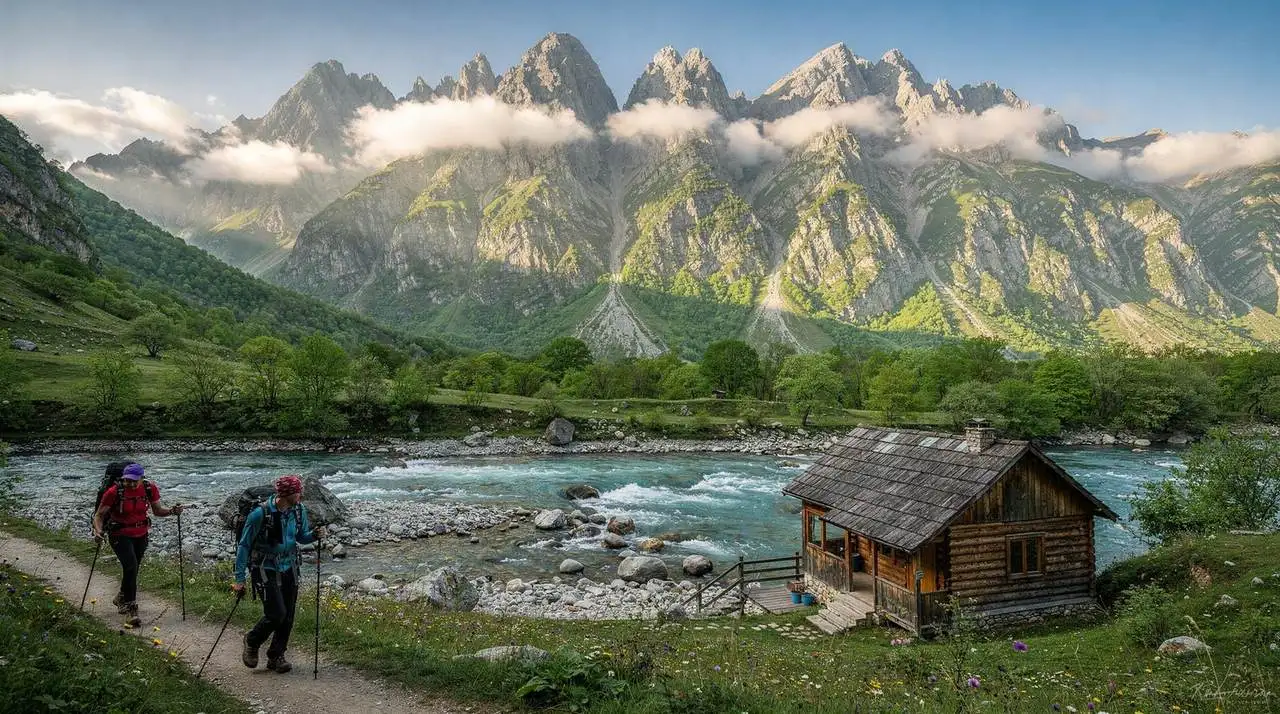
Shkodra is the essential first night for anyone attempting the classic northern Albania mountain circuit: Shkodra — Koman ferry — Valbona — Theth traverse — Shkodra by road. Our hiking the Albanian Alps guide covers the full logistics, and the Theth-Valbona hike guide details the specific traverse.
| Where | Northern Albania, gateway to the Alps |
| Cost | EUR 25-40/day |
| Time needed | 1-2 days |
| Getting there | Furgon from Tirana (~1.5-2hrs, ~EUR 3-4) |
| Best time | April-October; June-Sept for onward mountain travel |
History: A City of Resistance
Shkodra’s recorded history stretches back to the 4th century BC, when it was the capital of the Illyrian Labeatae tribe and later of the Kingdom of Illyria under Gentius — the last Illyrian king to resist Rome. The Romans took it in 168 BC. The city passed through Byzantine, Serbian, Bulgarian, and Venetian hands before the Ottoman siege of 1478-1479, one of the most famous sieges in Balkan history: the Albanian commander Gjergj Arianiti and the Venetian garrison held off a vastly superior Ottoman force for years, finally surrendering only after Venetian political abandonment rather than military defeat. The Venetian defense of Shkodra became a celebrated episode in European consciousness — Pope Sixtus IV declared a special mass when the city fell.
The city maintained a strong Catholic identity through the Ottoman period (the Ottoman administration was relatively tolerant of Christianity in urban centers), and today approximately 40% of Shkodra’s population is Catholic, giving the city a distinctly different cultural tone from predominantly Muslim Tirana. The late 19th and early 20th centuries saw Shkodra emerge as a center of Albanian literary and nationalist activity.
The historical sites guide places Shkodra in the broader context of Albanian urban history, from Illyrian foundations to the Venetian and Ottoman periods that shaped its current character.
Things to Do
Rozafa Castle
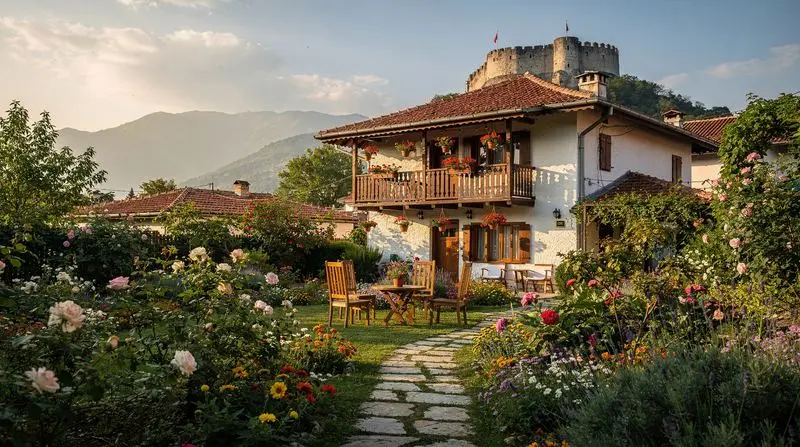
The castle is Shkodra’s unmissable sight. Perched on a 130-meter rocky hill at the confluence of the Drin and Buna rivers, Rozafa was continuously occupied from Illyrian times through the late Ottoman period, making it one of the longest-continuously-used fortifications in the Balkans. The castle complex is large — enough walls, towers, cisterns, and inner compounds to explore for two or three hours — and the views from the ramparts over Lake Shkodra, the Buna River valley, and the mountains of Montenegro and the Albanian Alps are exceptional.
The castle takes its name from the legend of Rozafa: a young bride walled alive into the castle’s foundations during construction, in exchange for the walls finally holding firm. The legend is recounted in every guidebook and by every local guide; the alleged “Rozafa spring” inside the castle is still visited by mothers seeking its legendary milk-producing properties. The legend belongs to a broader Balkan tradition of foundation sacrifice myths and appears in similar forms in Serbian and Romanian folklore.
Practical details: Entry is approximately 400 ALL for adults. Open daily 8am to 6pm (7pm in summer). A small museum inside covers the site’s history from Illyrian times through the Venetian and Ottoman periods. The views are most spectacular in the late afternoon when the lake catches the light. Allow two to three hours for the full complex.
Lake Shkodra
Europe’s largest lake (by some measures — it competes with Lake Ohrid for this title) extends some 50 km northward from Shkodra into Montenegro. The Albanian shore of the lake is underdeveloped — quiet reed beds, fishing villages, and wetlands that make it an outstanding birdwatching destination. Over 270 bird species have been recorded here, including Dalmatian pelicans, pygmy cormorants, herons, egrets, and various waders.
Boat trips on the lake and cycling around the shore are popular activities. The village of Shiroka, a short drive from Shkodra, sits directly on the lake and has restaurants serving fresh carp and eel from the lake — a particular northern Albanian delicacy. See our dedicated Lake Shkodra page for details on birdwatching, cycling, and boat tours.
Koman Lake and Shala River Day Trip
One of the great combination excursions from Shkodra, this tour from Shkodra covering Koman Lake and the Shala River combines two of the north’s most spectacular water bodies — the Koman reservoir gorge and the turquoise Shala River — in a single day trip that is one of Albania’s finest experiences. The Shala River canyon, with its white gravel beach at the base of vertical limestone cliffs, photographs as near-impossibly beautiful. A dedicated day with this excursion is one of the highlights of northern Albania.
Alternatively, this Komani Lake and Shala River day trip covers the same territory with a slightly different itinerary — excellent for those who want to maximize time on the water.
Guided Tour of Traditional North Albania
For visitors wanting to understand Shkodra’s place in the broader northern Albanian context, a guided tour provides essential orientation. This Shkodra highlights tour of traditional northern Albania covers the castle, the lake, the old bazaar, and the cultural traditions of northern Albania with a knowledgeable guide — an excellent introduction before heading into the mountains. The guide provides context on the Kanun tribal law code, the Catholic heritage, and the unique cultural position of Shkodra as the north’s intellectual and commercial centre.
Theth Day Trip or Onwards Journey
Theth is accessible by minibus from Shkodra — a two-hour journey through increasingly dramatic mountain scenery to the high-altitude village of Theth National Park. Most visitors spend two to three nights in Theth before either returning to Shkodra or continuing on the famous multi-day traverse to Valbona.
This private day tour from Shkodra to Theth waterfall and the Blue Eye is a good option for visitors who cannot spend multiple nights in the mountains but want to experience Alpine Albania. Note: the Blue Eye near Theth is a different spring from the famous one near Gjirokastra — equally beautiful but less visited.
For those ready to commit to the full alpine experience, this 3-day Albanian Alps trip covering Valbona and Theth handles all the logistics of the mountain circuit — transport from Shkodra, accommodation in both valleys, guiding for the Valbona-Theth traverse, and a return transfer — the most straightforward way to experience the full alpine loop.
The Koman Lake Ferry
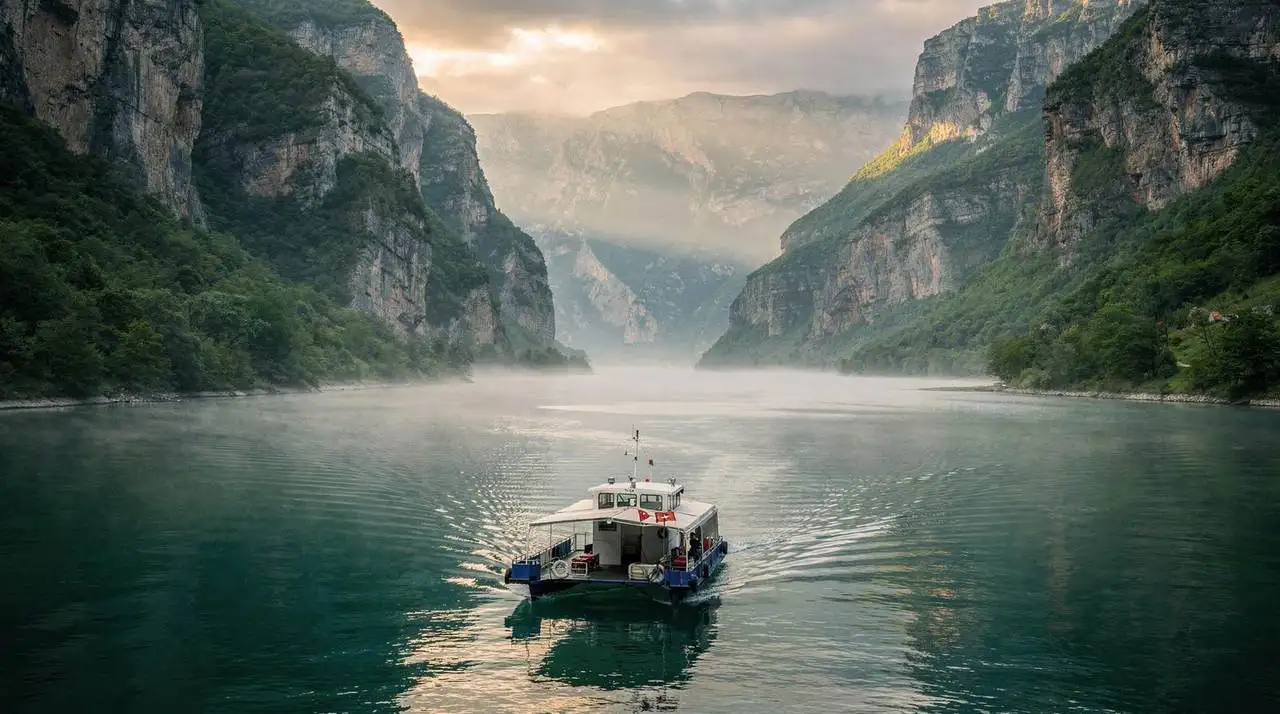
From Shkodra, organized minibus transfers depart early morning to reach the Koman Lake ferry — a 2.5-hour boat crossing through one of the most dramatic gorge systems in Europe, described by travelers as one of the great journeys of their lives. The ferry connects to Valbona via a connecting minibus.
The Old Bazaar and Pedonale
Shkodra’s pedestrian main street (Rruga Kole Idromeno, locally known as the Pedonale) is the social heart of the city and one of the finest walking streets in Albania — lined with cafes, old facades, and a constant stream of local life. The old bazaar area adjacent to the Pedonale has been partially restored and contains a mix of traditional shops and new cafes.
The 16th-century Lead Mosque (Xhamia e Plumbit) at the bazaar’s edge is one of the finest Ottoman buildings in northern Albania — named for the lead that was used to waterproof its dome. The mosque survived the communist atheist campaign in better condition than many Albanian religious buildings and was restored in the 1990s.
Shkodra’s cafe culture is intense even by Albanian standards: sitting in a Pedonale cafe with a coffee for an hour in the morning provides an excellent window into northern Albanian social life. The evening xhiro (promenade) here is one of the most social in Albania.
Historical Museum and Marubi Photography Museum
Shkodra’s Gjuhadol Historical Museum covers the city’s history from Illyrian times through the communist period. The Marubi National Museum of Photography is one of the most distinctive museums in Albania, preserving the photographic archive of the Marubi dynasty — an Italian-Albanian family who established Albania’s first photography studio in Shkodra in 1858 and documented the city, its people, and the surrounding region in extraordinary detail for three generations. For photography enthusiasts, this museum is unmissable. The archive of 150,000 glass plate negatives represents one of the most complete visual records of any Balkan city in the late 19th and early 20th centuries. Entry approximately 300 ALL.
Shkodra as a Gateway: Onward Routes at a Glance
| Route | Duration | Best for |
|---|---|---|
| Shkodra to Theth | ~2 hours by minibus | Mountain village, waterfall, Alps intro |
| Shkodra to Koman ferry to Valbona | ~2.5hr ferry + connecting minibus | Dramatic gorge crossing, full Alps circuit |
| Shkodra to Lake Shkodra (Shiroka) | ~15-20 min taxi or bike | Birdwatching, lake fish lunch |
| Shkodra to Montenegro (Ulcinj/Podgorica) | Border crossings at Hani i Hotit/Muriqani | Balkans multi-country trip |
Where to Eat
Shkodra’s food scene is rooted in northern Albanian tradition, which differs from the south in its greater emphasis on meat (particularly beef and lamb), dairy products, and dishes reflecting the city’s Catholic heritage.
Restorant Mrizi i Zanave (outside Shkodra, near Fishtë) — One of the best restaurants in northern Albania, serving traditional slow-food Albanian cooking in a beautiful rural setting with their own vegetable garden. Worth the short drive. The menu changes daily based on garden produce and seasonal availability. Budget EUR 12-20 per person.
Piazza (Pedonale area) — Popular central restaurant serving a mix of Albanian and Italian dishes. Good byrek and grilled meats. The location on the pedestrian street makes it excellent for people-watching with a meal. Budget EUR 7-14 per person.
Lake Fish at Shiroka — The restaurants in the village of Shiroka (7 km from center, on the lake) serve fresh carp and eel from Lake Shkodra. A full lunch with lake views costs EUR 6-10 per person and is one of the authentic experiences of northern Albania.
Flija is a northern Albanian ceremonial dish: layers of thin batter brushed with cream and cooked over embers in a heavy pan. Time-consuming to make and hard to find at restaurants, but worth seeking out through a guesthouse that can prepare it with advance notice.
Fresh lake fish — particularly carp and eel from Lake Shkodra — are regional specialities. The restaurants at Shiroka village serve the best versions, grilled simply with olive oil. Our Albanian food guide covers the northern Albanian food traditions including the lake fish culture.
Where to Stay
Shkodra’s accommodation centers on guesthouses and small hotels in the city center. As a staging post for the Albanian Alps, the city has a well-developed guesthouse infrastructure used to receiving and sending out hikers and trekkers.
City center guesthouses are the best option for most visitors — family-run, typically with breakfast, and priced at EUR 20-40 per night. Many are on or near the Pedonale, putting you in easy reach of the restaurants and the morning social life.
Hotels are available from budget to mid-range; the best options are within walking distance of the castle.
Hostel beds are available for solo budget travelers, typically EUR 10-15 per night. The hiker-oriented guesthouses near the Pedonale often have dormitory options.
Full recommendations in our where to stay in Shkodra guide.
How to Get to Shkodra
From Tirana: The most frequent connection in Albania — furgons run continuously throughout the day (6am to late afternoon), taking approximately 1.5 to 2 hours. The fare is around EUR 3-4. By car, the journey via the SH1 takes around 1.5 hours.
From Montenegro: The Hani i Hotit and Muriqani border crossings connect Shkodra to Ulcinj and Podgorica in Montenegro. Shared taxis and buses cross both borders throughout the day.
From Kosovo: Via the Kula-Morina crossing, Shkodra is connected to Prizren and Pristina in Kosovo — an increasingly popular route for Kosovar day-trippers visiting the lake and the Alps.
From the Albanian Alps: Return transport from Theth and Valbona runs to Shkodra via minibus (Theth) and via the Koman Lake ferry and connecting bus (Valbona).
For car rental options and road condition guidance, see our car rental in Albania guide.
Best Time to Visit
Shkodra is pleasant year-round, but April through October is optimal. The city is not a beach destination, so it does not have the sharp seasonal variation of the riviera towns. Spring and autumn are particularly nice: mild temperatures, good hiking conditions in the surrounding mountains, and fewer tourists.
Summer (July-August) is warm (28-32°C) and the city is busy. Winter is cold (close to freezing at night) but the city remains fully functional. The road to Theth is typically closed by snow from November through mid-June.
Cathedral and Catholic Heritage
The Cathedral of Saint Stephen, the largest Catholic church in Albania, stands as a significant symbol of Shkodra’s religious identity and its survival through the communist period’s aggressive atheism campaign, when Albania officially declared itself the world’s first atheist state and closed or repurposed nearly every religious building in the country. The cathedral was used as a sports hall during those decades, and its restoration after 1990 is part of a broader story of religious revival visible across Shkodra, where churches and mosques reopened within a few years of the regime’s fall.
Visiting the cathedral and hearing this history from a local guide adds real depth to what might otherwise be a straightforward architectural stop, and it connects directly to the city’s distinct Catholic-majority character discussed earlier in this guide. The building is generally open to visitors outside service times, and its scale — considerably larger than most Albanian churches — reflects the historical wealth and influence of Shkodra’s Catholic community before the communist period.
Practical Tips
The Alps connection: Shkodra is the essential staging point for the Albanian Alps. If you are heading to Theth, Valbona, or the Koman Lake, spend a night in Shkodra to arrange transport, buy supplies, and rest before the mountain leg. Our hiking the Albanian Alps guide covers all logistics.
Cycling: Shkodra is very flat and the city has a cycling culture. Bike rental is available from several shops and some guesthouses. Cycling to Shiroka and around the lake shore is a popular and easy half-day activity.
Photography: The Rozafa Castle views at sunrise and sunset are exceptional. The Marubi Museum is essential for photography enthusiasts.
Language: The northern Albanian dialect (Gheg) differs somewhat from the southern Tosk dialect — another cultural distinction from Tirana. Italian is particularly widely spoken in Shkodra, reflecting historical Venetian and later Italian connections.
Safety: Shkodra is a safe city. The Kanun blood feud tradition that historically shaped northern Albanian society is largely inactive in urban settings. See our Albania safety guide for general travel information.
Budget: Shkodra is one of Albania’s most affordable cities. A daily budget of EUR 25-40 covers everything comfortably. See our Albania travel budget guide for detailed cost breakdowns.
The 14-day Albania itinerary includes Shkodra as the northern anchor of the full-country circuit, giving context for how the city fits into a broader Albanian journey. The Theth-Valbona trek itinerary begins and ends here, making Shkodra both the preparation ground and the satisfying conclusion to the mountain crossing.
Frequently Asked Questions About Shkodra
Is Shkodra worth visiting?
Yes — Shkodra is one of Albania’s most rewarding cities and is frequently underestimated by travelers who pass through only long enough to organise mountain transport. Rozafa Castle, the Marubi photography museum, the old bazaar district, and the Catholic cathedral make for a genuinely rich day of sightseeing. The city’s distinct northern Albanian character — Catholic majority, strong Venetian heritage, cycling culture — sets it apart from Tirana and makes it worth two days if time allows.
Is Shkodra the gateway to the Albanian Alps?
Shkodra is the single essential staging point for all Albanian Alps travel. The Koman Lake ferry, the Theth minibus, the Valbona connection, and the Peaks of the Balkans trail circuit all begin here. Accommodation in Shkodra serves as a base for organising early morning departures, buying supplies, and arranging onward transport into the mountains. Without a night in Shkodra, timing the ferry and mountain connections is significantly harder.
How do you get from Shkodra to Theth?
Daily minibuses run from Shkodra to Theth in season (mid-June through September), departing from near the city centre in the early morning and taking approximately two hours along a rough mountain road. The fare is around EUR 5-7 per person. Out of season or for greater flexibility, a private 4WD transfer can be arranged through guesthouses for EUR 50-80 per vehicle. There is no public bus service off-season and a high-clearance vehicle is essential for the upper road sections.
What is there to do in Shkodra?
The main attractions are Rozafa Castle (400 ALL entry, two to three hours), the Marubi National Photography Museum (one of the finest museum experiences in Albania), the Sheshi Demokracia pedestrian area and old bazaar, the Church of Saint Stephen (the largest Catholic church in Albania), and the lake shore at Shiroka (a 20-minute taxi or bike ride away). Cycling around the flat lake plain is a popular half-day activity. The Marubi archive alone — 150,000 glass-plate photographs documenting Albanian life from the 1850s onward — is reason enough to visit.
How far is Shkodra from Tirana?
Shkodra is approximately 115 km north of Tirana, typically reached in 1.5 to 2 hours by bus or car via the SH1 highway. Buses depart Tirana’s Rinia terminal regularly throughout the day. The fare is around 400-500 ALL (EUR 3.50-4.50). It is an easy day trip from Tirana though most Alps-bound travelers stay overnight.
When is the Theth road open?
The mountain road connecting Shkodra to Theth is typically closed by snow from November through mid-June, though the exact dates vary by year. The safe travel window is mid-June through late September. Outside these dates, the road may be passable in a 4WD under careful conditions but is not reliable. Check current conditions with your Shkodra guesthouse before departure.
Is the Marubi Photography Museum worth visiting?
Yes — the Marubi National Museum of Photography is one of Albania’s most distinctive museums, preserving 150,000 glass-plate negatives documenting Albanian life from 1858 onward, captured by three generations of the Italian-Albanian Marubi family. Even visitors without a specific interest in photography generally find it one of the most memorable stops in Shkodra, offering a visual record of the city and country found nowhere else. Entry is approximately 300 ALL.