The Albania Bucket List: 15 Experiences Worth Building a Trip Around
Albania is still in the window where “before everyone else does” is genuinely applicable. The Riviera is being discovered. The Albanian Alps are appearing on European hiking itineraries. The UNESCO cities are on the radar in ways they were not five years ago. The combination of extraordinary natural landscape, living history, and prices that make the equivalent Greek or Croatian experience feel extravagant remains intact — for now.
These are fifteen experiences worth building an Albanian trip around — not ranked (that would require knowing which one matters most to you) but curated for depth, variety, and the specific quality that makes Albania’s best experiences impossible to replicate elsewhere in Europe.
| Best time to go | May-June or September for most items on this list |
| Minimum time | 10-14 days to hit the majority without rushing |
| Booking ahead | Alps guesthouses and Vjosa rafting need advance contact |
| Budget impact | Most experiences are free or under EUR 25 per person |
| Getting around | Rental car recommended for the Riviera road and Llogara Pass |
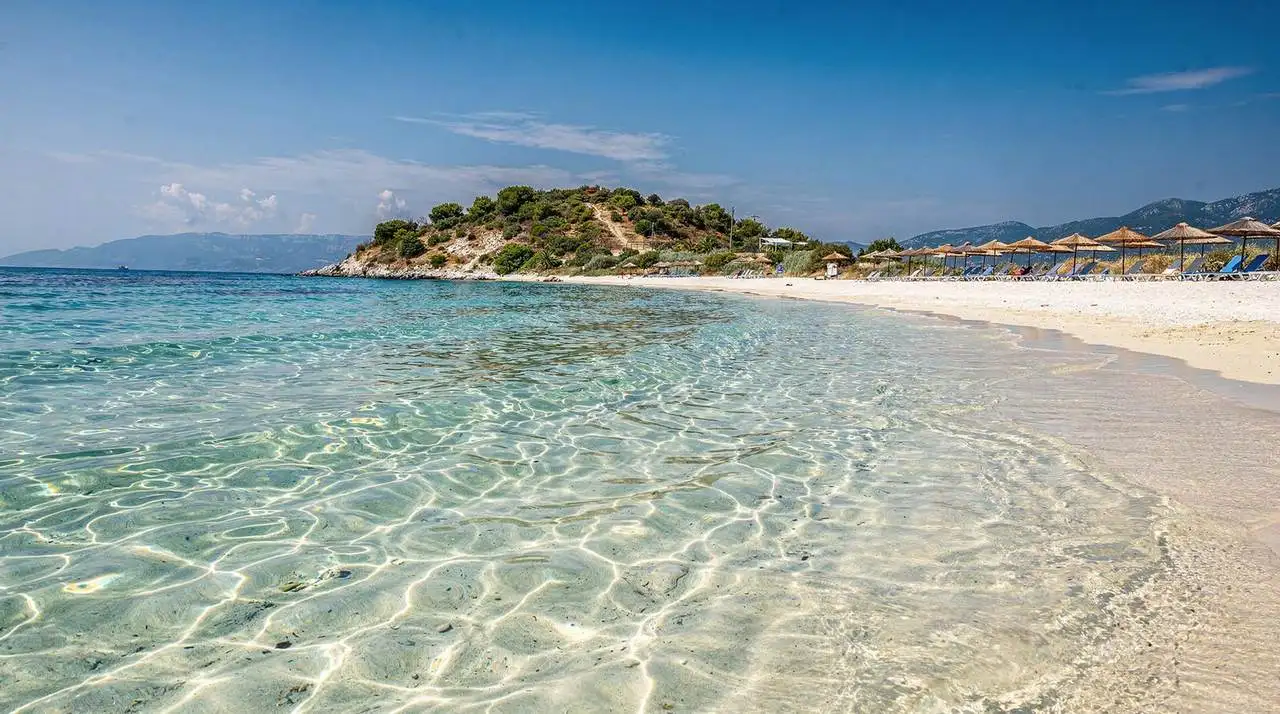
1. Swim in the Ksamil Lagoon at Sunrise
Ksamil in peak summer is deservedly popular. Ksamil at 6:30am on a July morning, before the crowds arrive, with the lagoon turning from violet to turquoise as the sun clears the hills and the small offshore islands casting long shadows on perfectly still water — this is something else entirely.
The water temperature in July reaches 26-27 degrees Celsius; the air is already warm; the beach is empty. This is what the photographs were trying to show you. Being there in person, in the silence before the beach clubs open and the day visitors arrive from Saranda, is the actualization of a scene that most people only experience as a screen background.
The boat trips around the Ksamil islands that run later in the day are also worth experiencing — by late morning, the water turns the extraordinary saturated turquoise that makes Ksamil distinctive. Albanian Riviera boat trips from Saranda cover the Ksamil island area and give you the sea perspective on the lagoon that the shore cannot.
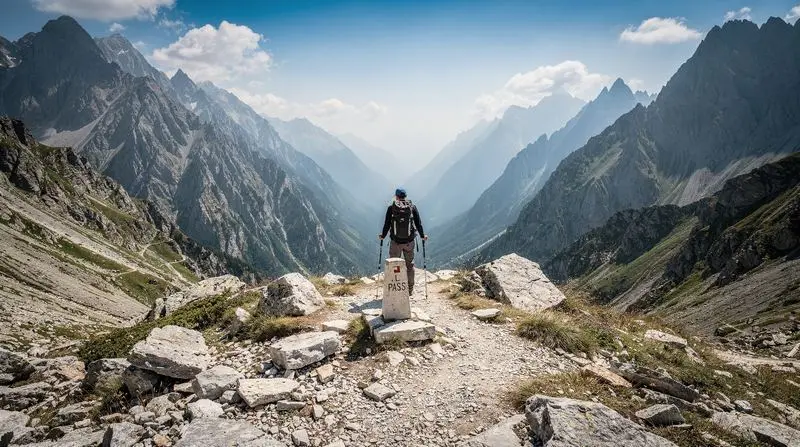
2. Walk the Theth-Valbona Trail
The Theth-Valbona hike over the Valbona Pass is one of the great mountain walks of Europe. Five to seven hours of hiking through meadows and beech forest, a crossing of the 1,793-meter pass with views north to Kosovo and south into the Albanian highlands, then a descent into the Valbona gorge and the blue-green Valbona River.
This is not a hike for the dramatically unfit, but it is not a technical climb. It is a long, demanding, beautiful walk through country that still feels genuinely remote. Late May brings wildflowers at peak; September offers crystal-clear air and significantly thinner crowds. Book your guesthouses in both Theth and Valbona months in advance for summer — this trail has been discovered and beds fill fast.
The hike is described in detail in the Theth-Valbona hike guide, and the guesthouses in the Albanian Alps guide covers accommodation on both sides of the pass.
3. Ride the Koman Lake Ferry
The two-hour ferry journey through the drowned Drin River canyon from Koman to Fierza is one of Europe’s finest scenic transport experiences. The walls of the canyon rise hundreds of meters from the emerald-green water on both sides, and the boat — an old cargo ferry carrying local produce and motorbikes alongside tourists — threads through the canyon with the practical purpose of connecting isolated communities.
Arrive at the Koman ferry dock by 9am (departures vary by season) and stake out a position on the roof deck. Two hours of something extraordinary follows: vertical limestone cliffs, golden eagles overhead, isolated farmhouses at the water’s edge accessible only by boat, and the particular silence of a canyon where the mountain walls absorb every sound except the engine and the water.
The full story of the crossing is in the Koman Lake ferry guide.
4. Watch the Sunset from Lekuresi Castle
The hill above Saranda has a restored Ottoman castle with a terrace restaurant facing west over the bay. The sun sets into the Ionian from here, with Corfu silhouetted on the horizon and Ksamil’s islands visible to the south. On a clear evening in September, when the summer haze has cleared, the color range of an Albanian coastal sunset is sufficient to produce photographs that friends will assume are filtered.
Book a table at the terrace restaurant for the hour before and after sunset. Eat grilled fish from the day’s catch. Drink the local wine. Watch Corfu darken into silhouette while the sea below the castle shifts through copper to rose to deep blue. This is one of the best free things to do in Albania that involves spending a little money — the meal costs EUR 20-25 per person for a restaurant serving one of Europe’s better views.
5. Explore Butrint in the Early Morning
Butrint national park near Saranda is one of the Mediterranean’s finest archaeological sites, and almost nobody visits it before 9am. The Greek theater, the Roman baths with their floor mosaics, the Byzantine baptistery with the largest early Christian mosaic in the region, the Venetian castle, the Ottoman tower — all in a nature reserve of genuine ecological importance where egrets fish in the lagoon channels beside the paths.
Arrive as the park opens, before the tour buses from Saranda and Greek island day trips arrive. Walk the site in the morning light when the ruins and the surrounding trees are still quiet. The scale of the place — a fully inhabited ancient city through multiple civilizations, all visible in one walk — is only apparent without crowds.
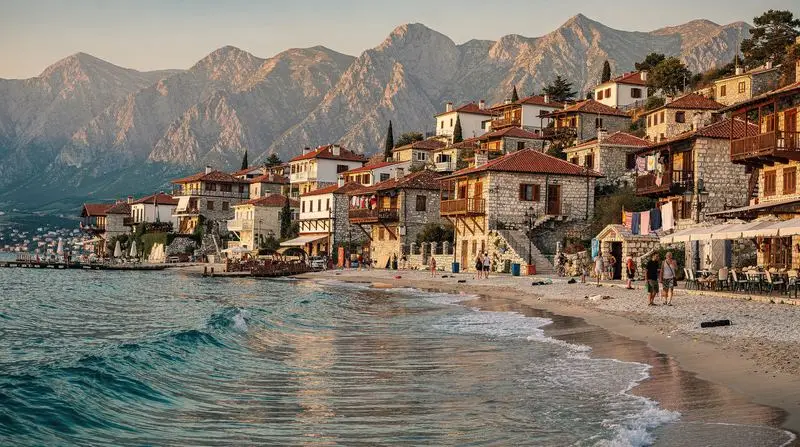
6. Wander Gjirokastra’s Old Town Alone at Dawn
Gjirokastra at 7am in May or September: the stone lanes are empty, the castle is backlit by the rising sun, the old bazaar has not yet opened, and the city looks exactly as it must have appeared in the early 20th century when the Albanian writer Ismail Kadare — who was born here — was forming his literary imagination on its strangeness.
Walking the steep alleys of the Palorto neighborhood, past Ottoman tower houses with their external staircases and overhanging upper stories, in complete solitude, is one of the finest urban experiences in the Balkans. Gjirokastra at dawn is a city that belongs to itself rather than to tourism, and it is yours alone for about two hours before the day begins.
Guided tours from Tirana provide context that makes Gjirokastra’s history fully comprehensible — day tours to Berat and the southern UNESCO cities include historical commentary that enriches both cities significantly.
7. Eat a Full Albanian Breakfast at a Village Guesthouse
The Albanian guesthouse breakfast — served unhurriedly at a wooden table in a garden or on a terrace with mountain views — is among the best meals available in the country. Expect: home-baked bread with a crisp crust; local white cheese (djathë i bardhë) that is briny and fresh; olives from the family’s own trees; thick yoghurt; eggs from the yard; honey from local production; fresh vegetables from the garden; and strong coffee.
This meal, eaten in the Theth valley with the river audible below and the peaks of the Accursed Mountains visible above, is worth the flight to Albania on its own terms. The same breakfast in a Berat guesthouse costs about EUR 6 and comes with a view over the Osum gorge. Value does not cover it.
8. Raft the Vjosa River
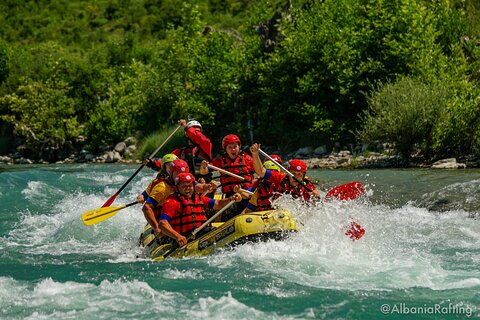
The Vjosa is one of the last wild rivers in Europe — largely free of dams and diversions, running from its sources in the Greek mountains to the Albanian Adriatic coast. Rafting the section around Permet in spring or early summer, when the water is high and the canyon walls frame the sky above, is one of Albania’s finest active experiences.
The rafting near Permet is serious — grade III to IV in spring — and is operated by several adventure companies based in the town. The combination of a morning rafting the Vjosa and an afternoon at the Benja thermal baths below the limestone arch (geothermal springs in a river gorge, free to use) makes for a day of contrasts that is hard to surpass in any single-day experience.
9. Stand on the Llogara Pass at Dusk
The Llogara Pass at 1,025 meters is the geographic and experiential gateway to the Albanian Riviera. The transition from the pine forest of the mountain road to the panorama of the entire Ionian coast below happens in the space of a single bend, and the first sight of the sea spread below — the Riviera road threading between mountain and water, the coastal villages in their bays, Greece visible as a haze on the horizon — is one of the most dramatic road moments in European travel.
At dusk, with the sea below turning gold and the mountains behind going purple, the Llogara Pass is close to perfect. The stone restaurant at the pass is open through the evening and the grilled meats are good. Stop here, eat something, and watch the coast below you transition into night.
10. Take a Day on the Shala River
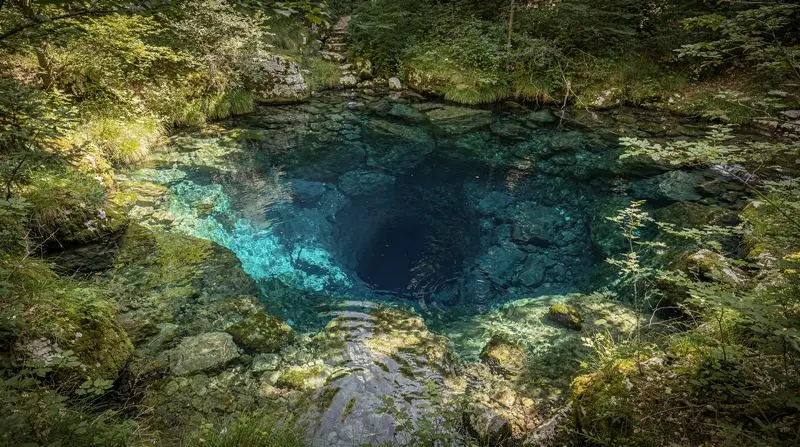
The Shala River in the Albanian Alps flows through a canyon of white limestone karst, and its color — a saturated turquoise-blue that is genuinely improbable to anyone who has not seen it — has made it one of the country’s most-shared images in recent years. The photographs are accurate. The river is exactly that color.
Taking a boat up the canyon, swimming at the traditional gathering point (a sandbar where the canyon widens into a natural pool), and eating fresh fish at a floating restaurant on the river is one of those experiences that Albania travelers who have done the Riviera many times cite as a revelation. Combine it with the Koman Lake ferry for a full day of extraordinary Albanian water that requires almost no other activity to complete.
11. Eat Tavë Kosi in Berat
Tavë kosi — lamb and rice baked in a thick yoghurt and egg custard — is Albania’s most celebrated dish, and Berat’s version of it is considered the national standard. The dish takes hours to prepare and the result is a baked crust over a rich, tangy interior that is unlike anything else in the Balkan culinary repertoire.
Eat it in Berat, ideally at a guesthouse restaurant that makes it to order for dinner, with a carafe of local Berat white wine and a view from a terrace over the Osum gorge. This is Albanian food at its canonical best — the dish, the setting, and the price (about EUR 7 per person) combine for one of the finest value meals in Europe.
12. Enter the Bunk’Art Museums
Albania’s 175,000 concrete bunkers — distributed across every part of the country from beaches to mountain passes, one for every three inhabitants at the time of construction — are the most visible physical legacy of Enver Hoxha’s paranoid dictatorship. The Bunk’Art 1 and Bunk’Art 2 museums in Tirana occupy two of the enormous underground shelters built for the leadership in the event of nuclear war.
These are serious museums of communist Albanian history, with well-curated exhibits in the architecture of fear converted into a space for understanding what that fear produced. Walking through the underground corridors of Bunk’Art 1, passing rooms designed for government ministers to survive a nuclear attack while ordinary Albanians sheltered in the concrete domes visible in every landscape, provides a visceral historical education that changes how you see the rest of the country.
Communist Albania tours with the Bunk’Art Museum provide guided context for the exhibits and the broader history — particularly valuable for the political history which requires explanation to be fully comprehensible.
13. Drive the Full Riviera Road
The coastal road from Vlora south to Saranda — via the Llogara Pass, Dhermi, Himara, and Porto Palermo — is one of Europe’s finest scenic drives. The road alternates between mountain switchbacks, coastal terraces above the sea, and sections where the tarmac sits directly on the shoreline.
Do this drive in a full day, slowly, stopping at every viewpoint, beach, and village that catches your attention. In June or September, when the road is not congested with summer traffic, it takes a full day done properly and involves all the stops that make the Riviera more than the sum of its beaches. See the driving in Albania guide for the route, timing, and what to watch for on this particular road.
14. Drink Coffee in Tirana’s Blloku
The Blloku neighborhood in Tirana — once the exclusive compound of the communist elite, surrounded by walls and forbidden to ordinary citizens, now the city’s most fashionable quarter — has pavement cafes that reflect Albanian coffee culture in full expression. Strong espresso for EUR 1, extended conversations, the particular Tirana phenomenon of sitting with a single coffee for two hours because nobody is in any hurry.
Blloku in the morning, before the lunch crowd arrives, is one of the most enjoyable urban experiences in the Balkans. The neighborhood’s history — what it was, what it now represents — adds a layer to the very good coffee. Walking through streets that ordinary Albanians could not enter until 1991, now full of Albanian millennials on laptops, is itself a summary of Albania’s extraordinary 35-year trajectory.
Tirana walking tours cover the Blloku area with historical context that makes the coffee stop twice as interesting.
15. Find Your Own Albania
Every traveler who goes deep into Albania finds something that is not in any guide — a village above Himara that is not in the tourism literature, a swimming hole in a river valley that a farmer pointed them toward, a guesthouse in the mountains where the daughter speaks perfect English and her grandmother makes wine from a grape variety with no name outside the valley.
This is the experience that no bucket list can contain by definition. It is the reason to go, to slow down, to leave one day in the itinerary deliberately open, and to follow the advice of the person who lives there. Albania rewards curiosity and genuine engagement with its people in ways that become the most memorable part of the trip.
See the Albania travel tips guide for practical guidance on how to create the conditions for these encounters, and the free things to do in Albania guide for the experiences that cost nothing but deliver everything.
Planning Your Bucket List Trip
Most of these fifteen experiences require some planning:
- Items 2, 3, and 10 (the Alps experiences) require advance accommodation booking for summer, and the Koman Ferry requires an early start
- Items 5, 6, and their UNESCO city companions require at least two nights each to do justice
- Item 8 (Vjosa rafting) requires contacting an operator in advance for Permet-area tours
- Items 1, 4, 7, 9, 11 are achievable spontaneously with a rental car and some cash
The Albania itineraries section has structured routes that combine multiple bucket list items efficiently. The Albania travel budget guide confirms that almost all of these experiences cost a fraction of their equivalent in Western Europe. That combination — authentic, extraordinary, affordable, and still uncrowded — is why the phrase “before everyone else does” still applies.
Building Your Own Order
The fifteen items above are grouped loosely by theme rather than geography, so a practical trip usually clusters them by region: the south (Ksamil, Butrint, Gjirokastra, Riviera drive, Llogara Pass, Vjosa rafting), the centre (Tirana, Berat, Bunk’Art), and the north (Koman ferry, Theth-Valbona, Shala River). Most successful routes move through these three clusters in sequence rather than backtracking, since the north in particular requires committed travel time to reach and is worth doing as a dedicated block rather than a rushed detour.
A reasonable default order for a first two-week trip: start in Tirana, head south through Berat and Gjirokastra to the Riviera and Saranda, then loop back north via Tirana to finish with the Alps section — putting the most physically demanding and logistically involved part of the trip (the mountains) at the end, when you’ve settled into Albania’s rhythms and the payoff of the Koman ferry crossing lands hardest.
Which Items Suit Which Kind of Traveller
Not every item on this list suits every trip style, and being honest about that upfront saves disappointment:
- First-time visitors with limited time: prioritise items 1 (Ksamil), 5 (Butrint), 6 (Gjirokastra), 9 (Llogara Pass), and 12 (Bunk’Art) — these deliver maximum impact for minimum logistics.
- Active travellers: items 2 (Theth-Valbona), 8 (Vjosa rafting), and 10 (Shala River) are the physically engaged half of the list and reward those with more time and fitness.
- Slow travellers who want depth over breadth: items 6, 14, and 15 — the early-morning Gjirokastra wander, Blloku coffee culture, and simply following local advice — cost nothing and reward patience over ticking boxes.
- Families: items 1, 4, 7, 11, and 13 are the most manageable with children; the Vjosa rafting and the full mountain pass crossing are better suited to older kids or adults-only groups.
Frequently Asked Questions About the Albania Bucket List
What is the single best thing to do in Albania?
There is no single answer, but the Theth-Valbona hike and the Koman Lake ferry are the two experiences most consistently cited by repeat visitors as uniquely Albanian — dramatic, still relatively undiscovered, and impossible to replicate elsewhere in Europe. For travellers who prioritise the coast, an early Ksamil swim or the drive over Llogara Pass deliver a similarly strong first impression.
How many days do I need to cover the Albania bucket list?
Ten to fourteen days covers the majority of this list at a comfortable pace, combining two or three UNESCO cities, a Riviera stretch, and the Alps section (Koman ferry plus Theth-Valbona). Three weeks allows genuinely unhurried time for all fifteen items plus room for the unplanned discoveries that item 15 describes.
Is the Albania bucket list suitable for a first-time visit?
Yes — this list is deliberately built around Albania’s most accessible highlights rather than obscure insider spots, making it a strong framework for a first trip. Pair it with the Albania travel tips guide for the practical logistics that sit alongside these experiences.