Borsh: Seven Kilometres of Quiet Ionian Shore
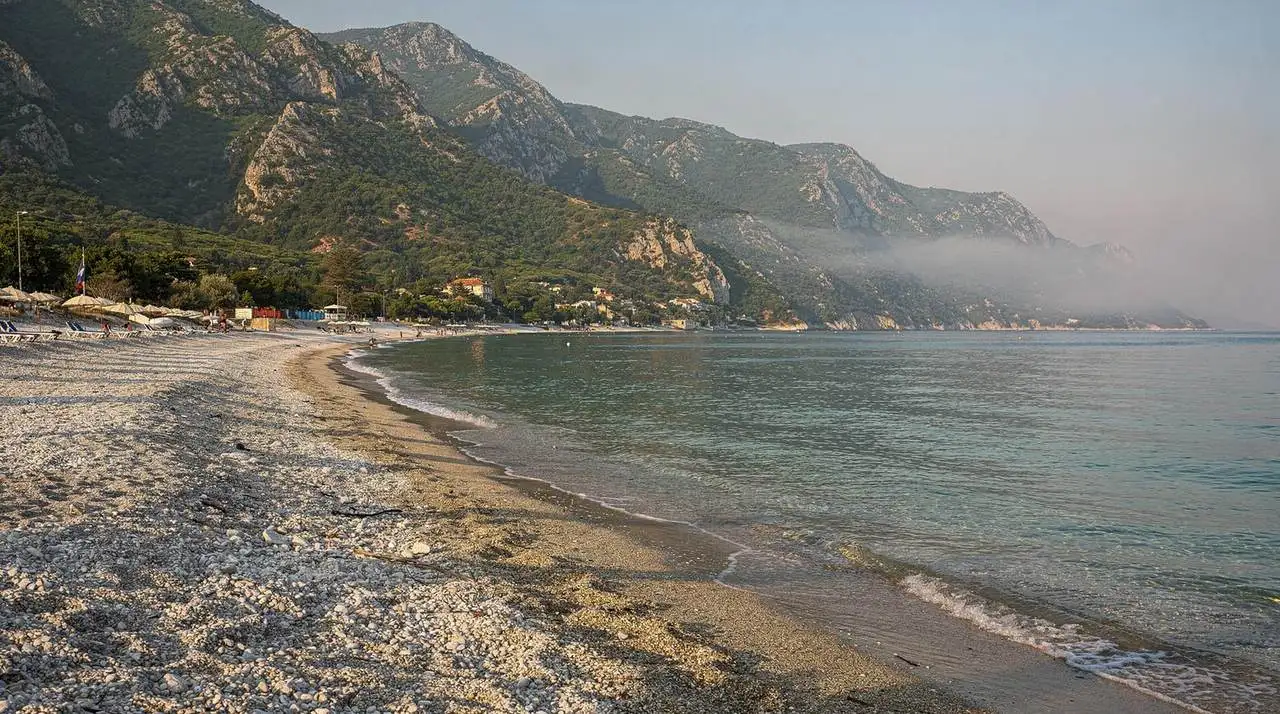
Albania’s longest beach is not its most famous, which is entirely characteristic of how this country tends to arrange its attractions. While visitors cluster at Dhermi and rush to Ksamil, Borsh stretches for seven kilometres along the Ionian coast between Himara and Saranda in relative peace, offering a kind of beach experience that has largely disappeared from the Mediterranean: long, wide, uncrowded, affordable, and genuinely local.
Borsh is a village as much as a beach — a settlement that spills down a hillside behind the shore, with old stone houses, working olive groves, and a population that largely does not depend on tourism. The beach itself is backed by scrubby vegetation and the occasional fruit orchard. There are beach bars and umbrellas for those who want them, and long stretches of empty shore for those who do not. The mountains rise behind, the Ionian stretches ahead, and the general atmosphere is one of uncomplicated ease.
Borsh sits on the Albanian Riviera approximately 35 kilometres north of Saranda and 30 kilometres south of Himara. It pairs naturally with both as a day trip or as a quieter base for a low-key Riviera stay. Our best beaches in Albania guide compares all the major options along this coast. For the broader Riviera itinerary, the Albanian Riviera road trip guide covers how Borsh fits into a week-long coastal circuit.
| Where | Southern Riviera, ~35 km / 40min north of Saranda |
| Getting there | Self-drive, furgon (Saranda-Himara route), or organised tour |
| Vibe | Village beach, not a resort — bring your own entertainment |
| Lounger hire | Around EUR 5-8/day, cheaper than Dhermi or Ksamil |
| Best for | Space, quiet, families, budget travelers |
The Beach
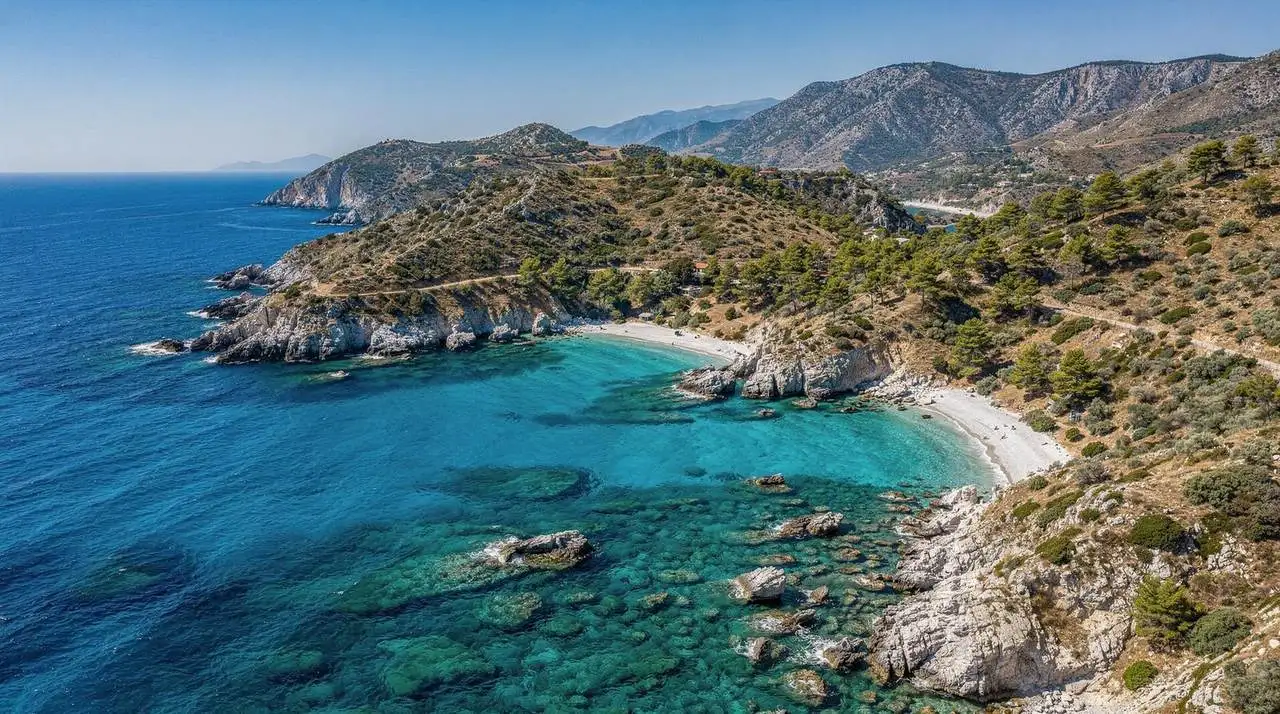
Seven kilometres is genuinely long. Walking the full length of the Borsh beach, from the northern end where the road meets the shore to the rocky headland at the south, takes around an hour and a half at a relaxed pace — and for significant stretches you will encounter almost no one. This is not an exaggeration or a seasonal anomaly; Borsh simply does not attract the density of visitors that its neighbours do.
The beach is a mix of fine dark pebble and coarse sand, typical of the southern Riviera coastline. The water entry is gradual at the north end and slightly steeper at the south. The Ionian here is the same extraordinary blue-green as everywhere on this coast, with excellent visibility and water temperatures that reach 25-26 degrees Celsius in July and August.
The pebble composition means the water clarity extends very close to shore — no sediment stirs up to cloud your view. Snorkelling directly off the beach, particularly near the rocky outcroppings at the southern end, reveals good marine life: sea bass, bream, octopus, and the dense sea urchin populations that indicate clean, undisturbed water.
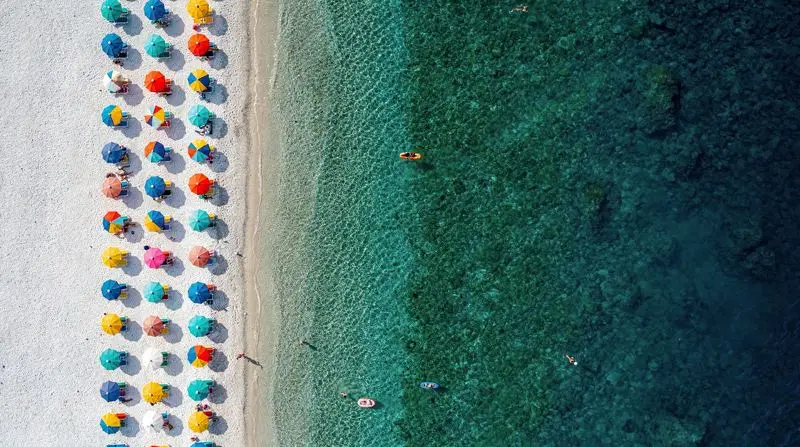
Beach bars and umbrella rentals are concentrated in the central section of the beach, within easy walking distance of the main road. Prices are noticeably lower than at the more touristic Riviera beaches — umbrella and sunbed sets cost around EUR 5-8 per day rather than the EUR 10-15 you might pay at Dhermi or Ksamil. Out of peak season, much of the beach infrastructure closes and the shore reverts to something wilder and more natural. The central section has a shower facility and some basic changing areas maintained by the beach bar operators; the northern and southern extremes have none.
The Village
Borsh village sits on the slopes behind the beach, connected by a road that winds up from the shore. It is a genuine Albanian village — not a resort town — and the contrast with the beach atmosphere is immediate. Stone houses, chickens, old men in cafes, vineyards, and the large old-growth olive groves that give this part of the Riviera its characteristic landscape.
The olive trees of Borsh are remarkable. Some are very old indeed — centuries-old specimens with trunks of twisted, gnarled proportions that look more sculptural than agricultural. The olive harvest in October and November involves much of the village population and is one of the more authentic rural experiences available on the Riviera if you happen to visit at the right time. Locals say the olives of Borsh produce oil with a distinctively intense, almost peppery character attributable to the combination of ancient rootstock and the specific mineral character of the soil.
Travelers with a genuine interest in this side of village life — rather than just the beach — can sometimes arrange a visit to a working grove or a small family press during harvest season by asking at a village guesthouse; nothing is formally organised for tourists, but Albanian rural hospitality tends to extend an invitation readily to anyone who shows real curiosity. Our agrotourism in Albania guide covers more structured farm-stay options elsewhere in the country for travelers who want this kind of experience without relying on informal local connections.
The village is also home to the ruins of a Byzantine-era church and some older fortifications. Nothing is formally signed or managed as a tourist attraction — they are simply there, incorporated into the fabric of the village, as is common in this part of Albania where history is so dense that antiquity becomes unremarkable. Our Albania off the beaten path guide covers several similar village experiences along the southern Riviera.
The village square is the social centre — a cafe with plastic chairs, old men playing dominoes, and a general unhurriedness that contrasts dramatically with the beach scene below. Stopping for a coffee here, away from the beach bars, gives a much more authentic sense of what Borsh actually is as a community.
Things to Do at Borsh
Swimming and Snorkelling
The primary activity is the water itself. The seven-kilometre length means you can find your preferred spot — crowded and sociable in the central section, quiet and wild at the extremes. The water is consistently excellent: clear, warm in summer, and clean enough to snorkel without any particular preparation.
The rocky southern headland is the best snorkelling location, with submarine rock formations, caves at shallow depth, and the marine life they attract. Bring your own mask and fins; equipment rental is limited at Borsh compared to the more developed beaches. The water at the southern end is slightly deeper and more exposed to swell, which can improve the snorkelling conditions by bringing in open-water fish species.
Exploring Qeparo Village
A few kilometres north of Borsh, the ancient village of Qeparo offers one of the most atmospheric detours on the southern Riviera. The old village sits on a rocky hillside above the modern beach settlement, its stone houses largely abandoned and slowly returning to the mountain. Walking through old Qeparo — past roofless houses, through narrow lanes, with the sea visible through gaps in the walls — is one of the more haunting experiences available on this coast. The views from the upper village over the sea are exceptional. Allow an hour for the exploration and wear good walking shoes for the uneven terrain.
Day Trip to Porto Palermo
South of Borsh and before Himara, the Porto Palermo castle sits on a small promontory connected to the mainland by a narrow causeway. This Ottoman-era sea fortress, built by the legendary Ali Pasha of Ioannina in the early 19th century, is one of the most photogenic historical sites on the Albanian coast. It is a short detour from the main road and easily combined with a Borsh beach day. The castle interior, though ruined, is accessible and the views from its towers over the surrounding bay are extraordinary.
Guided Tours Along the Southern Riviera
For visitors who want to combine Borsh with the other highlights of the southern coast in a structured way, this guided day tour covering Saranda, Qeparo, and Himara visits the southern Riviera including the Borsh area, providing a structured way to see the coastline’s highlights with context and transport included. The guide explains the history of the ancient villages and gives context for the Albanian-Greek cultural mix that characterises this stretch of coast.
Boat Tours from Himara
Himara is 30 kilometres north of Borsh and offers boat tours along the Riviera coastline. These Albanian Riviera boat tours from Himara explore the sea caves and secluded coves between Borsh and Gjipe that are inaccessible from the land — an excellent complement to a beach day at Borsh. The boat tour perspective reveals the cliff coast north of Borsh, including formations only visible from the sea.
For dedicated sea cave exploration, this Himara Riviera caves boat tour covers the most dramatic cave systems near Borsh from the water. The limestone coast in this area contains cathedral-sized sea caves accessible only by boat, making the tour a genuinely extraordinary complement to a beach day.
Hiking from Borsh to Qeparo
A marked trail connects Borsh and Qeparo along the hillside above the coast, passing through olive groves and offering intermittent views of the sea below. The walk takes about 45 minutes one way and passes through some of the finest old-growth olive landscape on the Riviera. It is best done in the morning before the heat builds and provides a completely different perspective on this stretch of coast than the beach view. Bring water and wear sunscreen even in the early morning.
Diving Near Borsh
The clear water and rocky headlands around Borsh make it a reasonable base for snorkelling straight off the beach, though dedicated scuba operators are concentrated further north around Himara and Dhermi rather than in Borsh itself. Travelers keen on more structured diving — reef exploration, wreck sites, or certification courses — should plan around those bases and treat Borsh as a swimming and relaxation stop instead. Our diving and snorkelling in Albania guide covers the operators and sites along the whole Riviera coast.
An Increasingly Watched Stretch of Coast
Borsh has so far escaped the large-scale development that has transformed parts of Dhermi and Ksamil, but the pattern along the Riviera has been one of gradual change — small guesthouses giving way to larger builds, dirt tracks becoming paved roads. None of that has happened at scale in Borsh yet, and the seven-kilometre length of the beach means there is, for now, simply more space than demand. Travelers drawn to Borsh specifically for its undeveloped character should treat that as a reason to visit sooner rather than later, without assuming it will look identical in five years. For a wider view of how the coast is changing, our Albania road trip guide covers the whole Riviera route and notes where development has advanced furthest.
Where to Eat
Borsh’s restaurants are straightforwardly Albanian: grilled meat, fresh fish, village salad, byrek, and cold beer. The quality is generally good — the fish comes from local fishermen and the vegetables from local gardens.
Restorant Borshi (beachside, central section) — The best-positioned restaurant on the Borsh beach, serving fresh grilled fish, lamb, and Albanian salads. The grilled sea bass is excellent and the local olive oil is outstanding. Ask specifically for the local oil rather than the commercial variety that sometimes appears at tourist-facing restaurants. Budget EUR 8-12 per person.
Kafja e Bregut (beach bar and grill, north end) — A simpler beach bar operation serving cold drinks, grilled corn, and light snacks. Good for a midday break without a full meal commitment. The cold beer and grilled sweetcorn combination is a simple pleasure worth experiencing on a hot beach day. Budget EUR 3-6 per person.
Village tavernas (Borsh village, uphill) — The most authentic dining experience at Borsh is up in the village itself, where a couple of small family restaurants serve traditional Albanian cooking using produce from local gardens and farms. The slow-cooked lamb and stuffed peppers here are superior to anything on the beachfront. The host will likely bring out additional dishes not on any menu — accept them. Budget EUR 6-10 per person.
Look for locally produced grape or mulberry raki, which appears on tables throughout the southern Riviera. Fresh fruit — figs, pomegranates, grapes — is available from roadside sellers during summer and autumn. Our Albanian food guide covers the southern Ionian coast food traditions in detail.
Where to Stay
Accommodation options at Borsh are limited compared to the more developed Riviera destinations. A handful of guesthouses operate near the beach and in the village, offering simple rooms at low prices.
Beachside guesthouses — Basic but clean rooms within walking distance of the shore, typically EUR 20-35 for a double in season. Most include breakfast with local products — fresh cheese, honey, tomatoes, and olive oil from the village groves. The simplicity of these places is a feature rather than a flaw; this is rural Albania at its most unaffected.
Village guesthouses — A more authentic experience up in the village itself, with terrace views over the beach and sea. EUR 20-30 per night, typically with excellent home cooking available on request. The evening meal at a village guesthouse — eaten on a terrace with the sea below and the mountains above — is one of the more complete sensory experiences available on the Riviera.
For a wider choice of accommodation, Himara or Saranda are the practical bases, with Borsh visited as a day trip. See our Albania travel budget guide for cost comparisons across the Riviera and the where to stay in Saranda guide for the full southern Riviera accommodation picture.
Families looking for a longer stay rather than a single night should also consider the handful of self-catering apartments that have appeared in the village in recent years, generally rented directly through the owners rather than through international booking platforms — ask at the village cafe or through your guesthouse host, as word-of-mouth is still the main channel for arranging longer village stays. Our Albania family travel guide has broader guidance on choosing a quiet base like Borsh over a busier resort town when travelling with children.
Getting to Borsh
Borsh is located on the SH8 coastal road, approximately 35 kilometres north of Saranda and 30 kilometres south of Himara.
By car: The drive from Saranda takes around 40 minutes, from Himara around 35 minutes. The coastal road is in reasonable condition but involves significant curves — drive carefully, particularly at night. Parking is available near the beach access road. See our car rental in Albania guide for vehicle recommendations. The SH8 road itself is one of the most scenic drives in the Mediterranean.
By furgon: Public transport between Saranda and Himara passes through Borsh regularly in summer. Ask to be dropped at “Borsh plazhi” (Borsh beach) and confirm the driver knows the stop. Return connections are straightforward — flag down a southbound or northbound vehicle from the main road junction with the beach turnoff. Early morning services are most reliable; afternoon frequency can be unpredictable.
From Saranda: A day trip from Saranda is entirely practical — 40 minutes each way, with full flexibility for beach time in between. Our day trips from Saranda guide covers the southern Riviera options in detail, including transport timings and what to combine with a Borsh visit.
Best Time to Visit Borsh
June and September are the ideal months. The water is warm enough for comfortable swimming, the beach is quiet, the prices are low, and the landscape is at its best. June brings the tail end of the spring green before the summer heat browns the hills; September sees the heat soften and the first autumn colours appearing in the olive groves.
July and August see significantly more visitors — still far fewer than comparable beaches elsewhere in the Mediterranean, but enough to give the central beach section a lively, sociable atmosphere. Even in peak season, the northern and southern extremes of the seven-kilometre beach remain sparsely populated. Water temperatures peak in August at around 26-27 degrees Celsius — exceptional for Mediterranean swimming.
October: The beach closes down largely from October. A few year-round residents remain in the village, but beach infrastructure is shuttered. This is not the best time for beach tourism, though the olive harvest in late October is a genuinely rewarding experience for those who happen to be in the area. The landscape takes on a different quality in autumn, with the olive groves turning silver in the lower light and the sea air carrying the first cool edge of the season.
Borsh in the Riviera Context
Every stretch of the Albanian Riviera has its own character. Where Dhermi has the nightlife and the sophisticated beach club scene, where Ksamil has the island access and the Caribbean comparisons, where Himara has the history and the castle — Borsh has the space, the quiet, and the length.
For families wanting room to spread out, for couples who find crowded beaches exhausting, for travellers who want to read a book and swim without being sold cocktails, and for anyone who prefers the company of actual Albanian village life over a resort bubble — Borsh is the right choice.
The 14-day Albania itinerary includes the southern Riviera as a section of the country circuit, with Borsh mentioned as a quieter alternative within that stretch. Our comprehensive best beaches in Albania guide compares all the major swimming destinations along this coast and helps you match the right beach to your priorities. For those making the full Riviera drive, the combination of Borsh beach and Qeparo village makes for one of the most satisfying half-days on the entire coastal route.
Frequently Asked Questions About Borsh
How long is Borsh beach?
Borsh is Albania’s longest beach, stretching approximately 7 km of continuous grey pebble and mixed sand. The central section near the village is the most developed, with basic beach bars and sun lounger hire. The northern and southern ends remain largely undeveloped and very quiet even at the height of summer, making Borsh ideal for anyone who wants space and solitude without giving up sea swimming.
Is Borsh beach good for families?
Yes — Borsh is one of the best family beaches on the Albanian Riviera. The beach is wide, gently shelving into the sea, and the water is calm and clear. The absence of aggressive beach club culture and the low-key village atmosphere are suited to a relaxed family holiday. Facilities are basic — a few beach bars and simple restaurants — which suits families who prefer space over entertainment. Sun lounger hire is inexpensive compared to more developed riviera resorts.
How crowded does Borsh get in August?
Borsh is notably quieter than other Albanian Riviera beaches in August, even at peak season. The central section around the village sees a moderate number of visitors, but the northern and southern ends of the 7 km beach remain uncrowded. This is one of Borsh’s key advantages over Dhermi, Ksamil, and Himara — the scale of the beach absorbs visitors without feeling busy.
How do you get to Borsh?
Borsh is on the SH8 coastal highway approximately 20 km south of Himara. By car, it is a straightforward drive along the scenic coastal road. By public transport, furgons (shared minibuses) running between Vlora/Himara and Saranda stop at Borsh on request. From Himara the journey takes around 30 minutes. There is no dedicated bus service — the furgon system requires flagging vehicles from the roadside or asking your accommodation to arrange departure times.
What is near Borsh worth combining with?
The hilltop village of Qeparo, a 15-minute drive from Borsh, offers a beautifully preserved traditional stone village with an old quarter that predates the coastal road by centuries. Himara to the north (30 minutes) has more restaurant and accommodation options plus castle ruins. Porto Palermo (40 minutes south) combines a dramatic Napoleonic-era castle with a sheltered bay. The combination of Borsh beach and a Qeparo village walk makes for a particularly satisfying half-day.
Is Borsh a good base, or better as a day trip?
Both work, but they suit different travelers. Independent travelers with a car who value quiet evenings and don’t need restaurant variety do well basing themselves in Borsh village or beachside for a few nights. Those who want more dining and accommodation choice, or who are travelling by public transport, are better served basing in Himara or Saranda and visiting Borsh as a day trip.
Is Borsh suitable for solo travelers?
Yes, particularly for solo travelers who want a quiet, low-pressure beach stop rather than a social scene. The village atmosphere is welcoming without being intrusive, and the beach’s length means solitude is easy to find even in summer. Our Albania solo travel guide covers safety and logistics for independent travel along the Riviera more broadly.