Food Tours in Albania: Eating Your Way Through Albanian Culture
Albanian food is one of the country’s best-kept secrets — and food tours are the fastest way to understand it. The cuisine sits at the intersection of Ottoman tradition, Mediterranean freshness, and Balkan heartiness: grilled meats served alongside creamy yogurt sauces, fresh filo pastries baked in wood-fired ovens, slow-cooked casseroles in clay pots, and the kind of vegetable dishes — roasted peppers, stuffed grape leaves, slow-braised greens — that the Mediterranean climate makes exceptional.
For most visitors arriving without prior knowledge of Albanian food culture, a guided food tour cuts through the uncertainty of what to order, where to eat, and how much to pay. It also opens doors — to family-run establishments off the main tourist route, to producers selling direct from market stalls, and to explanations of what you are eating that transform a meal from pleasant to meaningful.
This guide covers the main food tour options across Albania, with practical advice on what to eat, where to find it, and how to book.
| Best base | Tirana (widest range of tours) |
| Cost | Around EUR 30-55/person, most tastings included |
| Duration | 3-4 hours typical |
| Booking | Same-day off-peak; 2-3 days ahead in July-August |
| Also worth it in | Durres (seafood), Berat (traditional restaurants) |
Why Albanian Food Deserves Your Attention
Albanian cuisine has suffered from obscurity for decades — a consequence of the country’s isolation under communism and its subsequent late entry into international tourism. It shares many ingredients and techniques with Greek, Turkish, and Balkan cuisines but has a distinct character shaped by the mountain and coastal environments of the country.
The key dishes you will encounter on any food tour:
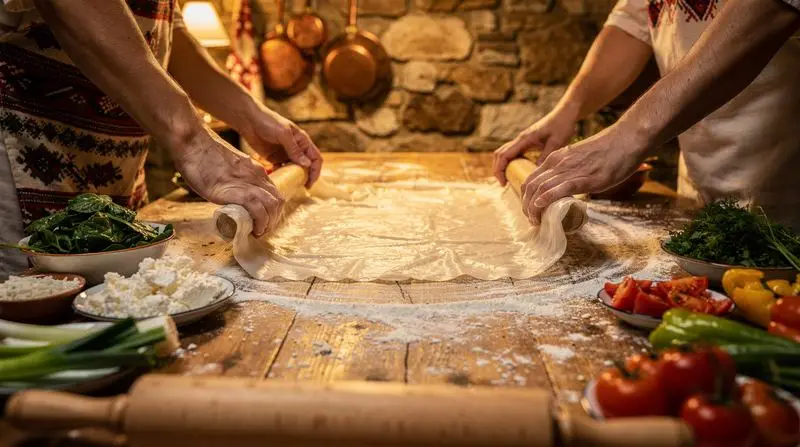
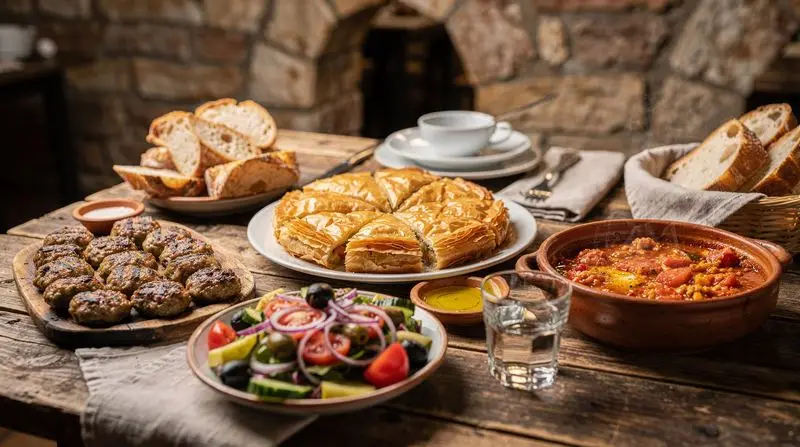
Byrek: The essential Albanian street food. Flaky filo pastry filled most commonly with spinach and feta-style cheese (byrek me spinaq), or with ground meat (byrek me mish). Baked fresh throughout the morning, best eaten hot from the tray. Available at every bakery in the country and costs EUR 0.50-1.50 per piece.
Tave kosi: The national dish. Lamb (sometimes chicken) baked slowly in a clay pot with rice, eggs, and a yogurt sauce that sets into a golden-crusted custard. Rich, deeply savoury, and unlike anything in neighbouring cuisines. A restaurant portion costs EUR 5-9.
Fergese Tirane: A Tirana speciality — a clay-pot dish of roasted peppers, tomatoes, and cottage cheese, bubbling in the oven and served directly to the table. Vegetarian and intensely flavoured. Costs EUR 3-5 in traditional restaurants.
Qofte: Grilled lamb or beef meatballs, seasoned simply with herbs and salt, served with bread and salad. The foundation of Albanian grill culture, found at every qebaptore from Shkodra to Saranda. A portion costs EUR 3-6.
Sufllaqe: The Albanian version of the doner or gyros — grilled meat in flatbread, with vegetables and yogurt sauce. Albania’s primary fast food, found at small roadside spots throughout the country. Costs EUR 1.50-3.
Raki: The Albanian spirit, distilled from grapes or mulberries, typically around 40% ABV. Served as both a welcome drink and a digestif. Homemade raki varies enormously in quality.
Taverna peshku: Fish restaurants near the coast. Grilled sea bass, sea bream, and squid served simply with olive oil and lemon. Albanian coastal fish is exceptional quality at very reasonable prices — a full grilled fish dinner at a Riviera restaurant costs EUR 10-18 per person.
Food Tours in Tirana
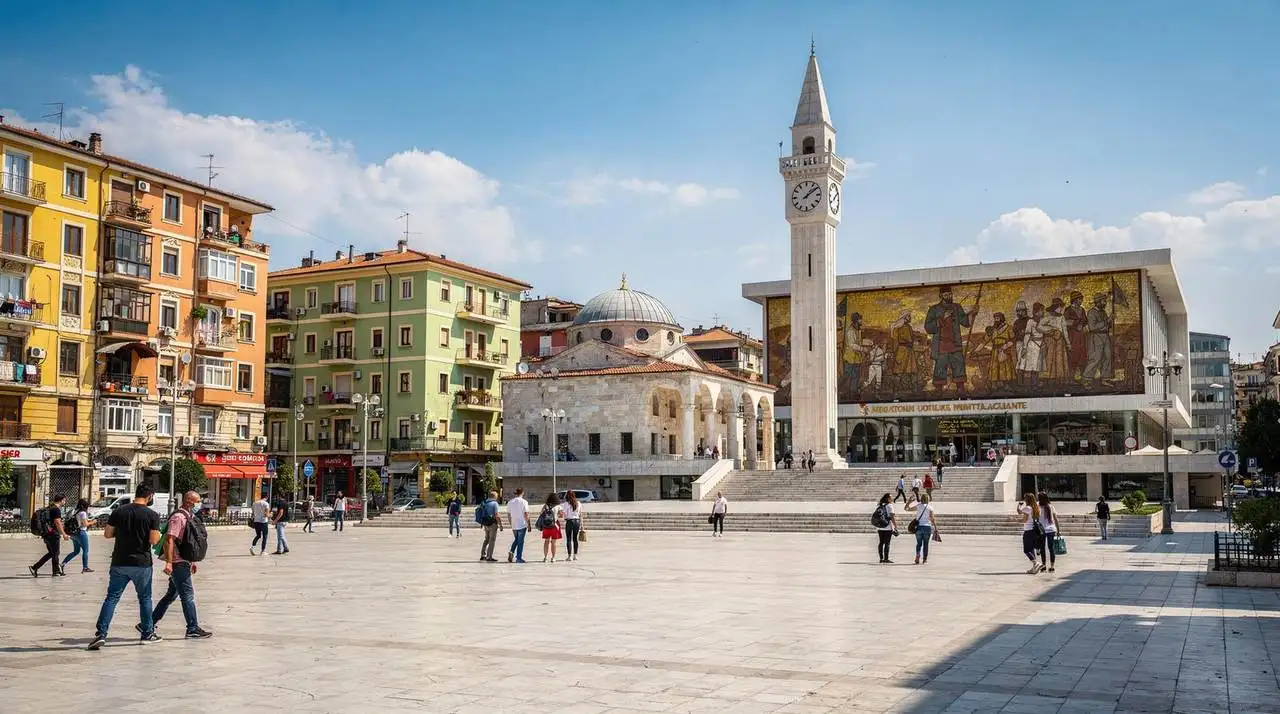
Tirana has the widest range of food tour options in the country, reflecting its status as the culinary capital and the city with the most international visitors. The epicentre of any Tirana food experience is the Pazari i Ri (New Bazaar) — a beautifully renovated market complex in the city centre that brings together traditional food vendors, specialty producers, wine and raki merchants, cheese sellers, and fresh produce stalls under a covered arcade.
This Tirana city food tour with meals included takes small groups through the Pazari i Ri and several other key food locations, covering byrek, tave kosi, fergese, local wines, and raki over a three to four hour walk. Meals are included in the price, making this effectively lunch (or a substantial mid-morning eating session). The small group format — typically 6-10 people — allows for genuine conversation with the guide and access to establishments that larger groups could not use. Cost approximately EUR 35-55 per person.
This Tirana traditional food cooking class takes the food experience further by teaching participants to make the dishes rather than only eating them — a natural progression from a food tour and an excellent way to bring Albanian food culture home. The class begins with a market visit and teaches three or four dishes over three hours.
What to Expect on a Tirana Food Tour
Most Tirana food tours run in the morning or early afternoon, when the market is at its most active and bakeries are producing fresh byrek. Duration is typically three to four hours, covering five to eight tasting stops.
Common stops include:
- A traditional bakery for fresh byrek (often from the wood-fired ovens in the old bazaar area)
- A cheese shop specialising in local varieties (kashkaval, djath i bardhe, gjize)
- An olive oil producer or specialist selling Albanian oils from the Berat or Vlora region
- A traditional Albanian restaurant for tave kosi or fergese
- A raki tasting session with a small producer
- The Pazari i Ri market for seasonal produce and atmosphere
- A coffee stop (because Albanian espresso culture is both serious and delicious)
- A sweet shop for baklava, sheqerpare, and kadaif
Dress comfortably and arrive hungry. The amount of food consumed on a full food tour is substantial — treat it as your main meal of the day.
The Pazari i Ri: Tirana’s Food Heart
The Pazari i Ri (New Bazaar) deserves its own description as the best single food destination in Albania. Renovated in 2017, the market occupies an Ottoman-era complex of wooden-roofed pavilions in central Tirana, with dedicated sections for every category of Albanian food production.
The cheese section alone — with vendors selling white cheese from the mountains, kashkaval aged in caves, gjize fresh from that morning, and specialist cheeses from specific regions — is worth an hour of exploration. The olive oil vendors will let you taste from open bottles; the Albanian oils from the Berat and Vlora regions are significantly better than most mass-produced Mediterranean equivalents.
The honey section is extraordinary: mountain honeys from Permet, beeswax products, and specialist varieties including the chestnut honey from the southern mountains. Buying honey here to take home — an easy checked-luggage item — is one of the best food souvenirs from Albania.
The raki vendors in the bazaar represent Albania’s most varied spirit culture: grape raki from the Riviera regions, mulberry raki from the south, plum varieties from the north, and the premium single-estate rakis that have begun to attract international attention.
Food Tours in Durres
Durres is Albania’s main port city and one of the oldest continuously inhabited urban settlements in the Balkans. Its food culture reflects this layered history: the Ottoman influence visible in the grilled meat tradition and the sweet shops, the Italian influence (from the pre-WWII period) visible in the pasta and pizza culture, and the communist-era legacy visible in the canteen-style restaurants that still operate alongside modern establishments.
This Durres traditional Albanian food tour covers the city’s historic markets, seafood restaurants along the waterfront, and traditional food producers — a perspective on Albanian culinary culture that is distinctly different from Tirana despite the short distance between the two cities. Cost approximately EUR 30-45 per person.
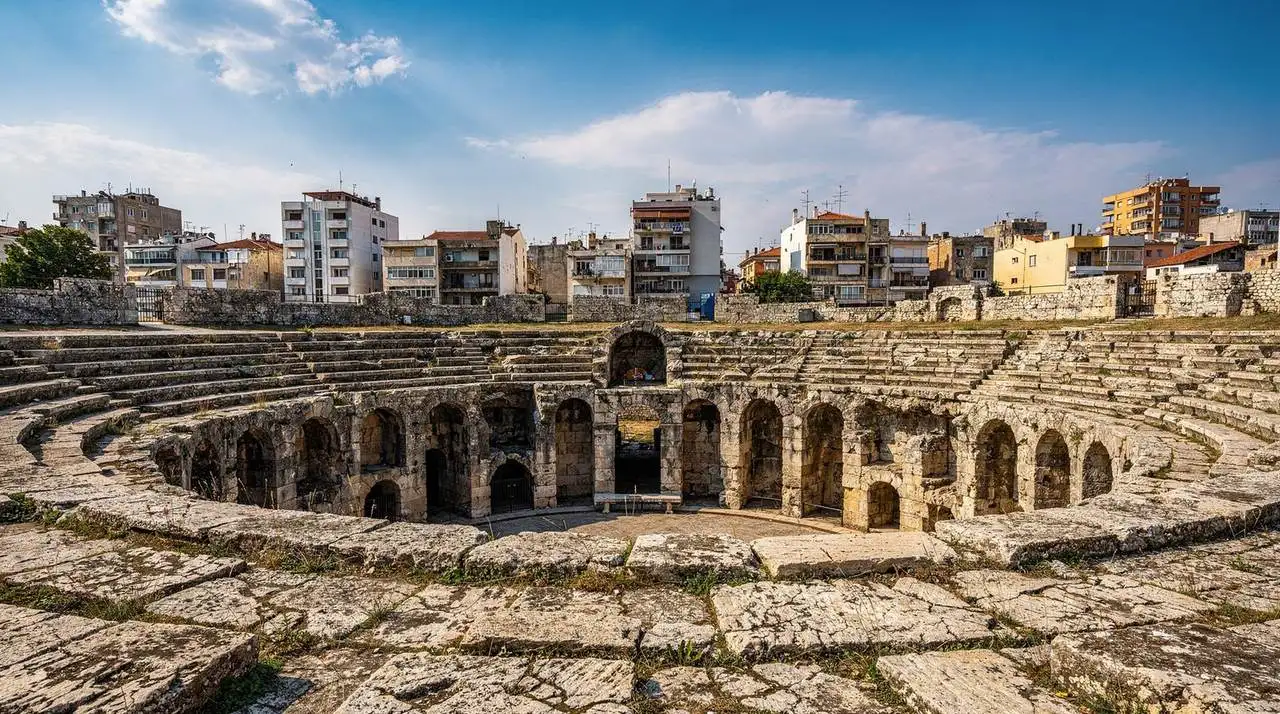
Durres is just 40 minutes west of Tirana by road or rail, making it an easy half-day addition to any Tirana visit. Its Roman amphitheatre, Byzantine mosaics, and long sandy beach make the city worth a full day even before considering its food options. The seafront fish restaurants near the harbour serve some of the freshest sea bass, red mullet, and squid in the country, brought in from the overnight catch. A full grilled fish dinner here costs EUR 10-15 per person.
Food in Berat and the South
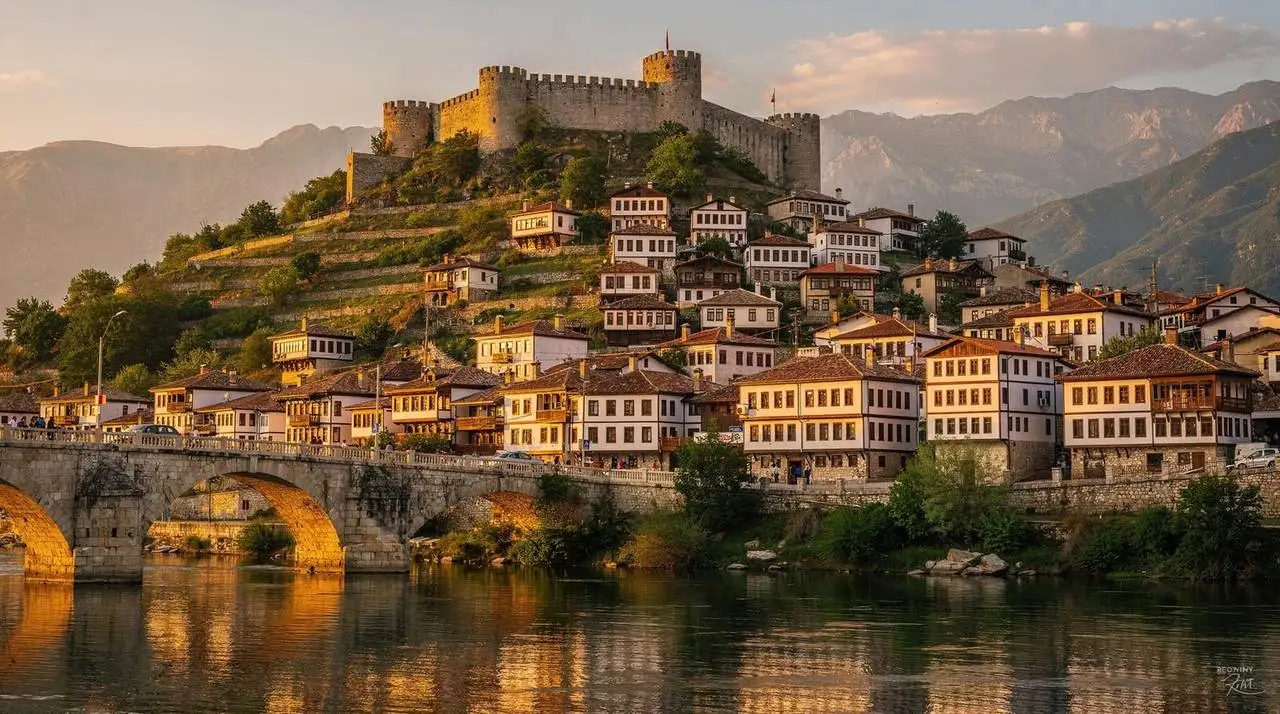
While Berat does not currently have the range of organised food tours that Tirana offers, the city’s traditional restaurant scene — particularly the establishments inside and around the old town — serves some of the finest Albanian food in the country. The UNESCO-listed setting adds atmosphere to meals that would be excellent regardless of surroundings.
The local specialities in Berat include:
Tave dheu: A Berat variant of the tave dish, using beef or chicken with a distinctive local spice blend. The Berat version is generally richer and more intensely seasoned than the Tirana version.
Patlexhan: Roasted aubergine dishes, often combined with yogurt or tomatoes, reflecting the Mediterranean vegetable abundance of the central lowlands.
Local wines: Berat is within the main wine-producing region of Albania. The Cobo winery near the city is one of the best producers of Shesh i Bardhe (a local white variety) in the country. See our wine tasting guide for winery visits that pair with a Berat food experience.
For hands-on food experiences in Berat, cooking classes provide an excellent alternative to a guided food walk. The cooking class experience in Berat begins with ingredient sourcing in the local market — olive oil from the valley, white cheese from mountain herds, local lamb — and ends with a meal in the Ottoman guesthouse setting.
Albanian Food Markets Worth Visiting
Beyond organised food tours, Albania’s markets (tregu or pazar) are worth visiting independently for the experience of food culture at its most unmediated:
Pazari i Ri, Tirana: The most beautiful and best-curated food market in Albania. Open daily from early morning to early afternoon. Excellent for buying local products (olive oil, raki, cheese, honey, dried herbs) to take home.
Old Bazaar, Kruja: A traditional bazaar selling crafts, antiques, and local food products including saffron, dried herbs, and raki. Best experienced before 1pm when vendors are most active.
Old Bazaar, Gjirokastra: Smaller than Kruja’s but beautifully atmospheric. Local products include walnut-based sweets (a Gjirokastra speciality) and the local cotton products.
Fish Market, Vlora: The morning fish market near the harbour is the best place to understand the scale and variety of the Albanian catch. By 8am, vendors are selling sea bream, bass, red mullet, squid, and whatever else has come off the boats overnight. Visit before 9am for the fullest selection.
Market in Permet: The weekly market in Permet is one of the most authentically local markets in the south — a gathering of regional producers selling honey, raki, mountain cheese, and seasonal produce. The honey from Permet valley beekeepers is among the finest in Albania.
Albanian Sweet Culture
A food tour of any Albanian city would be incomplete without addressing the sweet culture. Ottoman-influenced pastries and sweets remain central to Albanian hospitality:
Baklava: Nut-and-honey pastry in many regional varieties. Albanian baklava is generally less sweet than Turkish versions, with more walnut than pistachio. The Berat and Gjirokastra versions differ in the nut-to-syrup ratio — ask your guide to explain the local logic.
Kadaif: Shredded wheat pastry in syrup, served warm. Found at specialist sweet shops (llokumaxhi) throughout the country. Best eaten freshly made in the morning.
Sheqerpare: A soft, crumbly semolina biscuit soaked in sugar syrup. Albanian in origin and still widely made at home for celebrations.
Revani: Semolina cake in syrup, often flavoured with lemon. Common at both sweet shops and traditional restaurants.
The best places to explore Albanian sweets are the traditional pastry shops (furra or pasticeri) near the main bazaars in Tirana, Berat, and Gjirokastra. Many food tours include a sweets stop as the final destination — combining the savoury elements of byrek and tave kosi with a sweet ending provides a complete picture of the Albanian meal structure.
Wine and Raki Alongside Food Tours
No food tour of Albania is complete without engaging with the drink culture. Tirana and Durres both offer dedicated wine and raki tasting experiences that complement the food tour:
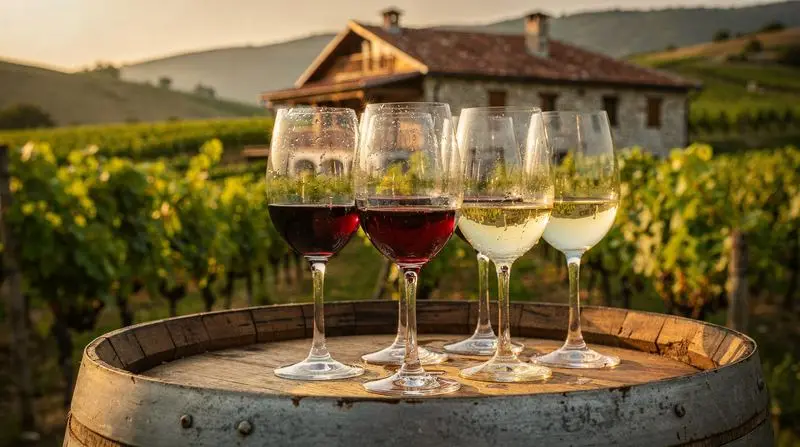
This Durres wine tasting tour introduces the indigenous Albanian grape varieties — Kallmet (a tannic red from the north), Shesh i Zi (a medium-bodied red), and Shesh i Bardhe (a fresh, aromatic white) — in a structured tasting session that pairs wines with local food.
Understanding Albanian wine makes eating in the country significantly more rewarding. The pairing of a chilled Shesh i Bardhe with grilled sea bream on the Riviera, or a glass of Kallmet with a winter tave kosi in Shkodra, is as natural and correct as matching Verdicchio with seafood or Barolo with braised meat.
Practical Tips for Food Tours
Dietary requirements: Most Albanian food tours can accommodate vegetarians. Vegan options are more limited due to the dairy-heavy nature of Albanian cuisine, but most tour operators will make arrangements if notified in advance. Nut allergies should be declared clearly, as nut-based sweets are common.
Pace: Albanian food culture runs on a slower timeline than northern European cafe culture. A food tour moves at conversation pace — plan to be out for three to five hours and enjoy the process rather than rushing between stops.
Booking: Tirana tours can often be booked same-day in off-peak season. In July and August, book at least two to three days ahead.
Combining with other tours: A morning food tour combines well with a communist history or city walking tour in the afternoon, giving a full day of Tirana exploration. The walking tours guide covers the best city walk options to pair with your food experience. The Tirana communist Albania tour and a food tour represent the ideal one-two of the capital’s cultural offerings.
Bringing home: Albanian olive oil, raki, local wines, mountain honey, and dried herbs all make excellent gifts. The food tour guide can often direct you to the best producers and shops for each product. Raki can be packed in checked luggage; be aware of EU/UK customs limits on bringing liquids from non-EU Albania. Honey and dried herbs are unrestricted.
Cost: Food tours in Tirana and Durres cost EUR 30-55 per person, typically with all food tastings and meals included. This represents excellent value — the food alone would cost EUR 20-30 if purchased individually.
Final Thoughts
Food is one of the most direct routes into understanding a country, and Albanian food — underappreciated and under-known — rewards the curious visitor who takes the time to eat properly. A guided food tour removes the uncertainty and opens the experience; everything you taste subsequently makes more sense with the context that a good guide provides.
Whether you spend a half-day in the Pazari i Ri or several days eating your way through the regions, Albanian food will leave you wishing you had started eating it sooner. The combination of cooking classes, wine tasting, food tours, and market visits creates a comprehensive food education that few European destinations can match at these price points.
See the Albania travel budget guide for overall cost planning, and the best experiences in Albania guide for where food fits into the broader Albanian travel picture.
Regional Food Tour Comparison
| Region | Best for | Typical cost | Format |
|---|---|---|---|
| Tirana | Widest variety, New Bazaar depth | EUR 35-55 | Guided walk, small group |
| Durres | Seafood, layered history | EUR 30-45 | Guided walk |
| Berat | Traditional restaurants, wine pairing | EUR 5-15 (meals) | Self-guided + cooking class |
Frequently Asked Questions About Food Tours in Albania
Are food tours worth it in Albania?
Yes, particularly in Tirana where the food scene has evolved rapidly and a knowledgeable guide dramatically accelerates your understanding of Albanian cuisine. Food tours introduce you to producers, hidden spots in the Pazari i Ri (New Bazaar), and dishes you would likely miss on your own. The small-group format also makes them good for meeting fellow travelers.
What do you eat on a Tirana food tour?
A typical Tirana food tour covers byrek (filo pastry with cheese or meat), qofte (grilled meatballs), fresh cheeses, local olives and olive oil, taverna-style meze, traditional sweets like baklava and kadaif, and tastings of local wine and raki. The New Bazaar market is usually a central stop for seeing Albanian produce and street food culture.
How much does a food tour cost in Albania?
Guided food tours in Tirana typically cost EUR 35-65 per person for a 3-4 hour experience including all tastings. Self-guided food walks cost almost nothing beyond what you eat. Private food tours or full-day regional food experiences cost EUR 80-150 per person. Given the quantity of food included, food tours represent excellent value compared to eating the same amount independently.