Why Tirana Surprises Every Visitor
Albania’s capital was once one of Europe’s most closed cities — a grey, heavily policed urban grid where private cars were banned and color was treated as subversion. Today Tirana has transformed into one of the Balkans’ most energetic, optimistic, and genuinely fun cities to explore. Pastel-painted apartment blocks, open-air terraces, world-class museums buried in Cold War bunkers, and a restaurant scene that punches well above its weight — Tirana delivers far more than the headlines about Albania typically suggest.
The city sits in a broad valley surrounded by forested hills, with Mount Dajti rising dramatically to the east. Its population of roughly 800,000 makes it by far Albania’s largest urban center, and the gap between Tirana and the rest of the country — in infrastructure, dining, entertainment, and ambition — is striking. Give it two or three days and you will leave genuinely impressed.
For those planning a longer trip, Tirana connects effortlessly with the rest of the country: you can reach Berat in two hours, Shkodra in ninety minutes, or base yourself here for day trips from Tirana to half a dozen unmissable sites. Our 14-day Albania itinerary uses Tirana as both the starting and finishing point for a complete cross-country journey.
| Where | Central Albania, valley below Mount Dajti |
| Cost | Around EUR 30-60/day |
| Time needed | 2-3 days |
| Getting there | Tirana Airport (TIA), 17km northwest |
| Best time | April-June, September-October |
A Brief History of the Capital
Tirana was declared Albania’s capital in 1920, a relatively late appointment for a city that had existed as a modest Ottoman market town. Under King Zog in the 1920s and 1930s, Italian architects gave the center its elegant Fascist-era boulevards and the broad Skanderbeg Square. After World War II, Enver Hoxha’s communist regime turned the city into a showcase of Stalinist ambition, filling it with concrete blocks, monuments, and the extraordinary network of bunkers that dot the entire country.
The post-1990 period brought chaotic change — the Pyramid of Tirana, built as Hoxha’s mausoleum, became a playground for thrill-seeking teenagers who slid down its concrete flanks. Mayor Edi Rama (later Prime Minister) made a splash in the early 2000s by painting the city’s drab buildings in bold, abstract colors, a move that became internationally recognized as an act of urban optimism. Today that spirit of reinvention continues, most visibly in the ongoing transformation of the Pyramid into a youth and tech hub.
Things to Do
Skanderbeg Square
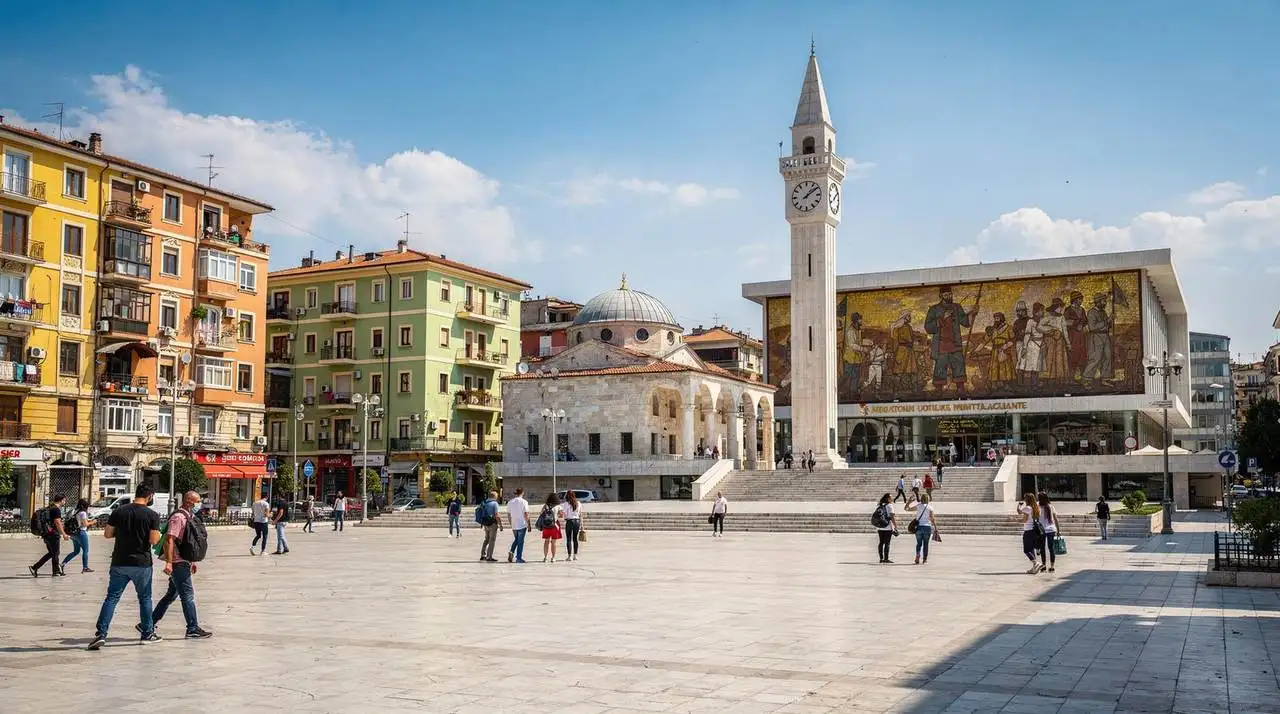
The vast central square is the logical starting point for any Tirana visit. It was redesigned and pedestrianized between 2017 and 2021, replacing asphalt with travertine stone and making it genuinely pleasant to walk across. The equestrian statue of Gjergj Kastrioti Skanderbeg — the 15th-century Albanian national hero who resisted Ottoman expansion — anchors the space. Around the square you will find the National History Museum with its enormous socialist-realist mosaic facade, the Et’hem Bey Mosque (one of the few religious buildings that survived Hoxha’s 1967 decree banning all religion), the Clock Tower, and the elegant Palace of Culture.
The square is most atmospheric in the early evening, when Albanian families gather for the traditional xhiro (evening promenade), vendors sell roasted chestnuts or corn on the cob in season, and the lit facades create a genuinely festive atmosphere. Allow at least an hour to explore properly.
Start your Tirana exploration with a guided walking tour to connect the dots between these landmarks and understand the layers of history compressed into a few city blocks. This popular Tirana walking tour covers Skanderbeg Square, Blloku, and the key historical sites with a knowledgeable local guide — typically two to three hours and available daily.
For those who prefer to explore on two wheels, this Tirana bike tour covering scenic highlights, culture, and nature takes small groups through the city’s neighborhoods, parks, and historical districts on bicycle — a refreshing way to cover more ground than a walking tour while staying close to the action.
Bunk’Art 1 and Bunk’Art 2
These two museums are among the most original and affecting in southeastern Europe. Bunk’Art 1 occupies a vast nuclear bunker built into the hillside northeast of the center — a five-story, 106-room complex originally constructed to shelter the communist leadership and 200 officials in the event of nuclear war. It now houses a powerful exhibition on the history of the Albanian communist state and the Ministry of Internal Affairs, with original furnishings, STASI-style surveillance documentation, and haunting personal testimonies.
Practical details: Bunk’Art 1 is open Tuesday to Sunday, 10am to 6pm. Entry is 800 ALL (approximately EUR 8) for adults. The site is located at Rruga Gjin Bue Shpata, northeast of the center — a taxi is the easiest way to reach it.
Bunk’Art 2 is smaller but equally powerful, located right in the city center beneath Skanderbeg Square. It focuses specifically on the terror of the communist secret police (Sigurimi), documenting the persecution, imprisonment, and execution of tens of thousands of Albanians. Entry is 500 ALL. Open the same hours as Bunk’Art 1.
Neither museum is easy viewing, but both are essential for understanding the country you are traveling through. The most comprehensive way to experience both museums and the broader communist legacy is on a dedicated Tirana communist Albania tour including Bunk’Art, which combines the museums with a guided narrative of how the regime shaped every aspect of city life.
The House of Leaves
Opened in 2017 in a former secret police (Sigurimi) surveillance villa, the House of Leaves is Tirana’s most unsettling attraction. The building served as a covert listening post and interrogation center during the communist era, and the museum preserves original equipment — wiretapping apparatus, hidden camera systems, dark rooms for developing surveillance photographs — alongside documentation of how the regime monitored its own citizens. The name refers to the way the building was disguised: covered in ivy and vegetation so it blended innocuously into the residential street.
Hours and entry: Open Tuesday to Sunday, 9am to 5pm. Entry is 500 ALL. Located on Rruga Muhamet Gjollesha, walking distance from Blloku. Plan at least 90 minutes here.
The Pyramid
For decades after 1990, the Pyramid — built in 1988 as a museum to Enver Hoxha and briefly used as a NATO headquarters during the Kosovo crisis — sat abandoned and deteriorating in the middle of one of Tirana’s main boulevards. A controversial decision to demolish it was ultimately reversed, and the building has been reimagined as TUMO Tirana, a free digital creative learning center for young people. The exterior retains its iconic brutalist geometry, now adorned with viewing platforms and climbing structures. It is one of the most photographed spots in the city and a remarkable example of how Tirana reinvents its relationship with the communist past rather than erasing it.
Blloku
During the communist era, Blloku (meaning “The Block”) was an exclusive residential enclave reserved for the party elite. Ordinary Albanians were forbidden from entering. Today it is Tirana’s trendiest neighborhood — a dense grid of cafes, bars, restaurants, boutiques, and galleries where the city’s young professional class spends its evenings. Hoxha’s former villa still stands on Rruga Dëshmorët e 4 Shkurtit, slightly eerie in its ordinariness. Walking through Blloku at dusk, drink in hand, is one of the great pleasures of a Tirana visit.
Blloku is also the center of Tirana’s nightlife. For those who want to experience the bar and club scene with local guidance, this Tirana pub crawl hits the best spots in Blloku and beyond — a sociable way to meet other travelers and sample the city’s nightlife without the guesswork.
New Bazaar (Pazari i Ri)
Tirana’s renovated bazaar market, completed in 2016, is a beautifully executed blend of old and new — a covered market square anchored by a traditional Albanian qebaptore (grill restaurant) at one end and surrounded by specialty food vendors, wine shops, cheese stalls, and produce sellers. It is the best place in the city to assemble a picnic, pick up Albanian raki and local olive oil to take home, or simply sit with a coffee and watch the city move. Most stalls open from early morning until early afternoon.
For a deeper dive into Albania’s food culture, the Tirana city food tour with meals included takes small groups through the Pazari i Ri and other key culinary spots, covering byrek, tave kosi, ferges, local wines, and raki in a single afternoon. Our food tours in Albania guide explains what to expect and how to choose the right tour.
Dajti Mountain and the Cable Car
Mount Dajti rises to 1,613 meters directly above the city’s eastern edge, and the gondola cable car — the longest in the Balkans at 4.2 kilometers — makes the ascent in around 15 minutes. At the top you will find a national park with walking trails through oak and beech forest, a restaurant with sweeping views over Tirana and the coastal plain beyond, and in winter, occasional light snowfall that brings the city’s families up in droves. It is an excellent half-day escape from the urban heat in summer.
Practical details: The cable car (Dajti Express) operates daily from 9am to 9pm. Return tickets cost approximately 1,400 ALL for adults. The station is on the eastern edge of the city, reachable by taxi in 15 minutes from the center.
This combined Tirana walking tour and Dajti cable car trip pairs the city highlights with the mountain ascent — a well-paced full day that covers the best of both. For the complete mountain experience including the Bunk’Art 1 bunker on the way, this Dajti cable car and Bunk’Art 1 combination tour is an efficient way to combine both must-see attractions.
National History Museum
The largest museum in Albania occupies the north side of Skanderbeg Square and covers Albanian history from Illyrian antiquity through the end of communism. The collection of archaeological finds from sites across the country — coins, jewelry, mosaics, amphorae — is genuinely impressive even if the display is occasionally dated. The communist-era section at the top of the building is particularly interesting for visitors who have also seen Bunk’Art.
Hours and entry: Open Tuesday to Sunday, 10am to 5pm. Entry is 700 ALL for adults. Allow two hours for a thorough visit.
Grand Park and the Artificial Lake
South of the center, Tirana’s Grand Park wraps around a large artificial lake built during the communist era. It is a green, relaxed space popular with joggers, cyclists, families with paddleboats, and anyone wanting to escape the city noise. The lakeside promenade is pleasant for an evening stroll. The nearby Zoological Garden is small but visited by families with children.
Explore by Segway
For a fun and efficient way to cover the city’s main landmarks, this Tirana Segway tour with a local guide covers history and culture at a pace that allows you to see far more than a walking tour in the same time. A novel way to experience the capital, particularly for visitors who have limited time.
Jeep Safari and Winery Day Trips
For visitors wanting active excursions beyond the city, the surrounding countryside offers excellent options. The mountains north of Tirana are accessible on a Bovilla Jeep Safari in 4WD — a half-day off-road adventure through the Bovilla reservoir area and mountain villages north of the capital, ideal for those who want an adrenaline injection between urban sightseeing days.
For wine enthusiasts, the Lunder Winery guided tour with wine tasting visits one of Albania’s finest boutique wineries just outside Tirana, covering the production process and tasting local varieties — a perfect half-day for those interested in wine tasting in Albania.
Food and Drink
Tirana’s restaurant scene has exploded in the past decade. Albanian cuisine centers on grilled meats, fresh vegetables, dairy products, and slow-cooked dishes that reflect Ottoman, Balkan, and Mediterranean influences simultaneously.
Byrek is the essential Albanian street food — a flaky filo pastry filled with spinach and cheese, or meat, baked fresh throughout the morning. Find it at any bakery around the Pazari i Ri for 100-200 ALL. Tave kosi — lamb baked with rice in a yogurt and egg sauce — is the national dish and appears on menus across the city. Ferges Tirane is a Tirana specialty: a rich, bubbling stew of peppers, tomatoes, and cottage cheese, served in a clay dish.
The murals and the surviving bunkers are scattered across districts that lie a couple of kilometres apart, too far to walk between comfortably and too close to justify a car: a Tirana segway tour with street art and bunkers covers that awkward middle distance.
Recommended Restaurants
Era Restaurant (Rruga Ismail Qemali, Blloku) — One of Tirana’s most consistently excellent traditional Albanian restaurants. Tave kosi and fergese prepared properly, in a comfortable setting popular with both locals and visitors. Budget EUR 10-20 per person.
Mullixhiu (Blv Gjergj Fishta) — The most celebrated restaurant in Albania, run by chef Bledar Kola who trained at Noma in Copenhagen. Modern Albanian cuisine using heritage ingredients — offal, wild herbs, preserved vegetables — in a tasting menu format. Reservations essential. Budget EUR 40-60 per person.
Petro e Mare (near Skanderbeg Square) — Good-value traditional Albanian cooking in a central location. Known for excellent baked lamb and byrek. Budget EUR 8-15 per person.
Pazari i Ri food stalls — The best quick lunch option in the city. Fresh grill stalls, cheese and olive vendors, and small bakeries around the market square. Budget EUR 3-6 per person.
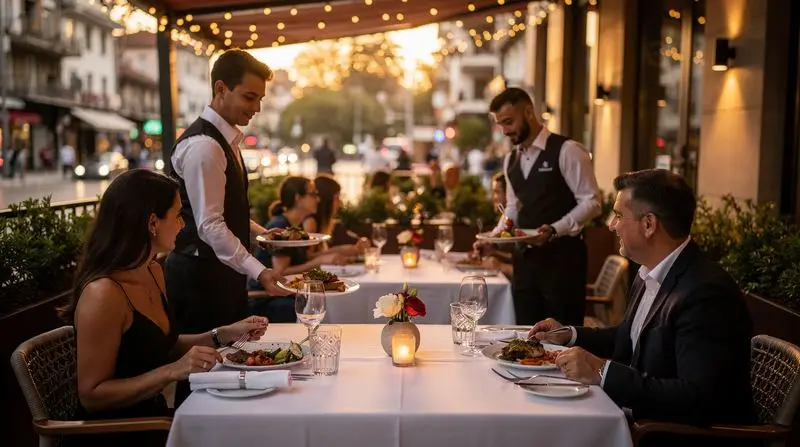
For fine dining, the restaurant scene around Blloku offers everything from modern Albanian tasting menus to Italian, Japanese, and international options. Tirana’s cafe culture is legendary among Albanians — the city reportedly has one of the highest concentrations of cafes per capita in Europe. Coffee is serious business: Albanian espresso is strong, inexpensive (around 100 Lek / EUR 1), and consumed multiple times daily.
Evening drinking culture in Blloku runs late, with bars open until 2-3am on weekends and a genuine club scene that has attracted international attention. Our nightlife in Albania guide covers the best venues in detail.
If you want to learn to cook Albanian food yourself, this Tirana traditional cooking class teaches participants to make byrek, tave kosi, and other classics in a home kitchen setting — an excellent half-day activity. More options are covered in our cooking classes in Albania guide.
Where to Stay
Tirana has accommodation across all price points, from international chain hotels to family-run guesthouses. The main areas to stay are:
Blloku and surroundings — the most convenient base for restaurants, bars, and nightlife. Mid-range and boutique hotels dominate here. Expect to pay EUR 60-120 per night for a comfortable double room.
Near Skanderbeg Square — central location for sightseeing, with a mix of business hotels and older properties. Some of the city’s most elegant hotels are on the boulevards radiating from the square.
Outer neighborhoods — budget guesthouses and apartments are available further from the center, generally requiring a short taxi or ride-share to reach the main sights.
For detailed accommodation recommendations, our where to stay in Tirana guide covers budget to luxury options with current pricing. Budget travelers should also check our Albania travel budget guide for realistic cost expectations.
Day Trips from Tirana
Tirana’s central location makes it an excellent base for day trips. The most popular are:
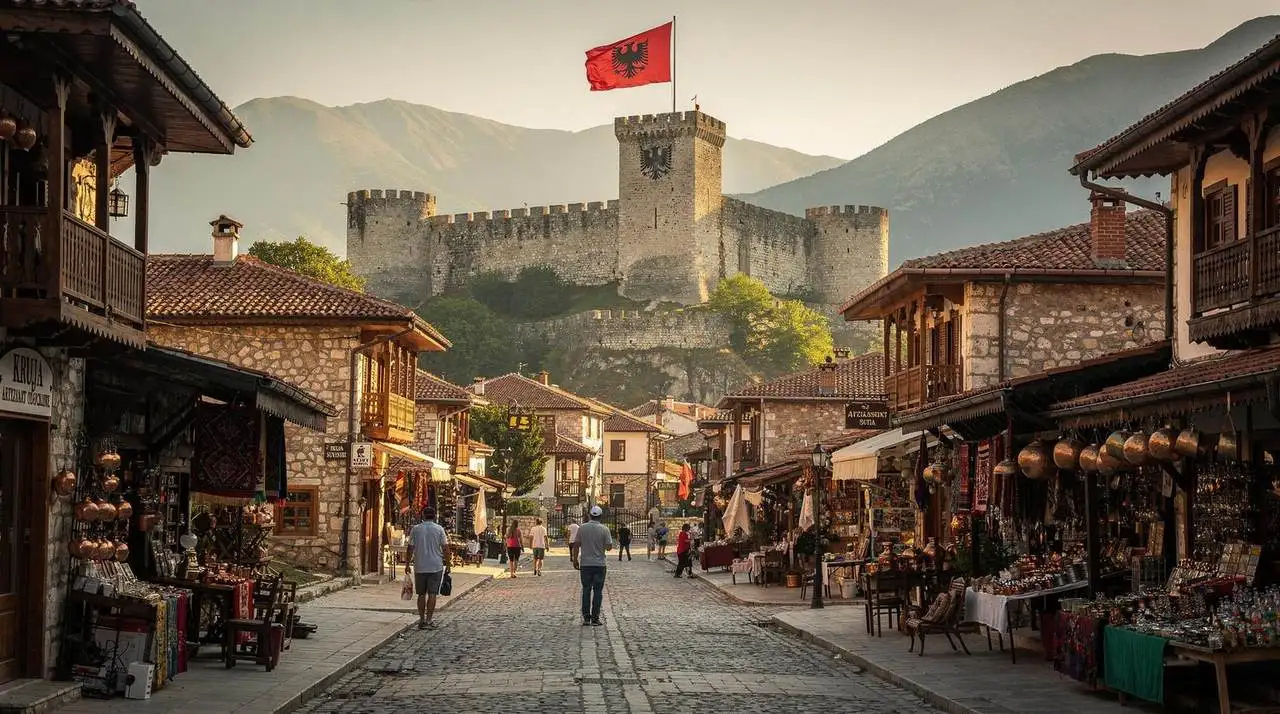
Kruja — a 45-minute drive north, Kruja is Albania’s most important historical town, perched on a rocky hill with a castle, a bazaar selling traditional crafts, and the Skanderbeg Museum. It is the most visited day trip from Tirana and easily combined with a half-day in the capital.
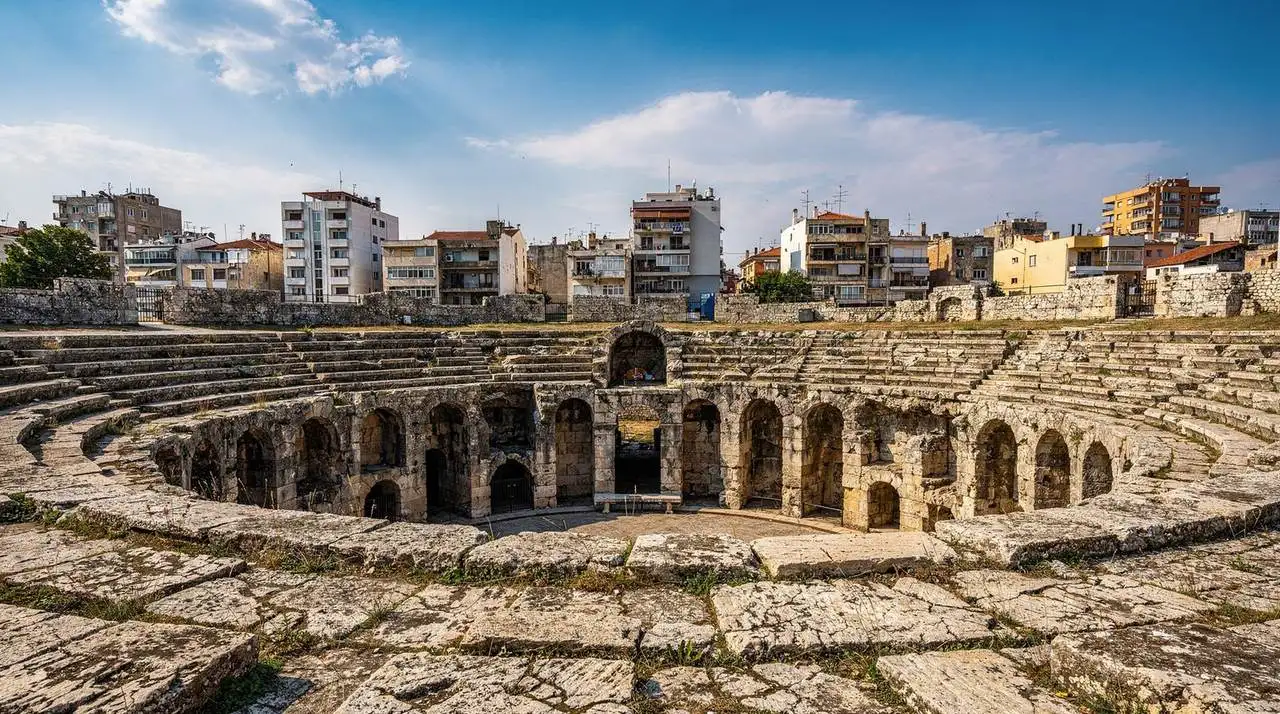
Durres — just 40 minutes west, Durres is Albania’s main port city and one of the oldest continuously inhabited settlements in the Balkans. Its Roman amphitheater (one of the largest in southeastern Europe), Byzantine mosaics, and long sandy beach make it a rewarding full-day excursion or an easy afternoon trip.
Berat — two hours south, the UNESCO city of a thousand windows is one of Albania’s most beautiful destinations. Easily done as a long day trip from Tirana; our day trips from Tirana guide covers transport options and timings in detail.
Shkodra and the North — two hours north, Shkodra sits at the edge of the Albanian Alps and serves as the gateway to Theth, Valbona, and the Koman Lake ferry.
Apollonia — about two hours south near Fier, the Greek and Roman city of Apollonia is one of Albania’s most impressive ancient sites and pairs well with Berat for a full-day history circuit. See the UNESCO sites in Albania guide for the full picture.
Suggested Tirana Itinerary
| Day | Focus |
|---|---|
| Day 1 | Skanderbeg Square, National History Museum, New Bazaar lunch, evening xhiro and Blloku dinner |
| Day 2 | Bunk’Art 1 or 2, House of Leaves, Pyramid, afternoon Dajti cable car |
| Day 3 (optional) | Day trip to Kruja or Durres, or a wine/jeep excursion outside the city |
This pacing works whether you are using Tirana purely as a gateway city or building a longer capital stay before heading to Berat or the coast. Travelers short on time can compress Days 1 and 2 into a single intensive day by prioritising Skanderbeg Square, one Bunk’Art museum, and Blloku in the evening.
Neighborhoods to Know
| Area | Character | Best for |
|---|---|---|
| Blloku | Trendy, dense with bars and restaurants | Nightlife, dining, boutique hotels |
| Skanderbeg Square area | Central, monumental, business hotels | First-time sightseeing, central location |
| Outer neighborhoods | Residential, budget-friendly | Longer stays, tighter budgets |
How to Get to Tirana
By Air: Tirana International Airport Nene Tereza (TIA) is located 17 km northwest of the city center. It is connected to most major European cities by direct flights, with Wizz Air, Ryanair, Air Albania, and numerous legacy carriers all operating routes. A taxi to the center costs around EUR 20-25 (negotiate before boarding or use the official taxi rank). The Rinas Express bus (Line 4) runs to the center for a fraction of the cost, departing from just outside arrivals.
By Bus: Tirana is connected to neighboring countries and all major Albanian cities by furgon (shared minibus) and long-distance coach. The main bus terminal for northern and international routes is in the Kombinat area; southern routes depart from near the train station.
By Car: Driving in Tirana is chaotic but manageable for experienced urban drivers. Parking in the center is scarce; most visitors use the city on foot and by taxi/ride-share. For information on renting a car for onward travel from Tirana, our car rental in Albania guide covers the main agencies, prices, and road conditions.
Our full how to get to Albania guide covers all entry options including ferry from Italy and overland routes from neighboring countries.
Best Time to Visit Tirana
Tirana is a year-round city, but the best conditions for sightseeing are in spring (April-June) and early autumn (September-October). Temperatures are warm but not oppressive (20-28°C), the light is excellent, and cafe culture spills onto every pavement. Summer (July-August) is hot — often 35°C-plus — and the city empties somewhat as residents head to the coast, but hotels are cheaper and the pace is different. Winter is mild by northern European standards (5-12°C) with occasional rain, but Tirana remains very much alive year-round.
Practical Tips
Currency: Albania uses the Albanian Lek (ALL). EUR is widely accepted in tourist contexts but you will get better value paying in Lek. ATMs are plentiful throughout the center and Blloku. Full currency and payment guidance is in our Albania safety and travel guide.
Getting around: The city center is walkable. Taxis and ride-share apps (Bolt is widely used) are cheap and reliable — a crosstown taxi rarely exceeds EUR 3-5. The bus network covers the outer neighborhoods.
Safety: Tirana is a very safe city for travelers. The main hazards are traffic (pedestrian crossings are treated as suggestions by many drivers) and petty theft in crowded areas.
Language: Albanian is the official language. English is widely spoken among younger Albanians and in the tourism industry. Italian is also commonly understood.
Tipping: A 10% tip is appreciated but not obligatory in restaurants. Round up taxi fares.
Wi-Fi and SIM: Free Wi-Fi is available in almost all cafes and hotels. Local SIM cards (Eagle Mobile, Vodafone Albania, ONE Telecommunications) are cheap and widely available at the airport and phone shops throughout the city.
Best restaurants guide: Before your trip, read our best restaurants in Tirana guide for current recommendations across all budgets and cuisines.
Tirana is also the natural starting point for most Albanian itineraries — whether you are heading south to the Albanian Riviera via our 7 days south itinerary, north to Theth and the Alps, or exploring the country’s UNESCO heritage sites. The full-country 14-day Albania itinerary begins and ends here, making Tirana both the gateway and the natural conclusion to any serious Albanian adventure.
Frequently Asked Questions About Tirana
Is Tirana worth visiting?
Absolutely. Tirana consistently surprises visitors who expect a post-communist grey city and find instead a vibrant, colourful capital packed with world-class museums, a buzzing cafe and restaurant scene, and a genuine energy that few Balkan capitals match. The Bunk’Art museums alone are among the most original cultural experiences in southeastern Europe, and the city is the ideal base for day trips to Kruja, Berat, and Durres.
How many days do you need in Tirana?
Two to three days is the sweet spot for most visitors. Two full days covers Skanderbeg Square, the Pyramid, both Bunk’Art museums, the House of Leaves, Blloku, and the New Bazaar with time to enjoy the cafe culture. A third day works well for a day trip to Kruja or Durres, or for exploring the Dajti Mountain cable car.
Is Tirana safe?
Tirana is a very safe city for tourists. Violent crime against visitors is extremely rare. The main hazards are aggressive traffic (pedestrians do not always have priority at crossings) and occasional petty theft in crowded markets or bus terminals. Standard urban common sense applies. The city center and Blloku are well-lit and busy until late.
What is the best area to stay in Tirana?
Blloku and the streets surrounding it are the best base for most visitors — closest to the best restaurants, cafes, and nightlife, with walking distance to most sights. The area around Skanderbeg Square suits those who prioritize central sightseeing access. Avoid the outer suburbs for a first visit, as they require taxis or ride-shares to reach the main attractions.
Is Tirana expensive?
Tirana is one of the most affordable capital cities in Europe. A coffee costs around EUR 1, a filling lunch at a local restaurant runs EUR 5-8, and a comfortable double hotel room in Blloku typically costs EUR 60-90 per night. Budget travelers spending EUR 30-40 per day live comfortably; mid-range travelers spending EUR 60-80 eat and drink extremely well.
Can you walk around Tirana?
Yes — the city center is very walkable. Skanderbeg Square, Blloku, the Pyramid, the New Bazaar, and the Grand Park are all connected by pleasant pedestrianized streets and boulevards. The Bunk’Art 1 museum requires a taxi (around EUR 3-4 from the center), and Mount Dajti requires the cable car, but everything else of interest is easily covered on foot.
What food should I try in Tirana?
Start with byrek — the flaky pastry filled with spinach and cheese available at any bakery for under EUR 2. Try tave kosi (lamb baked in yogurt and egg sauce), Tirana’s own ferges (a bubbling stew of peppers and cottage cheese), and qofte (spiced grilled meat rolls). For the adventurous, Mullixhiu restaurant near Blloku serves modern Albanian cuisine using heritage ingredients — one of the most exciting tasting menus in the Balkans at a fraction of Western European prices.