Albania’s Stone City
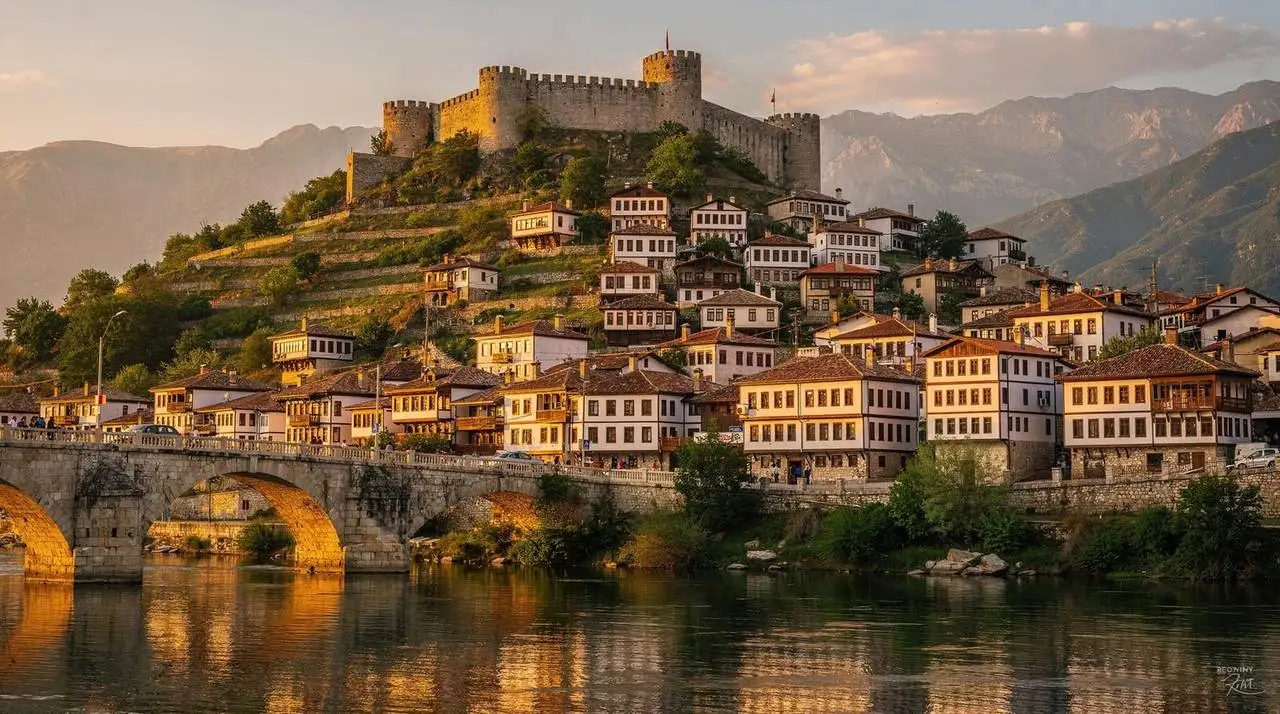
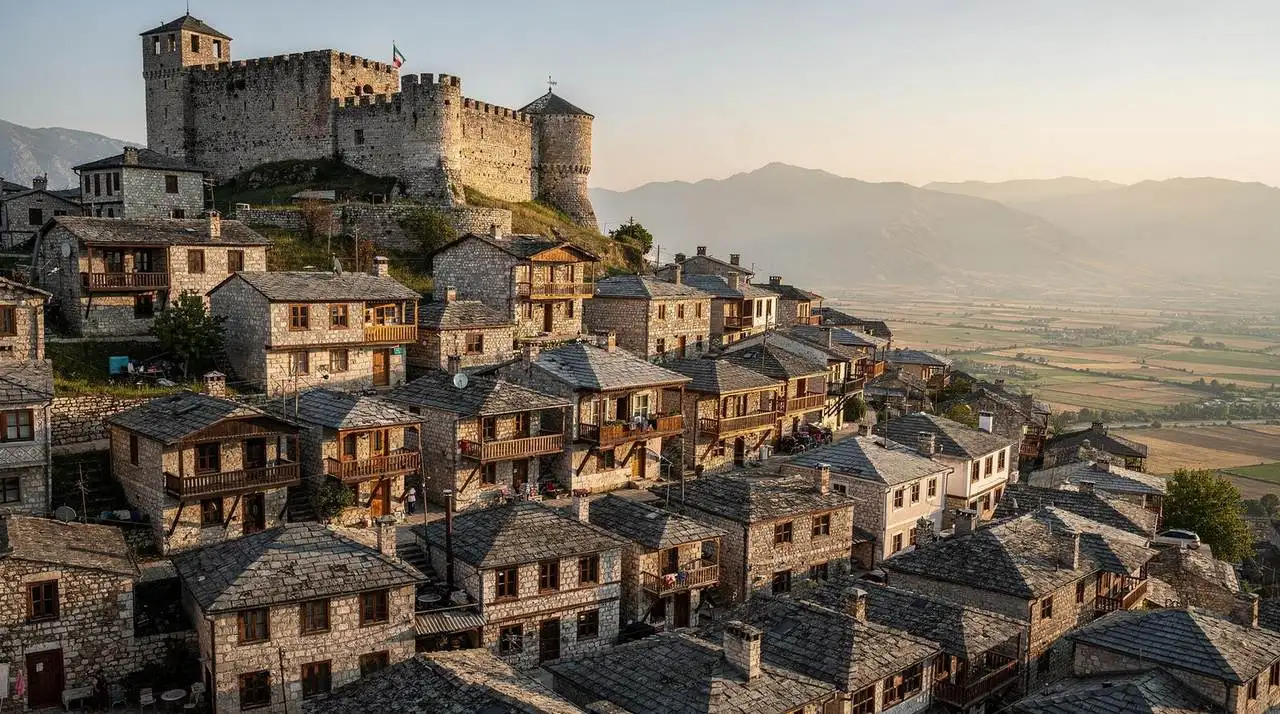
If Berat is the city of a thousand windows, Gjirokastra is the city of stone. Everything here — the castle, the tower houses, the bazaar, the streets themselves — is built from the same grey-blue limestone pulled from the surrounding mountains, giving the city a brooding, almost monochromatic grandeur that is entirely unlike anywhere else in Albania or the wider Balkans. UNESCO awarded it World Heritage status in 2005, recognizing a townscape that has remained remarkably intact since the Ottoman period.
Gjirokastra sits in a steep valley in southern Albania, the Drinos River threading through the valley floor below while the city climbs the mountainside above it, crowned by an enormous castle whose walls seem to grow organically from the rock. The city is approximately 230 km south of Tirana and 60 km north of Saranda, which makes it a natural stop on the southern Albania circuit. Writer Ismail Kadare — Albania’s most internationally celebrated novelist, and a Nobel Prize contender — was born here, and the city’s atmosphere of compressed history and dramatic landscape runs through his fiction.
Together with Berat, Gjirokastra forms one of the two UNESCO-listed Albanian Ottoman cities that define the UNESCO sites in Albania circuit. Most visitors to southern Albania include both in a single itinerary — our 7 days south Albania itinerary routes them efficiently alongside the Albanian Riviera and Saranda.
| Where | Southern Albania, ~230 km from Tirana, 60 km from Saranda |
| Getting there | Furgon from Tirana (~3hrs, EUR 5-7) or Saranda (~1hr, EUR 2-3) |
| Time needed | 1-2 days |
| Castle entry | Around 700 ALL |
| Best base | A guesthouse in a converted tower house, old bazaar area |
A City Shaped by Stone and History
Gjirokastra has been inhabited since at least the 4th century BC. The Byzantines fortified the hilltop, and the city developed as an important regional center under the Byzantine and later Epirote administrations. The Ottomans captured it in the early 15th century, and it was under their rule — and particularly under the local Ottoman governor Ali Pasha of Ioannina in the late 18th and early 19th centuries — that the distinctive tower houses (kulla) were built, as wealthy families competed in the height and fortification of their residences.
The city was a center of Albanian nationalist activity during the National Awakening movement, and several prominent figures of that period were born here. Under communism, Gjirokastra was Enver Hoxha’s hometown — a fact that both helped and complicated its preservation, as the regime invested in restoration while also suppressing the city’s cultural and religious life. The Soviet-era development is visible in the valley below the old town, a concrete counterpoint to the stone city above.
Things to Do
Gjirokastra Castle
The castle is the dominant feature of Gjirokastra — an enormous fortification occupying the highest point of the ridge, its walls stretching over 600 meters in length. It is one of the largest castles in the Balkans and one of the best-preserved in Albania, though “preserved” is somewhat relative: the castle complex encompasses structures from multiple periods, from Byzantine foundations to Ottoman additions to a Cold War-era military museum.
Inside the castle walls you will find the National Arms Museum — a large and somewhat eccentric collection of weapons, military equipment, and artillery pieces, including a US Air Force reconnaissance plane forced down during the Cold War. The fortress also contains an outdoor stage used during the National Folklore Festival, cisterns, towers, and watchtowers offering extraordinary views over the Drinos valley and toward the Greek border mountains.
Practical details: Open daily 9am to 5pm (7pm in summer). Entry is 700 ALL for adults. The castle is reached by a steep cobbled road from the bazaar — allow 15 minutes of uphill walking. The view from the castle walls at sunset, when the stone city turns golden below and the mountains darken, is one of the finest sights in Albania.
This Gjirokastra city guided tour covers the castle, the bazaar, and the historic tower houses with a local guide who brings the layers of history to life — strongly recommended for first-time visitors. Budget two to three hours for the castle complex alone.
The Old Bazaar (Pazari i Vjetër)
The old bazaar runs along a cobbled lane below the castle, lined with stone-arched shops selling souvenirs, traditional crafts, local honey and preserves, and handwoven textiles. It is small but atmospheric — the arched stone facades of the shops date to the Ottoman period, and some of the craftspeople working here maintain traditional techniques. The bazaar is the social center of the old town, particularly in the early evening when locals come down from the tower houses for coffee and conversation.
Look for the traditional qeleshe (white Albanian felt cap), handmade wool socks, and locally produced rakija to take home. Silver filigree jewelry in the Albanian tradition is also found at several shops. Prices are generally reasonable and negotiation on larger items is normal.
For a truly immersive bazaar experience, this old bazaar tour in traditional costumes provides an entertaining and photogenic way to explore the commercial heart of the old city — donning traditional Albanian dress and experiencing the bazaar as it once was. An unusual and memorable activity.
Ethnographic Museum (Zekate House)
Among the finest examples of the Gjirokastra tower house (kulla) style, the Zekate House was built in 1811 and is now preserved as an ethnographic museum. The building is extraordinary: three stories of stone walls, an asymmetric silhouette, and interiors that preserve original carved wooden ceilings, painted walls, traditional furniture, and the characteristic defensive features (gun loops, reinforced doors) that reflected the insecurity of the era.
Practical details: Entry approximately 300 ALL. Open Tuesday to Sunday, 9am to 5pm. The views from the upper stories over the city and valley are superb. Allow 45 minutes for a thorough visit.
Other tower houses in the old town include the Skenduli House, also open to visitors, which is privately maintained by the family and offers a more intimate glimpse into how wealthy Albanian families lived during the Ottoman period.
Ismail Kadare’s Birthplace
The novelist’s childhood home in the old bazaar area is marked and open to visitors (hours can be irregular — confirm at your guesthouse). For readers of Kadare’s work — particularly “Chronicle in Stone,” his autobiographical novel set in a city clearly modeled on Gjirokastra during the Italian and German occupations of World War II — visiting the house and the streets he describes is a deeply affecting literary pilgrimage. Even for non-readers, the house provides insight into how Gjirokastra’s atmosphere shaped one of the 20th century’s great novelists.
Antigonea Archaeological Site
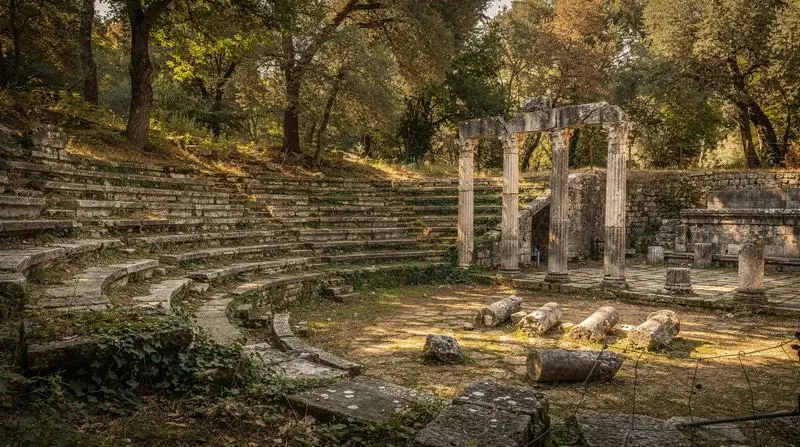
Around 5 km from Gjirokastra, the ruins of Antigonea are one of Albania’s most significant Hellenistic archaeological sites, founded in the 3rd century BC by the Epirote king Pyrrhus (of “Pyrrhic victory” fame). The site occupies a hilltop with sweeping views and includes remnants of city walls, temples, public buildings, and a well-preserved agora. It is undervisited and atmospheric, with the ruins half-reclaimed by wildflowers in spring. Easily combined with a Gjirokastra visit by rental car or taxi (around 15 minutes from the city center, entry approximately 500 ALL).
Zagoria 4x4 Safari
For a completely different perspective on the Gjirokastra region, the mountains and villages northeast of the city conceal dramatic gorges, remote communities, and landscapes inaccessible by ordinary road. This Zagoria 4x4 safari tour explores the mountains, rivers, and remote villages east of Gjirokastra in off-road vehicles — a high-energy half-day that shows a completely different side of southern Albania.
Blue Eye Day Trip
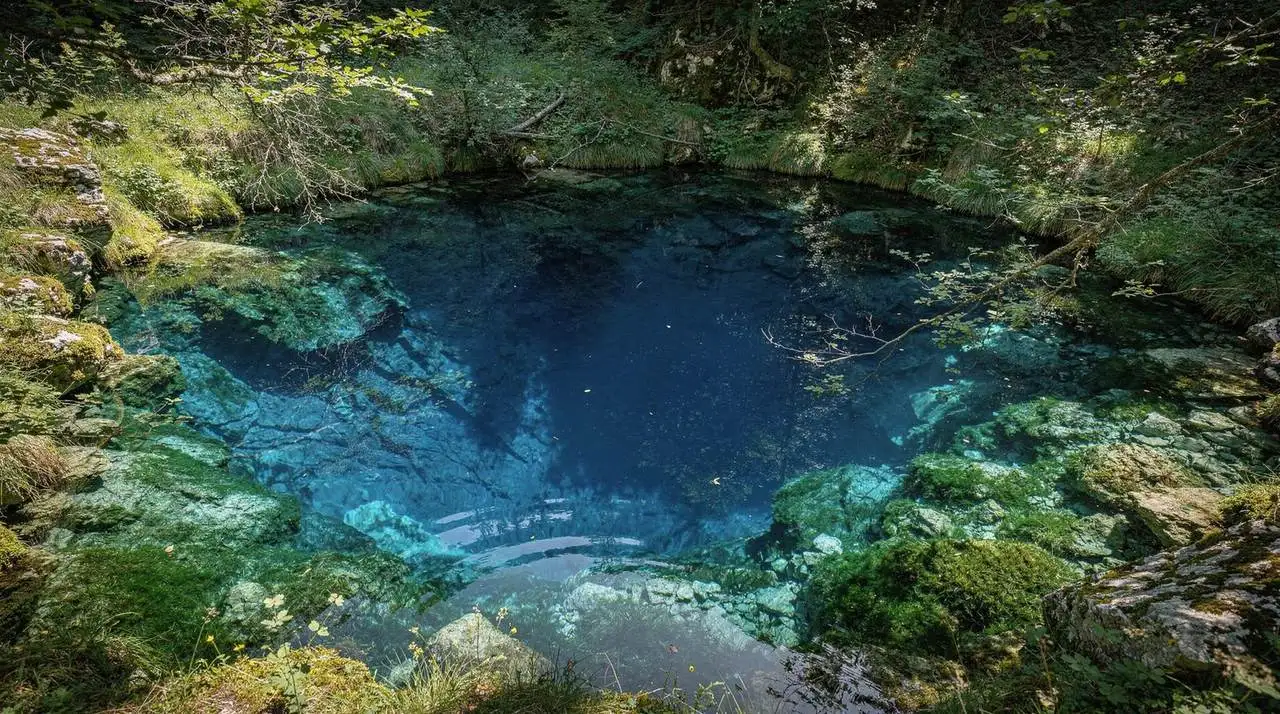
The Blue Eye spring — Syri i Kaltër — is one of Albania’s most celebrated natural attractions, located about 25 km west of Gjirokastra. The spring wells up from an underground river with extraordinary force, creating a circular pool of brilliant turquoise-blue water surrounded by beech forest. The colour is caused by the depth of the water (at least 50 meters, possibly much more — no diver has reached the bottom) and the reflection of light through it. A wooden boardwalk and viewing platforms make it accessible, and a short trail through the forest provides context.
The Blue Eye is one of the most-photographed spots in Albania and well worth the detour. Combine it with a visit to the nearby village of Labova e Kryqit, which has a Byzantine church. From Saranda, it is equally accessible — see the Saranda page for combined itinerary options.
Tepelena Day Trip
North of Gjirokastra on the road to Berat, the town of Tepelena sits at the confluence of the Vjosa and Drinos rivers and is associated with Ali Pasha of Ioannina — the Ottoman strongman who controlled much of southern Albania and northern Greece in the early 19th century. Lord Byron visited Ali Pasha’s court here in 1809 and described the encounter in “Childe Harold’s Pilgrimage.”
This tour combining Gjirokastra and Tepelena links both historically significant sites in a single trip, ideal for visitors interested in the region’s Ottoman past.
Multi-City UNESCO Tour
For travelers who want to cover Albania’s two UNESCO cities in a single organized trip, this guided tour connecting Tirana, Berat, and Gjirokastra’s UNESCO cities provides an efficient multi-city circuit with transport and guiding included — ideal for those with limited time who want to cover all three major cultural destinations in a single organized excursion.
Where to Eat
Gjirokastra’s cuisine reflects the city’s position at the heart of southern Albanian food culture. The cooking here is notably influenced by the Greek minority that has long been present in the region, resulting in some dishes — particularly preparations of lamb, eggplant, and fresh cheeses — that bridge Albanian and Epirote Greek traditions.
Kujtimi Restaurant (old bazaar area) — The best-known traditional restaurant in Gjirokastra, specializing in local dishes including the famous tavë e Gjirokastrës. Excellent service and atmospheric stone-arched interior. Budget EUR 10-16 per person.
Fantazia Restaurant (near the bazaar) — Good-value traditional food with a rooftop terrace offering castle views. Popular with both locals and visitors. Budget EUR 8-14 per person.
Guesthouse dinners — As in Berat, the best and most authentic eating in Gjirokastra is often at guesthouse restaurants. Most old-town guesthouses serve home-cooked dinners of local dishes for EUR 8-12 per person. Always ask in advance.
Tavë e Gjirokastrës is the city’s signature dish: lamb slow-cooked with onions and eggs in a clay pot, producing a tender, richly flavored result very different from the Berat version. Petulla (fried dough, often served with honey or feta) is a common breakfast. Local sheep’s cheese, walnuts, and the excellent local olive oil are found at every table.
For an immersive cooking experience, this Gjirokastra traditional Albanian vegetarian cooking class focuses on plant-based Albanian recipes — spinach byrek, stuffed peppers, walnut-based dishes — in a local kitchen. A wonderful way to spend a morning before exploring the castle. See our cooking classes in Albania guide for more options.
Local raki from the Gjirokastra region is noteworthy — the mulberry and grape varieties are particularly good. Ask at guesthouses for locally produced bottles.
Where to Stay
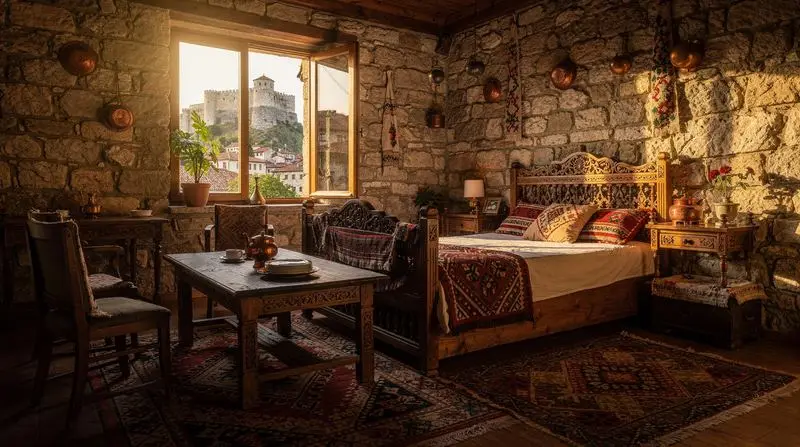
Accommodation in Gjirokastra centers on guesthouses converted from historic tower houses in the old bazaar area, which offer the most atmospheric base. Prices are reasonable: expect EUR 25-50 for a double room in a comfortable guesthouse with breakfast.
Staying in the old town puts you within walking distance of all the main sights and allows you to experience the city in the early morning and evening, when the tour groups have departed and the atmosphere is at its most authentic.
Guesthouses in the bazaar area are the best choice for most visitors — family-run, often with rooftop terraces and views of the castle, and typically including an excellent home-cooked breakfast.
Modern hotels in the lower town offer more facilities (parking, larger rooms) at slightly higher prices, but require a short drive or steep walk to reach the old town.
Full recommendations are in our where to stay in Gjirokastra guide.
How to Get to Gjirokastra
From Tirana: The journey south takes approximately three hours by furgon or private car, via the SH7 highway through Elbasan or the main southern route via Fier and Tepelena. Furgons depart from Tirana’s southern bus station several times daily, with the first departure typically around 7am. Cost approximately EUR 5-7 one way.
From Saranda: Gjirokastra is 60 km north of Saranda — roughly one hour by shared furgon (cost around EUR 2-3) or private car. This is the most common direction of approach for travelers coming from the Albanian Riviera. Multiple furgons make this connection throughout the morning.
From Berat: Two to three hours north, connected by the Tepelena road through the Vjosa valley. No direct public transport; connections require changing in Tepelena or Fier. By rental car the scenic gorge route through Tepelena is highly recommended.
By car: Gjirokastra sits on the SH75 road and is clearly signposted from both north and south. Parking in the lower town is easy; the old town is pedestrianized. See our car rental in Albania guide for agency recommendations.
Best Time to Visit
Gjirokastra is best visited from April through October. Spring and autumn are ideal — mild temperatures, clear skies, and manageable crowds. Summer is warm (25-32°C in the valley) but the stone of the old town retains heat, so morning and evening visits to the castle are far more pleasant than the midday hours. The city hosts the National Folklore Festival approximately every five years (next edition circa 2027-28) — if the timing aligns, it is unmissable, with the castle filling with traditional music, dance, and costume from across Albania and the diaspora.
Winter visits are cold (the valley is subject to frost) but have a certain austere beauty, with the stone city grey against grey skies and virtually no other visitors. Some guesthouses close November through March.
Practical Tips
Combine with Saranda: Most visitors to Gjirokastra combine it with a few days on the Riviera. Saranda is just one hour south and offers a complete contrast — beach, sea, and the ancient ruins of Butrint. The logical southern Albania route runs Tirana — Berat — Gjirokastra — Saranda.
Stone streets: Even more so than Berat, Gjirokastra’s old town streets are steep, cobbled, and uneven. Proper walking shoes are not optional — they are essential. Budget for a full day of uphill walking.
Local guides: The city’s history is sufficiently complex — Illyrian, Byzantine, Ottoman, nationalist, communist — that a local guide is highly worthwhile. Arrange through your guesthouse or pre-book a tour.
Photography: The best light on the castle falls in the afternoon; the best views of the tower houses are from the castle walls above. Early morning in the bazaar, before the tour groups arrive, offers the most atmospheric street photography.
Day trip from Saranda: Gjirokastra makes an excellent base for a day trip to the Blue Eye spring. Combine the two as part of a southern Albania day — spring in the morning (arrive before the tour groups at 10am), then Gjirokastra for the afternoon and evening. Our day trips from Saranda guide covers the logistics in detail.
Safety: Gjirokastra is a very safe destination. The main hazard is the stone streets — take care walking down steep sections in wet weather, as the limestone becomes extremely slippery.
Gjirokastra’s combination of UNESCO heritage, dramatic landscape, excellent food, and genuine living culture makes it one of the most rewarding destinations in Albania. Our UNESCO sites in Albania guide provides wider context for both this city and Berat, while the Albanian Riviera road trip itinerary shows how to combine Gjirokastra with the coast in a single week-long journey.
Gjirokastra vs Berat at a Glance
| Gjirokastra | Berat | |
|---|---|---|
| Character | Dark stone, austere, fortress-dominated | White facades, luminous, riverside |
| UNESCO since | 2005 | 2008 |
| Signature sight | The 600m castle and tower houses | The castle village and Mangalem quarter |
| Best for | Ottoman military history, Kadare fans | Photography, riverside evenings |
| Day trip nearby | Blue Eye spring | Osum Canyon |
Rather than choosing one, the standard southern circuit visits both — see the Albanian Riviera road trip itinerary for a routing that fits Tirana, Berat, Gjirokastra and the coast into a single week.
The Zagoria Villages
Northeast of Gjirokastra, the Zagoria region is a cluster of stone villages scattered across a mountainous plateau, largely bypassed by the standard Riviera-focused itinerary. These villages share Gjirokastra’s stone-built architecture but on a smaller, more rural scale — tower houses, stone churches, and terraced fields worked by a dwindling but still-present population.
Many Zagoria villages emptied out during the emigration waves of the 1990s and 2000s, and some now stand largely abandoned outside the summer months when diaspora families return. Visiting requires a rental car or an organised 4x4 trip, as public transport does not serve the area. The reward is a genuinely quiet, undeveloped side of southern Albania that contrasts sharply with the guesthouses and tour groups of the old town — worth half a day for travelers with their own transport and an appetite for the region’s less-visited corners.
Frequently Asked Questions About Gjirokastra
Is Gjirokastra worth visiting?
Gjirokastra is one of the most architecturally distinctive cities in the Balkans and absolutely worth visiting. The entire old town — castle, tower houses, cobbled bazaar — is built from the same grey-blue limestone, giving it a brooding, monochromatic grandeur unlike anywhere else in Albania. UNESCO recognised this with World Heritage status in 2005. For travellers interested in Ottoman history, Albanian culture, or simply extraordinary urban landscapes, Gjirokastra delivers consistently.
How do you get to Gjirokastra?
From Tirana, furgons depart from the southern bus station several times daily and take approximately three hours (cost around EUR 5-7). From Saranda, which is only 60 km south, furgons run frequently throughout the morning and take about one hour (cost EUR 2-3). By rental car, Gjirokastra is straightforward via the SH75 from either direction and is well-signposted.
Is Gjirokastra better than Berat?
The two cities are very different rather than directly comparable. Berat is more photogenic from a distance, its white Ottoman facades cascading down a hillside. Gjirokastra is built from dark stone and feels more austere and fortress-like — the enormous castle dominates everything. Most visitors who see both agree they complement rather than compete with each other. The standard southern circuit visits both, and choosing between them for a single stop is genuinely difficult.
How long to spend in Gjirokastra?
One full day is sufficient to see the castle, the old bazaar, the Ethnographic Museum (Zekate House), and Kadare’s birthplace. Two days is better — it allows a more leisurely exploration of the castle in the morning light, a proper lunch break in the old bazaar, and a half-day trip to the Blue Eye spring or the Antigonea archaeological site. An overnight stay is essential for experiencing the city in the early morning before tour groups arrive.
Can you combine Gjirokastra with the Blue Eye?
Yes, and this is the most popular and logical combination. The Blue Eye spring is only 25 km west of Gjirokastra — about 30 minutes by car. The recommended sequence is visiting the Blue Eye in the morning when it is least crowded and the light is best, then driving to Gjirokastra for the afternoon and evening. Several organised day trips from Saranda cover both sites efficiently in a single day.
Is Gjirokastra safe for tourists?
Gjirokastra is very safe. The main hazard is the terrain — the cobbled limestone streets in the old town become extremely slippery in wet weather, and some sections are steep enough to require careful footing. Take your time on descents after rain. Beyond that, Gjirokastra is a relaxed and welcoming city where visitors are a normal part of daily life.
Is Gjirokastra worth an overnight stay or just a day trip?
An overnight stay is strongly recommended. Day-trippers from Saranda typically get around four to five hours in the city, enough for the castle and a walk through the bazaar, but they miss the atmosphere of the old town at dawn and dusk, when tour groups have left and the stone streets belong to residents again. Guesthouses in the bazaar area are affordable — see the where to stay in Gjirokastra guide — making the extra night an easy decision for most itineraries.
What is the Zagoria region near Gjirokastra?
Zagoria is a cluster of stone villages on the mountainous plateau northeast of Gjirokastra, sharing the city’s distinctive architecture on a smaller, rural scale. Many villages emptied during the post-communist emigration waves and are quiet outside summer, when diaspora families return. Visiting requires a rental car or an organised 4x4 tour, as there is no public transport into the area, but it offers a genuinely undeveloped counterpoint to the old town’s tour groups.