Sazan Island and Karaburun: Albania’s Forbidden Coast
For decades, the most dramatic stretch of Albania’s coastline was off-limits to virtually everyone. Sazan Island, sitting at the entrance to the Bay of Vlora, was one of the most strategically fortified places in communist Europe — a military installation so secret and so heavily defended that it appeared on no public maps and was accessible only to authorised military personnel. Karaburun, the rugged peninsula that shelters the bay to the southwest, was similarly closed: a wilderness of limestone cliffs, ancient cave systems, and pristine sea, all sealed behind the logic of Cold War paranoia.
That era ended, and what was revealed when the fences came down is one of the most spectacular marine environments in the entire Mediterranean. The decades of military closure that kept people out also kept out fishing boats, development, and pollution. The waters around Sazan and Karaburun are extraordinarily clear, their sea floors still rich with the biodiversity that the rest of the Mediterranean has largely lost.
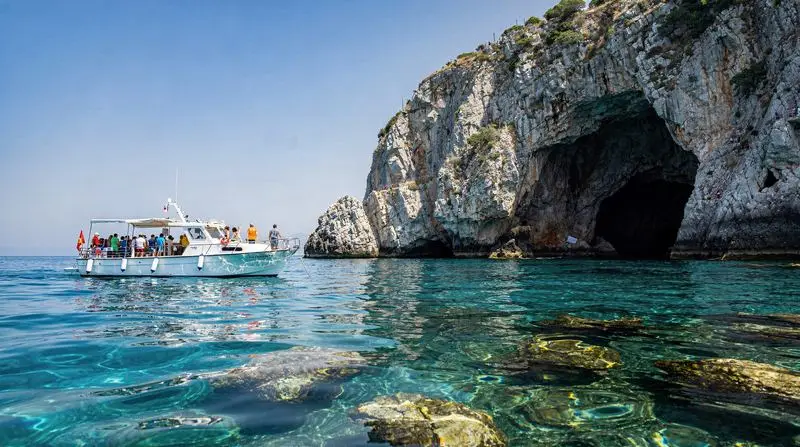
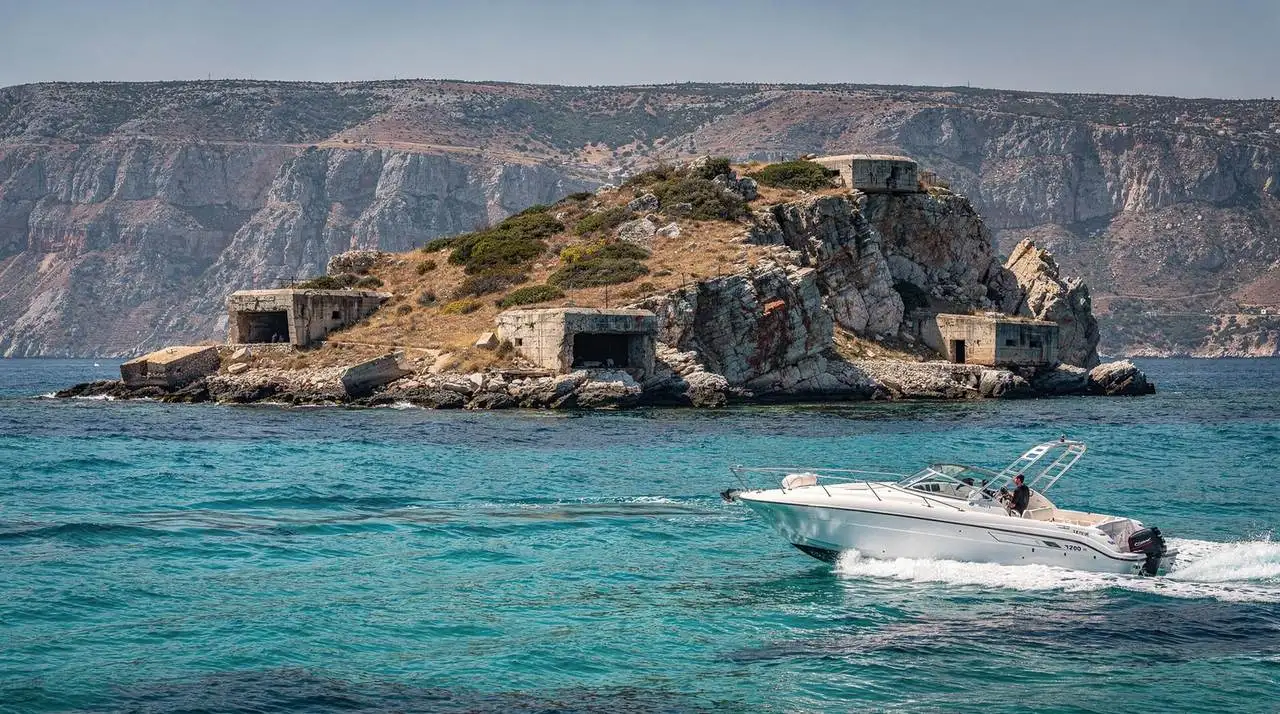
Today, boat tours from Vlora access this coast, taking visitors to sea caves, snorkelling sites, remote beaches, and the haunting ruins of the military installations that once made it a forbidden zone. It is a genuinely unique destination — beautiful, historically layered, and still wild in a way that very few Mediterranean coastlines can claim. Our boat tours Albania guide covers all the main marine excursions around the country; this one is among the finest.
| Where | Bay of Vlora entrance, departs from Vlora port |
| Cost | EUR 30-50/person for a full-day boat tour |
| Time needed | Full day (8-10 hours) |
| Getting there | Boat tour from Vlora harbour, book a day ahead in peak season |
| Best time | June-September; morning departures for calmer seas |
Sazan Island: The Formerly Secret Island
Sazan Island lies approximately 5 kilometres from the tip of the Karaburun Peninsula, at the point where the Bay of Vlora meets the Adriatic. It is a small island — about 5 square kilometres — but its position at the entrance to one of the best natural harbours in the Adriatic made it a strategic prize throughout history.
The ancient Greeks knew Sazan; ancient sources reference the island and its usefulness as a waystation on the Adriatic sailing route. In the 20th century, it became something else entirely. During World War II, both Italian and German forces fortified it. After the communist takeover, the Albanian state turned it into a top-secret military base, housing submarine pens, weapons depots, tunnels, anti-aircraft installations, and at various points nuclear-related storage facilities during the period of Soviet military cooperation in the 1950s.
The tunnels drilled into the island’s limestone — hundreds of metres of corridors, chambers, and submarine docking facilities — represent an extraordinary feat of military construction. When tours access the island, walking through these spaces is deeply atmospheric: the Cold War, made concrete and now slowly being reclaimed by vegetation and rust. The scale of what was built here — largely by military conscripts working in isolation — is sobering.
The island’s ecology, protected by decades of restricted access, is also remarkable. The coastline hosts nesting seabirds in numbers rarely seen elsewhere on the Albanian coast, and the underwater world around the island is among the richest in the Adriatic. The absence of commercial fishing for fifty years created a marine reserve before marine reserves were a concept.
Civilian Access to Sazan
Access to Sazan Island requires a military permit, which tour operators handle as part of the booking process. Not all boat tours include the island — some focus only on the Karaburun coast — so confirm the itinerary before booking if landing on Sazan is important to you.
This Sazan and Karaburun boat trip from Vlora is the classic full-day tour that combines both the island and the peninsula coast, with stops for swimming, snorkelling, and exploration of the military installations. It is the most comprehensive way to experience everything this area offers.
This small-group speedboat tour to Sazan and Karaburun offers a faster, more flexible approach that covers more ground and suits those who prefer a smaller group experience. The speedboat format allows for more flexibility in the itinerary and faster transit between sites.
Karaburun Peninsula: Wild Coast, Ancient Caves
While Sazan draws attention for its history, the Karaburun Peninsula is the natural centrepiece of the area. Karaburun is a narrow finger of land extending some 30 kilometres south of Vlora, its western side facing open Adriatic waters and its eastern side sheltering within the Bay of Vlora. The interior is nearly uninhabited — a rugged karst landscape of limestone peaks, ancient footpaths, and wild herbs.
The coast of Karaburun is spectacular. Sheer white and grey limestone cliffs rise directly from the sea in places, punctuated by coves accessible only by water, submerged caves, and arches carved by millennia of wave action. The clarity of the water here — in protected areas that saw no fishing for decades — is exceptional. Snorkellers frequently encounter depths that look five metres but are actually twenty.
The Haxhi Ali Cave
The most celebrated feature of the Karaburun coast is the Haxhi Ali cave, a sea cave large enough to navigate by boat. The cave entrance opens from the water into a cathedral-like space, where the combination of refracted light, rock formations, and the surreal experience of floating in a cave creates an impression that few natural wonders match. The water inside glows in blues and greens depending on the light angle, and in the inner chambers, where light does not penetrate, the darkness is complete.
The cave has been known to local fishermen and sailors for centuries — Ali Pasha of Ioannina is said to have used it as a sheltering point for his fleet. Today it is the most visited natural site in the Karaburun-Sazan Marine Protected Area, and for good reason.
This Sazan Island and Haxhi Ali Cave speedboat adventure from Vlora specifically combines the military island and the famous sea cave — two of the most memorable experiences in the entire area in a single focused excursion.
For the full cave exploration experience on the Karaburun coast, this Vlora Blue Cave and Grama Bay full-day speedboat tour covers additional cave systems and the historically significant Grama Bay, where ancient Greek and Roman sailors carved inscriptions into the cliff face — evidence of two thousand years of navigation along this coast.
Snorkelling and Diving
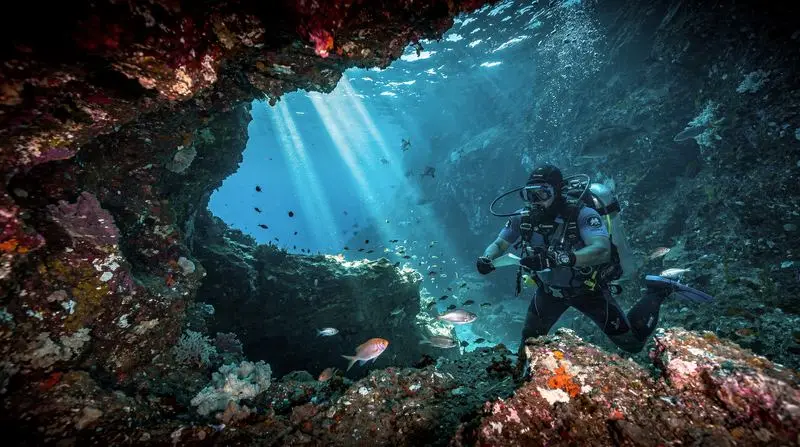
The waters around Karaburun are among the best snorkelling and diving sites in the Adriatic. The combination of protected status, the natural circulation patterns of the bay, and the rocky submarine topography creates exceptional conditions. Sea life is abundant by Mediterranean standards: grouper, octopus, various sea bream, sea urchins, and occasional sightings of dolphins, particularly in the offshore waters west of the peninsula.
The visibility on calm days can reach 30-40 metres in some locations — a transparency that reflects the absence of commercial fishing for decades and the natural flushing of the bay. Divers report encountering amphora fragments from ancient shipwrecks in the deeper sections.
For dedicated diving information, our diving and snorkelling guide for Albania covers the best sites, dive operators in Vlora, and what conditions to expect at different times of year.
Remote Beaches and Grama Bay
The eastern coast of Karaburun, facing the Bay of Vlora, has several small beaches accessible only by boat. Grama Bay is the most historically significant — the cliffs above the waterline preserve carved inscriptions from Greek and Roman sailors who sheltered here over two millennia, documenting the bay as a known landmark and shelter point on the Adriatic sailing route. Some inscriptions date from the 3rd century BC and are still clearly visible.
Standing at Grama Bay and reading inscriptions left by ancient sailors — names, dates, divine invocations scratched into the limestone by people who anchored here when the Roman Empire was still rising — is one of the more extraordinary temporal experiences available to any traveller anywhere.
Boat Tours from Vlora: What to Expect
Tour structure: Most Sazan-Karaburun tours depart from Vlora port in the morning (typically 8-9am) and return in the late afternoon (5-6pm), making for a full day on the water. The itinerary varies by operator but generally includes transit south through the Bay of Vlora, stops at Sazan Island (if included), exploration of the Karaburun coast with sea cave visits, swimming and snorkelling stops, and a return to Vlora in the afternoon.
Tour prices: Budget EUR 30-50 per person for a standard tour, depending on group size, boat type, and whether Sazan Island access is included. Private charter options are available for groups of 8-12 people who want a fully customised itinerary.
What to bring: A full day on the water requires preparation. Bring sunscreen (reapply frequently — reflection off water is intense), a hat, sunglasses, swimwear and a cover-up, towel, and water. Sea sickness medication is worth taking if you have any susceptibility. Snorkelling equipment is usually provided by the tour operator, but bring your own mask and fins if you have them for the best fit.
Booking: Tours depart most days in season (June through September). Book at least a few days in advance in peak season, as popular tours sell out. Morning bookings are particularly sought after as sea conditions are generally calmer before afternoon winds develop.
Where to Eat Near Vlora Port
Most Sazan-Karaburun tours include a simple lunch on board or at a remote beach. For pre- or post-tour meals in Vlora:
Taverna Lungomare (Vlora seafront promenade) — The most consistently recommended seafood restaurant in Vlora, with excellent fresh fish from Adriatic fishermen. The grilled sea bass and octopus salad are reliably excellent. Budget EUR 10-18 per person.
Restorant Vlora (port area) — A solid choice for traditional Albanian cooking near the departure point, convenient for early morning pre-tour meals. Byrek, grilled meat, and coffee. Budget EUR 4-10 per person.
Beach cafes near the port — Multiple simple cafes near the Vlora port serve coffee and quick breakfasts for early morning departures. A pre-tour coffee and byrek is the standard Albanian preparation for a day on the water.
Our Albanian food guide covers the seafood traditions of the Adriatic coast in detail, including the specific fish species found in Vlora Bay and how they differ from the Ionian coast varieties.
Vlora as Your Base
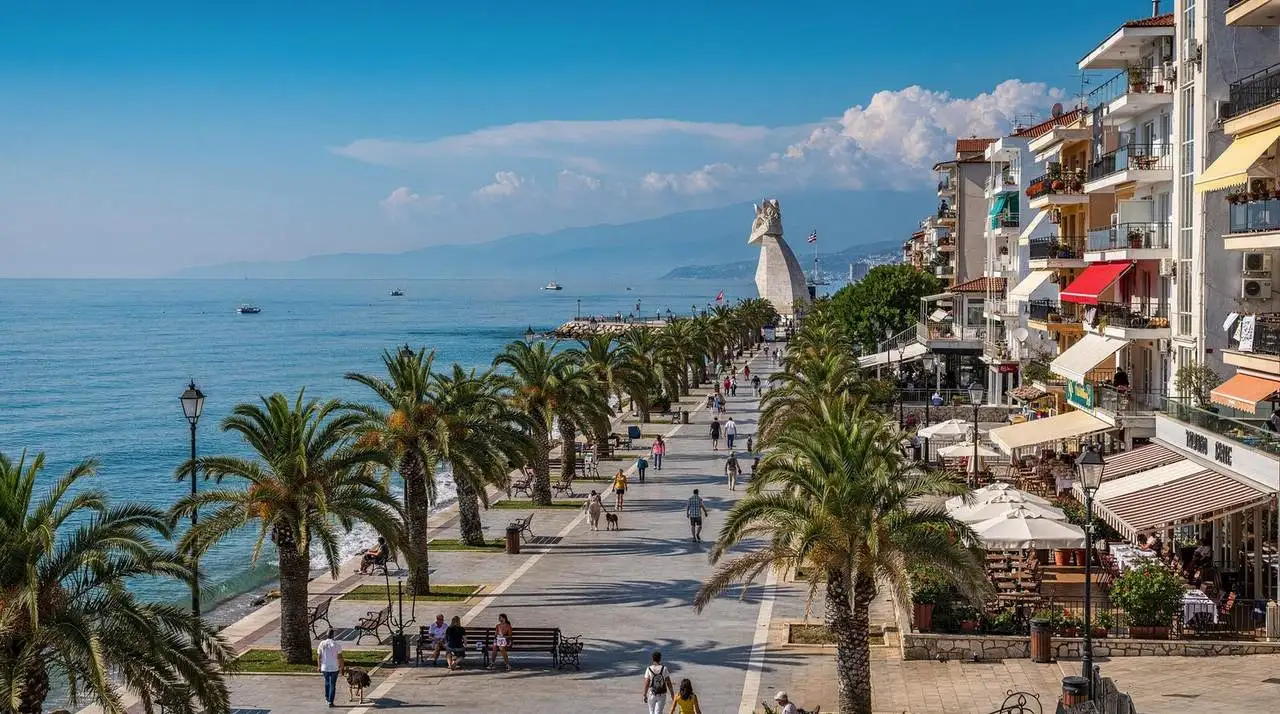
Vlora is the natural base for Sazan-Karaburun tours, and the city offers good accommodation, restaurants, and transport connections to make a 2-3 day stay comfortable. The city itself has historical significance — it was here that Albania declared independence in 1912, and the Independence Museum tells that story in detail. The Muradiye Mosque and the old bazaar area are worth an hour of exploration.
The Albania off the beaten path guide covers Vlora’s historical context alongside the coastal attractions. The Albanian Riviera road trip itinerary begins at Vlora and heads south through Llogara, Dhermi, and Himara — using the Sazan tour as the Vlora highlight before the riviera proper begins.
The Conservation Angle
The Karaburun-Sazan Marine Protected Area was formally established in 2010, recognising the extraordinary ecological value of these waters. The marine park covers approximately 120 square kilometres of sea and coastline.
Responsible tourism here matters. Tours operating within the marine park are required to follow regulations about anchoring, waste disposal, and marine wildlife interactions. When choosing a tour operator, prioritise those who communicate their environmental practices clearly. Do not purchase any seafood caught within the protected area, and do not disturb or collect marine life during snorkelling.
The protective regulations that exist today were hard-won after years of advocacy by Albanian and international environmental organisations. Supporting operators who respect the rules protects the extraordinary resource that makes this area worth visiting.
Choosing a Tour: Group Boat vs Speedboat
| Option | Group size | Pace | Best for |
|---|---|---|---|
| Standard group boat | 15-30 passengers | Fixed itinerary, more stops | Budget-conscious, social travellers |
| Small-group speedboat | 6-12 passengers | Faster transit, flexible stops | Those wanting more time at each site |
| Private charter | 8-12 passengers, exclusive | Fully customisable | Groups, special occasions, photography focus |
Group boats are generally cheaper and cover the standard highlights reliably, while speedboats reach the Karaburun coast and Sazan faster, leaving more time in the water at each stop — a meaningful difference on a coastline with this much to see. Private charters make sense for groups of six or more who want to skip shared-boat compromises entirely, particularly if photography or extended snorkelling time at specific caves is a priority.
Historical Depth: The Layers of Karaburun
The military history of Sazan is recent and dramatic, but Karaburun has been significant for much longer. The Grama Bay inscriptions represent the accumulated records of thousands of Greek and Roman sailors who anchored here seeking shelter. Byzantine, Venetian, and Ottoman navigators all knew this coast. The lighthouse at the tip of the Karaburun Peninsula, still standing and still functional, dates from the Austro-Hungarian period of Adriatic navigation.
This layering of history — ancient sailors, Ottoman control, Italian and German occupation, Albanian communist military secrecy, and now civilian tourism — gives the Sazan-Karaburun area a depth that goes well beyond scenery. Coming here with some awareness of what happened in these waters makes the experience considerably richer. Our UNESCO sites in Albania guide provides context for the broader heritage landscape of southern Albania.
The 14-day Albania itinerary includes a Sazan-Karaburun boat tour as the highlight day of the Vlora section, giving context for how it fits into a complete country circuit.
Frequently Asked Questions About Sazan Island and Karaburun Peninsula
Can tourists visit Sazan Island?
Yes — Sazan Island was a restricted Albanian military zone until 1997 and is now accessible as part of guided boat tours from Vlora. The island itself has limited public access beyond the shore areas of the tour route, but the tours visit the island’s caves and coastline as part of a broader circuit around the Karaburun Peninsula. The military history of the island — including the Soviet submarine base established in the 1950s — is a significant part of the tour’s interest.
What is the Haxhi Ali Cave?
The Haxhi Ali Cave is a dramatic sea cave on the Karaburun Peninsula, accessible only by boat. The cave entrance is large enough for small tour vessels to enter, and the interior features striking formations and a pool of clear water lit by refracted light from the entrance. It is one of the highlights of the Sazan-Karaburun boat circuit and is consistently cited by visitors as one of the most memorable natural features on the Albanian coast.
How do you book a Sazan-Karaburun boat tour?
Boat tours to Sazan Island and the Karaburun Peninsula depart from Vlora harbour. Tour operators are based along the Vlora seafront and at the harbour itself. Tours run daily in season (May through October) with morning departures (typically 8:00-9:00 AM) and full-day duration. Prices range from EUR 25-50 per person depending on tour length and what is included. Booking through your Vlora accommodation or directly at the harbour the evening before is sufficient — advance booking is recommended in July and August.
How long is the Sazan boat tour?
The standard Sazan-Karaburun boat tour is a full day, departing in the morning and returning to Vlora in the late afternoon (approximately 8-10 hours). The route typically covers the south and west coasts of the Karaburun Peninsula, visits the Haxhi Ali cave and other sea caves, circles Sazan Island, and includes stops for snorkelling and swimming. Lunch is sometimes included; check with your operator. The journey covers approximately 60-80 km of coastline.
What wildlife can you see on the Sazan boat tour?
The Sazan-Karaburun Marine Protected Area hosts significant marine biodiversity. Bottlenose and common dolphins are frequently encountered, particularly in the open water channels between Sazan and Karaburun. Mediterranean monk seals have been observed in the caves and rocky inlets, though sightings are rare and never guaranteed. Underwater, the snorkelling sites feature posidonia meadows, octopus, various fish species, and sea urchins. Birds include shearwaters and various seabirds over the open water.
Should you choose a group boat or a private speedboat tour?
It depends on budget and priorities. Standard group boats (15-30 passengers) are cheaper and cover the main highlights reliably, while small-group speedboats reach sites faster and allow more time in the water at each stop. Private charters, best for groups of six or more, allow a fully customised itinerary. First-time visitors on a budget usually do well with a standard group tour; those prioritising photography or extended snorkelling time should consider a speedboat.