Where Two Seas Meet
Vlora occupies one of the most geographically significant positions in Albania: at the point where the Adriatic Sea ends and the Ionian Sea begins, marked by the Karaburun Peninsula thrusting southward into the water. The city is Albania’s second largest port, historically important as the place where independence from the Ottoman Empire was declared on November 28, 1912 — a date that remains the most significant in the Albanian national calendar. Today Vlora is a busy, real city that functions as the northern gateway to the Albanian Riviera, offering boat trips to some of the coast’s most dramatic and inaccessible scenery, a growing tourist infrastructure, and access to the mountain pass at Llogara that marks the entrance to the riviera proper.
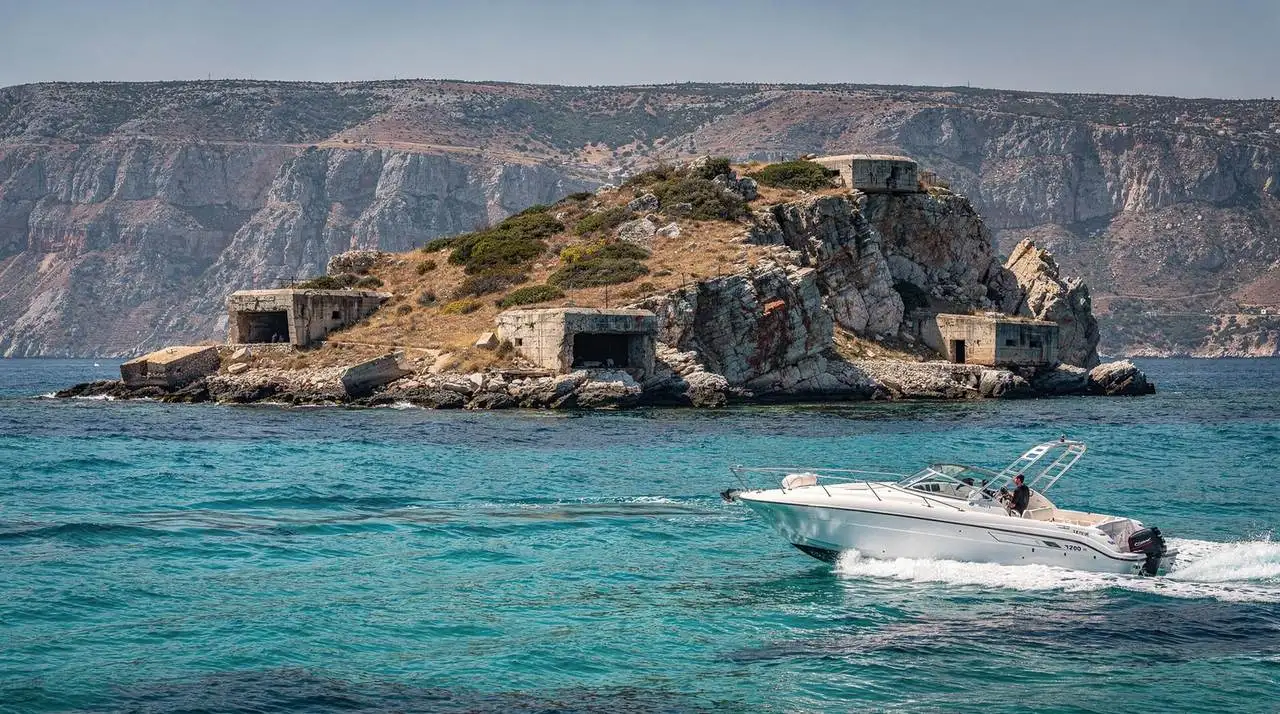
The city sits on a wide bay backed by mountains, with the Karaburun Peninsula forming a dramatic western wall and the island of Sazan — for decades an Albanian military secret accessible to almost no one — lying just offshore. The bay itself is one of the finest natural harbours on the Adriatic coast, which explains why the city has been strategically important since ancient times and why the communist-era military invested so heavily in its fortification. Today that legacy of enforced inaccessibility has become a tourism asset: the waters around Karaburun and Sazan are among the clearest and most biodiverse in the entire Mediterranean.
If you are heading south along the riviera road, Vlora is typically where the journey begins to feel genuinely adventurous. The scale of the bay, the silhouette of Karaburun on the horizon, the distant shape of Sazan Island — these are the visual cues that tell you the landscape is about to change.
Vlora is the natural starting point for the Albanian Riviera road trip itinerary, which follows the coast south through Llogara, Dhermi, Himara, and ultimately Saranda. Budget two to three days in Vlora before heading south; this allows time for the boat tours without feeling rushed, and gives you time to understand the city’s historical significance before the riviera absorbs your attention.
| Where | Northern gateway to the Albanian Riviera |
| Cost | Around EUR 30-55/day; boat tours EUR 30-50 |
| Time needed | 2-3 days |
| Getting there | 2-2.5 hrs from Tirana, 1.5 hrs from Berat |
| Best time | May-September (boat tours run May-October) |
History and Character
Vlora was known in ancient times as Aulon — an important Illyrian and later Greek settlement on the Adriatic. The Romans used it as a naval base; the Byzantines fortified it; the Normans, Venetians, and Ottomans all controlled it at various points in a turbulent medieval history. The harbour’s strategic value meant that whoever dominated the Adriatic wanted Vlora, and the city changed hands frequently enough to absorb multiple cultural layers.
The Independence Day declaration of November 28, 1912 took place in the house of Ismail Qemali, the first Prime Minister of independent Albania — now preserved as the Flag Museum on the main square. The choice of Vlora for this event was not accidental: the city’s history as a port and regional centre made it a credible location for a declaration intended to be taken seriously by European powers, and the presence of enough political and civic leadership to constitute a functioning government assembly.
The communist era brought heavy industrialization to the port, and Vlora was the site of significant social upheaval during the post-communist transition of the 1990s. The collapse of the pyramid schemes that devastated the Albanian economy in 1996-1997 hit the south particularly hard, and Vlora was at the center of the unrest that followed — a period of near-civil-war that is now largely forgotten outside Albania but shaped the city’s trajectory into the 2000s.
Today, the city has a tougher, more urban edge than the smaller riviera towns to the south, which can be a refreshing contrast after the relentlessly picturesque villages of the coast. It is a place where Albanians live and work, not just where they vacation, and that reality gives it a different texture from Dhermi or Ksamil. The seafront boulevard is genuinely pleasant; the old town has Ottoman monuments worth visiting; the food market is real and local; and the port activity — fishing boats, small cargo vessels, the occasional ferry — provides the background noise of a working harbour city.
Things to Do
Sazan Island and Karaburun Peninsula Boat Tour
This is the premier attraction of the Vlora area and one of the most memorable experiences on the entire Albanian coast. Sazan Island was Albania’s most secret military facility during the communist era — occupied first by Soviet forces in the 1950s, then by the Albanian navy — and remained off-limits to civilians until the early 2000s. The island is now accessible by permitted boat tour and reveals an extraordinary landscape: a rocky, largely undeveloped island with military bunkers slowly being reclaimed by vegetation, a lighthouse, and pristine coastline surrounded by some of the clearest water in the Mediterranean. The submarine pens and tunnel systems drilled into the island’s limestone are haunting and strange — Cold War infrastructure in a state of rusted abandonment.
The Karaburun Peninsula, which forms the southern arm of Vlora Bay, is a protected marine national park with dramatic limestone cliffs, sea caves of astonishing size and colour, turquoise coves accessible only from the water, and a total absence of human development. The protected status, combined with the decades of military exclusion that preceded it, has created marine conditions that would have been normal in the Mediterranean a century ago but are now genuinely rare. Visibility of 30-40 metres in calm conditions, abundant sea life, and the absence of anchor damage to the sea floor make this one of the best snorkelling environments in the Adriatic.
This Sazan and Karaburun boat trip from Vlora is the definitive way to see both — a full-day excursion that is the single most recommended activity in the entire Vlora area. The tour typically departs from the port at 8-9am and returns by 5-6pm, spending the day on the water with stops at Sazan, the Haxhi Ali cave, swimming bays on the Karaburun coast, and snorkelling sites. Book at least two days ahead in July and August, when popular tours sell out.
For a smaller group and faster access that covers more ground, this small-group speedboat trip to Sazan and Karaburun uses a faster vessel to cover more of the coast in the same time, reaching more remote sections of the peninsula and spending less time in transit. Ideal for visitors with tight schedules or those who prefer a more dynamic, smaller-group experience on the water.
For a focused adventure combining the military island and the famous Haxhi Ali cave system, this Sazan Island and Haxhi Ali Cave speedboat adventure targets the two most photogenic and historically compelling stops on the tour. Our boat tours in Albania guide compares all Vlora boat tour options in detail, including prices, group sizes, and seasonal availability.
Blue Cave and Grama Bay
Extending south along the Karaburun coast beyond the standard tour range, the Blue Cave system and Grama Bay offer some of the most dramatic sea-level experiences available anywhere on the Albanian coast. The Blue Cave — accessible only by swimming through a submerged entrance in calm sea conditions — glows with an ethereal blue light when sunlit from below, the reflection of the sandy sea floor creating an underwater luminosity that photographs as near-impossible. The chamber inside is large enough to tread water in comfort, the silence broken only by the lap of water against the cave walls.
Grama Bay is famous among historians as well as snorkellers: ancient Greek and Roman sailors carved inscriptions into the cliff face above the water, recording names, dates, and divine invocations across a period stretching from the 3rd century BC through the late Roman period. Reading these two-thousand-year-old records of mariners who anchored in the same bay you are swimming in provides one of the more extraordinary temporal experiences available anywhere in the Mediterranean.
This full-day Blue Cave and Grama Bay speedboat tour from Vlora is the specialist option for those who want to go beyond the standard Sazan tour and explore the more remote southern sections of the Karaburun coast. Weather conditions are important for the Blue Cave in particular — the submerged entrance is only safely accessible in calm seas.
Llogara National Park
The Llogara Pass, 40 km south of Vlora along the riviera road, sits at 1,027 metres and is the dramatic threshold between the urban Adriatic coast of the north and the wild Ionian riviera to the south. The transformation is genuine and sudden: you climb from the heat of the Vlora coastal plain through an ancient black pine forest that darkens and cools around you, emerge at the pass with the whole Ionian coast spread below, and begin the winding descent toward the turquoise sea far below. The view from the pass — looking south over Dhermi, Himara, and the coast all the way to Saranda on a clear day — is one of the great visual moments of Albanian travel.
The national park surrounding the pass is one of Albania’s finest managed wild areas. The ancient black pine forest covers thousands of hectares, with hiking trails ranging from short interpretive walks to full-day mountain routes. The Llogara pine, the dominant species, grows slowly and reaches extraordinary age — some individual trees are several hundred years old, their trunks deeply fissured and their canopies shaped by generations of mountain wind. Under the forest, the ground is carpeted with herbs and low shrubs that scent the air.
For those wanting to explore the national park with a guide and spend time in the first riviera town on the other side of the pass, this guided day trip from Vlora to Llogara and Himara covers both the mountain pass and the riviera town in a single well-organized excursion, with stops at the best viewpoints along the way. It is an excellent introduction to both environments without the complexity of managing the Llogara road independently.
Paragliding from Llogara
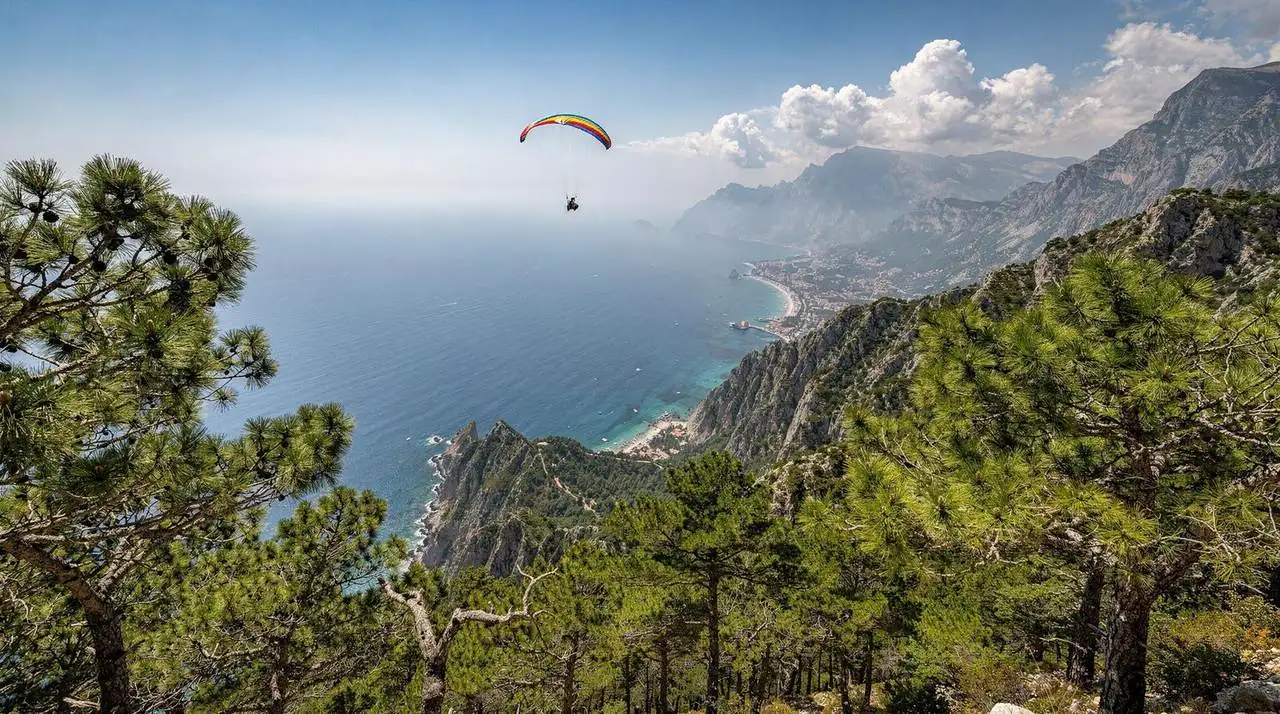
The Llogara ridge, with its reliable thermal and ridge updrafts above the Ionian, is one of the best paragliding locations in Albania and increasingly recognized as one of the better sites in southeastern Europe. The combination of a high, windy ridge facing open sea and a descent of nearly 900 metres to the beach below creates conditions that experienced pilots rate highly. For tandem flights, the technical side is handled by the pilot while you focus on the experience.
This paragliding experience at Llogara near Vlora is run by experienced Albanian pilots with professional safety equipment and provides an unforgettable aerial perspective on the riviera coast. Flights typically last 20-40 minutes depending on conditions and descend from the mountain ridge to the beach below — the landing on the shore with the Ionian lapping a few metres away is a genuinely dramatic conclusion. Flights depart when conditions are right rather than on a rigid schedule; best to book and confirm the morning of.
Independence Museum (Flag Museum)
On Vlora’s main square stands the Kongresit i Vlores Museum, housing the room where the Declaration of Independence was signed in November 1912 and displaying artifacts related to the national independence movement. The building itself is historically significant: it was the private villa of Ismail Qemali and has been preserved largely in its historical form, with original furniture, documents, and artifacts from the period of the declaration.
The context is important: the 1912 declaration came as the Ottoman Empire lost the First Balkan War against the alliance of Serbia, Bulgaria, and Greece, and Albanian leaders raced to declare independence before the victorious Balkan states could partition Albanian-inhabited territories among themselves. Ismail Qemali, a veteran Albanian political operator who had served the Ottoman state for decades, seized the moment and organised the congress that formally established the Albanian state. The building where this happened is now one of the few sacred sites of Albanian national memory.
Entry: Approximately 200 ALL. Open Tuesday to Sunday, 9am to 5pm. Allow 45-60 minutes for a thorough visit including the main rooms and the displays on the independence period.
The large Independence Monument on the square — featuring Ismail Qemali and figures of the independence movement — is one of Albania’s most photographed national monuments and the natural gathering point for Independence Day celebrations on November 28.
Walking Tour of the Old Town
Vlora’s old town is compact and walkable, with several Ottoman-era mosques, the Independence Museum, and the seafront boulevard all within reasonable walking distance of each other. The old bazaar area, while less grand than Gjirokastra’s or Kruja’s, retains some character and provides good coffee stops.
This Vlora old city walking tour covers the historical landmarks — the Independence Museum, the Muradiye Mosque, the old bazaar, and the seafront — with a local guide who contextualizes the independence movement and Ottoman heritage. Useful for visitors arriving without prior knowledge of Albanian history; the 19th and early 20th-century context that the guide provides makes subsequent visits to other Albanian historical sites considerably more meaningful.
Muradiye Mosque
Built in 1542 and attributed to the Ottoman architect Sinan — who also designed the Suleiman Mosque in Istanbul and dozens of the Ottoman Empire’s most significant religious buildings — the Muradiye Mosque is one of the most significant Ottoman religious buildings in Albania. Its attribution to Sinan is debated by architectural historians, but the quality of the construction is not: the single-domed structure with its elegant proportions and fine stonework is clearly the work of skilled builders with access to good materials.
The mosque survived the communist-era banning of religion in 1967 in better physical condition than many Albanian religious buildings, and was restored in the 1990s after the end of the communist system. The interior decoration, with its painted geometric patterns and calligraphy, is elegant and worth a brief visit. Open to visitors outside prayer times (approximately 9-11am and 2-4pm on non-prayer days); dress appropriately and remove shoes at the entrance. Entry is free but a small donation is appropriate.
Orikum and Radhimë Beaches
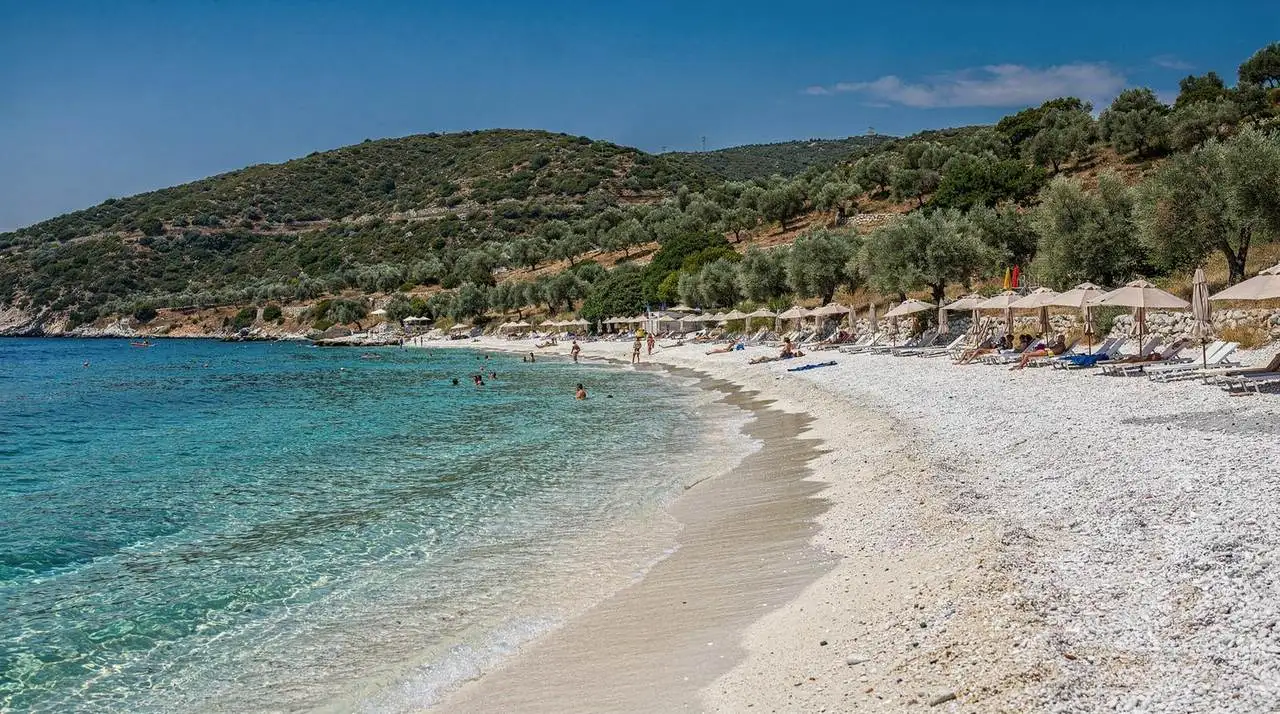
Immediately south of Vlora, the road passes through the former military town of Orikum and along a series of beaches — some long and sandy, others pebbly — that are popular with Vlora residents but relatively unknown to international visitors. The beach at Radhimë, approximately 15 km south of the city center, is one of the better options: a long stretch of pebble-and-sand beach with clear water and a scattering of beach bars and sun-lounger rentals.
These beaches offer genuinely good swimming without the crowds of the riviera proper — they are used predominantly by Albanian families from Vlora and Fier rather than international tourists, which keeps both prices and atmosphere closer to authentic local experience. Sunbeds and umbrellas run 500-800 ALL per set rather than the EUR 10-15 charged at the fashionable riviera beaches further south. The water quality is good and improves further south as you move away from the port.
The approach road south from Vlora through Orikum also passes the site of ancient Oricum, the Greek and Roman colony — there are some archaeological remains visible near the road, though the site is not formally developed for visitors.
Where to Eat
Vlora’s food scene reflects its character as a real working city rather than a resort: functional, local, and considerably cheaper than the tourist-heavy towns to the south. The seafront boulevard has numerous cafes and restaurants with sea views, but the best food is often found one or two streets back.
Taverna Lungomare (seafront promenade) — Good fresh seafood at the water’s edge, popular with both locals and visitors. The grilled sea bass and octopus salad are reliably excellent. Ask what came in that morning — the daily catch dictates the best choices. Budget EUR 10-16 per person.
Restorant Vlora (city center) — Traditional Albanian cooking at genuinely local prices, popular with city residents rather than tourists. Excellent tave kosi (oven-baked lamb with yogurt), grilled lamb, and the Vlora-style fish preparation — a garlicky, olive-oil-heavy approach that reflects the Italian culinary influence present throughout the Adriatic coast. Budget EUR 6-12 per person.
Kafja e Bajamit (old town area) — A good cafe and light meal spot near the old bazaar, serving byrek, coffee, and simple Albanian dishes. The byrek here is made the traditional way, with thin layers of filo and generous filling. Budget EUR 3-8 per person.
The port-area fish market — Vlora’s position as a fishing port means fresh catch is available at the harbor in the early morning. Several simple restaurants near the port buy directly from the boats and serve the freshest possible fish at prices reflecting local rather than tourist economics. Ask locally which restaurant is buying from which boats.
Fresh seafood is the speciality — the port city’s restaurants offer some of the freshest fish on the Albanian coast, typically grilled simply with olive oil and lemon. Look for qofte me peshk (fish patties) and grilled scorpion fish, which appear in Vlora restaurants and are regional specialities less commonly found in the tourist-heavy towns to the south. The octopus preparations here — slow-grilled with herbs and served with local white wine — are excellent.
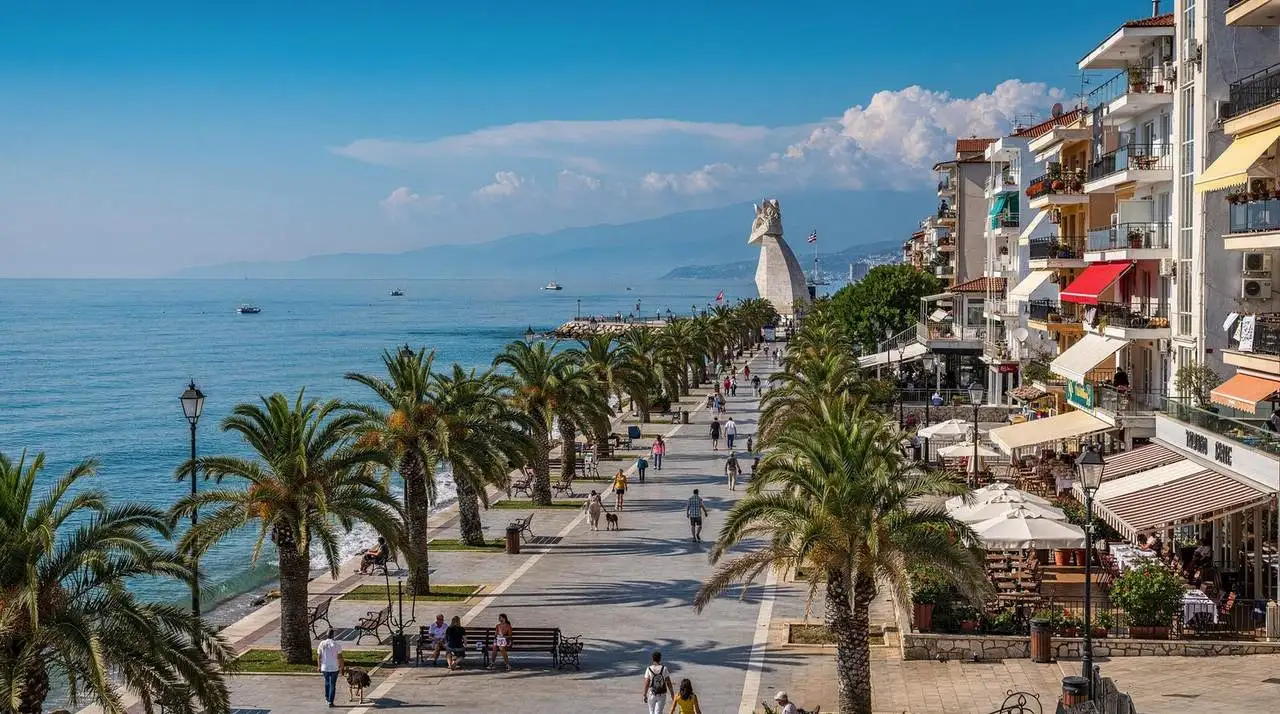
The seafront Lungomare is the social center of Vlora and particularly lively in the evenings. The Albanian tradition of the evening passeggiata is in full effect here — the promenade fills from around 7pm and stays busy until well past midnight in summer. Even if you eat elsewhere, the promenade is worth an evening walk for the atmosphere alone. Our Albanian food guide covers the seafood traditions of the Adriatic coast in detail.
Sazan was a closed military island for decades and Karaburun has no road along it, so the marine park the two form is reachable only from the water: a boat trip to Karaburun and Sazan from Vlora is the only way in, weather permitting.
Where to Stay
Vlora offers a full range of accommodation, from budget hostels near the bus terminal to comfortable hotels along the seafront. The presence of a real city rather than a resort town means guesthouses and apartments provide genuine value for money compared to the riviera towns further south.
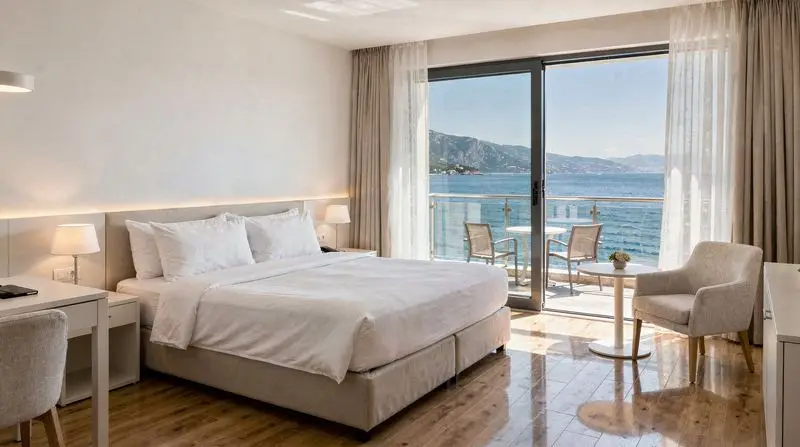
Seafront hotels offer views of the bay and convenient access to boat tour departure points. Mid-range options run EUR 40-80 per night in peak summer. The early morning departure times for Sazan boat tours (8-9am) mean staying close to the port area is practical.
City center guesthouses provide better value, typically EUR 25-45 per night, and put you within walking distance of the old town, the food market, and the main square. These family-run operations typically include breakfast and can help arrange boat tour bookings.
Apartments are increasingly available through rental platforms and suit families or longer-stay visitors. A two-bedroom apartment near the seafront for a week in June can often be found at lower total cost than equivalent hotel nights, with the bonus of kitchen access for market produce and fish.
Full recommendations in our where to stay in Vlora guide.
How to Get to Vlora
From Tirana: The most direct route takes approximately 2.5 hours by car or bus via the SH4 highway to Fier, then south to Vlora. Buses and furgons run this route frequently throughout the day from Tirana’s southern bus terminal; cost approximately EUR 5-7. First morning departures are the most reliable for catching the early boat tours.
From Berat: Around 1.5 hours via Fier — an easy connection if you are traveling through south-central Albania. The Berat-Fier road is straightforward and well-maintained.
From the riviera south: Vlora is connected to Dhermi, Himara, and Saranda by the SH8 riviera road, which passes over the Llogara Pass. The road is dramatic, frequently breathtaking, and in reasonable condition on the mountain sections. Driving from Saranda to Vlora through the riviera takes approximately 2.5 hours without stops — allow twice that with the stops the scenery demands.
By bus: Vlora’s bus terminal is centrally located and handles regular connections to Tirana, Fier, Berat, and the riviera towns. The terminal is within walking distance of the seafront hotels.
For those arriving by rental car from Tirana, see our car rental in Albania guide for agency recommendations and road condition information. Having a car in Vlora gives you flexibility for the Llogara Pass drive and for exploring the Orikum and Radhimë beaches without depending on local transport.
Best Time to Visit
May through September covers the best weather for Vlora and the surrounding area. The boat tours to Sazan Island and Karaburun run from May through October, weather permitting — calm morning conditions are essential for the cave visits and Blue Cave access. July and August bring peak crowds and temperatures (32-36°C in the bay area); May, June, and September offer the best balance of warmth, calm seas, and manageable tourist numbers.
The Independence Day celebrations on November 28 are worth attending if your schedule allows — Vlora takes the national holiday more seriously than anywhere else in Albania, being the city where the declaration happened. Concerts, public events, military ceremony, and a genuinely festive atmosphere draw Albanians from across the country. Accommodation books up well in advance for that weekend.
Winter (November-March) is quiet. The boat tours do not run, the beaches are closed, but the city itself remains functional with its local cafes and restaurants open. The bay in winter light, with the Karaburun ridge dark against a grey Adriatic sky, has a stern beauty entirely its own.
Practical Tips
Boat tours in advance: The Sazan and Karaburun tours are popular and can fill up in July and August. Pre-booking is advisable, particularly for the speedboat options which have smaller capacities. Many tours will also collect you from your hotel if arranged in advance.
The Llogara Pass road: If driving south, the Llogara Pass section requires full attention — the road is narrow with significant drops and no barriers in places. In clear weather it is spectacular; in rain or fog, reduce speed significantly and use headlights. The road is paved throughout and manageable in a standard car. See our Albanian Riviera road trip itinerary for a full driving guide including the best stopping points.
The port area: The harbor area is where boat tours depart. Confirm exact departure point when booking — some tours use the main port pier while others use a smaller quay on the bay’s southern edge.
Beaches: Vlora’s city beach is functional rather than beautiful. The better beaches are south of the city, toward Orikum and Radhimë, or much further south on the riviera proper. See our best beaches in Albania guide for the full picture of swimming options along the southern coast.
Safety: Vlora is a safe city for travelers. Exercise normal urban precautions in the city center, particularly around the bus terminal area. See our Albania safety guide for general travel safety information.
Budget: A daily budget of EUR 30-55 covers everything comfortably — accommodation, meals, and activities excluding the boat tours themselves. The boat tours typically run EUR 30-50 per person and represent good value for a full day on extraordinary water. See our Albania travel budget guide for detailed cost planning across different travel styles.
Vlora Boat Tour Options Compared
| Tour | Focus | Duration | Best for |
|---|---|---|---|
| Sazan & Karaburun full-day | Military island + peninsula caves | 8-10 hrs | First-timers wanting the classic route |
| Speedboat small-group | Same coastline, faster and more remote reach | 6-8 hrs | Tight schedules, smaller groups |
| Blue Cave & Grama Bay | Southern Karaburun, submerged cave, ancient inscriptions | Full day | Repeat visitors, snorkelling-focused travelers |
Weather matters most for the Blue Cave tour specifically — its submerged entrance is only safely accessible in calm seas, so this is the one to reschedule first if conditions turn.
Vlora as a Gateway
Vlora is best understood as a gateway and a base for exploration rather than a destination that exhausts itself in a day — use it to access Sazan Island and Karaburun, Llogara National Park, and the beginning of the Albanian Riviera, and you will find it enormously rewarding.
Two nights here represents the right minimum allocation: one full day for the boat tour, one day divided between the old town and a drive to Llogara, and the third morning for departure south toward Dhermi and the riviera proper. Three nights allows a more relaxed pace with time for an additional boat tour option or a half-day at Orikum.
The 14-day Albania itinerary includes Vlora as the gateway to the southern riviera section, with two nights budgeted before the coastal road drive begins. The Albanian Riviera road trip itinerary starts here and gives complete logistical guidance for the journey south through one of Europe’s most beautiful coastlines.
Frequently Asked Questions About Vlora
What is Vlora famous for?
Vlora is famous as the city where Albanian independence was declared on 28 November 1912 — a date still celebrated nationally as Independence Day. The Independence Monument and the house where the declaration was signed (Ismail Qemali’s residence) are in the city centre. Vlora is also the gateway to the Albanian Riviera and the departure point for boat tours to Sazan Island and the Karaburun Peninsula, which offer some of the most spectacular coastal scenery in the Mediterranean.
How do you get to Sazan Island from Vlora?
Boat tours to Sazan Island and the Karaburun Peninsula depart from Vlora harbour daily in season (May through October). Tours typically last 8-10 hours and cost EUR 25-50 per person. The route circles the Karaburun Peninsula, enters the Haxhi Ali cave, and loops around Sazan Island. Operators are based along the Vlora seafront — booking through your accommodation or directly at the harbour the day before is sufficient. July and August departures should be booked in advance.
Is Vlora a good base for the Albanian Riviera?
Yes — Vlora is the northern gateway to the Albanian Riviera and a practical base for anyone beginning the coastal drive south. From Vlora, the SH8 road climbs to Llogara Pass (1,027 meters) and descends to Dhermi and the riviera in approximately 1.5-2 hours. Two nights in Vlora allows a full-day Sazan boat tour plus time for the old town and a drive up toward Llogara before heading south. The city has good accommodation and restaurant options at lower prices than the riviera resorts.
How far is Vlora from Tirana?
Vlora is approximately 145 km south of Tirana, typically reached in 2-2.5 hours by car or bus via the SH4 highway. Regular buses run from Tirana throughout the day, costing around 500-700 ALL. The route passes through Fier and the agricultural lowlands — not especially scenic, but fast. Most travelers arrive in Vlora from Tirana and then continue south along the coastal road, making it the starting point of the classic Albanian south loop.
What is the Independence Monument in Vlora?
The Independence Monument in Vlora’s central square commemorates the declaration of Albanian independence on 28 November 1912, when Ismail Qemali raised the Albanian flag and declared the country’s separation from the Ottoman Empire after 400 years of Ottoman rule. The event ended centuries of foreign control and is the founding moment of the modern Albanian state. The monument and the adjacent flag museum are modest but historically significant stops for anyone interested in Albanian history. Entry to the museum is inexpensive (a few hundred ALL).