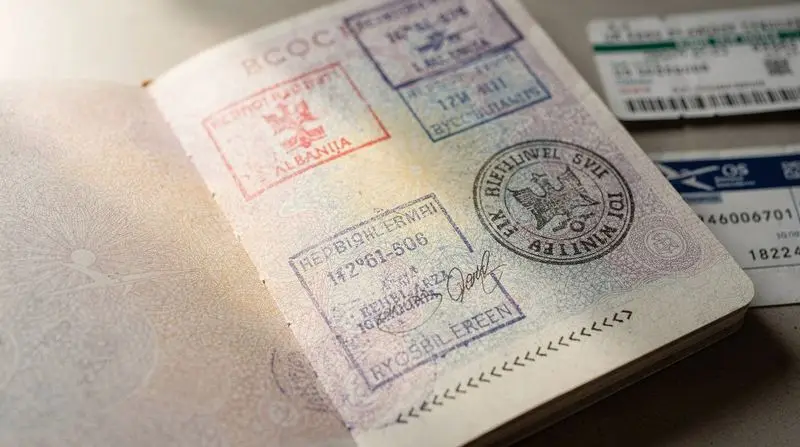
Albania Visa Requirements: A Practical Guide
Albania’s entry requirements are refreshingly simple for most Western travelers. The country operates a liberal visa-free access policy, welcoming visitors from the majority of the world’s developed nations without requiring prior visa application. This guide covers exactly who needs what, how long you can stay, what happens when you cross the border, and what the practical implications are for those combining Albania with neighboring countries.
| Visa-free stay | Up to 90 days within any rolling 180-day period |
| Who | EU, UK, US, Canada, Australia, and 100+ other nationalities |
| Schengen? | No — Albania time does not count against your Schengen days |
| Passport validity | At least 6 months beyond planned departure recommended |
| Overstay risk | Fine (EUR 100-500+), possible entry ban — enforced |
Understanding the entry situation clearly before you arrive is valuable. Albania is not Schengen, which changes the calculation for anyone who has been traveling in Europe, and the 90-day limit is more nuanced than it first appears. Read this before you plan your itinerary.
Who Does Not Need a Visa for Albania?
The following nationalities can enter Albania visa-free and stay for up to 90 days within any 180-day period:
European Union: All EU citizens (and EEA countries Norway, Iceland, and Liechtenstein) can enter Albania with just their national ID card or passport. No separate visa or prior application required.
United Kingdom: UK passport holders enter visa-free for up to 90 days following Brexit. This was confirmed under bilateral arrangements and is currently in force for 2025-2026.
United States: US passport holders can visit Albania for up to 90 days without a visa, for tourism, business, or transit.
Canada: Canadian citizens are visa-free for 90 days.
Australia and New Zealand: Australian and New Zealand passport holders are visa-free for 90 days.
Japan, South Korea, Singapore: Visa-free for 90 days.
Switzerland: Visa-free for 90 days (Switzerland is not EU but has a bilateral agreement).
Israel: Visa-free for 90 days.
Gulf States (UAE, Saudi Arabia, Qatar, Kuwait, Bahrain, Oman): Visa-free under bilateral agreements.
Albania has expanded its visa-free list significantly in recent years as part of its EU integration aspirations. The total list now includes over 100 countries. If your nationality is not listed above, check the Albanian Ministry of Foreign Affairs website or your country’s foreign ministry for current requirements. The list changes more often than most travelers expect.
Who Needs a Visa for Albania?
Citizens of countries not on the visa-free list must obtain a visa before arriving. This includes many African, South Asian, and some Middle Eastern nationalities. Visa applications are submitted at Albanian embassies or consulates abroad. The process typically requires:
- A valid passport (valid for at least 6 months beyond the travel dates)
- Completed application form
- Passport-sized photographs
- Proof of accommodation bookings
- Proof of sufficient funds
- Travel insurance
- Return or onward ticket
Visa fees and processing times vary by country of application. The Albanian consular network is not as extensive as Western European nations — if there is no Albanian consulate in your country, check which country’s Albanian embassy covers applications from your region. Online applications are accepted in some cases.
Check the website of the nearest Albanian embassy or the Albanian Ministry of Foreign Affairs for current requirements specific to your nationality. Visa requirements can change with political changes and bilateral agreements, so verify before finalizing your travel plans.
The 90-Day Rule: How It Works
Visa-free visitors can stay in Albania for a maximum of 90 days in any rolling 180-day period. This is calculated by looking back 180 days from your current date and counting the days you have spent in Albania in that window.
Practical example: If you arrived in Albania on June 1 and left on August 29, you have used 89 days. You cannot re-enter without exceeding the 90-day limit until approximately November 27 (180 days after June 1), unless you have used some of those days in other non-Schengen countries.
For most tourists, this limit is entirely irrelevant — few people spend 90 days in Albania in one stretch. It becomes relevant for those considering long-term stays or using Albania as a base. The digital nomads Albania guide covers strategies for extended stays, including official residency options.
The rolling calculation: The 90 out of 180 rule is a rolling window, not a calendar-year reset. You cannot simply wait for January 1 and start fresh. Look back 180 days from any given date to determine how many Albanian days have elapsed — that is the relevant window.
Partial days: Your entry day and exit day each count as full days for the purposes of the 90-day limit. If you arrive on Day 1 and leave on Day 90, you have used all 90 of your permitted days. Day 91 must be spent outside Albania.
Albania Is Not Part of Schengen
This is an important point that many travelers misunderstand. Albania is not a Schengen Area member. This means:
Schengen days are not consumed in Albania. If you have used 85 of your 90 Schengen days traveling through Germany, France, and Italy, you can still enter Albania for up to 90 days without any Schengen concern. Your Schengen count is unaffected by your time in Albania.
There is a passport control when entering and leaving Albania, regardless of where you are traveling from or to. Even if entering from North Macedonia or Montenegro (neither of which are Schengen either), you pass through Albanian border control. Entering from Greece (Schengen) to Albania counts as exiting the Schengen zone.
Albania has its own separate entry and exit stamps. Your passport will accumulate Albanian entry and exit stamps independently of any Schengen stamps.
This Schengen independence makes Albania particularly useful for travelers who have maxed out their Schengen allowance or want to extend a European trip without flying home. A common itinerary: spend time in Greece (Schengen), cross into Albania for several weeks, return to Greece — perfectly legal, as you left and re-entered the Schengen zone (the Greek border is the Schengen border, not the Albanian side).
The same applies in reverse: completing your time in Albania then entering Greece, Italy, or any other Schengen country starts a fresh Schengen visit, subject to the Schengen 90/180 rule separately from your Albanian count.
What Schengen independence means for trip planning: You can incorporate Albania into a longer European itinerary without worrying about Schengen day counts for the Albanian portion. Albania, Kosovo, North Macedonia, Bosnia, Montenegro, and Serbia are all non-Schengen, meaning a Balkans circuit through these countries preserves Schengen days for before and after.
Passport Requirements at the Border
Valid passport: Your passport must be valid at the time of entry. Albania officially requires that passports be valid for at least 3-6 months beyond the planned stay, though the requirement is not always strictly enforced. Have at least 6 months of passport validity as a safe margin — this is standard practice for international travel regardless of specific requirements.
EU/EEA National ID cards: EU and EEA citizens can use their national identity card instead of a passport to enter Albania. The card must be valid. This is one of the few non-EU countries that accepts EU national ID cards for entry — a useful flexibility for EU travelers who prefer not to travel with their passport.
Accommodation details: Border officials may ask where you are staying. Have the name and address of your first night’s accommodation available. In practice this is asked infrequently, but being prepared takes 10 seconds and prevents any awkwardness.
Return or onward ticket: Border control can technically ask for evidence that you have a means of leaving Albania before your 90 days expire. In practice, this is rarely asked of Western passport holders. Having a flight or ferry booked is good travel practice regardless.
Financial sufficiency: Some countries require visitors to demonstrate sufficient funds. Albania does not rigorously enforce this, but in principle, visitors should have enough funds to cover their stay. Having a credit card and some cash is the simplest demonstration.
What Happens at the Border
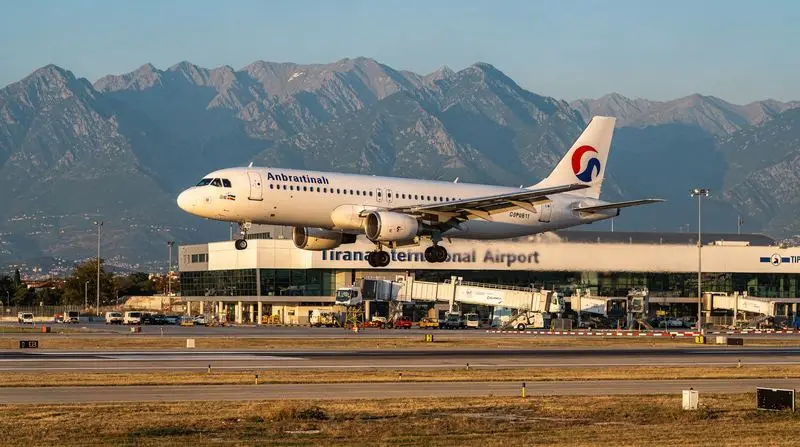
By air (Tirana Airport): The process is standard international entry. Queue at the passport control booths (separate queues for EU/non-EU in theory, though Albanian immigration often processes everyone together). Hand over your passport. It is scanned and stamped with an entry stamp showing your date of arrival. The process takes 1-5 minutes per person. Tirana Airport is a modern facility and the process is generally smooth. See the airport transfers Tirana guide for what happens after you clear immigration.
By ferry (Saranda from Corfu, or Durres from Italy): Border officials board the ferry before passengers disembark, or process passengers in the port terminal. The process is similar to airport entry. The Saranda crossing from Corfu is particularly fast — the journey takes about 30-45 minutes and border processing is generally quick. The Italy to Albania ferry guide covers the longer Durres ferry in detail.
By land: Border crossing times vary enormously. The Kakavija crossing from Greece can have queues of 1-2 hours in peak summer, particularly on weekends. The Morina-Vërmicë crossing to Kosovo is faster. On quieter crossings and in the shoulder season, you can walk through in minutes. Allow extra time for land border crossings in July and August.
What the entry stamp looks like: Albanian entry stamps are round, include the border crossing point name, and show your date of entry. Keep track of this date — it is the date from which your 90 days count.
Seasonal Entry Rules
Albania has historically operated a seasonal visa scheme during the peak summer months (typically July 1 to September 30) whereby citizens of several additional countries are permitted entry without the usual visa requirement. This policy changes annually and is announced by the Albanian government in late spring.
Recent years have included countries from the Western Balkans and neighboring states. If your nationality normally requires a visa for Albania, check current-year announcements in April or May before your summer trip. What applied in 2024 may not apply in 2026.
This seasonal liberalization reflects Albania’s commitment to growing tourism and its diplomatic relationships with neighboring states. It is a genuine flexibility that benefits travelers from countries otherwise in the visa queue.
Long-Term Stays and Residency
If you want to stay in Albania for longer than 90 days, you have several options:
Leave and re-enter: Cross into a neighboring country and return. Strictly speaking, Albanian law requires 180 days to elapse since your first entry for a fresh 90-day period. In practice, people do “border runs” to Montenegro, North Macedonia, or Kosovo, and enforcement is light. This is a gray area that has worked for many digital nomads but should not be relied upon as a long-term strategy — enforcement practices can change.
Apply for a residence permit (leje qëndrimi): Available through the Albanian border and migration police. Requirements include proof of accommodation, financial means, and in some cases, employment or study enrollment. This is the correct legal route for stays exceeding 90 days. The process involves submitting documentation at a local police station and waiting for approval.
D-type long-stay visa: Obtainable from Albanian consulates abroad for specific purposes — work, study, family reunification, or other approved categories. This requires advance planning and application before travel.
Freelancer or remote worker status: Albania does not yet have a formally designated “digital nomad visa” as of 2025-2026, unlike some other countries. However, the combination of 90-day visa-free access, low cost of living, and relatively light enforcement of the 180-day window has made it a popular base for location-independent workers. The Albania digital nomad guide covers strategies for legal extended stays in detail.
Albania and EU Membership: What It Means for Entry
Albania has been an EU candidate country since 2014 and opened formal accession negotiations in 2022. Progress toward EU membership is gradual — most analysts expect the process to continue through the 2030s at a minimum — but the direction of travel is relevant for entry policy.
As Albania aligns its regulations more closely with EU standards, visa and entry policies continue to evolve. Recent changes have expanded the visa-free list and modernized border procedures. The country is implementing EU-standard border management systems as part of the accession process.
For EU citizens specifically: EU membership, if and when it arrives, would make Albania part of the free movement area and eliminate passport control at most borders. For now, the border crossing is real but simple.
The Schengen perspective: Albania may join Schengen before full EU membership — several EU member states joined Schengen before the political process of full membership completed. This is speculative for the current period but worth knowing as context for why border arrangements may change over the coming years.
Overstaying Your 90 Days: What Actually Happens
The official rules are clear: visa-free visitors must leave within 90 days. The practical consequences of overstaying, while not pleasant, are worth understanding:
Detection: Albanian border control records your entry date. When you exit, the date is compared against your entry stamp. An overstay of even a single day will be detected.
Consequences: Overstaying may result in:
- A fine (amounts vary but can be EUR 100-500 or more)
- A formal warning or caution recorded against your passport
- Potential ban from future entry (particularly for significant overstays)
- Delays and complications at the exit border crossing
Is it enforced? Yes, increasingly so as Albania modernizes its border management for EU alignment. The tolerance that may have existed in earlier years has been replaced by proper enforcement aligned with EU standards. Do not rely on “it probably won’t matter” — take your 90-day limit seriously.
If you are close to the limit: Exit before your 90 days expire. The border agent will note the discrepancy and the conversation will not be fun. Give yourself a buffer — leave with a day or two to spare.
Entry from Kosovo: A Special Case
Kosovo is recognized by Albania as an independent state. Entry from Kosovo at the Morina-Vërmicë crossing is treated as a standard international border. Your 90-day visa-free period applies from your first Albanian entry stamp, not from the Kosovo border.
Important for Albanians and Kosovo Albanians: Citizens of both countries share ethnic and cultural ties, and the border between Albania and Kosovo has historically been managed with considerable flexibility. However, formal entry requirements still apply, and valid travel documents are required for all nationals.
Travel between Albania and Kosovo: For many visitors, combining Albania and Kosovo in one trip is natural — Prizren and the Rugova Gorge are short distances from the Albanian border. The Morina-Vërmicë crossing is efficient, and crossing takes around 15-30 minutes in normal conditions. Shkodra in northern Albania is the nearest major Albanian city. See the Albania travel tips guide for practical cross-border itinerary suggestions.
Entering Albania with a Valid Schengen Visa
Citizens of countries that require a visa for Albania but hold a valid Schengen visa of certain types may be eligible to enter Albania visa-free. Specifically:
- Holders of valid Schengen C or D visas (multi-entry, or still valid single-entry that has been used)
- Holders of valid national long-stay visas from certain EU member states
- The Schengen visa must have been used at least once for most categories
This provision is particularly useful for travelers from countries that require both Schengen and Albanian visas. Check with the Albanian Embassy for your country’s specific eligibility. The Schengen visa provision means that someone with a valid Italian or German Schengen visa, for example, may enter Albania without a separate Albanian visa.
Border Control Technology and Processing
Albania’s border control has modernized significantly. E-passport readers at Tirana Airport process machine-readable passports quickly. The biometric data in modern passports allows faster verification. For holders of older non-biometric passports (rare in Western countries now but still valid), manual processing applies.
Fingerprinting: Albania does not currently require fingerprinting of tourists from Western countries as part of the entry process.
Electronic travel authorization (ETA): Unlike countries such as Canada (eTA) or Australia (ETA), Albania does not require advance electronic authorization for visa-free travelers. You simply arrive with your passport.
Language at border control: Border officers at Tirana Airport typically speak functional English. At land border crossings, English is more variable — simple exchanges about your accommodation and length of stay are all that is usually needed.
Combining Albania with Neighboring Countries: Entry Implications
Many visitors combine Albania with other Balkans destinations. Here is how border crossings work in common itinerary combinations:
Greece to Albania (Kakavija or Qafa e Botes crossing): You exit Schengen, enter Albania. Your Schengen days stop counting when you cross into Albania. Peak summer queues at Kakavija can be long — allow several hours buffer if you have onward transport.
Montenegro to Albania (Han i Hotit or Muriqan crossings): Neither country is Schengen. Simple passport checks both sides. Often the fastest crossings in the region.
North Macedonia to Albania (Lin or other crossings): Again, both non-Schengen. Straightforward crossings.
Kosovo to Albania (Morina-Vërmicë): Efficient and usually fast. Both countries recognize each other fully.
Albania to Corfu (ferry from Saranda): Entering Greece counts as entering Schengen. Your Schengen clock restarts (or continues if you have days remaining). The short ferry from Saranda to Corfu is one of the easiest border crossings in the Balkans.
Practical Entry Checklist
Before arriving at any Albanian border:
- Passport valid for at least 6 months beyond your intended departure from Albania
- Know your accommodation address for the first night
- Understand how many days you have remaining in Albania (if you have visited before in the rolling 180-day period)
- Have onward travel booked or be able to demonstrate plans to leave within 90 days (rarely asked but good practice)
- Currency in euros for immediate needs after crossing (Lek available at ATMs immediately after entry)
- Travel insurance policy document or reference (see the Albania travel insurance guide for what to get)
Entry to Albania is consistently described as smooth and friendly by travelers. Border officers are professional, processing is quick, and the whole experience sets a positive tone for the trip ahead.
Making the Most of Your Time in Albania
Once you clear the border, the practical setup begins. If arriving at Tirana Airport, you need transport to the city — the airport transfers Tirana guide covers every option. If you want a SIM card immediately, Vodafone and ONE have kiosks in the arrivals hall. The Albania SIM card guide explains what to buy and what it costs.
For those arriving with questions about what the country actually costs day-to-day, the Albania travel budget guide gives realistic numbers across accommodation, food, transport, and activities.
If you are arriving with a plan to explore the country independently, a rental car unlocks the most rewarding parts of Albania. With 90 days of legal stay available to most visitors, there is no need to rush — the Albania itineraries section covers how to structure different lengths of visit from a long weekend to a month.
For most visitors, Albania’s entry process is the easiest part of the trip. A passport, a quick conversation with a border officer, a stamp in the document — and then one of Europe’s most underrated countries opens in front of you.
Day Trips and Short Excursions During Your Stay
Once settled in Albania, guided tours and day trips are an excellent way to see specific sites without the logistics of renting a car. For first-time visitors, organized options provide context and local expertise alongside the transport.
Guided day tours from Tirana to Berat cover the UNESCO-listed old town with commentary that brings the Ottoman and communist history to life — a much richer experience than arriving independently without context.
Tirana walking tours are a practical first step on your first full day in Albania — they orient you to the capital’s layout, history, and culture before you set off to explore independently.
For broader activity options throughout the country, GetYourGuide for Albania activities lists current tour options across regions, which is useful for planning as you go.
For everything else to prepare before you go, see the Albania travel tips guide and the Albania packing list.
Before You Book: A Quick Entry Sanity Check
Before finalising flights, it’s worth a two-minute check covering: your nationality’s current visa status (the list has expanded in recent years and continues to evolve), your passport’s expiry date against the 6-month recommended buffer, and whether your trip length plus any prior Albania visits in the last 180 days keeps you under 90 total days. For most travellers all three checks pass instantly. For those combining Albania with an extended European trip, digital nomad stay, or a nationality outside the visa-free list, doing this check early avoids a scramble close to departure. The Albania travel tips guide covers the rest of the pre-departure checklist once entry is confirmed.
Common Entry Scenarios Worked Through
A two-week summer holiday from the UK or US: Simplest possible case. Arrive at Tirana Airport, present a valid passport, receive an entry stamp, leave within 90 days. No visa, no advance paperwork, no Schengen interaction at all. This covers the overwhelming majority of visitors.
A month combining Albania with Italy or Greece: Because Albania is not Schengen, the calculation runs in two separate tracks. If you spend two weeks in Italy (Schengen) before flying to Tirana, your Schengen clock pauses the moment you enter Albania and resumes only if you re-enter a Schengen country afterward. This is genuinely useful for travelers who want to maximise total time in Europe without overstaying Schengen rules.
A digital nomad staying three months: This sits right at the edge of the 90-day visa-free limit. Plan the exit date carefully from your first entry stamp, and consider whether a formal residence permit application makes more sense than trying to time an exit and re-entry around the 180-day rolling window — see the Albania digital nomads guide for the practical route most long-stayers take.
A cross-border Balkans trip via Kosovo and North Macedonia: Each border crossing (Morina-Vërmicë to Kosovo, Qafë Thanë to North Macedonia) generates its own entry and exit stamp, and re-entering Albania from either does not reset your 90-day count — it’s still measured from your first Albanian entry within the rolling 180-day window. Keep a simple note of your dates if your Balkans loop involves multiple crossings back into Albania.
Visa-Free Access at a Glance by Region
| Region/nationality group | Visa-free days | Notes |
|---|---|---|
| EU / EEA | 90/180, or unlimited with ID card | National ID card accepted, no passport required |
| UK, US, Canada | 90/180 | Passport required, no advance application |
| Australia, New Zealand | 90/180 | Passport required |
| Japan, South Korea, Singapore | 90/180 | Passport required |
| Gulf States (UAE, Saudi, Qatar, etc.) | 90/180 | Bilateral agreements |
| Not on visa-free list | Visa required | Apply at nearest Albanian embassy/consulate before travel |
Planning Around the 90-Day Limit
Most visitors never come close to using their full 90 days, but a few trip shapes make it worth watching the calendar deliberately. Digital nomads and remote workers basing themselves in Tirana for a full quarter need to track their entry date precisely, since the 180-day window is rolling rather than resetting each calendar quarter — see the Albania digital nomads guide for how location-independent workers typically structure longer stays.
Travelers combining Albania with a long Balkans loop — Kosovo, North Macedonia, Montenegro, Bosnia, Serbia — benefit from the fact that none of these countries are Schengen either, so a multi-month regional trip does not eat into any Schengen allowance at all. This makes Albania a useful “base” for a longer overland trip through the region before or after a Schengen-zone leg. The border crossings Albania guide covers what to expect at each neighboring crossing point.
Frequently Asked Questions About Albania Visa Requirements
Do Americans need a visa for Albania?
No. US citizens do not need a visa to visit Albania and can stay for up to 90 days within a 180-day period without any pre-arranged permission. Simply arrive with a valid passport (valid for at least 3 months beyond your planned departure date) and you will be stamped in at the border or airport.
Do UK citizens need a visa for Albania?
No. UK passport holders do not need a visa for Albania and can visit for up to 90 days. Post-Brexit, the UK maintained its visa-free access to Albania independently of EU arrangements. A valid British passport is all that is required at the border.
How long can you stay in Albania without a visa?
Most Western passport holders (EU, UK, USA, Canada, Australia, and many others) can stay up to 90 days within any 180-day period without a visa. This is calculated on a rolling basis, not as a fixed calendar period. If you plan to stay longer, contact the Albanian embassy for information on longer-stay permits.
Is Albania in the Schengen Area?
No, Albania is not part of the Schengen Area. It is an EU candidate country but has not yet joined. This means that time spent in Albania does not count toward your 90-day Schengen allowance — a significant advantage for travelers maximizing their time in Europe. You can visit Albania without affecting your Schengen clock.
Can I extend my stay in Albania beyond 90 days without leaving?
This is one of the most common questions from longer-term visitors, freelancers, and retirees exploring Albania as a potential base, and the honest short answer is: not reliably through informal means. The correct legal route is a residence permit (leje qëndrimi) applied for through the Albanian border and migration police, requiring proof of accommodation, financial means, and often a specific purpose such as employment or study. Border runs to neighbouring countries have historically been tolerated in some cases, but enforcement has tightened as Albania modernises its border systems toward EU standards, so this should not be treated as a reliable long-term strategy.
Will my Albanian visa-free days affect my Schengen allowance later?
No. Albania and Schengen are entirely separate systems with independent day counts. Time spent in Albania does not consume any of your 90/180 Schengen allowance, and time spent in Schengen countries does not count against your Albanian 90-day limit. This separation is one of the more useful practical facts for anyone building a longer multi-country European itinerary, and it is worth mentioning explicitly to any travel companions unfamiliar with the distinction, since the assumption that “it’s all just Europe” is a common and easily corrected misunderstanding.
Do you need a passport for Albania?
Yes, a valid passport is required to enter Albania. EU citizens can enter with a national identity card, but most other nationalities require a full passport. Ensure your passport is valid for at least three to six months beyond your planned stay, as some border officers and airlines require this buffer.