Theth to Valbona: The Complete Hike Guide
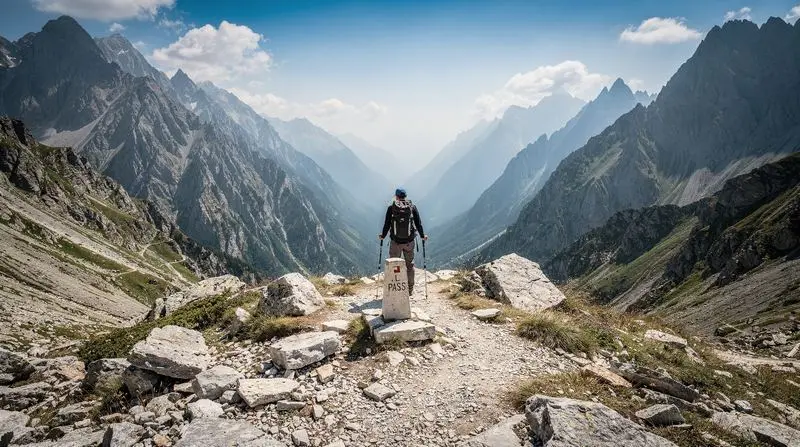
The Theth-Valbona trail is the most celebrated hike in Albania and one of the finest single-day mountain crossings in Europe. The route links two remote valleys in the Albanian Alps — locally known as the Bjeshket e Namuna, or Accursed Mountains — crossing the Valbona Pass at 1,800 metres through an alpine landscape of limestone peaks, beech forest, and high meadows. Seventeen kilometres from end to end, it takes most hikers six to eight hours depending on pace, fitness, and how often they stop to take photographs (which will be frequently).
This guide covers everything you need to complete the hike successfully: the route in both directions, the terrain and difficulty, timing and logistics, what to carry, how to reach the trailheads, and where to sleep on either side.
| Where | Albanian Alps, between Theth and Valbona valleys |
| Time needed | 6-8 hours moving, plus 2 nights (one at each end) |
| Cost | EUR 20-35/night per person for guesthouses, meals included |
| Getting there | Furgon or private transfer from Shkodra to Theth; ferry + minibus to Valbona |
| Best time | Mid-June to late September |
If this is your first time in the mountains here, the Albanian Alps guesthouse guide and our overview of Albania’s national parks give useful context before you commit to the crossing.
Trail Overview
Distance: 17 km point-to-point Elevation gain: approximately 900 m (Theth to Valbona direction) Elevation loss: approximately 700 m Highest point: Valbona Pass, 1,800 m Typical time: 6-8 hours moving time, 7-9 hours total with breaks Difficulty: Moderate to challenging Best season: Mid-June to late September Trail marking: Red and white waymarks throughout (Peaks of the Balkans system)
The trail is classified as moderate-to-challenging. There are no technical sections requiring ropes or climbing experience, but the sustained ascent, rough terrain, and length mean it demands a reasonable level of fitness. Walkers who regularly do 15-20 km days in hilly terrain will find it well within their ability. First-time mountain hikers or those unused to sustained ascents should allow extra time and carry plenty of water.
Which Direction to Hike
Most independent walkers do the crossing from Theth to Valbona. In this direction, the major ascent is concentrated in the first half of the day when energy levels are highest, and the descent into Valbona is long but mostly on good trail through beautiful forest. The views from the pass open up gradually as you climb, rewarding the effort.
The Valbona to Theth direction offers a steeper initial climb from the valley floor, a slightly shorter ascent section, and a more dramatic arrival into Theth’s narrow gorge. The descent on this side is rougher and steeper, which can be hard on knees. Many organised tours do this direction to tie in with the Koman Lake ferry arrival into Valbona in the afternoon.
Both directions are perfectly valid. If you are doing the crossing as part of a longer circuit — for example the full Peaks of the Balkans trail — your direction will be determined by your overall route.
If you are weighing the ferry leg, the dedicated Koman Lake ferry guide explains how that journey fits around the hike, and the Koman Lake destination page describes the setting.
The Route: Theth to Valbona
Section 1: Theth Village to the Forest (0-5 km, 2 hours)
From the main cluster of guesthouses in Theth, the trail heads north through the village, crosses the Theth River on a wooden bridge, and begins climbing through a mixed forest of oak, beech, and pine. The path is clear and well-marked throughout this section. The gradient is steady rather than brutal — long traversing sections alternate with shorter steeper rises.
At around the 3 km mark, the trail passes through an area of limestone outcrops and opens into more alpine terrain. The views back into the Theth valley begin to emerge here: the narrow gorge with its vertical walls, the river below, and the distinctive profile of the surrounding peaks.
Section 2: Forest to the Pass (5-10 km, 2.5 hours)
This is the most demanding section of the hike. The trail steepens as it climbs through thinning beech forest toward the treeline, then crosses a boulder field and series of switchbacks to reach the Valbona Pass. The terrain is rocky and requires careful foot placement, particularly if any water has collected on the stone slabs.
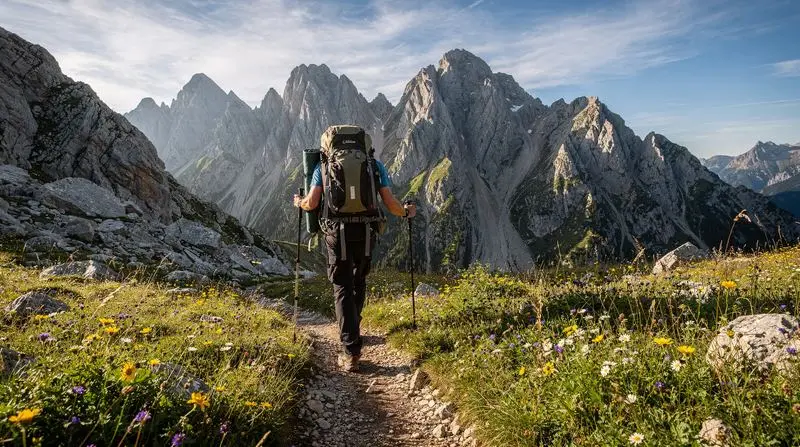
The treeline marks a psychological as well as a physical transition. Above it, the landscape becomes alpine tundra — short grasses, wildflowers, patches of scree — with the full panorama of the Accursed Mountains visible in multiple directions. On clear days, the view from the pass extends across the range into Kosovo and Montenegro. Stop and eat here; the descent is long.
Note on timing: You should reach the Valbona Pass by 2pm at the latest. Afternoon storms are common in the Alps in summer and the open pass is exposed. Starting the hike from Theth by 7am gives comfortable margin.
Section 3: Pass to Rragami (10-13 km, 1.5 hours)
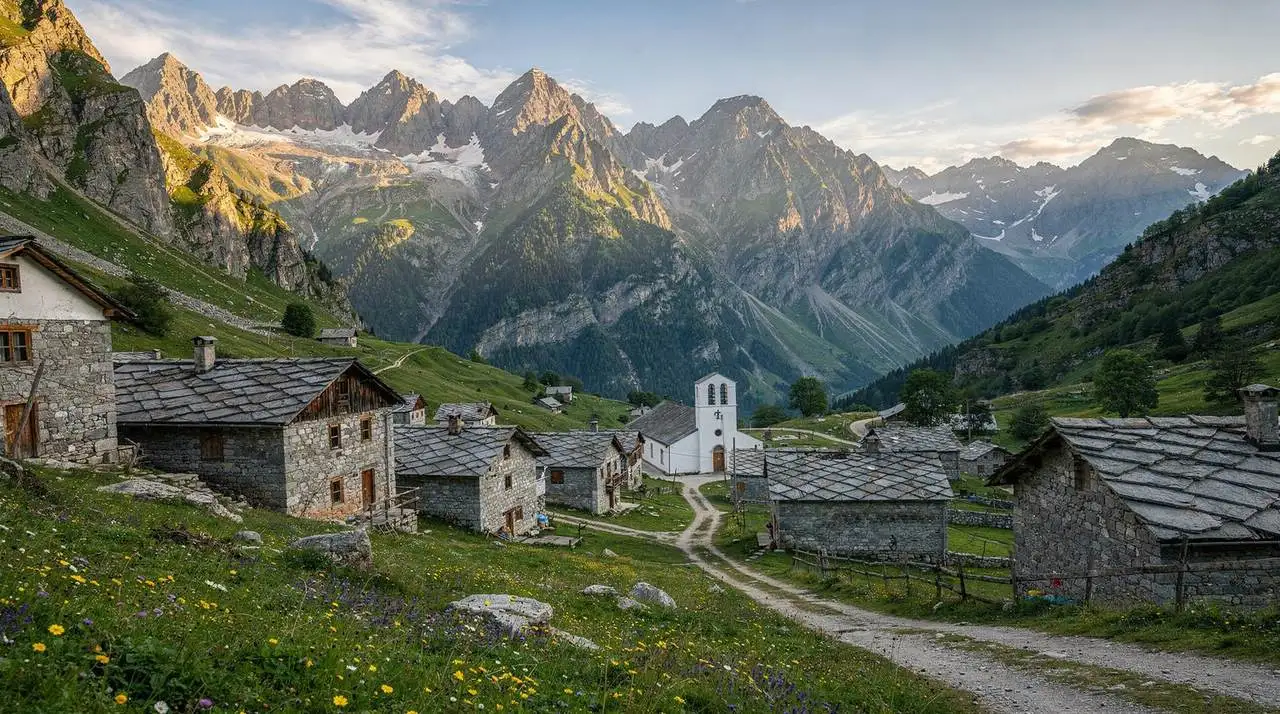
The descent from the pass initially crosses loose scree and steep grassy slopes before the trail enters forest again. The surface is more irregular here than on the ascent — take care on wet rock and root sections. The path descends through a beautiful mixed forest of old-growth beech toward the hamlet of Rragami, which appears below as a cluster of stone buildings in a green meadow.
Rragami has a small guesthouse and is an optional stopping point for those who want to break the journey, though most walkers continue to the Valbona valley floor.
Section 4: Rragami to Valbona (13-17 km, 1.5 hours)
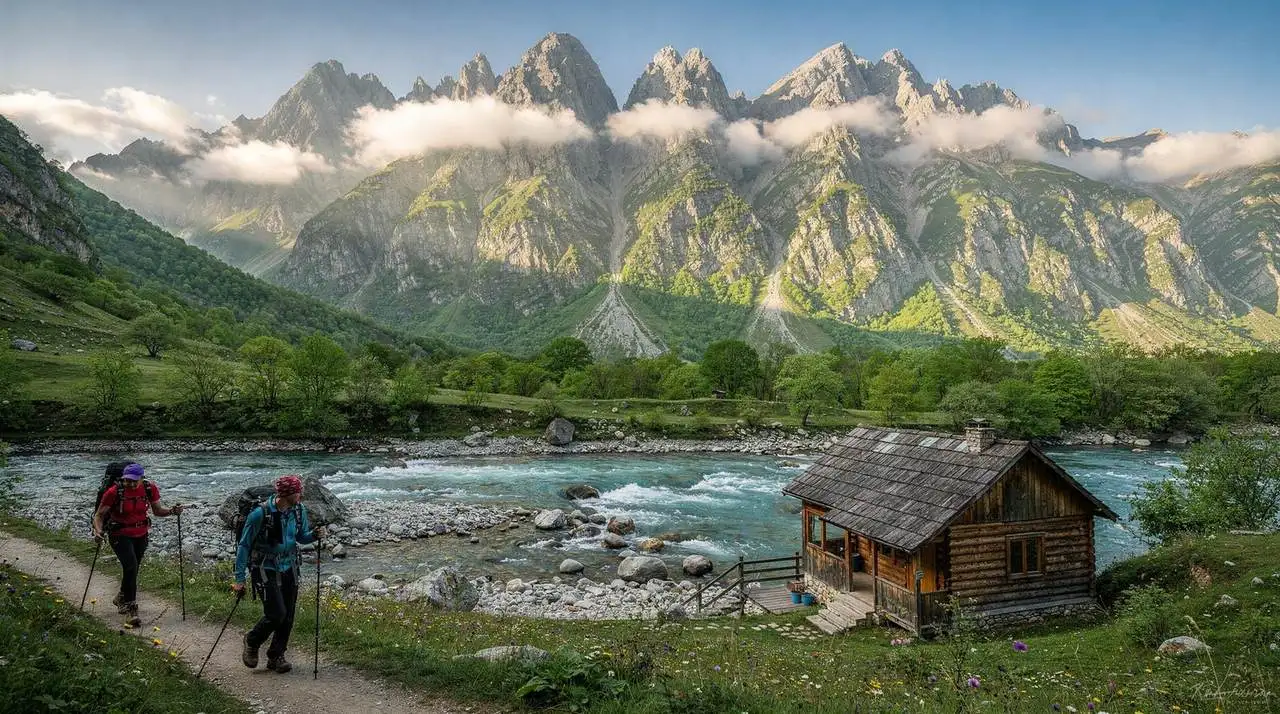
The final section descends gradually through forest and then along the Valbona River valley floor. The terrain flattens, the path widens, and the walking becomes noticeably easier. The river, running turquoise and cold from snowmelt throughout much of the season, is audible long before it appears.
The trail joins the main Valbona valley track and follows the river downstream to the main guesthouse cluster — recognisable by the ranger station, the small cafe, and the collection of accommodation signs. Most walkers reach this point in 6.5-8 hours from Theth.
Organised Tours
If the logistics of independent hiking in a remote mountain area feel daunting, organised tours handle accommodation, transport, and guiding:
This 3-day Albanian Alps trip from Shkodra includes the Valbona-Theth crossing with guided walking, guesthouse accommodation, and all transfers — a well-organised option that removes the uncertainty of arranging everything independently.
For a longer version that also takes in the Blue Eye spring and Theth’s waterfalls:
This 3-day Valbona, Theth, and Blue Eye tour from Tirana covers the crossing alongside the most scenic day hikes in both valleys.
Getting to the Trailheads
Getting to Theth
Theth is accessed from Shkodra. Daily minibuses depart Shkodra for Theth in the morning during high season (June-September), taking three to four hours along a road that is paved for much of its length but deteriorates on the final approach into the valley. Private taxis and organised transfers are also available from Shkodra.
From Tirana, take an early bus to Shkodra (2 hours) and connect to the Theth minibus. This makes for a long day — most visitors overnight in Shkodra before heading to Theth the following morning.
Getting to Valbona
Valbona is most dramatically reached via the Koman Lake ferry. From Shkodra, a morning connection (bus or private taxi) reaches Koman in time for the daily ferry departure at approximately 9:00 AM. The ferry crossing takes 2.5 hours through spectacular limestone gorge country, then a connecting minibus from Fierza reaches Valbona in another 45 minutes to one hour.
Alternatively, direct minibuses from Shkodra to Valbona take three to four hours by road, skipping the ferry but missing one of Albania’s most memorable experiences. Most visitors take the ferry at least one way.
Return from the Trail
After completing the crossing, you need to return to Shkodra (or continue on the Peaks of the Balkans trail). From whichever valley you end up in:
- From Valbona: Daily minibus to Fierza, then ferry back to Koman and connection to Shkodra. Or direct minibus to Shkodra by road.
- From Theth: Daily minibus back to Shkodra.
Organise your accommodation in advance and ask your guesthouse host about transport connections — they will typically know the exact schedule and can help arrange shared transport with other guests.
For wider context on the mountain roads and shared minibuses, see our guides to furgons and buses in Albania and driving in Albania, and check the seasonal road closures page before you travel.
Accommodation
Booking accommodation in both valleys is essential in July and August. Outside peak season, arriving without a reservation is generally possible but not recommended.
In Theth: The village has a good selection of guesthouses clustered around the main track. Prices run from EUR 20 to 35 per person per night including dinner and breakfast. Some guesthouses are near the start of the trail; others are a short walk further into the valley. Staying near the northern end of the village reduces the initial walk to the trailhead.
In Valbona: Guesthouses are more spread out along the valley. The main cluster near the ranger station is the most convenient for the trail arrival and for transport connections the following morning. Again, EUR 20-35 per person including meals is the typical rate.
Contact is almost always via WhatsApp. Ask each host to message ahead and recommend the next accommodation as you travel through the area.
What to Carry
Water: Carry at least 2 litres from your guesthouse. There are several springs on the trail, but their reliability varies by season. A water filter or purification tablets allow you to refill from mountain streams with confidence.
Food: Carry lunch and snacks. There is no food available on the trail between the valleys. A guesthouse breakfast will typically include bread, cheese, and eggs — enough fuel for the first few hours. Pack additional nuts, dried fruit, or energy bars.
Layers: Even in July, temperatures at the Valbona Pass can drop sharply if cloud moves in. Pack a waterproof jacket and a warm mid-layer. On sunny days the pass can be very warm, but conditions change quickly.
Footwear: Solid hiking boots with ankle support are strongly recommended. The boulder field below the pass and the rocky descent on the Valbona side have uneven surfaces that repay ankle stability. Trekking poles significantly reduce knee strain on the long descent.
Sun protection: Sunscreen, sunglasses, and a hat. The high sections above the treeline have no shade.
Offline maps: Download the trail on Maps.me or Gaia GPS before leaving Shkodra. Mobile signal is minimal in both valleys and nonexistent on the high trail. The trail is well-marked but having a GPS backup is sensible.
Small medical kit: Blister plasters, pain relief, and any personal medication. The nearest medical facilities are in Shkodra.
Cash: All guesthouses and any trail-side services are cash only. Bring sufficient Albanian Lek from Shkodra — there are no ATMs in either valley.
Trail Conditions by Season
June: The pass is usually clear of snow by mid-June most years, though late springs can delay this. The trail may be muddy and some sections slippery from snowmelt. Wildflowers are extraordinary — the alpine meadows below the pass are carpeted in colour. Fewer visitors than July-August.
July: Peak season. Trail is dry and conditions are typically reliable. Hot on lower sections; bring extra water. Some afternoon thunderstorm risk — start early and aim to be off the high terrain by 2pm.
August: Similar to July. Busiest period; guesthouses fill quickly. Still excellent hiking conditions.
September: Arguably the finest month. Crowds have thinned, the weather is stable and pleasant, and the beech forests begin turning golden. Days are slightly shorter but still ample for the crossing.
October: Possible in early October but risk of snowfall on the pass increases. Some guesthouses close after late September. Check conditions carefully before attempting.
Wildlife and Nature
The Albanian Alps are home to significant wildlife. Brown bears, wolves, and lynx inhabit the mountains, though sightings are rare and the animals avoid the main hiking trails. More commonly seen are chamois on the high ridges, golden eagles circling overhead, and a rich variety of smaller birds in the forest zones.
The wildflowers above the treeline are remarkable in June and July — orchids, gentians, alpine poppies, and dozens of species found only in the Dinaric Alpine zone. The forests of old-growth beech below the pass are among the finest remaining examples of this habitat type in Europe, with trees several hundred years old.
Combining with Other Hikes
For visitors spending several days in the Albanian Alps, the Theth-Valbona crossing fits naturally alongside other hikes in both valleys:
In Theth: The Blue Eye spring hike (45 minutes, easy), the Grunas Waterfall (1.5 hours return, easy), and the canyon walk along the river gorge (challenging, local guide recommended) all make excellent additions to a two or three night stay.
In Valbona: Day hikes along the valley floor (easy), the trail toward Rragami and Dragobia villages (moderate), and the approach route toward Jezerca for experienced mountaineers.
Our complete Albanian Alps hiking guide covers all of these routes in detail. If you would rather plan day by day, the Theth-Valbona trek itinerary lays out a ready-made schedule, and the personal account of the hike shows what the crossing feels like in practice.
Safety
The trail is safe in season when the conditions described above are observed. The two most important rules:
-
Start early. Leave Theth by 7am at the latest. This ensures you reach the pass well before any afternoon weather develops and gives ample time for the descent.
-
Check the weather. Ask your guesthouse host the evening before about the forecast. A clear morning that turns to afternoon storms is the most common hazard on the pass. If the forecast is poor, delay by a day rather than attempt the crossing in cloud.
Beyond these two precautions, the main requirement is adequate footwear, enough water and food, and a realistic assessment of your own fitness. The trail is achievable by any reasonably fit adult; it should not be underestimated but equally should not be feared.
Final Thoughts
The Theth-Valbona crossing is the kind of hike that stays with you. The combination of sustained physical effort, extraordinary mountain scenery, and the reward of arriving into a remote valley after hours on the high trail creates a powerful experience. The guesthouses at either end — the home-cooked food, the raki pressed on you by the host, the sound of the river through the window at night — complete it.
This is hiking at its most uncomplicated and most elemental. Come prepared, start early, and enjoy every step of it.
Renting Gear in Shkodra Before You Go
Not every hiker arrives in Albania with full trekking gear, and Shkodra — the last real town before Theth and Valbona — has a small but growing number of outdoor shops and guesthouses that rent or sell essential equipment. Trekking poles, in particular, are worth renting if you do not already own a pair: the long descent on either side of the pass is noticeably easier on the knees with them. If you are missing a waterproof layer or proper hiking boots, ask your Shkodra accommodation before assuming nothing is available — the tourism infrastructure around outdoor gear has improved considerably as the Theth-Valbona crossing has grown in popularity, though it still lags far behind established trekking hubs elsewhere in Europe. Bringing your own critical gear (boots especially, since fit matters most) remains the safer default.
A Realistic 3-Day Itinerary Around the Crossing
Most independent hikers underestimate how much the valleys either side of the pass reward extra time. A three-day structure gets the most out of the trip without feeling rushed:
| Day | Plan |
|---|---|
| Day 1 | Travel Shkodra to Theth (3-4 hours by minibus), settle into guesthouse, short walk to the Blue Eye spring or Grunas waterfall |
| Day 2 | The full Theth-Valbona crossing, starting by 7am, arriving Valbona guesthouse by mid-afternoon |
| Day 3 | Rest morning in Valbona valley, then Koman Lake ferry and onward transfer back to Shkodra |
Hikers with more time often add a fourth day for the Valbona-side day hikes toward Rragami or Dragobia before heading back, or extend into the wider Peaks of the Balkans trail for a multi-day mountain circuit.
Guided or Independent: Which Suits You
Independent hiking is entirely feasible for anyone comfortable navigating with offline GPS and comparing notes with fellow hikers and guesthouse hosts along the way — the trail is well-marked and busy enough in July and August that you are rarely far from other walkers. A guide adds real value in three scenarios: hiking outside peak season when the trail is quieter and weather less predictable, hiking solo and wanting the safety margin of local knowledge, or wanting the crossing folded into a wider, hassle-free Albanian Alps itinerary that also covers the Blue Eye and Koman ferry logistics without you having to plan each connection yourself. Both approaches are valid; the difference is mainly about how much you want to manage logistics yourself versus have them managed for you.
Frequently Asked Questions About the Theth to Valbona Hike
How long is the Theth to Valbona hike?
The Theth to Valbona hike is 17 kilometres point-to-point, crossing the Valbona Pass at 1,800 metres. Most hikers take 6-8 hours of moving time, with 7-9 hours total including breaks. Starting from Theth by 7am allows a comfortable arrival into Valbona in the early afternoon.
Is the Theth-Valbona hike dangerous?
The hike is not technically dangerous when done in good conditions with proper preparation. The main risks are rapid afternoon weather changes on the exposed pass, and rough rocky terrain on the descent into Valbona. The critical rule is to be at or past the Valbona Pass by 2pm to avoid afternoon storms.
Can beginners do the Theth-Valbona hike?
The hike is classified as moderate-to-challenging and is not suitable for complete beginners or those who rarely walk long distances. Reasonably fit adults who hike occasionally will find it challenging but achievable. First-time mountain hikers should allow extra time, go with a guide, and have a contingency plan.
When does the Theth-Valbona trail open?
The trail is typically passable from mid-June when snow clears from the Valbona Pass. In some years the pass holds snow into late June. By July the trail is fully reliable. Always check with your guesthouse host about current conditions before attempting the crossing in early or late season.
Do I need hiking boots for Theth to Valbona?
Yes, solid hiking boots with ankle support are strongly recommended. The boulder field below the pass and the rocky descent on the Valbona side have uneven surfaces where ankle stability matters significantly. Trail running shoes are manageable but not ideal. Trekking poles also reduce knee strain on the long descent considerably.