UNESCO World Heritage Sites in Albania: A Complete Guide
Albania holds four UNESCO World Heritage Sites — an impressive count for a small country, and one that reflects the extraordinary concentration of historical and natural significance within its borders. These sites span three millennia of civilization: from the Greek colonial ruins of Butrint to the Ottoman urban fabric of Berat and Gjirokastra, from the shared cultural landscape of the Ohrid region to ancient primeval beech forests stretching across multiple European countries.
For travellers, Albania’s UNESCO sites form the backbone of any serious cultural itinerary. They are genuinely outstanding — not just important by Balkan standards but remarkable by global ones. And they retain something increasingly rare among heritage sites: the ability to be explored without overwhelming crowds, overpriced entry, or the sensation of being processed through a tourist machine.
| Site | Inscribed | From Tirana |
|---|---|---|
| Butrint | 1992 | ~5.5 hours (via Saranda) |
| Berat historic centre | 2005/2008 | 2 hours |
| Gjirokastra historic centre | 2005/2008 | 3-3.5 hours |
| Ohrid Region (Albanian shore) | 2019 | 2.5-3 hours |
| Ancient beech forests (Valbona) | 2017 | ~6-7 hours (via Shkodra + ferry) |
Butrint: Layers of 2,500 Years (UNESCO 1992)
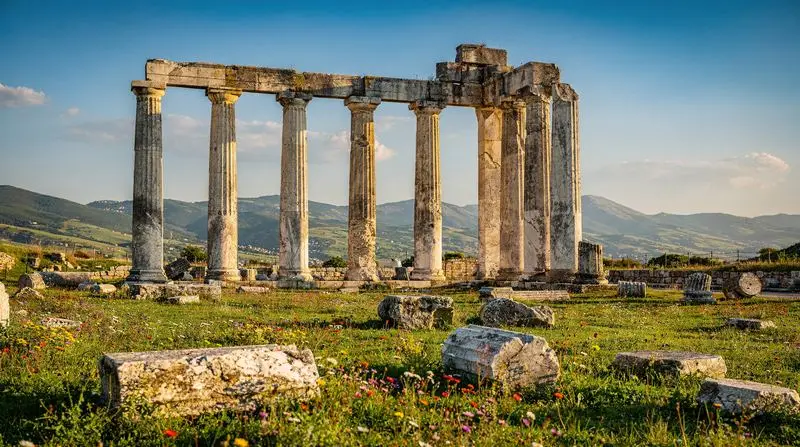
Butrint was Albania’s first UNESCO World Heritage Site, inscribed in 1992 — the same year the country opened to the world after decades of communist isolation. The site more than justifies the designation. Set on a forested peninsula between Butrint Lake and the Vivari Channel in the far south, it contains superimposed layers of Greek, Roman, Byzantine, and Venetian civilization on a single hilltop, creating a palimpsest of history that is almost without parallel in the Mediterranean world.
The Greeks founded the settlement around the 7th century BC. By the 3rd century BC it had grown into a significant city with temples, a theater (still remarkably intact), and a sophisticated water system. Julius Caesar awarded it colonial status; the Romans expanded it into a proper city — forums, baths, villas, public monuments. The Byzantines built substantial churches, including the extraordinary baptistery with its 6th-century mosaic floor (one of the finest early Christian mosaics in Europe). The Venetians added their lion-marked towers. All of this sits in a forest by a lake, with flamingos wading in the shallows and osprey hunting overhead.
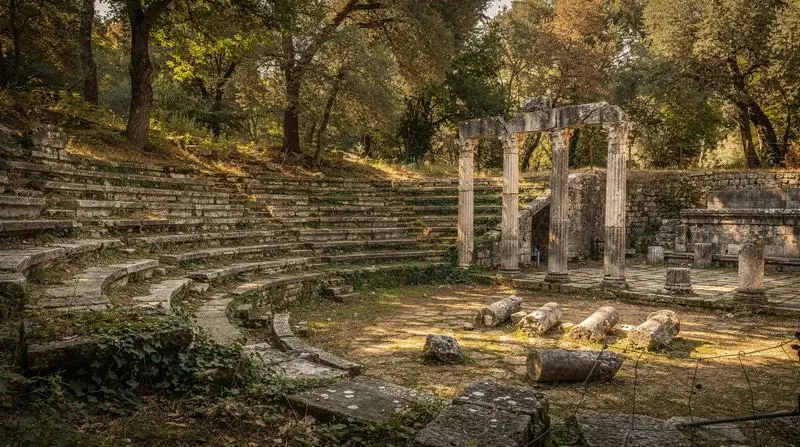
The theater at Butrint deserves particular attention. Cut into the hillside in the Greek fashion, it seated approximately 2,500 spectators and remains in an extraordinary state of preservation — the stone seating tiers are still intact, the orchestra circle is clear, and the acoustics, when you clap, still reveal the geometry of the original design. Standing in the center and looking up at the ancient seats, with forest canopy beyond, is one of those direct, unmediated encounters with antiquity that very few heritage sites still offer.
Join a guided Butrint tour from Saranda port with an expert guide who can illuminate the site’s remarkable historical layers and help you navigate the archaeological landscape efficiently. The site without a guide is interesting; with a guide who can explain the layering — Greek here, Roman there, Byzantine on top — it becomes exceptional. Cost approximately EUR 25-40 per person including transport.
Visiting Butrint
Location: 20 km south of Saranda on the road to Kakavija/Greece border.
Getting there: Taxi from Saranda (EUR 15-20 return with waiting), organized tours from Saranda and Gjirokastra, or rental car. No direct public transport serves the site.
Hours: Daily 8:00-20:00 (summer), 8:00-17:00 (winter). Check locally as hours change seasonally.
Entry fee: Approximately EUR 5-8 per person. Museum entry may be separate.
Time needed: Minimum 2-3 hours; 4 hours for those wanting to explore thoroughly including the outlying structures and the national park perimeter.
Best time: April-June and September-October for ideal weather and fewer visitors. July-August is crowded but manageable on weekday mornings.
Combine with: Ksamil beaches (5 km north of Butrint), Saranda seafront, and a day trip to the Greek island of Corfu (30-minute ferry from Saranda).
Berat and Gjirokastra Historic Centres (UNESCO 2005/2008)
Berat and Gjirokastra were inscribed as a joint property, recognizing them as “rare examples of an architectural character typical of the Ottoman period.” Both are living cities — not museum pieces — which makes them all the more remarkable. People have built here continuously for centuries and continue to do so, maintaining a visible connection between contemporary Albanian life and its Ottoman and earlier inheritance.
Berat: The City of a Thousand Windows
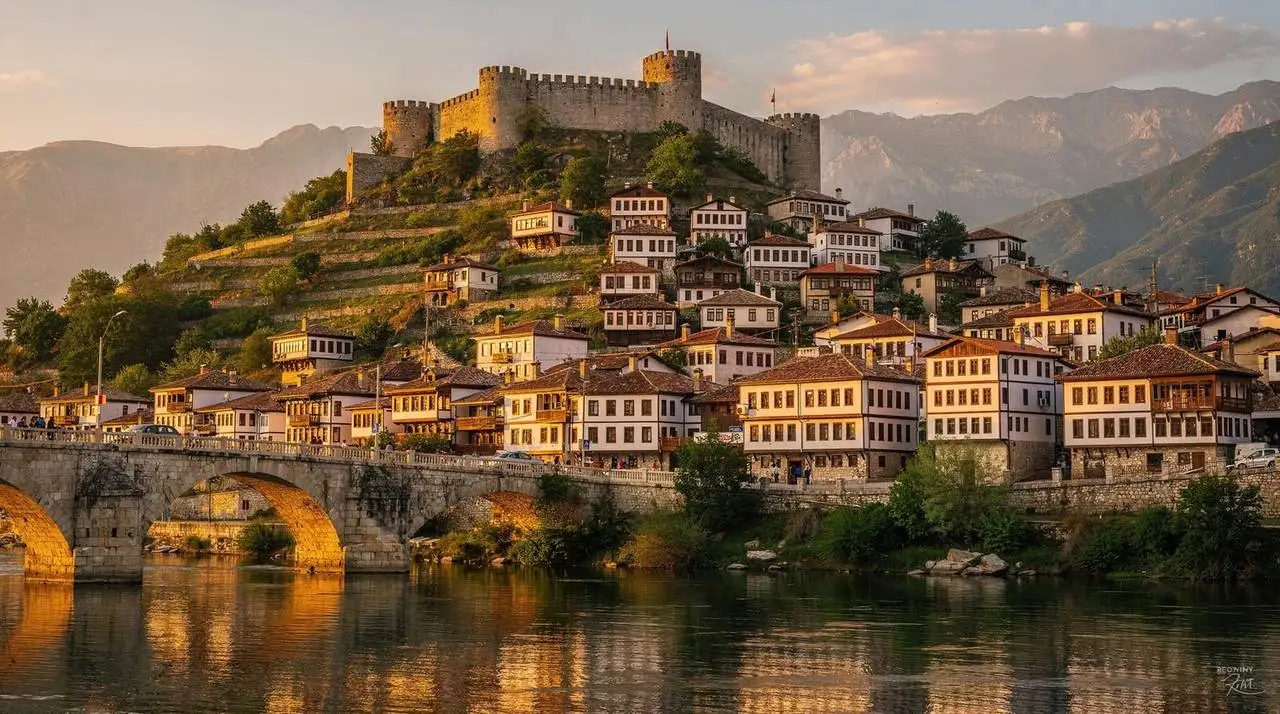
Berat is the more immediately photogenic of the two cities. Seen from across the Osum River, the whitewashed Ottoman houses climbing toward the castle — their large, symmetrical windows stacked in rows — form one of the most recognizable urban silhouettes in the Balkans. The windows were expensive status symbols when first installed: their concentration here reflects the prosperity of Berat’s Ottoman-era merchant class.
The historic core divides into three quarters: Mangalem (the Muslim quarter below the castle, with the 16th-century Lead Mosque), Gorica (the Christian quarter across the river), and Kalaja — the castle itself, still inhabited by around 400 people. The Onufri Museum inside Kalaja houses the finest collection of Orthodox religious art in Albania, including the remarkable paintings of Onufri himself — a 16th-century master celebrated for his innovative red pigment and the extraordinary expressiveness of his figures.
Walking the lanes of Mangalem in early morning, before the day-trippers arrive, is a foundational Albanian experience. The quality of light in the narrow whitewashed lanes, the smell of coffee and fresh bread from guesthouse kitchens, and the absolute silence of a city in which car traffic is limited to the streets below — these details accumulate into a mood that is hard to find anywhere else in Europe.
Book a full-day tour to Berat from Tirana — the most convenient way to visit if you are based in the capital, covering the castle, Onufri Museum, and the historic quarters with an expert guide who can explain the architectural and historical context in depth. Cost approximately EUR 40-60 per person including transport.
Visiting Berat: The city is approximately 120 km south of Tirana, 2 hours by road. Day trips are feasible but an overnight stay is strongly recommended — the city changes character at dusk as the day visitors depart and the local atmosphere reasserts itself. See the Berat travel guide and the Berat where-to-stay guide for overnight options.
Gjirokastra: The City of Stone
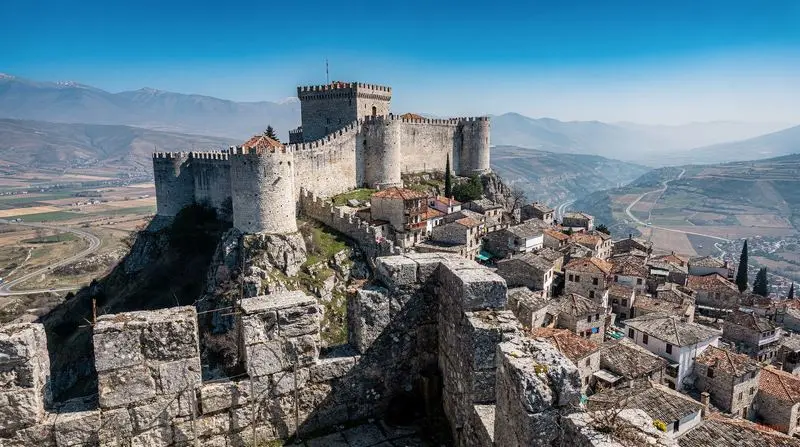
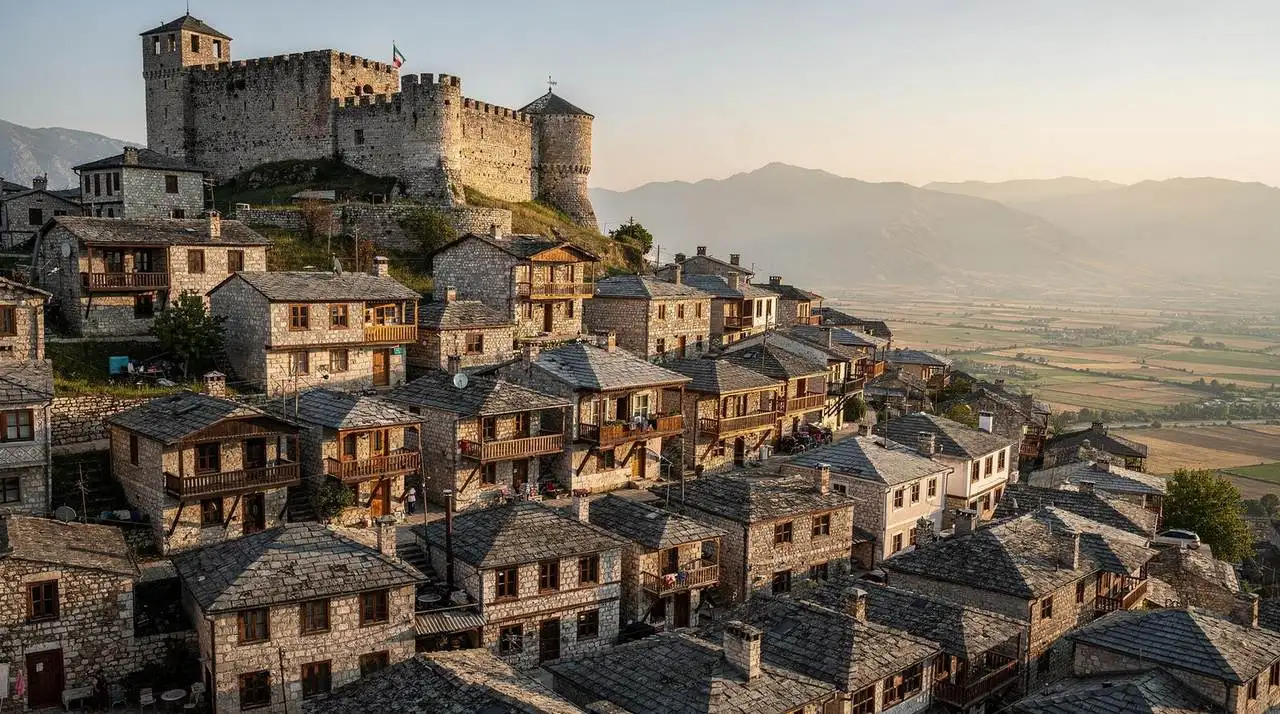
Gjirokastra is starker, more dramatic, and more historically layered than Berat. The UNESCO inscription came in 2005 (extended 2008), recognizing the “rare example of an Ottoman town preserved to a remarkable degree.” The stone-roofed houses climbing the steep hillside toward the massive castle are architecturally distinctive from any other Ottoman urban landscape — the grey schist slate roofs and heavy stone construction give the city an almost fortress-like appearance that reflects both the climate and the defensive mentality of the mountain communities that built it.
The castle above the city is the largest in Albania and one of the most dramatically situated in the Balkans. Inside are the National Weapons Museum, a Cold War-era American spy plane (an interesting artifact of Albania’s briefly ambivalent relationship with Western powers), and sweeping views over the Drino Valley. The Skenduli House and Zekate House — privately maintained kulla tower houses open to visitors — give an extraordinary interior view of how these fortified homes functioned as domestic spaces. Entry is EUR 2-3 per person at each house.
Gjirokastra was the birthplace of Enver Hoxha, the communist dictator, and of Ismail Kadare, Albania’s greatest novelist — a telling coincidence that says something about the intensity of experience the city produces in those who grow up within its stone walls.
Book a Gjirokastra Old Town and Castle guided tour for a structured introduction to the city’s layers — the guides here are exceptionally good, often with personal family connections to the houses and history they are describing. The castle visit in particular benefits from expert context on the Ottoman fortifications and the Cold War aircraft. Cost approximately EUR 20-30 per person.
Visiting Gjirokastra: Approximately 230 km south of Tirana, 3-3.5 hours by road. On the route between Tirana and Butrint/Saranda, making it a natural overnight stop on a southern Albania circuit. See the Gjirokastra where-to-stay guide for guesthouses within the UNESCO old town.
The Ohrid Region: Shared Heritage with North Macedonia (UNESCO 2019)
The Ohrid Region was inscribed as an extension of the existing Ohrid World Heritage property in North Macedonia, recognizing that the cultural and natural landscape of Lake Ohrid extends across the border into Albania. The Albanian portion of the site includes the shores of Lake Ohrid from Pogradec south, the National Park of Drilon, and the natural and cultural landscape of the eastern shore.
Lake Ohrid is one of Europe’s oldest and deepest lakes — estimated to be 4-10 million years old — and is home to numerous endemic species found nowhere else on earth. The lake’s waters are exceptionally clear (visibility to depths of 20-22 metres), fed by underground springs from the karst mountains surrounding it. The Albanian shore is less developed for tourism than the North Macedonian side, making it quieter and in some respects more rewarding.
The Lin peninsula, a few kilometres south of Pogradec, contains a Byzantine basilica floor mosaic of exceptional quality — a 4th-5th century CE work depicting animals, birds, and geometric patterns, exposed to the sky on the peninsula hillside, visited by almost nobody despite its significance. The mosaic is one of the finest early Christian floor decorations in the Balkans, and the walk to it through olive groves above the lake shore is itself beautiful.
The city of Pogradec, on the lake’s southwestern shore, is the main Albanian gateway. The lakeside promenade is pleasant, the fish restaurants are excellent (Ohrid trout is the regional specialty and is genuinely worth seeking out — mild, sweet, and found nowhere else in the world), and the mountains behind provide good hiking.
Visiting the Ohrid Region (Albania): Pogradec is approximately 150 km southeast of Tirana, 2.5-3 hours by road. Day trips from Tirana are feasible but an overnight allows better exploration of the lakeshore and potentially a ferry crossing to Ohrid in North Macedonia.
Ancient and Primeval Beech Forests (UNESCO 2017/Extended)
Albania’s fourth UNESCO site is less visited but perhaps most surprising: the country’s ancient beech forests are part of the “Ancient and Primeval Beech Forests of the Carpathians and Other Regions of Europe” — a transnational serial World Heritage Property that now spans 18 countries. The Albanian component includes primeval beech forests in the mountainous interior, particularly in the Valbona area of the Albanian Alps.
These forests are among the oldest surviving examples of temperate broadleaf forest in Europe — primeval woodland that has never been significantly altered by human activity. The ecological complexity and biodiversity of ancient beech forests is extraordinary: they support hundreds of species of fungi, insects, birds, and mammals that depend on old-growth conditions. Dead wood is left to decompose naturally, creating the habitat mosaic that defines true old-growth.
The sound of an ancient beech forest is different from managed woodland — the wind through old-growth canopy has a particular quality, the understorey is more varied, and the sheer scale of trees that have never been logged creates a sense of depth and permanence that younger forests lack.
Visiting: The Albanian Alps forests are most easily accessed via Valbona, reached by the Koman Lake ferry and road transport from Shkodra. The classic Theth-Valbona hiking trail passes through old-growth forest sections. See the Albanian Alps guesthouses guide for accommodation options within the forest.
Planning a UNESCO Albania Circuit
For travellers specifically focused on UNESCO heritage, a logical circuit covers:
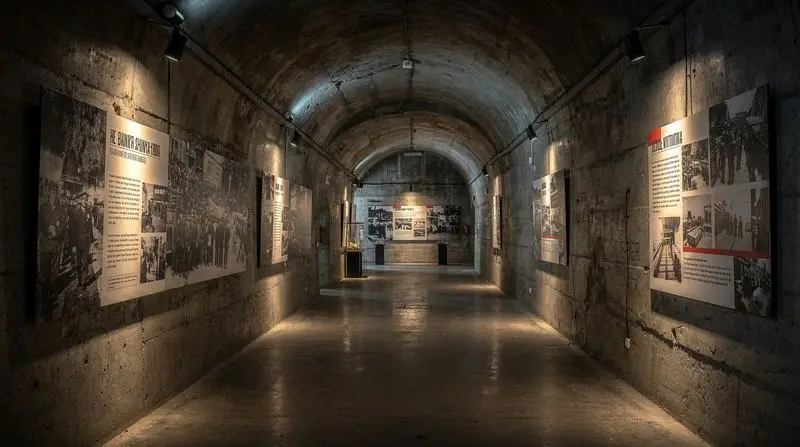
Days 1-2: Tirana — orientation, Bunk’Art museums, city context. See the Tirana guide.
Day 3: Berat — full day including castle, Onufri Museum, Mangalem quarter. Overnight.
Days 4-5: Gjirokastra — castle, old town, Drino Valley excursion. Overnight.
Day 6: Butrint — morning visit, then Saranda for overnight. Add Ksamil beaches.
Day 7-8: Pogradec / Lake Ohrid — return north, lakeshore exploration.
This is a seven-to-eight day circuit covering all four UNESCO sites. A full two weeks allows proper immersion at each location and includes side trips to Apollonia, Porto Palermo, and the Valbona Alps.
This 7-day guided Albania tour from Tirana covers the major UNESCO sites alongside the Alps and Riviera highlights — the most comprehensive organized tour available for visitors who want expert guidance throughout rather than self-organized logistics. Cost and itinerary details on the tour page.
Entry Prices and Practical Notes
A summary of current approximate entry fees for the UNESCO sites:
- Butrint: EUR 5-8 per person for the main site; EUR 2-3 additional for the museum inside the castle
- Berat castle (Kalaja) and Onufri Museum: EUR 3-5 per person
- Berat historic city walking: Free (the streets and neighbourhoods are publicly accessible; individual houses charge EUR 1-3 for interior visits)
- Gjirokastra castle and Weapons Museum: EUR 4-6 per person
- Gjirokastra historic houses (Skenduli, Zekate): EUR 2-3 each
- Butrint National Park (general access): included in site entry
- Lake Ohrid / Drilon National Park: Free for general access; boat tours in the park cost EUR 8-12
These prices remain substantially lower than comparable UNESCO sites in Italy, Greece, or France. A full day at Butrint with a guided tour costs less than a single admission to many European museums.
Albania’s UNESCO Heritage in Context
Albania’s UNESCO inscriptions reflect a broader reality about the country’s historical depth. Situated at the crossroads of the Adriatic and Mediterranean worlds, on the route between Rome and Constantinople (the Via Egnatia ran through what is now Albania), the country absorbed and adapted layers of Greek, Roman, Byzantine, Ottoman, and indigenous Albanian culture that accumulated over three millennia.
The communist period, despite its profound human costs, paradoxically preserved much of this heritage — urban development was restricted, traditional construction techniques were maintained by necessity, and the economic isolation that prevented modernization also prevented demolition. The “museum city” designations that Hoxha applied to Berat and Gjirokastra in the 1960s pre-empted UNESCO by decades.
Today the challenge is managed growth: maintaining the authenticity that made inscription possible while allowing the communities that live within these sites to prosper from tourism. Albania is working through the same tensions that older UNESCO destinations have faced. At the moment, the balance remains genuinely good — these are living, authentic places that have not yet been Disneyfied. Visiting them now, in this window before the crowds grow, is a privilege.
Complement your UNESCO exploration with the historical sites guide for sites beyond the World Heritage list, the castles guide for Albania’s extraordinary fortress heritage, and the museums guide for the best collections in Tirana, Berat, and Gjirokastra.
Photography at Albania’s UNESCO Sites
Each UNESCO site has particular photography conditions worth knowing:
Butrint: The golden hour before closing (roughly 6-7pm in summer) is when the forest light is most beautiful on the ruins. The theater interior, when lit obliquely by late afternoon sun, shows its construction detail clearly. The baptistery mosaic is best photographed in overcast light, which reduces the glare from the protective cover above.
Berat: The classic view — whitewashed houses reflected in the Osum River with the castle above — is best photographed in early morning (7-8am) or evening (6-7pm), when the light is soft and the river reflection is at its most complete. The Gorica side of the river provides the best vantage point for the Mangalem quarter.
Gjirokastra: The grey stone of the kulla houses is most atmospheric in low light — overcast mornings, or the golden light of late afternoon when the stone takes on a warmer tone than its midday grey. The castle terrace at sunset, when the Drino Valley and distant mountains are lit in the last light, is one of Albania’s finest landscape photography opportunities.
Ohrid Shore: The Lin peninsula mosaic is best photographed in morning light, when the sky gives even illumination without harsh shadows. The lake surface in early morning, when mist sometimes rises from the water, gives the Ohrid landscape its most dramatic character.
Getting the Most from a UNESCO-Focused Trip
Some practical advice for visitors specifically planning around the UNESCO sites:
Hire guides at the sites: All four UNESCO areas have licensed local guides available at or near the entrance. While guidebooks and audio guides are available, a human guide who knows the specific history and can adapt to your interests provides a richer experience. Rates run EUR 15-30 for a 2-hour guided tour.
Allow more time than you think: UNESCO sites in Albania consistently surprise visitors with the amount there is to see. Butrint in particular — often allocated two hours by day-trippers — rewards three to four hours for anyone with genuine historical interest.
Visit early: The main UNESCO sites see their peak visitor density between 10am and 2pm. Arriving at opening time (8am at most sites) gives you the first hour with dramatically fewer people, better photography conditions, and a different sensory experience of the sites.
Stay overnight near the sites: The difference between Berat as a day tripper from Tirana and Berat as an overnight guest in a Mangalem guesthouse is the difference between seeing a place and experiencing it. The same applies to Gjirokastra. The UNESCO old towns change completely in character after day visitors leave at 5-6pm.
For accommodation within or adjacent to the UNESCO sites, see the Berat where-to-stay guide and the Gjirokastra where-to-stay guide.
Albania’s UNESCO Tentative List: What Might Come Next
Beyond the four inscribed properties, Albania maintains a UNESCO Tentative List — sites formally nominated for future consideration that have not yet completed the inscription process. This list has included the ancient city of Apollonia near Fier, one of the largest and best-preserved Illyrian-Greek archaeological sites in the Balkans, and the historic center of Voskopoja, an 18th-century Aromanian cultural centre near Korça known for its extraordinary frescoed churches.
Neither is currently inscribed, meaning neither carries UNESCO World Heritage status yet, but both are worth visiting on the same logic that makes the confirmed sites appealing: genuine historical significance without the crowds that formal UNESCO status eventually brings. For travelers who enjoy seeking out heritage sites before they become fully established on the international circuit, Apollonia and Voskopoja are the natural next stops beyond the four confirmed properties.
Comparing the Four Sites: Which Suits Your Trip
Each of Albania’s UNESCO properties rewards a different kind of traveller, and knowing the distinctions helps prioritise a shorter trip. Butrint suits history and archaeology enthusiasts who want a single, concentrated encounter with layered antiquity in a national park setting — it pairs naturally with a Saranda or Ksamil beach stay. Berat and Gjirokastra suit travellers who want to actually stay overnight inside a UNESCO old town and experience it as a living place rather than a monument, and both work well combined with each other on a southern Albania loop.
The Ohrid Region suits travellers drawn to lake landscapes and want a quieter, less-visited UNESCO experience away from the main tourist circuit — it’s the site most often skipped, which is exactly its appeal for travellers seeking solitude. The beech forests suit committed hikers already planning the Theth-Valbona crossing, since visiting them requires genuine trekking rather than a car park and a ticket booth. For a first trip covering only one or two sites, Berat and Gjirokastra together deliver the highest density of “wow” per day of travel; for a two-week trip, all four are realistically achievable.
Guided Tours vs Independent Visits
Each UNESCO site can be visited independently with an entry ticket and a guidebook, but the value a guide adds varies by site. At Butrint, the layered Greek-Roman-Byzantine-Venetian history is genuinely difficult to parse without context — a guide transforms an interesting ruin walk into a comprehensible historical narrative, making this the site where guided visits add the most value. At Berat and Gjirokastra, independent wandering works well for absorbing the atmosphere, but a guide unlocks the interior stories of specific houses (the Onufri Museum’s iconography, the Skenduli and Zekate kulla houses) that are otherwise easy to walk past. The Ohrid Region and the beech forests are the most rewarding to visit independently, since their appeal is landscape and quiet rather than dense historical layering requiring interpretation.
Best Season for Each UNESCO Site
Timing varies meaningfully by site. Butrint’s forest setting means summer shade helps, but spring and autumn avoid both heat and crowds most effectively. Berat and Gjirokastra are at their photogenic best in the soft light of April-June and September-October, when the white facades and grey stone catch the low sun without midday’s harsh glare — see the Albania in April guide or Albania in October for seasonal specifics. The Ohrid Region is pleasant nearly year-round given its inland, lake-moderated climate, though summer adds swimming to the itinerary. The beech forests are only accessible in their full glory from mid-June to September, tied directly to the Theth-Valbona hiking season — outside that window, snow and closed guesthouses make the area impractical.
Frequently Asked Questions About UNESCO World Heritage Sites in Albania
How many UNESCO sites does Albania have?
Albania has four UNESCO World Heritage Sites: Butrint (an ancient city near Saranda inscribed in 1992), the Historic Centres of Berat and Gjirokastra (inscribed in 2005 and expanded in 2008), the Ohrid Region shared with North Macedonia (inscribed 2019), and the Ancient and Primeval Beech Forests in the Albanian Alps near Valbona (inscribed 2017 as part of a transnational listing). Together they represent Albania’s most significant contributions to world cultural and natural heritage.
Which UNESCO site in Albania is the best?
Both are extraordinary in different ways. Berat and Gjirokastra are living cities with inhabited Ottoman-era architecture and atmospheric old towns, making them outstanding places to stay overnight. Butrint is a purely archaeological site in a national park setting — more dramatic in scale and historical layering, but without the human dimension of the inhabited towns.
Can you visit all Albanian UNESCO sites in one trip?
Yes, easily. Butrint and Gjirokastra are very close together in southern Albania — both are accessible from Saranda in a single day, or can be combined in a 2-day loop. Berat is 3 hours north of Gjirokastra by road. A 4-5 day southern Albania route can comfortably cover all three UNESCO sites while also visiting the Blue Eye and the Albanian Riviera.