Where to Stay in Tirana: The Complete Neighborhood Guide
Tirana is a city that rewards staying in the right part of town. Albania’s capital has transformed dramatically over the past two decades — from a grey post-communist city into a genuinely lively, colourful urban destination — and the accommodation landscape has evolved just as quickly. Boutique hotels, design hostels, and well-positioned apartments now exist alongside older international chain options, all at prices that remain far below comparable European capitals.
The good news for visitors: Tirana is compact enough that most areas worth staying in are walkable to the main attractions. Skanderbeg Square, the National History Museum, the Blloku neighbourhood, and the grand Dajti Boulevard are all within 20 minutes on foot from most central hotels. That said, choosing your neighbourhood wisely still makes a noticeable difference to your daily experience.
This guide covers every district worth considering, gives realistic price expectations for 2026, and explains who each area suits best.
| Best neighborhood | Blloku |
| Cost | Around EUR 50-90/night for mid-range |
| Time needed | 2 full days minimum |
| Getting there | Tirana International Airport, 17 km from center |
| Best time | April-May or September-October |
Blloku: The Best All-Round Neighborhood
Blloku — Albanian for “the Block” — is the neighbourhood that most visitors end up choosing, and for good reason. Once the heavily guarded residential compound of the communist-era elite (including dictator Enver Hoxha himself), the area was opened to the public only after 1991 and has since reinvented itself as the social heart of the city.
Today, Blloku is the place where Tirana eats, drinks, and stays up late. The streets are lined with independent restaurants serving both Albanian and international cuisine, craft beer bars, coffee shops that stay full from 8am to midnight, and boutique fashion outlets. The neighbourhood has a slightly upscale, cosmopolitan feel without being sterile — there are still neighbourhood bakeries and corner groceries between the cocktail bars.
For accommodation, Blloku offers the widest choice at the mid-range level. Expect to pay EUR 50-90 per night for a well-reviewed boutique hotel or apartment, and EUR 90-150 for the better design hotels. In the off-season (November through March), the same rooms often drop to EUR 35-65.
The neighbourhood’s main drawback is noise: parts of Blloku are genuinely loud on weekend nights. When booking, look for rooms facing interior courtyards or quieter side streets rather than the main boulevard. Most properties on Booking.com include this detail in the room descriptions — read the fine print on street noise before confirming.
Skanderbeg Square and the City Center
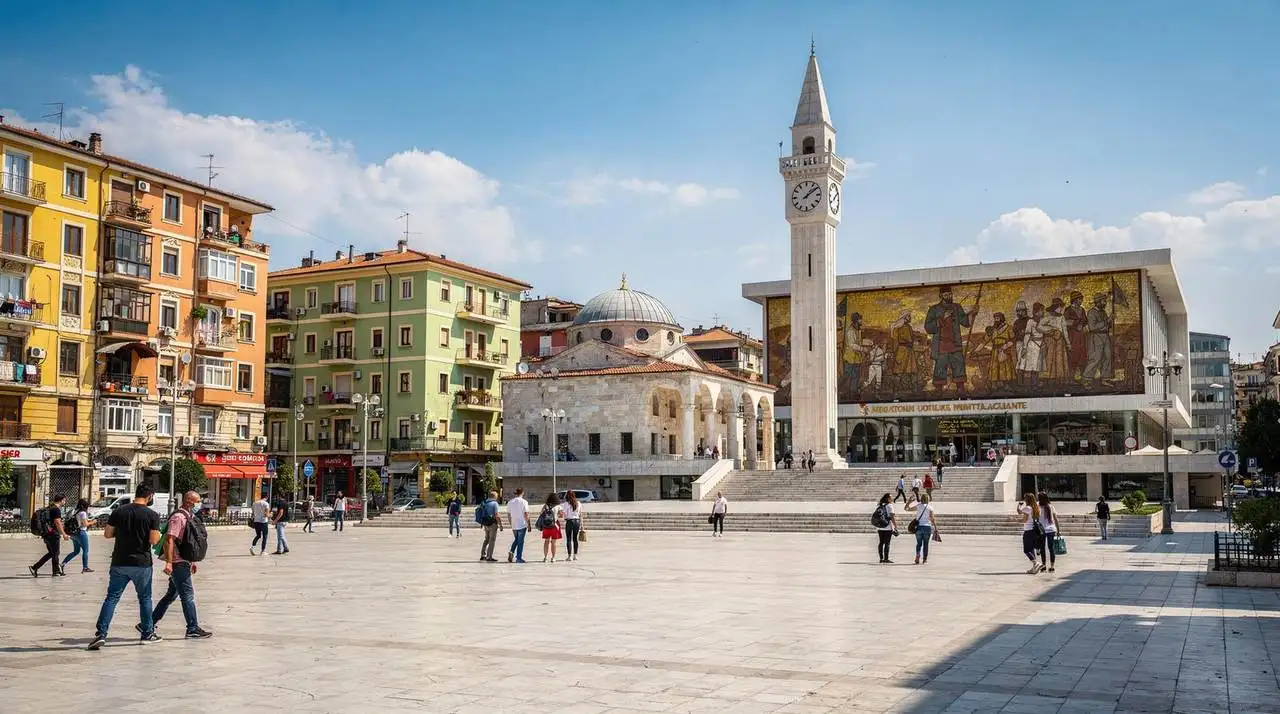
The area immediately surrounding Skanderbeg Square — Tirana’s main public plaza and the symbolic heart of the country — is the most historically resonant place to base yourself. Within walking distance you have the National History Museum, the Et’hem Bey Mosque, the Clock Tower, and the National Gallery of Arts. The square itself is one of the largest public spaces in the Balkans and genuinely impressive in its proportions.
Hotels in this area tend to fall into two categories: older business-class properties that were built for diplomats and have not been fully refreshed, and a smaller number of well-positioned boutique options that have capitalised on the prime location. Prices for good-quality accommodation here run EUR 60-120 per night in summer. The area is noticeably quieter at night than Blloku, which suits visitors who want an early start for day trips to Berat or Durres.
The city center area is also where most of the better mid-range restaurants are clustered, and where the main taxis and furgon services depart for other Albanian cities. If you are using Tirana primarily as a transit hub rather than a destination in its own right, being close to Skanderbeg Square makes practical sense.
The Boulevard Area: Dajti and the Grand Axis
Running south from Skanderbeg Square, the grand Dajti Boulevard was laid out during the Italian occupation of the 1930s and remains one of the most architecturally interesting streets in the city. The wide, tree-lined avenue passes the Parliament building, the Opera House, and a series of embassies before reaching the city’s university quarter.
Staying along or near the boulevard gives you a different experience of Tirana — more formal, less frenetic than Blloku, with a European-capital grandeur that surprises many visitors expecting a rougher city. Hotels here tend to be larger properties with more amenities, including rooftop bars and gym facilities. Budget EUR 70-140 per night in summer for the better options.
The area connects naturally to the Mother Teresa Square and the Artificial Lake Park, where Tiranans go running and walking in the mornings and evenings — a pleasant slice of local life that you are less likely to encounter in the tourist-heavy Blloku zone.
Outer Neighborhoods: Komuna e Parisit and Beyond
Komuna e Parisit (“Paris Commune”) is a residential neighbourhood southwest of Blloku that has been quietly gentrifying over the past decade. It lacks the buzz of Blloku but offers quieter, often better-value apartments and small guesthouses. Some of Tirana’s best independent restaurants have opened here in recent years, and the area is well-connected to the center by both taxi and foot.
For stays of a week or more, Airbnb and local apartment rental platforms offer good value in Komuna e Parisit and neighbouring Myslym Shyri Street corridor — expect EUR 35-55 per night for a well-equipped one-bedroom apartment compared to EUR 50-80 for equivalent hotels closer to Skanderbeg Square.
The outer ring of the city — areas like Rruga e Kavajes or the far end of the Dajti highway — is not recommended for tourists without a car. Transport back to the center is inconvenient and the accommodation-to-price ratio is rarely better than what you can find more centrally.
Tirana Neighborhoods Compared
| Neighborhood | Price (summer) | Vibe | Best for |
|---|---|---|---|
| Blloku | EUR 50-90 | Restaurants, bars, social | Most visitors |
| Skanderbeg Square/center | EUR 60-120 | History, quieter nights | Day-trip logistics |
| Dajti Boulevard | EUR 70-140 | Formal, spacious | Larger hotels, amenities |
| Komuna e Parisit | EUR 35-55 | Residential, gentrifying | Longer stays, better value |
Price Guide for Tirana Accommodation
Tirana accommodation spans a wide range:
Hostels and dorm beds: EUR 8-15 per night. Tirana has several well-run hostels concentrated in Blloku and the center, popular with backpackers and long-term travellers. The best Tirana hostels have rooftop terraces, social common areas, and staff with current travel information for the rest of Albania.
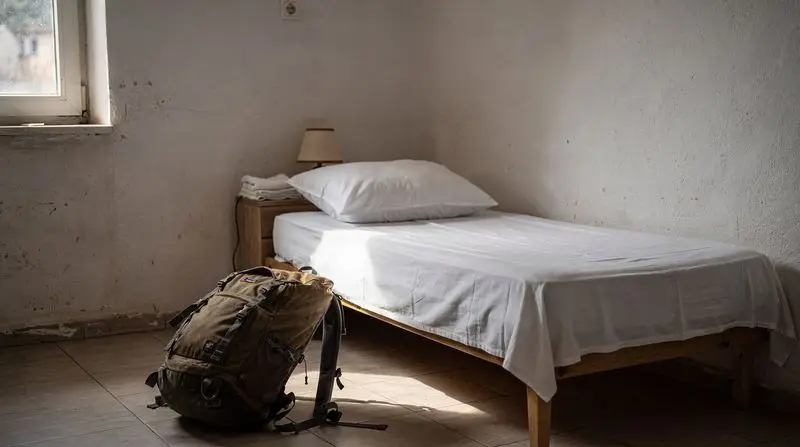
Budget private rooms and guesthouses: EUR 25-45 per night. Simple but clean rooms, often with shared bathrooms, typically including a basic breakfast.
Mid-range hotels and boutique properties: EUR 50-90 per night in summer, EUR 35-65 in winter. This bracket offers the best value in Tirana — rooms are generally well-furnished with air conditioning, reliable Wi-Fi, and often a small terrace or rooftop access.
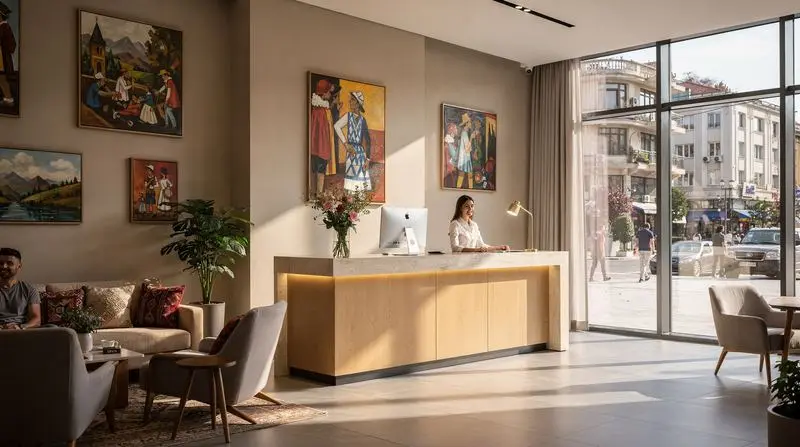
Upper mid-range and design hotels: EUR 90-150 per night. The top tier of independent Tirana hotels, often with rooftop bars, excellent restaurant facilities, and a higher level of design attention. Several exceptional properties in this range have opened since 2020.
International chain hotels: EUR 120-250 per night. The Sheraton and similar properties occupy a different market — useful for corporate travelers or those with point-based loyalty programmes, but poor value for leisure travellers given what independent hotels offer.
Seasonal Considerations
Tirana does not have the extreme seasonal swings of the coastal resorts, but pricing and availability still follow a pattern. The busiest periods are May, June, and September — when business travellers and leisure visitors overlap with the best weather. July and August see some reduction in business travel but an increase in Albanian diaspora visiting family, keeping occupancy reasonably high.
The best time to book Tirana accommodation is spring (April-May) or early autumn (September-October), when the weather is excellent and hotel prices are moderate. Avoid booking within two weeks of major Albanian public holidays, when domestic demand spikes. The worst value period is generally the week around Albania’s Independence Day (28 November).
In winter, Tirana accommodation is genuinely cheap — EUR 30-50 buys a good mid-range hotel room — and the city is still worth visiting for its excellent museums, cafe culture, and the Bunk’Art bunker museums that are best appreciated without summer crowds.
Booking Platforms and Tips
Booking.com has the widest inventory for Tirana hotels and offers the most reliable cancellation policies for the city. Most properties allow free cancellation up to 48 hours before arrival, which matters in a destination where plans often change. The review system is well-populated for Tirana.
Airbnb is strong in Tirana, particularly for apartments. If you are staying four or more nights, an apartment with a kitchen and washing machine often works out better value than a hotel — and you get a more local experience in a residential building.
Always read recent reviews carefully, particularly regarding Wi-Fi quality and air conditioning — both are critical in summer. Tirana gets hot from late June through August, and a room with only a fan rather than full air conditioning will affect your comfort significantly during the day.
What to Do During Your Stay
Tirana rewards at least two full days of exploration beyond just transit. The Bunk’Art museums — two former communist-era bunkers converted into cultural spaces — are among the most remarkable museums in the Balkans and should not be missed by anyone with an interest in the communist period.
The Tirana communist Albania tour with Bunk’Art Museum provides the best structured introduction to this period, combining guided walking through the communist-era city with entry to the bunker museum. Cost approximately EUR 25-40 per person including museum entry.
This Tirana city highlights walking tour covers the main landmarks with an English-speaking guide and runs daily in season — a useful orientation if you have limited time. Cost approximately EUR 15-25 per person.
The Dajti Mountain day trip is a popular half-day excursion from the capital: a cable car ride up to 1,600 metres, with forest walks and panoramic views over the city and coastal plain. It combines well with an afternoon back in Blloku.
This Tirana walking tour with Dajti cable car included combines the city highlights with the mountain excursion in a single full-day programme. Cost approximately EUR 35-50 per person.
Day Trips from Tirana
Tirana’s central position makes it an excellent base for day trips to destinations that would otherwise require a full stay. The best day trips from Tirana guide and the day trips from Tirana overview lay out the options in more detail, which is worth reading before you choose between a central or a quieter base. Berat, the UNESCO-listed “City of a Thousand Windows,” is roughly 120 kilometres south and can be visited in a long day.
This full-day Berat tour from Tirana covers the castle, the Onufri Museum, and the UNESCO old town with return transport — the most efficient way to see Berat if you are based in the capital. Cost approximately EUR 40-60 per person.
Durres on the Adriatic coast is just 38 kilometres west — an easy afternoon beach trip accessible by bus (EUR 2-3, 40 minutes) from the main bus station.
Kruja, the historic mountain town and site of Skanderbeg’s castle, is the most popular half-day trip from Tirana: 35 kilometres north and accessible by shared furgon from the city’s main bus station near Zogu i Zi.
Recommended Booking Strategy
Book your Tirana accommodation at least two weeks ahead for May-June and September, and at least a month ahead if visiting in July or August. Outside those peaks, same-week booking is generally fine.
Focus your search on Blloku for social atmosphere and convenience, the Skanderbeg Square area for history and day-trip logistics, and the Dajti Boulevard zone for a quieter, more refined stay. For longer visits or family travel, an Airbnb apartment anywhere within the inner ring road offers the best balance of value and comfort.
See the budget accommodation guide for the best hostel and guesthouse options in Tirana, and the boutique hotels guide if you are looking for something with more character than a standard hotel room.
If you are travelling with children, the family accommodation guide explains what to look for in a room, while couples will find more romantic ideas in the where to stay for couples guide. Anyone arriving by air should read the airport transfers guide before booking, since the way you reach your hotel can influence which neighbourhood is most convenient.
Once your base is settled, the 3 days in Tirana itinerary shows how to link the neighbourhoods above into a relaxed plan, and the best restaurants in Tirana guide helps you choose where to eat close to your hotel. If you plan to continue to the coast or the south afterwards, the where to stay in Saranda guide and the where to stay in Gjirokastra guide pick up where this page leaves off.
Frequently asked questions about Where to Stay in Tirana
Is Blloku too noisy for a light sleeper? Parts of it can be genuinely loud on weekend nights. Book a room facing an interior courtyard or a quieter side street rather than the main boulevard — most Booking.com listings note this in the room description — or consider Skanderbeg Square or Komuna e Parisit instead.
How many nights should I spend in Tirana before heading elsewhere? Two full days is the practical minimum to see Bunk’Art, the museums, and Blloku without rushing, plus a half-day trip to Berat or Dajti Mountain if time allows. Many visitors also use Tirana as a one-night bookend before and after a wider Albania circuit.