Valbona Valley: The Crown of the Albanian Alps
Hidden deep in the Accursed Mountains of northern Albania, Valbona Valley is one of the most dramatic landscapes in the entire Balkans. A glacially carved gorge flanked by peaks that climb above 2,600 metres, the valley rewards every traveller willing to make the journey — whether they come for a single night in a mountain guesthouse or the legendary multi-day crossing into Theth.
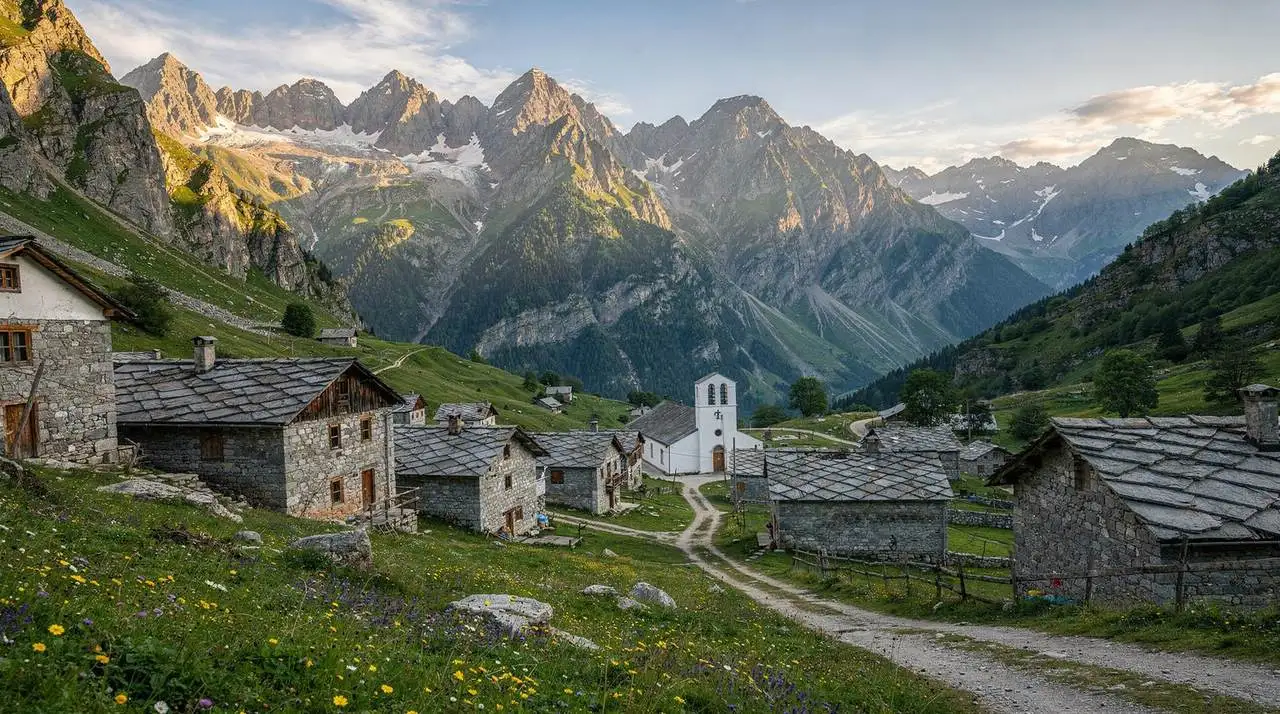
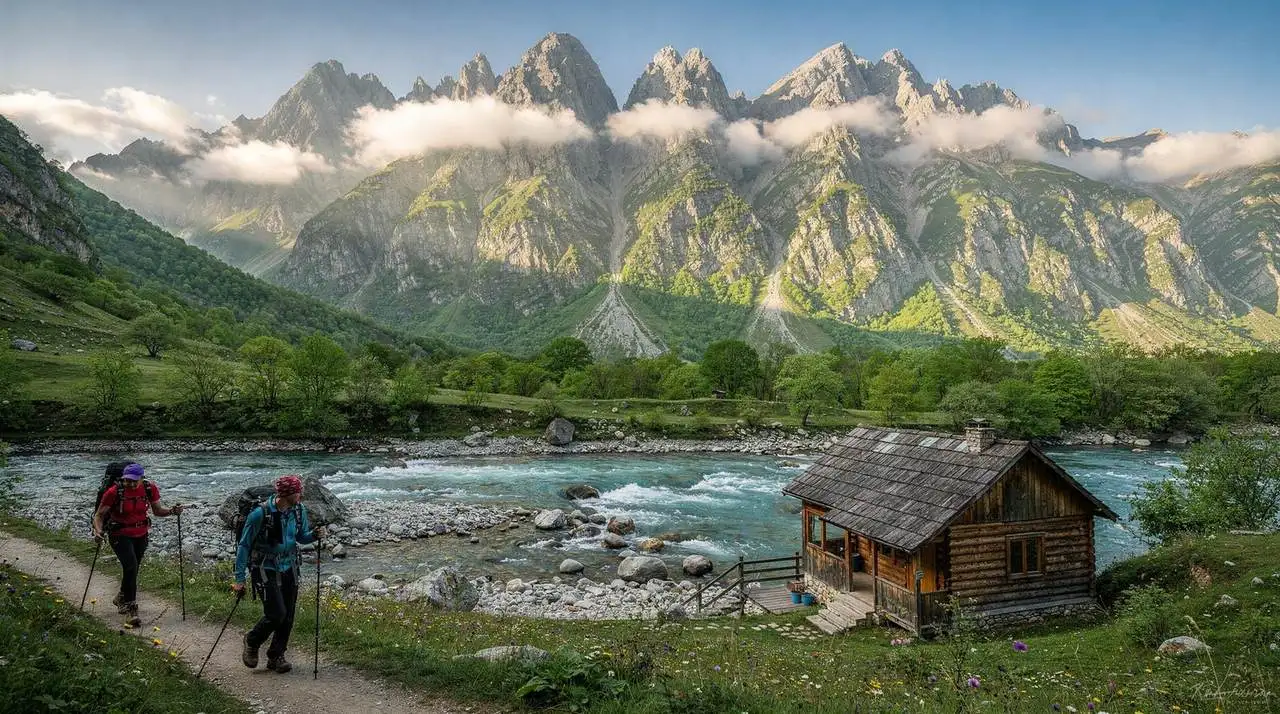
The Valbona River runs cold and turquoise through the valley floor, carving its way past beech forests, traditional stone farmhouses, and meadows thick with wildflowers in summer. This is classic Albanian Alps terrain: big skies, vertiginous ridgelines, and a pastoral calm that feels genuinely removed from the modern world. It is one of the few places in Europe where you can still wake to the sound of cowbells and rooster calls and spend a full day on foot without crossing a paved road.
Valbona sits within the classic Albanian Alps circuit alongside Theth and the Koman Lake ferry — three of the most remarkable travel experiences in the country, all within a day’s travel of Shkodra. For anyone planning a northern Albania itinerary, Valbona is not optional — it is the centrepiece. Our hiking the Albanian Alps guide covers the full logistics of planning the circuit.
| Where | Valbona Valley National Park, Albanian Alps |
| Cost | Around EUR 20-35/day incl. half-board guesthouse |
| Time needed | 1-2 days minimum |
| Getting there | Koman Lake ferry + minibus, or direct minibus from Shkodra |
| Best time | Mid-June to September |
Getting to Valbona
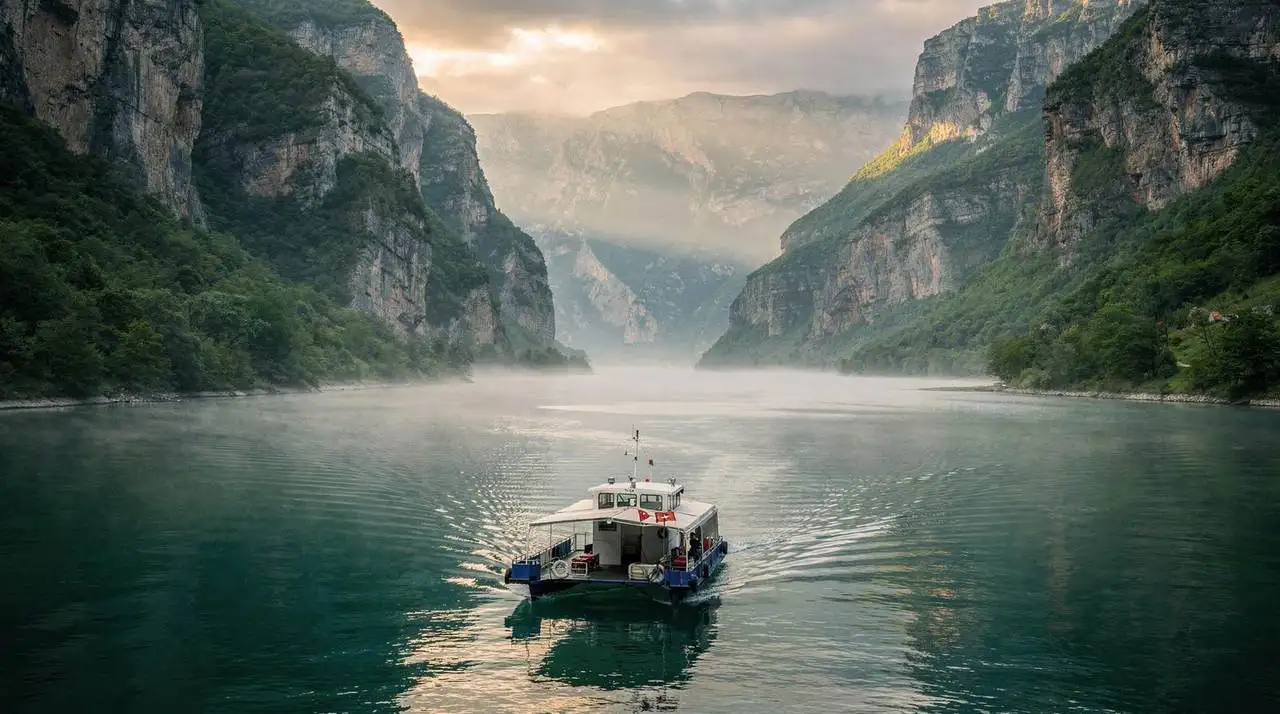
The classic route combines the Koman Lake ferry with a connecting minibus from Fierza to Valbona village. From Shkodra, morning minibuses connect to the Koman ferry departure point. The ferry departs at around 9:00 AM, and the full journey — ferry plus minibus — deposits you in the valley by early afternoon. The lake crossing alone, winding through dramatic limestone gorges that rival anything in Norway or Switzerland, is worth the trip independently.
Practical details: The Koman-Fierza ferry runs daily in season (June to September) and on reduced schedule out of season. The crossing takes approximately 2.5 hours. The connecting minibus from Fierza to Valbona takes a further 45-60 minutes on an increasingly rough mountain road. Tickets for the ferry can be booked through your accommodation or at the ferry landing; advance booking is advisable in July and August.
Alternatively, direct minibuses and shared taxis run from Shkodra to Valbona on a daily basis in high season, taking roughly three to four hours along a direct mountain route. This option misses the ferry experience but is faster. If you are driving your own vehicle, a 4WD or high-clearance car is strongly recommended for the final stretch into the valley. See our car rental in Albania guide for suitable vehicle recommendations.
From Tirana, it is possible to reach Valbona in a single long day by taking an early bus to Shkodra and catching the ferry connection, though most travellers overnight in Shkodra first to make the morning timing comfortable.
For visitors who prefer organized transport, this multi-day guided Albanian Alps tour covering Komani Lake, Valbona, and Theth from Tirana handles all the logistics of the mountain circuit — an excellent option for those arriving without their own vehicle or who want a guide to provide context throughout.
The Valley Itself
Valbona is not a single village but a loose scatter of hamlets and guesthouses strung along roughly 20 kilometres of valley. The main settlement and tourist hub sits near the end of the paved road, where a handful of cafes, guesthouses, and a small ranger station cluster together.
From this hub, the valley opens in two directions. Head upstream towards the Valbona Pass and you are on the route to Theth. Head downstream and you pass through more traditional farmsteads, cross suspension bridges over the river, and eventually reach the gorge mouth near Bajram Curri.
National Park: The Valbona Valley National Park was established in 1996 and covers around 8,000 hectares. The park entry fee is approximately 200 ALL per person, typically collected at the ranger station at the valley entrance. Wildlife here includes brown bears, wolves, lynx, and the endemic Albanian golden eagle, though sightings of the larger predators require patience and considerable luck. Birdwatching is excellent throughout spring and early summer.
The valley floor elevation is around 900 metres. The flanking peaks rise to over 2,500 metres in places, creating the towering gorge walls that give Valbona its dramatic character. The Valbona River changes character through the season — a torrent in late spring from snowmelt, a clear cold stream in late summer suitable for wading and swimming.
Hiking in Valbona
Valbona’s reputation rests primarily on hiking, and the network of trails — many improved in recent years through funding from the Peaks of the Balkans project — is genuinely impressive.
The Valbona-Theth Crossing
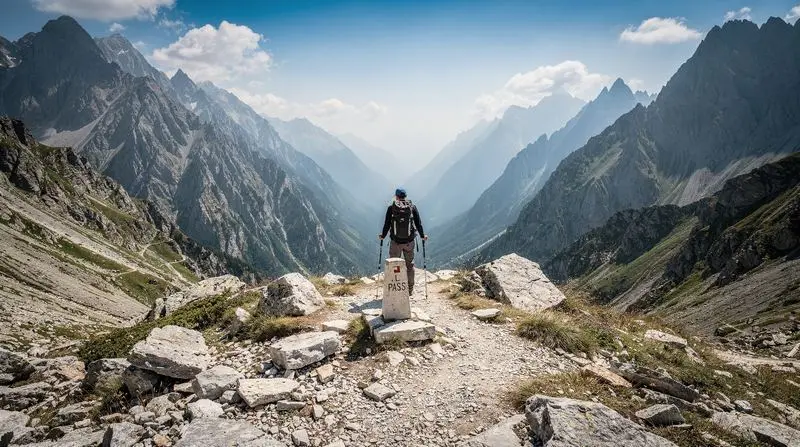
The iconic route between Valbona and Theth is among the finest one-day hikes in all of Europe. The trail climbs from the valley floor through alpine meadows and boulder fields to the Valbona Pass at 1,800 metres, then descends steeply into the Theth basin. The crossing takes most hikers seven to nine hours and requires a reasonable level of fitness.
The direction you hike matters. The Valbona-to-Theth direction is generally considered more demanding on the ascent but rewards you with a long, scenic descent into Theth. Theth-to-Valbona involves a steeper initial climb and a longer descent to the valley floor. Most independent travellers do the crossing in one direction and arrange transport back via Shkodra for the return.
Practical details: Start early — 6am departure from the trailhead is standard. The waymarking follows the Peaks of the Balkans red and white markers. Carry at least 2 litres of water, high-energy snacks, a waterproof jacket, and sunscreen. The pass section is above the treeline and fully exposed to afternoon thunderstorms — be below the treeline by early afternoon at the latest.
Our Theth-Valbona hike guide covers waypoints, timing, and what to carry in full detail.
Day Hikes from Valbona
Even without attempting the full crossing, there is excellent day hiking directly from the valley:
Rragami Village route: The trail to Rragami village winds through forest and pasture with fine ridge views. The village preserves traditional stone guesthouses and the walk takes 2-3 hours each way at a relaxed pace.
River gorge walk: The path along the river towards the gorge is flat and accessible — good for families and those wanting a gentle mountain walk without significant elevation. The gorge walls close in dramatically towards the valley mouth.
Jezerca Massif: The highest peak in the Dinaric Alps suits serious mountaineers looking for a multi-day alpine challenge. This route requires full alpine equipment, experience in exposed terrain, and preferably a local guide.
A three-day guided package including Valbona, the Theth crossing, and return combines the best of the region: this 3-day tour from Tirana to Valbona, Theth National Park, and the Blue Eye covers the complete circuit with accommodation, guiding, and transport arranged — the most efficient way to experience the Albanian Alps with confidence.
Peaks of the Balkans Trail
Valbona sits on the Peaks of the Balkans trail, a multi-day hiking circuit that crosses the borders of Albania, Kosovo, and Montenegro through some of the most dramatic mountain scenery in southeastern Europe. The full circuit takes 10-12 days; most hikers join the Albanian section at Valbona and exit at Theth or via the Doberdol Pass into Kosovo.
Our hiking the Albanian Alps guide covers the full Peaks of the Balkans Albanian sections with logistics for each leg.
Where to Stay in Valbona
The guesthouse (bujtina) culture of northern Albania is one of its defining pleasures, and Valbona has some of the best examples in the country. Rooms are simple — expect wooden furniture, wool blankets, shared bathrooms in older properties, and no television — but what the guesthouses lack in amenities they more than make up for in hospitality.
Breakfast typically includes fresh bread, local cheese, honey, eggs, and strong coffee. Dinner is usually a set menu of whatever the household has prepared: lamb or veal, mountain herbs, polenta, and yogurt-based sauces. Portions are substantial and the quality is consistently high.
Booking: Guesthouses rarely have online booking systems. WhatsApp contact is the norm. Ask your current accommodation to recommend onward options as you travel, or inquire at the ranger station at the valley hub. Prices in 2025 ran from EUR 20 to 35 per person per night including dinner and breakfast.
Location within the valley: If you want to be close to the trail head for the Theth crossing, stay near the main cluster at the valley hub. Notable names include the family guesthouses of Rragami and Dragobia villages, slightly off the main tourist track and correspondingly quieter — worth considering for a second night in the valley.
Booking ahead: In July and August, the best guesthouses fill two to three weeks in advance. Book by WhatsApp as early as possible and confirm arrival times.
Food and Drink
Meals in Valbona are overwhelmingly produced within the valley itself. The mountain diet leans on dairy — fresh cheese, sour cream, yogurt — combined with lamb, goat, and game meats in season. Wild mushrooms and mountain herbs feature heavily, as does cornbread (bukë misri) baked in the traditional way under a clay lid called a saç.
Raki, the Albanian spirit distilled from grapes or mulberries, is poured freely and often. Refusing the first glass is considered impolite; refusing the third is usually accepted. Local honey, often from hives kept on the valley slopes, is exceptional and available for purchase in most guesthouses — buy a jar to take home.
There are no restaurants as such — eating means eating with your host family, which is the correct and most rewarding way to experience northern Albanian mountain culture. Inform your host in the morning if you have dietary restrictions; they will do their best to accommodate, though vegetarians may find the diet somewhat dairy-heavy.
Our Albanian food guide explains the northern mountain cooking tradition, including the specific dishes and preparation methods you will encounter in Valbona guesthouses.
Best Time to Visit Valbona
Mid-June through September is the optimal window. Snow closes the Valbona Pass until at least late May most years, and the Theth crossing is only safely passable from June onwards. July and August bring the highest visitor numbers and the warmest temperatures, though even at peak summer the valley rarely feels crowded.
September is arguably the finest month: trails are clear, the crowds have thinned, and the beech forests begin to turn copper and gold. The combination of autumn colour and clear mountain air produces some of the finest photography conditions of the year.
October is possible for hardy travellers, but accommodation starts to close and the weather is unpredictable. The pass crossing becomes genuinely dangerous if snow falls early.
Spring (April to May) offers extraordinary wildflower displays in the lower valley, but the pass trail may still be snowbound. The river runs high and fast with snowmelt, making valley walks dramatic and stream crossings potentially challenging.
Winter visits for ski touring exist but require full alpine equipment, local knowledge, and considerable experience. This is not a commercial ski destination.
Practical Tips
Currency and Payments: The Albanian lek (ALL) is the only practical currency at the guesthouse level. Bring sufficient cash from Shkodra, as there are no ATMs in Valbona. Euros are generally accepted at the exchange rate your host offers; lek is preferred.
Mobile Coverage: Signal is intermittent at best. Albanian mobile operators have partial coverage in the main valley hub but nothing on the high trails. Download offline maps using Maps.me or Gaia GPS before you arrive. Let someone know your hiking plans and expected return.
Water: Mountain streams and springs are generally safe to drink directly in Valbona, but a filter or purification tablets are good insurance on longer routes above the guesthouse zone.
Footwear: Trail running shoes or light hiking boots are adequate for the Theth crossing in dry summer conditions. Trekking poles significantly ease the knee strain on the steep descent into Theth — bring them if you have them.
Fees and Permits: The national park charges a small entry fee (around 200 ALL per person). This is typically collected at the ranger station at the valley entrance.
Guides: The main trails are well-marked with red and white waymarks from the Peaks of the Balkans trail system. Independent hiking is perfectly feasible in summer. Off-season or for off-trail routes, hiring a local guide through your guesthouse is strongly advised. Rates are typically EUR 30-50 per day.
Valbona vs. Theth: Which First?
| Valbona | Theth | |
|---|---|---|
| Approach | Koman Lake ferry + minibus (scenic, half-day) | Minibus/4WD from Shkodra (2hrs, rougher road) |
| Valley character | Wide, open, grander scale | Tight, intimate, village-focused |
| Signature sight | Ferry crossing + open peak views | Blue Eye spring, lock-in tower |
| Best approach | Enter via Valbona, hike out to Theth (easier direction) | — |
Most travellers who have time do both, connected by the Theth-Valbona traverse. If choosing only one and the ferry journey itself appeals, start with Valbona; if a concentrated village experience with more short walks matters more, choose Theth. See our Theth destination guide for the full comparison from the other side of the pass.
History and Culture
Valbona falls within the Dukagjin highlands, territory historically governed by the Kanun — a fifteenth-century code of customary law attributed to Leke Dukagjini that regulated everything from blood feuds to hospitality obligations. The hospitality tradition (besa) was not merely cultural generosity but a binding legal duty: a guest in your home was under your protection, whatever the circumstances.
This ethic still shapes how travellers are received in the valley. The warmth you encounter in Valbona guesthouses has deep roots that predate the tourism industry by several centuries. Understanding this context makes the experience of staying in the valley richer — you are participating in a tradition, not simply consuming a service.
The communist era (1944-1991) had a complex effect on the north. Collectivisation disrupted traditional pastoral patterns, but the relative geographic isolation of the Accursed Mountains meant that cultural continuity was stronger here than in lowland Albania. After 1991, many families returned to ancestral lands and rebuilt guesthouses on the ruins of their old farmsteads.
Photography in Valbona
The valley is extraordinarily photogenic throughout the day, but the quality of light varies significantly. Early morning — from 6:00 to 9:00 AM — produces the most dramatic conditions: low side light on the limestone peaks, mist rising from the river, and the pastoral activities of the valley (herders moving livestock, smoke from guesthouse chimneys) that disappear as the day advances.
Midday light is harsh on the open meadows above the treeline but creates interesting effects in the forested river corridor. Late afternoon from around 4:00 PM as the sun drops behind the western ridge produces golden light on the eastern peaks — particularly the ridgeline above the Valbona Pass.
The Valbona-Theth crossing provides photographic opportunities that are impossible from the valley floor alone: views back down into Valbona from the pass, the expansive panorama of the Accursed Mountains from the ridgeline, and the descent into Theth where the valley and its famous church tower come into view around a bend in the trail.
Combining Valbona with the Broader Region
Valbona sits naturally within a northern Alps circuit. Most travellers pair it with Theth via the trail crossing, beginning or ending the circuit in Shkodra, which has the best accommodation and transport options in the north.
The Koman Lake ferry is an essential part of the journey and should not be rushed — plan to linger on the boat deck and soak up the views rather than treating it purely as a transit option. The Shala River tributary, accessible on a side trip from the ferry, is one of the most photogenic swimming spots in Albania and worth scheduling a dedicated excursion.
For a broader southern extension, a week-long itinerary could add Gjirokastra and the Albanian Riviera after completing the northern loop. The 14-day Albania itinerary shows exactly how Valbona fits into a complete country circuit, with realistic travel times and accommodation recommendations at each stop. The Theth-Valbona trek itinerary covers the specific mountain loop in its own dedicated planning guide.
Sustainability and Responsible Travel
The rapid growth of tourism in the Albanian Alps over the past decade has brought real economic benefits to communities that had very limited income alternatives. It has also brought pressures: trail erosion on the most popular routes, waste accumulation at beauty spots, and pricing pressures that can make traditional guesthouse culture difficult to sustain.
Responsible travel in Valbona means staying in locally owned guesthouses rather than externally managed properties; carrying out all non-biodegradable waste from high trails; staying on marked paths to avoid erosion; and engaging with the cultural context rather than treating the valley purely as a backdrop for outdoor sport.
Trail fees are in place on some sections and may be expanded — paying them without complaint is the correct response. The guesthouse economy is what sustains the valley’s traditional character; supporting it by staying and eating locally is the most effective thing a visitor can do.
Valbona is the kind of place that travel writers reach for superlatives to describe and then worry they have undersold. It is genuinely one of the great mountain experiences of Europe — not because it has cable cars or five-star lodges, but precisely because it does not. The combination of landscape, trail quality, and guesthouse hospitality adds up to something rare and worth protecting. Go early in the season for solitude. Go mid-season for reliability. Go in autumn for beauty. Just go.
Frequently Asked Questions About Valbona
How do you get to Valbona?
The classic route combines the Koman Lake ferry with a connecting minibus from Fierza. From Shkodra, minibuses depart early morning to the Koman ferry landing; the ferry crosses in 2.5 hours through dramatic limestone gorges and deposits passengers at Fierza, from where a further 45-60 minutes by minibus reaches Valbona village. The full journey takes most of the day and should be treated as an experience in itself, not merely a transfer. Alternatively, direct minibuses from Shkodra to Valbona take 3-4 hours on a mountain road.
Is Valbona better than Theth?
Valbona and Theth are complementary rather than competing — most travelers who love the Albanian Alps visit both. Valbona’s valley is wider and more open, with a grander sense of scale and more dramatic peak views. Theth’s valley is tighter and more intimate, with a more concentrated traditional village atmosphere. If you can only do one, Valbona has the advantage of the spectacular Koman Lake ferry approach; if you can do both via the traverse, you experience Albania’s mountains at their fullest.
What is there to do in Valbona besides the Theth hike?
Valbona rewards slower travel beyond the famous Theth traverse. Valley walking along the Valbona River, swimming in the cold turquoise pools below the guesthouse area, and exploring the traditional farmstead hamlets strung through the valley make excellent half-day activities. The Shala River side trip from the Koman ferry is a popular extension. For more experienced hikers, routes to the Valbona Pass viewpoint (without continuing to Theth) and several less-traveled ridgeline trails are accessible from the valley.
When is Valbona open?
Valbona guesthouses operate mid-June through late September. The Koman-Fierza ferry runs daily in season, with reduced service in shoulder months. Out of season, both the valley and the ferry become far less accessible and most accommodation closes. The ideal window is mid-June through mid-September. Late September can offer spectacular autumn colour and far fewer visitors, though guesthouse availability begins to narrow as owners close for winter.
Is there internet access in Valbona?
Internet access in Valbona is limited. Some guesthouses offer WiFi, but speeds are slow and reliability is variable. Mobile data signals (particularly Vodafone Albania) exist in parts of the main valley settlement but disappear on mountain routes. Download offline maps and complete any digital tasks before leaving Shkodra. Valbona’s disconnection from digital infrastructure is part of its appeal and should be embraced as part of the experience rather than worked around.