Kruja: The Cradle of Albanian Identity
No city in Albania carries more symbolic weight than Kruja. Perched on a rocky spur of Mount Kruja at roughly 600 metres above sea level, this small hilltop town was the stronghold of Gjergj Kastrioti — known to the world as Skanderbeg — the fifteenth-century commander who united the Albanian lords and held the Ottoman Empire at bay for more than two decades. To Albanians, Skanderbeg is not merely a historical figure; he is a founding myth, the embodiment of national resilience. And Kruja is where that story lives.
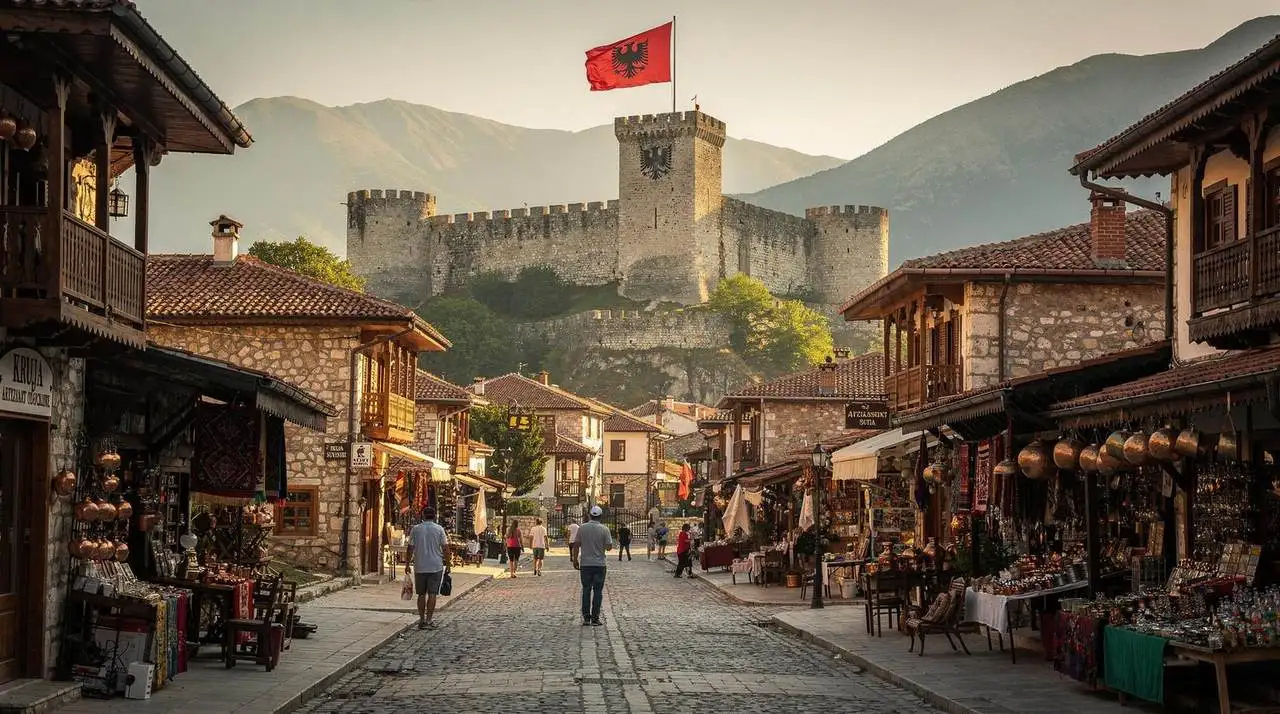
For visitors, Kruja delivers on multiple levels. The castle complex contains one of the most well-designed museums in the country. The old bazaar (çarshia) below the castle walls is authentic rather than contrived, still functioning as a commercial street where craftspeople sell hand-embroidered textiles, copper work, antique weapons, and traditional kilims. And the views from the castle ramparts — across the Adriatic coastal plain toward the sea, and up toward the bare peaks behind — make the forty-minute drive from Tirana feel very well rewarded.
Kruja is the ideal introduction to Albanian history for anyone starting their travels in the capital, and it works equally well as a standalone destination or combined with Durres for a two-site day. Our day trips from Tirana guide covers all transport options and the best ways to combine these two towns. The historical sites guide places Kruja in the broader context of Albanian heritage, from Illyrian hillforts to Ottoman cities.
| Where | Central Albania, ~30 km / 40-60 min from Tirana |
| Getting there | Furgon from Zogu i Zi terminal (~150 ALL) or taxi |
| Time needed | Half a day (3-4 hrs); a full day with Sari Salltik |
| Combined entry | Around 500 ALL (castle + museum) |
| Best paired with | Durres for a two-site day |
The Legend of Skanderbeg
Born around 1405, Gjergj Kastrioti was the son of an Albanian lord who sent him — along with his brothers — as a hostage to the Ottoman court, as was customary for vassal rulers seeking to guarantee their good behaviour. At the Ottoman court, Kastrioti excelled militarily, was given the name Iskander (Alexander, after Alexander the Great) and the honorific beg (lord), and rose to become one of the empire’s most effective field commanders.
In 1443, amid Ottoman military reverses at the Battle of Nish, Kastrioti defected, returned to Albania, and seized Kruja — his ancestral stronghold. He immediately converted back to Christianity, adopted the double-headed eagle as his standard (still the Albanian flag today), and began the extraordinary twenty-five-year campaign that kept the Ottomans out of Albania until his death in 1468.
Pope Calixtus III called him “the Champion of Christ.” Western European courts sent money and support. Venice, Naples, and Rome all recognised his importance as a bulwark against Ottoman expansion into the Adriatic and beyond. After his death, Albanian resistance collapsed quickly, Kruja fell in 1478, and the great Albanian exodus to Italy — the communities of Arbëreshë that still exist in Calabria and Sicily — began.
Skanderbeg’s importance to Albanian national consciousness cannot be overstated. His image appears on the currency, his name is on airports and squares across the country, and the museum at Kruja built to honour him is the most visited historical monument in Albania. The UNESCO sites in Albania guide places his resistance in the broader context of Albanian heritage.
The Skanderbeg Museum
The museum sits within the castle complex and was designed in the 1980s by the daughter of Albanian communist leader Enver Hoxha, Pranvera Hoxha, in collaboration with her husband. Whatever one thinks of its patronage, the building itself is architecturally striking — a neo-medieval structure of rough stone and wooden balconies that blends into the castle fabric without pretending to be ancient.
Inside, the collection traces Skanderbeg’s life and campaigns through weapons, armour, maps, manuscripts, and painted portraits. The famous helmet — a replica of the original now held in Vienna’s Kunsthistorisches Museum — is displayed prominently. The original helmet, surmounted by a goat’s head, was considered one of Skanderbeg’s most distinctive personal symbols during his campaigns. Illuminated maps show the military campaigns in detail. Ottoman firman documents and correspondence with European courts fill the upper galleries.
Practical details: Museum entry is approximately 300 ALL. Open Tuesday to Sunday, 9am to 5pm (6pm in summer). Allow 45 minutes to an hour for the museum. The museum is well labelled in Albanian and English.
A guided tour brings the history alive considerably: this guided tour from Tirana to Kruja Castle, the Old Bazaar, and Sari Salltik viewpoint is the most comprehensive way to experience Kruja — covering the castle, the museum, the bazaar, and the spectacular mountain viewpoint above the town in a single organised excursion with transport from Tirana included.
The Castle and Walls
The castle itself predates Skanderbeg — its foundations are medieval Albanian and possibly earlier — but the fortifications visible today are largely Ottoman reconstructions from the period after 1478. Walking the ramparts takes about twenty minutes and offers some of the best panoramic views in central Albania: the flat coastal plain stretching west toward the Adriatic, the suburbs of Tirana visible to the south, and the bare karst ridges of Mount Kruja rising immediately behind.
Entry: Castle complex approximately 200 ALL. Combined ticket with the museum available at the entrance.
Within the castle enclosure, beyond the museum, there is a small Ottoman-era tekke (Sufi lodge) belonging to the Bektashi order, which has historically played an important role in Albanian religious life. The tekke is still active and visitors are welcome to observe quietly. The Bektashi presence at Kruja is a reminder that Albanian religious history is more complex and syncretic than simple Muslim/Christian divisions suggest — Bektashism, with its mystical approach to faith and its accommodation of pre-Islamic traditions, has been an important thread in Albanian spiritual life for centuries.
A café inside the castle walls serves coffee and light refreshments and is a pleasant place to pause between the museum and the bazaar. The terrace looks over the plain below and is one of the better spots in the castle complex for photographs.
The Old Bazaar (Çarshia e Vjetër)
The covered bazaar running below the castle is one of the most authentically functioning old bazaars in Albania. Unlike some reconstructed Ottoman commercial streets elsewhere in the Balkans, Kruja’s çarshia has continuity — many of the shops have been in the same family for multiple generations, selling goods that are actually made by hand rather than imported for the tourist trade.
Highlights include shops selling hand-embroidered traditional Albanian dress (xhubleta from the north, with its distinctive conical silhouette), copper and silver jewellery, antique firearms (mostly nineteenth-century pieces), handwoven kilims and wool rugs in traditional Gheg patterns, and carved wooden objects. Prices are open to negotiation on most items, and the atmosphere is genuinely commercial rather than performative.
The bazaar is covered by a wooden arcade that keeps it cool in summer. The cobbled lane is steep in places. Coffee shops occupy the corners, and the smell of roasting coffee and grilled meat from the small restaurants at either end is constant and appealing.
Shopping tips: Hand-embroidered textiles are the strongest category. Authentic hand-embroidered pieces are significantly more expensive than machine-made imports — test by examining the reverse of the fabric, where the thread structure should be complex rather than printed. Copper and brasswork is a working craft here, not a museum display. Negotiate calmly; the bazaar is a professional environment and the vendors are used to international visitors.
Sari Salltik and the View Above the Town
Above the castle, a road climbs further up the mountain to the Albanian-Serbian tekke of Sari Salltik, a Bektashi pilgrimage site built over a much older Balkan sacred place. The site itself is modest, but the views from the ridge above Kruja — across the entire coastal plain to the sea and south toward Tirana — are extraordinary and worth the additional ascent, either on foot (about forty minutes from the castle) or by car.
The Sari Salltik viewpoint is included in the comprehensive guided tour linked above, or can be reached independently by rental car or taxi from the bazaar area. The pilgrimage site draws significant numbers of Albanian Bektashi on certain holy days — if you visit during one of these occasions, you will see an aspect of Albanian religious life that is rarely encountered by casual tourists.
Food in Kruja
The restaurant options at Kruja cluster around the bazaar entrance and the road up to the castle. Grilled meat is the default — qofte (spiced meatballs), shish qebap, and spit-roasted lamb in season. For the best meal in Kruja, look for the family-run restaurants tucked behind the bazaar rather than the more prominent tourist-facing options on the main approach road. Prices are low — a full lunch with raki, salads, and grilled meat rarely exceeds EUR 10 per person.
For a combined Durres and Kruja experience with food included, this Tirana to Durres and Kruja history and local food day trip includes tastings and a local meal as part of the circuit — an efficient way to cover both historical sites while experiencing the regional food traditions.
The byrek from the bakery stalls near the bazaar entrance is excellent — a morning visit to Kruja should begin with a fresh byrek and Albanian coffee before ascending to the castle. Our Albanian food guide explains the dishes you will encounter throughout Kruja and northern Albania.
Getting There
By furgon or bus. Furgons run from Tirana’s Zogu i Zi bus station to Kruja throughout the day. Journey time is around forty minutes. The fare is approximately 150 ALL. Note that services drop off in the early afternoon, so plan your return timing accordingly if relying on public transport.
By taxi or private transfer. A return taxi from Tirana to Kruja costs around EUR 25-35, and drivers will typically wait while you visit. This is the most flexible option, particularly if you want to combine Kruja with other stops on the same day.
By guided tour. Day tours from Tirana are the most popular option among international visitors and typically include transport, entrance fees, and a guide. Our day trips from Tirana guide compares the main options in detail.
By car. Driving from Tirana takes around thirty-five minutes via the Tirana-Durres highway and a turnoff toward Kruja. Parking is available near the bazaar entrance. See our car rental in Albania guide for vehicle options.
For the extended northern circuit including Kruja, Lezha, and Shkodra, this Kruja, Lezhe, Shkodra, and Mes tour combines multiple northern Albanian sites in a single long day — ideal for travelers who want to cover the main northern Albania highlights efficiently without organising their own transport.
Combining Kruja with Other Destinations
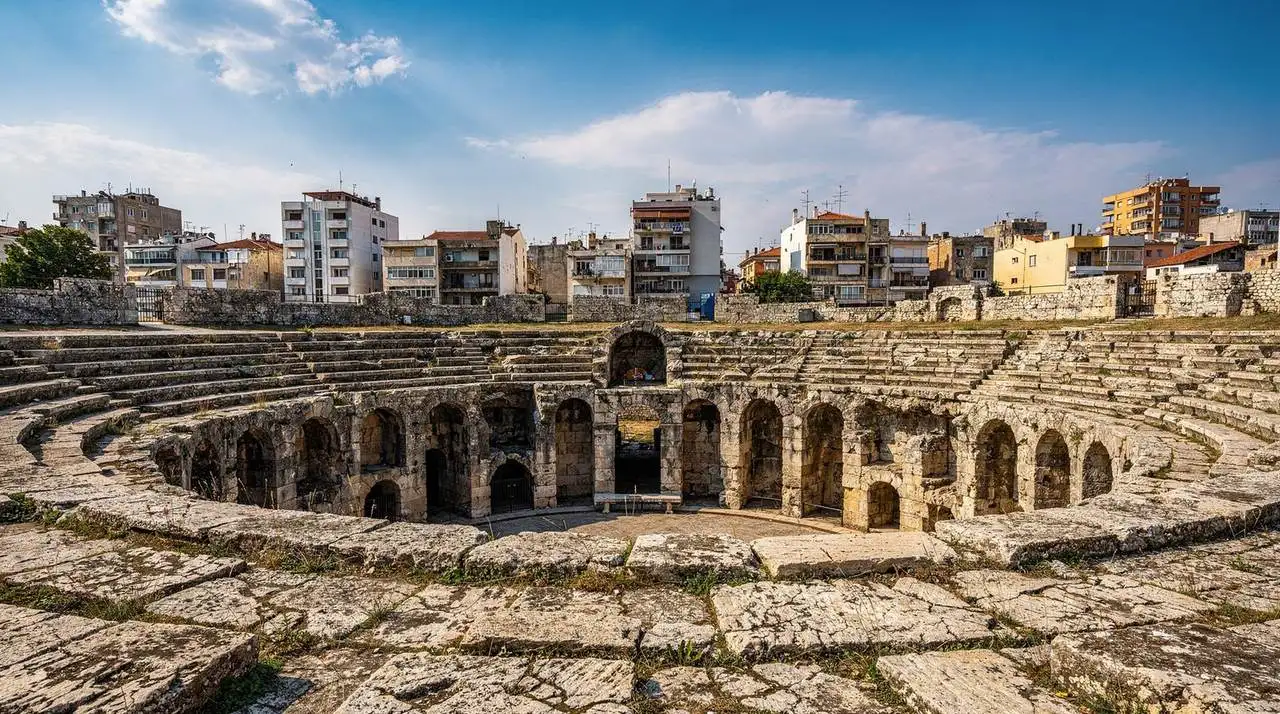
The most natural pairing is Kruja in the morning followed by Durres in the afternoon. The two towns are separated by about forty-five minutes by road, and the combination — mountain castle and Roman amphitheatre — gives a remarkably complete overview of Albanian history in a single day. Organised tours frequently bundle both.
Alternatively, Kruja combined with an afternoon in Tirana makes a strong cultural double — both the Kruja castle and the Tirana ethnographic institutions explore Albanian identity and material culture from complementary angles. The Tirana National History Museum, in particular, connects directly to the Skanderbeg story and provides context that enhances both the Kruja visit and the understanding of modern Albanian national identity.
For those with more time in northern Albania, combining Kruja with Shkodra — the northern gateway city — provides a north-south section through the heartland of Albanian history.
Best Time to Visit
Kruja is accessible year-round, which is one of its advantages over highland destinations that close in winter. Summer is the busiest period, with tour groups from Tirana arriving throughout the morning. Spring (April-May) and autumn (September-October) are ideal — mild weather, manageable crowds, and the mountain landscape either fresh green or turning gold.
Even on a winter visit, the castle, museum, and bazaar are open, and the absence of crowds makes for a more contemplative experience. The mountain air is noticeably cooler than Tirana at all seasons, making Kruja a pleasant escape on hot summer afternoons.
Practical Information
Opening hours. The Skanderbeg Museum is open Tuesday to Sunday, 9am to 5pm (6pm in summer). The bazaar shops keep variable hours but are generally open 9am to 6pm in season.
Entry fees. Castle complex: approximately 200 ALL. Museum: approximately 300 ALL. Combined tickets available at the entrance. Total entry rarely exceeds EUR 5 for both sites.
Time needed. Half a day (three to four hours) comfortably covers the castle, museum, and bazaar. A full day allows for Sari Salltik, a leisurely lunch, and more time in the bazaar.
Photography. Photography is permitted throughout the castle complex and bazaar. Inside the museum, photography of artefacts is technically restricted but widely tolerated. The view from the castle terrace over the coastal plain is one of the most photogenic viewpoints in central Albania.
Budget. Kruja is one of Albania’s most affordable day trips. Including transport from Tirana, entry fees, and lunch, a full day costs EUR 15-30 per person. See our Albania travel budget guide for broader cost planning.
The bazaar street is the approach to the castle rather than a separate stop — it climbs to the gate and its stalls still occupy Ottoman-era shopfronts: a Kruja castle and old bazaar tour does them in that order, which is the order the town was built in.
Kruja Compared to Other Day Trips from Tirana
| Kruja | Durres | Shkodra | |
|---|---|---|---|
| Distance from Tirana | ~30 km / 40-60 min | ~35 km / 40 min | ~2 hrs |
| Main draw | Skanderbeg castle + museum, bazaar | Roman amphitheatre, beach | Rozafa Castle, lake, Alps gateway |
| Time needed | Half day | Half to full day | Full day or overnight |
| Best combined with | Durres or Tirana afternoon | Kruja | Koman Lake ferry |
Kruja and Durres are the two most efficient half-day trips from the capital and combine naturally into a single, historically rich day — mountain fortress in the morning, Roman ruins by the sea in the afternoon.
Traditional Crafts Worth Buying in the Bazaar
Beyond the general shopping tips above, a few specific items are worth seeking out if you want a genuine souvenir rather than a mass-produced one. Hand-forged copper coffee pots (xhezve) are made by a handful of remaining coppersmiths working in small shopfront workshops visible from the lane — watching the hammering process, if a smith is working when you pass, is worth pausing for even if you don’t buy. Traditional qeleshe felt caps, distinct from the flatter versions sold elsewhere in Albania, are a Kruja specialty tied to the northern highland dress tradition. For textiles, look for pieces with visible irregularities in the stitching — a sign of hand rather than machine work — and expect to pay accordingly more for genuine hand-embroidery than for the cheaper printed alternatives displayed alongside it.
Why Kruja Matters
There is a tendency among visitors — particularly those coming from countries with deep reservoirs of their own medieval history — to be slightly sceptical of places that lean heavily on a single historical figure. Kruja leans on Skanderbeg and makes no apology for it. But the story it tells is genuinely important to understand, not just as Albanian national mythology but as actual European history.
The Ottoman conquest of southeastern Europe was one of the defining geopolitical processes of the fifteenth century, and Skanderbeg’s resistance delayed that conquest by a generation in the western Balkans. His campaigns affected the balance of power across the Adriatic and arguably influenced the survival of Renaissance Italy. Kruja, in this reading, is not merely a provincial hilltop museum but a place that sits at the edge of a much larger story.
Come for the view and the bazaar. Leave with some sense of what this small country has carried for a very long time.
Frequently Asked Questions About Kruja
Is Kruja worth visiting?
Kruja is one of the most rewarding day trips from Tirana and should not be skipped by anyone with an interest in Albanian history. The Skanderbeg Museum inside the castle complex is the best museum in Albania on the subject of medieval Albanian resistance to the Ottoman Empire. The old bazaar, one of the best-preserved Ottoman-era bazaars in the country, is excellent for traditional crafts and gifts. The mountain setting and castle views add genuine drama. Allow three to four hours minimum.
Can you do Kruja as a day trip from Tirana?
Yes — Kruja is the easiest and most popular day trip from Tirana. The distance is approximately 30 km and the drive takes 45-60 minutes. Buses and furgons run from the Zogu i Zi terminal in Tirana, costing around 200-250 ALL each way. Many visitors combine Kruja with a half-day in Tirana, spending the morning in the city and driving up to Kruja in the early afternoon when the light is good on the castle. Return by early evening.
Who was Skanderbeg and why is he important?
Gjergj Kastrioti Skanderbeg (1405-1468) is Albania’s national hero — an Albanian nobleman who served the Ottoman Empire as a military commander before defecting and leading Albanian resistance to Ottoman expansion for 25 years. His campaigns from the Kruja castle kept Ottoman forces at bay through the 1450s and 1460s and prevented the consolidation of Ottoman control over the western Balkans during his lifetime. He is celebrated across Albania and by Albanian communities worldwide as the defining symbol of national identity.
What is there to do in the Kruja old bazaar?
The Kruja old bazaar (Pazari i Vjetër) is a restored Ottoman-era bazaar where artisans sell traditional Albanian crafts: handmade silver jewellery, embroidered textiles, carved wooden items, traditional Albanian costumes and fustanellas, copperware, and antiques. It is the best place in Albania for high-quality traditional gifts and souvenirs. Prices are negotiable at some stalls. Several small cafe-restaurants in the bazaar serve byrek (flaky pastry), traditional Albanian coffee, and light meals.
How much does Kruja cost to visit?
Entry to the castle complex is approximately 200 ALL; the Skanderbeg Museum inside costs an additional 300 ALL. Combined total is rarely above EUR 5. The bazaar is free to browse. A full day including transport from Tirana, entry fees, and lunch in the bazaar costs EUR 15-25 per person — one of the most cost-effective cultural days in Albania.
Is Kruja better combined with Durres or Tirana?
Both work well for different reasons. Pairing Kruja with Durres gives a complete arc of Albanian history — medieval resistance in the mountains, Roman antiquity by the sea — and is the more popular choice among organised tours. Pairing Kruja with an afternoon back in Tirana, particularly the National History Museum, deepens the Skanderbeg story with broader national context. Neither combination requires more than a single day.
Is the walk up to Sari Salltik worth the extra time?
For travelers with a spare hour and reasonable fitness, yes. The forty-minute climb above the castle rewards you with panoramic views across the coastal plain to the Adriatic that are noticeably better than the castle ramparts alone, plus a glimpse of active Bektashi pilgrimage life at the tekke. Skip it if you are pressed for time or traveling with very young children — the castle and bazaar alone are a complete and satisfying visit.