Durres: Albania’s Ancient Port City
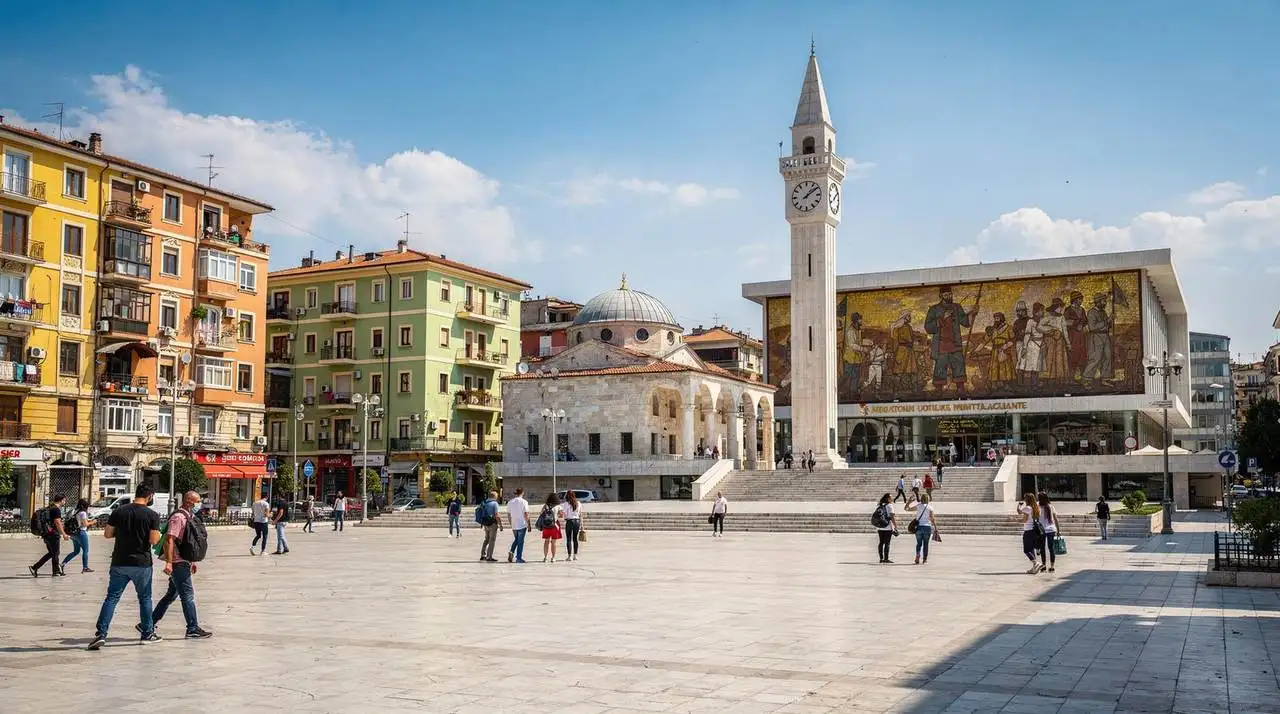
Durres — ancient Epidamnos to the Greeks, Dyrrachium to the Romans — stands as one of the oldest continuously inhabited cities in the Balkans, with a settlement history stretching back nearly three thousand years. Today it is Albania’s largest port and second city, a place where Roman ruins sit behind apartment blocks, Byzantine mosaics lurk beneath car parks, and a long sandy beach stretches south of the old town in both directions. It is not the most immediately photogenic city in Albania, but it rewards anyone willing to spend a day exploring beyond the seafront promenade.
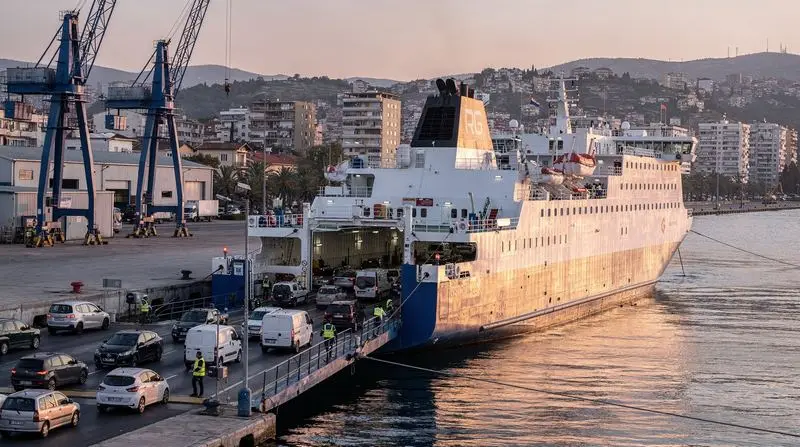
Most visitors to Durres come as a day trip from Tirana — the two cities are connected by a fast dual carriageway and take under forty minutes by bus or furgon. Others arrive by ferry from Bari or Ancona in Italy, stepping off the boat directly into Albanian territory for the first time. Either way, Durres offers a compact and genuinely impressive introduction to Albanian history, combined with beach access that is hard to match in the capital.
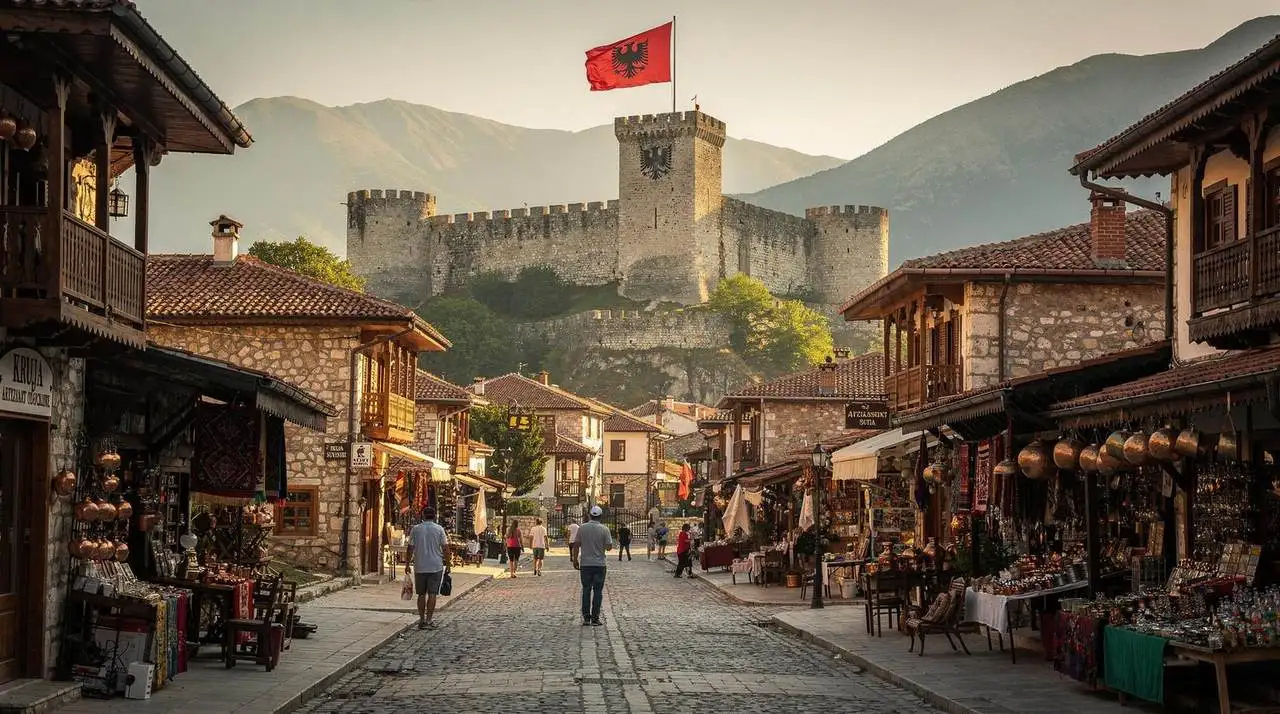
Durres pairs naturally with Kruja — the historical castle town 40 minutes to the north — for a two-site day trip from Tirana. Our day trips from Tirana guide covers all transport options and timings. For visitors arriving by sea, the Italy to Albania ferry guide covers everything from operator selection to what to expect on arrival.
| Where | Central Albanian coast, ~35 km / 40 min from Tirana |
| Getting there | Furgon from Tirana (Rruga e Kavajes, ~150 ALL) or ferry from Bari/Ancona |
| Time needed | Half a day for the amphitheatre and museum; a full day with the beach |
| Amphitheatre entry | Around 500 ALL |
| Best base | Tirana as a day trip, or a promenade hotel if you want beach time |
A Brief History of Durres
The city was founded as a Greek colony around 627 BC by settlers from Corinth and Corcyra (modern Corfu). Its natural deep harbour made it strategically and commercially vital from the outset. The Romans captured it in 229 BC and developed it into one of the most important cities in the Adriatic, the western terminus of the Via Egnatia — the great road that connected Rome with Byzantium (later Constantinople) via Macedonia and Thrace.
At its Roman height, Dyrrachium was home to tens of thousands of residents. Julius Caesar and Pompey fought a major battle nearby during the civil war of 48 BC. The amphitheatre built in the second century AD ranked among the largest in the Roman Empire. Byzantine rule followed, then Norman invasions, Venetian administration, and finally Ottoman conquest in 1501. The city passed through Albanian national hands again only with independence in 1912.
This layered past means that almost anywhere you dig in Durres — sometimes literally — something ancient surfaces. The city’s archaeological museum and the amphitheatre itself are the most accessible windows into this depth of history. The historical sites guide places Durres within the full context of Albanian antiquity, from Illyrian hillforts to Roman roads.
The Roman Amphitheatre
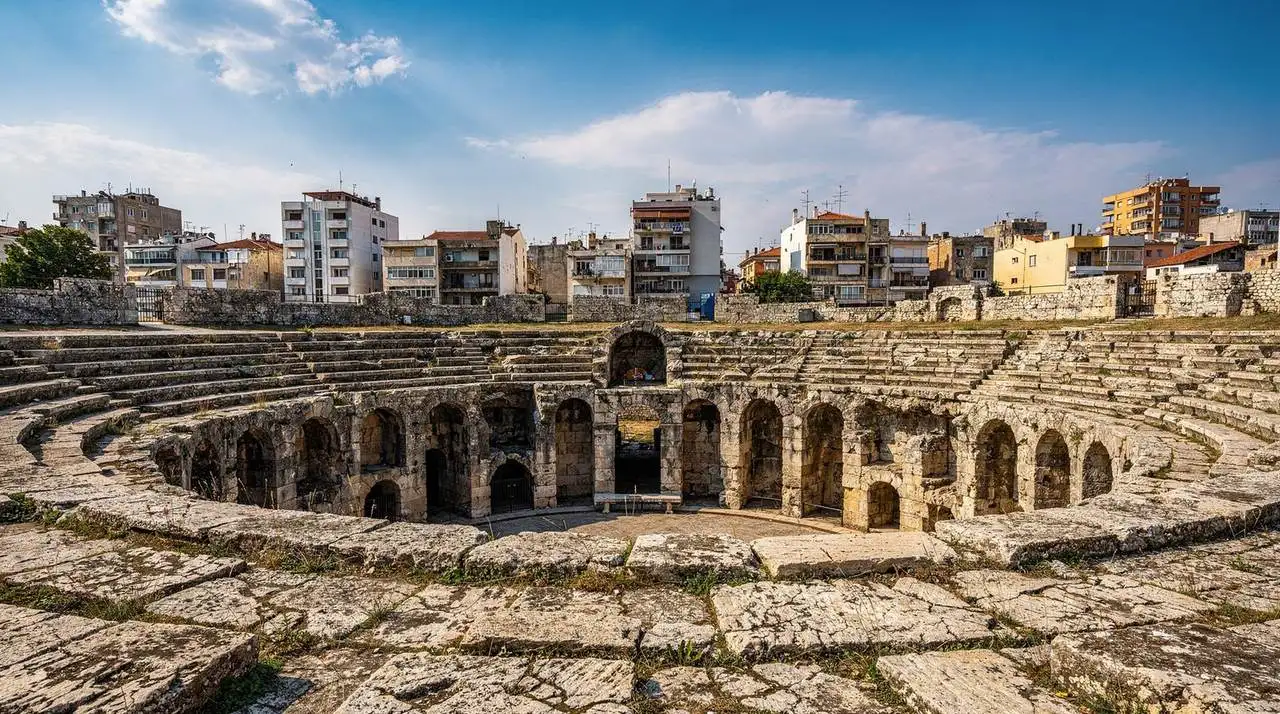
The Roman amphitheatre of Durres is the single most impressive ancient monument in Albania. Dating from the second century AD, it could seat up to 20,000 spectators, making it the largest amphitheatre on the Balkan Peninsula. The structure was buried for centuries, built over as the city contracted in the medieval period, and only properly excavated beginning in the 1960s.
What you see today is a partial but striking excavation cut into the hillside below the old city walls. The seating tiers, the arena floor, the vaulted entrance tunnels, and several Byzantine-era chapel frescoes are all visible. The frescoes are particularly unexpected: vivid sixth-century images of saints and martyrs painted into the interior of what had been a gladiatorial arena, now protected under a simple shelter.
Practical details: Entry costs around 500 ALL (roughly EUR 5). Open daily 8am to 7pm in summer, 8am to 5pm in winter. The site manages to avoid the overwhelming crowds that similar sites attract in western Europe — you can stand in the arena and look up at the tiers in genuine quiet.
A guided tour brings the history to life considerably: this Durres day tour with a local guide covers the amphitheatre, the museum, the Byzantine walls, and the city’s historical layers with an English-speaking guide who makes the centuries of occupation legible and compelling. The guide can explain which sections of the visible structure are original Roman, which are Byzantine additions, and which are modern conservation work — distinctions that would otherwise be invisible to non-specialist visitors.
The Archaeological Museum
The Durres Archaeological Museum, housed in a neoclassical building on the seafront promenade, contains one of the finest collections of Illyrian and Roman artefacts in the country. The ground floor displays funerary objects, coins, ceramics, and bronze pieces spanning from the seventh century BC through the Roman imperial period. The upper floors hold a significant collection of Hellenistic sculpture and mosaics recovered from excavations across the region.
Practical details: Entry approximately 300 ALL. Open Tuesday to Sunday, 10am to 5pm. The museum is manageable in an hour to ninety minutes. Labelling is in Albanian and English, and the collection is genuinely interesting rather than exhaustive. It pairs well with a visit to the amphitheatre to anchor the historical timeline. The coin collection is particularly strong, documenting the Illyrian monetary system and the transition to Roman coinage.
The Old City Walls
The Byzantine walls that ring the old hilltop quarter of Durres are among the best-preserved late-antique fortifications on the Adriatic coast. Built in the fifth century under Emperor Anastasius I, who was himself a native of Dyrrachium, the walls include several square towers still standing to impressive height. Walking along the wall circuit takes about forty minutes and provides elevated views over the modern city and the port.
Inside the walled area, the streets are narrower and older in character than the broad promenade below. The Orthodox Cathedral of Saint Astius occupies a prominent position here, and several Ottoman-period mosques and administrative buildings survive in varying states of repair. The neighbourhood within the walls still has a residential character — people live here, hang laundry, drink coffee on narrow balconies — which gives it a lived-in quality quite different from the sanitised historical centres of more commercially developed tourism destinations.
The Beach
Durres beach stretches for several kilometres south of the city centre, a broad sandy strand backed by hotels, restaurants, and beach clubs. In July and August it is genuinely crowded with Albanian families on holiday, with sunbeds and umbrellas packed close together and vendors moving through the crowds selling corn on the cob, watermelons, and fresh pastries.
For visitors accustomed to the boutique beach clubs of the Albanian Riviera, the Durres beach experience is more municipal than glamorous. But there is a lively, unpretentious energy to it that is engaging in its own right, particularly in the late afternoon when the heat eases and families spread picnics on the sand. The beach is free to access, though you will pay for sunbed rental from the beach clubs (typically EUR 5-8 per set).
Water quality in the main bay has improved significantly since EU-standard wastewater treatment plants came online in the early 2020s. The beach is cleanest at the northern end near the rocky headland and slightly north of the main urban strip. Our best beaches in Albania guide places Durres in context relative to the Riviera beaches further south.
Food and Drink
Durres has a solid restaurant scene centred on the promenade and the streets immediately behind it. Seafood is excellent — the proximity to the Adriatic means fresh fish and shellfish at prices well below what you would pay in comparable Italian coastal towns.
Restorant Teuta (promenade area) — The most consistently recommended seafood restaurant in Durres, with excellent fresh fish and a good wine list. Budget EUR 12-20 per person.
Taverna Kalaja (old town area) — Traditional Albanian cooking near the Byzantine walls. Good for byrek, tave kosi, and grilled lamb. Budget EUR 7-14 per person.
Morning byrek at bakeries near the central market — Durres has outstanding pastry shops (pastiçeri) serving byrek from early morning. Budget EUR 1-3 per portion.
The local food culture is best explored on an organised tour that takes you into the covered market, introduces you to producers, and guides you through the dishes you might not order from a menu without context: this Durres Traditional Albanian Food Tour covers the market and local food traditions with tasting included. Our food tours in Albania guide compares all similar options across the country.
For a cooking experience rather than just tasting, this Durres traditional Albanian cooking class with lunch and wine teaches classic Albanian recipes in a local home setting — an excellent half-day activity, particularly for those who want to bring Albanian flavours home with them. The class typically covers three to four traditional dishes and includes a full sit-down lunch.
The region around Durres also produces wine, and a dedicated tasting experience brings you into contact with local winemakers: the Durres Wine Tasting Tour is a good introduction to Albanian viticulture, and this Albanian wine tasting at Durres city provides a broader tasting of different regional wines with explanation. See our wine tasting in Albania guide for the full picture of Albanian viticulture.
Getting There and Away
From Tirana. Furgons (shared minibuses) run every fifteen to twenty minutes from the Durres Furgon station near Rruga e Kavajes in Tirana. Journey time is thirty-five to forty-five minutes and the cost is around 150 ALL. Taxis cost roughly EUR 15-20 each way. The Tirana-Durres expressway makes driving very straightforward — join the highway at any of the main Tirana entry points and follow signs west.
From Italy. Adriatic ferry lines operate overnight and daytime routes between Bari (eight hours), Ancona (twelve to sixteen hours), and the Durres ferry terminal. This is the classic overland-and-sea route into Albania for travellers coming from Italy or connecting from wider Europe. A full how to get to Albania guide covers operators, booking, and what to expect on arrival. The ferry arrival at dawn into Durres harbour — with the amphitheatre hill visible from the ship — is a memorably dramatic introduction to the country.
Onward from Durres. Furgons depart from the main bazaar area for most major Albanian cities. Kruja is accessible via a shared taxi or organised tour and makes an excellent pairing for a two-stop day. Shkodra is roughly two hours north by bus. Apollonia and Berat lie to the south — roughly 90 minutes and two hours respectively.
Combining Durres with Day Trips
Durres works well as a standalone day trip from Tirana, but it also anchors a richer circuit. The most popular combination is Durres in the morning — amphitheatre and museum — and Kruja in the afternoon, the castle town and old bazaar making a complementary historical stop.
This guided day trip from Tirana covering both Kruja and Durres is an efficient way to cover both cities in a single organised day with transport and a guide included. The guide moves between Roman history at Durres and medieval Albanian resistance history at Kruja, providing the connective tissue that makes the day intellectually coherent rather than just a list of sights.
Most visitors find that one full day covers Durres comfortably. The amphitheatre, museum, old town walls, and a seafront lunch can be accomplished without rushing in six to seven hours. See our day trips from Tirana guide for transport details and timing.
Practical Tips
Best months. May, June, and September are ideal: warm enough for the beach but not oppressively hot, and the city is less crowded than in peak July-August. Winter is quiet but mild, and the monuments are accessible year-round.
Getting around. The central sights — amphitheatre, museum, promenade — are all within easy walking distance of each other. The beach strip to the south is better reached by taxi or the local city bus (approximately 50 ALL). The city centre is flat and walkable; the old town on the hill above requires a short climb.
Safety. Durres is a safe city for tourists. The ferry port area at night can be chaotic and best avoided if you have just arrived — organise your onward transport before you disembark if possible. See our Albania safety guide.
Accommodation. Most visitors stay in Tirana and day-trip, but Durres has a reasonable selection of hotels along the promenade, particularly in the mid-range segment. This makes it a viable base if you want to be closer to the beach than the capital allows. Expect EUR 35-70 per night for a mid-range hotel in summer.
Language. English is spoken in most tourist-facing businesses. Italian is often understood, particularly among older residents, a legacy of the strong commercial ties with Italy over many decades. The ferry connections with Bari and Ancona have created a genuinely bilingual commercial environment along the promenade.
Budget: Durres is affordable by any standard. A daily budget of EUR 25-45 covers amphitheatre entry, a good lunch, and a comfortable afternoon at the beach with sunbeds. See our Albania travel budget guide for broader cost planning.
Durres for Children and Families
Durres is one of the more family-friendly destinations in Albania. The beach is the obvious draw — shallow water for a reasonable distance from shore, sandy mix, and the full range of beach vendors selling ice cream, corn, and fresh fruit. The promenade is wide and flat, with outdoor cafe terraces that accommodate pushchairs without difficulty.
The amphitheatre is genuinely interesting for older children (ten and above) who can grasp the scale and function of the space. Standing in the arena and imagining gladiators is not a difficult conceptual leap. Pedal boats and small motorboat rentals are available from the beach in summer. The seafront gelato shops near the museum are an effective motivation for getting children through the historical sites.
Day Trips and Onward Travel from Durres
Apollonia. The ancient Greek city of Apollonia, one of the most significant classical sites in Albania, lies about sixty kilometres south of Durres near the town of Fier. A day trip combining Durres with Apollonia makes an impressive historical double — Roman amphitheatre in the morning, Greek colonnades in the afternoon.
Shkodra. The historic northern city of Shkodra is about two hours north of Durres by road. Travellers beginning the northern Alps circuit often travel from Tirana to Durres and then north, using Durres as a transition point on the coastal plain before heading into the mountain gateway city.
Vlora. The coastal city of Vlora and the start of the Albanian Riviera are roughly ninety minutes south. For travellers arriving by ferry from Italy who want to head directly to the coast without stopping in Tirana, the Durres-to-Vlora road runs smoothly along the coastal plain and provides a reasonable introduction to Albania’s varied landscape.
Durres by Season
Water temperature, crowd levels, and the ferry-port atmosphere change considerably across the year. Use this as a rough planning guide alongside the Albania travel budget guide for seasonal price swings.
| Month | Sea | Crowds | Notes |
|---|---|---|---|
| May-June | Warm enough to swim | Light | Amphitheatre and museum uncrowded; beach clubs open by mid-May |
| July-August | Warmest, best for swimming | Very heavy, mostly domestic tourism | Book promenade hotels ahead; ferry port busiest |
| September | Still warm | Moderate, dropping fast after mid-month | Arguably the best month — warm sea, thinner crowds |
| October-April | Too cool to swim comfortably | Very light | Monuments still open; good for a quiet history-focused visit |
The Market and Everyday Durres
Away from the amphitheatre and the promenade, the covered central market is where Durres shows its working character rather than its tourist face. Stalls sell produce trucked in from the fertile plain around the city, fresh fish landed that morning, and household goods aimed squarely at residents rather than visitors. It is a reasonable place to buy fruit, olives, or cheese for a picnic on the beach, and a useful counterpoint to the seafront restaurants if you want a sense of how the city actually functions day to day.
Combine it with a walk through the streets just behind the market, where apartment blocks from the socialist era sit alongside newer construction and small family-run shops — a texture of ordinary Albanian urban life that the promenade alone does not show. Our street food in Albania guide has pointers on what to look for if you want to eat like a local rather than from a tourist menu.
What Durres Means for Albania
Durres is in many ways the entry wound of Albania into the wider world — the place where ships have arrived and departed for three millennia, where armies have landed and where migrants have left from. The great exodus of 1991, when desperate Albanians stormed cargo ships in the harbour to flee to Italy as communism collapsed, happened here. The city carries that weight alongside its Roman stones and Byzantine mosaics.
Understanding Durres is to understand something essential about the Albanian experience: an ancient people, a crossroads location, and a history of surviving everything that larger empires chose to do to them. The amphitheatre is impressive. The museum is worthwhile. But the city itself, noisy and entrepreneurial and slightly chaotic around the port, is the real exhibit.
Day trip from Tirana. See the amphitheatre. Eat seafood on the promenade. Leave with a better sense of where this country has come from.
Frequently Asked Questions About Durres
Is Durres worth visiting?
Durres is worth a half-day visit, particularly for the Roman amphitheatre — the largest ancient amphitheatre in the Balkans, partially excavated within the modern city and free to walk around. The archaeological museum is excellent and undervisited. The old city walls and Byzantine mosaics add to a genuinely interesting historical layer. As a beach destination, Durres is Albania’s largest resort but not its most attractive — the beaches work for a quick swim but lack the clarity of the southern Ionian coast.
Can you do Durres as a day trip from Tirana?
Yes — Durres is the easiest day trip from Tirana. The distance is approximately 35 km and buses run constantly from Tirana’s main terminal throughout the day. The journey takes 40-50 minutes and costs around 150-200 ALL. You can visit the amphitheatre, museum, and waterfront in a comfortable half-day and return to Tirana for dinner. The proximity makes Durres the default Albanian seaside option for Tirana-based travelers on a short break.
Does the ferry from Italy arrive at Durres?
Yes — Durres is Albania’s main ferry port with regular car ferry services from Bari and Ancona in Italy. The crossing from Bari takes approximately 8-9 hours (overnight services available), while Ancona is a longer 15-19 hour crossing. Ferry operators include Adria Ferries, Grimaldi Lines, and Ventouris Ferries. Tickets cost approximately EUR 45-80 per person for a seat or EUR 80-150 for a cabin, plus vehicle supplements. Arriving by ferry from Italy is a classic Balkan overland route.
What is the Roman amphitheatre like in Durres?
The Durres amphitheatre dates to the 2nd century AD and could hold up to 20,000 spectators — a scale that reflects the city’s importance as a major Roman port. Unlike the Colosseum in Rome, the Durres amphitheatre was gradually absorbed into the medieval city and is partially buried beneath houses. The excavated sections are freely accessible and well-interpreted. Byzantine-era Christian chapels were built into the amphitheatre structure and their mosaics are among the finest early Christian artworks in Albania.
Is Durres beach good?
Durres beach is long — approximately 10 km of flat sandy shore — and well-equipped with beach bars, umbrellas, and facilities. It works perfectly well for a casual beach day and is extremely accessible from Tirana. However, the water quality and scenery do not compare to the Albanian Riviera or Ksamil further south. If you have time to travel to the south coast, do so. If you are limited to northern Albania, Durres beach is a reasonable option for a day’s swimming.
Is one day enough for Durres?
For most travelers, yes. A single day comfortably covers the Roman amphitheatre, the archaeological museum, a walk along the Byzantine walls, and lunch on the promenade, with time left for a swim if the season suits. Only extend to an overnight stay if you specifically want beach time beyond a couple of hours, or plan to combine Durres with Kruja at a relaxed pace rather than as a single packed day.
What is the best time of year to visit Durres?
May, June and September give the best balance of warm-enough sea and manageable crowds, as the seasonality table above shows. July and August are hottest and busiest, largely with Albanian domestic tourists rather than foreign visitors, so promenade hotels and restaurants get genuinely full. Winter is quiet and mild, and the historical sites remain open, making it a reasonable off-season option if swimming is not the priority.