Day Trips from Tirana: The Essential Guide
Tirana’s central position in Albania makes it one of the best-situated capitals in the Balkans for day trip diversity. Within two hours in any direction, you can reach a UNESCO city of a thousand windows, a medieval castle on a rocky crag, one of the largest Roman amphitheaters in southeastern Europe, a glacial lake surrounded by forested peaks, ancient Greek ruins in an olive grove, or one of the most extraordinary archaeological sites in the Mediterranean. The density of rewarding destinations within reach of the capital is remarkable.
This guide covers the eight best day trips from Tirana, with honest assessments of travel time, what to see, how to get there, and how to combine them efficiently. All destinations are reachable by public bus or shared taxi if you are traveling without a car; several are better reached on organized tours that handle transport and guiding.
| Destination | Distance | Time needed |
|---|---|---|
| Berat | 120 km south | Full day (6-8hrs) |
| Kruja | 32 km north | Half day (3-4hrs) |
| Durres | 38 km west | Half to full day |
| Apollonia | 115 km southwest | Full day with travel |
| Bovilla Lake | 25 km northeast | 3-6 hours |
| Shkodra | 110 km north | Full day |
| Gjirokastra & Blue Eye | 230 km south | Long day or overnight |
| Dajti Ekspres | 20 km (cable car) | Half day |
Berat: The City of a Thousand Windows
Distance from Tirana: 120 km south
Travel time: 2 hours by road
Best for: Architecture, history, Ottoman heritage, photography, wine
Time needed: Full day (6-8 hours)
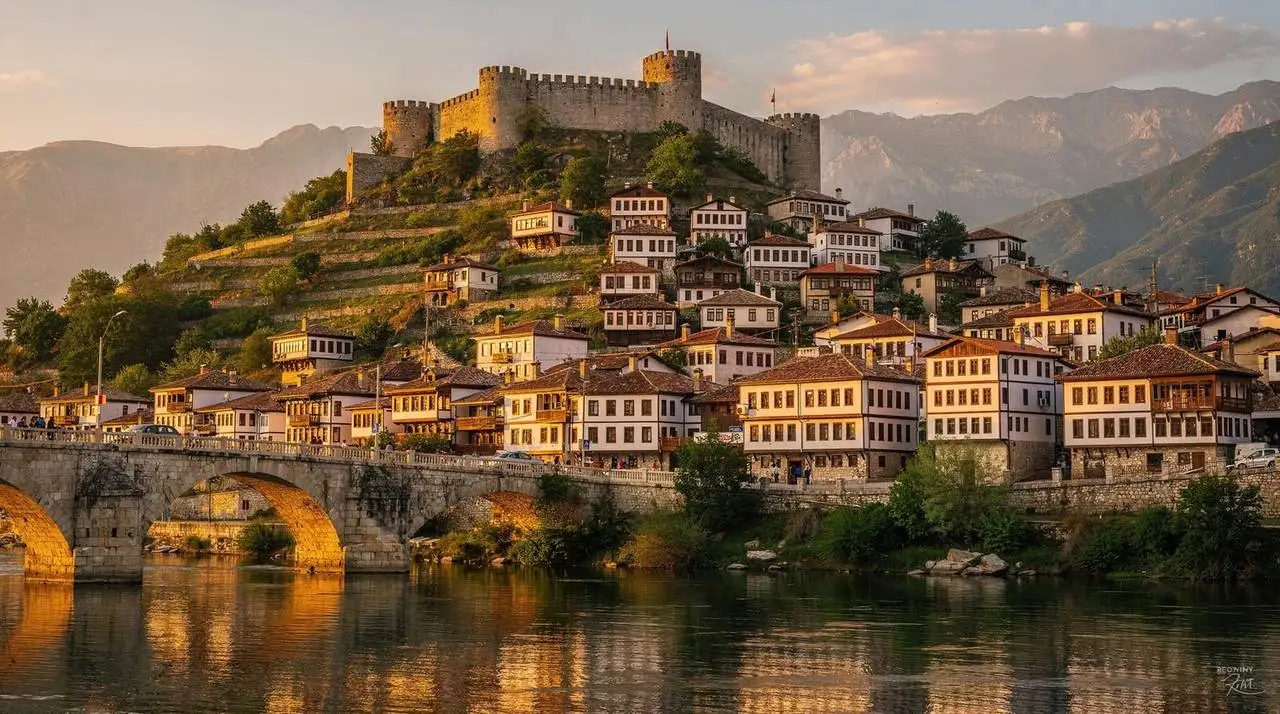
Berat is the most visually striking day trip from Tirana and arguably the most important destination in southern Albania. A UNESCO World Heritage Site since 2008, the city is defined by its double-stacked rows of white-windowed Ottoman houses climbing the hillside toward a medieval castle. The visual effect — the windows reflected in the Osum River, the castle against the sky, the Byzantine churches embedded in the castle walls — is one of the most photographed views in the Balkans.
The castle district (Kalaja) on the hilltop contains a living neighborhood of Ottoman tower houses, Byzantine churches, and the National Iconography Museum with an extraordinary collection of medieval religious painting. The museum alone is worth the journey — the 12th to 18th century icons displayed here are among the finest in the Byzantine artistic tradition, and the museum is largely uncrowded even in peak season.
Below the castle, the Mangalem and Gorica neighborhoods reward slow walking through narrow alleys between the great Ottoman houses. The Gorica neighborhood on the opposite bank of the Osum, reached by a stone bridge, has a slightly different character — quieter, more residential, with excellent views back across the river to the Mangalem terraces.
Wine in Berat: The Berat region is Albania’s most celebrated wine-producing area. The Shesh i Bardhë white grape and the Kallmet red produce wines of genuine character. Several wine producers in and around Berat offer tastings — ask at your accommodation or at the Berat visitor center for current producers accepting visitors.
This full-day Berat guided tour from Tirana includes transport and a knowledgeable guide for the castle and old town, providing the historical context that makes Berat’s extraordinary architecture fully comprehensible. One of the most consistently well-reviewed day trips from Tirana available.
Alternative Berat full-day tours with different operators include additional time for the Osum Canyon area or the surrounding wine country — worth comparing for itinerary fit.
By public transport: Direct buses run from Tirana’s southern bus station (Zogu i Zi area) to Berat several times daily — approximately 2 hours, EUR 3-4. Return buses run until late afternoon; check the schedule at the station on arrival. See the bus routes Albania guide for current departure times.
By car: The SH4 highway south to Berat is well-maintained and the drive takes around 1 hour 45 minutes. Parking is available near the stone bridge to Mangalem.
Staying overnight: Berat genuinely deserves more than a single day. An overnight stay allows an evening walk when the day visitors have left and the castle and old town return to their residents, plus a morning start before the day-trip crowds arrive from Tirana. The Berat destination guide covers accommodation options in the old town.
Kruja: The National Hero’s Mountain Fortress
Distance from Tirana: 32 km north
Travel time: 45 minutes by road
Best for: Albanian history, national identity, traditional bazaar, dramatic views
Time needed: Half day (3-4 hours)
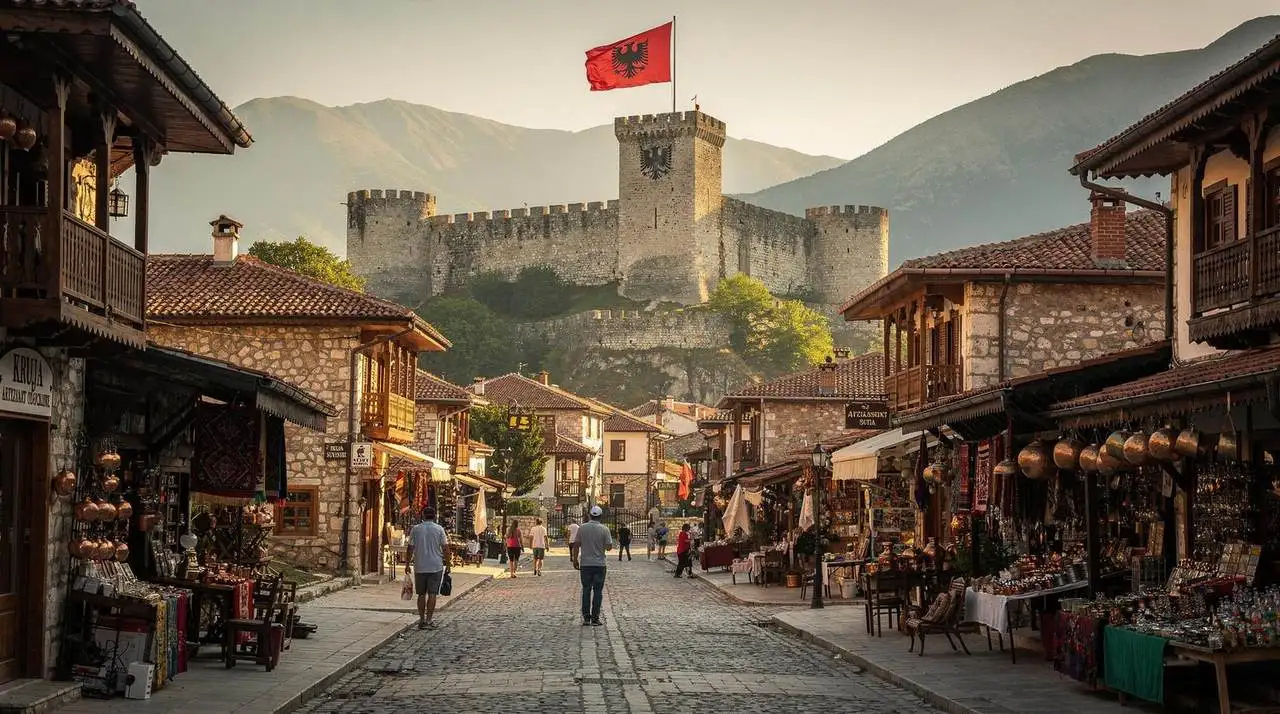
Kruja is Albania’s most historically resonant destination, perched on a dramatic rocky outcrop above the coastal plain. It is the hometown of Gjergj Kastrioti Skanderbeg — the 15th-century national hero who successfully resisted Ottoman expansion for 25 years — and has been a place of pilgrimage for Albanians ever since independence. The Skanderbeg Museum, housed in a striking modern building designed by Pranvera Hoxha within the castle walls, tells the story of this resistance with striking graphic presentation.
The old bazaar below the castle is one of the better-preserved traditional markets in Albania — a cobbled street lined with wooden-fronted shops selling hand-woven rugs, silver jewelry, copper artifacts, felt caps (qeleshe), and Albanian folk art. Unlike many tourist bazaars, Kruja’s still functions as a working market with some artisans producing on-site. Prices are competitive and the selection is genuinely distinctive.
The Kruja Castle and Old Bazaar guided tour from Tirana includes transport and a guided visit to the castle, museum, and bazaar — a well-organized half-day that covers the key highlights with historical commentary that makes the Skanderbeg story genuinely gripping.
By public transport: Shared taxis (furgons) run from Tirana’s northern bus station to Kruja throughout the day (45 minutes, EUR 2). Return transport is frequent until mid-afternoon.
Combination suggestion: Kruja is conveniently situated between Tirana and Shkodra. A morning in Kruja followed by continuation north to Shkodra for the night, then Theth or Valbona the following day, is one of the most efficient route structures for a northern Albania circuit.
Durres: Ancient Port and Roman Amphitheater
Distance from Tirana: 38 km west
Travel time: 40 minutes by road or 30 minutes by train
Best for: Roman and Byzantine archaeology, Albanian history, beach
Time needed: Half to full day
Durres is the closest major day trip from Tirana and the most accessible by public transport — there is even a commuter rail line between the two cities. One of the oldest continuously inhabited cities in the Balkans (founded by Greek colonists from Corinth around the 7th century BC), Durres has been a major Mediterranean port for 2,600 years and its archaeological layers reflect this longevity.
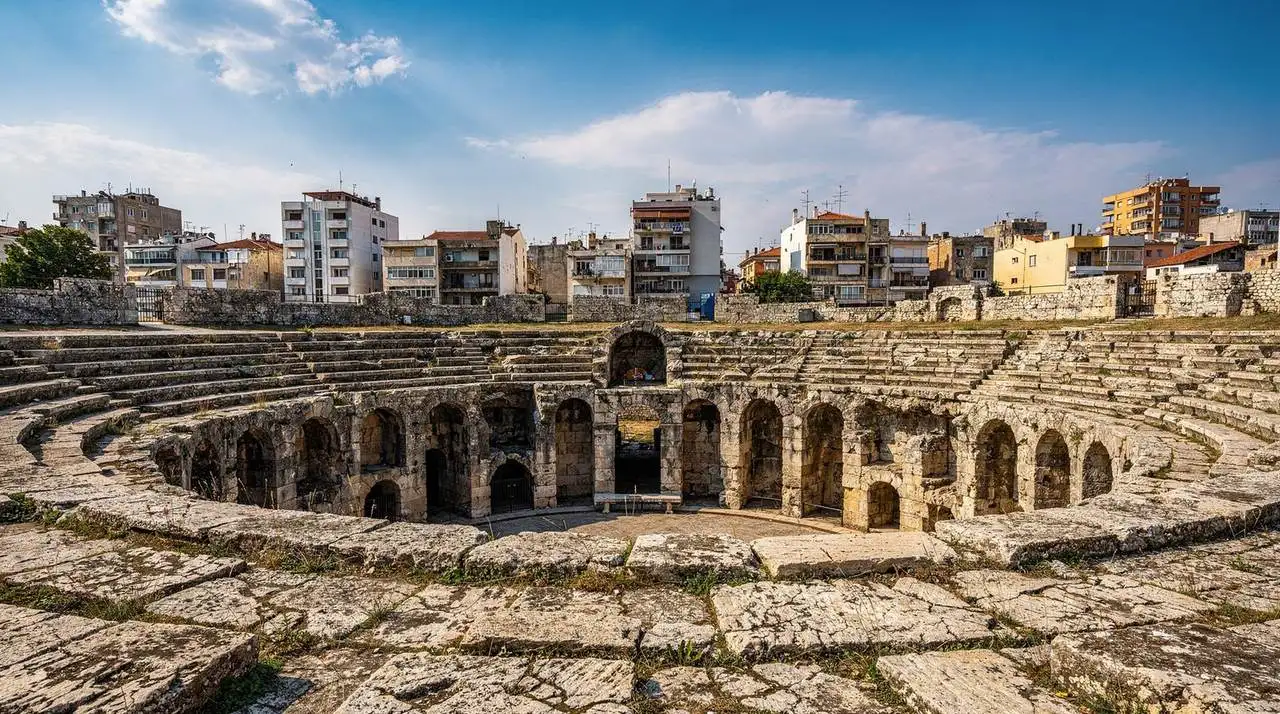
The Roman amphitheater is the headline attraction: built in the 2nd century AD and capable of holding 20,000 spectators, it is one of the largest surviving Roman entertainment structures in southeastern Europe. Uniquely, it is built into the hillside at the edge of the modern city, and Byzantine-era Christian chapels with remarkable floor mosaics were later cut into its lower levels. The combination of Roman construction, Byzantine fresco fragments, and Albanian urban context is extraordinary — and the site is largely uncrowded.
The Archaeological Museum has an excellent collection of Illyrian-era artifacts including jewelry, ceramics, and coins that predate the Roman period. The Venetian tower at the seafront and the city walls provide additional historical context. The long sandy beach south of the city is Albania’s most accessible beach from Tirana and is popular with Albanians in summer.
By train: Tirana to Durres by rail takes approximately 30-35 minutes and runs multiple times daily — the most pleasant and relaxing option. The station is walkable to the main sites.
By public transport: Buses and shared taxis run constantly between the cities (EUR 1-2, 40 minutes). By car, the expressway takes 35-40 minutes.
Combination with Apollonia: Durres and Apollonia (see below) can be combined in a single full day by car — Durres in the morning and Apollonia in the early afternoon, arriving back in Tirana for dinner.
Apollonia: Ancient Greek City in an Olive Grove
Distance from Tirana: 115 km southwest
Travel time: 1 hour 30 minutes to 2 hours
Best for: Ancient Greek and Roman archaeology, contemplative setting, history
Time needed: 3-4 hours on-site; full day with travel
Apollonia is one of the most evocative ancient sites in Albania — the ruins of a prosperous Greek colonial city (founded around 588 BC) spread across a low hill surrounded by ancient olive groves. The remains of temples, a theater, a bouleuterion (council chamber), the remains of city walls, and various civic structures are all visible across a surprisingly large site. The setting — quiet, green, the silence broken only by wind through the olives and distant sheep bells — is unusually atmospheric for an archaeological site of this significance.
The on-site museum contains an excellent collection of finds from the excavations, including sculptures, coins, and everyday objects that bring the ancient city to life. A Franciscan monastery built within the ruins adds another historical layer — the monastery was active for centuries within the ancient city’s footprint, and its church is still standing amid the ruins.
The combined Apollonia and Berat day tour from Tirana is the most time-efficient way to see both sites — ancient Greek ruins in the morning and UNESCO Ottoman city in the afternoon, with transport and guiding covering both. This tour is particularly recommended because Apollonia is difficult to reach by public transport and the guide’s commentary significantly enriches both sites.
By public transport: Take a bus toward Fier (approximately 2 hours from Tirana, EUR 4-5), then a taxi from Fier to the site (10 km, EUR 8-10 return with waiting time). This is possible but involves coordination; an organized tour or rental car is more practical for most visitors.
What to look for at Apollonia: The bouleuterion (council chamber) with its curved seating is particularly well-preserved. The cenotaph monument at the entrance area shows the sophistication of the ancient city’s public architecture. The museum’s display of ancient coins traces the city’s economic history across centuries of occupation.
Bovilla Lake and Gamti Mountain
Distance from Tirana: 25 km northeast
Travel time: 35-45 minutes
Best for: Hiking, nature, mountain views, getting out of the city
Time needed: 3-6 hours depending on hiking distance
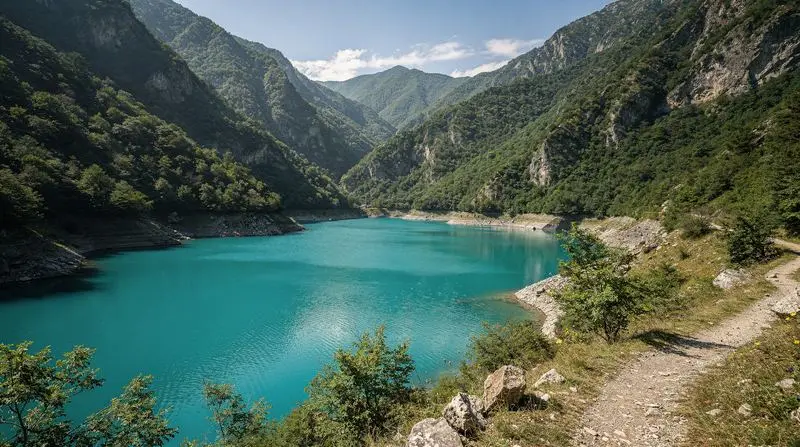
Bovilla is Tirana’s nearest natural escape — a reservoir lake set in forested hills northeast of the city, accessible in under an hour and offering hiking trails, lake views, and a genuine change of environment from the urban context. The lake was created by the Bovilla dam, which supplies Tirana with drinking water. The protected catchment zone around the reservoir has preserved significant forest cover that makes this feel more remote than the proximity to the city would suggest.
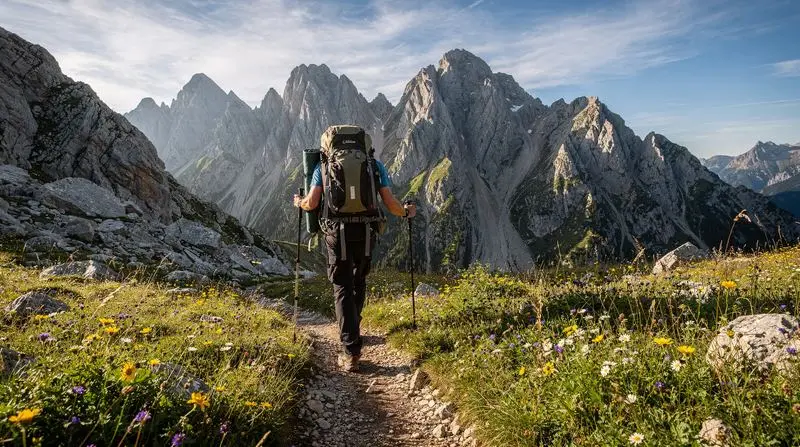
The hiking trail to Gamti Mountain above the lake rises to around 1,400 meters, passing through beech and pine forest before emerging onto open ridgeline. The panoramic views from the Gamti ridge — Tirana to the south, the Adriatic coast on the horizon on clear days, higher peaks to the north — are among the better mountain views accessible without leaving the Tirana orbit. The ascent takes 2-3 hours from the lakeside; descent 1-2 hours.
The Bovilla Lake and Gamti Mountain hike from Tirana provides transport to and from the trailhead and guided hiking — particularly useful for visitors unfamiliar with the trails who want a structured mountain experience without the full commitment of the Albanian Alps.
By car: Drive northeast from Tirana toward Vaqarr, then follow signs to the Bovilla dam. The road is paved to the dam; rougher beyond. A high-clearance vehicle is useful for the tracks beyond the dam but not essential in dry conditions.
Mountain biking alternative: The trails around Bovilla are popular with Tirana mountain bikers. Several bike rental and guided ride operators in Tirana run Bovilla mountain bike day trips — a different way to experience the same landscape.
Shkodra: Gateway to the North
Distance from Tirana: 110 km north
Travel time: 1 hour 45 minutes to 2 hours
Best for: Historical city, Rozafa Castle, lake views, base for the Alps
Time needed: Full day
Shkodra is Albania’s northern capital and most significant city north of Tirana. Its Rozafa Castle — dramatically sited on a rocky promontory above the confluence of the Buna and Drin rivers and Lake Shkodra — is one of the most impressive fortifications in the Balkans, with views that extend across the water to the mountains of Montenegro.
The city’s pedestrianized boulevard, the Ottoman Leaded Mosque, the Catholic Cathedral of Saint Stephen, the Marubi National Museum of Photography (extraordinary collection of 19th and 20th century Albanian photographs), and the old bazaar district all reward a few hours of exploration. Shkodra has an unusually strong cultural life for a mid-sized Balkan city — an arts scene, music tradition, and cafes that reflect its historical position as a crossroads of Albanian, Catholic, and Balkan influences.
As a stepping stone: Shkodra functions most powerfully not as an end destination but as a gateway. It is the departure point for Theth, Valbona, and the Koman Lake ferry. Most visitors who make it to Shkodra discover they want to continue north into the mountains. A day trip to Shkodra works as a taster; most visitors who get there want to stay longer.
By public transport: Frequent buses from Tirana’s northern bus station (1 hour 45 minutes, EUR 4-5). Departures throughout the morning.
By car: The SH1 highway north to Shkodra is good quality. Approximately 110 km, 1 hour 40 minutes.
Gjirokastra and the Blue Eye
Distance from Tirana: 230 km south
Travel time: 3 hours by road
Best for: UNESCO old city, castle, communist history, Blue Eye spring
Time needed: Very long day (12+ hours) or — better — overnight stay
Gjirokastra is technically possible as a very long day trip from Tirana but is substantially better as an overnight or two-night stay. The UNESCO-listed stone-built old city, the massive Ottoman castle with its captured Cold War-era US military aircraft, the underground communist-era tunnel, and the extraordinary architecture of the Dukagjin and Skenduli tower houses all justify spending at least one night.
The Blue Eye (Syri i Kaltër) — a spring of impossibly blue water that erupts from unknown underground limestone channels — sits on the road between Gjirokastra and Saranda and is one of the most beautiful natural phenomena in Albania. The color of the water — a saturated turquoise-blue that seems physically impossible — is real and genuinely extraordinary. It makes a natural pairing with Gjirokastra: drive south from Tirana to Gjirokastra, spend the night, visit the Blue Eye on the way to or from Saranda.
By public transport: Buses run from Tirana to Gjirokastra (approximately 4-5 hours, EUR 7-10). Depart on the earliest available bus to maximize time in the city. Return buses depart early morning.
By organized tour: For those who want to see Gjirokastra without driving 230 km south and back, guided southern Albania tours from Tirana sometimes cover Gjirokastra and the Blue Eye in a long day excursion — check current availability for tours that cover the southern UNESCO route.
Combining with Berat: A 3-4 day southern Albania circuit — Tirana, Berat (1 night), Gjirokastra (1 night), Blue Eye, Saranda (1-2 nights) — covers the country’s greatest hits in the south with comfortable overnight stops rather than frantic day trips. This is the recommended approach for first-time visitors.
Dajti Ekspres: Mountain Above Tirana
Distance from Tirana: 20 km (gondola from the city edge)
Travel time: 15 minutes by cable car
Best for: Views over Tirana, forest walk, mountain restaurant
Time needed: Half day
Dajti Mountain — the forested peak that forms the eastern backdrop of Tirana — is accessible via the Dajti Ekspres cable car. The gondola rises 1,613 meters, offering views back over the capital and, on clear days, across to the Adriatic. The top has walking trails through pine forest, a restaurant, and several viewpoints.
This is the most accessible nature escape from Tirana — a 15-minute cable car ride from the city edge is all that separates Tirana’s urban environment from mountain forest. Families, couples, and hikers all use this route. The forest walks at the summit vary in difficulty; the trail toward Dajti Peak (1,612 meters) takes 1.5-2 hours from the cable car upper station.
How to reach the Dajti Ekspres: Take a taxi or Bolt from central Tirana to the cable car lower station (approximately EUR 5-8). The cable car operates most days; check the official schedule as it occasionally closes for maintenance.
Planning Your Day Trips: Practical Advice
By car: Having your own vehicle gives maximum flexibility. The road network has improved dramatically, though secondary roads can still be rough. Petrol stations are widely available. See the car rental Albania guide and the driving in Albania guide for logistics.
By organized tour: Day tours handle transport, guiding, and often entrance fees. They are the most practical option for Berat, Kruja, and Apollonia — particularly for first-time visitors who benefit from expert commentary.
By public transport: Albania’s bus and shared furgon network connects Tirana to most destinations. For Durres and Kruja, public transport is entirely reliable. For Berat, an early start is essential. For Gjirokastra and Apollonia, organized tours or rental cars are more practical. The bus routes Albania guide covers specific departure points and schedules.
Combination efficiency: Several destinations work well together in paired trips:
- Kruja in the morning, continue to Shkodra for the night
- Apollonia and Berat (the combined GetYourGuide tour covers this efficiently)
- Bovilla Lake and Dajti Mountain (both in the northeastern hills, accessible in the same day)
- Durres and the surrounding coastal area
A sample week combining day trips with city time: Day 1 — arrival and Tirana city exploration; Day 2 — Kruja (half day) plus Bunk’Art in the afternoon; Day 3 — Berat (full day, ideally with an overnight); Day 4 — Berat wine country and return to Tirana; Day 5 — Durres and the beach; Day 6 — Bovilla Lake or Dajti Ekspres for a lighter nature day; Day 7 — departure or an extra buffer day for weather-dependent plans like Bovilla. This rhythm balances demanding full days with lighter half days, which matters more than it sounds — back-to-back long excursions wear travelers down faster than the destinations themselves.
Guided walking context for Tirana: Before any day trip, a Tirana walking tour provides the Albanian historical background that makes every subsequent destination more comprehensible. Tirana walking tours cover the communist period, the national history, and the city’s rapid transformation — context that enhances Kruja’s Skanderbeg story, Berat’s Ottoman heritage, and Gjirokastra’s Cold War tunnel.
For the communist history context that makes so many Albanian destinations richer, Communist Albania tours with the Bunk’Art Museum provide the historical foundation that transforms what might otherwise be puzzling details — the 175,000 concrete bunkers visible throughout Albania, the empty shelves of communist-era shops that old Albanians remember — into a comprehensible historical narrative.
For Multi-Day Trips
Several of the best destinations from Tirana work better as 2-3 day stays than as day trips:
Berat: Two nights minimum to see the city at the right pace, visit the wine country, and walk both the Kalaja and Gorica neighborhoods without rushing.
Gjirokastra and Saranda: Three nights allows Gjirokastra (with the Blue Eye), Butrint, Ksamil, and the Riviera — a southern Albania mini-circuit that is far more rewarding than a single rushed day.
Shkodra and the Alps: Shkodra itself is a half-day city. The mountains beyond — Theth, the Koman Lake ferry, Valbona — require 3-5 additional days and cannot be day-tripped from Tirana.
For structured multi-day routes that combine multiple destinations efficiently, the Albania itineraries section provides detailed day-by-day plans for different trip lengths and interests.
Tirana’s day trip geography is one of its underrated strengths. The city has substantial attractions of its own — the Bunk’Art museums, the communist history layer, the food scene, the Blloku neighborhood — but the combination of that urban base with such a rich hinterland makes it one of the most productive capitals in the Balkans for a traveler interested in depth over distance.
Day Trips from Tirana by Time Available
| Time available | Best choice |
|---|---|
| Half day (3-4 hours) | Kruja or Dajti Ekspres |
| Full day (6-8 hours) | Berat, Durres, Shkodra, or Bovilla Lake |
| Very long day (10+ hours) or overnight | Apollonia combined with Berat, or Gjirokastra and the Blue Eye |
This breakdown is useful for travelers slotting a day trip around other Tirana commitments — a business trip with a single free afternoon suits Kruja or Dajti far better than an attempt at Berat, which needs the better part of a day to do justice.
Public Transport vs Car vs Organized Tour
Choosing how to reach each destination matters as much as choosing where to go:
Public transport works well for: Durres (train), Kruja (furgon), and Berat (bus), all of which have frequent, reliable services from Tirana’s bus stations. See the bus routes Albania guide for current departure points.
A rental car is most valuable for: Bovilla Lake, Apollonia, and any day combining two destinations (Durres plus Apollonia, or Kruja plus onward travel to Shkodra) — the car rental Albania guide covers logistics.
Organized tours are the practical choice for: Apollonia (difficult by public transport), Berat (context-rich guiding pays off), and Gjirokastra as a long day (removes the burden of a 230km round trip).
Frequently Asked Questions About Day Trips from Tirana
What are the best day trips from Tirana?
Berat (UNESCO city, 2 hours south) and Kruja (castle and bazaar, 40 minutes north) are the most popular day trips. The Albanian Alps are reachable for a very long day. Other excellent options include Shkodra (2 hours north), Apollonia archaeological site (2.5 hours south), and Durres (45 minutes west) for a quick beach day.
Can you do Berat as a day trip from Tirana?
Yes, Berat is very manageable as a day trip. It is approximately 2 hours from Tirana by bus (400-500 ALL each way) or car, giving you 5-6 hours in the UNESCO old town — enough to explore the castle, the Mangalem and Gorica quarters, and have lunch. Staying overnight is significantly more rewarding, but the day trip is a solid option on a tight schedule.
How far is Kruja from Tirana?
Kruja is approximately 35-40 kilometres from Tirana, reachable in 45-60 minutes by car or furgon. It makes an excellent half-day trip from the capital — the castle and national museum are 2-3 hours of sightseeing, and the old bazaar is ideal for browsing Albanian crafts and souvenirs. Afternoon return leaves plenty of time for a Tirana evening.
Can you visit the Albanian Riviera from Tirana in a day?
Technically possible but tiring and not recommended. Saranda is 4+ hours from Tirana by road. Dhermi is about 3 hours. A day trip leaves very little actual time at the destination after the return journey. The Riviera is best visited with at least 2-3 nights based there rather than as a day excursion from Tirana.
Which Tirana day trip is best for families with children?
Kruja and Durres are the most family-friendly options — both are short drives with manageable amounts of walking, engaging museums, and a beach option at Durres for younger children who need a break from sightseeing. Dajti Ekspres is also excellent for families, combining a fun cable car ride with easy forest walks and a mountain-top restaurant. Longer trips like Gjirokastra or Apollonia involve more driving time than most young children tolerate well.
Do I need to book Tirana day trip tours in advance?
For Berat and Apollonia tours, booking a day or two ahead is recommended in June-August, when popular departures can sell out. Kruja and Durres are flexible enough for same-day decisions given the frequent public transport. Bovilla Lake’s guided hike benefits from advance booking if you want a specific group size or date.