Best Restaurants in Tirana: Where to Eat in Albania’s Capital
Tirana’s restaurant scene has undergone a genuine transformation over the past decade. The city that once offered little beyond basic cafes and unremarkable Albanian standards now has a dining landscape that rewards serious exploration: innovative chefs reinterpreting traditional recipes with contemporary techniques, long-established family restaurants holding firm to the classics, and a street food and market culture that is among the most vibrant in the region.
The key to eating well in Tirana is knowing which category you are looking for. A business lunch in a sleek modern restaurant produces a very different experience from a slow Sunday meal in an old-quarter trattoria, which is different again from a morning at the New Bazaar sampling pastries and cheeses. This guide covers all of them.
| Where to eat | Blloku (fashionable), New Bazaar (traditional/market), Lake district (relaxed) |
| Typical cost | Around EUR 12-18/person for a full traditional meal |
| Don’t miss | Mullixhiu for modern Albanian, New Bazaar byrek and market food |
| Best time | Lunch 12:30-3pm; dinner from 8-9pm onward |
| Booking | Advance recommended for Mullixhiu and Mrizi i Zanave |
Mullixhiu: Where Modern Albanian Cuisine Begins
Mullixhiu is the most talked-about restaurant in Albania, and with good reason. Chef Bledar Kola spent years researching forgotten Albanian recipes and ingredients before opening this restaurant on the banks of the Lana River, and the result is a menu that feels both deeply rooted and completely contemporary.
The cooking here is built around rediscovered Albanian ingredients — ancient grain varieties, heritage vegetable breeds, foraged herbs, and artisanal dairy products from producers that most Albanians had forgotten existed. A meal might begin with a small bowl of aged sheep’s yogurt with wild herbs, move through a reinterpretation of fergese using a particular local pepper variety, and finish with ballokume cookies served with something unexpected alongside.
The setting is smart but not formal: a converted old mill with exposed wooden beams and a terrace over the river. Prices are higher than most Tirana restaurants but modest by Western European standards. Booking in advance is strongly recommended, particularly for weekends.
Mullixhiu is the right choice for a special meal in Tirana, for anyone with a serious interest in how Albanian cuisine is evolving, or simply for visitors who want to eat something memorable before leaving the country.
Oda: The Traditional Experience Done Properly
Oda occupies a historic house near the center of Tirana and serves traditional Albanian food with a fidelity that has made it a long-standing favorite for both visitors and locals who want the real thing. The interior is decorated with traditional Albanian objects — carved wooden ceilings, copper pots, and photographs from the communist era — creating an atmosphere that feels genuinely old rather than manufactured.
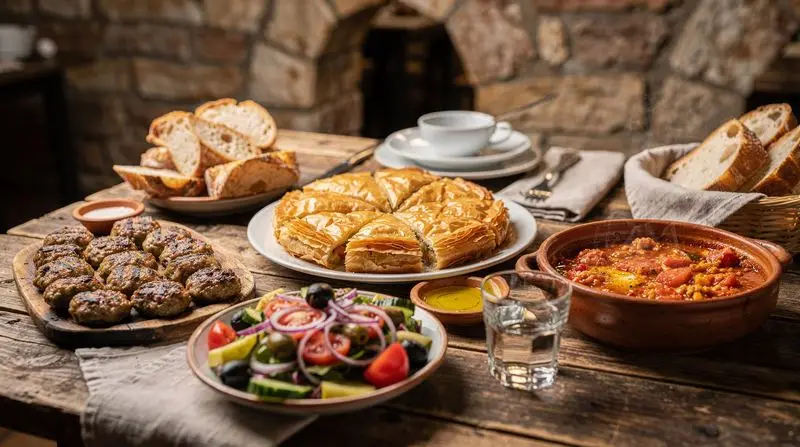
The menu at Oda reads like a survey of Albanian classics: tave kosi, fergese, qofte, byrek, grilled meats, and slow-cooked lamb dishes that have been on the menu since the restaurant opened. The portions are large, the quality is consistent, and the prices are fair. This is not a restaurant that experiments; it is one that does familiar things very well.
Live traditional music plays on some evenings, which adds to the atmosphere without becoming intrusive. Oda works for groups as well as couples and is one of the best places to introduce visitors to Albanian food who are uncertain about what to order — the staff are patient with questions and generous with recommendations.
Era Restaurant: Views Over the City
Era is a Tirana institution with multiple branches, the most memorable being the rooftop location with a panoramic view over the city’s rooftops toward the mountains. The food is Albanian and Mediterranean, leaning heavily toward grilled meats, seafood, and the kind of reliable cooking that makes Era a sensible choice for a relaxed evening meal.
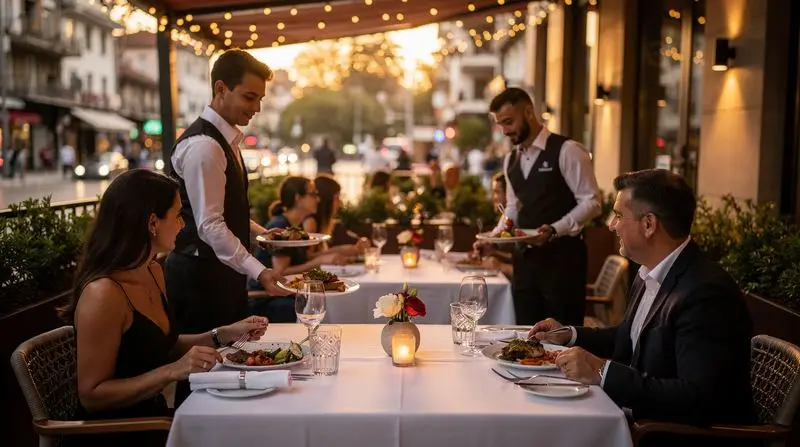
The rooftop terrace is the main draw, particularly in the warm months from April through October, when the setting sun over Dajti Mountain turns dinner into something more atmospheric than the food alone would justify. That said, the kitchen is solid: the grilled lamb chops are excellent, the seafood pasta is well-executed, and the house wine is drinkable at a low price.
Era is particularly popular with local families on weekends and with business diners during the week. The combination of reliable food, pleasant surroundings, and moderate prices has kept it relevant across decades of competition from newer restaurants.
New Bazaar: Tirana’s Greatest Food Destination
The Pazari i Ri — the New Bazaar — is not a single restaurant but a revitalized historic market complex that has become Tirana’s most exciting food destination. The market hall and its surrounding streets contain a combination of fresh produce vendors, artisanal food shops, and a dense cluster of restaurants and cafes that together create one of the most rewarding food experiences in the Balkans.
On a morning visit, the market stalls sell seasonal vegetables and fruit from local farms, fresh white cheese and gjize from regional dairies, cured meats, honey, olive oil, and preserved goods that represent a cross-section of Albanian food culture in one compact space. The smell of fresh byrek from the bakeries around the perimeter begins early and rarely lets up until midday.
By lunchtime, the restaurants around the bazaar fill with a mix of office workers, market vendors, and tourists. The food stalls on the covered terrace level serve quick portions of traditional dishes at prices well below comparable restaurants elsewhere in the city. Several more formal restaurants on the ground level offer table service and full menus.
For a guided introduction to the New Bazaar and the broader Tirana food scene, this small-group food tour with meals included starts at the market and covers multiple stops across the city, with a local guide explaining the context behind each dish and producer. It is one of the most efficient ways to understand Tirana’s food culture in half a day.
Serendipity and Juvenilja: Lakeside Dining
The artificial lake (Liqeni Artificial) in the northern part of Tirana is ringed by restaurants and cafes that collectively form one of the most pleasant dining areas in the city. The combination of water views, tree-lined paths, and a concentration of well-run restaurants makes the lake district the preferred choice for long weekend lunches and evening meals when the weather is good.
Serendipity is one of the better-regarded lakeside restaurants, with a menu that blends Albanian and international dishes and a terrace that fills up on summer evenings. Several neighbors offer similar menus and comparable quality, making the lake area one where walking the stretch and choosing based on the atmosphere of the moment works perfectly well.
The lake restaurants are a 15-20 minute walk from the center of Tirana through Rinia Park, which makes the journey there part of the experience. Albanians treat the lakeside as a destination in itself rather than just a place to eat, and the pace of a meal here reflects that — slow, social, and focused on the pleasure of being outside.
Mrizi i Zanave: A Drive Worth Making
Strictly speaking, Mrizi i Zanave is not in Tirana but in the village of Fishtë, roughly 40 kilometres north of the city near Lezha. It earns inclusion in any guide to eating well near Tirana because it represents something exceptional: a farm-to-table restaurant that has been doing exactly that work for decades, long before the concept became fashionable.
The restaurant grows or raises almost everything on its menu: vegetables from the farm garden, lamb and goat from the property, dairy products from the farm’s own animals, and wine from a small on-site vineyard. Meals are long and course-based, following the rhythm of what is ready rather than a fixed menu, and the setting in a traditional farmhouse with mountain views is very beautiful.
This is the place for a special occasion meal in the Tirana region, for anyone interested in Albanian food culture at its deepest level, or for a long Sunday lunch that becomes the highlight of a visit. Book well in advance as the restaurant has a devoted following among Tirana’s food-conscious residents.
Before booking anything, it helps to place the meals inside the rest of your stay. The Tirana destination guide covers the sights that shape a day, and where to stay in Tirana explains which neighborhoods put you within easy walking distance of the restaurants below.
Where to Eat by Neighborhood
Tirana’s food is distributed across several distinct areas, each with a different character.
The Blloku district, once the exclusive residential area of communist-era officials, is now the city’s most fashionable neighborhood and contains the highest concentration of cafes, bars, and restaurants per square metre in Albania. The quality ranges from excellent to mediocre; the atmosphere is reliably lively.
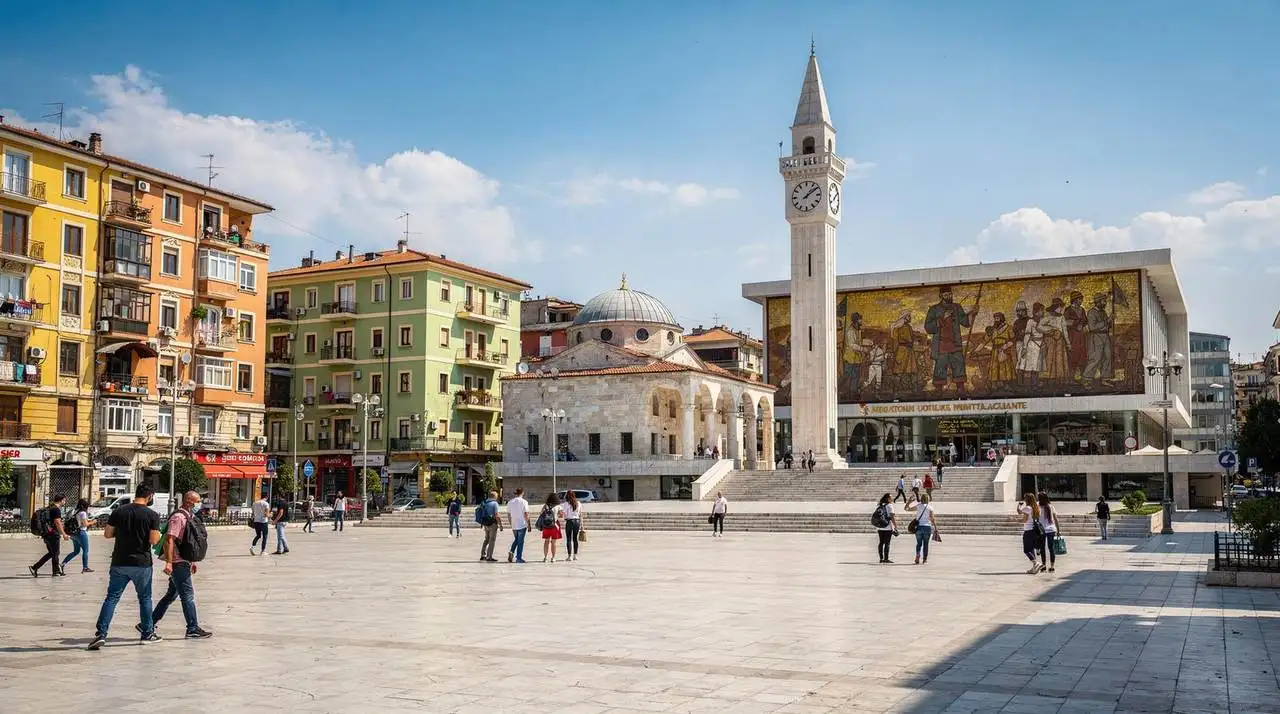
The area around Skanderbeg Square and the main boulevard has the most tourist-facing restaurants, which tend to have English menus and slightly inflated prices. Quality varies and depends heavily on individual restaurants rather than the area as a whole.
Rruga Myslym Shyri and its side streets have become a reliable area for finding well-priced, unpretentious restaurants serving good traditional food alongside a growing number of newer spots with more contemporary menus.
Street Food and Casual Eating
Tirana does casual eating extremely well. The byrek shops that open at dawn and serve continuously through the morning produce some of the best versions of this pastry in the country. A freshly baked piece of byrek me djath (cheese) costs around 100-150 Albanian lek — roughly EUR 1 — and is one of the great bargain breakfasts anywhere in Europe.
Sufllaqe (the Albanian take on doner kebab, often stuffed into a thin flatbread with yogurt sauce, tomato, and pickles) can be found at dedicated sufllaqe shops throughout the city and is the preferred late-night food for Tiranans after bars close. Qofte stalls grill throughout the afternoon and evening on the busier streets near the center.
Understanding Albanian food culture as a whole gives context to these individual eating experiences — many dishes make more sense once you understand the broader culinary tradition they come from.
For more on eating cheaply and on the move, the street food guide goes deeper into what to order from stalls and bakeries, and it pairs well with a slow evening of drinks described in the nightlife guide.
Coffee Culture and the Cafe Scene
No account of eating and drinking in Tirana is complete without acknowledging the coffee culture that defines daily life here. Albanians drink coffee at a rate that puts most European countries to shame, and the cafe as social institution is as important in Tirana as any restaurant.
The standard Albanian coffee experience involves a small cup of strong espresso-style coffee drunk slowly at a pavement table, often over conversations that extend for an hour or more. The cafe scene in Blloku and around Rinia Park is particularly lively, and the quality of coffee preparation in Tirana’s better cafes is genuinely high.
Most cafes also serve pastries and simple savory items through the morning, making them viable breakfast destinations. Prices are among the lowest in Europe: an excellent espresso rarely costs more than EUR 1.20.
The habits behind all this are explored in the guide to Albanian coffee culture, and the blog piece on Albania’s coffee obsession is a good companion read if you want to understand why the pavement table matters so much.
Guided Food Experiences in Tirana
For visitors who want to cover Tirana’s food scene efficiently and with local insight, organized food experiences offer real value. The knowledge of a local guide — which bakery makes the best byrek, which market vendor has the finest cheese, which restaurant’s owner can explain the history of each dish — takes considerable time to develop independently and is essentially pre-loaded in a guided experience.
The small-group Tirana food tour with meals included visits the New Bazaar alongside several other significant food stops, covering a range of traditional Albanian dishes with the context that makes them more interesting. Meals are included, which means the tour replaces a standalone dining experience rather than adding to a budget. Groups are kept small for a more personal experience.
Understanding Albanian food culture broadly before arriving in Tirana makes guided food tours significantly more rewarding — you are arriving with questions to ask rather than needing everything explained from the foundation up.
Neighborhoods for Eating: A Quick Guide
Tirana’s restaurant geography divides broadly into several distinct zones, each with its own character and best suited to different dining intentions.
The Blloku neighborhood — the most fashionable district in Tirana, once the exclusive residential area of the communist leadership and now the heart of the city’s cafe, bar, and restaurant scene — has the highest density of dining options. The quality ranges enormously. The best approach is to avoid the most obviously tourist-facing establishments and look for places where local Albanians are clearly the primary clientele. Side streets off the main Blloku avenues tend to have better food at lower prices than the main boulevard.
The New Bazaar area is the destination for traditional food, market-fresh ingredients, and the most authentic experience of how Tirana’s food culture works at its foundation. Restaurants here are either embedded in the market itself (serving quick, traditional food to market workers and neighborhood residents) or positioned on the surrounding streets to benefit from the market’s energy and supply chain.
The artificial lake district in northern Tirana offers a more relaxed setting with water views and extensive outdoor seating. Restaurants here are generally mid-range in terms of both quality and price, and the pleasant walking paths around the lake make it a natural destination for afternoon coffee and an early evening meal.
The Old Town area around Skanderbeg Square has the most mixed restaurant quality, with the highest-traffic tourist restaurants sitting alongside some genuinely good traditional places that have been in operation for decades.
Tirana as a Base for Wider Albanian Dining
Tirana’s central position and airport access make it the natural starting or ending point for a broader Albanian food trip. From here, Berat and its riverside restaurants are around two hours south, and the Albanian Alps and Shkodra’s lake fish tradition are reachable to the north. Many visitors treat their first and last nights in Albania as Tirana dining, bookending a trip that explores the country’s regional food traditions in between.
If you have a spare day, the day trips from Tirana are an easy way to add a village lunch or a regional specialty to your plans, and the 3 days in Tirana itinerary shows how to fit the restaurants above into a short stay. Those planning a longer culinary loop can follow the foodie Albania itinerary.
Choosing Between Tirana’s Signature Restaurants
| Restaurant | Best for | Price level | Setting |
|---|---|---|---|
| Mullixhiu | A memorable, contemporary meal | Higher | Converted mill, river terrace |
| Oda | Introducing visitors to Albanian food | Moderate | Historic house |
| Era | Reliable food with a view | Moderate | Rooftop |
| Mrizi i Zanave | Farm-to-table special occasion | Moderate-higher | Farmhouse, 40km from Tirana |
Vegetarian and Dietary Options in Tirana
Tirana is by far the most accommodating Albanian city for vegetarians and, increasingly, vegans. Mullixhiu’s foraged-ingredient approach naturally produces excellent plant-based dishes, the New Bazaar market stalls make self-catering straightforward, and most traditional restaurants will happily prepare fergese, byrek, and salads without meat on request. A handful of newer Blloku restaurants now offer dedicated vegan menus, a rarity elsewhere in Albania. The Albanian food guide covers which traditional dishes are naturally plant-based.
What to Order: A Tirana Cheat Sheet
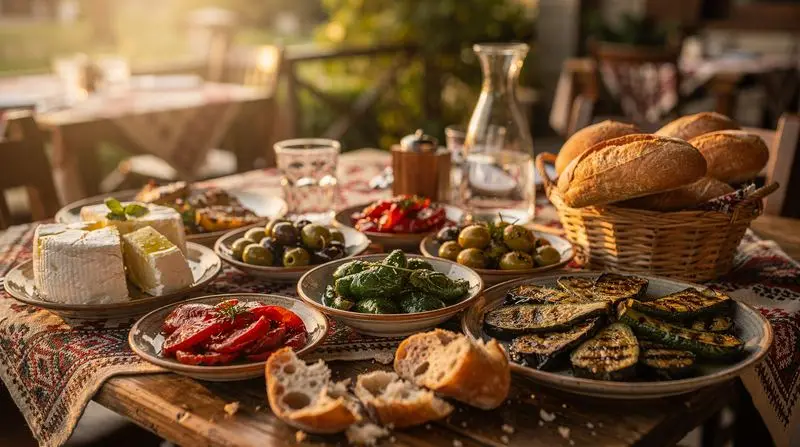
For visitors overwhelmed by menus in Albanian (increasingly accompanied by English translations but not universally), a simple ordering framework covers most situations. Start with a shared portion of fergese and a salata shqiptare (tomato, cucumber, and white cheese salad). Add byrek me djath if the kitchen makes it well. For the main course, tave kosi if available — or grilled qofte if the kitchen has a charcoal grill operating. Albanian wine (Shesh i Bardhe white or Shesh i Zi red) with the meal.
This framework produces a satisfying and representative meal at any traditional Albanian restaurant in Tirana and costs EUR 12-18 per person at most establishments, including a carafe of wine.
Seasonal Notes for Tirana Dining
Tirana’s restaurant scene runs year-round with less seasonality than the coastal towns, but there are still useful patterns. Summer (June-September) brings rooftop and lakeside terraces like Era and the artificial lake restaurants to their best, with outdoor dining comfortable well into the evening. Winter sees the Blloku and New Bazaar indoor restaurants come into their own, and Mullixhiu’s tasting menu shifts with the season’s foraged ingredients — winter visits bring root vegetables, preserved goods, and heartier dishes than the summer menu. Spring and autumn are generally considered the most comfortable seasons for a Tirana food-focused visit, avoiding both summer heat and winter’s shorter days.
Practical Information for Dining in Tirana
Lunch is served from roughly 12:30pm to 3pm and is the main meal of the day for most Albanians. Dinner starts late by Western European standards — most restaurants do not fill up until 8pm or 9pm, and kitchens in traditional restaurants are typically open until midnight.
Most Tirana restaurants accept cash in Albanian lek or euros. Card payment is increasingly common in Blloku and the more upscale restaurants but cannot be relied upon everywhere. Bringing cash to a first visit at an unfamiliar restaurant remains wise.
Tipping at 10% is becoming common in tourist-facing restaurants and is always appreciated. In very traditional and family-run places, rounding up the bill is the more typical approach. The tipping guide and the currency and money guide cover these habits in more detail.
For visitors who want to explore food tours in Albania beyond Tirana — including cooking experiences across the country — options are expanding rapidly as tourism infrastructure develops.
Frequently asked questions about Best Restaurants in Tirana
What is the single best restaurant in Tirana?
Mullixhiu is the most acclaimed for a memorable, contemporary meal, but “best” depends on intent: Oda for an approachable traditional introduction, Era for a reliable view, and the New Bazaar for the most authentic everyday food experience.
Is Tirana expensive compared to the rest of Albania?
Somewhat, but still very affordable by Western European standards. A full traditional meal runs EUR 12-18 per person, and even Mullixhiu, the city’s most talked-about restaurant, remains modest by comparison to equivalent dining in major European capitals.
Do I need a reservation in Tirana?
For Mullixhiu and Mrizi i Zanave, yes, particularly on weekends. Oda, Era, and most New Bazaar and Blloku restaurants take walk-ins comfortably outside the busiest Friday and Saturday dinner hours.
How does Tirana’s food scene compare to Albania’s coastal cities?
Tirana offers far more variety and culinary ambition than any coastal town, reflecting its role as the country’s largest city and its exposure to international dining trends. For seafood specifically, Saranda and the Riviera towns remain the better choice; for everything else — modern Albanian cuisine, street food, and cafe culture — Tirana leads.