Castles in Albania: Fortresses That Shaped a Nation
Few countries of Albania’s size have more castles per square kilometer. The geography explains why: a mountainous terrain of narrow valleys and rocky ridges, where every defensible hilltop became a stronghold for Illyrian tribes, Byzantine governors, medieval lords, and Ottoman administrators across successive millennia. Albania’s castles are not romantic ruins built for spectacle — they were serious, functional fortifications built to control passes, guard river crossings, and project power over surrounding territories. The best of them still do that, looming over modern towns with an authority that centuries have not diminished.
The five most significant castles each tell a different story about Albanian history. Gjirokastra is monumental scale in stone. Berat is living history — a castle that never stopped being inhabited. Rozafa carries a founding legend of the nation. Kruja is synonymous with the greatest hero of Albanian resistance. Porto Palermo is romance and intrigue on the Ionian coast. Together they represent one of the richest castle circuits in southeastern Europe.
| Largest | Gjirokastra Castle |
| Still inhabited | Berat Castle (around 400 residents) |
| Best legend | Rozafa Castle, Shkodra |
| Best coastal setting | Porto Palermo Castle |
| Entry fees | around EUR 3-5 per castle |
Gjirokastra Castle: Albania’s Mightiest Fortress
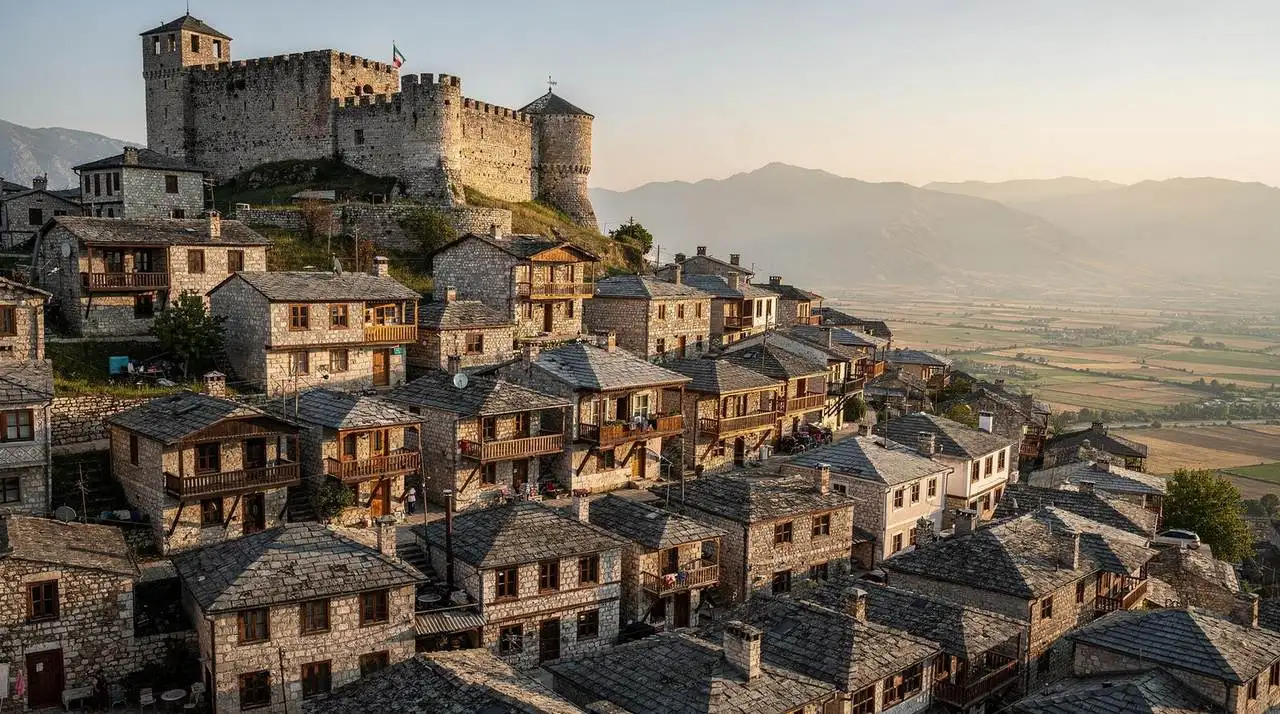
The castle above Gjirokaster is the largest in Albania by any measure — the total enclosed area, the mass of its walls, and the sheer physical dominance it exerts over the UNESCO-listed city below. The approach from the old bazaar, climbing steep stone alleys through increasingly ancient neighborhoods, builds to the revelation of massive walls and towers that emerge above the rooftops with theatrical effect.
The site has been fortified since at least the 12th century, when Byzantine records mention the kastron of Argyrocastron. The main phase of construction and expansion was under the Ottoman Empire in the 17th and 18th centuries, when Gjirokastra became a significant administrative center. The castle grew to its current size under Ali Pasha of Ioannina in the early 19th century — the same figure who built Porto Palermo Castle on the coast and who maintained a semi-independent fiefdom that worried both the Ottomans and European powers.
The castle’s interior is extensive and varied. The National Weapons Museum is the primary formal attraction — a substantial collection spanning from Illyrian weapons to communist-era military hardware, housed in the historic prison and arsenal buildings. The American Lockheed U-2-style reconnaissance plane displayed in the central courtyard is one of Albania’s more unusual historical artifacts: shot down (or crashed, accounts differ) during the Cold War, it represents the brief and complicated period when Albania flirted with Western alignment.
The cistern system — underground water storage built by the Ottomans to withstand sieges — is atmospheric and accessible with a guide. The clock tower, the bazaar stalls inside the walls, and the Ottoman hamam (bath house) ruins all add texture to a site that demands at least three hours to explore properly.
Book a guided Gjirokastra city tour that includes the castle with expert historical commentary — essential for understanding the layers of Ottoman, Albanian, and Cold War history compressed into this remarkable site.
Gjirokastra Castle Visiting Details
Entry fee: Approximately EUR 3-5 per person.
Hours: Daily 9:00-19:00 (summer), 9:00-16:00 (winter). Hours change seasonally.
Getting there: The castle is a 15-20 minute walk uphill from the old bazaar. Taxis can take you to the castle gate. Most guided tours include transport.
What to wear: Comfortable shoes with grip — the stone paths inside the castle are uneven.
Best time: Morning visits for cooler temperatures and better light for photography. Early September for the Gjirokastra National Folk Festival (held every 5 years).
Berat Castle (Kalaja): The Living Fortress
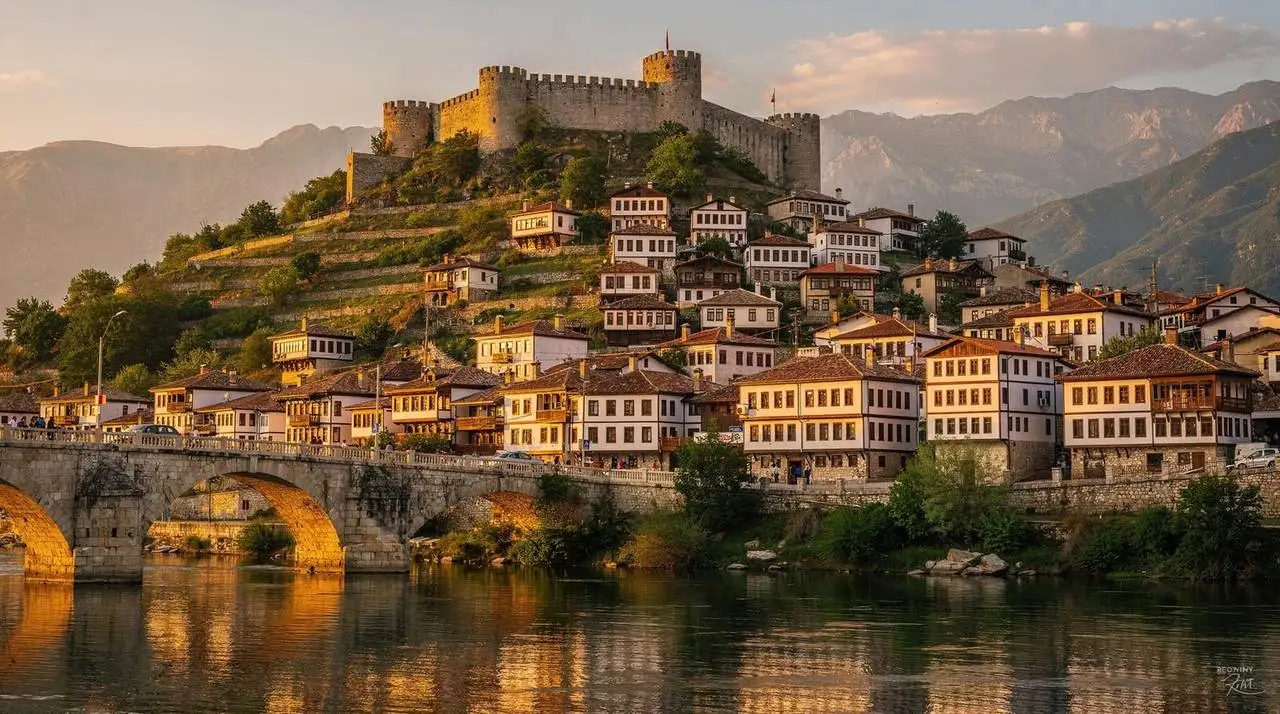
Berat’s castle is among the most extraordinary in Europe for a simple reason: people still live there. Around 400 inhabitants maintain homes, gardens, and daily life inside the medieval walls of Kalaja — a remarkable continuum of habitation stretching from the 4th century BC to the present day.
Built initially by the Illyrians and dramatically expanded by the Byzantines in the 5th and 6th centuries, Kalaja crowns a rocky limestone outcrop 200 meters above the Osum River. The Byzantine expansion created the layout that essentially survives today: a circuit of thick walls enclosing a plateau of churches, cisterns, and residential structures. The Ottomans added their layers and converted some churches to mosques, but the overall Byzantine character of the enclosed settlement remained.
Inside the walls today you find a remarkable collection of Byzantine-era churches — over a dozen remain identifiable, with eight or so regularly accessible. The most important is the Church of the Dormition of Saint Mary, which houses the Onufri Museum: the finest collection of Orthodox religious art in Albania, centered on the magnificent icons of 16th-century painter Onufri, whose vivid red pigments remain an art historical mystery. The Church of the Holy Trinity (13th century) and the Church of the Evangelistria are also significant and usually open.
The castle viewpoints — looking north over the Osum valley, south toward the plains, and down onto the Mangalem quarter’s stacked windows — are among the finest in all of Albania.
See our Berat travel guide and the UNESCO sites guide for full details on visiting Kalaja as part of a Berat day.
Rozafa Castle: Shkodra’s Mythic Fortress
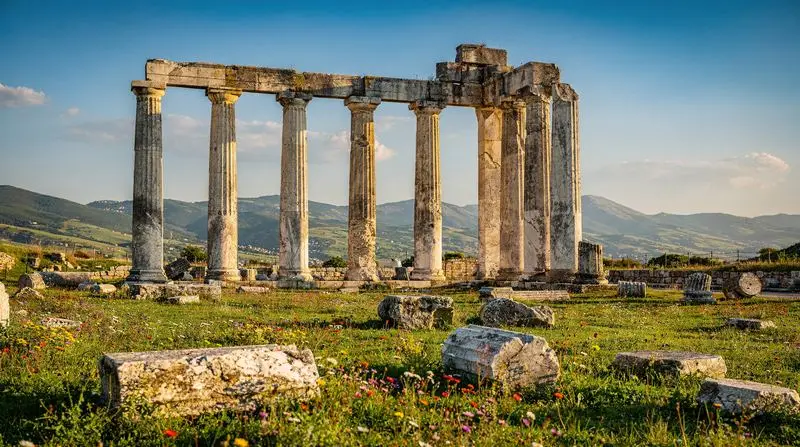
Rozafa Castle occupies one of the most strategically perfect sites of any fortress in Albania: a limestone hill at the confluence of the Drin, Buna, and Kiri rivers, just west of Shkodra in northern Albania. Three rivers below and mountain views in every direction made this one of the most contested fortifications in Balkan history — the city of Shkodra changed hands between Illyrians, Romans, Byzantines, Slavic kingdoms, Venetians, and Ottomans, with Rozafa as the prize each time.
The castle’s name derives from the Albanian legend of Rozafa: a woman immured in the castle walls during their construction to stabilize the building with her sacrifice. She agreed on condition that one breast, one eye, and one hand remain uncovered to feed, see over, and tend to her infant son. The nursing stone at the castle, still damp with water that locals once collected for sick children and nursing mothers, perpetuates the legend in physical form. It is one of Albania’s most powerful pieces of living mythology.
The ruins themselves are extensive: Venetian towers with carved lion reliefs, Ottoman additions, Byzantine structural remains, and the overall medieval curtain wall are all visible. The Rozafa Museum inside the castle covers the site’s multi-period history with reasonable clarity. The views from the ramparts over the confluence of the three rivers, the Shkodra plain, and the distant mountains are exceptional — on clear days the Adriatic coast is visible.
Getting there: Rozafa is 3-4 km from Shkodra city center. Taxi (cheap) or bike ride from town. Entry fee is modest.
Combine with: The Marubi National Photography Museum in Shkodra city center — one of the most outstanding museums in Albania, housing the archive of the Marubi dynasty of photographers who documented Albanian life from the 1850s onward.
Kruja Castle and the Skanderbeg National Museum
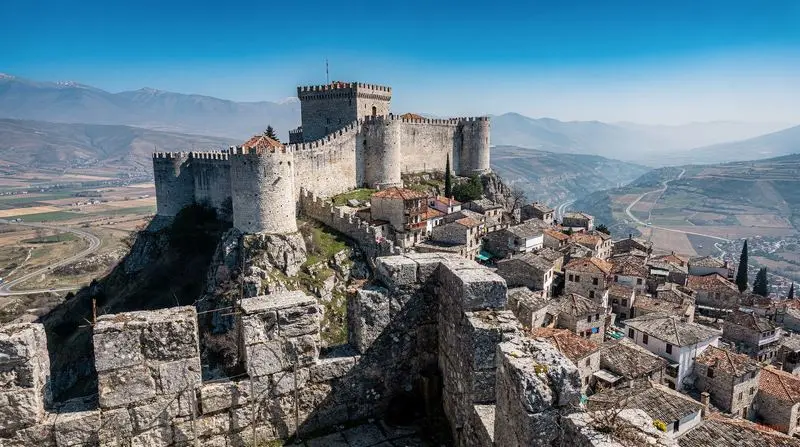
Kruja’s castle complex — perched dramatically above a gorge 25 km north of Tirana — is arguably the most emotionally significant historical site in Albania. This was the stronghold of Gjergj Kastrioti Skanderbeg, the Albanian national hero who united the country’s fractious princes and led resistance to the Ottoman Empire for over two decades (1444-1468). His red-and-black double-headed eagle banner became the Albanian flag; his memory is the organizing myth of Albanian nationhood.
The Skanderbeg National Museum dominates the castle complex — an extraordinary piece of architecture designed to look like a medieval fortress while housing modern museum galleries. The collection is comprehensive and surprisingly moving: Skanderbeg’s campaigns, his diplomatic relationships with European powers (popes, Venetian doges, and Neapolitan kings all supported his resistance), the fall of Albania after his death, and the subsequent Albanian diaspora to Italy (the Arbëreshë communities whose descendants still speak a medieval Albanian dialect).
Join a guided tour from Tirana to Kruja Castle, the old bazaar, and Sari Salltik viewpoint for a comprehensive half-day covering the castle, museum, and the old bazaar with its traditional craft shops.
The old bazaar immediately below the castle is one of the finest surviving Ottoman commercial streets in Albania — a long lane of artisan workshops under wooden porticoes, selling hand-loomed rugs, copper-worked objects, traditional embroideries, and authentic regional crafts. Unlike many Albanian souvenir markets, Kruja’s bazaar still contains genuine craft production rather than just imported goods.
The viewpoint at Sari Salltik — named for a Bektashi dervish saint whose shrine attracts pilgrims — provides panoramic views over the surrounding valleys and toward the Adriatic. The Bektashi tekke (lodge) here is an atmospheric and genuinely active place of worship, offering a window into the syncretic Islamic tradition that has shaped Albanian spiritual life.
Getting there: Kruja is about 25 km north of Tirana, 30-45 minutes by car. Regular tours from Tirana are the most convenient option. The drive up through the gorge to the hilltop is spectacular in itself.
Porto Palermo Castle: Romance on the Ionian Coast
Porto Palermo Castle occupies the most dramatically beautiful setting of any castle in Albania. Built on a rocky promontory almost completely surrounded by the turquoise Ionian Sea, accessed by a narrow causeway in the sheltered bay of Porto Palermo between Himara and Saranda, it was constructed in the early 19th century by Ali Pasha of Ioannina as a naval base and private stronghold.
The Ionian setting is extraordinary: the castle walls drop almost directly into the sea, the bay outside is the color of lapis lazuli, and the pine-covered mountains of the Albanian Riviera rise immediately behind. During the communist period the bay served as a submarine base for the Albanian navy, and the castle and surrounding waters remain partly military territory — access is sometimes restricted or requires a permit.
When accessible, the castle interior shows the tripartite structure of Ali Pasha’s design: residential quarters, a mosque with a distinctive hexagonal minaret, and defensive towers. But the exterior, seen from the bay or the coastal road above, is worth the stop regardless of whether full interior access is possible.
Getting there: Porto Palermo is on the SH8 coastal road between Himara and Saranda, approximately 15 km south of Himara. Access road leads down to the bay from the main road. Best visited as part of an Albanian Riviera coastal drive.
Castle Touring in Albania: Practical Tips
Start with the UNESCO cities: Berat and Gjirokaster each have their castle as the centerpiece attraction, and both cities deserve overnight stays. Plan at least two nights in each.
Use guided tours for context: Albania’s castles are rarely well-explained by on-site signage (improving, but patchy). A knowledgeable guide transforms the experience from interesting ruins into comprehensible history.
Go early or late: Most castles are substantially more enjoyable in morning or late afternoon light — both for comfortable temperatures and for photography. Midday visits in summer are hot and the light is harsh.
Wear appropriate footwear: Every Albanian castle involves uneven stone, steep inclines, and potentially slippery surfaces. Comfortable closed shoes with grip are essential. Sandals are not appropriate.
Check opening times locally: Hours change between summer and winter seasons, and some sites have irregular closures for events or maintenance. Verify current hours when you arrive in the nearest city rather than relying on information from months earlier.
The castle circuit — Kruja from Tirana, Berat en route south, Gjirokastra before Saranda, Porto Palermo on the coast, and Rozafa in the north — forms a natural multi-week Albania itinerary that combines the country’s greatest historical sites with its finest landscapes. Add in the historical sites of Butrint and Apollonia, the museums of Tirana, and the thermal baths of Permet, and you have the framework for a genuinely exceptional trip.
Comparing Albania’s Five Major Castles
| Castle | Base town | Standout feature | Time needed |
|---|---|---|---|
| Gjirokastra | Gjirokastra | Largest, weapons museum, U-2 spy plane | 2-3 hours |
| Berat | Berat | Still inhabited, Onufri Museum icons | 2-3 hours |
| Rozafa | Shkodra | Founding legend, three-river view | 1-1.5 hours |
| Kruja | Kruja | Skanderbeg museum, old bazaar | 2-3 hours |
| Porto Palermo | Porto Palermo | Sea-surrounded, Ali Pasha naval base | 30-45 minutes |
Combining Castles with the Rest of Your Albania Trip
The castle circuit fits naturally around the two other pillars of an Albania itinerary: the Riviera coast and the mountains. Gjirokastra and Porto Palermo sit on or near the route between Tirana and Saranda, so a southbound road trip picks up both without a detour. Rozafa in Shkodra is a natural stop before continuing to Theth or the Koman Lake ferry. Kruja, at just 30-45 minutes from Tirana, works as a half-day add-on to any Tirana stay. Travelers pressed for time should prioritize Berat and Gjirokastra — both are UNESCO-listed, both justify an overnight stay, and together they represent the fullest expression of Albania’s Ottoman-era architecture.
Frequently asked questions about Castles in Albania
Which is the best castle to visit in Albania if I only have time for one?
Berat Castle, for its unique status as a still-inhabited fortress with around 400 residents living inside the medieval walls, alongside the Onufri Museum’s collection of Byzantine religious art. Gjirokastra is the closest rival for sheer scale and its unusual Cold War-era spy plane exhibit.
Are Albania’s castles suitable for children?
Yes, though supervision is needed on the uneven stone paths and unguarded drops at sites like Rozafa and Gjirokastra. Kruja’s Skanderbeg museum and old bazaar tend to hold children’s interest best thanks to the hands-on craft shops below the castle. Comfortable, closed-toe shoes are essential for any castle visit with kids.
How do Albania’s castles compare to castles in neighboring countries?
Albania’s castles are less internationally known than those in Croatia or Montenegro, which means fewer crowds and lower entry fees — typically EUR 3-5 versus EUR 10-15 at comparable sites in Dubrovnik or Kotor. What Albania’s castles lack in polished visitor infrastructure, they make up for in authenticity: Berat’s castle is a living neighborhood rather than a heritage-managed museum piece, and Gjirokastra’s still shows the layered scars of Ottoman, monarchist, and communist-era use rather than a single restored period.
Getting to Albania’s Castles Without a Car
Public transport reaches most of the major castles without difficulty. Berat and Gjirokastra are both served by regular buses and furgons from Tirana — see the bus routes Albania guide for schedules and prices. Rozafa is a short taxi or bike ride from central Shkodra, itself reachable by frequent furgon. Kruja is close enough to Tirana that a guided day tour or a furgon combined with a short local taxi covers it easily. Only Porto Palermo genuinely benefits from a rental car, since it sits on the coastal road between Himara and Saranda with no direct bus service to the castle itself — see the car rental Albania guide if that is on your list.