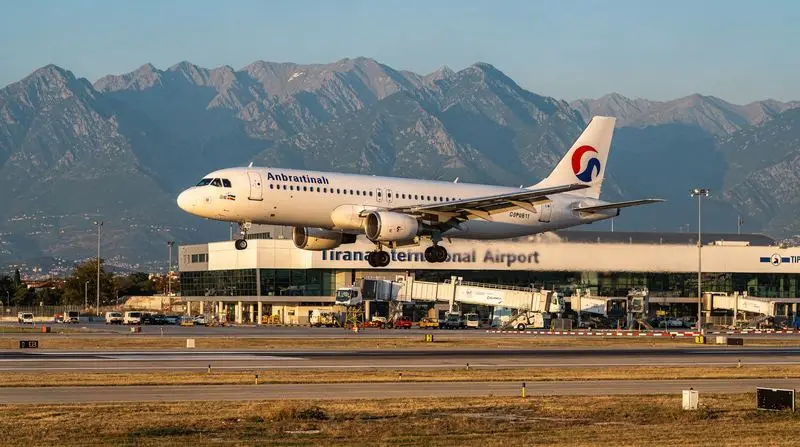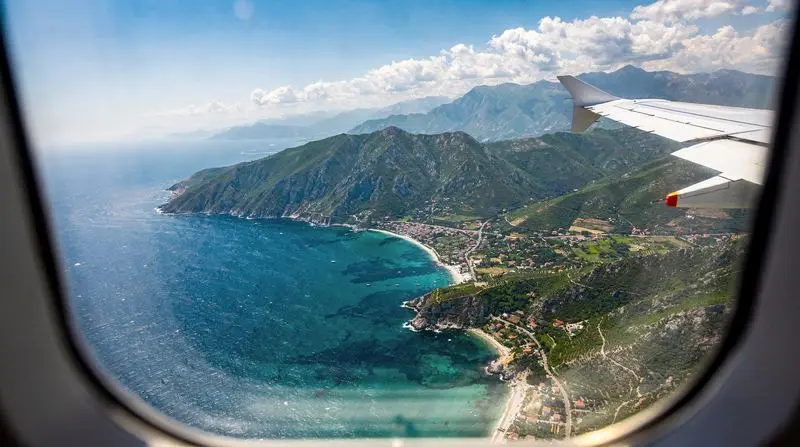
The first thing that hit us was the light. We landed at Tirana’s Rinas Airport on a September afternoon, and even before we cleared customs the quality of the Balkan sky was doing something particular — a warm, hazy gold that made the distant mountains look like a watercolor. We had heard Albania was beautiful. We had not expected it to announce itself quite so immediately.
That trip was our first, and it changed how we think about travel in Europe. We have been back several times since and built this entire site around trying to share what we discovered. But it started there, at a small airport named after Mother Teresa, trying to figure out how to get a taxi that was not going to charge us ten times the local rate.
Here is the honest version of that first visit — what caught us off guard, what exceeded every expectation, and what we genuinely wish someone had told us before we went.
| Trip length | 10 days (2 Tirana, 2 Berat, 2 Riviera, plus travel days) |
| Cost | Around €50-70/day for two, mid-range |
| Best first-trip season | May-June or September for fewer crowds and comfortable heat |
| Getting in | Direct flights to Tirana from most major European hubs |
| Language | English widely understood in Tirana and tourist areas; a few Albanian words help elsewhere |
What Surprised Us
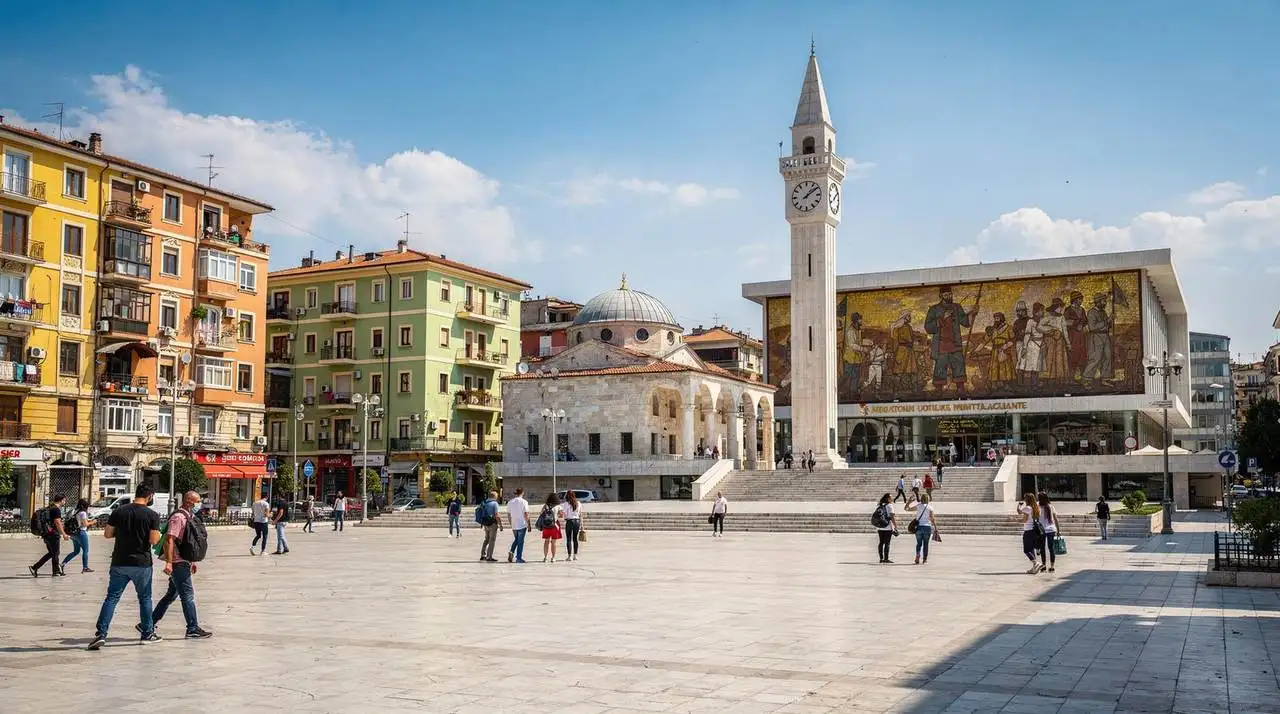
How normal it felt. We had arrived expecting something exotic and slightly chaotic. What we found was a functioning, modern country with a lively capital, decent roads, good coffee shops, and fast Wi-Fi. Tirana surprised us most: it is colorful, young, energetic, and far more vibrant than its communist-era reputation would suggest. We had half-expected grey concrete and suspicion. We found colored facades, rooftop bars, and a city that goes out late and sleeps in later.
How little English was needed. Albania’s younger population speaks good English, particularly in Tirana and the main tourist areas. In smaller towns and villages we needed a few words of Albanian, mostly to be polite rather than necessary. Locals were patient and often went to enormous lengths to communicate even without a shared language. A phrasebook would have been nice to have; it was never essential.
How bad the driving actually is. We had read warnings but assumed they were exaggerated. They were not. Albanian roads, particularly in the mountains, require full attention. Overtaking on blind corners is common. Livestock appears in the road without warning. Mountain passes in the north are steep, narrow, and crumbling at the edges. This is not a reason not to go — it is just a reason to rent a car with a decent insurance policy and allow considerably more travel time between destinations than any map application will suggest. Our car rental Albania guide covers everything you need to know.
How cheap everything was. We knew Albania was affordable. We did not know quite how affordable until we sat down for our first proper meal — lamb cutlets, salads, bread, wine, dessert, coffees — and paid the equivalent of twelve euros for two people. We sat there for a moment checking the bill, assuming we had misread something. We had not. Prices across Albania are low enough to feel slightly disorienting if you have come from anywhere else in Europe. The current picture is covered in our Albania travel budget guide.
How many bunkers there are. We had read about the communist-era bunkers before we went. We had not internalized that 170,000 of them were scattered across a country the size of Wales. They appear everywhere — on beaches, in fields, on roundabouts, half-buried in hillsides, clustered in rows along the coast. Once you see them, you cannot un-see them. They become part of the landscape, and they lend the country a peculiar, dreamlike quality unlike anywhere else.
What We Loved
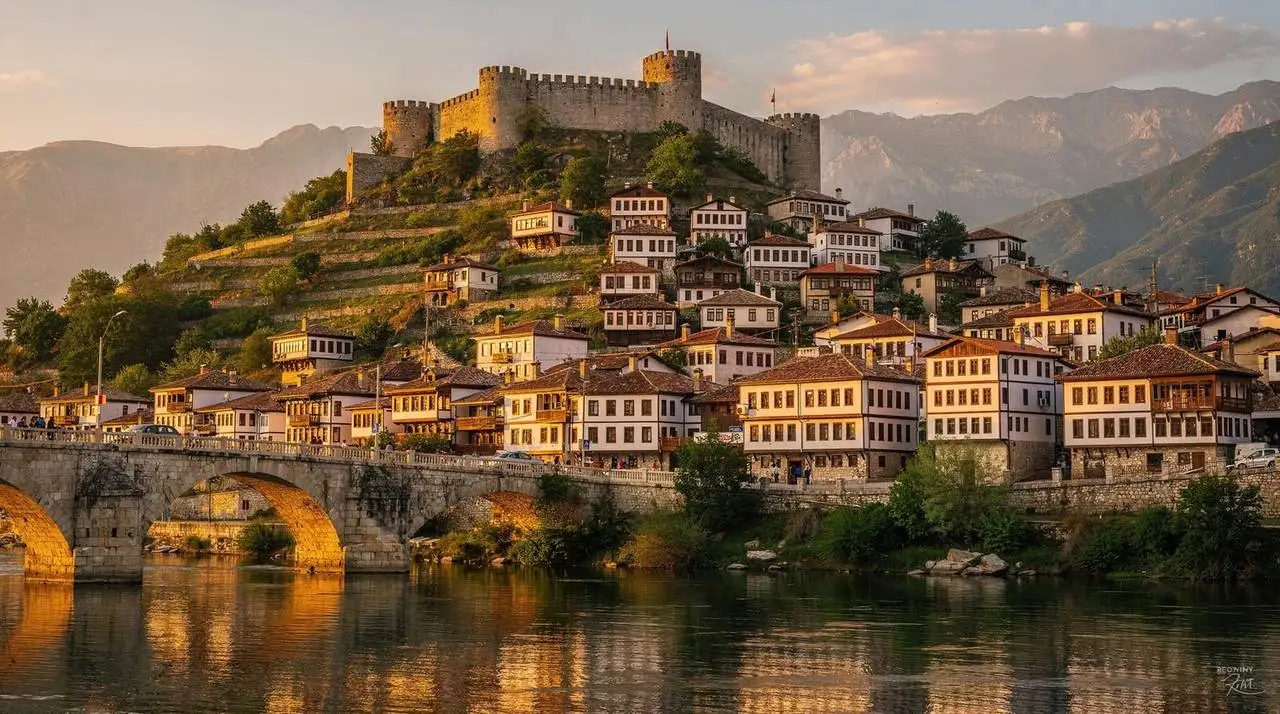
Berat. Without question, Berat was the highlight of our first trip, and it has remained one of our favorite places in all of Europe. The city sits in a valley flanked by mountains, and from below the Ottoman-era houses climbing to the castle look like a painting. Up close, they are extraordinary — white multi-windowed facades stacked up a hillside so steep that the roofs of the houses below become the gardens of the houses above. The castle district is still inhabited. People live inside the walls in houses that have stood for centuries. We spent an afternoon wandering with no particular destination and felt entirely, perfectly lost.
The food. We did not expect to be as interested in Albanian food as we became. It starts with byrek for breakfast — a hot filo pastry filled with cheese or spinach, pulled from the oven and served with a yogurt drink called kos. From there it expands into slow-cooked lamb, grilled meats, fresh salads dressed with good olive oil, and along the coast, seafood that arrived on the boat that morning. The flavors are clean, generous, and deeply satisfying. We ate better than we expected every single day. The full Albanian food guide covers what to order and where.
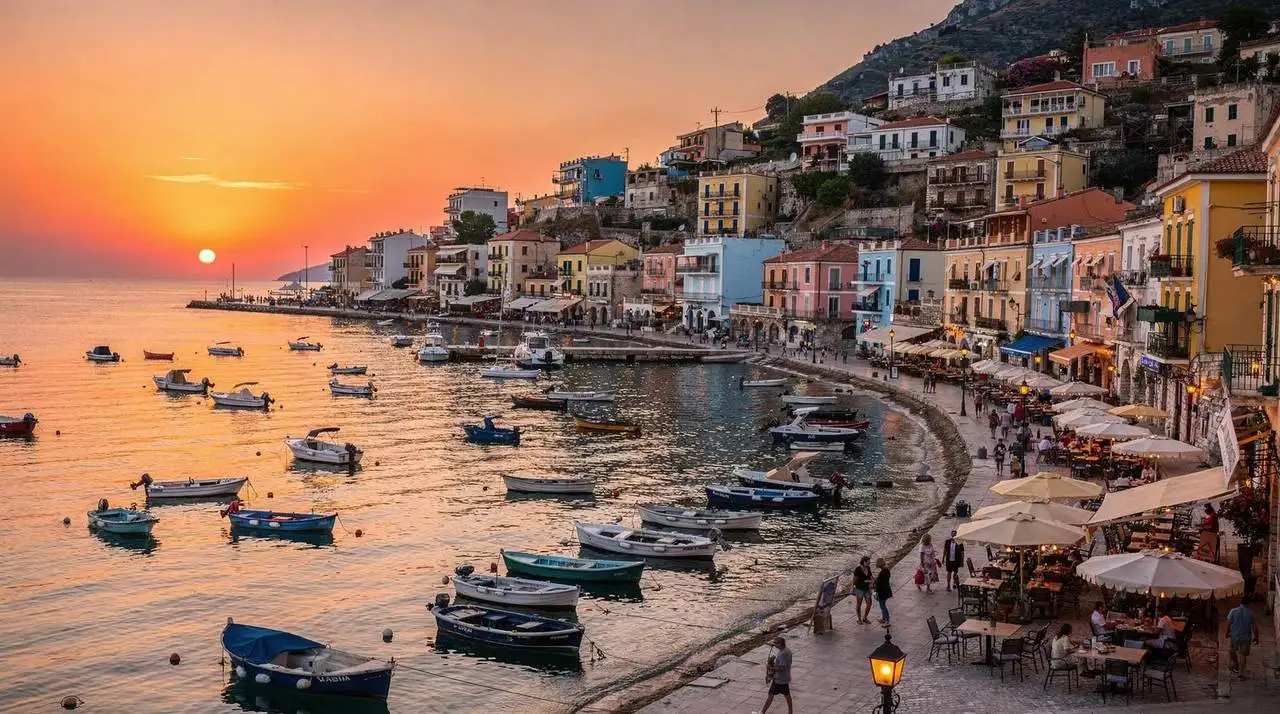
The Riviera. We came in September, which turned out to be nearly perfect: summer crowds had thinned, prices had softened slightly, and the water was still warm. The beaches along the Albanian Riviera — particularly around Saranda and the smaller coves north of it — were more beautiful than we had imagined. The particular blue-green of the Ionian Sea at places like Ksamil is genuinely hard to describe without sounding like a travel brochure. You will just have to see it.
The people. This is where we have to stop being careful. Albanian hospitality is real, and it is remarkable. Our guesthouse host in Berat sat with us for two hours after dinner, showing us photographs of the city from the 1980s and explaining, in careful English, what life under Hoxha had been like. A man who noticed us struggling with a map in Tirana walked us six blocks out of his way to make sure we found the right street. A restaurant owner in Saranda, when we mentioned we were leaving the next morning, came to our table with a small bottle of raki and said simply, “for the road.” These things happened repeatedly, and they were never transactional.
The walking tours. On day two in Tirana, we joined a guided Tirana walking tour that was one of the best decisions of the trip. The guide was a young Tirana native who had lived through the post-communist transition and could explain, from personal experience, what the city looked like in the 1990s and what it had become. The Blloku neighbourhood, the Pyramid, the BunkArt museum — all of it made more sense with context than it would have as a solo wander.
What We Wish We Knew
Allow more time than you think you need. Albania is not large, but moving around takes longer than distances suggest. Mountain roads are slow. Buses run on approximate schedules. If you try to see too much in too little time, you will spend most of your trip in transit and miss the pleasure of sitting still in places long enough to actually feel them. We tried to be in five places in ten days. We should have been in three places in ten days.
Learn a little Albanian. Even ten words — thank you, hello, please, how much, very good — will open doors. Albanians visibly warm when a foreigner makes any effort with the language. Faleminderit (thank you) and mirë (good) will get you a long way.
Pack layers for the mountains. We visited in September and were caught out by how cold the evenings get in the highlands. The temperature drops fast once the sun goes behind the peaks, and what felt like a warm autumn afternoon can become a cold night very quickly. In the north especially, pack as if you expect the weather to surprise you.
Get out of Tirana sooner. Tirana is worth time — probably two days at minimum — but the city is not what makes Albania special. The country’s soul is in its mountains, its ancient cities, and its coastline. If we were doing the trip again, we would spend one night in Tirana to settle in, and then head south toward Berat and the Riviera, or north toward the Alps.
Book Tirana walking tours in advance. We nearly missed the walking tour that reframed our entire understanding of the city — it was almost full when we showed up. For a first visit, a communist Albania tour with BunkArt museum visit is the kind of experience you want booked before you arrive, not hoped for on the day. The BunkArt tunnels are one of the most striking experiences in Tirana and the history they document gives you the context for the whole country.
Do not stress about ATMs. We read various accounts of cash shortages and ATM reliability before we went and worried more than necessary. In Tirana and the main tourist areas, ATMs are plentiful and work reliably. In smaller villages, carry cash because there may be no ATM at all. Have a contingency, but do not overthink it.
Consider a food tour on the first day. We discovered Albanian food through happy accident rather than planning. A Tirana food tour with meals included would have given us the context we needed from day one to make the most of every meal we ate afterward. The guide’s knowledge of the markets, the traditional dishes, and the neighbourhood spots transforms your relationship with Albanian food for the rest of the trip.
Money and Communication on a First Trip
Albania uses the lek, and while cards are increasingly accepted in Tirana and the main coastal towns, we found ourselves reaching for cash constantly once we were outside the capital — for furgons, for small family restaurants, for the market stalls at the New Bazaar. Our Albania currency and money guide covers exchange rates, where to get the best rates, and how much cash to realistically carry day to day. On the language side, even though we managed fine with limited Albanian, having a handful of phrases ready smoothed a lot of small interactions; our Albanian language basics guide has the essentials, and the fuller Albania language phrasebook goes further if you want to make more of an effort, which locals visibly appreciate.
Health and Practical Safety Nets
We did not need to use travel insurance on that first trip, but we had it, and in hindsight we would not travel to Albania without it given the driving conditions and the more remote mountain areas. Our Albania travel insurance guide covers what to look for specifically for Albania, including coverage for hiking and mountain activities if that is part of your plan. On the more mundane side, our Albania pharmacy and health guide is useful to have bookmarked before you need it rather than after — pharmacies are plentiful in towns but sparser in the mountains.
Things We Wish We Had Sorted Before Landing
Visa and entry. As it turned out, entry was simple for us, but we had spent more time worrying about it than necessary. Check current requirements for your nationality before you go — our Albania visa requirements guide covers who needs what.
A local SIM. We landed without one and regretted it for the first day, relying on patchy airport Wi-Fi to sort a taxi. Picking up a local SIM at the airport or in central Tirana on day one solves this immediately; the Albania SIM card guide covers current providers and prices.
What to pack. We underestimated how much the temperature swings between the coast and the mountains, even within the same week. Our Albania packing list is the guide we wish we had read before that first trip.
Common tourist traps. We got overcharged for a taxi from the airport on day one — a classic first-timer mistake that is easy to avoid once you know the going rate. The scams and tourist traps guide covers this and a handful of other things to watch for, none of which are serious, all of which are avoidable with a little forewarning.
Practical Planning for First-Timers
For a first trip to Albania, the structure that works best is:
Two days in Tirana. Walking tour on day one, neighbourhoods and BunkArt on day two.
Two nights in Berat. The castle, the Onufri Museum, the riverside walk, a long dinner. Do not rush.
Two nights on the Albanian Riviera. We went to Saranda and Ksamil. September was perfect. The best beaches guide can help you choose based on your timing.
If you have more time, the north — Shkodra, Koman Lake, and the Albanian Alps — deserves its own trip or extension. Our 14-day Albania itinerary covers a route that includes both north and south.
Getting to Albania is more straightforward than many people expect — direct flights from major European cities are available year-round, and the airport is efficient. The Albania safety guide addresses the concerns that first-timers often bring with them from outdated news coverage.
The Thing That Stays With You
First trips have a particular quality to them. You are not yet familiar enough with a place to take anything for granted, so everything lands with a slightly heightened intensity. We remember our first dinner in Tirana — a terrace somewhere near the Blloku neighborhood, warm evening air, the smell of woodsmoke and espresso, a plate of grilled lamb that cost us three euros — with the kind of clarity that usually only attaches to significant moments.
Albania does that to people. It arrives in the consciousness with an almost physical impact: the light, the scale of the landscapes, the weight of a history that is complicated and layered and unlike anywhere else in Europe. We came back changed, which is what you want from a trip.
Go. Take your time. Let it surprise you.