Cycling in Albania: Pedaling Through Europe’s Last Frontier
Albania is emerging as a genuinely exciting cycling destination, and not just for the adventurous fringe. The country offers a remarkable variety of terrain within a compact geography: flat Adriatic coastal plains, forested river valleys, Mediterranean clifftop roads above the Ionian Sea, and the dramatic switchbacks of the Albanian Alps. For cyclists willing to accept that roads can be rough and traffic occasionally chaotic, the rewards — in scenery, cultural encounters, and sheer novelty — are exceptional.
| Best regions | Albanian Riviera, Tirana, Lake Ohrid, Vjosa Valley |
| Difficulty range | Easy city rides to advanced Alpine touring |
| Best time | May-June and September-October |
| Bike rental | Widely available in Tirana; limited elsewhere |
| Guided tours | Half-day and full-day options from Tirana |
The Albanian cycling scene in 2026 reflects the country’s broader transformation. A decade ago, basic bike hire barely existed outside the capital. Today, Tirana has a network of cycling lanes, a growing community of local cyclists, and several professional operators offering guided bike tours. Around the country, adventure cycling companies have mapped routes, established logistics, and started welcoming touring cyclists in significant numbers.
Prices are among the lowest in Europe, the food is excellent, locals are almost universally welcoming, and the landscapes have not yet been smoothed and packaged for mass consumption. Albania cycling tourism is at exactly the stage that Slovenia and Montenegro were fifteen years ago — now is the time to go.
Guided Bike Tours in Tirana
The Albanian capital has more to offer cyclists than most visitors expect. Tirana itself has invested substantially in cycle infrastructure since 2018, and the surrounding area provides surprisingly varied riding within easy reach of the city center.
Join a guided bike tour of Tirana’s scenic highlights covering the city’s cultural and architectural landmarks, the Grand Park, and the canal system on quality hybrid bikes with a knowledgeable local guide. Cost approximately EUR 25-40 per person for a half-day tour.
Tirana’s guided cycling tours typically cover:
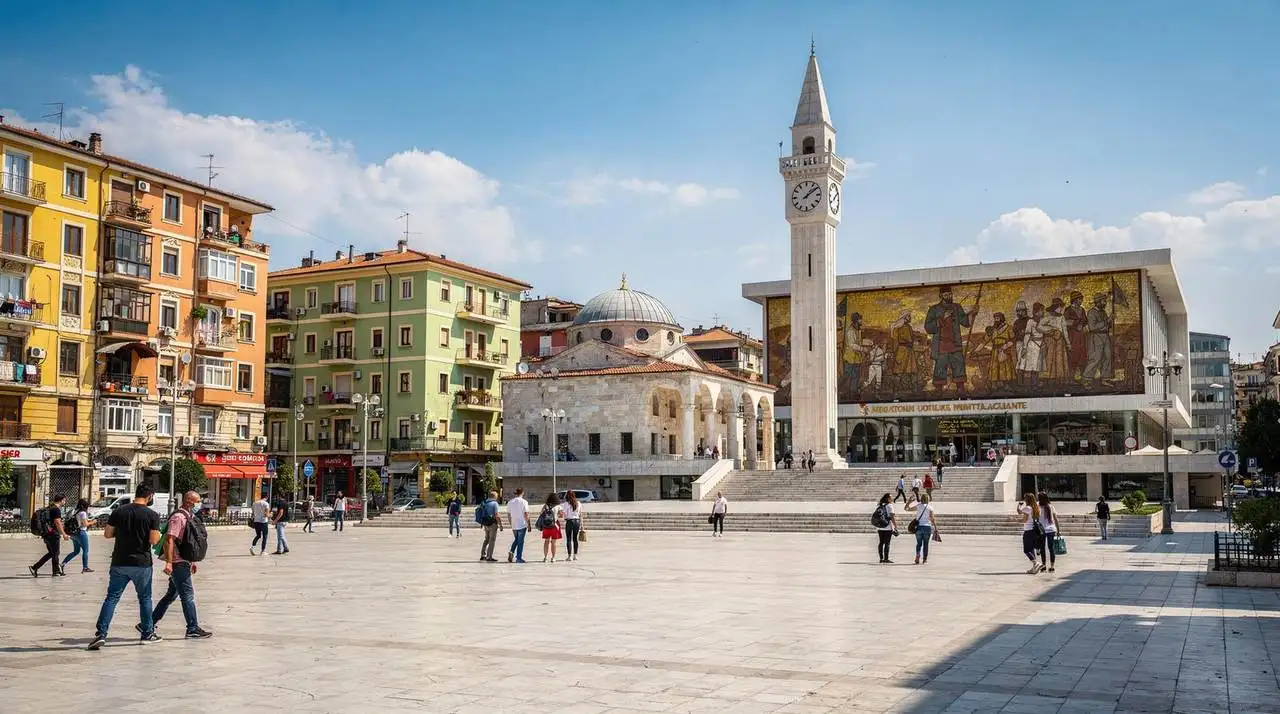
- Skanderbeg Square and the historic center: The pedestrianized heart of the city is best appreciated slowly, by bike or on foot
- Blloku district: The former elite communist enclave, now Tirana’s most fashionable neighborhood of cafes, bars, and boutiques
- Grand Park and Artificial Lake: The lung of the city — a surprisingly large green space perfect for cycling
- The Ring Road and Lana River canal path: Pleasant flat cycling through residential neighborhoods
- Colorful painted apartment blocks: The famous murals that define Tirana’s post-communist visual identity
- Dajti Mountain approach: Some tours extend toward the mountain foothills for a taste of the terrain that rises immediately behind the city
Half-day and full-day options are available. These tours suit all fitness levels — the city terrain is mostly flat and the pace is relaxed, with frequent stops for coffee, explanation, and photography.
Best Cycling Routes in Albania
The Albanian Riviera Coastal Route
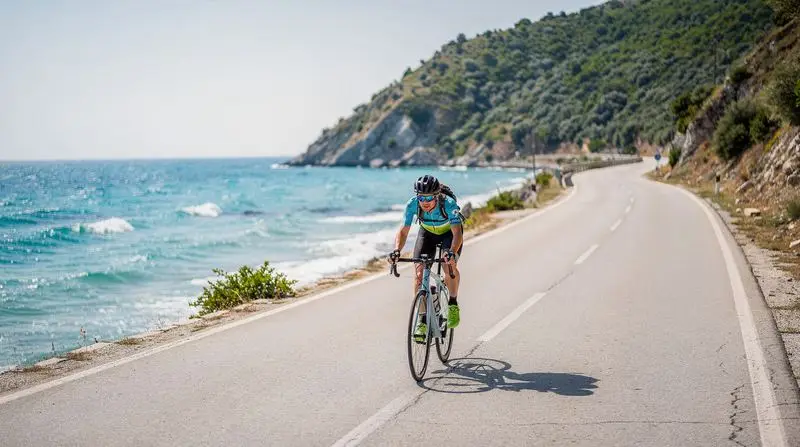
The road from Vlora south through Llogara Pass and along the Ionian coast to Saranda is one of the most spectacular cycling routes in southeastern Europe. The climb to Llogara Pass at 1,027 metres is serious — approximately 20 km of climbing from sea level — but the reward is breathtaking: views over the Ionian Sea and Corfu, pine forests, and then a long descent to the crystalline water of the Riviera beaches.
The coastal section from Llogara down to Himara and beyond has dramatic ups and downs as the road follows the limestone headlands. It is not easy cycling but the scenery at every turn is exceptional. Total distance from Vlora to Saranda: approximately 150 km. Allow two to three days for a comfortable pace with time to swim.
Road surface: Mostly paved and reasonable, with some rough patches particularly north of Himara. Traffic is light outside July-August; heavy in peak summer when campervans and rental cars congest the road.
The best time for the Riviera cycling route is May-June or September-October, when traffic is light, temperatures are manageable, and the scenery is at its finest. Cycling this route in July heat (34-37°C on the coast) is possible but requires very early starts and significant water carrying capacity.
Tirana to Kruja
A manageable day ride from Tirana to Kruja, the historic hilltop town associated with national hero Skanderbeg. The route (approximately 25 km one way) climbs steadily through the outskirts of Tirana into the foothills before the final ascent to Kruja. The old bazaar and castle reward the effort handsomely, and a taxi or furgon can bring you and your bike back if you do not want to repeat the climb.
The Kruja bazaar sells traditional Albanian crafts, and the Skanderbeg Museum inside the castle is the country’s main museum dedicated to the 15th-century Albanian leader who resisted Ottoman expansion. Total elevation gain: approximately 600 metres. A moderate but not demanding day’s cycling.
Lake Ohrid Shore Route
The road around Lake Ohrid from Pogradec along the Albanian shore is gentle, scenic, and relatively traffic-free. The lake views are magnificent, the lakeside villages are charming, and the road surface is acceptable throughout. A circuit of the Albanian lakeshore (approximately 30-35 km from Pogradec and back) makes a very pleasant day’s cycling.
The Lin peninsula — where a Byzantine basilica floor mosaic of the 6th century lies exposed on a hilltop surrounded by the lake — is the highlight of this route. The final climb to the mosaic site is short but steep. The view from the hilltop, with the lake on three sides and the mountains of North Macedonia across the water, is extraordinary.
Vjosa Valley Route
The Vjosa River — Europe’s last wild river, now a national park — runs through a broad valley between Permet and Tepelena. The road following the river is mostly flat, traffic is minimal, and the river scenery is outstanding. Combining with the Benja Thermal Baths and Langarica Canyon creates a multi-activity Permet area itinerary.
The Vjosa valley cycling is at its finest in May and October: cool temperatures, the river running full and green, and the surrounding mountains either fresh with spring growth or russet with autumn colour. The spring wildflower season transforms the verges from Tepelena to Permet into an extended botanical display.
Shkodra Lowlands and Lake Skadar
The area around Shkodra and Lake Skadar offers excellent flat cycling through rural Albanian landscape largely unexplored by cyclists. The lake shore south of Shkodra is particularly rewarding — a combination of wetland birdwatching and rural Albanian village life with no significant gradients. Distance from Shkodra to the main lake viewpoints: approximately 20-30 km return.
Lake Skadar is shared with Montenegro and is one of the largest freshwater lakes in Europe. The Albanian shore is less developed than the Montenegrin side, with fewer tourists and more authentic villages. The pelicans, cormorants, and herons visible from the lakeshore cycling routes are an unexpected bonus.
Albanian Alps (Advanced)
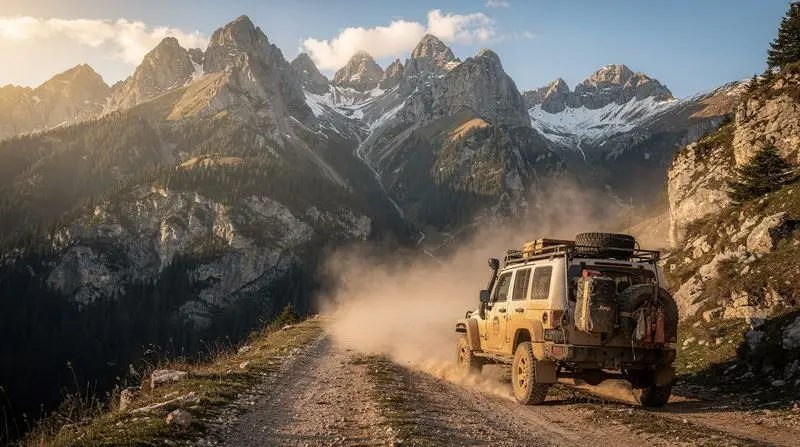
The mountain roads of the Albanian Alps — particularly the route from Shkodra through the mountains to Valbona and Theth — are for experienced adventure cyclists only. The terrain is extreme, sections are unpaved, gradients are severe, and support infrastructure is sparse. Those who complete them describe the experience as among the most memorable cycling of their lives. A support vehicle is strongly recommended.
The road to Theth from Shkodra (approximately 70 km, with significant elevation gain and rough surface) is the most popular of the Alpine cycling challenges. It is genuinely difficult — plan 6-8 hours in the saddle — but the descent into the Theth valley and the arrival at a mountain guesthouse makes it one of the most satisfying day’s cycling available.
Mountain Biking in Albania
Beyond road cycling, Albania has significant mountain biking potential that is just beginning to be developed commercially. The forested hills around Tirana (particularly the Bovilla and Dajti areas), the slopes of Mount Tomorr near Berat, and the trail systems around Theth in the north all offer excellent off-road riding.
Formal trail networks with waymarking and maintained surfaces are limited, and most mountain biking currently requires either a guide or strong navigation skills. The upside is genuine wilderness riding with no other mountain bikers in sight — exactly the kind of uncrowded experience that the Alps and Pyrenees can no longer offer.
The Dajti Mountain area above Tirana is the most accessible mountain biking zone from the capital. The gondola cable car to the mountain can carry bikes, giving access to the plateau and trails above the city. From there, routes run through beech forest with exceptional views over the city and the Adriatic plain. Several Tirana operators are developing formal mountain bike tour programmes that should have more options by mid-season 2026.
The hills around Berat also offer rewarding mountain biking — particularly the forested sections of Mount Tomorr where trail conditions are good in summer and autumn. Berat’s proximity to the mountain makes it a viable base for day rides.
Cycling Infrastructure and Practicalities
Tirana laid its first protected lanes only in the last few years and they still stop short of joining up, which makes the useful routes local knowledge rather than map reading: a Tirana bike tour with a local guide uses the linked sections and avoids the boulevards that have none.
Bike Rental
Quality bike rental is available in Tirana from several operators, typically offering hybrid bikes, city bikes, and some hardtail mountain bikes. Electric bikes are available from some providers — useful for the significant climbs that Albanian terrain demands. Outside Tirana, dedicated bike rental is limited, and bringing your own or joining a guided tour with supplied bikes is advisable for regional cycling.
Cycling tour operators who supply bikes use quality equipment — typically Trek, Giant, or equivalent brands with appropriate gearing for Albanian gradients. Check the gear range before committing to a mountain route.
Road Conditions
Albanian roads range from excellent (recently built or EU-funded highways) to genuinely challenging (mountain tracks, village roads). For road cycling, the main coastal highway (SH8) and the national road network connecting major cities are generally acceptable. Secondary roads are more variable. Google Maps and OpenStreetMap are both useful; the latter often has more detail on track surfaces.
Cobblestone surfaces in towns like Berat and Gjirokastra are beautiful to look at but uncomfortable and occasionally slippery on narrow road tyres.
Traffic
The most significant cycling hazard in Albania is traffic behaviour. Albanian drivers are improving but can be impatient, have limited experience with cyclists, and do not always maintain safe passing distances. On main roads outside urban areas, cars move fast. Recommendations:
- Ride with a rear red light even in daylight on main roads
- Use a hi-visibility vest or jacket
- Plan routes on secondary roads where possible
- Avoid the Tirana-Durres highway entirely — it is effectively a motorway and cycling is both dangerous and prohibited in sections
In cities and on quieter roads, traffic is manageable. In the mountains, roads are often nearly empty.
Safety Equipment
Bring a helmet — quality helmets are not reliably available for rent in Albania. A basic tool kit (tyre levers, patches, pump, spare tube), a phone with offline maps, and plenty of water capacity are all recommended. Distances between towns with shops can be significant on mountain routes.
When to Cycle
May and June: Arguably the best months — warm but not hot, vegetation lush, roads quiet, wildflowers on mountain routes.
July and August: Hot (30-38°C on the coast and plains), coastal roads busy with tourist traffic, but mountain routes are magnificent and cooler.
September and October: Excellent conditions with warm temperatures, reduced traffic, and beautiful autumn colours particularly in the north.
Winter: Possible on the coast but mountain routes close due to snow. Not recommended for most cyclists.
Combining Cycling with Other Activities
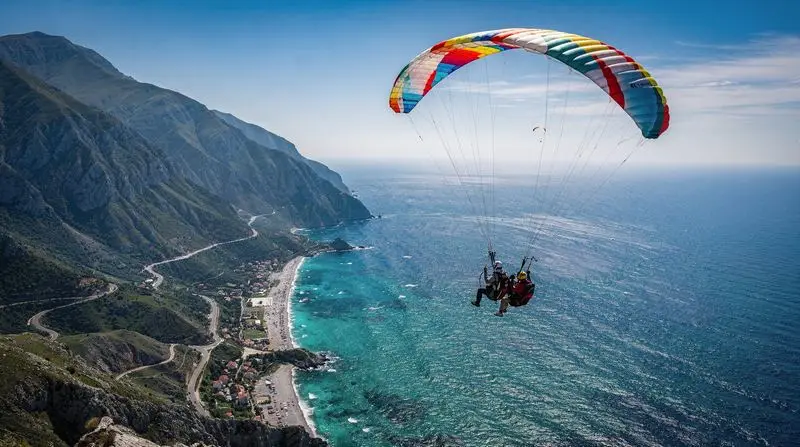
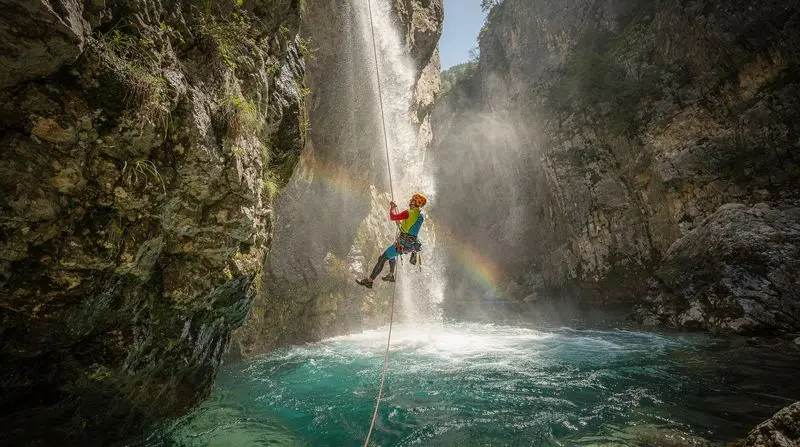
A cycling trip to Albania naturally intersects with many of the country’s other major activities and attractions. Riders on the Riviera route pass the paragliding launch site at Llogara. The Permet area combines cycling the Vjosa valley with canyoning at Langarica and soaking at Benja thermal baths. Cyclists in the north can include the Theth-Valbona hiking traverse as a side trip.
The UNESCO heritage cities — Berat, Gjirokastra, and Butrint — all fall on or near the main cycling corridors and deserve proper exploration time. Build in at least a full rest day at each to visit the historical sites and museums properly.
Albania rewards cyclists who combine movement with genuine immersion: stopping for coffee at the village cafe, accepting an invitation to taste home-produced raki, asking a local shepherd for route advice. The country’s famous hospitality — the cultural code of besa, meaning unconditional trust and welcome to guests — makes cycling here a fundamentally social as well as physical experience.
For a self-guided two-week cycling itinerary through Albania, consult the growing network of cycle touring resources on platforms like CycleBlaze and Komoot, where increasingly detailed Albania routes are being logged by riders. See also the Albania road trip guide for route planning context applicable to both driving and cycling.
Accommodation for Cyclists
The family guesthouse network that serves hikers in the Albanian Alps works equally well for touring cyclists. Most mountain guesthouses are happy to store bikes overnight, provide a hose-down for muddy kit, and point you toward the next day’s terrain.
On the Riviera, the best cyclist-friendly accommodation is found in Himara and Vlora — both have guesthouses with secure bike storage and owners accustomed to travelling cyclists. Where to stay in Himara and where to stay in Vlora cover the options at each price point.
For a budget cycling trip, the hostels in Tirana and Shkodra provide the best information networks and social scenes for meeting other cyclists and getting current route advice.
Choosing a Route by Fitness and Experience Level
Albania’s cycling routes span a genuinely wide range of difficulty, and matching the route to your fitness level makes the difference between an exhilarating trip and a miserable one.
| Route | Difficulty | Best for |
|---|---|---|
| Tirana city tour | Easy | Any fitness level, families |
| Lake Ohrid shore (Pogradec) | Easy-moderate | Casual cyclists wanting scenery without climbs |
| Vjosa Valley (Permet-Tepelena) | Moderate | Cyclists comfortable with a full day in the saddle |
| Tirana to Kruja | Moderate | Fit riders wanting a single demanding climb |
| Riviera coastal route (Vlora-Saranda) | Moderate-hard | Multi-day tourers with climbing experience |
| Albanian Alps (Shkodra-Theth) | Hard | Experienced adventure cyclists with support |
First-time visitors to Albania who want to test the cycling scene without committing to a demanding multi-day route should start with a Tirana guided tour or the Lake Ohrid shore route, both of which give a genuine taste of Albanian cycling without requiring advanced fitness or navigation skills.
Packing and Logistics for a Cycling Trip
A few practical points that make an Albanian cycling trip run smoothly:
Spare parts: Bike shops outside Tirana are limited, particularly for anything beyond basic tubes and tyres. Touring cyclists should carry a reasonably complete repair kit and know how to use it — a broken derailleur cable in the Albanian Alps is not something you can fix with a phone call to a shop.
Water and food planning: Distances between villages with shops can be significant on mountain and interior routes. Carry more water capacity than you think you need, particularly on the Riviera route in summer heat and the Vjosa Valley route where shade is limited.
Connectivity: An Albanian SIM or eSIM with data is worth having for route navigation and emergency contact, particularly in the Alps where mobile coverage is patchy. See the Albania eSIM guide for setup before you arrive.
Transporting a touring bike into Albania: Most airlines accept bikes as checked luggage with advance notice and a bike box or bag. If arriving by ferry from Corfu or Italy, bicycles typically travel for a modest supplement.
Frequently Asked Questions About Cycling in Albania
Is Albania safe for cycling?
Generally yes, with sensible precautions. The main hazard is traffic behaviour rather than road quality — drive predictably, use lights and hi-visibility gear on main roads, and avoid the Tirana-Durres motorway entirely. Rural and mountain roads are calmer, with light traffic and generally courteous drivers once you leave the cities.
Do I need a mountain bike or a road bike for Albania?
A hybrid or gravel-style bike with reasonably wide tyres is the most versatile choice, since even paved Albanian roads often include rough patches, potholes, and occasional gravel sections. A pure road bike with narrow tyres works for main highways like the SH8 but will struggle on rougher secondary and mountain roads.