Thermal Baths and Hot Springs in Albania: Natural Wellness in the Wild
Albania sits on active geothermal ground, and the result is a scattering of natural hot springs that emerge from river gorges, limestone cliffs, and mountain valleys across the country. These are not manicured spa resorts — they are raw, natural phenomena where warm mineral water pools beside cold rivers, steams in cool air, and, in the case of the most famous site at Benja near Permet, flows directly under a beautiful Ottoman stone bridge. The experience of soaking in warm geothermal water with a mountain gorge above and a clear Albanian river beside you, spending almost nothing, is one of the most distinctive pleasures Albania offers.
The thermal baths scene here is resolutely unpretentious. Where neighboring Greece and Montenegro have begun developing geothermal springs into formal wellness complexes with entry fees and changing rooms, Albania’s hot springs mostly remain accessible, informal, and free or very low cost. That is changing gradually — some sites now charge a small entry fee of EUR 1-3 — but the overall character remains closer to wild swimming than day spa.
| Where | Benja near Permet (most famous); also Elbasan and Peshkopi |
| Cost | Free to EUR 1-3 entry at organized sites |
| Temperature | Around 28-35°C at Benja |
| Best time | Year-round; most atmospheric October-April with visible steam |
| Bring | Swimsuit, towel, cash, sandals |
Benja Thermal Baths: Albania’s Most Famous Hot Springs
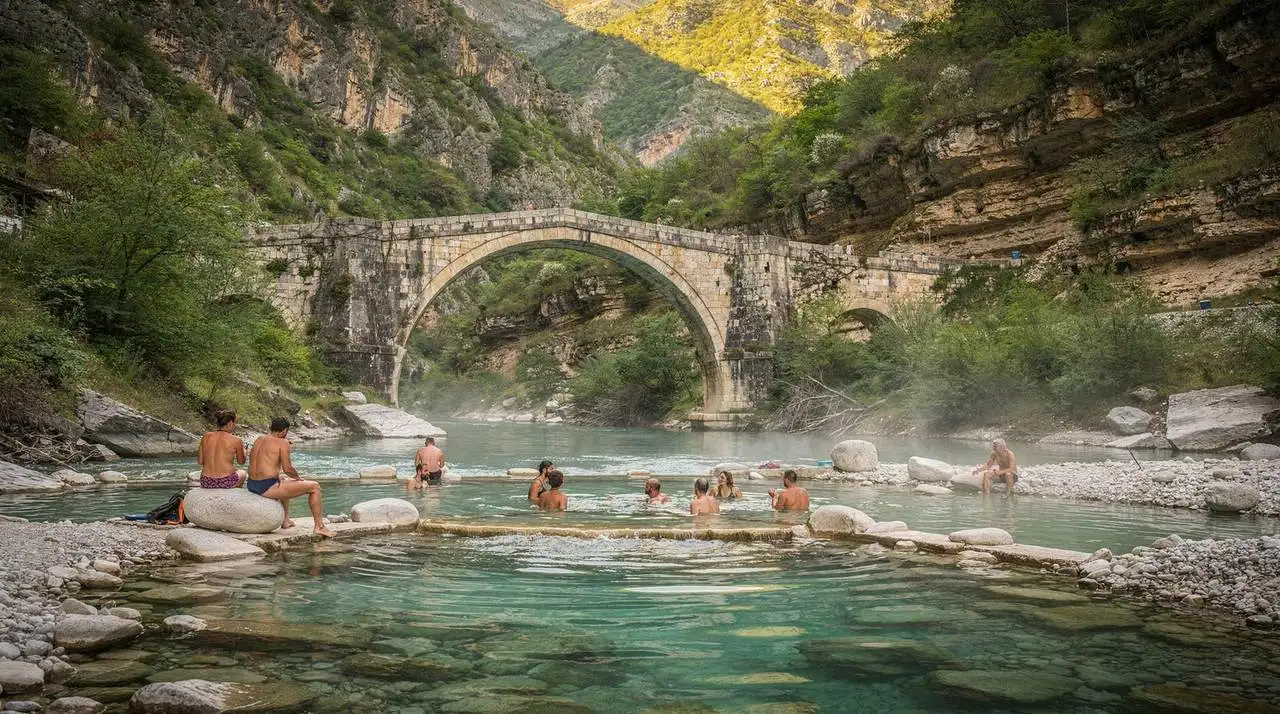
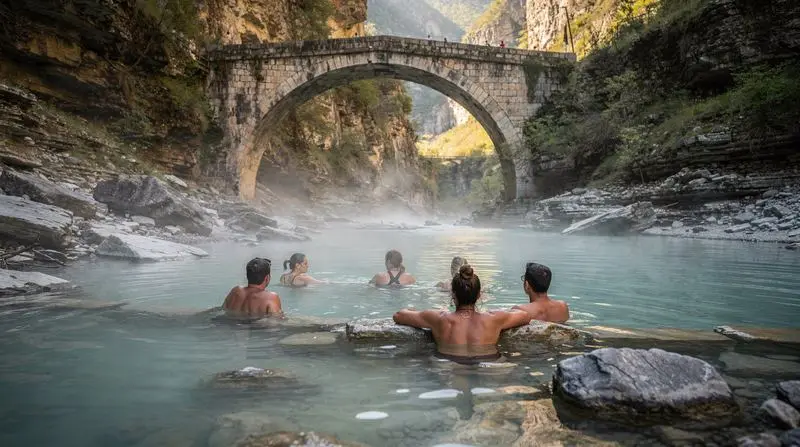
The Benja Thermal Baths near Permet in southeastern Albania are the country’s most visited hot spring site, and deservedly so. They sit in the Langarica Canyon — the same gorge used for canyoning adventures — at a point where warm mineral springs emerge from the limestone walls and flow into pools beside and beneath a beautifully preserved Ottoman bridge.
The setting is extraordinary. The canyon walls rise above you, the cold turquoise river flows alongside the warm pools, and the arch of the bridge frames the gorge view. In cooler months (October through April), steam rises from the thermal pools, making the scene almost theatrical. In summer, the contrast between the warm pool and the cold river — just meters apart — provides a natural version of the Scandinavian hot-cold immersion experience that is deeply satisfying.
Book a guided Benja Thermal Baths experience from Permet that combines the hot springs with the Langarica Canyon and the surrounding natural landscape, with local knowledge of the best pools and ideal visiting times. Cost approximately EUR 20-35 per person including transport and guided canyon walk.
Benja Thermal Baths Practical Details
Location: Approximately 8 km south of Permet on the road toward Kelcyre, in the Langarica Canyon. The access road branches off the main road and leads down to the canyon.
Temperature: The main thermal pools are typically 28-35 degrees Celsius — comfortably warm rather than scalding. Specific temperatures vary by pool and season, with the hottest pools closest to where the springs emerge from the rock.
Entry: As of 2026, entry is either free or involves a small charge (typically EUR 1-3 per person) to access the organized bathing area near the main Ottoman bridge.
Facilities: Basic changing areas exist at the main organized site. Bring your own towel. Several small cafes and restaurants have established near the canyon entrance, serving simple Albanian food.
Crowds: Summer weekends attract significant numbers, particularly Albanian families who come from Tirana, Gjirokastra, and surrounding towns. Weekday visits in summer and any visit in the shoulder season (April-June, September-October) are considerably quieter and more atmospheric.
Water quality: The mineral waters contain hydrogen sulphide (giving the characteristic sulphurous smell common to geothermal springs), magnesium, calcium, and other minerals. They are considered safe for bathing and have been used medicinally by local Albanians for generations.
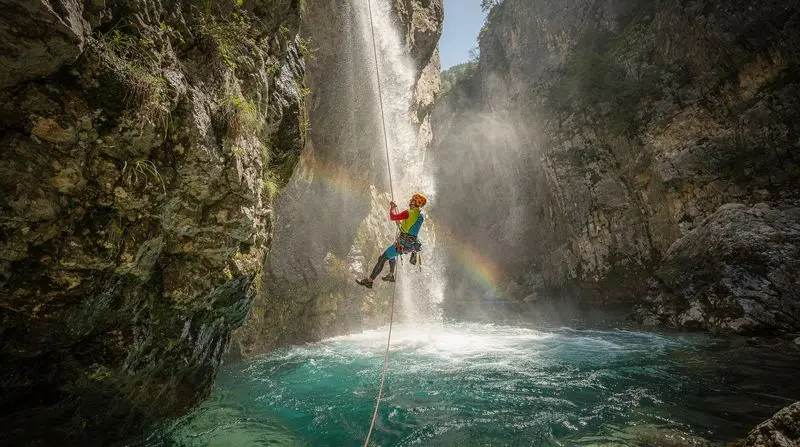
Combining with Langarica Canyon: The canyon and the thermal baths are within the same gorge system. Many visitors combine both on the same day — canyon trek in the morning, thermal soak in the afternoon. This is one of the most satisfying single-day activity combinations available in southern Albania.
Getting to Benja from Major Cities
From Saranda, a full-day tour combining the Blue Eye, Butrint, and Ksamil covers the major natural and historical sites of southern Albania — combining this with a separate Permet day trip creates a comprehensive southern Albania circuit that includes both Benja and the coast.
From Tirana by road: approximately 180 km, roughly 2.5-3 hours depending on traffic and road conditions. The route passes through Berat or via the Elbasan-Korce road depending on preference. Several Tirana-based operators offer day trips combining Vjosa rafting and Benja thermal baths.
From Berat: approximately 90 km southeast via Corovoda and the SH75 road. Allow 1.5-2 hours. This makes a natural combination with Osum Canyon canyoning and the UNESCO old town — a three-day circuit that covers Berat’s cultural highlights and the outdoor activities of the surrounding area.
From Gjirokastra: approximately 70 km northeast, around 1.5 hours. The road from Gjirokastra to Permet passes through the beautiful Drino Valley with views of the mountains rising on both sides. This makes Permet highly accessible as a day trip from the UNESCO city.
By public transport: furgons (shared minibuses) run from Tirana, Berat, and Gjirokastra to Permet. From Permet town, a taxi covers the final 8 km to the baths for approximately EUR 5-8 return with waiting time.
Elbasan: Thermal Waters in Central Albania
Elbasan, a mid-sized industrial city in central Albania that most tourists bypass, has a less celebrated but historically significant thermal spring complex. The Elbasan baths have been used for centuries — Ottoman records document them being frequented by travelers for their purported healing properties — and they continue to attract Albanian visitors for relaxation and therapeutic bathing.
The Elbasan thermal facility is more developed than Benja, with organized bathing pools, private treatment rooms, and changing facilities. The waters have a different mineral composition from Benja — lower sulphur content, higher sodium and bicarbonate — and are considered particularly effective for skin conditions and joint problems according to local tradition.
Elbasan itself has some underrated attractions: the Byzantine-era castle walls running through the city center, the archaeological museum in the castle, and traditional cafes in the old bazaar area. It can work as a day trip from Tirana (roughly 55 km, 45-60 minutes) or as a stop on the way south toward Berat or Permet.
The thermal establishment at Elbasan (locally known as Llixha) is open daily with modest entry fees. For therapeutic bathing rather than natural pool experience, Elbasan offers a more structured option than Benja’s wild setting.
Peshkopi: Thermal Springs in the Northeast
Peshkopi is a small mountain town in northeastern Albania, in the Diber region near the North Macedonia border. It is well off the standard tourist circuit — most foreign visitors to Albania never get this far northeast — but the geothermal springs here are known locally and provide an excellent reason to visit a part of Albania that receives almost no international tourism.
The springs around Peshkopi emerge in the Drin River valley and the surrounding mountain terrain. Some have been developed into basic bathing facilities; others remain entirely natural and accessible with minimal infrastructure. The surrounding landscape is mountainous and beautiful — the Diber valley has some of Albania’s most dramatic mountain scenery, largely unknown to outsiders.
The town itself provides a window into everyday Albanian life far removed from the tourist trail: the local market, the traditional cafes, and the unhurried pace of a provincial mountain town. Combining Peshkopi with the nearby canyon landscapes and mountain villages of the Diber region makes for a rewarding off-the-beaten-track itinerary for travelers who have already seen the headline destinations and want to go deeper.
Other Thermal Springs Worth Seeking
Albania’s geothermal activity is widespread, and in addition to the main established sites, warm springs emerge in numerous locations:
Hotova springs near Permet: A short drive from Benja, additional geothermal springs emerge in the Hotova-Fratar National Park area. Less visited and more completely wild than Benja, these require more initiative to find but reward the effort with complete solitude.
Llixha e Elbasanit: The name “Llixha” in Albanian literally means thermal baths (from the Turkish word), and several villages across the country bearing this name have warm spring water emerging nearby. Worth investigating if your route passes through areas with this name.
Northern Albania: Geothermal activity in the Shkodra region and the mountains to the north is less documented for tourist access but likely to be developed in coming years as adventure tourism in the Albanian Alps expands.
Thermal Baths and Albanian Wellness Culture
The concept of thermal bathing as both social activity and health practice has deep roots in Albanian culture. Long before tourist infrastructure existed, Albanian families gathered at natural hot springs for the weekend — bringing food, spending the day together, and treating the experience as a combination of picnic, therapeutic visit, and social occasion. That character persists today at Benja and other sites, where Albanian families spread out on the rocks, children splash in the cold river while parents soak in the warm pools, and a general atmosphere of relaxed enjoyment prevails.
Foreign visitors are almost always made welcome. Do not be surprised if a neighboring family invites you to share their lunch or if an elderly Albanian visitor explains, with great seriousness, which specific medical conditions the waters are supposed to cure. This conviction in the therapeutic power of mineral water runs deep in Balkan culture generally and Albanian culture specifically.
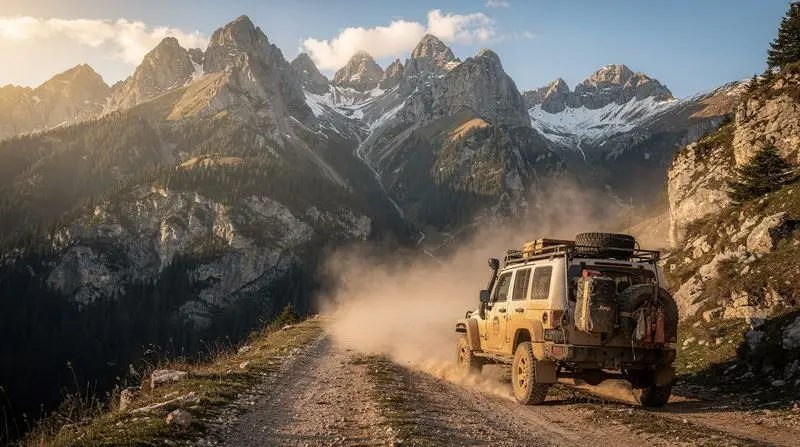
The baths also function as a perfect counterpoint to Albania’s active adventure activities. After a day’s canyoning in Langarica Canyon or an off-road jeep tour in the mountains, an afternoon in the hot pools is a deeply satisfying contrast. Plan your Permet area day accordingly.
Permit Area Multi-Day Planning
Permet rewards at least an overnight stay rather than a day trip. It sits in the Vjosa River valley surrounded by mountains and is known for producing some of Albania’s most highly regarded wine, particularly from the Shesh white grape variety grown in the local hillside vineyards. See the wine tasting guide for winery options near Permet.
The local restaurant scene is excellent by Albanian standards, with an emphasis on fresh river trout, slow-cooked lamb, and seasonal vegetables. The town’s main square has a pleasant cafe culture, and from Permet you can organise Langarica Canyon trekking and canyoning, Benja Thermal Baths visits, hiking in the Hotova-Fratar National Park, rafting on the Vjosa River, and wine tasting at local producers. All of this is achievable in two to three days, making Permet an ideal base for an extended southern Albania exploration alongside Berat and Gjirokastra.
Best Time to Visit Thermal Baths
Unlike beach activities that concentrate in July and August, thermal baths are genuinely rewarding year-round:
Spring (March-May): The contrast between cool air and warm water is at its most atmospheric. Steam rises visibly from the pools. Fewer visitors than summer, and the surrounding vegetation is at its most lush.
Summer (June-August): The warm water is less essential when air temperatures are high, but the thermal pools remain pleasant and the surrounding canyon is beautiful. Weekends are crowded at Benja; weekday visits give a much more relaxed experience.
Autumn (September-November): Similar to spring — excellent conditions, dramatic autumn colour in the canyon vegetation, moderate visitor numbers, and comfortable temperatures for combining the baths with canyon walking.
Winter (December-February): The most theatrical time at Benja, with steam clouds rising above the pools against the bare limestone walls of the canyon. Access can be limited in heavy snow. The thermal warmth is most appreciated precisely when it is most needed. Very few other visitors.
Essential Packing List for Thermal Bathing
For a day at Albania’s thermal springs:
- Swimsuit (essential — nudity is not appropriate at Albanian thermal sites)
- Towel (not typically provided at natural sites)
- Sandals or flip-flops for walking between pools
- Dry bag for phone and valuables — the informal sites have no organized storage
- Change of clothes for afterwards
- Small rucksack for the day
- Water and snacks if visiting remote springs away from cafe facilities
- A light layer for afterwards — the transition from warm water to cool mountain air can feel chilly even in summer
- Cash — most thermal site facilities and nearby cafes are cash-only
The experience of Albanian thermal baths is best approached with a relaxed schedule and no tight time pressures. These are places for arriving late morning, staying through the afternoon, and leaving in the early evening — the Albanian way of doing thermal bathing that makes the experience genuinely restorative.
Thermal Baths in the Context of an Albania Trip
For visitors building an active itinerary, thermal baths provide the ideal recovery element in an otherwise physically demanding programme. After hiking in the Albanian Alps, the springs at Peshkopi or future-developed northern Albania sites would be ideal. After canyoning and rafting in the Permet area, Benja is perfect. After beach swimming and boat touring along the Riviera, the slightly cooler mountain setting of Benja provides a welcome change of pace.
The best experiences in Albania guide gives an overview of how thermal bathing fits within a two-week Albania itinerary, and the Albania travel budget guide covers the cost of the Permet area as a base. Thermal bathing itself costs almost nothing — making it one of the highest-pleasure, lowest-cost activities in a country already remarkable for its value.
Photographing the Thermal Baths Responsibly
Benja’s setting under the Ottoman bridge is one of the most photogenic spots in southern Albania, but photography here should respect the bathers around you. Early morning, before the day’s crowds arrive, offers the best combination of soft light and empty pools for landscape shots. If other bathers are in frame, a quick nod or word asking permission is good practice — most Albanian families are relaxed about it but appreciate being asked. Winter mornings, when steam rises dramatically off the pools against the cold canyon air, are the single best conditions for atmospheric photography, though the tradeoff is a cold walk to and from the water.
Etiquette and What Locals Expect
Albanian thermal baths are informal but not unstructured, and understanding the unwritten rules helps visitors blend in rather than stand out. Swimwear is required at every site — the wild, unmonitored setting does not mean anything goes, and Albanian families bathing alongside you expect standard modesty. Loud music and large group behaviour are frowned upon at the smaller, more contemplative springs like Hotova; Benja’s main pools are more social and tolerant of chatter and children splashing.
If a local family invites you to share food or raki at the pools, accepting graciously is the right response — this is the same besa hospitality tradition that shapes Albanian life generally, covered in the things to know before visiting Albania guide. Littering is a genuine problem at some sites during peak summer weekends; pack out anything you bring in, since formal waste facilities are minimal at the more natural springs.
Combining Thermal Baths with a Wider Southern Albania Trip
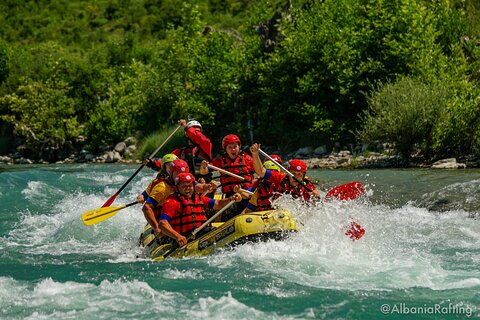
Benja rarely works as a standalone destination — it rewards being folded into a broader southern Albania route. Travelers coming from Saranda or Gjirokastra typically add Permet and Benja as a one- or two-night detour before continuing to Berat or back to Tirana, since the Drino Valley road between Gjirokastra and Permet is scenic enough to be worthwhile on its own. Families often pair a Benja soak with rafting on the Vjosa River the same day — cold-water rafting in the morning, warm mineral pools in the afternoon, is a genuinely satisfying contrast that Albanian tour operators increasingly package together. For a longer circuit, see the Albania road trip guide for how Permet fits into a two-week southern loop alongside the coast and the UNESCO towns.
Frequently Asked Questions About Thermal Baths and Hot Springs in Albania
How does Benja compare to hot springs in Greece or Montenegro?
Benja is more natural and undeveloped than most equivalent sites in Greece or Montenegro, which have increasingly formalized their geothermal springs into paid wellness complexes. Benja retains a free, wild-swimming character with only minimal infrastructure, which is part of its appeal for travelers seeking an authentic rather than a manicured spa experience.
Can I visit Benja Thermal Baths as a day trip from Saranda?
It is a long day — roughly 2.5-3 hours each way — so most visitors combine it with an overnight in Permet rather than a rushed single-day round trip from Saranda. If time is limited, prioritize a southern circuit that includes Gjirokastra en route, which shortens the practical detour considerably.
Are the Benja hot springs free?
The Benja thermal baths near Permet are free to access — there is no entrance fee for the natural outdoor pools formed by the Lengarica River. The springs sit within Hotova-Dangelli National Park. Bring your own towels and supplies, as there are no changing facilities or services at the springs themselves.
How hot are the thermal baths in Albania?
The Benja springs near Permet maintain a temperature of approximately 29-32°C, warm enough to be therapeutic and relaxing without being uncomfortably hot. The pools are formed where the thermal water mixes with the cooler river, creating different temperature zones. Summer visitors often combine a dip in the hot springs with a swim in the cooler river sections nearby.
When is the best time to visit Benja thermal baths?
The thermal baths are enjoyable year-round, but spring (April-May) and autumn (September-October) offer the most pleasant experience — the air temperature is cool enough that the warm water feels genuinely therapeutic, and crowds are minimal. In midsummer the hot springs are less appealing in 35°C heat, though the surrounding canyon scenery remains beautiful. The Permet area combines well with a Gjirokastra visit as part of a southern Albania circuit.