Where to Stay in Vlora: Albania’s Riviera Gateway
Vlora is the city where the Albanian Riviera begins — or ends, depending on your direction of travel. Standing at the point where the Adriatic and Ionian seas meet, Vlora has a strategic and symbolic importance that goes beyond its role as a beach destination. It was here, on 28 November 1912, that Albanian independence was declared, and the Vlora region remains one of the most historically significant parts of the country.
For visitors, Vlora functions as both a destination in its own right and the northern gateway to the Albanian Riviera. Staying here gives you access to a proper city with genuine infrastructure — good restaurants, real supermarkets, a functioning public transport hub, and a cultural life that exists year-round rather than seasonally — while putting you within striking distance of the Llogaraja Pass and the beautiful beaches to the south.
The city is notably more affordable than the resort areas of Dhermi, Ksamil, or Saranda, making it an attractive base for budget-conscious visitors who want Riviera beach access without Riviera beach prices.
| Where | Lungomare promenade, city center, or Radhima |
| Cost | Around EUR 35-90/night |
| Getting there | Bus/furgon from Tirana, around 3 hours |
| Best time | June or September for value |
| Booking | 2-3 weeks ahead for July-August |
Vlora works as a base for the Llogaraja Pass and the beaches to the south, so check how far each address is from the bus or furgon stop and from the road out of town before you pay. Prefer a rate with free cancellation, which lets you hold a room while your Riviera plans take shape. You can browse Vlora stays on Booking.com with those points in mind.
The Lungomare: The Best Area for Visitors
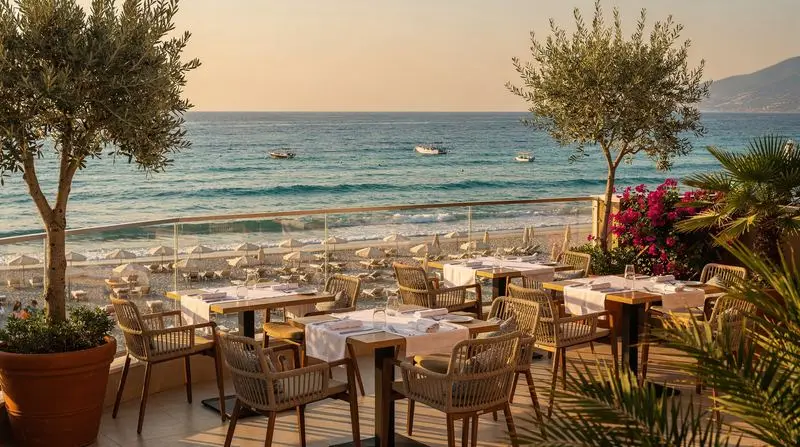
Vlora’s Lungomare (seafront promenade) extends along the bay from the city’s ferry terminal northward. This is a wide, well-maintained promenade with cafes and restaurants on one side and the beach on the other — a classic Adriatic seafront layout that works equally well as a morning run route, an afternoon sunbathing strip, and an evening dining destination.
The area around and behind the Lungomare is where most visitor accommodation in Vlora is concentrated. Hotels and apartments within a few minutes’ walk of the promenade give you immediate beach access, a good choice of restaurants within easy reach, and a central position for exploring the rest of the city.
Lungomare area prices:
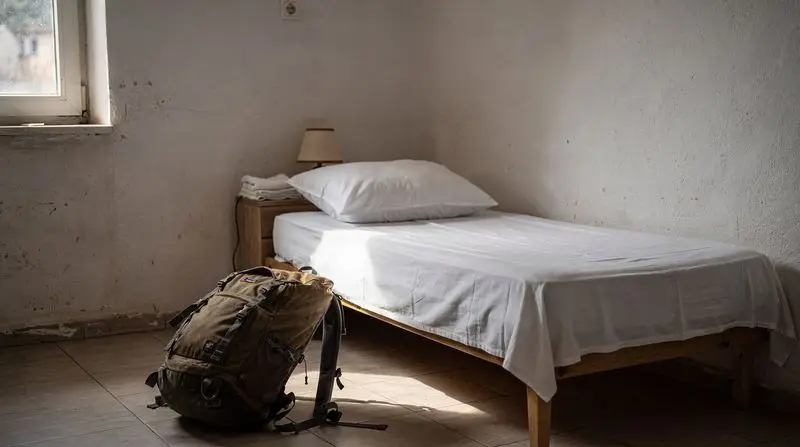
- Budget guesthouses and simple rooms: EUR 30-50 per night in summer
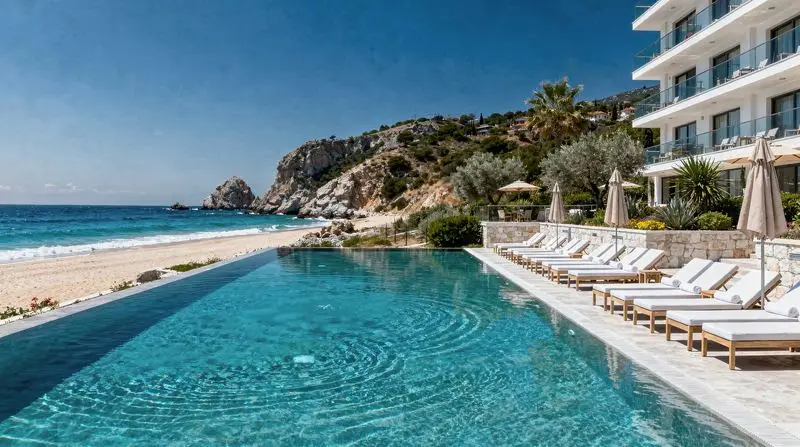
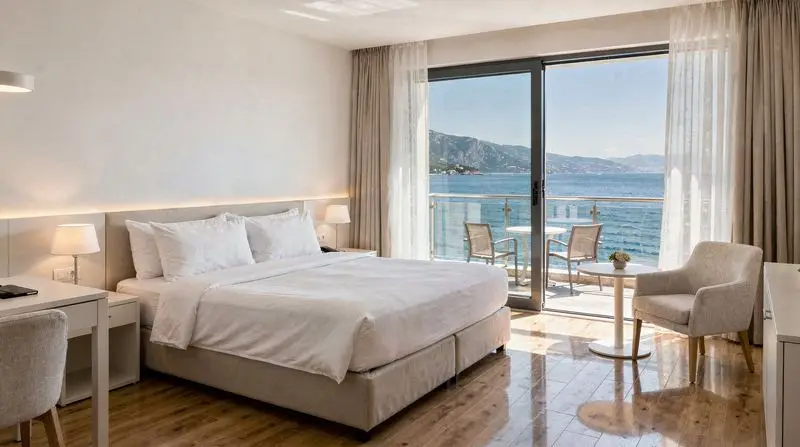
- Mid-range hotels with sea views: EUR 50-90 per night in July-August
- Newer boutique properties: EUR 80-120 per night in peak season
- Shoulder season (June, September): 30-40 percent lower across all categories
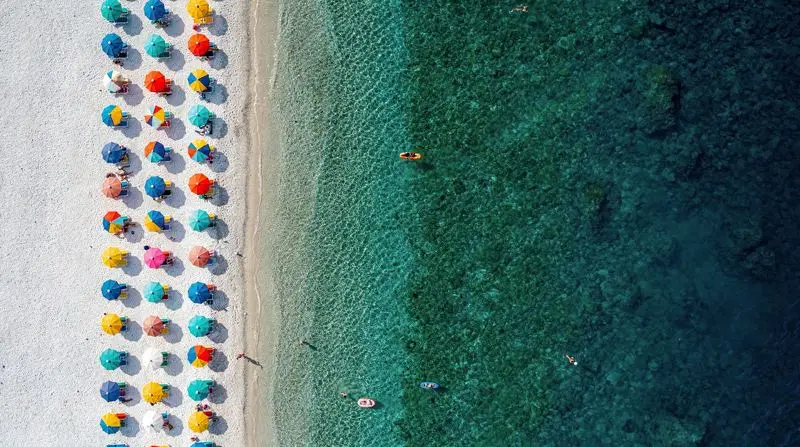
The beach along the Lungomare is an urban beach rather than a pristine cove — it is sandy and clean but bordered by the city rather than by mountains. For dramatic natural beauty, you need to travel south to Dhermi or beyond. But for a convenient, properly serviced beach with restaurants within walking distance and no logistics, the Lungomare beach works well, particularly for a one or two-night city stop.
The evening atmosphere on the Lungomare is genuinely pleasant. The Albanian xhiro tradition — a slow, sociable evening walk — is practised here in a particularly leisurely form, with families walking between the promenade cafes as the sun goes down over the bay. Finding a seafront restaurant table for sunset is one of the better simple pleasures Vlora offers.
The City Center: Culture and History Base
Vlora’s city center, a short walk inland from the Lungomare, centers on the Flag Square (Sheshi i Flamurit) — the site of the independence declaration, marked by a prominent monument. The surrounding streets have the character of a proper Albanian city: everyday shops, local cafes, the market, and residential streets that mix older buildings with communist-era blocks.
Staying in the city center area rather than directly on the Lungomare saves some money (EUR 25-45 per night for mid-range guesthouses) and puts you closer to the transport connections — the bus and furgon station, where services run north to Tirana (3 hours) and south toward Himara and Saranda.
The Muradiye Mosque — a fine 16th-century Ottoman building attributed to the architects of Suleiman the Magnificent — and the nearby Muradie complex are worth visiting and are easily reached on foot from city center accommodation. The Independence Museum covers the events of 1912 with documents and artefacts from the declaration period — a worthwhile 45 minutes for anyone interested in Albanian history.
City center accommodation is particularly practical for budget travellers who are using Vlora as a transit stop rather than a destination: the bus station is within easy walking distance, and the morning furgons to Himara and Saranda depart from here.
Radhima and the Northern Bay
The bay north of Vlora curves around toward the Karaburun Peninsula, and a road follows the shore through the small settlement of Radhima to the beach areas and ferry point for the Sazan Island boat tours. Several guesthouses and small hotels have established themselves along this bay road, offering a quieter alternative to the Lungomare with similarly accessible beach conditions.
Radhima area prices: EUR 35-60 per night in peak season, slightly lower than equivalent properties on the Lungomare. The area is peaceful and the sunsets over the bay are excellent, but you need a car or regular taxi budget to get to the city center and Lungomare restaurants in the evenings.
The bay road itself is pleasant for cycling or morning walking — the shoreline here has the character of the working Adriatic rather than the Ionian beach experience to the south, with fishing boats and less development than the main Lungomare. For visitors who prefer a quieter, more local atmosphere alongside their beach access, Radhima is a reasonable choice.
Karaburun Peninsula: The Day Trip Highlight
The Karaburun Peninsula — the narrow finger of land that closes off the western side of Vlora Bay — is protected as a national park and is among the most spectacular natural areas in Albania. Its sheer limestone cliffs, hidden sea caves, and crystal-clear water rival anything on the main Riviera, but the peninsula is accessible only by boat.
Boat tours from Vlora to Karaburun (and to the nearby Sazan Island, a former military island opened to tourism in recent years) run daily in summer from the main harbor. This is one of the genuinely special experiences available from a Vlora base — a full-day boat trip that covers sea caves, swimming stops, and cliff scenery found nowhere else on the coast.
This Vlora to Karaburun and Sazan Island boat tour is one of the most popular activities in the region and books out quickly in July-August — reserve ahead if this is on your itinerary. The tour covers the cave systems of Karaburun (some of which penetrate 50-100 metres into the cliff face), the former military installations of Sazan Island, and multiple swimming stops in water of extraordinary clarity. Cost approximately EUR 35-55 per person.
The Haxhi Ali Cave — a large sea cave accessible only from the water on the Karaburun coastline — is one of the most dramatic cave formations on the Albanian coast. This natural cavern, large enough to paddle a boat inside, is featured on most Karaburun tours and is genuinely memorable.
Llogaraja Pass and Riviera Access from Vlora
Vlora’s position at the start of the SH8 coastal road makes it the natural northern entry point to the Riviera. From the city, the road climbs through the Llogaraja National Park (the forest on the pass is magnificent, and the park viewpoints are worth a stop) before descending to Dhermi and continuing south.
By car from Vlora, you can reach:
- Llogaraja Pass: 35 km (40-50 min)
- Dhermi: 48 km (55-65 min)
- Himara: 80 km (1.5 hours)
- Saranda: 180 km (3-3.5 hours)
By furgon or bus, services run from Vlora to Saranda via the coastal road daily in summer (journey time 3-4 hours with stops). This route covers most of the major beach destinations, stopping at Dhermi junction and Himara.
This full-day Albanian Riviera tour from Vlora is ideal for visitors who prefer to be driven rather than drive — covering the main beaches from the Llogaraja Pass to the southern Riviera in a single guided day with stops at the most scenic viewpoints and beach coves. Cost approximately EUR 35-55 per person.
Paragliding: Vlora’s Signature Activity
Vlora has established itself as one of the best paragliding launch sites in Albania, with the Llogaraja ridge above the city providing reliable thermal conditions for tandem flights. The combination of the mountain launch site and the panoramic view of both the Adriatic and Ionian seas — the bay and peninsula on one side, the Riviera coast stretching southward on the other — makes this one of the most dramatic paragliding experiences available in the western Balkans.
Tandem paragliding from the Llogaraja ridge above Vlora launches from around 1,000 metres and flies down toward the coast, giving views of the entire bay below. No experience is required — the pilot handles all the flying, and the flight time is typically 15-25 minutes. Cost approximately EUR 50-80 per person.
For visitors staying in Vlora for two or more nights, combining the Karaburun boat trip with a Llogaraja paragliding session gives you both the maritime and aerial perspectives on the bay — two very different ways of experiencing the same spectacular geography.
Narta Lagoon and Wildlife Watching
Just north of Vlora, the Narta Lagoon is a significant wetland and birdwatching area. The flamingo colony that winters here is one of the more unexpected wildlife encounters in Albania — hundreds of flamingos feeding in the shallow lagoon, visible from the road and from walking paths along the waterside.
The lagoon is designated as a Ramsar Wetland of International Importance and is the most accessible birdwatching site in southern Albania. Beyond flamingos, the area hosts herons, egrets, cormorants, spoonbills, and a range of migratory waders in season. A morning at the lagoon followed by an afternoon at the Lungomare beach is a surprisingly satisfying Vlora day for wildlife-inclined visitors.
Access to the lagoon is straightforward — a taxi from the city center takes 15-20 minutes and costs EUR 5-8 each way. The main observation points are walkable once you are at the lagoon edge.
Apollonia: Half-Day Cultural Excursion
The Hellenistic city ruins at Apollonia, approximately 50 kilometres north of Vlora near the town of Fier, are among the finest ancient ruins in Albania. The site features the remains of a monumental gateway, a bouleuterion (council chamber), temples, and an extraordinary nymphaeum, all within a park setting that gives the site the feel of a genuine archaeological landscape rather than a managed tourist attraction.
From Vlora, Apollonia is accessible by car (50 minutes) or as part of an organised day tour. A taxi to Apollonia and back with 2-3 hours at the site costs approximately EUR 40-60. Entry to the site is EUR 3-5 per person.
The combination of Apollonia with the Ardenica Monastery — a medieval complex 8 kilometres from Apollonia with exceptional 18th-century frescoes — makes an excellent full cultural day from a Vlora base. See the historical sites guide for more detail on both sites.
Seasonal Pricing and Availability
Vlora’s accommodation does fill up in July and August, but not to the same extreme pressure as Ksamil or Dhermi. As a city with substantial year-round population and business travel, it has more accommodation capacity relative to demand, and same-week booking is more often viable in peak season than at pure beach destinations.
July-August: Book 2-3 weeks ahead for the better promenade hotels; the main risk is paying more for a last-minute booking than if you had reserved earlier. Hotel prices are at their highest, but still 30-40 percent lower than equivalent quality in Saranda or Dhermi.
June and September: Excellent value and very manageable. These are arguably the best months to use Vlora — comfortable temperatures (26-30 degrees), quieter beaches, and hotel prices 30-40 percent lower than peak. The Karaburun boat tours still run, the Llogaraja park is beautiful, and the Lungomare has its evenings back from the summer crowds.
May and October: Very affordable (EUR 25-50 per night across most categories) and pleasant weather. Some beach infrastructure is reduced but the city itself is fully operational. The Narta Lagoon flamingos are visible in these months.
November-April: Vlora functions normally as a city year-round. Hotel prices drop to EUR 20-40, making it a genuinely cheap base for exploring the nearby Apollonia ruins and the Narta lagoon birdwatching area.
Food in Vlora
Vlora’s food scene has improved considerably over the past five years. The promenade restaurants serve fresh seafood from the Adriatic and Ionian — the bay’s mixed-water geography produces a variety of fish — alongside standard Albanian dishes. A full dinner of grilled fish, salad, and local wine costs EUR 12-20 per person at promenade restaurants.
The city center streets have a better concentration of genuinely local restaurants where a full meal costs EUR 7-12 per person. The market near the city center is well-stocked with fresh produce for self-catering, and the artisan food stalls around Sheshi i Flamurit sell local olive oil, dried herbs, and local honey.
Vlora olive oil deserves specific mention — the olive groves on the slopes above the city produce oil of genuine quality, and bottles bought from local producers at the market cost EUR 6-10 and make excellent gifts.
Practical Connections
Tirana: 3 hours by bus or furgon, multiple daily departures from Vlora’s main bus station near the city center. A comfortable, well-established route that passes through the agricultural heartland of southern Albania.
Gjirokastra: A longer route (3.5-4 hours) via the Tepelena junction — possible as a day route but more practical as a stage on a longer journey south. The road through Tepelena passes the Benja Thermal Baths area.
Berat: Approximately 2.5 hours north, accessible by furgon with connections via Fier. Berat is a worthwhile side trip from Vlora for its UNESCO-listed Ottoman architecture.
Ferry connections: Vlora has ferry connections to Brindisi and Bari in Italy — a useful entry and exit point for visitors combining Albania with an Italian itinerary.
For budget travelers particularly, Vlora’s combination of genuine city amenities, Riviera beach access, and lower prices than the resort destinations makes it one of the best-value bases in southern Albania. See the budget accommodation guide for specific hostel and guesthouse recommendations across Albania.
Food and Restaurants in Vlora
Vlora’s food scene has improved considerably over the past five years, reflecting both increased tourism and rising local expectations. The promenade restaurants serve fresh seafood from the Adriatic and Ionian — the bay’s mixed-water geography produces a variety of fish — alongside standard Albanian dishes.
Seafood: Vlora’s position at the junction of two seas gives it access to an unusually diverse catch. Mussels from the bay, sea bream, bass, and squid are all excellent here. A full grilled fish dinner at a good promenade restaurant costs EUR 12-20 per person.
Fish restaurants near the harbour: The best seafood value is found slightly away from the main tourist promenade at the smaller restaurants near the working port area. These serve the day’s catch in a straightforward way (grilled, fried, or in a light tomato sauce) at EUR 8-14 per person for a complete meal.
Vlora olive oil: The olive groves on the slopes above the city produce oil of genuine quality. Buying from a local market vendor or from the producers who sell at the main market costs EUR 6-10 per bottle and makes an excellent gift.
Byrek and bakeries: Vlora’s bakeries open early (from 5:30-6am) and the byrek available in the morning — still warm from the oven, with cheese or spinach filling — is some of the best in southern Albania. A morning byrek and espresso costs EUR 1.50-2.50.
Vlora’s Independence History
The role Vlora played in Albanian independence in 1912 is genuinely significant and worth engaging with for any visitor interested in Balkan history. The Independence Museum (Muzeu i Pavarësisë) near Flag Square covers the events of November 28, 1912 — when Ismail Qemali proclaimed Albanian independence from the Ottoman Empire — with documents, photographs, and artefacts from the period.
Entry is approximately EUR 2-3 per person. The museum is small but well-curated, and the 30-45 minutes needed to see it thoroughly provides useful context for understanding why Albanian national identity is so strongly connected to this city.
The Independence Monument in Flag Square, and the adjacent Ethnographic Museum in a restored 19th-century house, complete the historical picture of Vlora’s moment in Albanian history.
Vlora vs. Other Bases at a Glance
| Base | Peak price | Strength | Best for |
|---|---|---|---|
| Vlora | EUR 35-90 | Year-round infrastructure, ferry to Italy | Budget-conscious travellers |
| Dhermi | EUR 80-160 | Boutique beach quality | Beach-club atmosphere |
| Saranda | EUR 60-130 | Maximum infrastructure | Butrint/Corfu access |
| Himara | EUR 40-120 | Balanced town base | Mid-Riviera flexibility |
Vlora vs. Other Southern Albania Bases
Choose Vlora if: You want a proper city with year-round infrastructure, ferry connections to Italy, historical significance, and affordable prices while still having Riviera beach access as a day trip or short drive.
Choose Dhermi if: The beach is your priority and you are willing to pay more for boutique quality and the most fashionable Riviera atmosphere. See the Dhermi where-to-stay guide.
Choose Saranda if: Maximum infrastructure, Butrint access, and ferry connections to Corfu are your priorities. Saranda is better positioned for the southern Riviera and requires more advance booking for summer than Vlora. See the Saranda where-to-stay guide.
Choose Himara if: You want a Riviera town base with good beach access at prices between Vlora and Dhermi. See the Himara where-to-stay guide.
Frequently asked questions about Where to Stay in Vlora
Is Vlora worth staying in, or just passing through? It’s genuinely worth a night or two in its own right — the Karaburun Peninsula boat trip, the Narta Lagoon flamingos, and the independence history are all reasons to stay rather than just transit through on the way to the Riviera beaches further south.
How does Vlora compare to Himara as a Riviera gateway? Vlora has more year-round city infrastructure and lower prices; Himara sits closer to the best beaches (Gjipe, Drymades, Palase) and makes a better base if beach-hopping without much driving is your priority. Many visitors use Vlora for one night and Himara or Dhermi for the beach-focused portion of the trip.