Albania Bus Routes: The Complete 2026 Guide
Getting around Albania by bus and furgon is genuinely practical and genuinely cheap. The country’s transport network — a mixture of long-distance coaches on the main routes, smaller minibuses for regional connections, and furgons leaving when full rather than on fixed schedules — takes some adjustment for first-time visitors, but delivers you reliably to almost everywhere tourists want to go at prices that are hard to beat anywhere in Europe.
This guide covers every major bus and furgon route in detail: departure points, approximate schedules, current prices, journey times, booking procedures, and practical tips for each specific route. It is the information you need to plan an entirely land-based itinerary through Albania without a rental car.
| Tirana → Saranda | 6-7h, around EUR 10-12 |
| Tirana → Berat | 2-2.5h, around EUR 4-5 |
| Tirana → Shkodra | 2-2.5h, around EUR 3-4 |
| Tirana → Vlora | 3-3.5h, around EUR 5-6 |
| Departure points | Tirana has no single terminal — Zogu i Zi (south) or northern cluster |
Understanding the Albanian Bus System
Before diving into specific routes, the structure of the system helps set expectations:
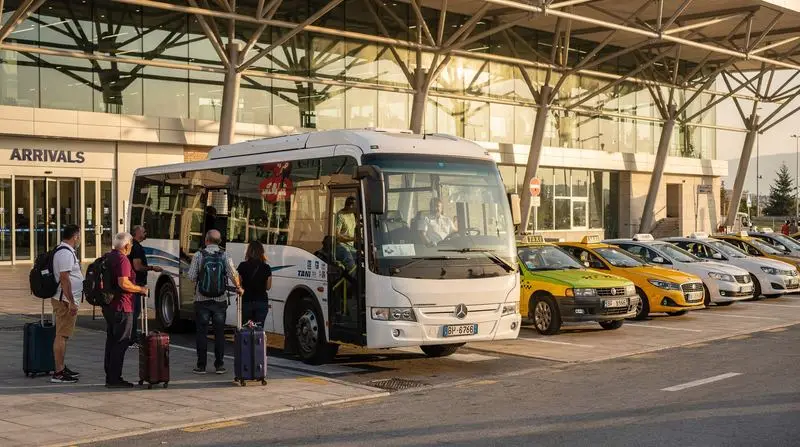
Long-distance coaches: Air-conditioned coaches running on approximately fixed schedules between major cities. These are the most comfortable option for the main intercity routes and are booked either at the departure point on the day, or sometimes via phone or WhatsApp with the operator the evening before.
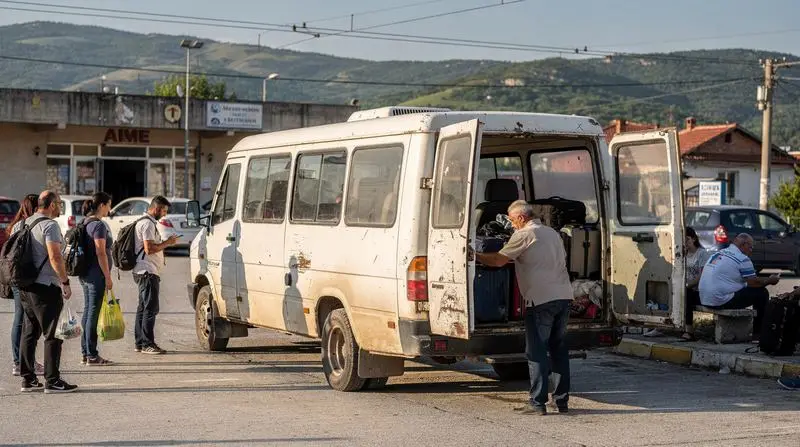
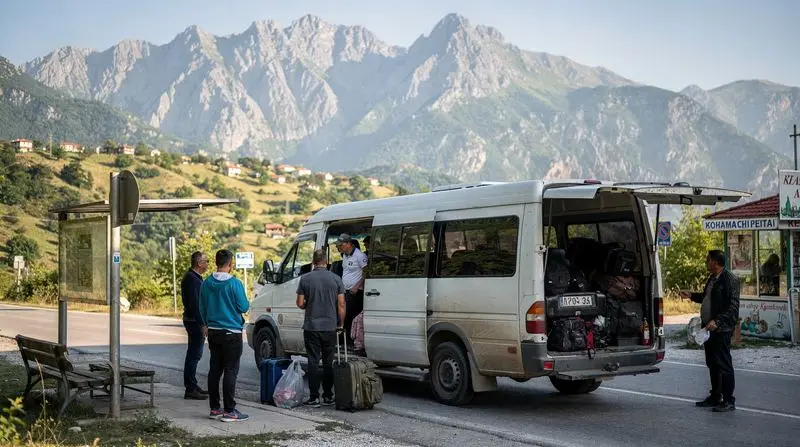
Furgons: Minivans or minibuses (typically Ford Transit style) that run frequently on shorter and medium-length routes. They depart when full — there is no fixed departure schedule, but on busy routes this effectively means departing every 20-45 minutes through the morning. Payment is made on board in cash. Cannot be pre-booked. See the Albania buses and furgons guide for a complete explanation of how furgons work in practice.
National bus terminals: Most Albanian cities have a main bus station that serves as the departure hub for long-distance services. The exception is Tirana, which complicates the picture significantly.
The Tirana situation: Tirana does not have a single central bus terminal. Different routes depart from different locations around the city — primarily from the area around the Zogu i Zi roundabout and surrounding streets, with northern routes departing from a different cluster near the northern ring road. This is confusing on first encounter but becomes manageable once you know which departure point serves your route. Always verify current departure locations with your accommodation the evening before travel — departure points can shift over time.
Route 1: Tirana to Saranda
Journey time: 6-7 hours direct; approximately 7-8 hours via stops including Gjirokastra
Price: EUR 10-12 (approximately 1,100-1,300 ALL)
Type: Long-distance coach
Frequency: Typically 2-4 departures daily from Tirana in high season; reduced frequency in winter
Main departure times (Tirana): Usually 06:00, 08:00, and 12:00 — verify current schedule directly with the operator as this changes seasonally
This is the most heavily traveled tourist bus route in Albania — connecting the capital with the south’s primary resort city and gateway to Ksamil and Butrint. The route goes via the SH4 national road through Elbasan and Fier before cutting south through the Tepelena valley and Gjirokastra to Saranda. The journey is long but passes through genuinely interesting terrain — the Vjosa River valley, the mountains above Tepelena, and the approach to Gjirokastra are all scenic.
Departure point (Tirana): The Tirana-Saranda bus departs from the Zogu i Zi bus cluster, specifically from operators whose stands line the roads around this area. The exact departure street changes periodically — ask at your accommodation the evening before or in the morning for the current departure point, or arrive at the general Zogu i Zi area (near the roundabout of the same name) and ask bus company staff who will point you to the right vehicle.
Arrival point (Saranda): The central bus station area near the seafront, within walking distance or a short taxi ride from most accommodation.
Booking: Some operators now allow booking by phone or WhatsApp the day before for a confirmed seat. Walk-up tickets are generally available, but in peak season (July and August) buses can fill — arriving at the departure point 30-45 minutes early ensures a seat and a comfortable position.
Key notes for this route:
- The bus to Saranda often stops in Gjirokastra for a 20-30 minute layover. Consider breaking the journey in Gjirokastra (1-2 nights) rather than sitting in the bus for the full 6-7 hours — you cover the same ground with an additional UNESCO city experience.
- The reverse journey (Saranda to Tirana) departs very early — typically 05:00-07:00 from Saranda for a midday arrival in Tirana. Do not miss the morning departure if you have onward plans.
- Booking for Corfu: travelers continuing to or arriving from Corfu should factor in the ferry crossing time separately. The Saranda-Corfu ferry guide covers the crossing logistics.
Connections from Saranda:
- Ksamil: local taxi (15 minutes, EUR 3-5) or shared minibus when operating
- Butrint National Park: taxi (20 minutes, EUR 7-10 round trip with waiting time)
- Gjirokastra: bus or furgon (1.5-2 hours, EUR 3-5)
Route 2: Tirana to Berat
Journey time: 2-2.5 hours
Price: EUR 4-5 (approximately 450-550 ALL)
Type: Coach or large minibus
Frequency: Multiple departures daily — approximately every 1-2 hours from morning through mid-afternoon
Main departure times (Tirana): First departure around 07:00, continuing through the morning; last departure typically 16:00-17:00
Tirana to Berat is one of the most practical bus routes in Albania — short enough to be comfortable, direct, and frequent enough that advance booking is rarely necessary outside peak summer. Berat is 120 km south on the SH4 road, and the journey passes through the agricultural Myzeqe plain.
Departure point (Tirana): The Berat bus departs from the Zogu i Zi area, specifically from the southern end of the cluster. Ask locally or at your accommodation for the specific street — it is consistent but not always immediately obvious to first-time visitors in the area.
Arrival point (Berat): Berat’s main bus station is on the outskirts of town, approximately 15-20 minutes’ walk or a short taxi ride from the old town. Taxis from the station to the Mangalem quarter cost EUR 2-3.
Key notes for this route:
- Berat is a 2-hour bus ride from Tirana, making it feasible as a (very long) day trip, though staying overnight is strongly recommended — the UNESCO old city deserves an evening and a morning without the pressure of a return bus.
- Return buses from Berat to Tirana run from early morning. The last bus back is typically 16:00-17:00 — do not leave the return too late if you need to be in Tirana for an evening flight.
- For a guided experience combining the journey and the city visit, guided day tours to Berat from Tirana are available and include transport and a knowledgeable guide for the historical content.
Connections from Berat:
- Permet: furgon or shared transport (approximately 2.5-3 hours, EUR 4-5)
- Gjirokastra: change at Tepelena or take a bus via Fier (3-4 hours total)
- Vlora: furgon or bus (approximately 1.5-2 hours)
Route 3: Tirana to Shkodra
Journey time: 2-2.5 hours
Price: EUR 3-4 (approximately 350-450 ALL)
Type: Coach or large minibus
Frequency: Very frequent — one of the busiest routes in Albania, with departures every 30-60 minutes throughout the day
Main departure times (Tirana): From approximately 05:30, continuing throughout the day until late afternoon
Shkodra is the gateway to the Albanian Alps and consequently one of the most important tourist bus routes. The journey on the SH1 motorway north to Shkodra is fast and comfortable by Albanian standards.
Departure point (Tirana): The Shkodra bus departs from the northern bus cluster area, which is separate from the Zogu i Zi area used for southern routes. The departure point is near the intersection of Rruga e Durresit with the northern ring road, approximately 2 km north of Skanderbeg Square. A Bolt ride from central Tirana to this departure point costs EUR 2-3 and simplifies navigation considerably.
Arrival point (Shkodra): The main bus station in Shkodra is centrally located. Most accommodation is within walking distance or a short taxi ride.
Key notes for this route:
- Due to the high frequency, this route rarely requires advance booking except during major Albanian public holidays.
- Shkodra is the critical staging point for reaching Theth, Valbona, and the Koman Lake ferry. Plan to spend at least one night in Shkodra before the early morning ferry or furgon to Theth.
Connections from Shkodra:
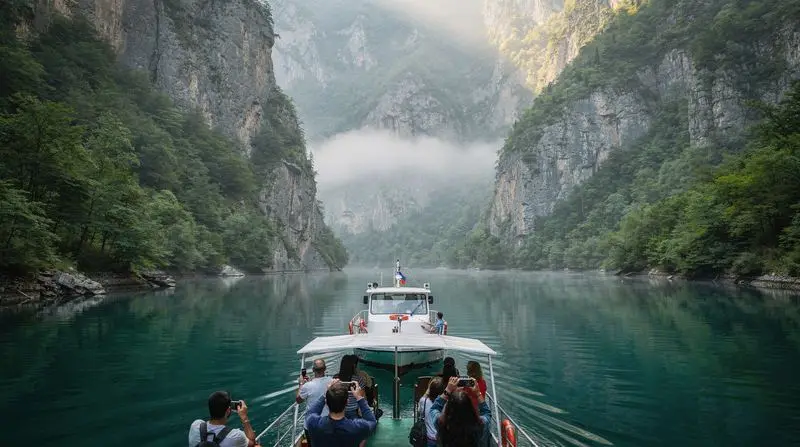
- Koman Lake ferry: see the Koman Lake ferry guide for exact departure times — the ferry leaves very early (typically 09:00 from the Koman landing stage, requiring departure from Shkodra by 06:30-07:00 to allow time for the road to Koman)
- Theth: furgon from Shkodra (2-2.5 hours, EUR 8-10, summer only — typically May through October)
- Montenegro (Muriqan border): shared transport or taxi (approximately EUR 5-8 to border)
- Ulcinj (Montenegro): buses operate the crossing, approximately 2-2.5 hours total
Route 4: Tirana to Vlora
Journey time: 3-3.5 hours
Price: EUR 5-6 (approximately 550-650 ALL)
Type: Coach
Frequency: Several departures daily
Main departure times (Tirana): Multiple morning departures starting around 07:00
Vlora is the northern gateway to the Albanian Riviera and the departure point for the road to Llogara Pass. The journey covers the Myzeqe agricultural plain and then the approach to the coast.
Departure point (Tirana): Zogu i Zi area (southern direction buses).
Arrival point (Vlora): Vlora bus station near the city center. City buses and local taxis continue onward.
Key notes:
- Vlora itself is worth 1-2 nights — see the Vlora destination guide for what the city offers.
- From Vlora, buses and furgons continue south toward Dhermi and Himara on the Riviera.
Connections from Vlora:
- Dhermi: furgon (approximately 1 hour via Llogara Pass when operating)
- Himara: bus or furgon (1.5-2 hours, EUR 3-4)
- Saranda: continuing south (4-5 hours total from Vlora via the Riviera road)
Route 5: Tirana to Gjirokastra
Journey time: 4-5 hours
Price: EUR 7-9 (approximately 750-950 ALL)
Type: Long-distance coach
Frequency: Several departures daily
Main departure times (Tirana): Early morning departures (06:00-09:00) most common
Gjirokastra is a direct bus ride from Tirana via the Tepelena valley. The route follows the Vjosa River valley for a significant section — beautiful mountain scenery and the distinctive landscape of the southern Albanian interior.
Departure point (Tirana): Zogu i Zi area.
Arrival point (Gjirokastra): The bus station is at the base of the old town, a significant uphill walk to the castle area. Taxis from the station to the old town cost EUR 3-5 and are worth taking.
Key notes:
- Some Gjirokastra buses continue through to Saranda. Useful for travelers doing the southern loop (Tirana to Gjirokastra, then Saranda, then return).
- Return buses from Gjirokastra to Tirana depart early morning.
- Gjirokastra makes a logical and rewarding stop between Tirana and Saranda — staying 1-2 nights rather than passing through is strongly recommended.
Connections from Gjirokastra:
- Saranda: bus or furgon (1.5-2 hours, EUR 3-5)
- Permet: furgon (approximately 2 hours, EUR 4-5)
- Blue Eye spring (Syri i Kaltër): taxi from Gjirokastra (approximately EUR 15-20 return with waiting time)
Route 6: Saranda to Gjirokastra
Journey time: 1.5-2 hours
Price: EUR 3-5
Type: Bus or furgon
Frequency: Multiple daily (furgons when full; fixed-schedule buses at set times)
Departure times: Morning through early afternoon from Saranda
The most popular tourist-to-tourist route in southern Albania — connecting the two UNESCO cities. The road via Delvina climbs into the mountains and provides dramatic views of the Drino Valley as you approach Gjirokastra.
Departure point (Saranda): The bus departure area near the seafront. Furgons also depart from near the main bus area.
Key notes:
- Direct buses run between these two cities without requiring a change.
- The Blue Eye spring is on the road between them — it can be visited as a stop if you arrange a taxi for that section rather than a direct bus.
Route 7: Shkodra to Theth
Journey time: 2-2.5 hours
Price: EUR 8-10 (approximately 900-1,100 ALL)
Type: Furgon (minibus)
Frequency: 1-2 departures daily in summer (May-October); does not operate in winter
Departure times: Typically 07:00-08:00 from Shkodra; return from Theth in late afternoon
The furgon to Theth is a mountain journey in itself — a narrow road with switchbacks, sheer drops, and dramatic valley views culminating in arrival at one of the most spectacular village settings in Europe. The road has been improved in recent years but the final sections to Theth remain a rough drive.
Departure point (Shkodra): The Theth furgon departs from near the city center market area (Pazari i Ri), not from the main bus station. Confirm the exact departure point locally or with your accommodation.
Key notes:
- The furgon departs very early. Stay in Shkodra the night before and confirm the departure point in advance.
- Service is seasonal — roughly May through October. Exact start and end dates depend on road and weather conditions.
- Accommodation in Theth is exclusively guesthouses (half-board). See the guesthouses Albanian Alps guide for options and booking guidance.
- Most hikers take the furgon to Theth, hike the Theth-Valbona trail (7-9 hours), then exit via the Koman Lake ferry back to Shkodra. This circuit — known as the Albanian Alps loop — is one of the classic Balkan hiking itineraries.
Route 8: Tirana to Durres
Journey time: 45 minutes to 1 hour
Price: EUR 2-3 (approximately 200-300 ALL)
Type: Minibus or furgon
Frequency: Very frequent — departures every 10-15 minutes from morning to evening
The most-traveled bus route in Albania. Durres is 38 km from Tirana on the expressway and receives heavy traffic from Tirana commuters, day-trippers, and travelers continuing to the ferry port.
Departure point (Tirana): Zogu i Zi area. The frequency means you rarely wait more than 15 minutes.
Also served by train: The Tirana-Durres rail line operates several times daily and takes approximately 30-35 minutes — slightly slower than bus but a different experience. The station in Tirana is near the Zogu i Zi area.
Route 9: The Riviera Coastal Routes (Vlora to Saranda)
The coastal route is essential for Riviera travel but more complex than the main inland routes. The road is the single-lane SH8 coastal road (or the newer highway where completed) through the Llogara Pass.
Vlora to Himara:
- Journey time: 1.5-2 hours via Llogara Pass
- Price: EUR 3-4
- Frequency: Several furgons daily (more frequent in summer)
- Departure: Vlora bus station area
Himara to Saranda:
- Journey time: 2-2.5 hours
- Price: EUR 3-4
- Frequency: Several daily, reducing outside summer
Getting to Dhermi specifically: Dhermi is perched on the hillside above the main coastal road. The bus or furgon stops on the SH8 — from the main road junction, it is a 20-30 minute walk (steep) or a taxi ride (EUR 5-8) up to the village. Tell the driver you want Dhermi well in advance.
Summer congestion note: In July and August, the coastal SH8 between Vlora and Saranda gets very busy, particularly on weekends when Albanian summer travelers from Tirana head to the coast. Furgons run frequently but fill quickly — early morning departures are substantially more comfortable than midday travel. Leave flexibility in your schedule on peak travel days.
Booking and Ticket Information
Advance booking: Most Albanian bus tickets are purchased at the departure point on the day. Some larger operators on the Tirana-Saranda route accept bookings by phone or WhatsApp — ask at your accommodation for current operator contacts for your route.
Walk-up reality: For most routes, arriving 20-30 minutes before the stated departure time and purchasing on the spot is perfectly workable outside peak summer. In July and August on the most popular routes (Tirana-Saranda, Tirana-Berat), earlier arrival is advisable.
Punctuality: Albanian buses run with variable punctuality. Allow 30-60 minutes buffer on stated departure times when planning connections. Journey times can also extend by 30-60 minutes due to traffic, driver stops, and road conditions — particularly on mountain routes.
Weekend and holiday service: Service reduces on Sundays and Albanian public holidays (November 28 Independence Day, January 1, and others). If traveling on a Sunday, check locally that your intended service runs.
Payment: Cash is the expected payment method on virtually all Albanian buses and furgons. Keep Albanian lek available. See the Albania currency guide for ATM locations and cash planning.
International Bus Routes from Tirana
Albania connects by bus to neighboring countries, making overland Balkan itinerary travel practical:
Tirana to Pristina (Kosovo): Daily coaches, approximately 3-4 hours via the mountain highway, EUR 12-18.
Tirana to Skopje (North Macedonia): Daily or several weekly, approximately 5-6 hours, EUR 18-25.
Tirana to Athens (Greece): Overnight coaches, approximately 8-9 hours via the Greek border at Kakavia, EUR 25-35. A practical option for travelers doing a Greece-Albania combination without flying.
Tirana to Podgorica (Montenegro): Several daily, approximately 3-4 hours, EUR 10-15.
Tirana to Istanbul (Turkey): Long-distance overnight services, approximately 16-20 hours for travelers on extended Balkan journeys.
International bus departure points in Tirana are generally the same Zogu i Zi area cluster as domestic routes. Major operators include FlixBus (limited Albania coverage but expanding), national operators, and local Balkan coach companies. FlixBus bookings can be made online; other operators are typically booked at the station or via WhatsApp.
Practical Tips for Albanian Bus Travel
Arrive early for comfortable positioning. Albanian bus and furgon culture does not use reserved seats on most services. Arriving 20-30 minutes before the stated departure gives you the best seat choice — important on a 6-hour Tirana-Saranda journey where your position matters.
Luggage handling. Large backpacks and bags go in the compartment under the bus or in the front of the furgon. There is rarely an additional charge for luggage.
Toilet stops. Long-distance coaches stop once or twice at roadside rest areas. Furgons may stop at a petrol station or café at the driver’s discretion. Use facilities before departure and during stops — on mountain routes, the next stop may be 1-2 hours away.
Air conditioning. Long-distance coaches on major routes are air-conditioned. Furgons may or may not have air conditioning — windows open for ventilation. In summer, a window seat is a meaningful advantage.
Motion sickness precautions. The mountain roads to Theth, across Llogara Pass, and the switchbacks of the Riviera coastal road are winding. If you are prone to motion sickness, sit at the front of the vehicle, avoid reading during mountain sections, and have remedies ready.
The social experience. Albanian buses and furgons are social environments. Albanians travel with food, engage with fellow passengers, and treat the journey as a community experience rather than a private transit. Being open to conversation — or simply observing the social dynamics — is one of the more authentic Albanian experiences available on a budget. The Albania customs and etiquette guide provides context for the social norms you will encounter.
Bus Travel vs. Other Transport Options
Albanian bus travel is the cheapest way to move between cities, but it is not always the fastest or most practical. The trade-offs:
Bus advantages: Very cheap, available on all main routes, genuinely authentic way to travel, no navigation required.
Bus limitations: No fixed schedules on furgon routes, departure points spread across Tirana require knowing where to go, limited luggage space in furgons, no direct service to many Riviera beaches (only to road junctions), time-consuming on longer routes.
Alternative: Rental car travel offers dramatically more flexibility for the Albanian Riviera and the mountain regions. See the car rental Albania guide for rental options and the driving in Albania guide for road conditions and route planning. Private drivers hired for the day offer a middle option — the flexibility of a car without the responsibility of driving on Albanian roads, and if you land late or want to skip the Zogu i Zi scramble on arrival, a private transfer from Tirana Airport to top Albania destinations is an easy way to start the trip.
For the complete picture of getting around Albania — including taxis, private drivers, rental cars, and the Koman Lake ferry — see the broader getting-around section of the Albania travel tips guide.
Frequently Asked Questions About Bus Routes in Albania
How do buses work in Albania?
Albania’s intercity transport runs on a mix of full-size buses and furgons (shared minibuses). Most routes depart from central bus stations or specific street corners in city centers, not always from formal terminals. Tickets are typically purchased directly from the driver or conductor. Furgons depart when full rather than on fixed schedules, so morning travel is most reliable.
How much do buses cost in Albania?
Albanian bus and furgon travel is very affordable. Tirana to Berat costs 400-500 ALL (EUR 4-5). Tirana to Saranda is 1,200-1,500 ALL (EUR 12-15) for the approximately 4-hour journey. Tirana to Shkodra is around 400 ALL (EUR 4). Short city-to-city routes under 1 hour cost 100-300 ALL. These prices are among the lowest in Europe for equivalent distances.
Is there a bus from Tirana to Saranda?
Yes. Daily buses and furgons run from Tirana to Saranda, with the journey taking approximately 4-4.5 hours and costing EUR 12-15. Departures are typically in the morning from Tirana’s southern bus area. The route passes through Gjirokastra, making it possible to stop there en route to the coast.
Can you travel Albania entirely by bus?
Yes, the main destinations on the standard tourist circuit are reachable by bus and furgon: Tirana, Berat, Gjirokastra, Saranda, Shkodra, and the major Riviera towns all have public transport connections. The Albanian Alps (Theth, Valbona) require minibuses from Shkodra. The Albanian Riviera’s smaller beaches between towns are harder to reach without a car, but the main hubs are covered.
Do Albanian buses have air conditioning?
Long-distance coaches on major routes (Tirana-Saranda, Tirana-Gjirokastra) are generally air-conditioned. Furgons vary — many have working AC in summer, but some rely on open windows for ventilation. If heat sensitivity is a concern, ask before boarding, especially on the longer Tirana-Saranda route.
Is it faster to fly within Albania instead of taking a bus?
Albania has no functioning domestic flight network for tourism purposes — road transport (bus, furgon, or rental car) is the only practical way to move between cities. For the longest hauls (Tirana to Saranda, for example), this means accepting a 6-7 hour journey by bus regardless of preference; there is no faster alternative short of a helicopter charter.
Breaking Up the Longest Routes
The Tirana-Saranda run at 6-7 hours is the single longest tourist route in Albania, and splitting it improves the experience considerably rather than sitting through it in one sitting. The bus already stops in Gjirokastra for a layover — breaking the journey there for one or two nights turns a grueling transit day into two manageable legs with a UNESCO city in between. The same logic applies to Tirana-Vlora-Saranda: stopping in Vlora or Himara along the coastal SH8 route converts a long single push into a properly paced Riviera itinerary. Few first-time visitors realize this is an option until they are already several hours into an uncomfortable direct journey — plan the stopover from the start instead.
Weekday vs. Weekend Bus Frequency
Service frequency drops noticeably on Sundays and Albanian public holidays across almost every route in this guide. If your itinerary has any flexibility, avoid scheduling a long-distance departure (particularly Tirana-Saranda or Tirana-Gjirokastra) on a Sunday, when some operators run a reduced timetable or skip a departure entirely. Saturdays are generally unaffected. The Albania travel tips guide covers the wider calendar of public holidays that can affect transport, shops, and opening hours.
Booking Through Your Accommodation
For travelers uncomfortable navigating Albania’s informal departure points alone, most guesthouses and hostels will confirm the current departure location, help arrange a phone or WhatsApp booking with the relevant operator, and sometimes even walk you to the stop on your first morning. This is standard hospitality in Albania and worth using, particularly on your first bus journey of the trip before you have a feel for how the system works. It costs nothing and removes most of the first-timer anxiety around Tirana’s scattered departure points, and hosts are generally happy to help even for guests who booked elsewhere or are just passing through for a night.
For travelers who prefer everything arranged before arrival, several licensed operators on the Tirana-Saranda and Tirana-Gjirokastra routes now accept WhatsApp bookings a day or two in advance — a useful middle ground between full independence and a guided tour.
What to Do If You Miss a Departure
Missing a scheduled long-distance bus is rarely a disaster given how frequently the main routes run. On high-frequency corridors like Tirana-Shkodra or Tirana-Durres, the next furgon typically departs within 15-30 minutes. On less frequent routes like Tirana-Saranda, where only 2-4 coaches run daily, missing the morning departure can mean a genuine delay of several hours or a wait until the next day in peak season — a strong argument for arriving at the departure point with margin rather than cutting it close, especially for once- or twice-daily long-distance services.
Combining Multiple Routes in One Day
Ambitious itineraries sometimes try to combine two bus legs in a single day — for example, Tirana to Berat in the morning, then Berat onward to Vlora in the afternoon. This is generally workable on well-connected corridors but requires checking connection times locally rather than assuming a seamless transfer; Albanian bus schedules are not centrally coordinated the way European rail networks are, so a missed connection at a mid-route town can mean an unplanned overnight stop. Building in a buffer of at least an hour between legs, and having a fallback accommodation option in mind for the connecting town, removes most of the risk.
Bus Routes at a Glance: Journey Time and Price Comparison
| Route | Journey time | Price | Type |
|---|---|---|---|
| Tirana → Saranda | 6-7h | EUR 10-12 | Long-distance coach |
| Tirana → Berat | 2-2.5h | EUR 4-5 | Coach/minibus |
| Tirana → Shkodra | 2-2.5h | EUR 3-4 | Coach/minibus |
| Tirana → Vlora | 3-3.5h | EUR 5-6 | Coach |
| Tirana → Gjirokastra | 4-5h | EUR 7-9 | Long-distance coach |
| Saranda → Gjirokastra | 1.5-2h | EUR 3-5 | Bus/furgon |
| Shkodra → Theth | 2-2.5h | EUR 8-10 | Furgon (seasonal) |
| Tirana → Durres | 45min-1h | EUR 2-3 | Minibus/furgon |
Choosing Between Bus, Furgon, and Car for Your Route
For the main tourist arteries — Tirana to Berat or Shkodra — the bus and furgon system works well and needs no supplementing. For the Riviera coast between Vlora and Saranda, or for reaching smaller beaches and villages between the main furgon stops, a rental car or a private driver opens up far more of the country in the same amount of time. The buses and furgons guide explains how the informal furgon system actually operates day to day, which is worth reading before your first journey.