Getting Around Albania by Bus and Furgon
Albania does not have a rail network worth using for tourism. The roads are what connect the country, and the road transport system is dominated by a wonderfully informal institution: the furgon. Understanding how furgons work is the single most useful piece of practical knowledge for getting around Albania on a budget. Once you grasp the logic, you can get almost anywhere in the country for a few euros and a bit of patience.
This guide covers furgons, long-distance buses, city transport, ride-hailing apps, and how to combine them into a workable transport strategy for any Albanian itinerary — from a weekend in Tirana to a full circuit of the south and north.
| What it is | Shared minibus, no fixed schedule, leaves when full |
| Typical cost | EUR 1-15 depending on distance |
| Payment | Cash only (Albanian Lek) |
| Best time to travel | Morning (06:00-10:00) — afternoon frequency drops |
| Booking | Not possible; show up and ask for your destination |
What Is a Furgon?
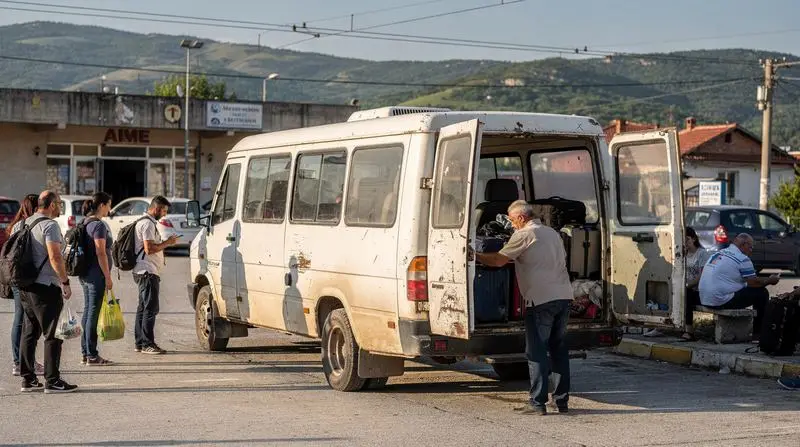
A furgon is a shared minibus — typically a Mercedes Sprinter or similar van — that carries 8-20 passengers between towns and cities. The name comes from the Albanian word for van, derived from the German “Furgon” (which Albanians absorbed through Eastern Bloc contacts during the communist era).
Furgons are privately operated, often by the driver themselves. They have no fixed schedules. They depart when they are full — or full enough that the driver decides to leave. They can be hailed from the roadside between towns if there is space. They stop anywhere along the route if someone asks to get off.
This informal system makes furgons simultaneously very convenient and somewhat unpredictable. On a busy route (Tirana to Durres, Tirana to Shkodra, Tirana to Berat), you will rarely wait more than 20-30 minutes because the demand is high enough to fill a van quickly. On quieter routes, particularly in the afternoon when the morning rush is done, you might wait an hour or more. On mountain routes (Shkodra to Theth, for example), the connection is not a spontaneous furgon but an organized departure — your guesthouse arranges it.
The Furgon Departure Experience
Furgons depart from informal “stations” — often just a stretch of pavement near a market or bus station where vehicles for different destinations cluster. Drivers or touts call out destinations. You identify which vehicle goes where you want to go, take a seat, and wait for departure.
In Tirana, the main furgon departure points are:
Sheshi Shqiponja (Eagle Square) area — for furgons to northern destinations (Shkodra, Lezha, Kukës)
Kombinat area (south of center) — for southern destinations (Berat, Fier, Vlora, Saranda, Gjirokastra)
Various neighborhood points for specific suburban and regional directions
The locations are not always formally signed. Ask locals, your guesthouse, or use Google Maps, which has improved significantly for Albanian transport. In smaller towns, the furgon departure point is usually known by everyone and easy to find by asking any local.
The process: Arrive at the departure point and tell someone where you want to go. A driver or assistant will direct you to the relevant vehicle. Hand over your larger bag if it needs to go in the back cargo area (sometimes a small charge of 50-100 ALL applies for large luggage). Take a seat inside. When the vehicle fills — which could be 5 minutes or 45 minutes later — you depart. You pay either when you board or on arrival at your destination. Prices are fixed per journey.
What to expect inside: Furgons are usually air-conditioned in summer (bring a layer — the AC can be aggressive). Seats are close together. You may be squeezed next to strangers for several hours. The experience is authentic and often sociable — Albanians share food, make conversation, and treat the shared journey as a social occasion.
Furgon Prices
Furgons are extremely cheap. Sample fares (2025-2026):
- Tirana to Durres: 200 ALL (EUR 2)
- Tirana to Shkodra: 400 ALL (EUR 4)
- Tirana to Berat: 400-500 ALL (EUR 4-5)
- Tirana to Vlora: 600 ALL (EUR 6)
- Tirana to Saranda: 1,200-1,500 ALL (EUR 12-15)
- Tirana to Gjirokastra: 1,000-1,200 ALL (EUR 10-12)
- Shkodra to Bajram Curri (for Valbona): 600 ALL (EUR 6)
- Saranda to Ksamil: 100-150 ALL (EUR 1)
- Saranda to Himara: 400 ALL (EUR 4)
- Berat to Fier: 200 ALL (EUR 2)
- Gjirokastra to Permet: 300 ALL (EUR 3)
For a sense of scale: a traveler criss-crossing the country by furgon can cover the entire transport budget for a two-week trip for under EUR 60. The Albania travel budget guide breaks down how furgon costs compare to car rental across different itinerary types.
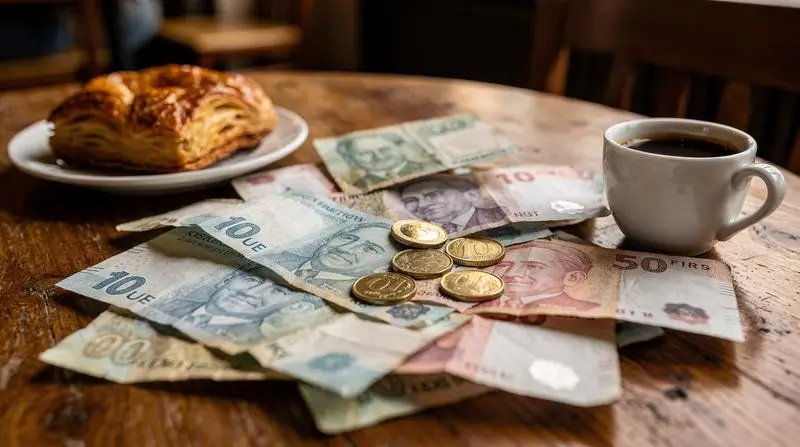
Payment: Cash only. Furgon drivers do not accept cards. Have Albanian Lek ready in small denominations (100-500 ALL notes). Paying with a 2,000 ALL note for a 400 ALL journey causes frustration. See the Albania currency guide for ATM locations and denomination advice.
Long-Distance Buses
Alongside furgons, several bus companies operate fixed-schedule long-distance routes with actual coaches (not vans). These are more comfortable, more reliable on timing, and slightly more expensive. They make sense for the longest routes:
Tirana to Saranda: Direct buses run 2-3 times daily (roughly morning and midday departures). The journey takes 5-6 hours depending on stops. Tickets around 1,500 ALL (EUR 15). Several companies including Turgut and Alban Touring serve this route.
Tirana to Gjirokastra: Similar to Saranda, with 2-3 daily departures. Journey 3.5-4 hours. Fares around 1,000-1,200 ALL.
Tirana to Shkodra: Buses complement furgons on this well-traveled route. Departures throughout the morning. Fares similar to furgons (400-500 ALL).
International buses: Regular services connect Tirana with Pristina (Kosovo), Skopje (North Macedonia), Podgorica (Montenegro), and major European cities. These operate on fixed schedules and can be booked in advance at the terminal. For Kosovo and Macedonia, multiple daily departures exist from Tirana’s main bus terminal area.
Booking: Online booking is not well-developed for domestic Albanian routes as of 2025-2026. For long-distance buses, go to the relevant departure point the evening before and ask about schedules and ticketing. For international routes, some companies have websites or Facebook pages where you can contact them directly.
City Buses in Tirana
Tirana has an urban bus network covering the city and some suburban areas. Buses run from roughly 06:00 to midnight. Fares are 40 ALL (about EUR 0.40) per journey, paid to the driver in cash on board. Exact change is appreciated but not strictly required.
The city bus network covers most tourist-relevant areas: the center, Blloku, the university district, and suburban neighborhoods. Routes are not always intuitive without local knowledge. For most city journeys, walking (Tirana’s center is compact), the Bolt ride-hailing app, or a short taxi is faster and more convenient.
In other Albanian cities, municipal buses exist but are rarely relevant for visitors — taxis and walking cover the relevant distances.
Ride-Hailing Apps in Albania
Bolt is the dominant ride-hailing app in Albania and works well in Tirana, Durres, Shkodra, and increasingly in other towns. Download it before you arrive and add a payment method. Fares are metered, transparent, and almost always lower than a street taxi. This is by far the most convenient way to get around Tirana.
How Bolt works: Set your pickup and destination in the app. The fare is shown before you confirm. The driver’s car, plate number, and rating are visible. Disputes about fares do not happen — the price is fixed before you get in.
Uber and Grab do not operate in Albania. Bolt is the one to use. See the best apps for Albania guide for a full rundown on transport apps.
Taxis in Albania
Metered taxis operate in all major Albanian cities. The challenge is that not all taxi drivers use their meters, and unlicensed cabs frequently approach tourists in tourist areas. Standard approach:
- Use Bolt where available — it eliminates negotiation entirely
- If taking a street taxi, agree on the price before getting in and confirm the currency (Lek or euros)
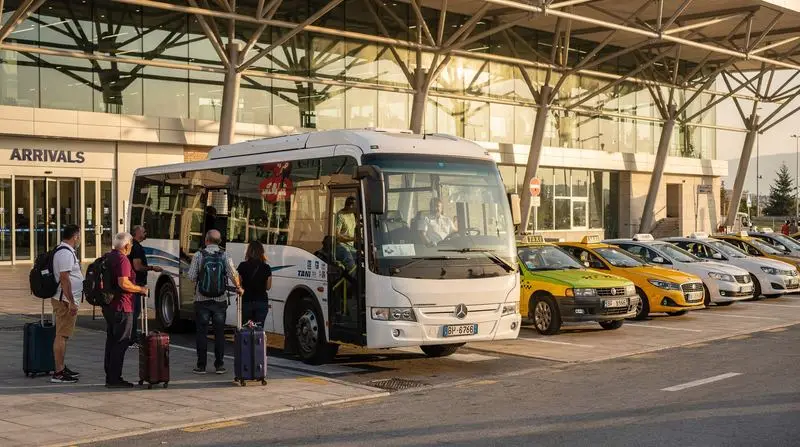
- For airport taxis, use the official rank; the airport transfers Tirana guide covers the airport taxi situation specifically
- If you would rather have a driver waiting on arrival, you can book a private transfer from Tirana Airport to your onward destination in advance
Within small towns and villages, taxis are often informal — the local driver who doubles as an informal guide. Rates are negotiable and rarely excessive. Albanians are generally not trying to overcharge tourists; the hospitality culture runs too deep for that. Still, knowing the approximate going rate prevents embarrassment.
Getting to the Albanian Alps by Public Transport
Getting to Valbona and Theth without a car requires planning but is entirely possible. The standard approach for the Valbona Valley:
- Furgon from Tirana to Shkodra (frequent departures, 400 ALL, about 2 hours)
- Organized transport from Shkodra to Komani dam (morning departures at around 06:30-07:00; book through your Shkodra guesthouse the night before — this is not a spontaneous furgon)
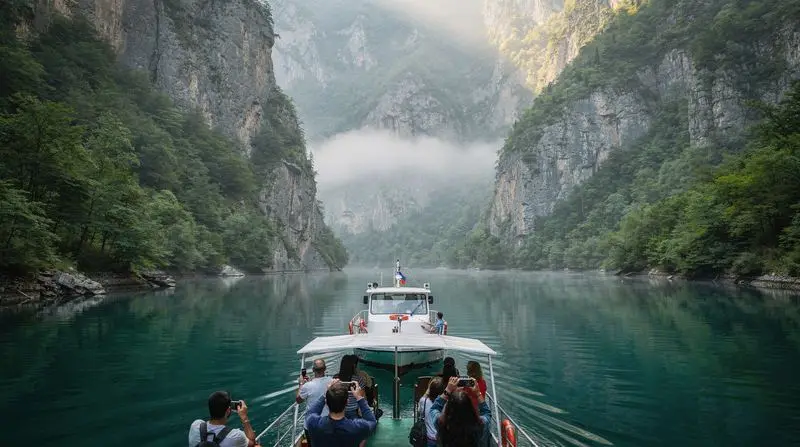
- Koman Lake ferry from Komani to Fierza (one crossing daily, takes about 2.5 hours — one of Albania’s most beautiful journeys, winding through canyon scenery)
- Furgon from Fierza to Bajram Curri, then onward transfer to Valbona
For Theth: Shkodra to Theth is served by organized transfers (not spontaneous furgons), also arranged through your Shkodra guesthouse. Departures typically in the morning. The journey takes 2.5-3 hours depending on road conditions.
The key insight for alpine transport: The connections to Theth and Valbona are organized through local guesthouses and small operators, not spontaneous street furgons. Your accommodation in Shkodra is the best booking and information source. This is not a weakness of the system — it reflects the reality that mountain routes require advance coordination.
Tips for Using Furgons Successfully
Go to the departure point in the morning. Most furgons for distant destinations run in the morning, leaving between 06:00 and 10:00. Afternoon frequency drops sharply, and for popular mountain routes, it can effectively stop after 14:00.
Arrive patient and flexible. If you have a tight connection or need to be somewhere by a specific time, the furgon system is not your friend. Add buffer time to any schedule built around furgon transport. The departure time is “when we’re full,” which is not negotiable.
Speak the destination clearly. Pronunciation matters. Have the destination written in Albanian script as a backup (on your phone screen) — showing someone the text works when pronunciation fails.
Luggage goes in the back. Large backpacks and suitcases go in the rear cargo area of the Sprinter. Keep your valuables — passport, phone, cash — in a bag you keep with you in the cabin.
Bring small bills. Have 100-500 ALL denominations ready to pay your fare. Drivers do not appreciate having to make change for large notes.
Ask locals at the destination. When you arrive, ask your guesthouse about the return furgon time and departure point. This information is locally specific and more reliable than anything you can find online.
Book mountain connections through your accommodation. For the Koman Lake ferry approach and connections to the Albanian Alps, your guesthouse in Theth or Valbona will arrange shared transport and can advise on timings far more effectively than trying to navigate the system independently.
Albania by Public Transport: A Realistic Assessment
For a traveler with plenty of time and a relaxed approach to schedules, getting around Albania by furgon and bus is perfectly feasible and genuinely enjoyable. You will interact with local people, see parts of the country from a van window that a rental car separates you from, and spend almost nothing on transport.
For a traveler with limited time wanting to cover maximum ground — the Riviera, the mountains, the historic cities — renting a car is almost certainly the better choice. The freedom and time savings justify the cost, which is modest given Albania’s low general prices.
Many experienced travelers split the difference: furgon from Tirana to Berat (an easy two-hour journey with good frequency), then a rental car in Berat or Vlora for the Riviera section where the freedom to explore is most valuable. Or fly in, spend time in Tirana by Bolt and walking, then rent for the south. Mix and match as your itinerary demands.
The Furgon as a Social Experience
One underrated aspect of furgon travel is the social dimension. Sharing a Sprinter van with eight to fifteen Albanians on a two-hour mountain journey creates interactions that would never happen in a rental car or on a train. Your neighbor may offer part of their lunch. The driver may stop to pick up a relative. A grandmother may hand you pastry wrapped in a cloth. None of this is organized or expected — it is simply what furgon travel in Albania involves.
For travelers interested in experiencing genuine Albanian daily life rather than the tourist layer, furgon travel is one of the best windows available. You see the villages the highway bypasses, the local shops that do not feature in any guide, the way Albanians actually move through their country. The Albania travel tips guide covers other ways to connect with authentic Albanian culture during your trip.
Key Furgon Departure Points by City
Tirana: The main furgon departure areas are informal and can shift, but broadly:
- Northern destinations (Shkodra, Kukës, Lezha): Near Sheshi Shqiponja (Eagle Square) and surrounding streets
- Southern destinations (Berat, Fier, Vlora, Saranda, Gjirokastra): The Kombinat area and bus station south of the center
- Durres: Multiple departure points including near the center
Your guesthouse or hostel will know the current, specific departure location for your destination — ask them the night before. This is more reliable than any published map.
Shkodra: The main furgon and bus station is in the eastern part of the city. Furgons for Tirana (frequent), Lezha, Kukës, and organized departures toward the Albanian Alps area. Organized transport to Komani for the Koman Lake ferry is arranged through local operators rather than spontaneous furgons — your guesthouse coordinates this.
Saranda: The furgon departure area is near the main square and market area in central Saranda. Regular services to Gjirokastra, Butrint direction, Ksamil, and Tirana.
Gjirokastra: The bus and furgon area is in the lower modern part of the city (not the old town). Connections to Tirana, Saranda, Permet, and other southern destinations.
Berat: Furgons and buses depart from the main bus terminal in the lower city. Good connections to Tirana (frequent throughout the day), Vlora, Fier, and other destinations.
Comparing Transport Options for Common Routes
Tirana to Berat:
- Furgon: EUR 4-5, 2 hours, departs frequently in the morning
- Bus: EUR 5-6, 2.5 hours, 2-3 fixed departures daily
- Car hire (one-way if available): EUR 20-25 plus fuel, about 1.5 hours driving
- Verdict: Furgon wins for budget solo travel; car hire for groups or travelers continuing south
Tirana to Saranda:
- Furgon: EUR 12-15, 5-6 hours, 1-2 departures daily (early morning)
- Bus: EUR 14-16, 5.5-6 hours, 2 fixed departures
- Car hire: EUR 25-30 plus fuel, about 4 hours driving (via Riviera)
- Verdict: Car hire if doing the Riviera route; furgon or bus if going directly to Saranda
Tirana to Shkodra:
- Furgon: EUR 4, 1.5-2 hours, very frequent departures throughout the morning
- Bus: EUR 4-5, 2 hours
- Car hire: EUR 15-20 plus fuel, about 1.5 hours
- Verdict: Furgon is excellent for this route given the frequency
Tirana to Gjirokastra:
- Furgon: EUR 10-12, 4-5 hours, 2-3 morning departures
- Bus: EUR 12, 4 hours, scheduled
- Car hire: EUR 25 plus fuel, about 3.5 hours driving
- Verdict: Either works; car gives more flexibility for stops along the way
Long-Distance Bus Companies
For longer routes where a proper coach makes sense, the main operators include:
Turgut / Alban Touring / Union Lajthiza: Several companies operate major long-distance routes (Tirana-Saranda, Tirana-Gjirokastra). Tickets can often be booked at the station the night before or on the day for less popular routes.
For Kosovo: The Tirana-Pristina route is well-served with multiple daily departures. Journey around 3-4 hours on a direct bus. Fares around EUR 10-15. The Qafa e Morinës border crossing is the standard route.
For North Macedonia: Tirana-Ohrid and Tirana-Skopje routes exist. Journey times 6-8 hours. Fares EUR 15-25.
For Greece: Connections to Thessaloniki and Athens exist for those continuing further into Greece after Albania. These are overnight buses typically and take 8+ hours.
Using Public Transport as a Backpacker
For backpackers and budget travelers, furgons are the backbone of a cost-effective Albanian itinerary. The combination of cheap fares, broad network coverage, and the social richness of shared travel makes them the preferred transport mode for many independent travelers.
The key adjustments from Western transport habits:
- Accept that departure times are approximate
- Arrive in the morning for best options
- Ask your accommodation for current, local advice on connections
- Carry small bills in Lek at all times
- Have your destination written in Albanian as a backup
The furgon system works reliably for the vast majority of journeys. It connects every significant town in Albania, runs every day the country is moving, and costs almost nothing. It is not a perfect system by Northern European transport standards — but it gets you where you need to go, with interesting company, for a price that leaves plenty of budget for the things that matter: food, accommodation, and experiences.
For tours and activities that include transport from Tirana to specific destinations, organized day trips from Tirana handle transport, guiding, and logistics in one package — useful when you want the destination experience without navigating the transport yourself.
For a complete picture of how Albanian transport costs fit into your overall trip budget, see the Albania travel budget guide and the bus routes Albania guide for specific timetable information on main routes.
Furgon vs. Bus vs. Rental Car: Quick Cost Comparison
| Route | Furgon | Long-distance bus | Rental car (fuel incl.) |
|---|---|---|---|
| Tirana → Berat | EUR 4-5 | EUR 5-6 | around EUR 20-25 |
| Tirana → Saranda | EUR 12-15 | EUR 14-16 | around EUR 25-30 |
| Tirana → Shkodra | EUR 4 | EUR 4-5 | around EUR 15-20 |
| Tirana → Gjirokastra | EUR 10-12 | EUR 12 | around EUR 25 |
Solo budget travelers consistently come out ahead with furgons; groups of two or more often find a rental car breaks even or comes out cheaper once flexibility is factored in. See the driving in Albania guide for what self-driving those same routes actually involves.
First-Time Furgon Checklist
For visitors trying a furgon for the first time, a short mental checklist removes most of the uncertainty:
- Arrive at the departure cluster in the morning — afternoon frequency drops sharply on longer routes.
- Have your destination written in Albanian script on your phone as a backup to pronunciation.
- Carry small Lek denominations; see the Albania currency guide for ATM locations before you need cash.
- Confirm your bag goes in the rear cargo area, and keep valuables with you in the cabin.
- Ask your accommodation the evening before about the current departure point — these shift periodically and are not always signed.
Frequently asked questions about Buses and Furgons in Albania
How do I find the right furgon in Tirana?
Tirana has no single terminal — furgons for northern destinations depart from near Sheshi Shqiponja (Eagle Square), while southern destinations depart from the Kombinat area. Ask your guesthouse the evening before for the current departure point, as these shift periodically and are not consistently signed.
Is it safe to travel by furgon in Albania?
Yes, furgon travel is widely used by Albanians themselves and is considered safe. The main practical concerns are comfort on longer routes (seats are close together) and the lack of fixed schedules rather than any safety issue. Keep valuables with you rather than in checked luggage, as with any shared transport.
Can I use a furgon to reach the Riviera beaches directly?
Only partially. Furgons and buses running the coastal SH8 road stop at towns and main junctions — Vlora, Himara, Saranda — but do not detour to individual beaches like Gjipe, Jale, or the quieter coves between towns. From a junction stop, a short taxi ride or a walk usually covers the last stretch; see the best beaches Albania guide for which beaches require this extra step.
Furgons and Language: What You Actually Need
Language is rarely a real barrier on Albanian furgons. Drivers and fellow passengers are used to tourists, and destination names are usually all that is needed to be understood — “Berat,” “Sarande,” “Shkoder” spoken clearly get you where you need to go. Having your destination typed in your phone as a backup removes any remaining ambiguity. Basic Albanian courtesy phrases (a simple “faleminderit” for thank you) are appreciated but not required — see the Albania language basics guide if you want to pick up a handful of useful phrases before you travel.
When Furgons Do Not Run
Furgon frequency drops sharply, and on some routes stops entirely, outside the main travel season. Mountain connections to Theth and Valbona typically operate only from May through October, weather and road conditions permitting. In winter, reaching these destinations independently requires arranging a private driver through your Shkodra accommodation rather than relying on scheduled transport — factor this into any off-season Albanian Alps itinerary, and confirm current status locally before committing to a winter mountain trip, since road closures can change week to week and last-minute alternatives are limited outside the main season.