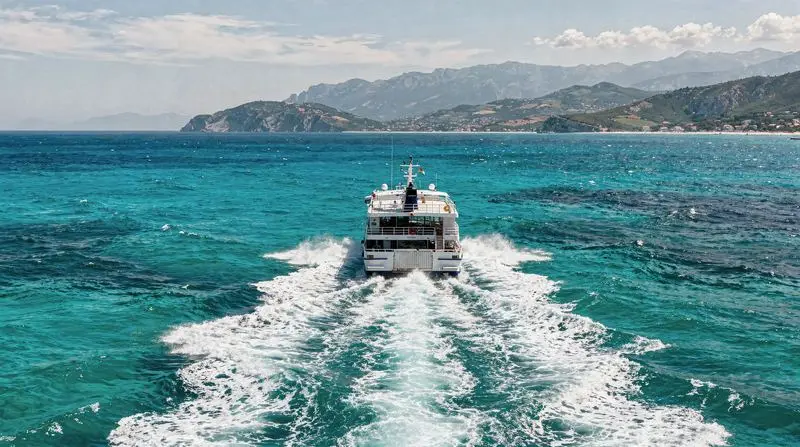
The Corfu to Saranda Ferry: Your Complete Guide
The short sea crossing between Corfu and Saranda is one of the great travel shortcuts in the Mediterranean. You board a ferry on a Greek island, and barely 25 minutes later you are stepping off in Albania — a country that feels a world apart from its neighbor, yet sits just a few kilometers across the Ionian Sea. This crossing is the most popular way to enter Albania from Greece, and for good reason: it is fast, affordable, and drops you directly on the Albanian Riviera, one of the most beautiful stretches of coastline in all of Europe.
This guide covers everything you need to know: which operators run the crossing, what the timetables actually look like in practice, how much to budget, what happens at the border, and how to connect onward into Albania.
| Route | Corfu Town (Kerkyra) to Saranda |
| Crossing time | Around 25-90 minutes, depending on vessel |
| Cost | From around EUR 10-25 per person one way |
| Operators | Finikas Lines, Ionian Seaways |
| Booking | Buy at the port; book ahead in July-August |
The Route: Corfu Town to Saranda
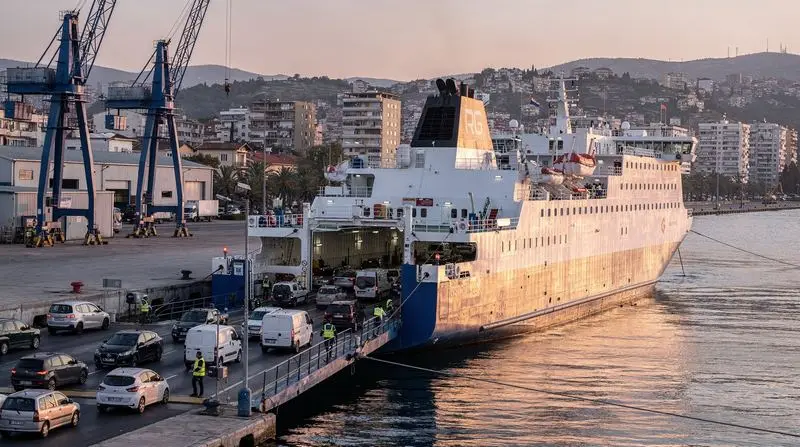
All ferries on this route depart from the New Port in Corfu Town (also called Kerkyra) and arrive at the ferry dock in central Saranda. Both ports are conveniently located — the Corfu New Port is a short taxi or bus ride from the center of Corfu Town, and the Saranda ferry dock sits right on the seafront promenade, within walking distance of accommodation, restaurants, and transport connections.
The distance across the water is roughly 12 kilometers. On a clear day, you can see Albania from the northeastern coast of Corfu — the mountains behind Saranda are visible with the naked eye.
Ferry Operators
Finikas Lines
Finikas Lines is the dominant operator on this route and runs the most frequent service. They operate both conventional car ferries and the faster Ksenofon hydrofoil service. On high-season days, Finikas can run four to six crossings in each direction. Their vessels accept foot passengers and bicycles; cars can be carried on the conventional ferry service.
Ionian Seaways
Ionian Seaways operates a complementary schedule, particularly useful when Finikas crossings are fully booked in peak season. They tend to run a slightly lower frequency but are a reliable fallback. Ticket prices are broadly similar to Finikas.
Additional Seasonal Operators
During July and August, demand is high enough that additional fast craft sometimes enter the market. Check local boards at the Corfu New Port for any supplemental services running that week.
Journey Times
- Fast hydrofoil (Finikas Ksenofon): 25-35 minutes
- Conventional ferry: 75-90 minutes
The fast service is worth the small premium in price if time matters to you. On the conventional ferry, the crossing is pleasant — you pass close to the southern tip of Corfu, then watch the Albanian coast grow in detail as you approach. The hydrofoil is faster but glassed-in, with less deck space for enjoying the scenery.
Ticket Prices
As of 2025-2026, expect to pay:
- Foot passenger one way: EUR 10-20 (depending on operator and season)
- Foot passenger return: EUR 20-35
- Car (standard vehicle) one way: EUR 45-70
- Motorcycle one way: EUR 25-40
- Bicycle: EUR 5-10
Prices increase somewhat in July and August. The fast hydrofoil service typically costs EUR 3-5 more than the conventional ferry.
Children (usually under 12) travel at half price or free with most operators. Confirm when booking.
Where to buy tickets: Both operators sell tickets at booths in the Corfu New Port terminal building, typically opening 1-2 hours before departure. You can also buy through local travel agencies in Corfu Town, which can be convenient if you want to sort it out while still exploring the island. Online booking is available through both operators’ websites for some sailings, though the booking systems are not always fully up to date — buying in person or via a local agent remains the most reliable method.
Timetables and Frequency
Timetables change seasonally and year to year, so always confirm current schedules locally. The following gives a realistic picture of what to expect:
High season (June to September): 4-6 sailings daily in each direction, spread throughout the day from roughly 07:00 to 20:00 (Corfu departure times). The first sailing is popular — it gets you into Saranda with the whole day ahead.
Shoulder season (April, May, October): 2-3 sailings daily. The route operates reliably but with less frequency.
Low season (November to March): Service is heavily reduced, sometimes to one sailing every few days. If you are traveling outside the main season, verify that the crossing is operating on your intended date before committing to this route.
Practical tip: Check times the day before at the port or via your accommodation. The Albanian and Greek ferry websites are not always updated in real time, and local knowledge is more reliable than any printed schedule.
What Happens at the Border
The Corfu to Saranda crossing involves two border controls: Greek customs as you leave Corfu (usually minimal — your passport is scanned at the terminal) and Albanian border control as you arrive at Saranda dock.
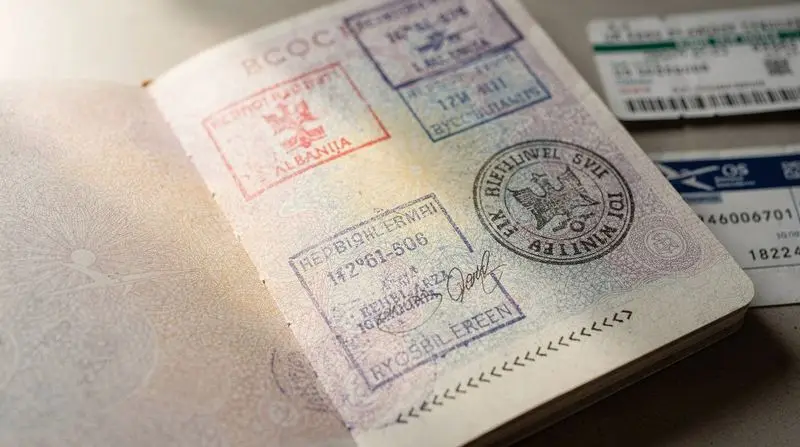
Albanian entry: Officers board the ferry or process passengers at the dock. You hand over your passport, it is scanned and stamped. The process is typically straightforward and takes 5-20 minutes for the whole vessel. Have your passport ready and know your accommodation address in Saranda or elsewhere in Albania. EU citizens can use their ID card; other nationalities need a full passport.
No visa required for most Western passport holders — EU, UK, USA, Canada, Australia, and most other developed countries can enter without a visa for stays up to 90 days. See our Albania visa requirements guide for a full country-by-country list.
Currency: You do not need Albanian Lek to board the ferry. EUR is accepted in Saranda for most tourist transactions, but having some Lek for local transport, markets, and small shops is useful. There are ATMs on the main promenade in Saranda — use one when you arrive.
Customs declarations: Standard limits apply. You can bring personal belongings, reasonable amounts of alcohol and cigarettes (200 cigarettes, 1L spirits for EU allowances), and personal electronics without issue.
Arriving in Saranda
Saranda ferry dock sits at the southern end of the seafront promenade. Walking out of the port, you are immediately on the Saranda esplanade, lined with restaurants, cafes, hotels, and travel agencies. The town center is 5-10 minutes on foot. Most accommodation in Saranda is within reasonable walking distance of the dock, though a taxi (costing 300-500 ALL within town) saves effort if you have luggage.
Saranda itself is a resort town with a sweeping horseshoe bay, a range of hotels and apartments in all budget ranges, and excellent connections for onward travel. Key nearby destinations include:
- Butrint (22km south) — UNESCO World Heritage Site with Greek, Roman, and Byzantine ruins. Easily done as a half-day trip.
- Ksamil (16km south) — the Albanian Riviera’s most beautiful small resort with sandy beaches and tiny offshore islands.
- Gjirokastra (90km north) — UNESCO-listed Ottoman city, one of Albania’s highlights.
- Himara (90km north up the coast) — the most rugged and beautiful section of the Albanian Riviera.
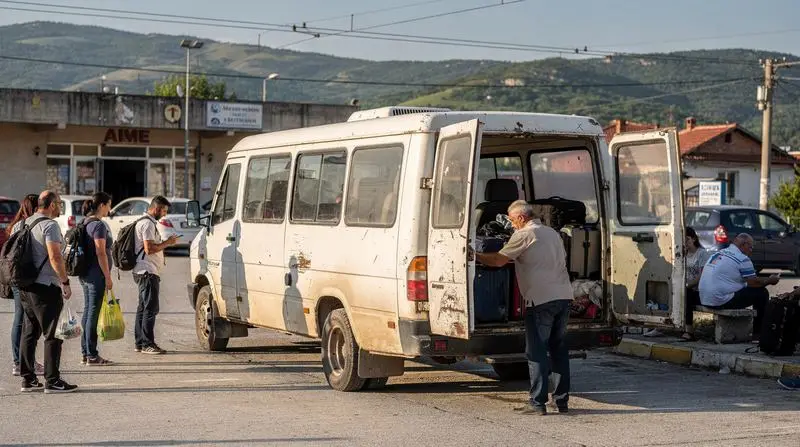
For getting around from Saranda, furgons (shared minibuses) depart from near the main square. See our buses and furgons guide for how they work.
If you plan to stay a few nights, our where to stay in Saranda guide helps you pick a neighborhood close to the dock, and the Saranda destination page gives a fuller picture of the town. For ideas beyond the waterfront, see day trips from Saranda.
Day Trips Between Corfu and Albania
The Corfu-Saranda route works brilliantly as a day trip in either direction.
From Corfu to Albania: Take the first morning ferry, spend the day exploring Saranda and Butrint, and return on a late afternoon sailing. This gives you a genuine taste of Albania without needing to book accommodation.
Book a guided day trip from Saranda to Corfu covering Corfu Town and the famous Palaiokastritsa beach — a brilliant option if you are staying on the Albanian side.
Join a guided day trip from Corfu to Saranda and Butrint — a well-organized full-day excursion that handles the ferry and takes you to Albania’s finest ancient site, ideal if you are based in Corfu and want a hassle-free introduction to Albania.
Crossing in the Other Direction: Albania to Corfu
Everything above applies equally if you are crossing from Saranda to Corfu. Albanian departure control is conducted at the Saranda dock before boarding. Greek entry control happens at the Corfu New Port. The process is equally simple in this direction.
If you are ending your Albania trip in Saranda and continuing to Corfu — perhaps to catch an international flight from Corfu Airport — this crossing is the obvious connection. Corfu Airport has flights to many European cities, particularly during summer, so it can function as an exit point from Albania even without returning to Tirana.
Practical Tips for the Crossing
Arrive at the port 30-45 minutes before departure. The terminal queues can build up, particularly in summer, and you want to secure your ticket and get in line without rushing.
Bring a light jacket. The sea crossing is short but the hydrofoil is air-conditioned and the conventional ferry can be windy on the open deck.
Keep your passport accessible. You will need it multiple times — at the Corfu terminal, when boarding, and at Albanian immigration. Keep it in a pocket or top of your bag, not buried in luggage.
Check the sea conditions in November-March. Crossings can be cancelled in rough weather during the off-season. If you are traveling outside the main season, have a backup plan (flying to Tirana, or entering Albania overland from Greece at Kakavija) in case the ferry is suspended.
Combine with the Albanian Riviera. The ferry is your entry point to one of Europe’s most underrated coastlines. Our guide to how to get to Albania covers how this crossing fits into broader Albania itineraries.
The Corfu to Saranda ferry is one of the most satisfying short crossings in Europe — quick, affordable, and the beginning of something genuinely different from the rest of the Mediterranean.
Combining the Corfu Ferry with the Albanian Riviera
The Corfu to Saranda crossing is the ideal gateway to the Albanian Riviera, one of the Mediterranean’s most beautiful and underrated stretches of coastline. Once you step off the ferry in Saranda, you are positioned perfectly to explore south toward Ksamil and Butrint, or north along the coast toward Himara, Dhermi, and the dramatic Llogara Pass.
Saranda to Ksamil (16km south): Albania’s most-photographed beach destination, with offshore islands accessible by a short swim or boat. The clear turquoise water and sandy beaches here rival anything on the Greek islands — at a fraction of the price. Buses and taxis connect Saranda and Ksamil frequently.
Saranda to Butrint (22km south): The UNESCO World Heritage Site at Butrint is one of Albania’s greatest historical treasures. Greek, Roman, Byzantine, and Venetian layers of settlement are visible in extraordinary preservation within a nature reserve. A taxi from Saranda costs 1,000-1,500 ALL return with waiting time. Allow 3-4 hours for the visit.
Saranda to Himara (90km north): The coastal road north from Saranda to Himara is one of Albania’s most scenic drives, winding through mountains with the Ionian below. Himara has a proper old town above the beach resort, rocky coves accessible by boat, and a relaxed atmosphere that represents the Riviera at its least commercial. Renting a car gives you the most freedom on this stretch.
For more detail on each stop, read the pages on Butrint, Ksamil, Gjirokastra and Himara. If you would rather see the whole coast in one go, the Albanian Riviera road trip itinerary links these places into a single route, and the Albanian Riviera destination page gives the wider context.
What to Know About Albanian Customs and the Entry Stamp
Your Albanian entry stamp from Saranda is important documentation if you are combining Albania with other countries. The stamp records your date of entry and starts your 90-day visa-free period.
If you plan to re-enter Greece: Greek border control (as the Schengen area boundary) will check your Albanian entry stamp. Crossing back to Corfu by ferry means passing through Greek immigration — this is quick for most nationalities.
Keep your ticket stub: Ferry ticket stubs serve as useful documentation alongside your passport stamp. Some accommodation requires proof of the date you crossed into Albania.
No currency exchange at sea: There is no currency exchange facility on the ferry itself. Exchange euros for Albanian Lek at a bureau in Saranda town center or use an ATM on the promenade immediately after disembarking. Our Albania currency and money guide explains how cash and cards work once you are inside the country, and the Albania travel budget page helps you plan daily spending.
Staying connected: Mobile data is easiest to sort out before or just after you cross. The Albania eSIM guide covers the options, and it is worth installing one before you board so that maps and ride apps work as soon as you land.
Alternative Water Routes Near Corfu
The Corfu-Saranda crossing is the most direct route, but several additional water connections are worth knowing:
Igoumenitsa (Greece) to Saranda: A longer crossing option from the Greek mainland port of Igoumenitsa, operating less frequently. Useful if you are traveling from mainland Greece without going via Corfu.
Day boat tours from Saranda: Several local operators run boat tours that visit Butrint, the Blue Eye spring area, and the Riviera coves. These are an alternative to the land-based exploration and give a perspective of the Albanian coast from the sea.
The Crossing in Both Directions: Different Experiences
An interesting quality of the Corfu-Saranda crossing is how different it feels in each direction.
Corfu to Saranda: You are arriving. The Albanian mountains grow larger as you approach, the concrete and terrace apartments of Saranda’s seafront come into focus, and there is the particular sensation of crossing into something unfamiliar. Even experienced travelers often describe arriving in Albania from the sea as one of their most memorable border crossings.
Saranda to Corfu: You are departing. Looking back at Albania from the water gives a perspective you could not get from within — the arc of Saranda Bay, the terraced hills above, and the mountains behind. Corfu grows from a shape on the horizon into the lush green of the Ionian island’s characteristic landscape.
Both crossings are worth experiencing on a round-trip itinerary. The 25-90 minutes each way is time well spent at the rail.
Practical Checklist Before You Board
Before joining the queue for the Corfu to Saranda ferry:
- Passport valid (EU nationals: ID card is sufficient)
- Cash in euros for the ticket purchase (Albanian Lek available on arrival in Saranda)
- Accommodation address for your first Albanian night
- Offline maps downloaded for the Saranda area
- Bolt app installed for local transport in Albania
- Light jacket or layer accessible (the sea crossing is windy regardless of air temperature)
The Albania visa requirements guide has a complete list of what you need at the Albanian border.
The Corfu to Saranda ferry remains one of Europe’s most underrated travel experiences — not because of the crossing itself (though the views are fine), but because of what it delivers you into. Albania’s Riviera on a clear June morning, seen from the Saranda promenade with coffee in hand, is genuinely one of the Mediterranean’s great pleasures.
Comparing the Corfu Route to Other Ways Into Albania
Saranda is not the only gateway from Greece, and the Corfu ferry is not always the fastest way to reach every part of Albania. It helps to see where it fits among the alternatives:
| Route | Best for | Approx. time |
|---|---|---|
| Corfu to Saranda (ferry) | Riviera-first itineraries, combining a Greek island stop | 25-90 minutes crossing |
| Igoumenitsa to Saranda (ferry) | Travelers coming from mainland Greece without a Corfu stop | Longer crossing, less frequent |
| Kakavija land border (Ioannina area) | Overland travelers heading to Gjirokastra or Tirana directly | Variable, depends on bus/car connections |
| Flying into Tirana | Visitors prioritizing the north or center over the Riviera | N/A, but adds a domestic transfer south |
For anyone building a Greece-Albania combined trip that starts on the coast, the Corfu ferry into Saranda remains the simplest and most scenic option — see the Albania Greece combined itinerary for how it fits into a longer route.
Weather and Seasonal Reliability
The Ionian Sea between Corfu and Saranda is generally calm from late spring through early autumn, but conditions do vary enough to affect planning. Summer (June-September) brings the most reliable sailings and the flattest seas, though afternoon winds can occasionally cause minor delays on the smaller hydrofoil craft. Shoulder season (April-May, October) is usually still comfortable, with slightly choppier crossings on windy days but rarely outright cancellations. Winter (November-March) is the season to watch closely — storms in the Ionian can suspend the route for a day or more at a time, and the reduced schedule means a cancelled sailing may leave you waiting rather than simply catching the next departure. If your trip depends on a specific date in winter, build in a buffer day and have an overland backup plan through the Kakavija border crossing in mind.
Final Thoughts
The Corfu-Saranda crossing works because it removes friction from a trip that could otherwise involve long overland transfers. Whether you are starting your Albania trip here or ending it before flying home from Corfu, the short hop across the Ionian is one of the most efficient border crossings in the Mediterranean — and one of the most scenic.
Frequently Asked Questions About Corfu to Albania Ferry
How long is the ferry from Corfu to Albania?
The ferry from Corfu (Kerkyra port) to Saranda takes approximately 25-35 minutes on the fast hydrofoil and around 45-60 minutes on standard ferries. It is one of Europe’s shortest international sea crossings, making it an easy and popular way to combine a Greek islands visit with an Albania trip.
How much is the Corfu to Saranda ferry?
Ferry tickets from Corfu to Saranda typically cost EUR 19-25 per person one way. Return tickets are usually EUR 35-45. Prices vary slightly by operator and season. The crossing is served by Ionian Cruises and Finikas Lines, among others. Book tickets at the port or online through the ferry company websites.
How often does the Corfu ferry run?
In peak summer season (June-September), ferries run multiple times daily — typically 4-6 departures in each direction. In the shoulder season (May, October), services reduce to 1-2 daily. In winter, service is very limited or suspended entirely. Always check current schedules with the ferry operators before planning your departure.
Do you need to book the Corfu ferry in advance?
In July and August, booking at least 1-2 days ahead is recommended as ferries can fill up, especially on weekends when Albanian families travel between the two destinations. In shoulder season, same-day booking at the port is usually possible. Carry your passport — border controls operate on both sides of this international crossing.
Is the Corfu ferry the best way to reach the Albanian Riviera?
For most travelers starting from Greece, yes. It lands you directly in Saranda, the natural base for exploring Ksamil, Butrint, and the southern Riviera, without the longer overland transfer from Tirana. If your trip is centered on northern Albania instead, flying into Tirana and working south is usually more efficient.
Does the Corfu ferry run in winter?
Yes, but with much reduced frequency — sometimes as little as one sailing every few days between November and March, and crossings can be cancelled in rough weather. If you are travelling outside the main season, confirm the current schedule locally before committing to this route, and have a backup plan such as flying to Tirana or crossing overland at Kakavija.