Guesthouses in the Albanian Alps: Everything You Need to Know
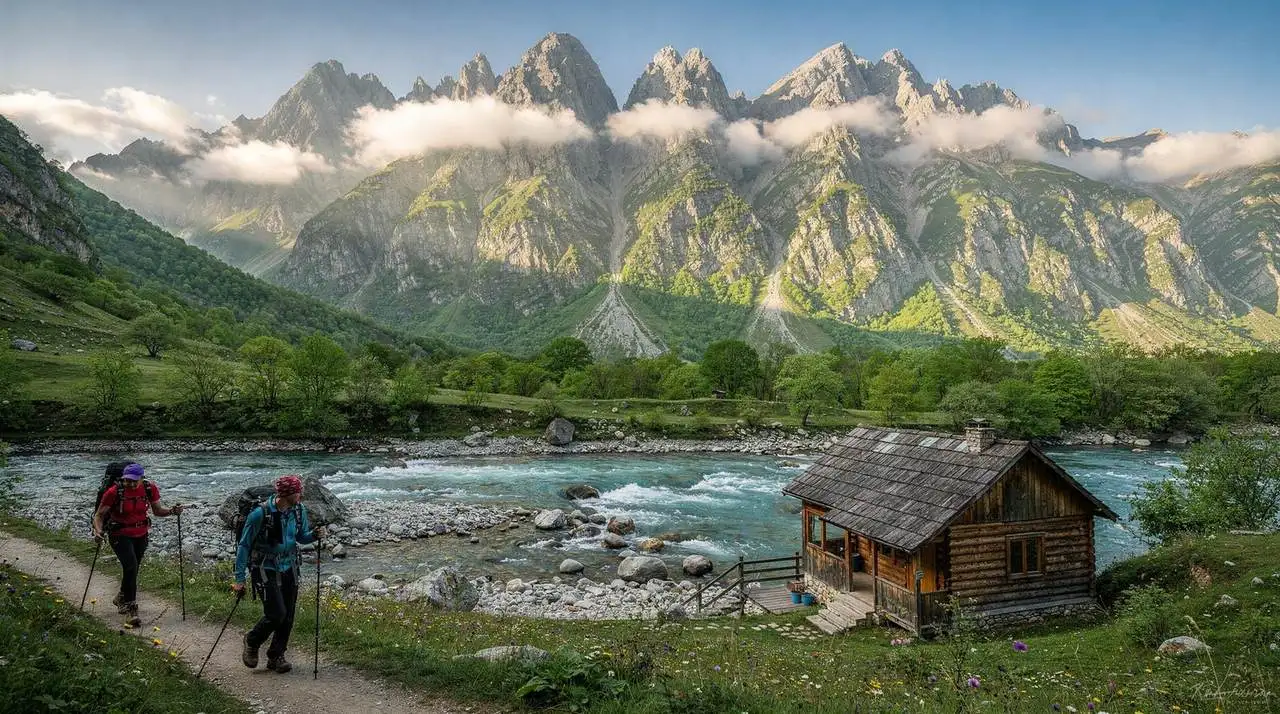
The Albanian Alps — the Bjeshket e Namuna, or Accursed Mountains — are one of the most spectacular and least-visited mountain ranges in Europe. The valleys of Theth and Valbona, along with the Koman Lake route that connects them to the lowlands, offer hiking on a par with the Dolomites or the Julian Alps at a fraction of the cost and without the crowds that now define those more famous destinations.
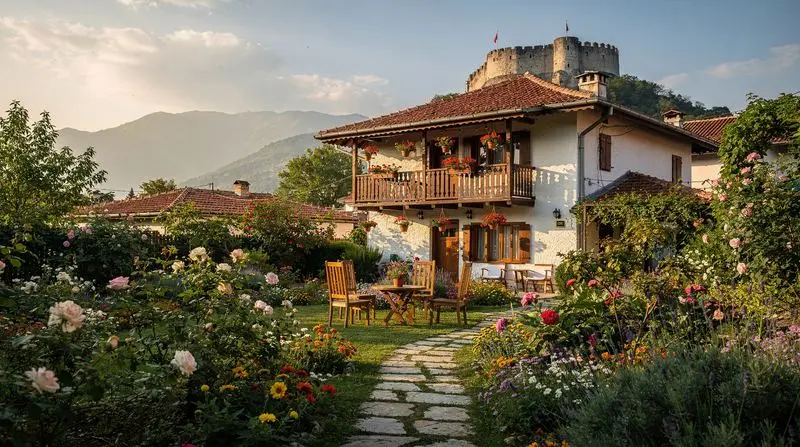
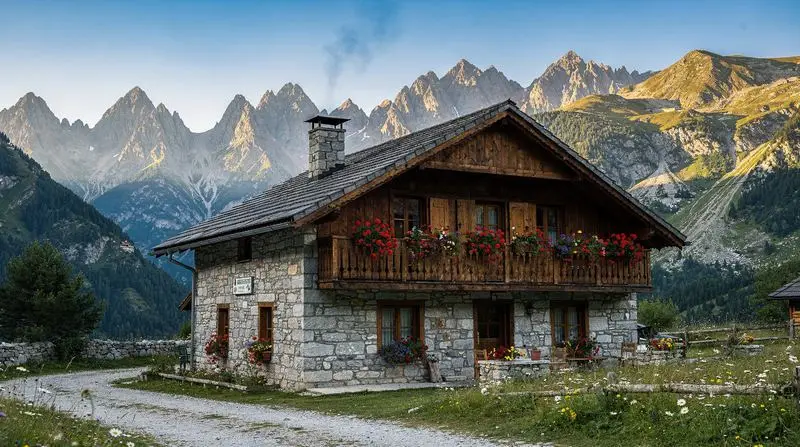
The accommodation system that makes hiking in the Albanian Alps possible is the family guesthouse — an institution that has developed organically as local families have responded to growing visitor numbers by opening rooms in their homes or purpose-building simple lodge structures in their farmsteads. These are not boutique hotels performing authenticity; they are working family homes where a generation has grown up, where the food comes from the garden and the surrounding forest, and where the hospitality is an expression of the Albanian tradition of besa — a code of honour around hosting guests.
Understanding how these guesthouses work, what to expect, and how to book them is essential preparation for any Albanian Alps trip.
| Cost | EUR 20-35 per person, half-board included |
| Payment | Cash only (EUR or Albanian Lek); no ATMs in either valley |
| Booking | WhatsApp/Facebook groups direct; some Booking.com/Airbnb listings |
| Season | Mid-May to late September, weather permitting |
| Wi-Fi | Improving but not universal; buy an Albanian SIM as backup |
The Half-Board System
Almost all guesthouses in Theth and Valbona operate on a half-board basis — meaning dinner and breakfast are included in the nightly rate. This is not merely a sales practice but a practical necessity: the villages are remote, grocery supplies are limited, and the logistics of self-catering in a mountain valley without a supermarket are not straightforward for most visitors.
Standard half-board rates in 2026:
- Theth: EUR 20-30 per person per night, including dinner and breakfast
- Valbona: EUR 22-35 per person per night, including dinner and breakfast
- More developed properties with private bathrooms and better facilities: EUR 30-40 per person
For context: a EUR 25 per person half-board rate at a Theth guesthouse includes a dinner of multiple courses using locally produced ingredients — bean soups, grilled meat, fresh salads, local bread, and often homemade rakia as a welcome drink — followed by a breakfast of eggs, cheese, honey, bread, and fruit. The food quality is consistently better than what you could buy at comparable prices in any mountain restaurant in Western Europe.
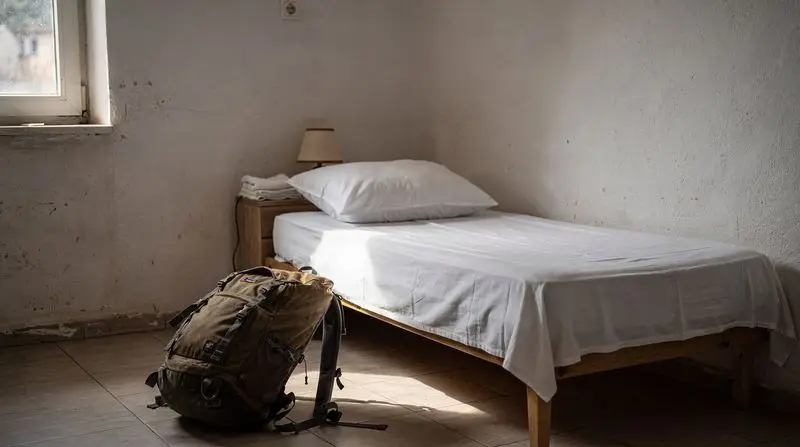
Rooms in the half-board rate are typically simple but adequate: a bed with clean linens, shared or private bathroom depending on the guesthouse, and occasionally a small terrace or balcony with mountain views. The degree of comfort has improved significantly over the past five years as guesthouses have invested in better bathrooms and mattresses in response to visitor feedback.
Theth: The Most Accessible Alpine Village
Theth is located at the northern end of the Fan i Thatë river valley, surrounded by peaks that rise above 2,500 metres. The village itself is strung along the valley bottom, with farmhouses separated by meadows, the famous blue-water Blue Eye natural pool (Syri i Kaltërt i Thethit), and the 18th-century Theth Lock Tower (Kulla e Ngujimit) — a structure used for blood feud refuge — among the main landmarks.
From Shkodra, Theth is accessible by a daily furgon that runs most mornings in season (late May through late September, approximately). The road is improved but still demanding in places, taking 2.5-3 hours through spectacular mountain scenery. The approach to Theth, as the road descends into the valley with the peaks rising on all sides, is one of the great arrival moments in Albanian travel.
Guesthouses in Theth: Approximately 20-30 family guesthouses operate in the Theth valley during the hiking season, ranging from simple rooms in family farmhouses to more developed lodge-style properties. The largest guesthouses have 15-20 beds across multiple rooms; the smallest are a single room or two in a family home.
Booking Theth guesthouses: The most reliable current approach is through the Albania Alps Facebook groups (search “Theth” or “Albanian Alps hikers”), where owners post availability and contact details each season. Several properties are also now listed on Booking.com, and a few appear on Airbnb. Direct WhatsApp booking with guesthouse owners is common and reliable once you have a contact number.
Season: The main season runs from mid-May through late September, weather permitting. Some guesthouses open as early as April if snow conditions allow; most close by October. Winter visits are possible but require serious preparation and direct confirmation that a specific guesthouse will be open.
The most popular walk in the Theth area is the summit approach to Maja Kollata (2,558 m), which begins from the village and takes 4-6 hours return for a fit hiker. The Gropa e Okoles canyon walk is another excellent half-day option. The Blue Eye spring — a cold-water pool of remarkable blue-green colour fed by underground springs — is a 45-minute walk from the main village cluster and one of the most popular short walks in the valley.
Valbona: The More Remote Alternative
The Valbona valley is accessed from Bajram Curri in the east or, more dramatically, via the Koman Lake ferry from Shkodra. This two-hour boat journey through the flooded canyon of the Drin River is one of the most extraordinary travel experiences in Albania — steep limestone walls rising hundreds of metres from the water, occasional small settlements clinging to ledges, and silence broken only by the ferry’s engine.
Valbona has fewer guesthouses than Theth but a similarly warm hospitality tradition. The valley is slightly wilder and less developed, attracting hikers who want a quieter experience than the increasingly busy Theth circuit.
Guesthouses in Valbona: A dozen or so family guesthouses operate in the main valley, concentrated near Valbona village and further up toward the Valbona Pass. Standards are comparable to Theth; the same half-board system applies at similar prices.
The signature route in this area is the Valbona to Theth crossing — a full day’s hike over the Valbona Pass (2,037 m) that is arguably the most dramatic single-day walk in the Balkans. The pass sections can hold snow until June in some years; check conditions with your guesthouse before attempting it. The descent into Theth, with the valley opening below and the village visible far down, is one of those moments in hiking that stays with you.
Getting to Valbona: The Koman Lake ferry departs from Koman (accessible by bus from Shkodra, 2.5 hours) and arrives at Fierze, from where shared taxis run up the Valbona valley. The full journey from Shkodra to Valbona takes a long day. Alternatively, from Bajram Curri (accessible from Kosovo), the drive to Valbona is 30-40 minutes.
For accommodation and logistics base before entering the Alps, see the Shkodra accommodation guide.
Koman Lake: The Gateway Journey
The Koman Lake ferry deserves special mention as an experience in its own right, not merely as transport to the mountains. The Drin River was dammed in the 1970s to create a reservoir, and the ferry that navigates this reservoir passes through one of the most dramatic landscapes in the Balkans — sheer canyon walls, forested slopes, and the occasional village accessible only by water or steep mountain path.
The ferry departs from the Koman dam early in the morning (typically around 9am, but confirm locally) and takes approximately two hours to reach Fierze. The scenery in the narrow canyon sections is extraordinary — walls that rise hundreds of metres on both sides, with the still water reflecting the stone above.
This Koman Lake and Shala River boat tour from Shkodra covers both the lake ferry experience and the Shala River canyon as a day trip — ideal for visitors who want the dramatic lake scenery without committing to the full multi-day Alps itinerary. The Shala River’s turquoise pools, visible on a short side trip from Fierze, are among the most beautiful natural features in northern Albania. Cost approximately EUR 40-60 per person.
Peaks of the Balkans: Multi-Day Circuit Guesthouses
The Peaks of the Balkans is a 192-kilometre circular trail crossing northern Albania, Kosovo, and Montenegro. The Albanian sections pass through Theth and Valbona, and the entire circuit can be completed in 10-14 days by fit hikers.
Guesthouses along the Peaks of the Balkans route have developed their own coordination systems: most now use a common registration and pre-booking arrangement, and trail operators in Shkodra can help arrange the guesthouse-to-guesthouse bookings for the entire circuit in advance. If you are hiking the full trail, booking ahead is strongly recommended, as trail popularity has grown significantly in recent years.
The half-board rates along the Peaks of the Balkans circuit are EUR 20-35 per person, consistent across the Albanian sections. Kosovo and Montenegrin sections may vary.
The Peaks of the Balkans circuit is one of the outstanding multi-day hiking routes in Europe — less known than the Via Alpina or GR routes in France, but genuinely on the same level for scenery and trail quality. The combination of Albanian, Kosovar, and Montenegrin mountain culture along the route gives it a richness that purely natural trails lack.
What to Expect from a Mountain Guesthouse Stay
Rooms: Simple, clean, and functional. Beds are typically wooden-framed with good mattresses (quality has improved significantly over recent years as guesthouses have received feedback from international visitors). Shared bathrooms are common in smaller properties; larger or more developed guesthouses have added en-suite facilities.
Bathrooms: Hot water is usually reliable in established guesthouses, heated by wood-fired boilers or solar panels. Cold water at smaller places is less common now than it was five years ago, but confirm hot water availability when booking if this matters to you.
Electricity: Available in Theth and most of Valbona via connection to the national grid, though power cuts are not unknown. Most guesthouses have charging points in common areas if not in every room.
Wi-Fi: Improving but not universal. Theth now has a few guesthouses with reliable Wi-Fi. In Valbona, connectivity is more variable. An Albanian SIM card bought in Shkodra (EUR 3-5) provides reasonable 4G coverage in valleys with line-of-sight to towers and is more reliable than guesthouse Wi-Fi in remote areas. See the Albania SIM card guide for practical information.
Language: Very few mountain guesthouse owners speak fluent English, but communication is universally warm and functional. Translation apps work well for more complex conversations. The basic transaction of arriving, eating dinner, sleeping, and leaving is manageable with minimal shared language.
Payment: Cash only at the vast majority of mountain guesthouses. EUR and Albanian Lek are both accepted; having a mix is useful. Stock up on cash in Shkodra before heading into the mountains — there are no ATMs in either valley.
The Food at Mountain Guesthouses
The meals at Albanian Alps guesthouses are one of the unexpected highlights of the mountains. This is not minimalist trail food but substantial home cooking using produce from the guesthouse gardens and surrounding landscape.
Typical dinner: Bean soup (pasul) — cooked slowly with local herbs and served with thick slices of fresh bread — is the Alps standard. Alongside this you will typically find grilled meat (lamb or beef from the family’s own animals), fresh salads with locally grown tomatoes and cucumbers, and fermented cheese with the sharp, slightly sour character of mountain dairy. The sequence is rarely rushed — dinner in a Theth guesthouse is a social occasion.
Typical breakfast: Eggs, white cheese, honey from the family’s hives or bought from neighbours, homemade jam from summer berries, bread baked that morning, and coffee. In some guesthouses, fresh-squeezed juice in season. This breakfast is significantly better than the continental breakfast of most European hotels.
Rakia: Every guesthouse has its own supply, usually from their own production. The custom is to drink a small glass before dinner, often accompanied by a piece of cheese or bread. This is cultural as much as culinary — the sharing of rakia is a hospitality gesture with deep roots in Albanian tradition. See the raki guide for more context on this ritual.
Activities and Guided Hiking
Most guesthouses can connect you with local guides for the main hiking routes. For the Valbona to Theth crossing or the Peaks of the Balkans, a local guide who knows current trail conditions is genuinely valuable — the mountain weather can change quickly and some route sections are not obviously marked.
Guide rates run EUR 50-80 per day per group, representing excellent value for the knowledge and safety margin provided.
For a first exposure to the Albanian Alps without committing to the full logistics of an independent hiking trip, this day trip from Shkodra to Theth provides transport, a guide, and an introduction to the valley — a useful reconnaissance for planning a longer stay. The tour visits the Theth waterfall, the Blue Eye spring, and the Lock Tower. Cost approximately EUR 45-65 per person.
For the full multi-day experience with organized transport and guesthouse accommodation along the classic route:
This 3-day Valbona to Theth Alps trip covers the Koman Lake ferry, Valbona valley, the mountain pass crossing to Theth, and return transport — the full experience with logistics organized, accommodation in mountain guesthouses, and guidance throughout. Cost approximately EUR 120-180 per person for three days including guesthouse half-board.
Packing and Preparation for Mountain Guesthouse Stays
The mountain guesthouses provide beds and meals; everything else is your responsibility. Practical preparation makes a significant difference to comfort:
Hiking footwear: Proper hiking boots are essential for the main trails. Trail runners are adequate for shorter valley walks but not recommended for the Valbona Pass crossing, which can be wet, rocky, and snow-patched in early season.
Layers: Mountain temperatures can drop significantly at night even in July and August. Evenings in the guesthouses can be cool, and the pass crossing begins at altitude where temperatures are lower than the valley. A light down or synthetic insulation layer is essential.
Cash: Stock up in Shkodra. EUR 200-300 per person for a 4-5 day stay covers guesthouse half-board, guide fees, and any incidentals.
Water: Tap water in the guesthouses is typically spring water from mountain sources and is safe to drink. You can refill your bottle throughout the day from the numerous springs and streams — the water quality in the Albanian Alps is excellent.
Sun protection: The mountain UV is strong, particularly at altitude and in the exposed ridge sections. Sunscreen, a hat, and sunglasses are important on crossing days.
Booking Advice Summary
- Book Theth guesthouses at least 2-3 weeks ahead for July-August; the most popular properties fill early
- Book Valbona with similar lead time, particularly for weekend nights in peak season
- For Peaks of the Balkans multi-day hiking, book the complete sequence 4-6 weeks ahead through a local operator
- Carry cash in EUR — no ATMs exist in either valley
- Confirm half-board rate includes both dinner and breakfast before arrival
- Check current road conditions for the Shkodra-Theth drive, which can be affected by rain in spring and early summer
- If you are arriving by furgon from Shkodra, confirm the departure time the evening before — schedules change and the driver sometimes leaves earlier than advertised
For the best hostels in Shkodra to use as a staging base, and for budget planning that includes both mountain and coastal accommodation, see the complete budget accommodation guide.
Comparing Theth and Valbona for First-Time Visitors
The question of which valley to prioritise is one that every Alps-bound visitor encounters. The honest answer depends on what you are seeking:
Choose Theth if: You are travelling independently without a car or guide and want the most straightforward access (the daily furgon from Shkodra eliminates the logistics of the Koman Lake ferry). Theth also has more guesthouses, more facilities (a small medical post, a few cafes), and is better established as a tourist destination. The waterfall walk, the Blue Eye spring, and the Lock Tower are all within walking distance of the village center.
Choose Valbona if: You want the more remote, less-visited experience. Valbona has fewer tourists than Theth even in peak season, the valley is slightly larger and more dramatic, and the approach via the Koman Lake ferry adds a spectacular additional component to the journey. If you are doing the full traverse (Valbona to Theth or the reverse), Valbona is typically the starting point.
Visit both if: Your itinerary allows 3-5 days in the Alps — the classic route of Valbona to Theth via the pass crossing is the peak experience, and it requires visiting both.
Getting the Most from a Short Alps Visit
For visitors with only one night in the mountains, the best approach:
Evening: Arrive in Theth by the afternoon furgon from Shkodra. Walk to the Blue Eye spring (45 minutes return) before dinner. Guesthouse dinner at 7:30pm. Evening on the terrace as darkness fills the valley.
Morning: Early walk (6:30am) toward the Gropa e Okoles before other guests are up. Return for breakfast. Descend by the return furgon (typically departing Theth around 1pm).
This pattern gives you the essential Theth experience — the valley quiet, the mountain light, the guesthouse food — without requiring the Valbona crossing logistics. It is also the right introduction for visitors considering a longer return trip.
Environmental Notes
The Albanian Alps are increasingly protected but not yet fully managed as tourist destinations. Some practical environmental practices:
Leave no trace: The mountain valleys have limited waste management infrastructure. Carry out everything you carry in on hiking days. Guesthouses dispose of their waste through local collection arrangements; do not add to their burden with your hiking litter.
Stay on marked trails: The Peaks of the Balkans and main Theth-Valbona trails are marked and established. Improvised routes across unstable mountain terrain risk both erosion and accidents.
Support guesthouse economy: The guesthouse system is the economic foundation of the mountain communities. Staying with local families, eating their food, and paying fair rates (do not bargain down an already modest half-board rate) directly supports the people who have kept these valleys inhabited.
The UNESCO designation of the beech forests in the Valbona area reflects international recognition of the ecological significance of these mountains. Approaching them with corresponding respect enhances rather than diminishes the experience.
For all the practical context around visiting northern Albania, including transport from Tirana and Shkodra, see the Albania road trip guide and the where to stay in Shkodra guide.
Theth vs Valbona Guesthouses: A Quick Comparison
| Theth | Valbona | |
|---|---|---|
| Number of guesthouses | 20-30 | About a dozen |
| Access | Daily furgon from Shkodra (2.5-3hrs) | Koman Lake ferry + minibus, or via Bajram Curri |
| Atmosphere | More developed, busier in peak season | Quieter, wilder |
| Best for | First-timers, straightforward logistics | Travelers wanting fewer crowds |
| Half-board rate | EUR 20-30/person | EUR 22-35/person |
Frequently Asked Questions About Guesthouses in the Albanian Alps
Do Theth and Valbona guesthouses take card payments?
No. Almost all mountain guesthouses in both valleys are cash-only, and there are no ATMs in either valley. Stock up on cash — a mix of euros and Albanian Lek — in Shkodra before heading into the mountains.
Can I book a guesthouse in the Albanian Alps online?
Some properties now appear on Booking.com and Airbnb, but the most reliable method remains direct contact via WhatsApp or the Albania Alps Facebook groups, where owners post current availability each season. Ask your current host to message ahead to your next guesthouse if you’re doing a multi-night circuit.