The Best Experiences in Albania
Albania is not a one-note destination. The country spans Alpine mountain passes, Ionian coastal coves, Byzantine fortress cities, ancient Greek archaeological sites, and a capital that went from the world’s most isolated city to one of the Balkans’ most interesting in the space of thirty years. The experiences available here range across this full spectrum.
This guide cuts through the noise and identifies the experiences that define a great Albanian trip — the ones that experienced Albania travellers would do again.
| Region | North (Alps), South (Riviera/UNESCO cities), Centre (Tirana) |
| Best time | May–June and September for hiking and ruins; July–August for the coast |
| Typical cost | Free (viewpoints, old towns) to around EUR 25-230 for guided experiences |
| Time needed | 10-14 days to cover most of this list without rushing |
| Booking | Advance booking recommended for the Alps package and peak-season boat tours |
1. The Theth-Valbona Hike
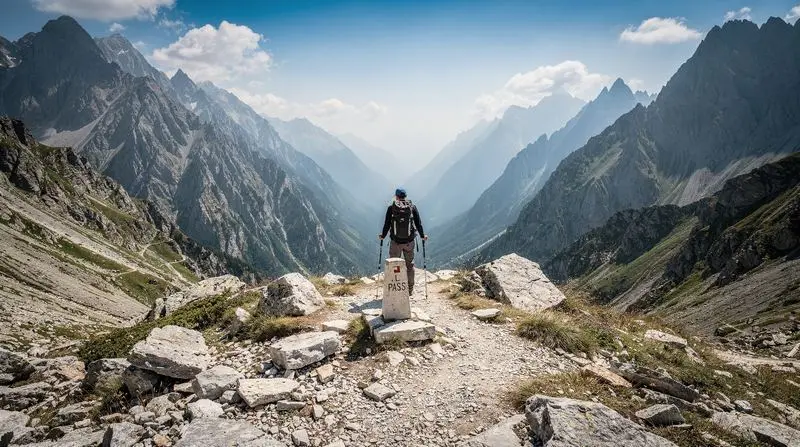
The Theth-Valbona trail is the signature experience of the Albanian Alps and, by a significant margin, the most memorable single day’s activity in the country. The trail crosses the Valbona Pass at 1,793 metres through the Accursed Mountains — a landscape of grey limestone peaks, high meadows carpeted with wildflowers in early summer, and views that extend across the entire northern Albanian massif.
The hike takes five to seven hours in good conditions, gaining about 900 metres to the pass and losing 800 metres on the descent to Valbona. It is not technically difficult — no ropes, no scrambling — but it is long and the altitude is real. The reward: a descent into the Valbona Valley with its distinctive gorge, its blue river, and its stone guesthouses run by families whose grandparents built them with the same stone they sleep under.
The experience extends beyond the walking. Getting to Theth involves the spectacular canyon road from Shkodra. Getting from Valbona to Shkodra on the return involves the Koman Lake ferry (experience 2 on this list). The combination, done over two or three days, is the finest mountain experience in the Balkans.
If you want the full Alps experience including Koman Lake ferry and both valleys in a single organised package, this 3-day Albanian Alps trip from Shkodra covers the Koman ferry, Valbona valley, Theth crossing, and return — the full circuit with all logistics handled. Cost approximately EUR 180-230 per person with accommodation and transport.
2. The Koman Lake Ferry
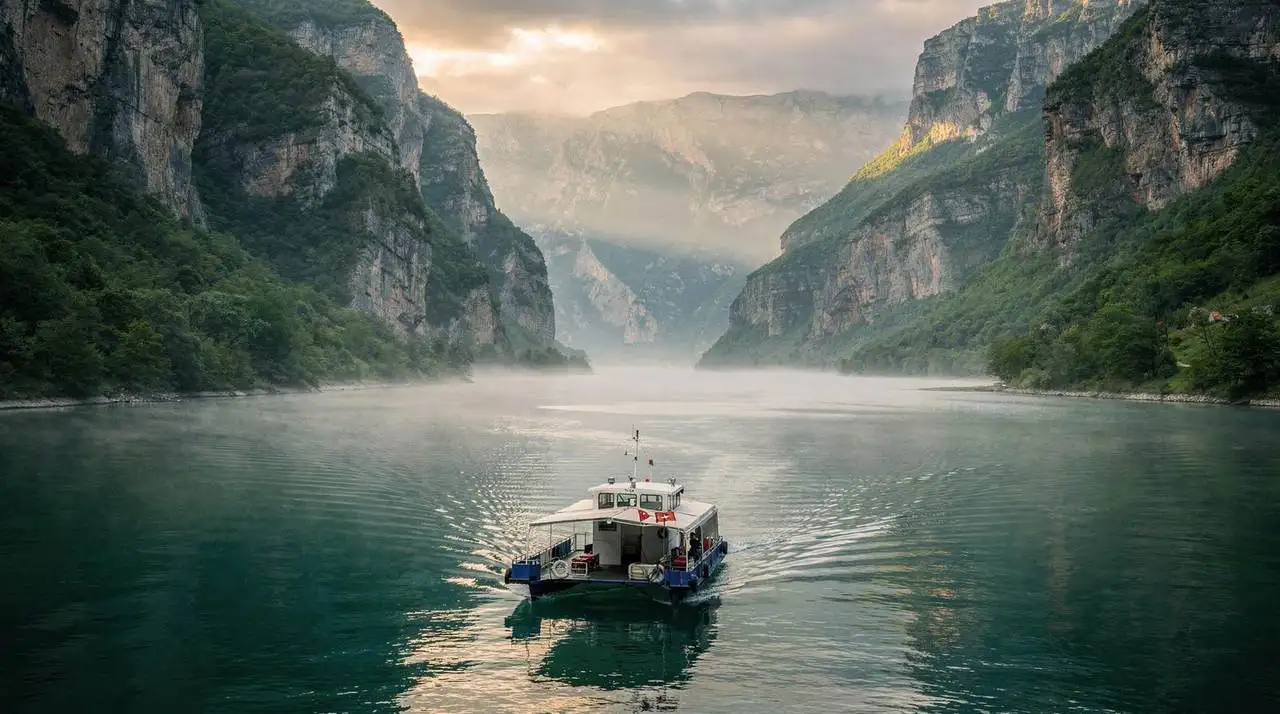
The Koman Lake ferry is a working cargo boat that runs daily through the drowned canyon of the Drin River, from the Koman dam to Fierza at the entrance to the Valbona Valley. The journey takes around two hours and passes through scenery of such consistent drama that it is difficult to put the camera down for the full crossing.
The canyon walls rise hundreds of metres on both sides, composed of grey and ochre limestone that catches the morning light in shifting angles. The water in the reservoir is a deep turquoise-green. Isolated villages with no road access appear at the water’s edge. An eagle circles overhead above the boat. The ferry itself is ancient and functional and carries motorbikes, boxes of produce, and occasional confused tourists alongside each other without ceremony.
Combined with the morning drive from Shkodra to the Koman dam along a canyon road that is dramatic in its own right, this is one of the great journeys in European travel. Many travellers describe it as the single best day of their Albania trip. See the full Koman Lake ferry guide for timetables and logistics.
The Shala River, accessible from a junction near the Koman crossing area, adds another dimension. This combined Koman Lake and Shala River boat tour from Shkodra reaches both the ferry canyon and the turquoise Shala River in a single day — an extraordinary double bill that covers two of Albania’s finest natural water features.
3. Albanian Riviera Boat Tour
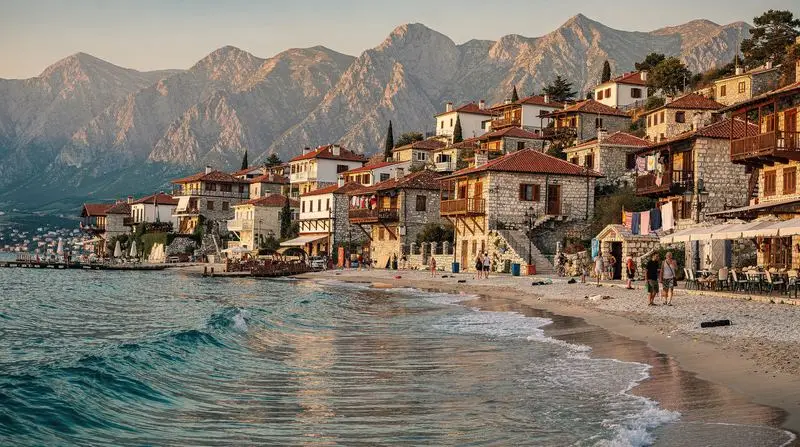
The Albanian Riviera is more rewarding from the sea than from the shore. Getting on the water reveals the true scale of the mountains — they rise 1,500 metres from the waterline along much of the coast — and reaches coves, sea caves, and swimming spots that are inaccessible by road.
A full-day boat tour from Himara typically covers the Blue Cave (a sea cave where refracted light turns the water an almost fluorescent blue), Gjipe beach (the canyon cove accessible only by foot or boat), Porto Palermo bay and castle, and several swimming stops at coves of exceptional clarity. The Ionian sea temperature in peak season reaches 26-28°C. This Albanian Riviera boat tour from Himara is the most popular coastal tour, covering the key highlights with a small group for EUR 25-40 per person. Book 2-3 days ahead in peak season.
The day on the water also provides the reverse view of the coastal drive: looking back at the mountains from the sea, the vertical scale of the Albanian coast becomes fully apparent in a way that the landward perspective cannot convey.
4. Berat at Golden Hour
Berat is Albania’s most photographed city, and the photograph that everyone takes is the same: the white Ottoman houses of Mangalem and Gorica, stacked up the hillsides on either side of the Osum River gorge, their extraordinary multi-windowed facades glowing in the late afternoon or early morning light.
The experience of being in Berat at golden hour is better than any photograph of it. The city, which has been continuously inhabited since the 4th century BC, has a weight and atmosphere at dusk that daylight hours dilute. Walking the cobbled lanes of Mangalem in the hour before sunset, when the light is orange and angled and the swifts are screaming overhead, and the guesthouse terraces are filling up with the evening’s first wine, is one of the finer half-hours available in southern Europe.
Stay at least two nights in Berat. The castle neighbourhood of Kalaja above the city — an inhabited castle with Byzantine churches, a fine museum of icons, and views across the gorge — deserves its own morning. See where to stay in Berat for the best guesthouse options in the Mangalem quarter.
A cooking class in Berat extends the cultural immersion beyond sightseeing. Berat cooking classes run by local families teach byrek, tave kosi, and traditional Albanian desserts in a domestic setting — the food culture and the architectural context combining into a single experience.
5. Butrint: Ancient City, Natural Beauty
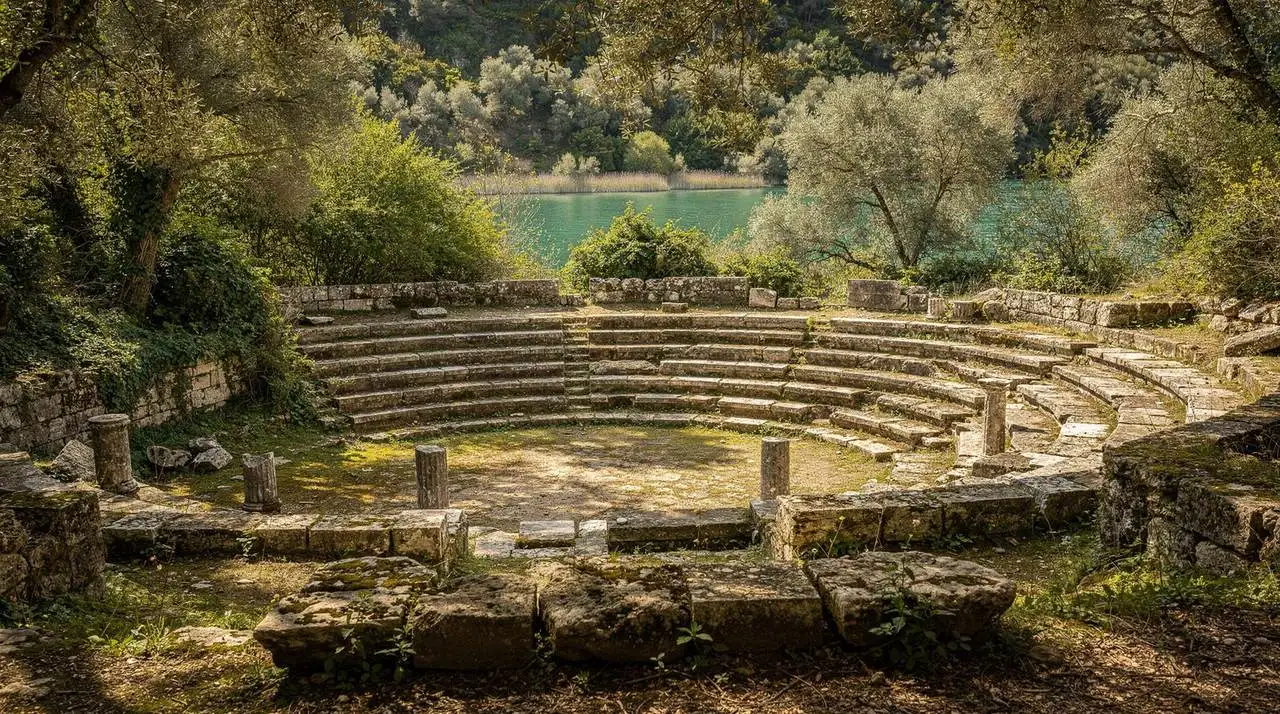
Butrint national park near Saranda is one of the most extraordinary archaeological sites in the Mediterranean and one of the most undervisited. The ancient city — Illyrian, Greek, Roman, Byzantine, Venetian, and Ottoman layers within a single site — sits on a peninsula in a lagoon of exceptional ecological sensitivity, surrounded by reed beds, saltwater channels, and woodland.
The ruins include a Greek theatre, a Roman bath complex with floor mosaics intact, a baptistery with one of the largest early Christian floor mosaics in existence, a Venetian castle, and layers of wall that compress millennia of history into a square kilometre of ground. The scale is manageable — Butrint can be done in two to three hours — but the depth is inexhaustible for anyone who wants to linger over the history.
The setting doubles the experience. The lagoon around the city is a wildlife sanctuary; egrets, herons, and kingfishers are visible from the path; the reed-bordered channels reflect the morning sky in a way that combines archaeology with natural history in a pairing that UNESCO recognised early. Entry costs approximately EUR 10 per person.
6. Tirana Food Tour
Tirana has one of the Balkans’ most underrated food scenes, and exploring it on foot with a guide who knows the history of each dish and the best place to find it is one of the great ways to understand a city. A food tour of Tirana typically covers the old bazaar area, the morning market, the Blloku neighbourhood, and several specific restaurants and producers.
This Tirana city food tour with meals included covers the essential dishes — byrek, tave kosi, speca me gjize (peppers with white cheese), and the excellent local desserts — in the company of a small group with a knowledgeable local guide. Cost approximately EUR 35-50 per person including all tastings and meals.
Beyond the specific foods, a food tour in Tirana reveals the city’s ethnic and historical complexity: the Ottoman-era dishes that have been in the city for 500 years, the Italian-influenced cooking that arrived via television from across the Adriatic in the 1970s and 80s, and the contemporary Albanian restaurant movement that is now interpreting the country’s culinary heritage in new ways.
7. The Blue Eye Spring
The Blue Eye (Syri i Kalter) near Saranda is a natural spring where cold water wells up from underground at such a rate and from such depth that the centre of the pool is a dark, impenetrable blue surrounded by rings of turquoise and green. The colour is so intense and so strange that first-time visitors spend several minutes simply trying to understand what they are looking at.
The spring sits in a natural park accessible by a short walk through the forest. The trail is lined with plane trees that form a canopy over the river channel, and the water in the channel running from the spring is cold, clear, and moving quickly — a striking contrast to the apparently still surface of the spring pool itself.
In spring and early summer when snowmelt is keeping the flow strong, the Blue Eye is at its most powerful. In late summer, the flow reduces and the colour changes character — still beautiful, but different. Entry to the national park costs approximately EUR 1-2 per person.
8. Gjirokastra Old Town
Gjirokastra requires time and presence. The UNESCO-listed city of grey stone — built on a ridge above the Drinos Valley, its castle visible from every direction — is one of the finest examples of Ottoman urban architecture in existence, and it functions as a living city rather than a preserved museum.
The experience of exploring Gjirokastra is best done over an evening and the following morning: arriving in late afternoon when the light is on the castle, eating in the old bazaar as the local residents are doing the same, walking up to the castle at dusk for the view over the valley, and then having the old town almost to yourself in the early morning before the tour groups arrive.
The National Folklore Museum in the Skenduli house — a 17th-century Ottoman mansion within the old town — gives a sense of how these extraordinary buildings were actually lived in. See where to stay in Gjirokastra for guesthouses in the old town that put you within the historic environment rather than adjacent to it.
9. Ksamil Islands at Dawn
Ksamil is one of the most photographed places in Albania, and the photograph that travellers aspire to — empty turquoise water, small forested islands, nobody else in the frame — requires arriving before 8am.
Coming to the beach at dawn in Ksamil in July or August means arriving before the day-trippers from Saranda, before the sunbed operators have set up, before the water taxis are running. The lagoon in the first light of morning, with the islands catching the rising sun and the water shifting from purple to turquoise, is as beautiful as its reputation suggests. By 10am, the crowds arrive.
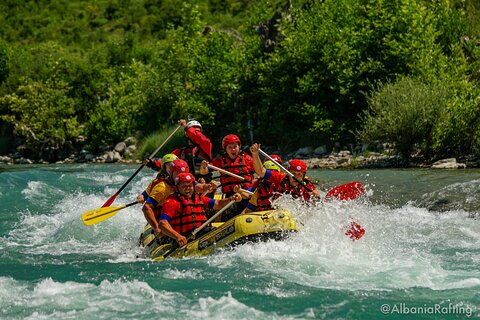
The water taxi to the first island (operating from around 9am in peak season, EUR 5-7 return per person) reaches an island beach that is consistently less crowded than the main shore. The kayaking and SUP tour around the Ksamil islands is an excellent morning activity that gives access to the best swimming spots before the motorised boats arrive.
10. Benja Thermal Baths at Permet
The Benja thermal baths near Permet are among the most distinctive natural experiences in Albania — hot springs at 29-32°C bubbling up from the Lengarica riverbank within a dramatic limestone gorge, with a natural arch spanning the canyon above. In winter or spring when the air is cool, soaking in these pools with the canyon walls around you and the river running below is one of the most physically pleasurable experiences available in the country.
The thermal baths are best visited as part of a Permet day or overnight stop. The town itself — producing some of Albania’s finest honey and raki — is worth an evening of exploration. The Permet off-beaten-path experience pairs naturally with a thermal baths visit: the Vjosa river rafting, the Kelcyra Gorge drive, and the Byzantine castle above the thermal springs create a full day of varied southern Albanian experience.
11. Tirana Communist History Tour
Tirana cannot be understood without understanding the communist period that shaped it, and the city’s extraordinary processing of that history through its museums is one of Albania’s unique cultural offerings. Bunk’Art 1 and Bunk’Art 2 — the pair of converted nuclear shelters — are among the most original museums in Europe. The House of Leaves, documenting the Sigurimi secret police surveillance apparatus, is genuinely disturbing and very well presented.
The communist architecture of the city — the massive government buildings, the broad boulevards, the mosaic facades — is visible throughout the centre and makes more sense with historical context. A guided tour ties these threads together.
The Tirana communist Albania tour including Bunk’Art provides the historical framework that makes the rest of the city legible. Understanding what Albania was — the most isolated country in Cold War Europe — transforms your reading of everything you subsequently see.
12. Drinking Raki With a Guesthouse Owner
This is the experience that does not appear on any official list and that most returning Albania visitors mention unprompted. The moment at a mountain guesthouse or a southern farm-stay when the owner sits down with a bottle of home-distilled raki and begins to talk — about the communist era, about their family’s history, about what Albania was and is becoming, about the grapes or plums or mulberries from which the raki came — is the specific experience that Albania offers and that no amount of organised tourism can replicate.
The raki is the vehicle. The conversation is the experience. Pack curiosity.
13. A Southern Wine Tasting in the Berat or Permet Corridor
Albania’s wine industry is small but genuinely interesting, and a tasting at a family producer in the Berat valley or around Permet is an experience that most itineraries skip entirely because it requires knowing to look for it. The Shesh i Bardhe (white) and Shesh i Zi / Kallmet (red) varieties are native to the country, and small estates near Berat pour wines that never leave Albania.
Combining a wine tasting with the Berat cooking classes makes for a full afternoon that pairs the region’s food and drink traditions. The Albanian wine guide has background on producers and what to ask for.
14. A Long Raki-Fuelled Dinner in Any Traditional Restaurant
Beyond the guesthouse-owner moment described above, a formal version of the same experience — a long dinner at a traditional restaurant with multiple courses, a carafe of house raki, and no rush toward the bill — is one of the most repeatable great experiences in the country. Restaurants in Tirana, Berat, and Gjirokastra each do this in a slightly different register, but the underlying rhythm — starters, slow-cooked mains, unhurried conversation — is consistent everywhere. The Albanian food guide explains what to expect on the menu.
Matching Experiences to How Much Time You Have
Not every visitor has two weeks. This table matches the experiences above to realistic time budgets.
| Time available | Best experiences to prioritise |
|---|---|
| Weekend (2-3 days) | Tirana food tour, Tirana communist history tour, one Riviera or Alps day trip |
| One week | North OR south: Alps (Koman ferry + Theth-Valbona) or Riviera + Berat + Gjirokastra |
| 10 days | Add Butrint, Blue Eye, Ksamil, and Benja thermal baths to the one-week core |
| Two weeks | The full list — north and south, with two nights each in Berat and Gjirokastra |
Planning the Best Albania Trip
Combining as many of these experiences as possible requires planning that balances geography and timing. A two-week itinerary can realistically include Tirana, the Albanian Alps (Koman ferry and Theth-Valbona hike), Berat, Gjirokastra, and the Riviera. A one-week trip should prioritise either the north (Alps and Tirana) or the south (Riviera, Berat, Gjirokastra) with limited crossover.
See things to know before visiting Albania and the Albania road trip guide to plan a trip that includes as many of these experiences as possible. The 10-day Albania itinerary provides a tested framework for fitting the major highlights into a single trip. For a broader overview of the country, the Albania worth visiting guide makes the full case for why this country is one of Europe’s most rewarding destinations right now.
Frequently asked questions about Best Experiences in Albania
Which single experience should I not skip if I only have time for one?
For most first-time visitors, the Koman Lake ferry combined with the Theth-Valbona hike is the experience that people talk about years later. If mountains are not the priority, Berat at golden hour is the closest thing Albania has to a can’t-miss cultural moment.
Can I do both the north (Alps) and the south (Riviera) in one trip?
Yes, but it requires at least 10-12 days to avoid a rushed feel, since the two regions are separated by a full day of driving or furgon travel via Tirana. A one-week trip is better spent committing to one region rather than crossing the country twice.
Do I need a rental car to reach most of these experiences?
Not strictly. Furgons (shared minivans) connect Tirana, Shkodra, Berat, Gjirokastra, Saranda, and the Riviera towns reliably and cheaply, and organised tours cover the Koman ferry, the Alps package, and the Riviera boat tours without a car. A rental car adds flexibility for Llogara Pass, Porto Palermo, and the smaller Riviera coves, but it is not a requirement for completing this list.