Is Albania Worth Visiting? The Honest Answer
The question itself is slightly revealing. Nobody asks whether France is worth visiting, or Italy, or Greece. The question arises because Albania occupies an unusual position in the European travel imagination: a country that most people know almost nothing about, formed by impressions that are typically outdated (1990s chaos, 2000s poverty, vague associations with organised crime) and rarely updated with any current reality.
The honest answer is: yes, Albania is worth visiting. For most travellers looking at the broader Mediterranean and Balkans region, it is among the best choices available. Here is the case in full, followed by the equally honest qualifications.
| Best for | Beaches, UNESCO cities, mountains, budget value |
| Cost | around EUR 30-50/day budget, EUR 50-80 mid-range |
| Best time | May-June or September for weather and value |
| Main caveat | Infrastructure still improving outside main hubs |
| First stop | Tirana, then Riviera or Alps depending on priorities |
The Case For Albania
The Beaches Are World-Class
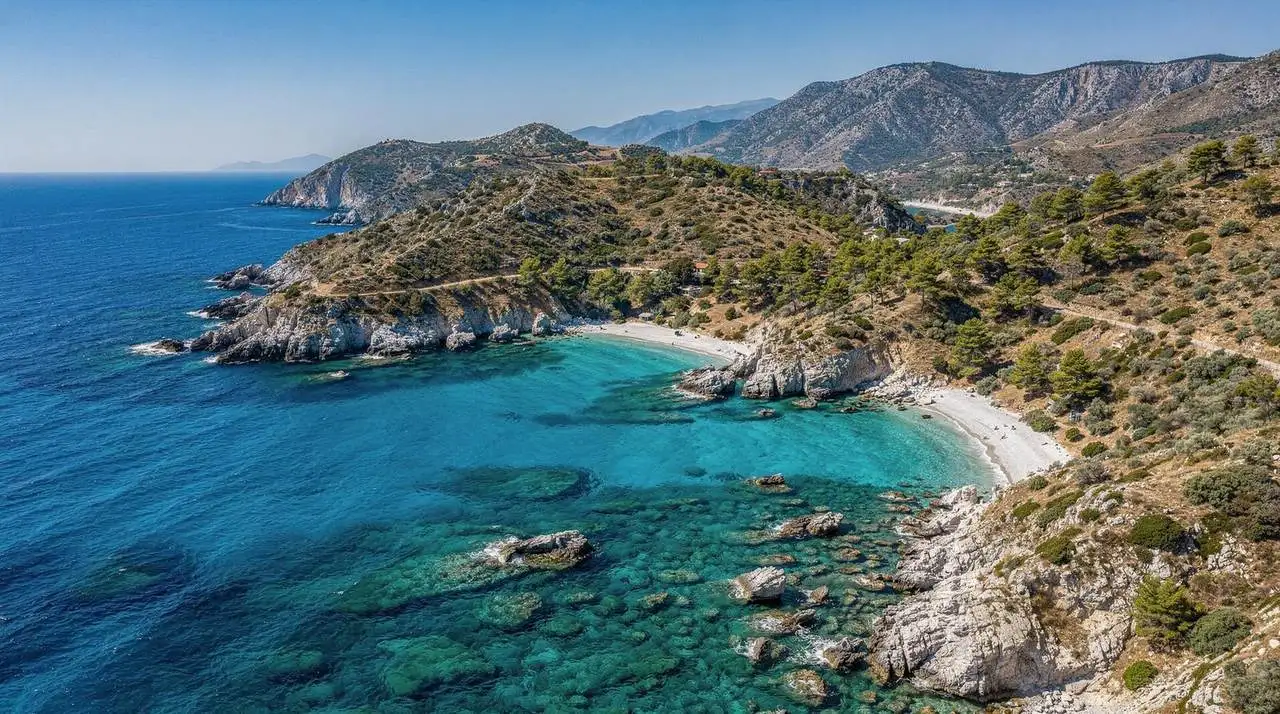
The Albanian Riviera runs for around 110 kilometres along the Ionian Sea — the same body of water that laps the shores of Corfu, Kefalonia, and southern Greece. The water clarity is exceptional, the colour ranging from deep blue offshore to a turquoise-green in the shallow bays that genuinely looks computer-generated. The beaches range from wide sandy arcs to small pebble coves tucked between limestone headlands.
Places like Ksamil, with its offshore islands set in a turquoise lagoon, and Gjipe, the dramatic canyon cove accessible only by foot or boat, are not “good for the Balkans” — they are good by any Mediterranean standard. The comparison is to the Ionian Greek islands at one-half to one-third the price.
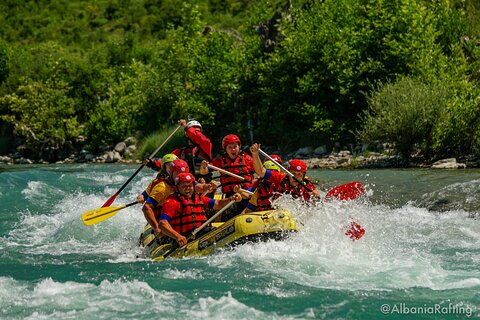
Getting on the water reveals beaches and coves that road travellers never find. This Albanian Riviera boat tour from Himara reaches the Blue Cave, Gjipe Canyon, and Porto Palermo by sea — the most beautiful way to experience the coast’s most dramatic section. Book ahead in July and August as these fill quickly; prices run EUR 25-40 per person for a half-day.
The History Runs Deep
Albania’s historical layers are more complex and more interesting than most visitors expect. The Butrint archaeological site near Saranda contains Illyrian, Greek, Roman, Byzantine, Venetian, and Ottoman remains within a UNESCO-listed complex of extraordinary natural beauty. It is as significant archaeologically as many of the better-known Greek sites, and significantly less crowded.
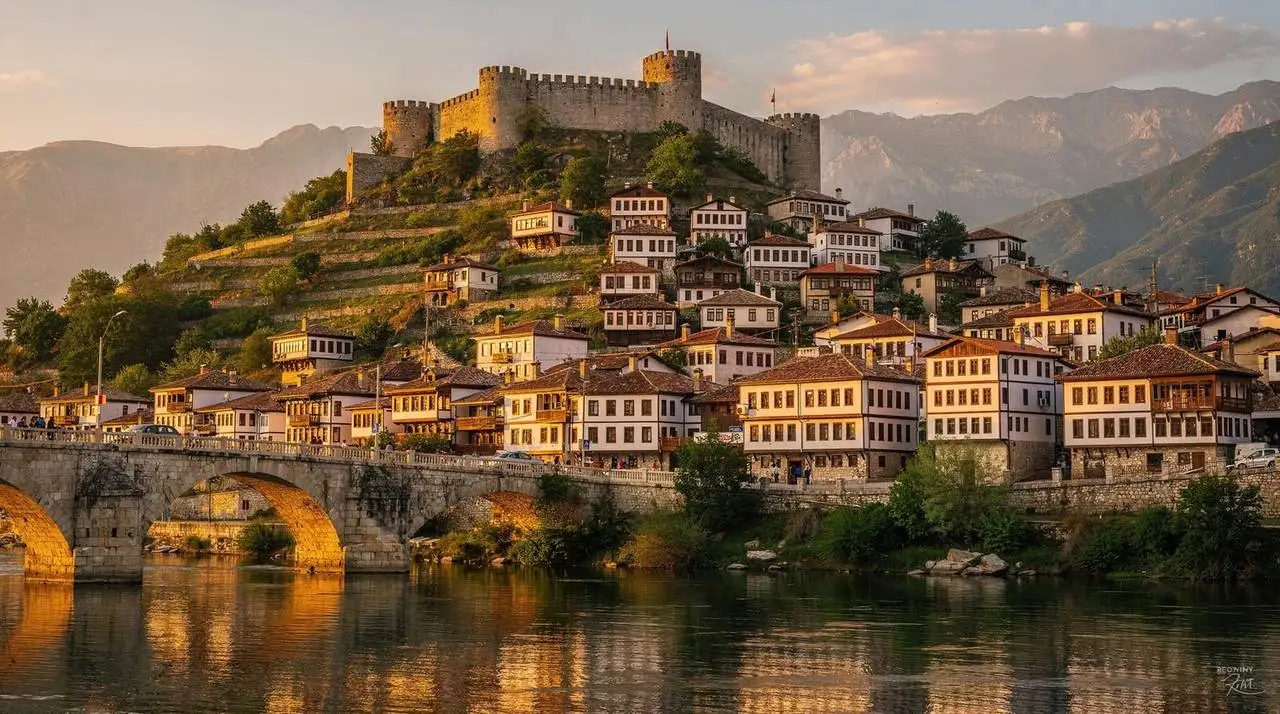
Berat — the UNESCO-listed city of a thousand windows — is one of the most beautiful Ottoman cities in existence. Gjirokastra — the grey-stone mountain fortress city — is equally remarkable and equally deserving of its UNESCO status. Neither city is overwhelmed by tourism; both can be explored at leisure in a way that Dubrovnik or Santorini cannot.
The communist-era history adds another layer of fascination. Albania under Enver Hoxha was the most isolated country in Europe — more isolated than North Korea by some measures — and the physical remnants of that isolation are everywhere: 175,000 concrete bunkers distributed across the country, the Bunk’Art museum systems in Tirana’s former nuclear shelters, the still-inhabited tower houses of Gjirokastra built under conditions of extraordinary constraint. This history is recent enough to feel immediate and has been processed in ways that are intelligent and moving.
Start with a guided Tirana walking tour to understand the capital’s layers. This Tirana walking tour covers Skanderbeg Square, the Blloku neighbourhood, the communist-era architecture, and the street art movement that has transformed the city’s public spaces. It costs around EUR 15-20 per person and runs approximately 2-3 hours — an ideal orientation before heading south.
The Mountains Are Extraordinary
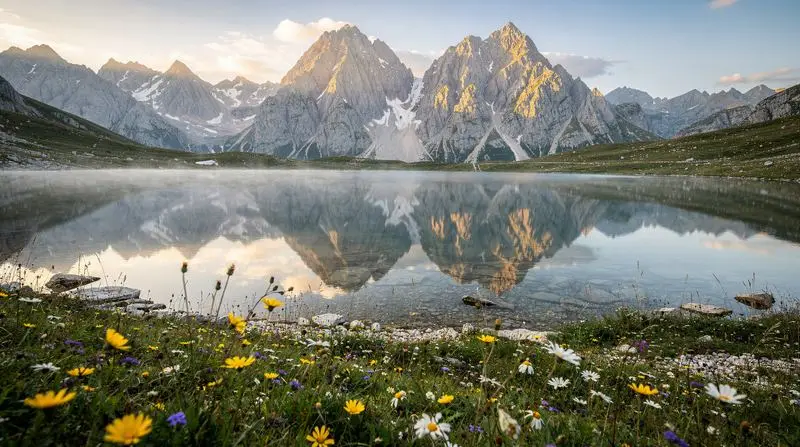
The Albanian Alps — accessible from Shkodra via the Koman Lake ferry — contain some of the most dramatic mountain scenery in Europe. The massif known as the Accursed Mountains straddles the border with Kosovo and Montenegro and has been described, without exaggeration, as the Alps before tourism. Stone-towered villages in deep gorges, meadows of summer wildflowers at altitude, traditional guesthouses where dinner is cooked over wood fires — it is a type of mountain experience that has largely disappeared from the western Alps.
The Theth-Valbona hike is the signature route: a full-day crossing of the Valbona Pass at 1,793 metres through scenery of genuine grandeur. Even travellers who do not consider themselves hikers regularly describe it as one of the highlights of their European travels.
Guesthouses in the Albanian Alps offer half-board (dinner and breakfast included) for EUR 22-35 per person per night — some of the best value mountain accommodation in Europe, with food cooked from the guesthouse’s own garden and livestock.
The Food Deserves More Attention
Albanian cuisine sits at the intersection of Mediterranean, Ottoman, and Balkan traditions and the result is more interesting than most visitors expect. The slow-cooked meat dishes — particularly tave kosi (lamb baked in yoghurt) and the various gjelle preparations braised under a sac — have a depth of flavour absent from faster-cooked Mediterranean cuisines. The seafood is fresh, abundant, and priced in a way that makes it accessible as an everyday meal rather than a special occasion splurge.
The local dairy — white cheeses, thick yoghurt, fresh cream — is outstanding and forms the backbone of the breakfast culture. The olive oil around Vlora and Berat is some of the finest produced in Europe. And the wine scene, while small, has genuinely interesting indigenous varieties that sommeliers are beginning to pay attention to.
Food tours in Tirana and cooking classes in Berat and Gjirokastra give the deepest immersion in Albanian food culture. A half-day cooking class in Berat, making byrek, tave kosi, and traditional desserts, costs EUR 30-45 per person and includes the meal you have cooked.
The Hospitality is Genuine
This is the hardest thing to quantify and the thing that returning visitors mention most. Albania has a deep cultural tradition of hospitality — rooted in the ancient Kanun customary law and the concept of besa — that manifests in contemporary travel as a warmth that most visitors find striking and often moving.
The guesthouse owner who gives you a tour of his olive grove before breakfast. The family at a mountain picnic who insist you join them and press food on you for an hour. The old man in Gjirokastra’s bazaar who stops what he is doing to walk you to the exact house you are looking for. These are not performative hospitality for tourist dollars; they are expressions of a cultural code that predates tourism by centuries.
The Prices Are Genuinely Low
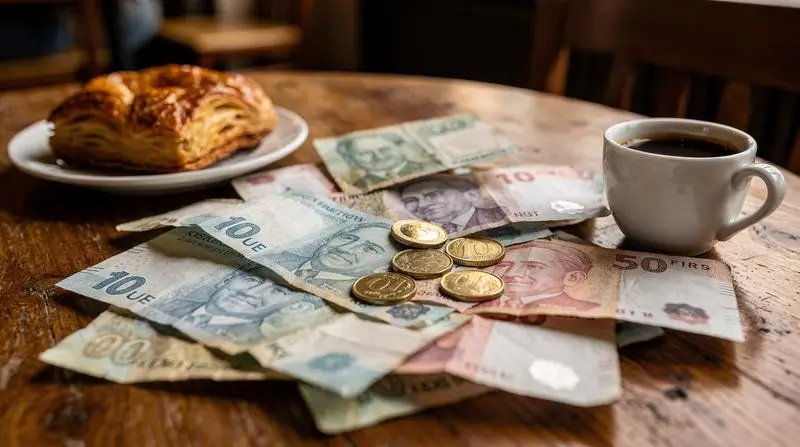
Albania is one of the cheapest countries in Europe. A good guesthouse double room in peak season costs EUR 50-90. A full dinner for two at a proper restaurant, with wine, costs EUR 25-40. A beach sunbed costs EUR 5-8. The furgon from Tirana to Saranda costs EUR 10.
These prices make experiences accessible that would be aspirational in comparable Mediterranean destinations. Staying an extra week because the daily costs are so manageable. Eating at the best restaurants without budgetary anxiety. Taking the boat trip rather than doing the maths.
See Albania travel budget for current detailed figures by travel style and season.
The Honest Qualifications
No destination guide is complete without the caveats, and Albania has them.
Infrastructure is inconsistent. Mountain roads can be rough. Not every booking platform covers every property. Card payment does not work everywhere. If consistent reliability in all logistics is important to you, Albania’s imperfections will occasionally frustrate.
Beaches in peak summer are not empty. July and August on the Riviera are busy. Not crowded by Greek island or Croatian standards — genuinely and significantly less crowded — but not the deserted paradise that some old guides still describe.
Some development is happening quickly. The Riviera coast in particular is changing fast, with new construction that is sometimes sympathetic to the landscape and sometimes not. Visiting soon, before the most dramatic development of the next decade occurs, is advice given with genuine feeling.
English is not universal. Outside tourist areas and urban environments, navigating in English alone can be limiting. A few words of Albanian, or Italian in the south, helps considerably.
Cash is essential. While card payment is increasingly available in cities and tourist areas, smaller villages and many guesthouses still operate on cash only. Always carry Albanian lek. ATMs are available in all towns.
What to Do to Make the Most of Albania
A first visit to Albania benefits from a structure that balances the different dimensions of the country. A ten-day itinerary that combines two nights in Tirana, two or three nights in the Albanian Alps, two nights in Berat or Gjirokastra, and three nights on the Riviera covers the most distinct landscapes and experiences.
The 10-day Albania itinerary provides a tested framework for exactly this. The Albania group tours guide covers the option of a guided tour for first-time visitors who want expert local context. This 7-day guided tour of all Albania covers the Alps, UNESCO cities, and Riviera in a single package from EUR 600 per person — an excellent option for travellers who want all logistics handled.
Who Will Love Albania
- Travellers who want Mediterranean quality at Balkan prices
- History enthusiasts drawn to layers that range from ancient Greek to communist-era
- Hikers seeking genuinely remote mountain landscapes
- Beach travellers tired of paying top prices for crowded shores
- People who value authentic encounters over polished tourist experiences
- Adventurous travellers looking for a country still in the process of being discovered
- Couples: Albania is one of the most romantic destinations in Europe at this price point. See where to stay for couples for the best accommodation options.
Who Might Struggle
- Travellers who need everything to work perfectly every time
- Those with very limited time who cannot slow down and explore
- Anyone who expects the specific conveniences of Western European tourism everywhere they go
The Bottom Line
Albania is worth visiting. For a significant number of travellers — particularly those who have already seen Greece, Croatia, and Italy and are looking for what comes next — it is not just worth visiting but is one of the best available choices in European travel. The combination of coast, history, mountains, food, and price is almost uniquely compelling.
The reservation is not about the destination but the approach. Albania rewards travellers who arrive prepared, curious, and flexible. It occasionally punishes those who expect everything to work exactly as planned. If you can offer the former, it will return something exceptional.
For planning, the best time to visit Albania covers the seasonal picture in detail. For a full comparison with neighbouring destinations, see the Albania vs Greece comparison and the Albania vs Croatia comparison.
Worth Visiting For: A Region-by-Region Breakdown
| Region | Best for | Time needed |
|---|---|---|
| Tirana | City energy, museums, nightlife, food | 2-3 nights |
| Albanian Riviera | Beaches, boat trips, coastal villages | 3-5 nights |
| Berat and Gjirokastra | UNESCO Ottoman architecture, atmosphere | 2-3 nights |
| Albanian Alps (Theth/Valbona) | Hiking, mountain guesthouses, scenery | 3-4 nights |
| Saranda and the South | Butrint, Blue Eye, Corfu ferry access | 2-3 nights |
A first visit does not need to cover every region to be worthwhile — even a focused week on just two or three of these delivers a genuinely rewarding trip, and the Albania travel tips guide helps decide which combination suits your priorities.
Common Doubts, Addressed Honestly
“Isn’t it basically the same as Montenegro or Croatia, just cheaper?” Not quite — Albania has its own distinct character shaped by the communist-era history, the mountain culture, and a hospitality tradition (besa) that feels different from its neighbours’ more commercialized tourist economies. See the Albania vs Montenegro comparison for the specific differences rather than assuming Albania is simply a discount version of its neighbours.
“Is it actually safe, given the reputation?” Yes, consistently — the Albania safety guide covers this in detail, and the honest data shows Albania as one of Europe’s safer countries for tourists on personal safety metrics, with road conditions being the more realistic concern than crime.
“Will I struggle without speaking Albanian?” Not in tourist areas. English is increasingly common among younger Albanians, particularly in Tirana and the Riviera, and Italian works well with older generations in the south. The Albania language basics guide covers the handful of useful phrases.
Frequently Asked Questions About Whether Albania Is Worth Visiting
Is Albania worth visiting for a first-time Balkans traveller?
Yes, and for many travellers it is one of the strongest choices in the region — the combination of coastline, UNESCO cities, mountains, food, and low prices is hard to match elsewhere in the Balkans or wider Mediterranean at this price point.
How many days do you need in Albania to feel it was worth the trip?
A minimum of 5-7 days lets you cover at least two distinct regions (typically Tirana plus either the Riviera or the Alps) without feeling rushed. Ten to fourteen days allows a fuller circuit covering the mountains, UNESCO cities, and coast in one trip.