Osum Canyon: Albania’s Grand Canyon
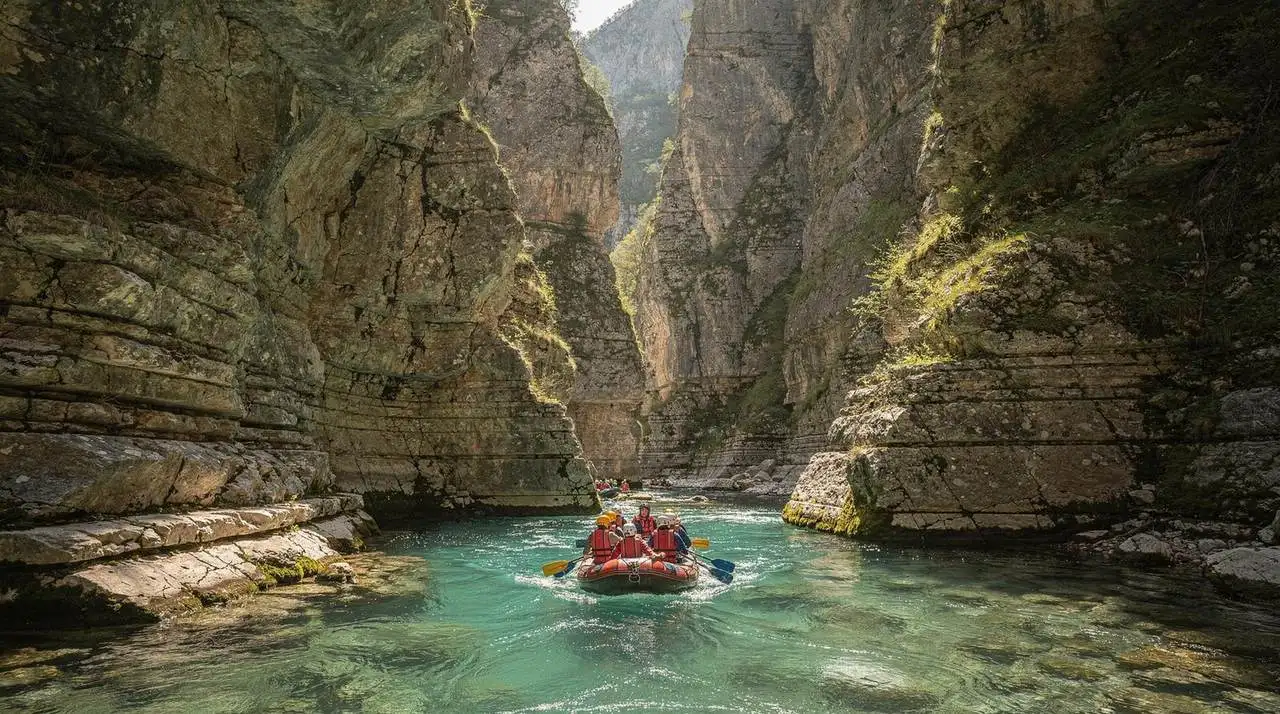
Carved over millions of years by the Osum River through a plateau of soft limestone south of Berat, the Osum Canyon is one of the most dramatic natural features in the Balkans. For a stretch of roughly 26 kilometres, the river has cut a gorge up to 80 metres deep and in places no more than a few metres wide — a slot canyon system of vertical walls, overhanging rock faces, natural arches, and chamber-like pools that qualifies for the comparison to the American Southwest that Albanian tourism materials frequently make.
The “Grand Canyon of Albania” label is marketing hyperbole in terms of scale — the Osum is not the Colorado — but in terms of the intensity and beauty of the canyon environment, the comparison captures something real. This is a place where the river has done something remarkable with the rock, creating a landscape unlike anything else in the country, and where the human activity best suited to it — rafting, canyoning, river tubing — provides some of the most exhilarating adventure experiences available in Albania.
The canyon begins near the town of Corovoda and runs north, with the best accessible section for water sports roughly between Corovoda and the point where the Bogove waterfall drops into the gorge from a hanging valley above. Most organised excursions use Berat or Corovoda as a base. The Osum Canyon pairs naturally with Berat for a two-day visit combining cultural history with natural adventure, and can also be combined with Permet and the Vjosa River for a broader southern Albania active circuit.
| Where | Near Corovoda, ~40km south of Berat |
| Cost | Around EUR 25-50/person for guided rafting or canyoning |
| Time needed | Half day to full day |
| Getting there | Organised tour from Berat, or self-drive to Corovoda |
| Best time | Late May-June for water levels; July-Sept for warmth |
The Geology
The Osum Canyon sits within the Mirdita-Korabi geological zone, an area of carbonate rocks — primarily limestone and dolomite — laid down in the Mesozoic era and subsequently deformed by the tectonic forces that built the Dinaric Alps. The Osum River has exploited zones of structural weakness in this limestone, cutting rapidly downward through dissolution and mechanical erosion to create the present gorge system.
The most distinctive features of the canyon walls — the honeycomb weathering patterns, the horizontal dissolution notches, the undercut bases — are all products of the differential behaviour of limestone under combined chemical and mechanical erosion. Where harder beds interrupt the softer limestone, resistant ledges form natural terraces and overhangs. Where the rock is uniformly soft, the walls are smooth and near-vertical.
Several cave systems are visible in the canyon walls, inaccessible from the canyon floor but evidence of the same karstification process that continues to shape the landscape. Springs emerge at various points from the canyon walls, adding their flow to the main river.
Rafting the Osum
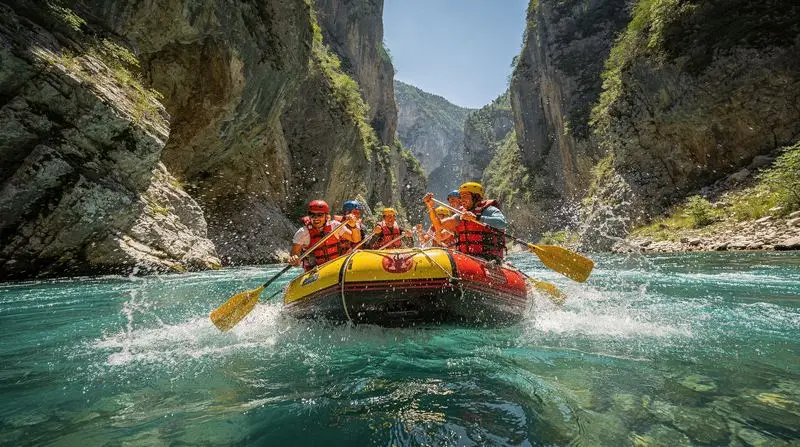
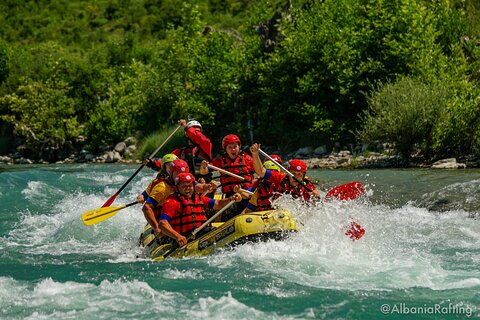
The Osum River’s canyon section provides the best whitewater rafting in central Albania. The rapids vary from Class II (straightforward, suitable for families with children from about eight years old) in summer’s lower flows to Class III-IV in spring when snowmelt from the Gramoz and Tomorri massifs swells the river significantly.
The standard rafting excursion runs from a put-in point above the canyon through the main gorge section, covering approximately 15 kilometres over four to five hours including stops for swimming, cliff jumps, and canyon exploration. The experience combines the whitewater element with the extraordinary visual environment of the canyon — paddling through 70-metre walls with light filtering from a narrow strip of sky above is something that stays with most participants for a long time.
Practical details: Most operators provide all equipment including wetsuits, helmets, paddles, and life jackets. Wear old shoes (trainers or sandals with straps) and bring a change of dry clothes for the return journey. The river runs cold from spring snowmelt — wetsuits are recommended even in June. Budget EUR 30-50 per person for a half-day guided rafting excursion including equipment.
From Berat, the most convenient departure point for organised excursions, this Osum Canyon and Bogove Waterfall tour from Berat covers both the canyon rafting and the famous waterfall in a single full-day excursion — the most efficient way to experience the Osum’s highlights with transport and equipment included.
From Corovoda, where the canyon is entered more directly, this Osum Canyon rafting and river tubing tour from Corovoda offers a more locally organised approach with flexible start times and combination river activities.
For a more active experience combining rafting, kayaking, and river tubing in a single day, this Osum Canyon rafting, kayak and river tubing combination from Berat is the most comprehensive water activity option on the river — excellent for those who want to try multiple water sports in the canyon environment.
The Bogove Waterfall
The Bogove waterfall is the visual centrepiece of the Osum Canyon system. A stream from the upland plateau above the gorge cascades over the canyon rim in a single drop of approximately 25 metres, falling directly into the river at the canyon floor. The waterfall is accessible both from above — via a path from the upland village of Bogove — and from the canyon floor as part of a rafting or river excursion.
From above, the approach through the village of Bogove and across the plateau provides the dramatic experience of arriving at an invisible canyon edge and suddenly looking down 70 metres to where the river runs far below. The descent path to the canyon floor is steep and rough; most visitors see the waterfall from the river rather than from above.
From the river, the Bogove waterfall appears around a bend as a white curtain against the vertical grey canyon wall, with a pool at its base suitable for swimming. Most rafting groups stop here for a swim and photographs. The spray from the falls cools the immediate area considerably even on the hottest summer days.
The combination of the Bogove waterfall with the canyon and river makes the Osum system one of the most scenically complete adventure landscapes in the country. The falls are at their most impressive in spring and early summer when snowmelt maximises the flow — by August the curtain is thinner but still beautiful.
Canyoning in the Osum
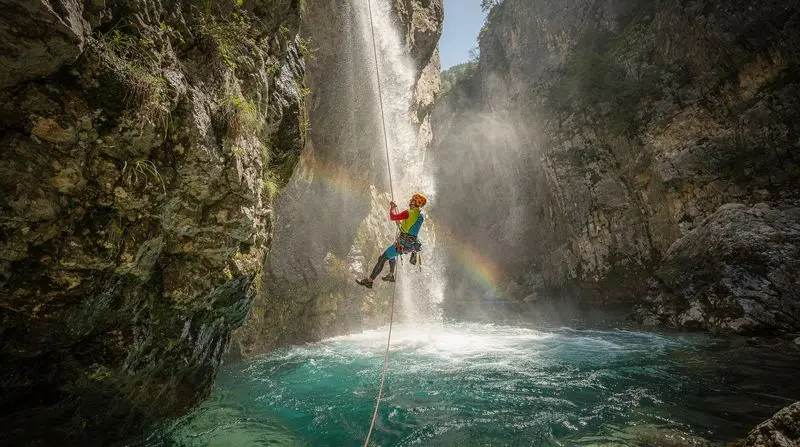
Canyoning — the sport of descending canyon systems on foot, in water, and by abseiling — is particularly well-suited to the Osum, which has several tributary gorges and accessible sections of the main canyon where technical descents are possible. The activity is covered in detail in the canyoning in Albania guide.
The technical requirements vary by route. Entry-level canyoning in sections of the Osum accessible without ropes is possible for most fit adults. More technical routes involving abseils of 10-20 metres into the canyon require basic rope skills and are typically guided by local operators from Berat or Corovoda.
The best canyoning season is June through September, when water temperatures are tolerable and water levels have dropped from the spring peaks. Wetsuits are provided by most operators even in summer, as the canyon walls block sunlight and the water remains cool.
Visiting Without a Water Activity
For those who want to see the Osum Canyon without getting in the water, two main options exist:
The rim walk from Corovoda. A path along the canyon rim provides aerial views of the gorge from above. The most dramatic viewpoints are accessible within a thirty to forty-five minute walk from the edge of Corovoda town. The slot canyon character of the system is visible from above in sections where the walls are close enough to appear as a crack in the plateau rather than an open valley. No fee, no guide required — just comfortable walking shoes.
The road along the canyon. The main road from Corovoda toward Berat runs close to the canyon edge in several sections, with pullouts providing viewpoints. The canyon is visible from the road but best appreciated on foot at the rim.
Neither option provides the full impact of the canyon experienced from within, at river level, where the scale and enclosure are most felt. The water activities are not merely recreational additions — they are the primary way of truly encountering the Osum.
Getting to Osum Canyon
From Berat. The city of Berat is the primary base for Osum Canyon excursions, sitting roughly 40 kilometres north of Corovoda via a winding mountain road. Organised day tours from Berat are the easiest approach for most visitors; the drive alone takes about one hour. Tour operators in Berat include transport, equipment, and guide in their packages.
From Tirana. A long day trip from Tirana is technically possible — the drive to Corovoda takes around two and a half hours. Most visitors overnight in Berat and run the canyon excursion as a day trip. See our car rental in Albania guide for vehicle options if you plan to drive independently.
From Permet. For travellers coming from Permet or the southern interior, Corovoda is roughly ninety minutes by road, making the Osum a feasible addition to a southern Albania circuit. Our Albania off the beaten path guide covers the interior southern circuit that combines Permet, the Osum Canyon, and Berat in a logical sequence.
Self-drive. The road to Corovoda is fully paved, and the canyon rim viewpoints are drivable without a high-clearance vehicle. For the rafting and canyoning activities, joining an organised excursion from Berat or Corovoda is strongly recommended rather than attempting to arrange equipment independently.
Where to Eat Near the Osum Canyon
In Corovoda: The small city has basic restaurants serving standard Albanian grilled meat, salads, and byrek. The main street cafes provide coffee and simple food. Budget EUR 4-8 per person.
Restorant Kanioni (Corovoda, near canyon entrance) — The best-positioned restaurant for canyon visitors, serving grilled lamb, byrek, and salads with views toward the gorge. A solid choice for post-rafting recovery. Budget EUR 5-10 per person.
In Berat (40 minutes): If using Berat as your base, the full range of restaurant options is available in the city. The old town area has several excellent traditional restaurants. See the Berat destination guide for specific recommendations.
Picnic supplies: For river trips, bring your own food from Berat or purchase from Corovoda market. Operators typically provide water but not meals on half-day excursions; full-day packages sometimes include a simple lunch.
Our Albanian food guide covers the regional cooking of central Albania, including the Berat and Corovoda area traditions.
Osum Canyon and Berat
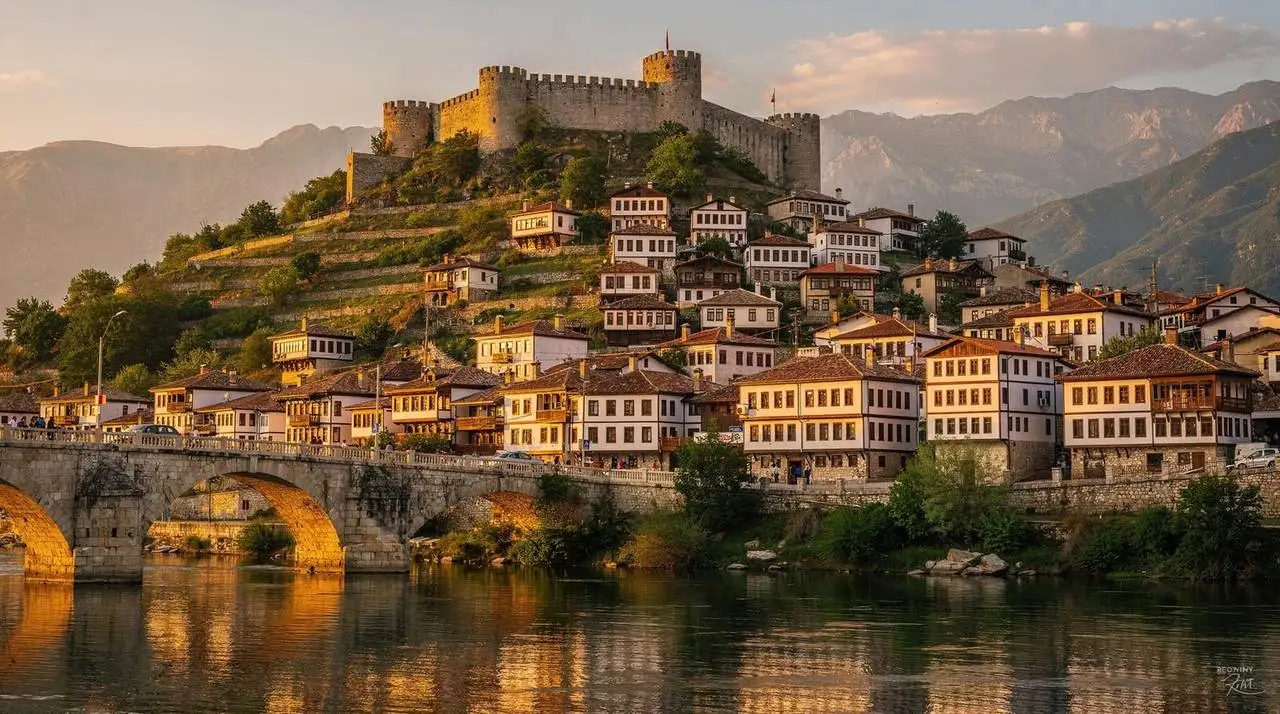
The natural and historical complement to the Osum Canyon is Berat, the UNESCO-listed Ottoman city with its extraordinary terraced houses on the hillside above the Osum River. Berat deserves at least two nights — one for the old town, castle, and museums, one for the Osum Canyon excursion.
The city of Berat sits on the Osum River itself; the same river that carves the dramatic canyon to the south flows through the city in a more gentle, cultivated valley. Seeing both the canyon and the city gives a complete picture of how the Osum has shaped the landscape and the human history of the region. The UNESCO sites in Albania guide covers Berat’s heritage significance in detail.
The Rafting Season
The full rafting in Albania guide covers the Osum alongside the Vjosa at Permet and other rafting rivers in detail. The key seasonal points for Osum:
Spring (March to May) provides the most technically challenging water, with high flows from snowmelt creating Class III-IV conditions in the main canyon. This is the season for experienced paddlers and for those who want the most intense whitewater experience. Water temperatures are cold — wetsuits are essential.
Early summer (June to July) balances good flows with more manageable water temperatures. This is typically the most popular rafting season and the best balance of safety and excitement for most visitors.
Late summer (August to September) brings lower, warmer water — better for swimming and river tubing, but less dynamic for rafting. The scenery is unchanged.
October is possible in most years, with the river beginning to rise again from autumn rain.
Practical Tips
What to bring. Operators typically provide wetsuits, helmets, and paddles. Wear old shoes (trainers or sandals with straps), bring a change of dry clothes for the return, and protect any electronics in waterproof bags. Sunscreen is essential even in the canyon — the exposed sections receive intense direct sun at midday.
Physical requirements. Rafting on the Osum is suitable for most reasonably fit adults and older children (typically 8 and above). Canyoning requires more physical confidence, particularly for routes involving jumps or abseils. No prior experience is required for either if using a reputable guided operator.
Safety. The organised operators on the Osum have good safety records, but the canyon environment is not without risk. Brief properly on self-rescue techniques before entering the water, wear your helmet throughout, and follow your guide’s instructions at all times regarding rapid sections.
Group size. Rafts typically carry four to eight passengers plus a guide. Private arrangements for smaller groups can be made at higher cost. Joining a shared group departure (typically morning departures from Berat) is the most cost-effective approach.
Budget. Organised rafting tours from Berat run approximately EUR 30-50 per person including transport, equipment, and guide. The Corovoda-based tours are sometimes cheaper. Canyoning packages run slightly higher due to additional equipment requirements.
Osum Canyon Rafting Season at a Glance
| Season | Water flow | Water temp | Best for |
|---|---|---|---|
| Spring (Mar-May) | High, snowmelt | Cold | Experienced paddlers, Class III-IV whitewater |
| Early summer (Jun-Jul) | Moderate-high | Cool | Most visitors — best balance of thrill and comfort |
| Late summer (Aug-Sep) | Lower | Warm | Swimming, river tubing, gentler rafting |
| October | Rising again | Cold | Canyon walking, rim views, limited rafting |
Combining Osum with Nearby Adventure
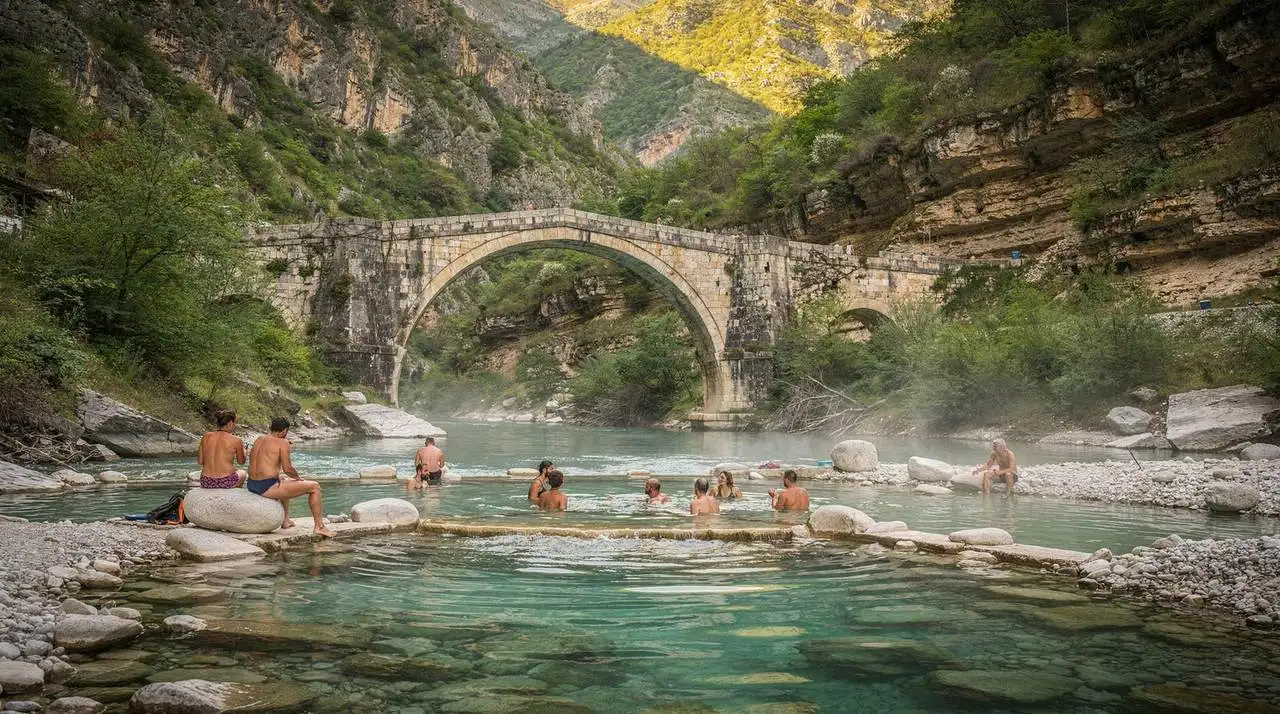
The Osum sits within reach of several other southern Albania natural attractions, and a multi-stop itinerary rewards travellers with more than a day to spend in the region. Permet, roughly ninety minutes away, offers the Benja thermal baths and Vjosa River rafting — a genuinely different river character from the tight limestone slot of the Osum, and a good contrast for those interested in Albania’s river landscapes broadly. The canyoning in Albania guide and rafting in Albania guide both cover how the Osum and Vjosa rivers compare for difficulty and scenery, useful if you are deciding which to prioritise on a tight schedule.
For travellers based in Berat for several nights, alternating a cultural day in the old town with an adventure day at the Osum is the most common and most satisfying pattern. Early booking is rarely necessary outside July and August weekends, when Albanian domestic tourists also head to the canyon in numbers.
Corovoda Town
The small city of Corovoda, at the northern end of the accessible canyon section, serves as the local base and the closest urban centre to the main put-in points. With a population of around 8,000, it is a quiet provincial town with basic accommodation, restaurants serving standard Albanian grilled meat, and cafes along the main street.
One notable feature of Corovoda is its position in the Skrapar region, which has a distinctive local cultural identity — the Skraparli tradition of folk polyphony (isopolyphony) is part of the intangible cultural heritage recognised by UNESCO at a broader regional level for Albania. Asking locals about this tradition, particularly older residents, produces interesting conversation and insight into the musical heritage of the area.
Why the Osum Canyon Deserves Its Reputation
Adventure travellers who have experience with canyon systems across Europe — the Tara in Montenegro, the Neretva in Bosnia, the Verdon in France — consistently rank the Osum among the most impressive. The visual drama is genuine; the 80-metre walls in the tightest sections create a sense of geological spectacle that photographs cannot fully represent.
What sets the Osum apart from more developed alternatives is precisely the combination of drama and accessibility, natural wilderness and organised activity, all within an hour of a UNESCO city of outstanding beauty. Albania has few experiences that pack this much into a single day, and the Osum Canyon is near the top of the list. The 14-day Albania itinerary includes the Osum as a day activity from Berat, giving context for how it fits into a broader Albanian journey.
Come in late May or early June. Get in the water. Look up at the walls. This is what Albania offers that nowhere else does.
Frequently Asked Questions About Osum Canyon
Can you raft the Osum Canyon?
Yes — rafting is the primary activity in the Osum Canyon and the most dramatic way to experience the 80-meter limestone walls. The season runs from late April through June when water levels are sufficient for safe rafting; July and August see lower water levels that limit or prevent rafting in sections. Operators based in Berat and Corovoda organise half-day and full-day rafting trips, typically costing EUR 30-50 per person including guides, equipment, and transport to the put-in point. Our Osum Canyon rafting guide covers the logistics in detail.
Is Osum Canyon Albania’s Grand Canyon?
The comparison is used locally and the visual similarity is genuine. At its tightest sections, the Osum Canyon walls rise 80-100 meters in sheer limestone, creating a narrow slot canyon with a turquoise river at the bottom. The scale is considerably smaller than the actual Grand Canyon, but the geological drama and isolation are real — the canyon runs for approximately 26 km and is inaccessible except by water or steep scramble in most sections. It is Albania’s most dramatic river canyon and justifies the comparison.
Where is the Bogove waterfall in Osum Canyon?
The Bogove waterfall (Ujëvara e Bogovës) drops into the Osum Canyon approximately 20 km upstream from Corovoda and is one of the most spectacular features of the canyon — a multi-stage waterfall falling into a turquoise pool that can be reached by kayak or on foot via a steep scramble. On rafting trips, the waterfall is typically a lunch stop and swimming break. The pool at the base of the falls is cold and deep — swimming is possible and excellent in early summer.
How do you visit Osum Canyon from Berat?
Berat is the most practical base for an Osum Canyon day trip. Operators in Berat organise transport to Corovoda (approximately 40 km, 1 hour) and back, making it straightforward to join a rafting or canyoning tour from Berat. Departure times are typically early morning. If you have your own car, driving to Corovoda and meeting an operator there is also feasible. The 14-day Albania itinerary includes Osum as a day activity from Berat.
What is the best time to visit Osum Canyon?
Late May and June are the optimal months: water levels are sufficient for rafting, temperatures are warm enough for swimming without being oppressively hot, and the canyon flora is at its best. April can work but water temperatures are very cold. July and August offer hiking and canyoning but water levels drop and rafting becomes more restricted. Autumn (September-October) is beautiful for canyon walking but swimming is cold and rafting may be limited by low water.
Can you combine Osum Canyon with Permet or the Vjosa River?
Yes — Corovoda, the base for Osum activities, is roughly ninety minutes from Permet by road, making a combined southern interior circuit feasible for travellers with two or three days. The two rivers offer distinct experiences: the Osum’s tight limestone slot canyon versus the Vjosa’s broader wild-river character near Permet, plus the Benja thermal baths as an additional draw. Many visitors base in Berat for the Osum and add Permet as a separate overnight stop rather than attempting both in a single long day.