Beach Clubs in Albania: The Riviera’s Best Sunbed Scene
The Albanian Riviera has evolved rapidly from a barely accessible stretch of Ionian coastline into one of the Mediterranean’s most compelling beach destinations. The pace of development has been remarkable: beaches that had no facilities a decade ago now have professionally run beach clubs with full sunbed service, cocktail bars, DJ sets at sunset, and kitchens producing food that would not embarrass a Mykonos restaurant. Yet prices remain substantially lower than comparable beaches in Greece, Croatia, or Montenegro — and the coastline is shared with a fraction of the crowds those countries attract in summer.
| Where | Riviera from Dhermi to Ksamil, plus Saranda |
| Sunbed pair cost | Around EUR 10–25/day, often with minimum spend |
| Best months | June and September for quality-to-crowd ratio |
| Payment | Bring cash; card acceptance is inconsistent |
| Booking | Advance reservation recommended for weekends in July–August |
The Riviera runs from Vlora in the north down to Saranda and the Greek border, with the most concentrated beach club scene between the Llogara Pass and Himara. Each village and bay has developed its own character: Dhermi leans upscale and social-media-savvy; Jale is more bohemian and festival-adjacent; Drymades is a hidden cove with boutique beach clubs; Himara has a real Albanian town feel with beaches attached. Further south, Ksamil’s island beaches and Saranda’s busy promenade complete the picture.
Understanding the Riviera’s geography before you arrive — the winding coastal road, the distances between beaches, the differences in character between spots — makes planning a beach holiday here substantially more rewarding than arriving without a plan.
The Albanian Riviera Beach Club Experience
What distinguishes Albanian beach clubs from simple beaches is the package they offer: a reserved space on the beach, service that comes to you, food and drink at the sunbed, and an organized environment for a full beach day.
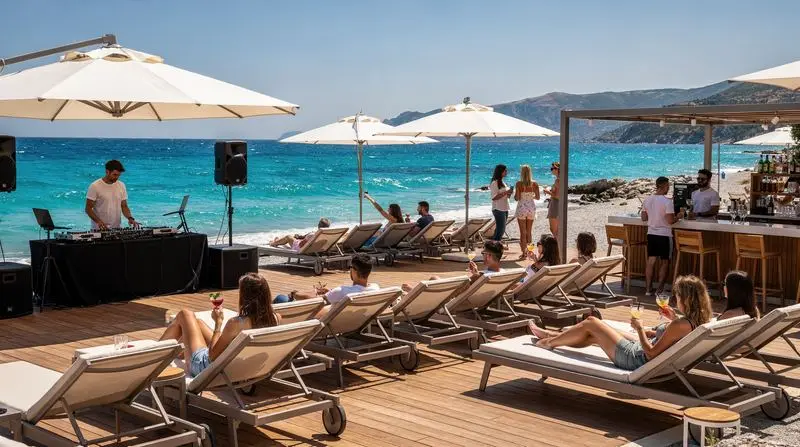
What a typical beach club provides:
- Sun loungers and padded daybeds with umbrellas, typically sold in pairs
- Cocktail and juice service directly to your sunbed
- Kitchen service producing fresh salads, grilled fish, seafood platters, and Albanian mezze
- DJ sets from midday through late afternoon or evening
- Maintained beach areas with regular cleaning
- Toilet and changing room facilities
- In better-equipped clubs: showers, lockers, and sometimes water sport equipment hire
Pricing: Sunbed pairs cost approximately EUR 10-25 depending on location within the club, the club itself, and proximity to weekends. This often includes a minimum food and drink spend, which is easily met in practice — a lunch and two cocktails covers the minimum at most clubs.
The Riviera vs. comparable destinations: A day at a Dhermi beach club costs 30-60% less than equivalent quality at a Greek island beach club. The water quality is identical (Ionian Sea), the sun is identical, the food quality is comparable, and the scenery is arguably superior given the mountain backdrop. This differential will narrow as the Riviera’s reputation grows.
Dhermi: The Riviera’s Flagship Beach
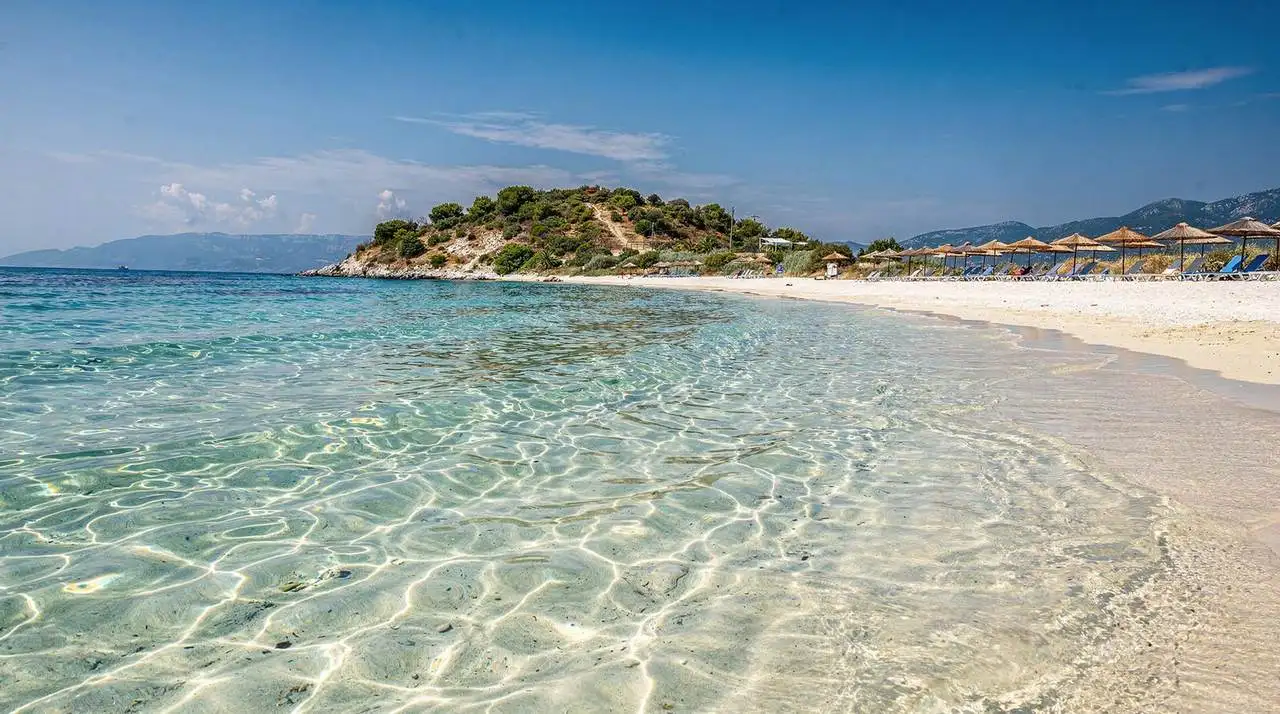
Dhermi is the most developed and most widely promoted beach destination on the Albanian Riviera, and for good reason. The beach is long (roughly 1.5 km of grey-white pebbles), protected by surrounding mountains, and faces south-southwest for maximum sun exposure through the day. The water — classic Ionian turquoise, extraordinary clarity — is exceptional by any Mediterranean standard.
The beach club scene here is concentrated and competitive. Multiple operators have established well-organized clubs over the past several years, each trying to differentiate through service quality, music programming, or food offering. Competition has been good for standards: the food at Dhermi’s better beach clubs is genuinely excellent — fresh octopus from the morning catch, local fish grilled simply, mezze salads using Albanian produce.
The village of Dhermi itself, perched on the hillside above the beach, adds a dimension that beach-only destinations lack. An evening walk up through the stone lanes of the old village after a beach day — followed by dinner at one of the terrace restaurants with views across the Ionian — is one of the Riviera’s more consistently satisfying daily routines. The contrast between the beach energy below and the quiet stone village above is distinctive.
What to Expect at Dhermi Beach Clubs
The more developed beach clubs at Dhermi have become genuinely professional operations with full restaurant kitchens, trained bar staff, and music production that runs from ambient early in the day through to higher-energy sets in the late afternoon. Several clubs now have Instagram-worthy aesthetic details — branded umbrellas, design-forward furniture, art installations — that reflect both the local ambition and the clientele they are attracting.
The clientele is mixed: Albanian families, diaspora Albanians, Kosovars, and growing numbers of international visitors from across Europe who have discovered the Riviera via word of mouth and social media. Weekend crowds in July and August are substantial; midweek, particularly in June and September, the same beach clubs operate at a fraction of the density.
Booking: The better beach clubs at Dhermi now take advance reservations — increasingly essential for weekends in July and August when the most desirable daybeds are allocated by 9am. Contact clubs directly (most manage reservations via Instagram or WhatsApp) or ask your accommodation to assist. Arriving without a reservation on a Saturday in August and expecting a prime sunbed is optimistic.
Practical Dhermi Details
Getting there: Dhermi is on the SH8 coastal road, approximately 40 km south of Vlora and 45 km north of Himara. The beach is reached by a steep descent road from the main highway — the junction is clearly signed. By public furgon: services run from Vlora and from Saranda on the SH8; from the road junction, a short minibus or taxi ride takes you to the beach. See the buses and furgons guide for public transport details.
Season: June through September. July and August are peak season with maximum activity and prices. June and September offer identical beach quality with meaningfully smaller crowds and lower prices.
Accommodation: Multiple guesthouses in the village and villas for rental on the hillside above. Book well in advance for peak summer — quality accommodation in Dhermi fills months ahead.
Drymades: The Boutique Option
Drymades is a smaller, more secluded beach immediately south of Dhermi, reached by a road that branches from the main highway. Less well known than Dhermi to international visitors, it has developed a more intimate character with fewer but often higher-quality beach clubs catering to travelers who want a more curated, less crowded experience.
The beach at Drymades is slightly smaller and steeper than Dhermi but with identical Ionian water quality. The surrounding limestone cliffs and pine forest create a sense of enclosure that makes it feel genuinely private — a contained cove rather than an open beach. Several boutique beach clubs here have established reputations specifically for food quality — fresh grilled octopus, locally caught fish, excellent salads — rather than social energy.
For travelers who prefer atmosphere over activity, Drymades is consistently the better choice over Dhermi in high season. The quieter environment also makes it a good base for exploring nearby hidden coves on foot — a 15-20 minute coastal path walk from Drymades reaches beaches accessible only on foot and generally unknown to all but the most thorough Riviera explorers.
The beach club operators at Drymades typically keep their capacity deliberately limited, which is both their main attraction and their main practical constraint: arriving without a reservation and finding no space is a real possibility in July.
Jale: The Bohemian Beach
Jale has carved out a distinct identity from Dhermi: more relaxed, more alternative, less polished. The beach here is smaller and more sheltered, in a cove flanked by steep hillsides, and the prevailing atmosphere is closer to Mediterranean festival campsite than beach resort. Camping on the beach or in the olive grove directly above it is common and accepted; the bar owners emerged from the same organic, DIY spirit.
The beach bars at Jale are simpler than Dhermi’s beach clubs but have personality. Music programming tends toward alternative electronic, indie, and eclectic genres rather than the commercial deep house of the upscale Riviera clubs. The crowd skews younger and more internationally diverse — backpackers, budget travelers, alternative tourism seekers, and a significant contingent of Balkan young people who treat Jale as their festival beach.
At night, Jale is the Riviera’s most reliably active location for outdoor parties that run late. The bars here are not formal clubs but open-air beach bars where dancing happens spontaneously. The combination of warm nights, cheap drinks, and a crowd that has arrived looking for this specific energy creates nights that visitors who expected a quiet beach holiday find memorable.
The beach at Jale itself is good — narrower than Dhermi but with the same turquoise water and excellent snorkeling directly from shore, where rocky formations shelter an interesting range of marine life. There is minimal vehicle access to the beach, which helps preserve its character from the development that has reached neighboring beaches.
Practical notes for Jale: Located a few kilometers south of Dhermi on the main road, with a steep unpaved access track. Expect to walk the final section. Accommodation is basic — guesthouses, camping, and a handful of small villas. This is not the place to come for a comfortable beach club experience; it is the place to come if comfortable is not what you are seeking.
Palasa: The Local Option
Palasa beach sits in a long, sheltered bay north of Dhermi, accessible by a rough track from the main road. Less developed than Dhermi or Jale, it has beach bars and basic facilities rather than full beach club infrastructure, and the overall atmosphere is significantly more local and Albanian in character. Families from Vlora and Fier are the dominant demographic on summer weekends.
For travelers seeking the Riviera’s water quality without the scene — who want to spend a beach day among Albanian rather than international visitors — Palasa is a strong option. The water is exceptional, the beach is long, and the relaxed atmosphere is genuinely distinctive from the more developed southern beaches.
The absence of full beach club infrastructure is Palasa’s main attraction for a certain kind of traveler and its main limitation for another kind. If you want a lounger, service, and a DJ, look further south.
Himara: Beach with a Town Attached
Himara is the main town on the central Riviera — a working Albanian coastal settlement with year-round population, permanent residents, and a functioning local economy rather than a resort. This distinction gives it a character different from the beach-focused villages of the northern Riviera. The town has a small old quarter with Greek and Albanian cultural heritage (there is a significant ethnic Greek community in the Himara area), seafront restaurants, a promenade that functions as the social heart of the community, and beaches that attract both local residents and visitors.
The beaches immediately around Himara — Livadhi to the north, the main town beach, and the stretch to the south — have beach clubs and bars but with a more balanced local-and-tourist crowd than Dhermi. Prices are if anything slightly lower. The restaurant scene in town is genuinely good, particularly for fresh seafood direct from local boats.
Himara as a base: The town works well as a base for exploring the surrounding Riviera. Day trips to Dhermi, Jale, and the extraordinary Gjipe Beach are all feasible from Himara. Gjipe — accessible either by a 45-minute gorge walk (through the canyon of the Gjipe river) or by boat from Himara — is one of the Riviera’s most dramatic locations: a small beach at the end of a limestone gorge, with cliffs rising hundreds of meters above.
Boat tours from Himara along the Albanian Riviera access beaches and coves that are difficult or impossible to reach by road — including Gjipe beach, sea caves in the limestone cliffs, and the stretch of coastline between Dhermi and Palasa that has some of the Riviera’s clearest water. Taking a day on the water from Himara is one of the consistently best single-day experiences on the Riviera.
Porto Palermo: The Castle Beach
Porto Palermo, between Himara and Saranda, is dominated by its extraordinary setting: an Ali Pasha castle on a peninsula jutting into a near-circular bay. The beach here is simpler than the main Riviera beach clubs, but the castle backdrop and the calm, enclosed water of the bay create a photography setting that is among the most distinctive on the Albanian coast.
The beach at Porto Palermo has basic facilities and a few simple bars. This is not a destination for the beach club experience but for the experience of swimming in an extraordinary natural amphitheater with a Turkish-era fortress at one end. It makes an excellent stop on a driving day along the Riviera — the Riviera road trip route includes Porto Palermo as a natural halt between Himara and Saranda.
Ksamil: Beaches and Islands
Ksamil, near Saranda in the far south, is the Albanian Riviera’s most photographed location: a small town with several small islands just offshore, surrounded by turquoise shallows that look, in the right light, more Caribbean than Balkan. The islands are accessible by short water taxi from the main beach, and the channels between islands and shore are shallow and extraordinarily clear — the color of the water in photographs of Ksamil is real and unfiltered.
The beach club scene in Ksamil has developed substantially over the past several years. The main beach has multiple operators with sunbed service, bars, and food production. The island beaches (accessible by water taxi, typically EUR 3-5 return) are quieter with simpler facilities — a few sunbeds, a drinks vendor, and extraordinary water.
Ksamil’s overall atmosphere is more tourist-dense than Dhermi — the proximity to the Butrint archaeological site and to the Greek border via Corfu means it attracts visitors on shorter itineraries who concentrate here rather than spreading along the full Riviera. This density has a character: busier, more international, with a wider range of nationalities than the Himara-Dhermi stretch.
Best time to experience Ksamil: Early morning (before the day-tripper crowds from Saranda arrive) or in June and September when the crowds thin to manageable levels. See the Ksamil destination guide for complete details on accommodation, boat trips to the islands, and how to time the visit.
For getting to Ksamil and exploring the surrounding area including Butrint, boat trips from Saranda around the Ksamil islands give the full coastal perspective — approaching the islands from the sea reveals the water color and the coastal geography that land-based exploration cannot.
Saranda: Urban Beach Scene
Saranda is the Riviera’s largest settlement — a proper town with year-round population, multiple hotels, and a waterfront promenade beach that is urban in character. The Saranda beach scene is beach bars and some beach club infrastructure on a long waterfront rather than the cove-and-club experience of Dhermi or Ksamil. The overall experience is city beach rather than boutique Riviera club.
Saranda functions most effectively as a base for exploring the southern Riviera and its attractions rather than as a beach destination in itself. The town is 15 minutes from Ksamil, 5 minutes from Butrint, and the most practical arrival point for ferries from Corfu. The evening promenade (xhiro) and seafront restaurant scene is genuinely pleasant.
The Saranda destination guide covers the town’s accommodation, restaurants, and nearby attractions in full detail.
Getting the Most from Albanian Beach Clubs
Arrive Early
Beach clubs fill quickly on summer days, particularly on weekends. Arriving by 10am gives the best choice of sunbeds, avoids the midday scramble, and allows a full day rather than an afternoon visit. The Ionian light is extraordinary in the morning hours, and the color of the water changes through the day — the midmorning period, before the sun is directly overhead, often shows the best blues and turquoise.
Understand the Minimum Spend Model
Many Albanian beach clubs charge for sunbeds with a minimum food and drink spend rather than a flat sunbed fee, or combine both. The total spend for a pair of sunbeds plus a lunch and drinks typically lands between EUR 25-50 per couple, which is the effective daily cost. This model differs from the flat-fee sunbed rental common in some European beach club markets.
Bring Cash
While cards are increasingly accepted at Dhermi’s more developed beach clubs, smaller beach bars and some established clubs operate cash-only or have unreliable card readers. Albanian Lek (ALL) is the standard currency; euros are sometimes accepted at a rough exchange rate that favors the vendor. ATMs are available in Himara and Saranda but not on the beaches themselves. See the Albania currency guide for ATM locations and cash planning.
Factor in the Road
The SH8 coastal road is spectacular but slow, winding, and occasionally congested in peak season. Allow significantly more time than Google Maps suggests — the road can take twice as long as the map indicates in heavy July and August traffic. Avoid driving this road in the dark in high season if possible. Plan your beach day to arrive at one location and stay, rather than attempting multiple beach clubs in a single day via road.
The Water Requires Respect
The Ionian Sea around the Albanian Riviera is beautiful but can develop currents, particularly around headlands and in narrow channels between islands. Swim within marked areas where they exist. The extraordinary clarity of the water can make depths look shallower than they are — the water at Ksamil’s outer islands can be 4-5 meters deep despite looking like 1-2 meters from the surface. Ask locally about conditions at unfamiliar beaches before swimming.
Know When to Go
The Riviera has a distinct seasonal rhythm that significantly affects the experience:
June: Warm, quieter than high season, most beach clubs operational. Excellent conditions.
July and August: Peak season. Maximum activity, maximum prices, maximum crowds. Weekends particularly busy. The full beach club experience is available in its most energetic form.
September: The best month for many travelers. Crowds thin significantly after the second week. Prices drop. Water remains warm from the summer — typically 23-24°C. Beach clubs operate with reduced hours. The light quality in September on the Riviera is extraordinary.
October: Most beach clubs have closed by mid-October. The coast empties. Accommodation becomes very limited. Not a beach club season.
The Riviera in a Week: A Planning Framework
A week based on the Albanian Riviera provides an excellent framework for a beach holiday that also touches Albania’s broader offerings. A workable structure:
Days 1-2: Dhermi as a base. Beach club days, evening walks through the village. Day trip to Jale.
Day 3: Boat tour from Himara along the coast — sea caves, Gjipe beach, coastal perspective on the Riviera you cannot get from the road.
Day 4: Drive south via Porto Palermo to Saranda. Stop at the castle and the beach below it.
Day 5: Butrint in the morning (arrive early), Ksamil in the afternoon and evening.
Day 6: Day trip to Gjirokastra or Berat for cultural contrast — the UNESCO cities are 1.5-2.5 hours from Saranda. The day trips from Tirana guide covers these routes, which are equally applicable from the Riviera.
Day 7: Return north, stopping at Llogara Pass for the panoramic view of the Riviera you have spent the week exploring from within.
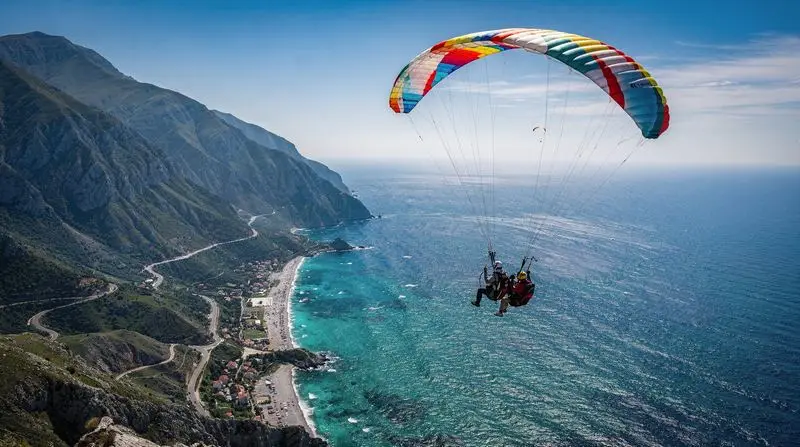
For those interested in adding an active element, paragliding from the Llogara Pass is one of the Riviera’s signature experiences — launching from the mountain ridge above the coast and landing on the beach below combines the geographic drama of the pass with a view of the Riviera that no road or boat provides.
How Beach Clubs Fit the Wider Riviera Picture
Beach clubs are part of the Riviera experience but not all of it. The full Albanian Riviera offers:
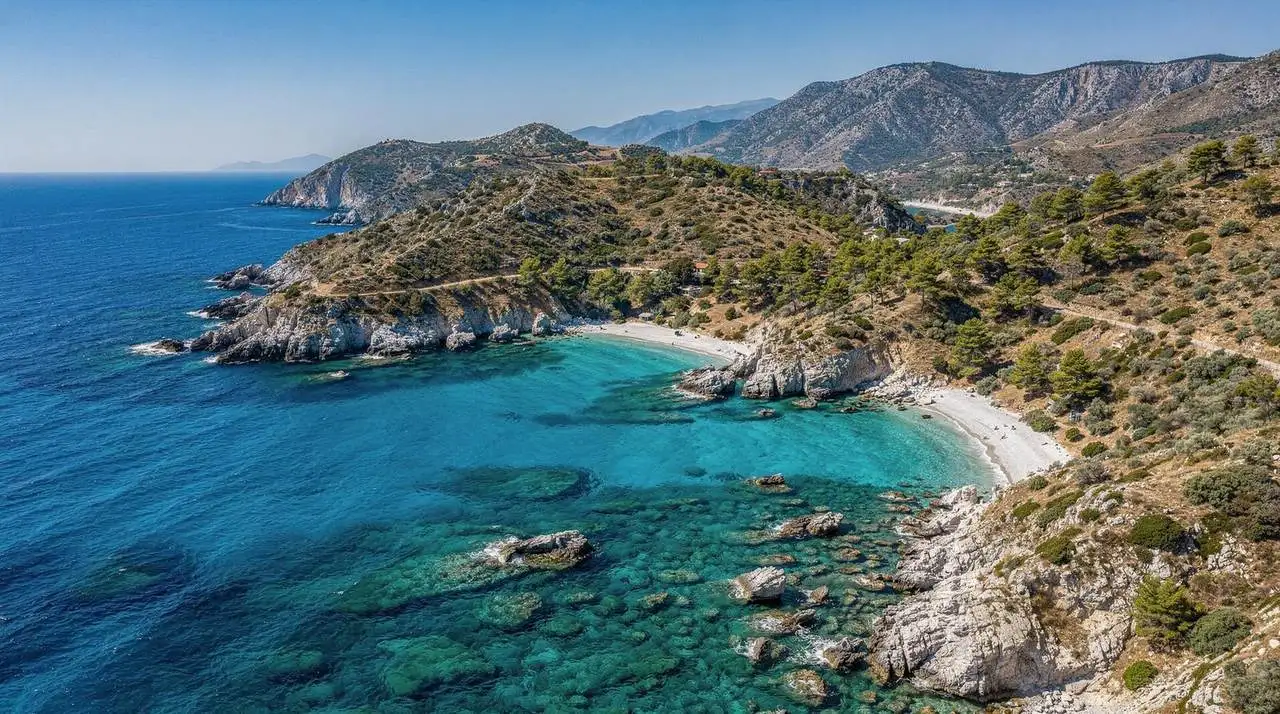
Natural beach discovery: Many of the best beaches along the Riviera remain undeveloped or lightly developed. The coastal path between Palasa and Dhermi, accessible from both ends on foot, passes beaches accessible only on foot. The coves north of Himara require a boat to reach. This wilderness coast sits alongside the beach club scene and is often more rewarding for the right kind of traveler.
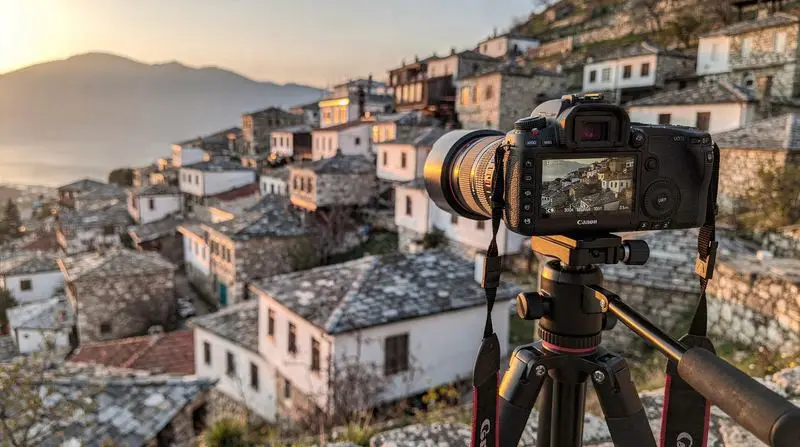
Albanian village life above the beach: The hill villages of Dhermi, Himara, and Palasa retain an authentic Albanian community character above the beach tourist zone. Staying in the village rather than at the beach and walking down each day creates a different experience — guest in a community rather than customer at a resort.
Mountain activities: The mountains above the Riviera are extraordinary. Paragliding from Llogara, hiking on the mountain trails above Dhermi, and driving the switchback road to Llogara Pass for the panoramic views are all available as day activities from a beach base.
Boat experiences: The coast from the sea reveals geography that land and beach cannot show. The limestone cliffs, sea caves, and hidden coves are primarily accessible by boat. Taking at least one day on the water during a Riviera stay is one of the consistently highest-value decisions visitors make.
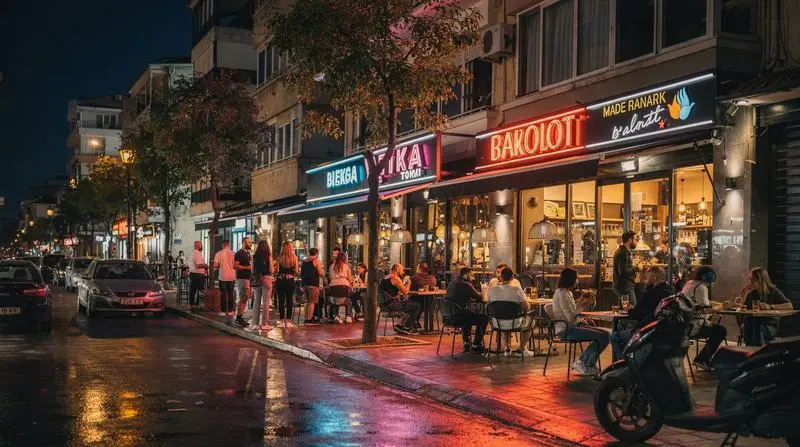
Nightlife: The Riviera’s beach clubs transition into evening venues as the sun sets, and several have DJ lineups that run through the night in high season. Dhermi and Jale are the main evening and nightlife centers. The Albania nightlife guide covers what happens after dark on the Riviera and in Tirana.
The Riviera’s Direction of Travel
The Albanian Riviera is developing at a pace that is both exciting and worth acknowledging honestly. The combination of natural beauty and lower prices will not last indefinitely as the Riviera’s reputation grows. Venues that are charmingly rough around the edges in 2026 will be replaced by polished operations as investment follows visitor numbers. The crowds that currently feel manageable will grow.
This is not a reason to avoid the Riviera — it is a reason to visit it now, in what is likely its finest window of quality-to-cost ratio and before the discovery curve removes the advantage of early arrival. The Albanian Riviera destination guide covers the broader coast in full, including how to plan a Riviera trip that moves beyond the main beach club hotspots into the less-visited stretches that remain genuinely uncrowded.
The beach clubs are the social infrastructure of the Albanian Riviera experience — the place to spend the heat of the day, to eat fresh seafood, to watch the Ionian light change across extraordinary water. They are not the whole story, but they are an excellent place to spend a significant part of it.
Which Riviera Beach Fits Your Style
| Beach | Vibe | Price level | Crowd | Best for |
|---|---|---|---|---|
| Dhermi | Polished, social-media-ready | Higher | Busy, international mix | First-timers wanting the full beach club experience |
| Drymades | Curated, boutique | Higher | Small, capacity-limited | Couples wanting quality without the scene |
| Jale | Bohemian, festival-adjacent | Lower | Younger, backpacker-heavy | Late nights and a more alternative crowd |
| Palasa | Local, unpolished | Lowest | Mostly Albanian families | Water quality without the scene |
| Himara | Town beach with real community | Moderate | Mixed local/tourist | Basing yourself for day trips |
| Ksamil | Iconic islands, shallow turquoise | Moderate–higher | Very busy, day-tripper heavy | Photos and a short, high-impact visit |
| Saranda | Urban promenade | Moderate | Busy, transient | Convenience as a travel hub |
Getting Between Beach Towns Without a Car
Not every visitor rents a car for the Riviera, and it is entirely possible to build a beach club trip around public transport and taxis. Furgons (shared minibuses) run the length of the SH8 between Vlora and Saranda, stopping near the access roads for Dhermi, Jale, and Himara on request — flag one down or ask your guesthouse for the current schedule, since timetables shift by season and are rarely posted formally.
From the main road junctions, the final stretch down to the beach itself is usually a 10-20 minute walk or a short taxi ride, since beach access roads are often too steep or narrow for larger vehicles. Taxis between adjacent beach towns (Dhermi to Jale, Himara to Porto Palermo) typically cost EUR 10-20 and are the practical option for evening transport when furgons have stopped running. See the buses and furgons guide for a fuller breakdown of routes and typical costs, and the driving in Albania guide if you are weighing whether a rental car is worth it for a Riviera-focused trip.
What to Pack for a Riviera Beach Day
A few items make a meaningful difference to comfort on Riviera beach days. Reef-safe sunscreen matters more here than at a typical resort beach, since many of the best coves have minimal shade and the midday Ionian sun is intense even by Mediterranean standards; reapplication after swimming is essential rather than optional. Water shoes are genuinely useful at the pebble beaches that dominate the central Riviera (Dhermi, Jale, Himara) — the stones are comfortable to lie on but less comfortable to walk on barefoot, especially entering the water.
A dry bag protects phones and cash on boat trips or when swimming out from shore, both common activities on the clearer stretches of coast. Cash in small lek denominations covers beach bar purchases more smoothly than large notes, which some smaller operators struggle to change. Finally, a light cover-up or shirt for the walk between the beach and the village above is worth having, since many restaurants and shops outside the immediate beach zone expect at least minimal coverage.
Snorkeling and Swimming Off the Beach Clubs
Several Riviera beaches reward bringing your own mask and snorkel rather than relying entirely on sunbed time. The rocky headlands at Jale and the northern end of Dhermi shelter small fish, sea urchins, and interesting rock formations close to shore, making for good casual snorkeling without needing a boat. Drymades and the coves accessible on foot from Palasa tend to have the clearest water for snorkeling precisely because they see less boat traffic than the main beach club strips. Around Porto Palermo, the calm, enclosed bay beneath the castle is a notably safe and scenic spot for a longer swim, sheltered from the open-sea currents that can develop elsewhere along the coast. None of this requires paid equipment hire in most cases — bringing your own gear from home or buying an inexpensive set in Tirana or Saranda is usually more cost-effective than daily rental at the beach.
Beach Club Etiquette and Booking Tips
A few unwritten rules make the Riviera beach club experience smoother. Reserving a sunbed and then leaving it empty for hours while you explore elsewhere is generally frowned upon, especially in peak season when demand outstrips supply — if you plan to leave for an extended period, mention it to staff rather than simply disappearing. Tipping is not obligatory but 5-10% for attentive sunbed and bar service is appreciated and increasingly expected at the more polished Dhermi clubs. Most venues manage bookings informally via Instagram direct message or WhatsApp rather than a formal reservation system, so screenshot your confirmation and the club’s location pin, since address details are not always precise on maps. Showing up right at opening (typically 9-10am) rather than after a leisurely breakfast makes a meaningful difference to sunbed choice on any July or August weekend.
Frequently Asked Questions About Beach Clubs in Albania
Are there beach clubs in Albania?
Yes, Albania’s Riviera has a growing number of beach clubs, particularly around Dhermi, Jale, and Himara. These range from simple sunbed-and-bar setups to more developed venues with DJs, restaurant service, and design furniture. The scene is developing rapidly and is still more affordable and less commercial than comparable beach clubs in Greece or Croatia.
How much do beach clubs cost in Albania?
Sunbed and umbrella rental at Albanian beach clubs typically costs EUR 5-10 per set per day. Some clubs charge a minimum consumption fee of EUR 10-20 instead of or in addition to sunbed fees. Food and drinks are priced higher than in local restaurants — expect EUR 3-6 for a beer and EUR 12-20 for a meal. Overall, even the most expensive Albanian beach clubs cost significantly less than equivalents in Mykonos or Dubrovnik.
What is the best beach club in Albania?
Dhermi has the highest concentration of developed beach club venues on the Riviera, with several well-regarded spots offering good facilities, quality food, and a social atmosphere that attracts both Albanian and international visitors. Jale’s beach clubs have a more relaxed, backpacker-friendly character. In Ksamil, beach clubs cater heavily to families visiting the famous lagoon.
Do Albanian beach clubs play music?
Yes. The more developed beach clubs at Dhermi and Jale play music throughout the day, typically transitioning from background ambient music in the morning to louder electronic music in the afternoon and evening. Some venues host DJ nights in peak season. Travelers seeking quiet beach experiences should opt for the simpler sunbed operators at less-developed beaches rather than the club-style venues.
Do I need to book a beach club in advance?
For Dhermi and Drymades on July and August weekends, yes — the best daybeds are typically claimed by 9am and the more established clubs now take reservations via Instagram or WhatsApp. Outside peak weekends, and at less-developed beaches like Palasa or the Himara town beaches, walk-up availability is usually fine. Ksamil’s island beaches operate on a first-come basis via water taxi rather than formal reservations.