| Best for | Culture, thermal baths, Korce Christmas market, value |
| Coast temps | 8-15°C, mild but wet |
| Closed | Beach clubs, mountain guesthouses, most boat tours |
| Prices vs summer | 35-50% lower |
| Booking | Easy almost everywhere; book ahead only for Korce Christmas market weekends |
Albania in Winter: The Honest Guide
Nobody sells you an Albanian winter holiday. The travel industry ignores it, the beach photographs are impossible from December to February, and the mountain trails are under snow. Yet winter tourism in Albania has a quiet and growing following among travellers who know what they are getting: one of Europe’s most culturally rich countries at its most affordable, peaceful, and authentic, with thermal waters, UNESCO cities, and a Christmas market that rivals anything in the Balkans.
This is not a guide for everyone. If you want guaranteed sunshine and beach swimming, come between May and October. But if you are curious about Albania’s cities, history, food, and thermal traditions — and if the idea of having the castle at Gjirokastra or the old bazaar at Kruja entirely to yourself is appealing — winter deserves serious consideration.
Winter Weather in Albania
Albanian winters vary dramatically by region. The coast is mild but wet; the mountains are cold and snowbound; the interior cities sit somewhere between the two.
The coast (Saranda, Himara, Vlora) enjoys the mildest winters in the country. Temperatures rarely fall below 5°C at night and regularly reach 12-15°C on sunny days. Rain is frequent — the Riviera coast receives most of its annual precipitation between November and February — but sunshine breaks between fronts are common. Swimming is not realistic for most people, but coastal walking is often perfectly pleasant.
Tirana and the central lowlands average 7-11°C in January. The city can be grey and damp for stretches, but it can also produce crisp, blue-sky winter days that make the snow-capped mountains around the city unusually beautiful. The capital’s indoor culture — its museum scene, its cafe life, its restaurant quality — is entirely unaffected by the season.
Berat and Gjirokastra in winter have an atmospheric quality that summer cannot produce. Mist in the valleys below the castle at Gjirokastra, or frost on the stones of Berat’s old town before the sun reaches the hillside, creates a visual drama absent in the tourist season. Both cities are UNESCO-listed and function as living communities year-round; winter makes it easier to see that.
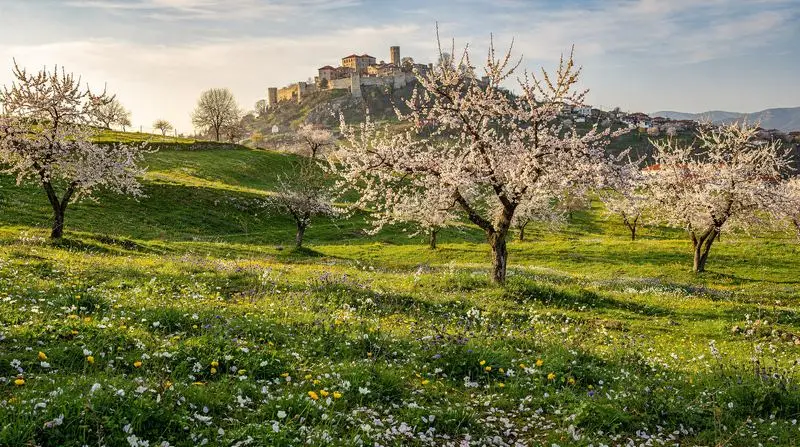
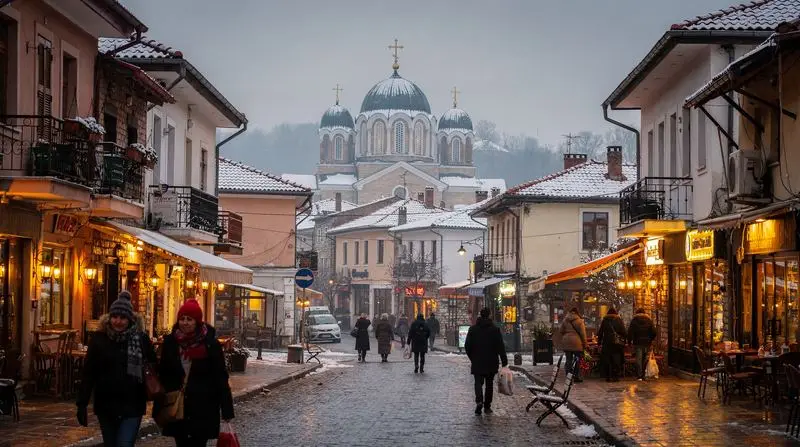
Korce in the southeast is the winter destination for Albanians. The city sits at 869 metres elevation and regularly receives snow from December to February. Its Christmas market — the largest and most elaborate in Albania — draws visitors from across the country and from neighbouring North Macedonia.
The Albanian Alps (Theth, Valbona, Shkodra hinterland) are snowbound from November to April. Accessing Theth in winter requires serious planning and appropriate equipment; the village road through the canyon is often impassable, and most guesthouses close. This is true wilderness winter for experienced travellers only.
| Region | Jan Temp | Rain | Recommended |
|---|---|---|---|
| Saranda/coast | 8-14°C | Frequent | Yes, with realistic expectations |
| Tirana | 5-11°C | Moderate | Yes — cultural capital |
| Berat | 4-10°C | Moderate | Yes — atmospheric |
| Gjirokastra | 3-9°C | Moderate | Yes — most beautiful in mist |
| Korce | 0-6°C | Snow likely | Yes — Christmas market |
| Theth/Alps | -5 to 3°C | Snow | Experts only |
Korce: Albania’s Winter Capital
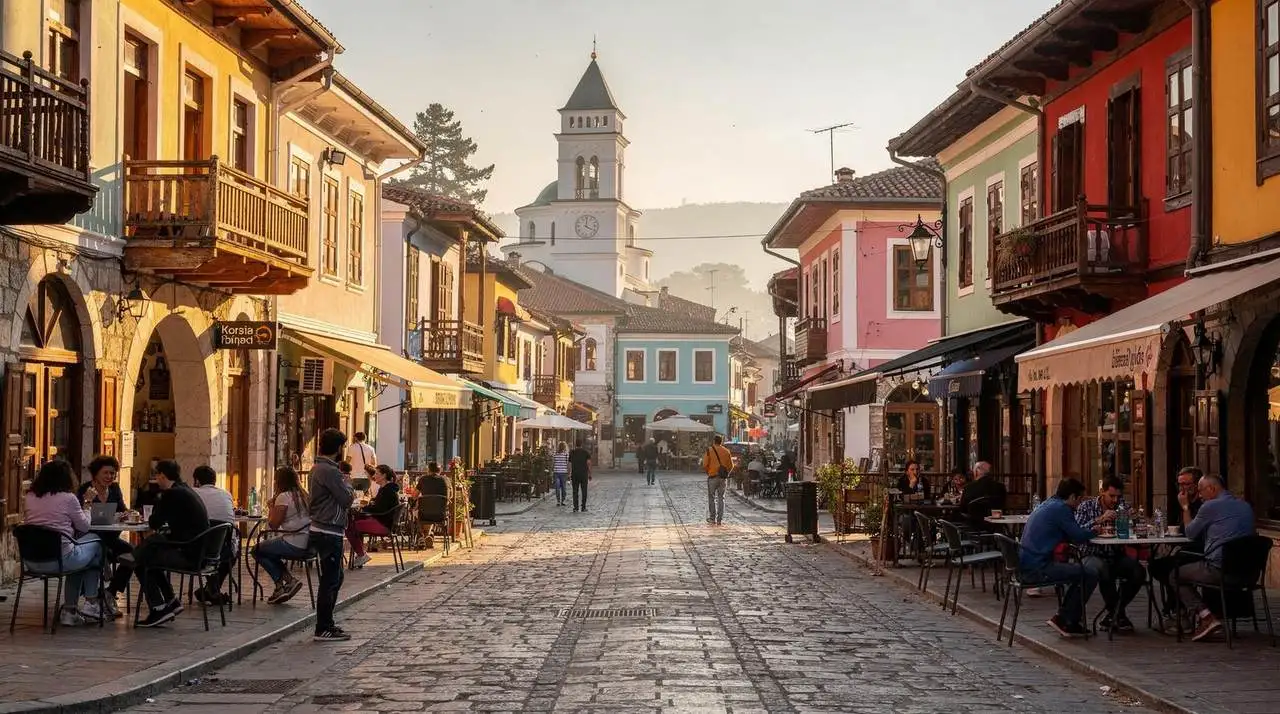
Korce comes into its own in winter. The city — which fancies itself the intellectual and cultural capital of Albania, a claim that Tirana would dispute — has a dignified, old-world atmosphere that suits cold weather: wide tree-lined boulevards, a fine collection of 19th and early 20th century buildings, an outstanding Orthodox cathedral, and a National Museum of Medieval Art that houses some of the most extraordinary Byzantine icons in the Balkans.
The Korce Christmas and New Year market, held in December, is a genuine event. Stalls selling local crafts, mulled wine, traditional sweets, and grilled meats line the central streets. The city’s proximity to the North Macedonian border means the market has a cross-cultural flavour, and the local raki flows freely. The market typically runs from the first weekend of December through to early January, with the most festive atmosphere in the week before and after Christmas.
Beyond the market, Korce deserves time. The Old Bazaar district has been restored sensitively and houses restaurants serving the local cuisine — which differs noticeably from coastal Albanian food, with more mountain influences, heavier bean and meat dishes, and extraordinary local cheeses. The Driloni resort area on the shore of Lake Ohrid, a short drive from Korce, is peaceful in winter and the lake views across to North Macedonia are spectacular.
The Korce Brewery — one of Albania’s most beloved institutions — welcomes visitors year-round. The brewery tour takes you through the production process for Korce beer, the country’s most popular lager, and finishes with a tasting session. The Korce brewery tour with beer tasting runs year-round including winter, costs approximately EUR 12-15 per person, and provides a warm, sheltered activity on a cold day — plus insight into the Albanian food culture that surrounds it.
Gjirokastra and Berat in Winter
These two UNESCO cities are arguably more interesting in winter than in summer, a contrarian position that becomes obvious within an hour of arrival.
Gjirokastra — the city of stone, built across a ridge above the Drinos Valley — loses the tourist layer entirely in winter and reveals what lies underneath: a working Albanian city where families have lived in these extraordinary Ottoman tower houses for centuries, where the morning market smells of woodsmoke and roasting peppers, and where the castle above the city can be explored in complete solitude. The castle museum, which houses a captured American spy plane among its exhibits, is open year-round. The views from the ramparts over the valley and the Greek border mountains beyond are, if anything, more dramatic when the air is cold and clear.
A winter walking tour of the old town — the Pazari neighbourhood, the Skenduli house museum, and the restored bazaar — takes a comfortable two to three hours at a leisurely pace. With no tour groups and no queue for the castle entrance (admission is approximately EUR 3), you can take the time the architecture actually deserves. The Gjirokastra guided walking tour is the best way to understand the layers of history visible in the city’s construction. In winter, private guides are easily arranged and often more flexible on itinerary.
Berat is similarly atmospheric. The white Ottoman houses of Mangalem and Gorica, stacked above each other above the Osum River gorge, look almost painterly in winter light. The castle neighbourhood above — Kalaja — has a small year-round population and remains accessible by road. The Onufri Museum inside the castle church houses a remarkable collection of 16th-century icons by the Albanian master painter Onufri, and winter visits are solitary and contemplative in a way that August does not permit.
Both cities have year-round guesthouses and restaurants. Prices in winter are dramatically lower than in the tourist season — a guesthouse room that costs EUR 80 in August may be EUR 30 in January. Dinner in a good restaurant in either city costs EUR 10-15 per person including wine, at the most affordable level you will find in Albania outside of a student canteen.
Thermal Baths: Albania’s Winter Highlight
The thermal springs scattered across southern Albania are a year-round attraction but genuinely best in winter. Soaking in geothermally heated water while the surrounding hills are dusted with snow or draped in winter mist is a specific pleasure that no other season provides.
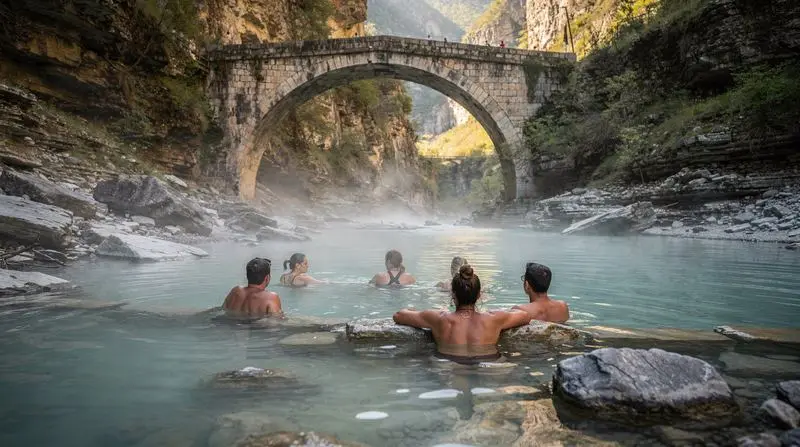
The most celebrated are the Benja thermal baths near Permet, where hot springs (around 29-32°C) emerge from the banks of the Lengarica River within the mouth of a dramatic gorge. The setting is extraordinary: a natural arch spans the river above the pools, stone pines cling to the canyon walls, and the surrounding landscape is silent in winter. This guided thermal baths experience from Permet includes the canyon walk and local context that makes the visit much richer than simply arriving at a hot spring. The pools sit at water temperatures that feel warm but not scalding — exactly right for a winter afternoon.
Entry to the Benja thermal baths is minimal — typically EUR 1-3 per person — but the guided option adds the Langarica Canyon walk and local storytelling that makes the outing a half-day rather than a quick dip. Permet town is the logical base, with accommodation from EUR 25-40 for a double room in winter. The town’s restaurants serve the local honey, raki, and lamb dishes that make southern Albanian food distinctive.
Other thermal options include the springs at Llixhat e Elbasanit near Elbasan, which have been used since Roman times, and the baths at Peshkopi in the northeastern mountains, where the infrastructure is more developed. For the full guide to thermal baths in Albania, including water temperatures and facilities at each site, see the dedicated guide.
Permet itself is worth a day beyond the thermal baths. The town sits at the confluence of two rivers in a valley that produces some of Albania’s finest honey and raki, and the surrounding mountains shelter Byzantine churches and castle ruins that most travellers have never heard of. The Kelcyra Gorge between Tepelena and Permet is one of the most spectacular canyon drives in the south — even more dramatic in winter when the river is full and the rock walls are dark with moisture.
Tirana in Winter
The Albanian capital does not close for winter. The city’s café culture — which operates year-round on a different clock from most European capitals, with Albanians eating dinner at 9pm and finishing coffee at midnight — is if anything more concentrated in winter when outdoor terraces are packed away and the warmth of the interior is welcome.
The cultural calendar is busiest from autumn through spring. The National Theatre, the Albanian National Opera and Ballet, and a network of smaller performance spaces run productions from October through May. The Tirana International Film Festival takes place in late November or early December and brings the city’s creative community into public view. Ticket prices for theatre and opera performances are extraordinarily low by European standards — EUR 5-15 for a seat at the National Opera.
Museum days are excellent in winter. The National History Museum on Skanderbeg Square — with its famous mosaic facade of Albanian heroes — is a substantial half-day. Bunk’Art 1 and Bunk’Art 2, the pair of converted communist-era bunkers that now serve as museums of communist Albanian history, are among the most original museums in Europe and can be visited on consecutive days. The House of Leaves, which documents the surveillance apparatus of the Sigurimi secret police, is genuinely disturbing and very well presented. All three museums offer a deep immersion into the communist period that shapes modern Albania — understanding that history transforms your reading of everything else in the country.
This Tirana communist Albania tour including Bunk’Art runs year-round and provides the historical framework that makes the museum visit significantly more rewarding. Winter timing is ideal — the underground sections of Bunk’Art are heated and make for a comfortable escape from a cold grey day. The tour costs approximately EUR 30-40 per person and runs approximately three hours.
The Blloku neighbourhood, Tirana’s most fashionable district, operates full service through winter. The cluster of bars, cafes, and restaurants between the former communist-era villa quarter and the main shopping street hosts a year-round crowd that takes its coffee culture seriously. Winter evenings in Blloku — with condensation on the windows and the street outside glistening with rain — have an intimacy that summer terraces do not.
Where to stay in Tirana covers the year-round hotel and guesthouse options. Winter rates are substantially lower than summer across the board — a good mid-range hotel room that costs EUR 90 in July may be EUR 55-65 in January.
The Coastal Towns in Winter: Saranda and Vlora
The southern coast in winter has a quality that is difficult to describe to someone who has only seen it in summer. The Riviera towns quieten almost entirely; the beach clubs are closed and the seasonal restaurants are shuttered; but the year-round population — fishermen, farmers, guesthouse owners — remain, and the relationship between visitor and local becomes completely different.
Saranda is the most year-round of the Riviera towns. Its esplanade remains active even in winter (Albanians walk in the evening regardless of the month), and a core of restaurants and cafes serves the local population. The harbour, lined with fishing boats that are working rather than decorative, has a genuine character. Butrint is open year-round and is best visited in winter — the archaeological site is often completely empty, the birdlife in the surrounding lagoon is at its richest, and the ancient city can be absorbed at a pace that summer crowds prevent.
Vlora in winter is a working city without tourist infrastructure — which is to say, a real Albanian city. The seafront promenade, Lungomare, is used by local families for their evening passeggiata regardless of the weather. The Muradie Mosque, dating from 1537, is one of the finest Ottoman religious buildings in Albania and is freely accessible. The Sazan Island boat trips operate weather permitting from Vlora harbour in winter for smaller groups.
Winter Driving: What to Know
Winter changes road conditions significantly. The Llogara Pass road — the spectacular mountain route connecting central Albania to the Riviera — can be closed by snow for days at a time between December and February. Always check conditions before attempting it in winter; the local police road condition service gives live updates.
Mountain roads in general require more caution. The Theth road through the canyon closes entirely in deep winter. Roads in the south and around the UNESCO cities are generally manageable throughout winter except in exceptional snow events. The main highway from Tirana to Saranda via Fier and Tepelena remains open in all but the most severe conditions.
Pack accordingly: a windscreen scraper and a blanket in the boot are sensible precautions in January. Tyres appropriate for winter driving — or at minimum all-season tyres — are advisable if you are renting a car for mountain routes.
See driving in Albania for more specific guidance on winter road conditions, and car rental Albania for advice on vehicle specifications in winter.
What Is Closed in Winter
Being realistic about winter limitations is important:
Beaches: Completely off-season. No beach clubs, no sunbeds, no swimming infrastructure. The beaches themselves are accessible for a windswept walk, which is its own kind of experience.
Mountain guesthouses: Theth and Valbona guesthouses close around October or November and do not reopen until April or May. The Peaks of the Balkans trail is not accessible in winter conditions.
Some smaller Riviera restaurants: Seasonal operations in tiny villages like Palasa and Vuno close entirely. Larger towns remain served.
Boat tours: Riviera boat tours do not operate in winter on any scheduled basis. Individual arrangements may be possible in calm weather from larger harbours.
Some archaeological sites: Opening hours at some sites reduce in winter, and a small number close temporarily. Always check before making a special trip. Butrint and the main castle sites in Berat, Gjirokastra, and Kruja remain open throughout winter, though hours may shorten.
The Koman Lake ferry: The Koman Lake ferry typically operates year-round on a reduced winter schedule. Check the current timetable from Shkodra; bad weather can occasionally delay or cancel services.
Winter Cultural Calendar
December through February has more going on in Albanian cultural life than most visitors expect:
December: Korce Christmas Market (first weekend through early January), Tirana International Film Festival (late November/early December), Christmas celebrations in the Catholic north (Shkodra), New Year’s Eve celebrations across all cities.
January: National theatre season in full swing. Museum exhibitions. Albanian Independence cultural events (November 28th celebrations continue into December). Winter hiking events in the accessible mountain areas near Tirana.
February: Carnival celebrations in some coastal communities. Valentine’s Day has become a significant event in urban Albania. The first festivals of the year in Permet (honey and raki culture).
Winter Budget: Albania’s Best Value
Winter is when Albania becomes genuinely extraordinary value. The country is already one of Europe’s cheapest destinations in peak season; in winter it drops further.
Guesthouses in Gjirokastra or Berat: EUR 25-40 for a double room. A three-course dinner in Tirana: EUR 10-18 per person including wine. A furgon from Tirana to Saranda: EUR 10. Entrance to both Bunk’Art museums: EUR 5 total. A full guided city tour of Gjirokastra: EUR 15-25.
Car rental in January-February from Tirana Airport runs EUR 150-220 per week for a standard car — significantly cheaper than the EUR 250-350 summer rate. Petrol costs are the same year-round. The overall cost saving versus a summer trip, for comparable accommodation and activities, is typically 35-50 percent.
For budget travellers and slow travellers who want to spend real time understanding a place rather than passing through it, an Albanian winter month could be one of the best decisions available. A month in Tirana or Berat — renting an apartment, visiting the museums, eating in local restaurants — can cost under EUR 1,000 all-in including accommodation, food, and transport.
See Albania travel budget for a detailed comparison of seasonal costs.
Winter Itinerary: Ten Days in Off-Season Albania
A practical ten-day winter circuit for travellers who want culture, thermal baths, and authenticity:
Days 1-2: Tirana. Arrive, settle, spend two days in the capital: National History Museum, Bunk’Art museums, House of Leaves, Blloku neighbourhood. Take the communist Albania guided tour on day two. Good value mid-range hotels charge EUR 55-75 per night.
Day 3: Drive to Berat (2 hours). Afternoon and evening in the UNESCO city: Mangalem quarter, castle, Onufri Museum. The castle neighbourhood is particularly atmospheric in winter mist.
Day 4: Berat to Permet via the Osum River valley (2.5 hours). Afternoon arrival, evening in Permet town. Visit the local raki producers and the old bazaar.
Day 5: Benja thermal baths and Langarica Canyon. Full morning at the thermal pools, afternoon exploring the canyon and surroundings. Return to Permet for dinner.
Day 6: Permet to Gjirokastra (2 hours via Kelcyra Gorge — the spectacular canyon drive adds nothing to journey time versus the alternative and adds everything to the scenery). Afternoon in Gjirokastra old town.
Day 7: Full day in Gjirokastra. Castle, bazaar, Skenduli house, walking the stone lanes. Lunch in a restaurant in the old town for EUR 8-12.
Day 8: Drive to Saranda via the Blue Eye spring (2 hours). Afternoon along the esplanade, visit Butrint if arriving early enough.
Day 9: Butrint and coast. Morning at the archaeological site (empty in winter, very atmospheric). Drive north toward Himara or Vlora via the coastal road — a beautiful winter drive even without beach stops.
Day 10: Return to Tirana via the inland route (4-4.5 hours). Coffee stop in Fier or Lushnje.
Food and Drink in Albanian Winter
Winter food in Albania is hearty and exactly right for the season. The coastal lightness of summer — grilled fish, fresh salads, chilled white wine — gives way to slow-cooked traditions.
Tavë kosi (lamb baked with eggs and yogurt) is at its best in winter, served in deep earthenware dishes that hold the heat. Bean soup (fasule) with cornbread is standard in every traditional restaurant and costs around EUR 2-3. Slow-braised pork or lamb under the sac — a metal lid covered with glowing embers — is the winter celebration dish across the south. The new vintage of Kallmet wine from the northern regions arrives in late autumn and is consumed through winter.
Raki, Albania’s ubiquitous spirit, is the winter social lubricant. In Permet, the mulberry raki is extraordinary and local guesthouses often serve their own private reserve. In the UNESCO cities, the evening raki before dinner is standard hospitality regardless of the season.
The Winter Verdict
Winter Albania is not for everyone, and it would be dishonest to suggest otherwise. The beach holiday is impossible. The mountain hiking is off the table (with expert-only exceptions). Some infrastructure is reduced. The weather can be grey and wet for stretches.
But for the traveller who wants cultural immersion, authenticity, extraordinary value, and the experience of a UNESCO city in fog and firelight — with no crowds, no tour buses, and genuinely warm Albanian hospitality — winter is a legitimate and rewarding season to visit.
Winter Health and Practicalities
Pharmacies operate normally through winter in all towns and cities; see Albania pharmacy and health guide for what’s available and how prescriptions work if you need one while travelling. Travel insurance is worth confirming covers winter driving and any planned snowshoeing or skiing activity specifically — standard policies sometimes exclude winter sports as an add-on. See Albania travel insurance for what to check before booking.
What to Pack for Albanian Winter
Layering is the single most useful strategy, given the swing between mild coastal days and cold mountain nights. A waterproof jacket handles the frequent coastal rain; a warm mid-layer and a hat and gloves cover Tirana, Berat, Gjirokastra, and especially Korce, where temperatures regularly sit near freezing. Sturdy, waterproof footwear matters more than style — cobbled old towns get slick with rain and occasional ice. For a full seasonal breakdown across all months, see the Albania packing list guide.
New Year’s Eve and January in Albania
New Year’s Eve is celebrated enthusiastically across Albania, with organised fireworks and public celebrations in Skanderbeg Square in Tirana, and smaller but lively gatherings in Korce, Shkodra, and Saranda. Restaurants and bars fill up, and it is worth booking a table in advance in Tirana if you want a sit-down dinner beforehand. January itself is quiet — the cultural calendar continues with theatre and opera, but the festive energy of December has passed, making it arguably the single cheapest and calmest month to visit the country.
Winter Wildlife and Nature
Winter is an underrated season for Albania’s nature. Birdwatching in Albania is at its best from November through February, when migratory species overwinter in the wetlands around Butrint, Divjaka-Karavasta, and Lake Shkodra — the Karavasta lagoon holds one of Europe’s largest wintering populations of Dalmatian pelicans. Lake Ohrid’s Albanian shore near Pogradec is quiet and atmospheric in winter, with the surrounding mountains often snow-dusted above the still, deep-blue water.
Skiing and Snowshoeing in Albania
For travellers who want genuine winter sport rather than just cold-weather sightseeing, Albania has a small but real offering. Skiing in Albania is possible at Dardha near Korce, a modest resort popular with Albanian families, and increasingly at spots in the northern Alps. Snowshoeing in Albania around the Korce highlands and the accessible fringes of the Alps near Shkodra is a growing niche activity, best arranged with a local guide given the avalanche risk at altitude.
Frequently Asked Questions About Albania in Winter
Is Albania worth visiting in winter if the beaches are closed?
Yes, for the right traveller. Winter trades beach time for UNESCO cities without crowds, thermal baths in cold mountain air, the Korce Christmas market, and prices 35-50% below summer. It’s not a beach trip, but it’s a legitimate and often more culturally immersive way to see the country.
Do I need a car to visit Albania in winter?
It helps but isn’t essential. Furgon minivans connect the main towns year-round, and the main highways (Tirana-Saranda via Fier, Tirana-Shkodra) stay open in all but severe weather. A car matters most if you want flexibility around the Llogara Pass or Kelcyra Gorge, where conditions can change quickly.
What is the cheapest month to visit Albania?
January is typically the cheapest month overall — post-holiday, pre-spring, with guesthouse and hotel rates at their lowest and no festival premium. December carries a small markup around the Korce Christmas market and New Year period. See Albania travel budget for a full seasonal cost comparison.
Reaching Albania in Winter
Winter flight schedules to Tirana International Airport thin out slightly compared to summer, but connections from most major European hubs remain reliable; see flights to Albania for route options. The Corfu-Saranda ferry reduces its winter frequency and can be weather-dependent, so those arriving from Greece by sea should build in flexibility; check the current timetable via the Corfu to Albania ferry guide before finalising winter travel dates.
The thermal baths guide covers all of Albania’s hot spring sites with practical access details. The Albania off the beaten path guide includes Permet and the Vjosa Valley, which are particularly compelling in winter. See the best time to visit Albania for a full twelve-month overview to help you choose your ideal window.